Featured

The Ingles Way: The Goodness of Galicia

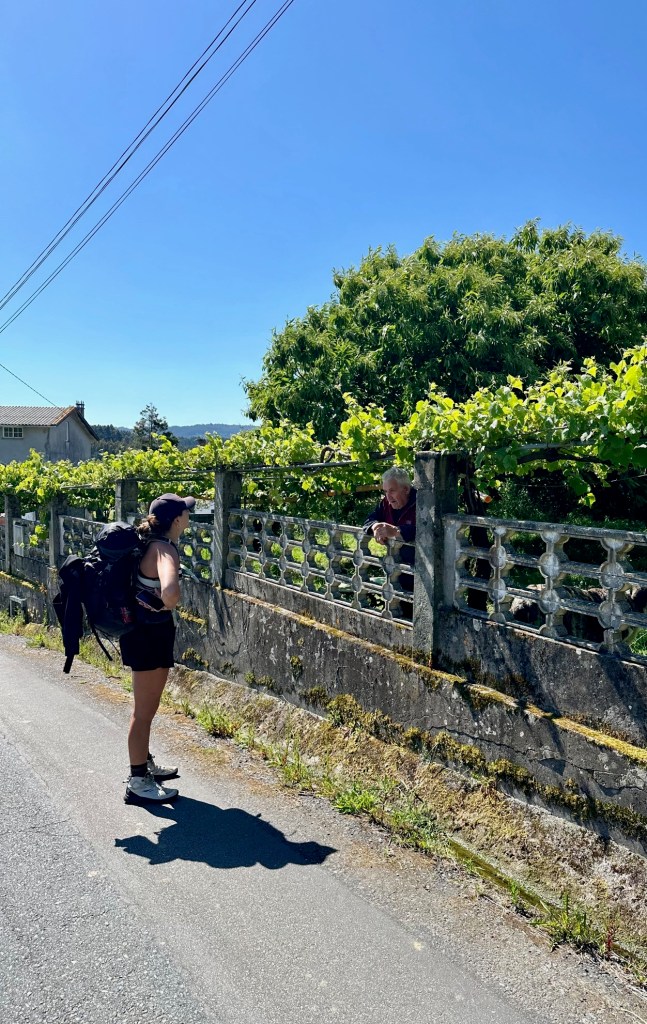
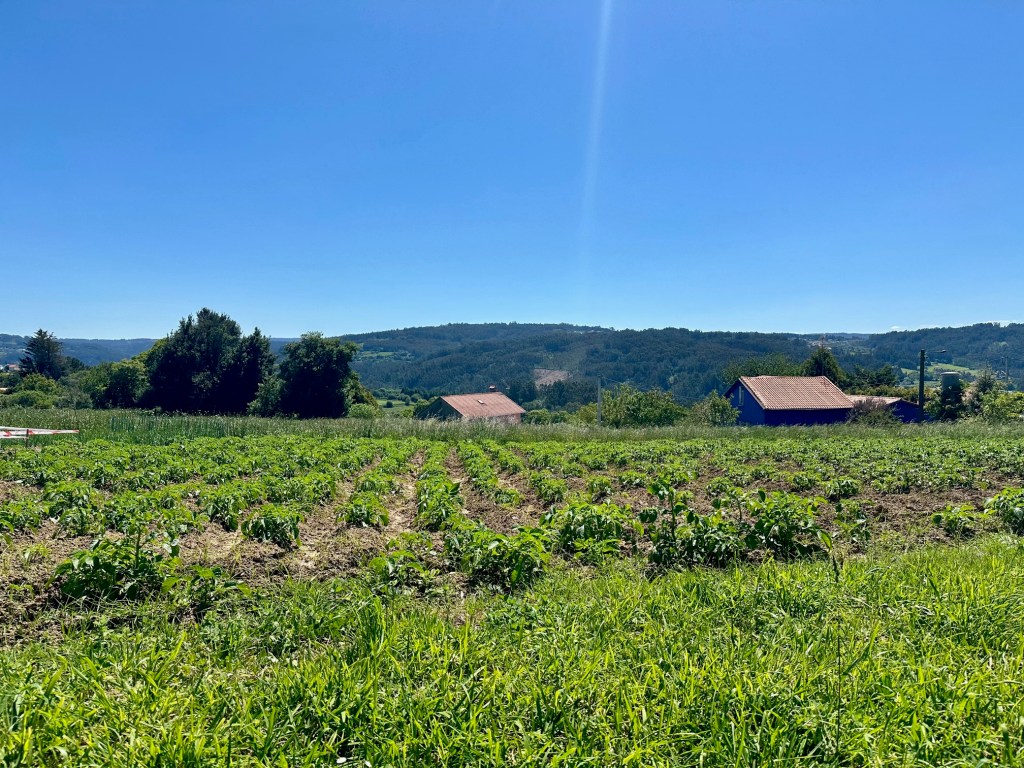
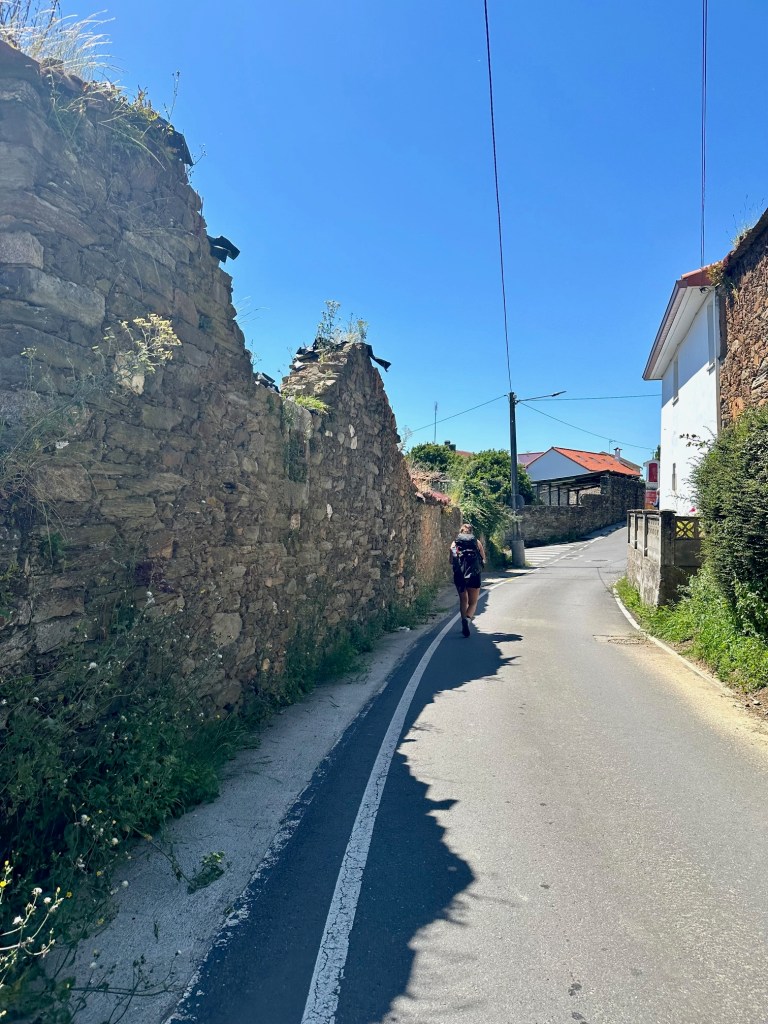
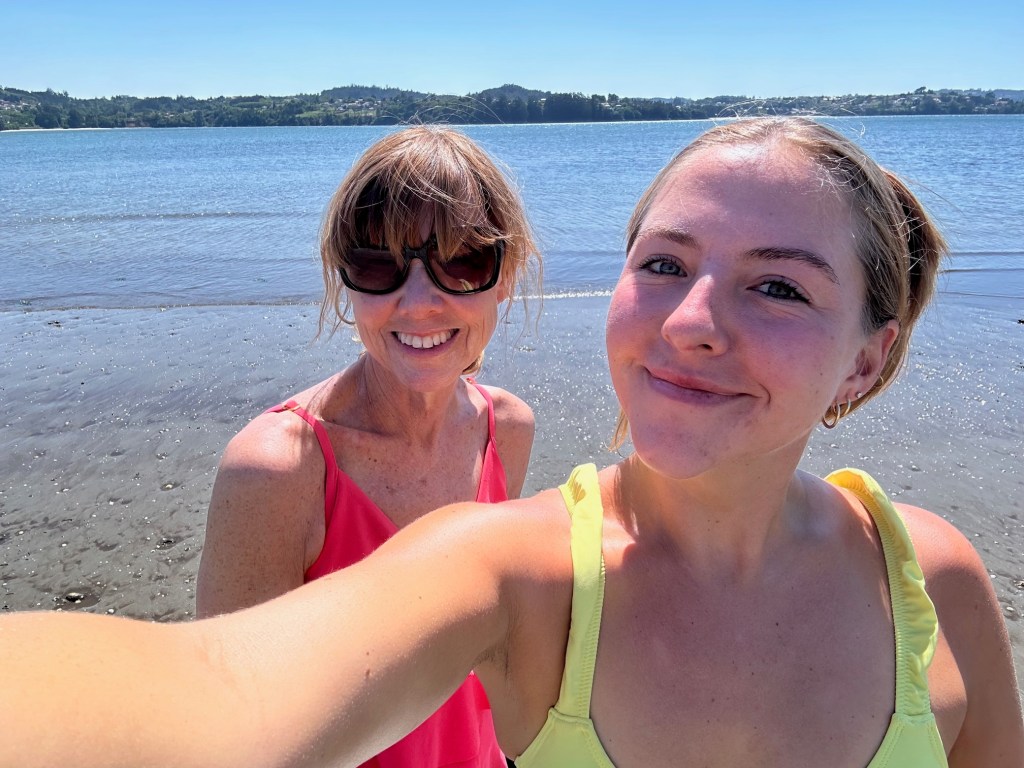
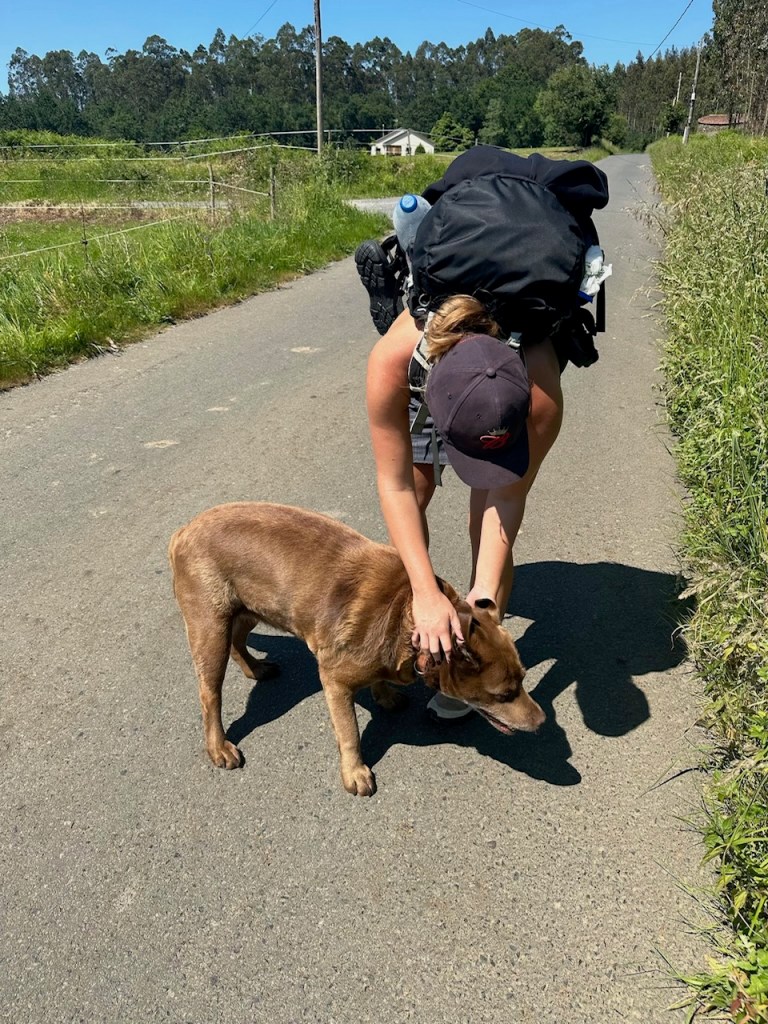
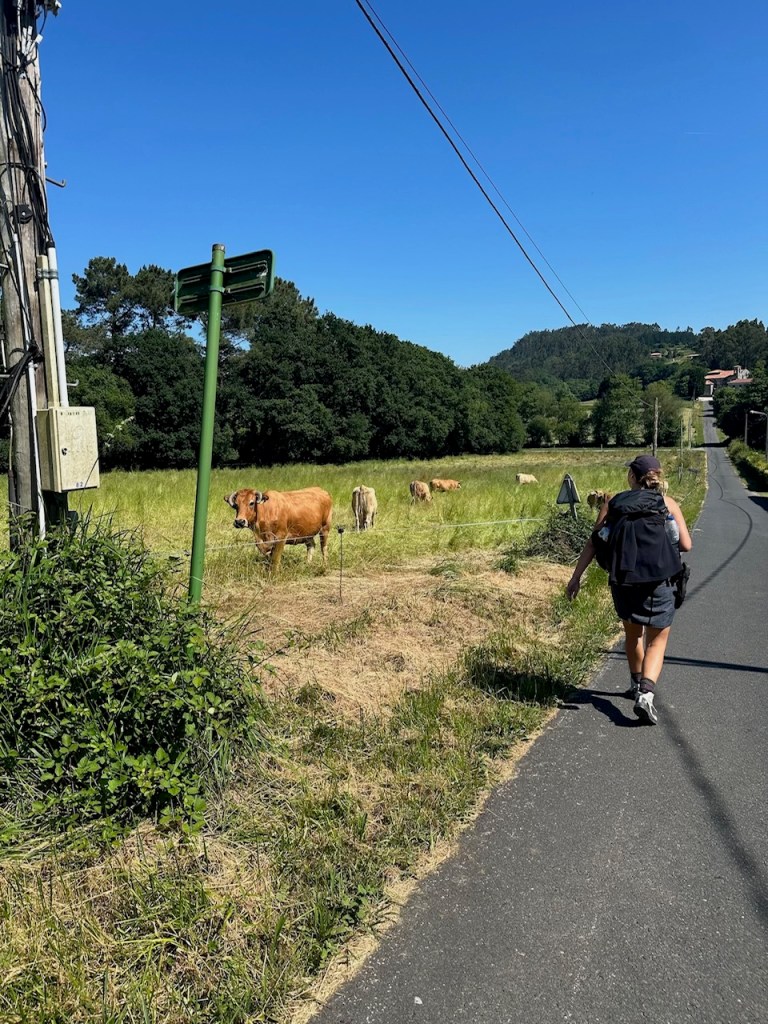
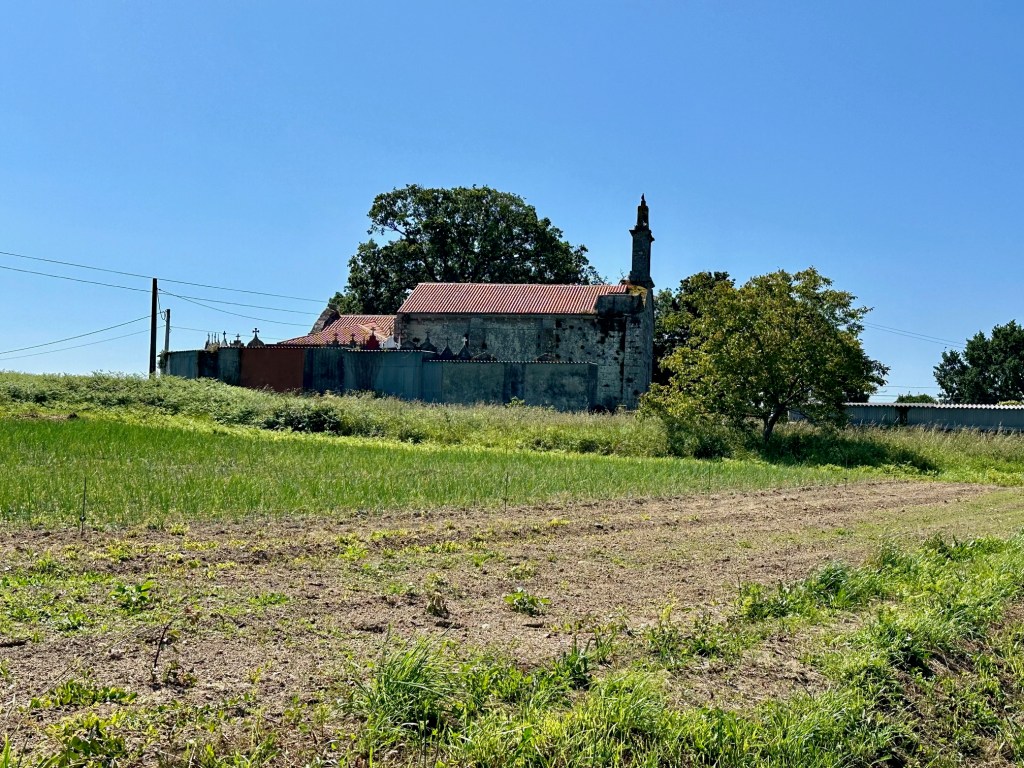
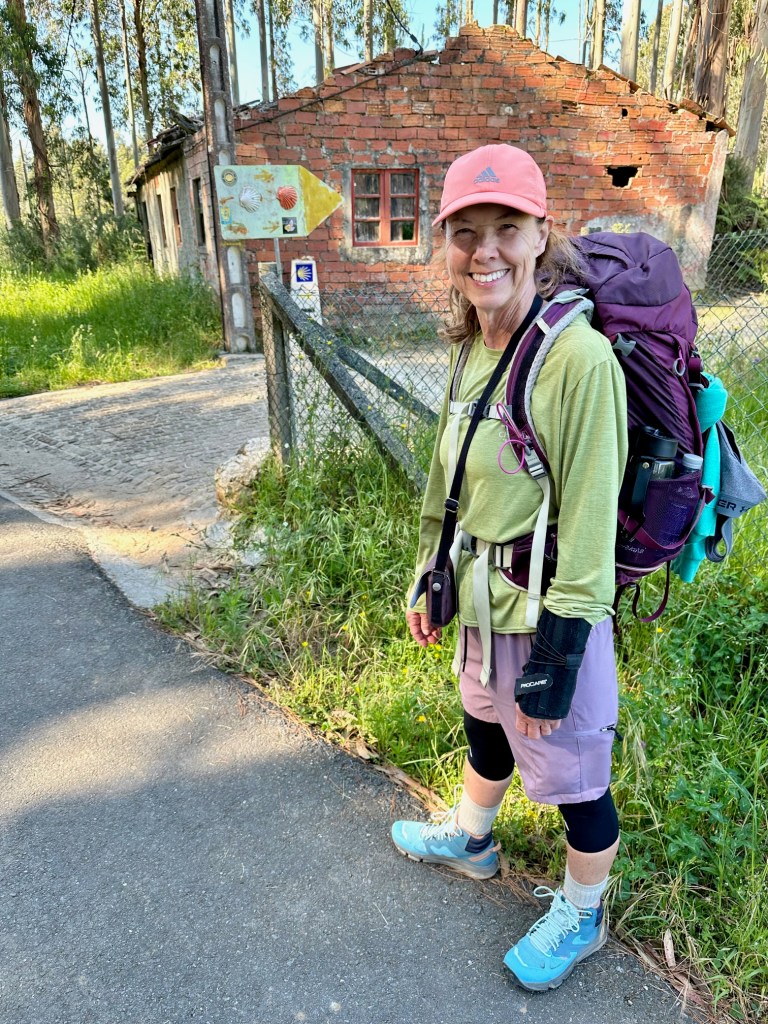
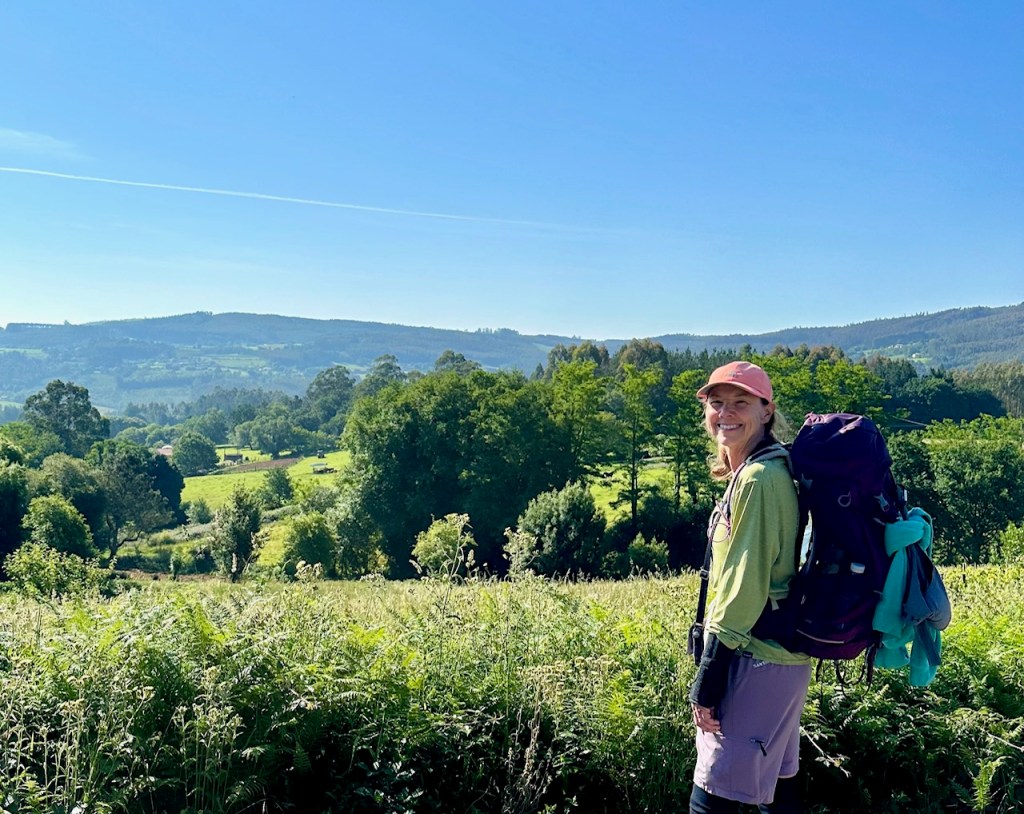
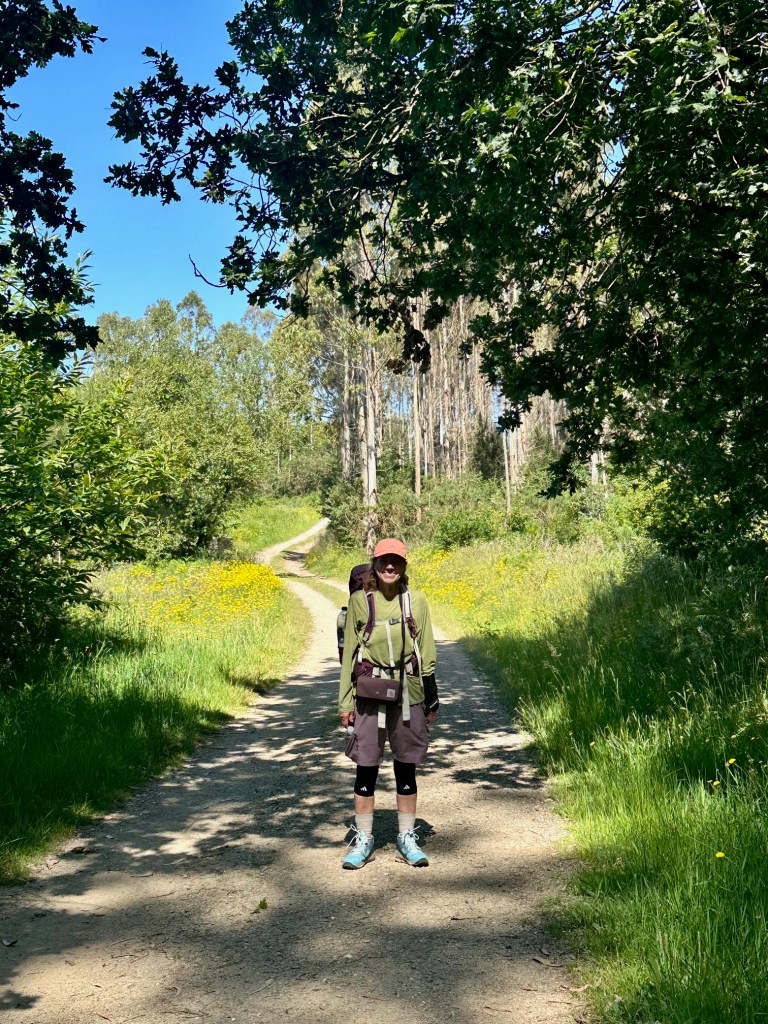
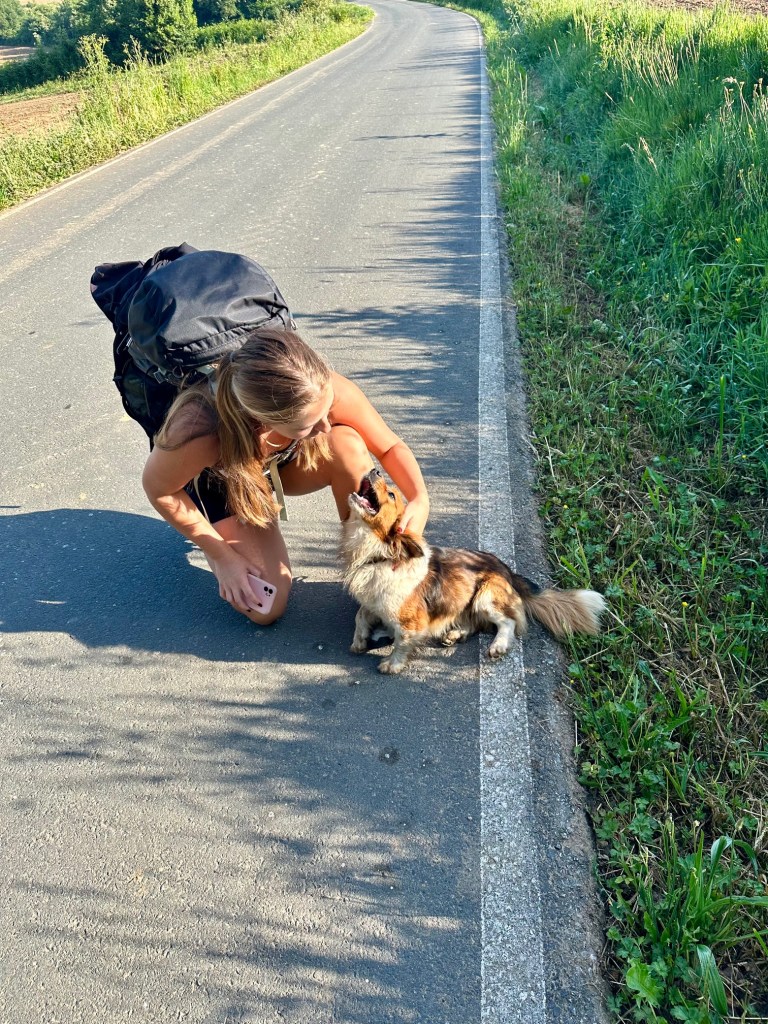
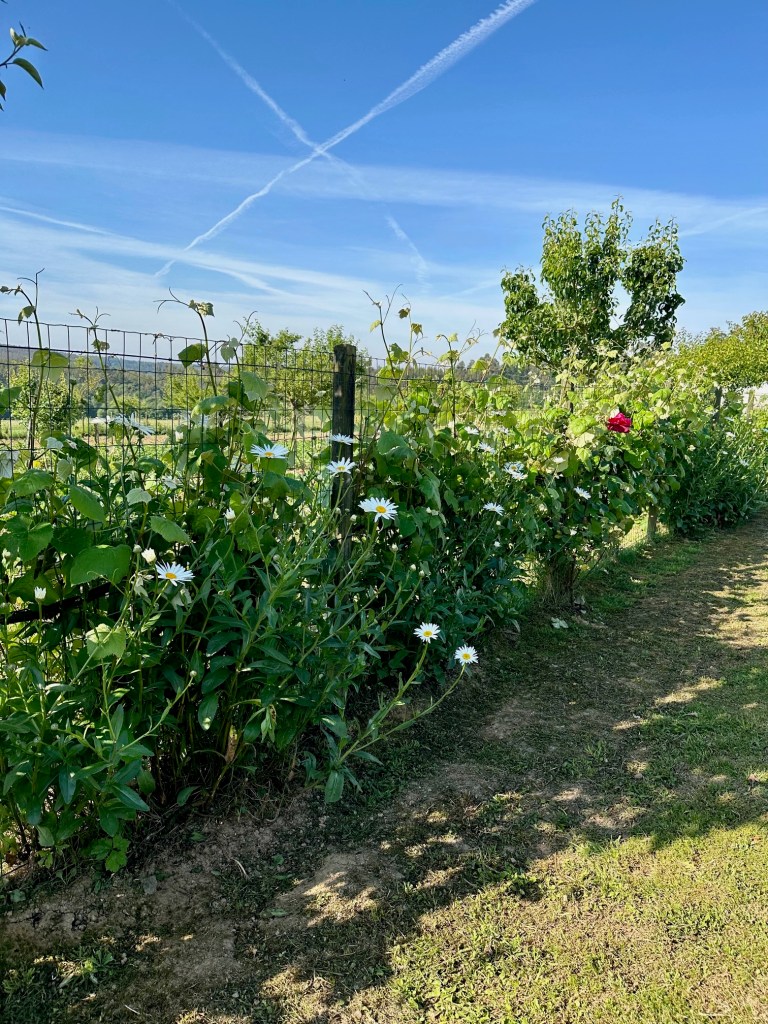
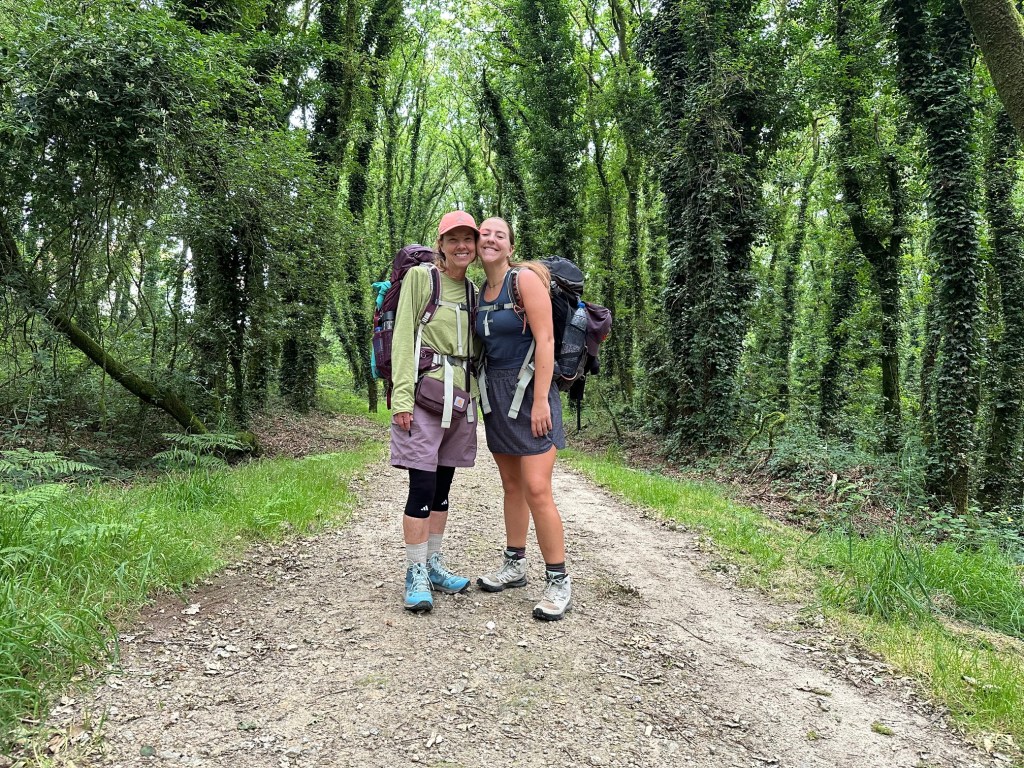
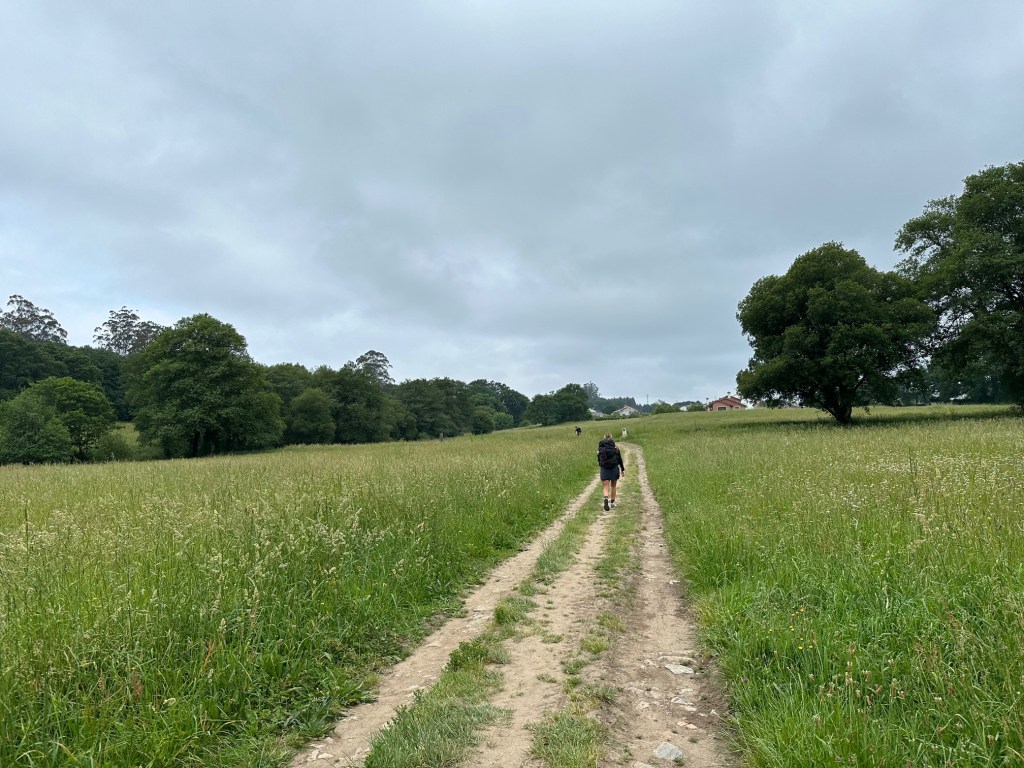
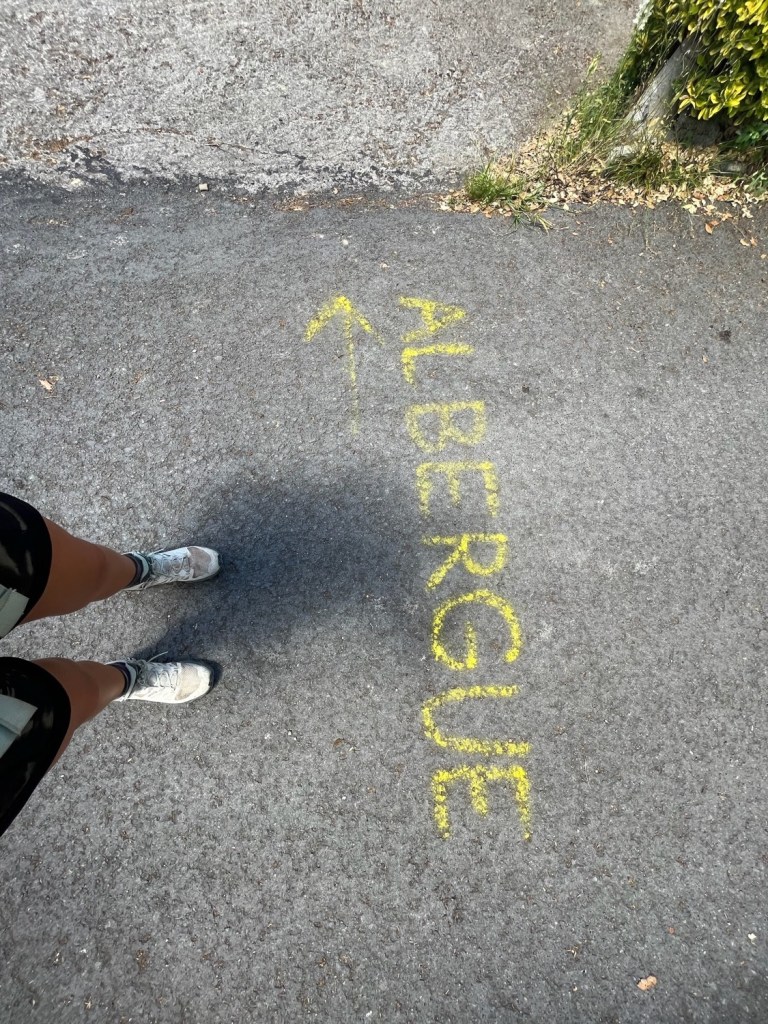
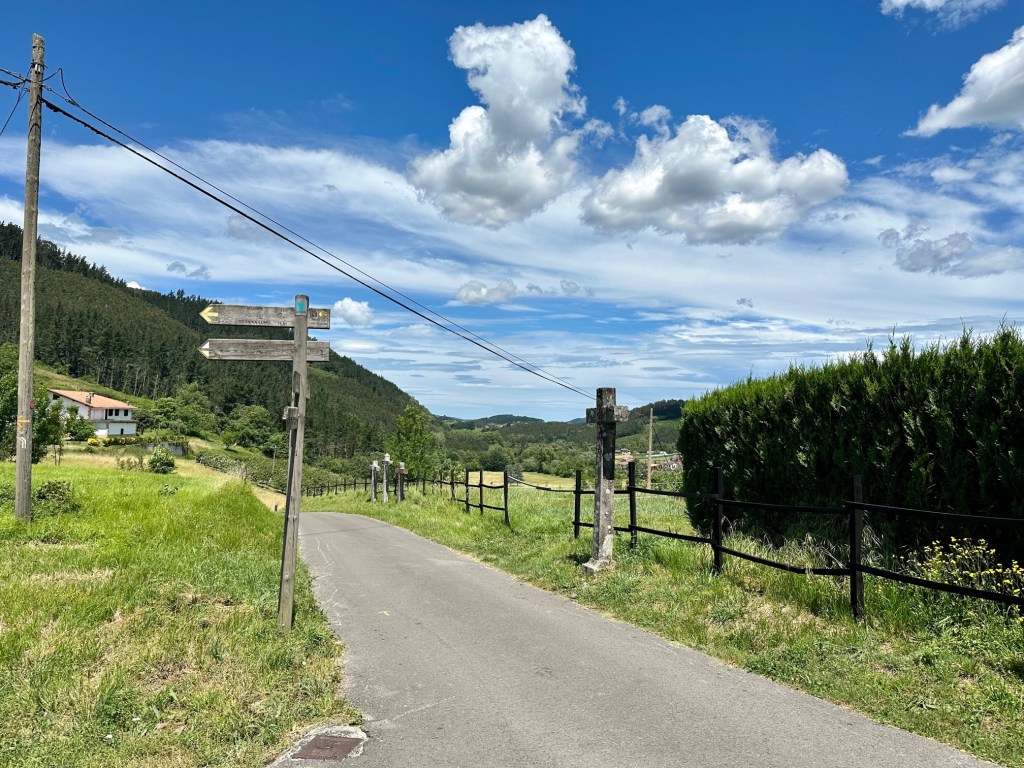
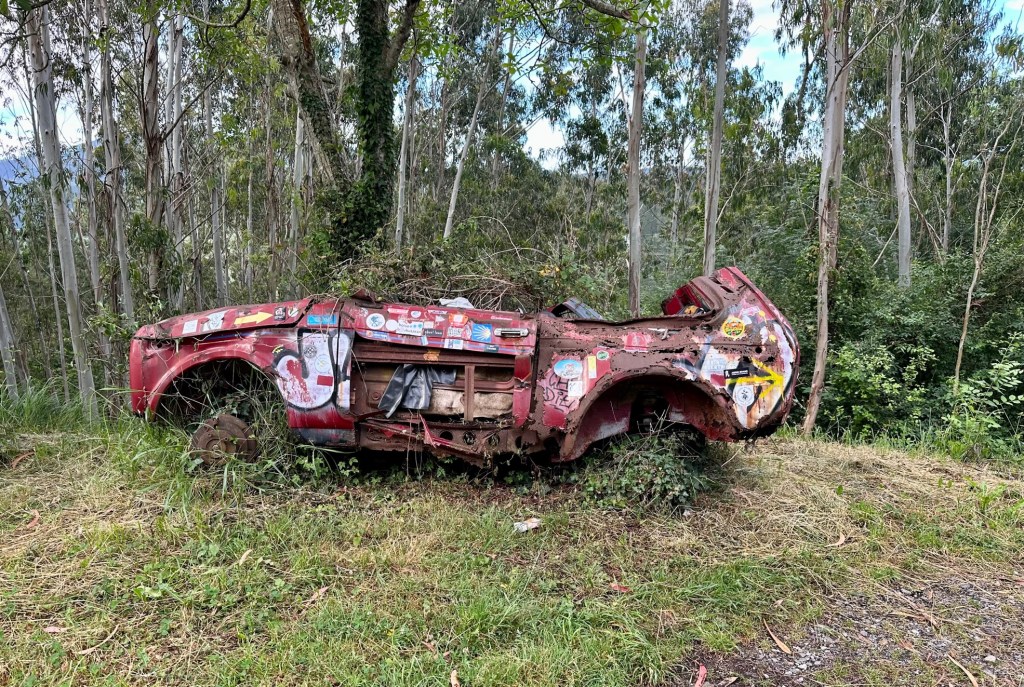
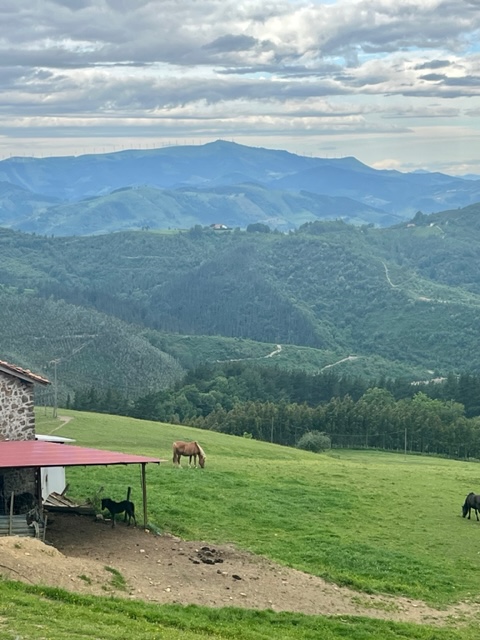
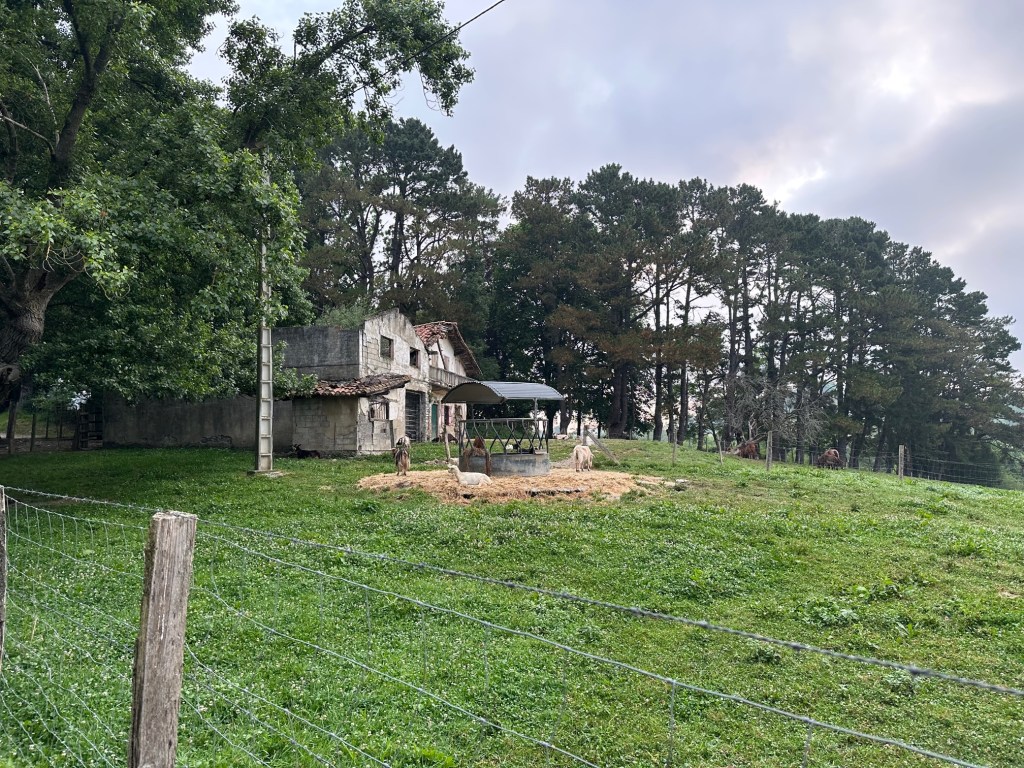
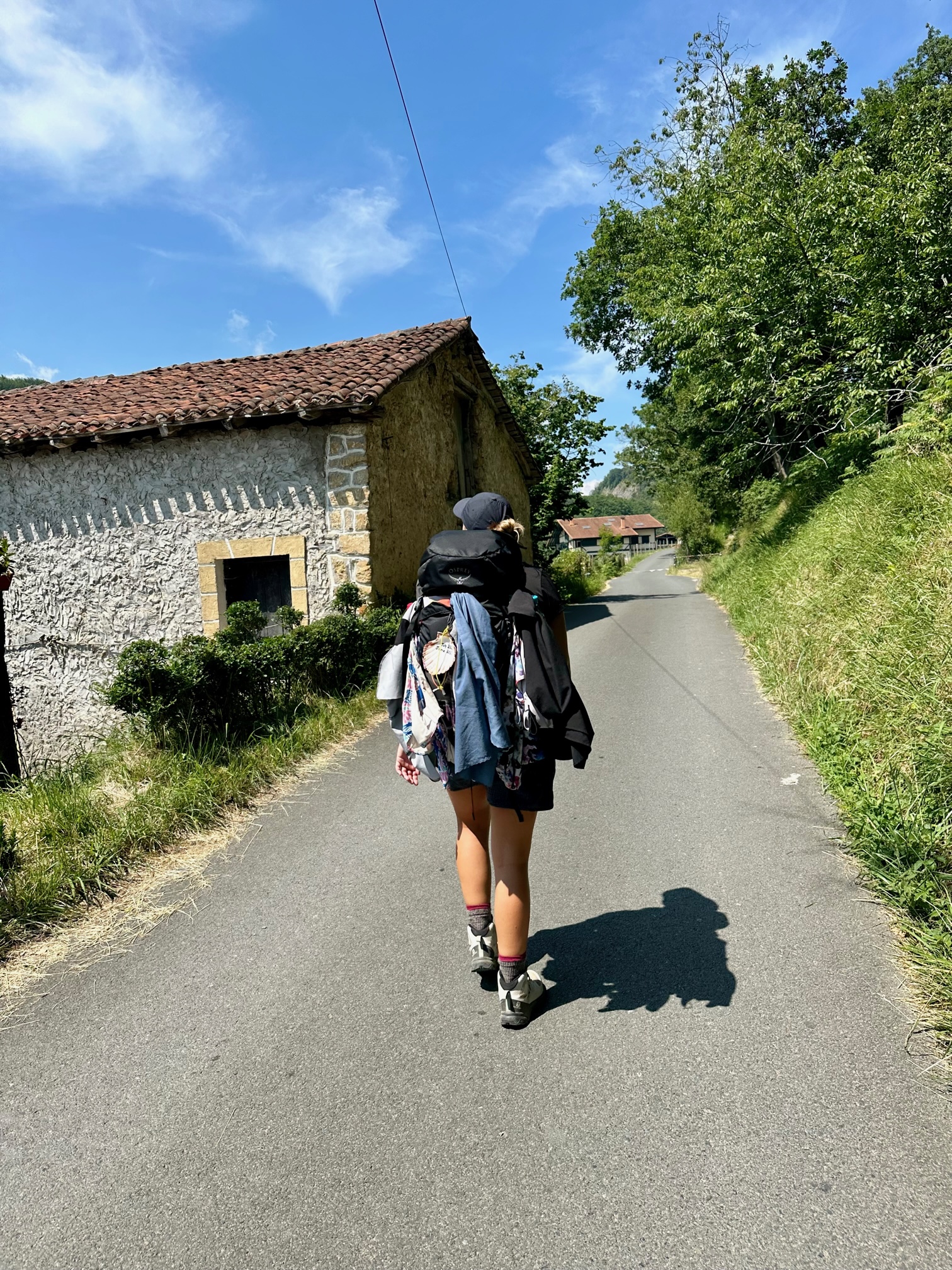
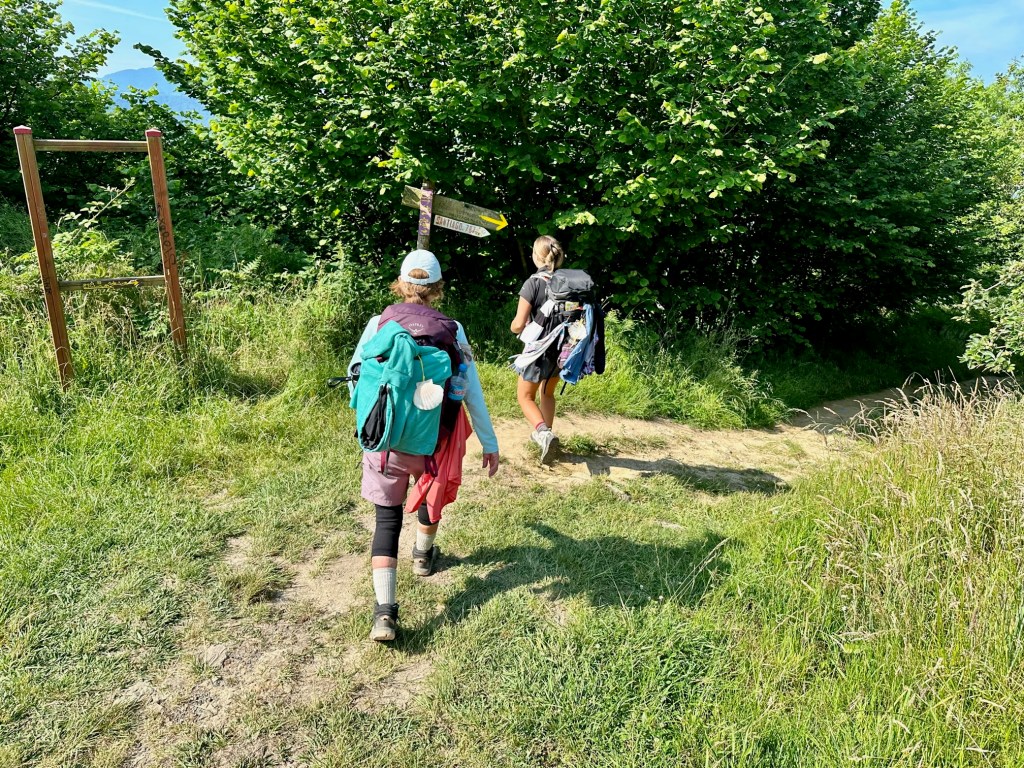
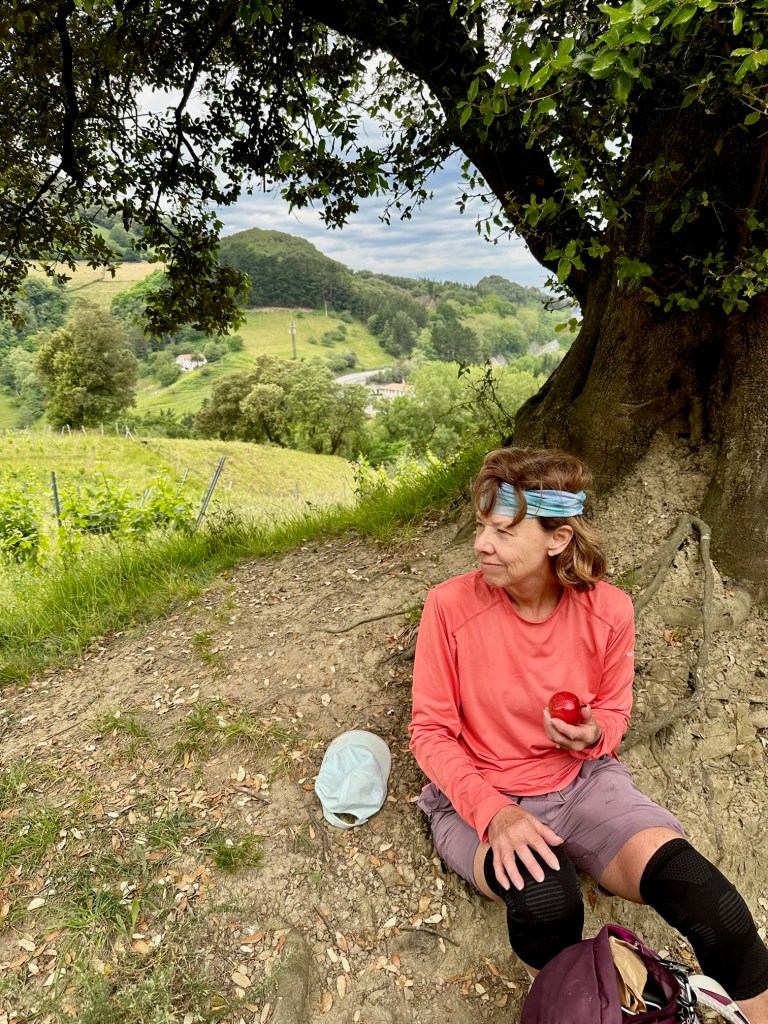
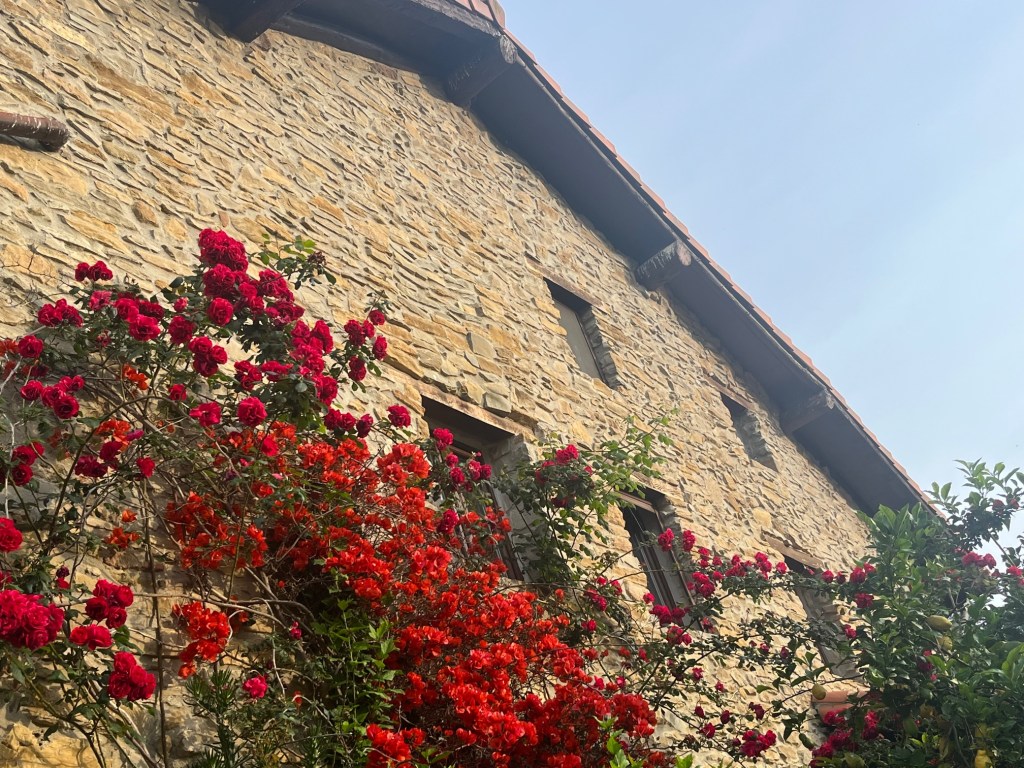
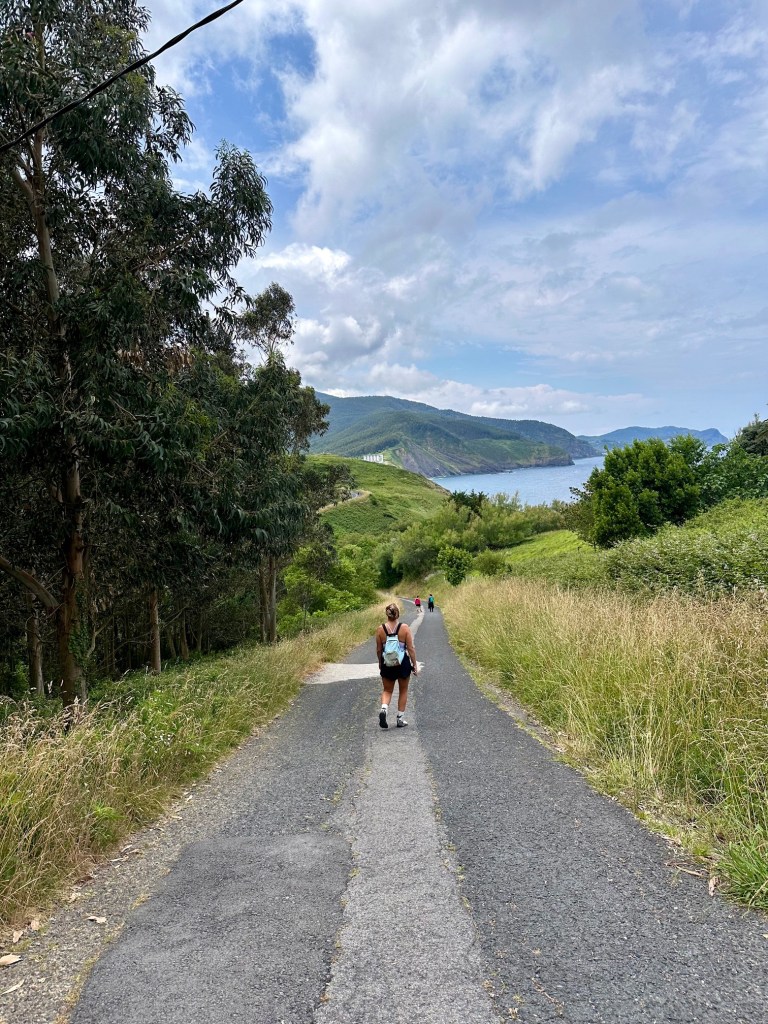
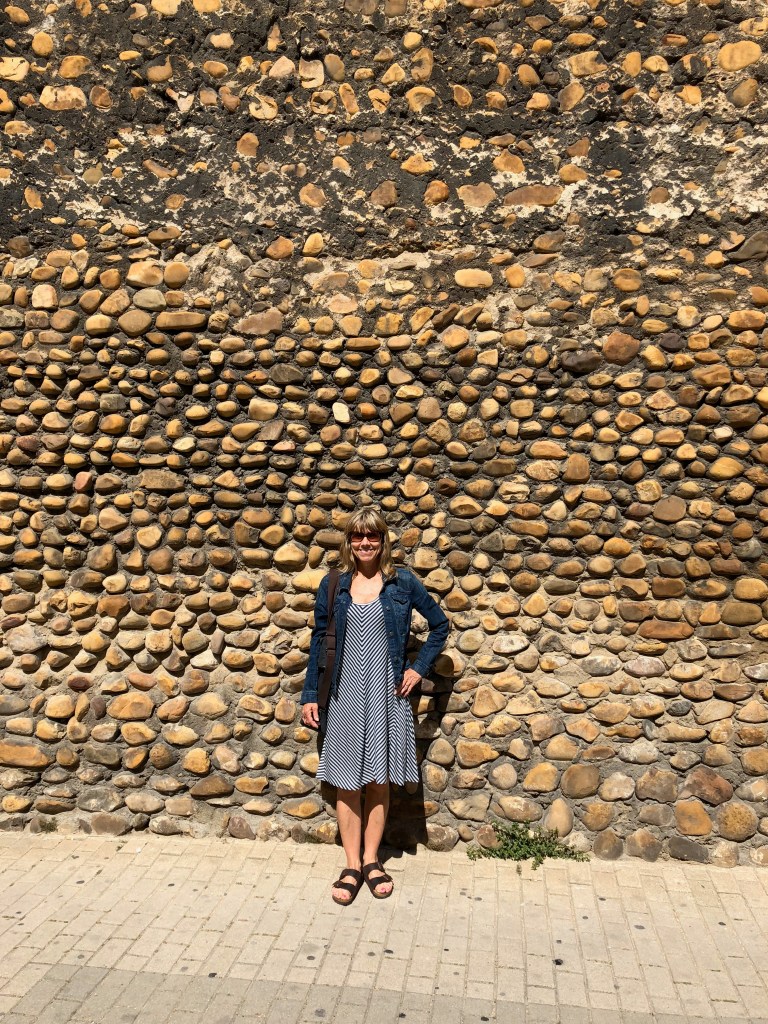
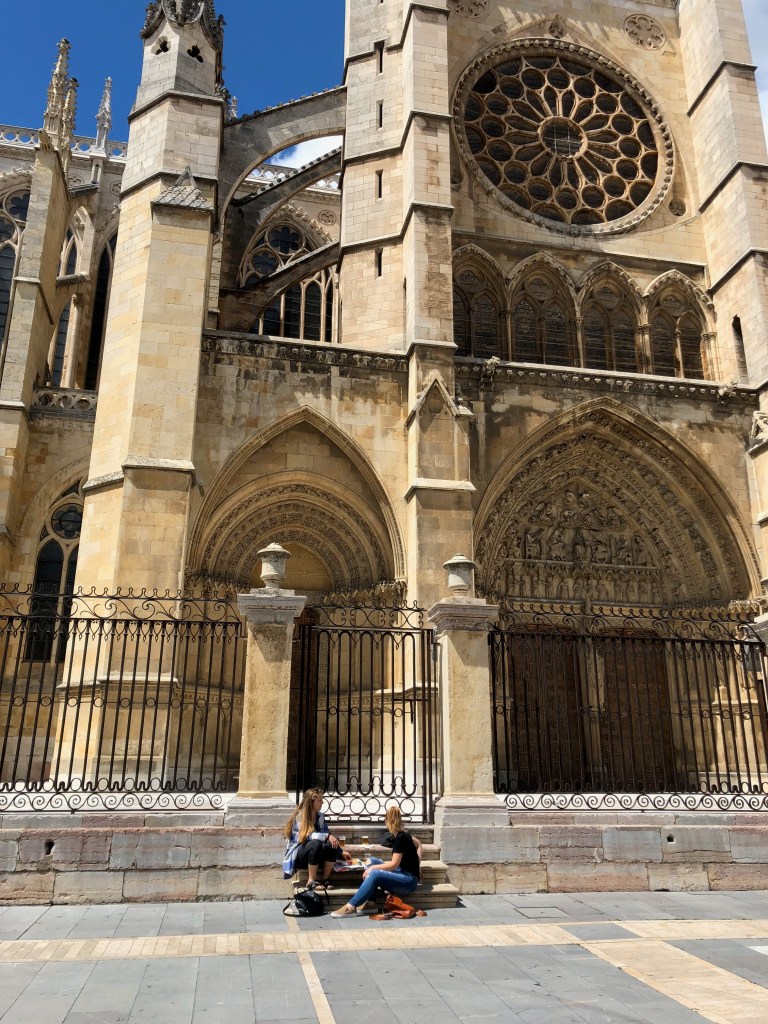
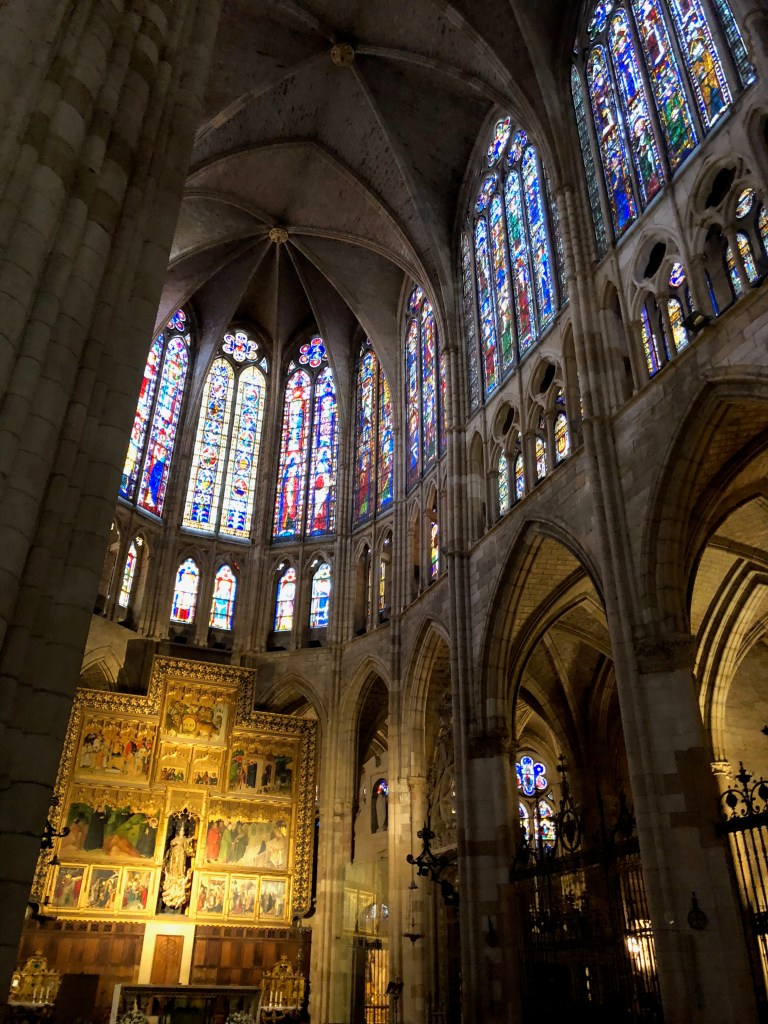
I walked the Ingles Way of the Camino de Santiago trail with my daughter in June of 2024. The Ingles (English) Way is so named from the British pilgrims long ago who arrived by boat to Spain from Northern Europe. The route leads through rural Galicia, taking its pilgrims along winding roads and pathways to see farms; smiling people happy to say “Buen Camino” (or, in our case a time or two, “You’re going the wrong way!); farm animals and friendly dogs; pretty red-roofed homes made of rock; ancient churches; lots of flowers, both wild and carefully curated at the pretty homes; past ancient rock walls, stretches of ocean, and through Eucalyptus forests…care to come along?
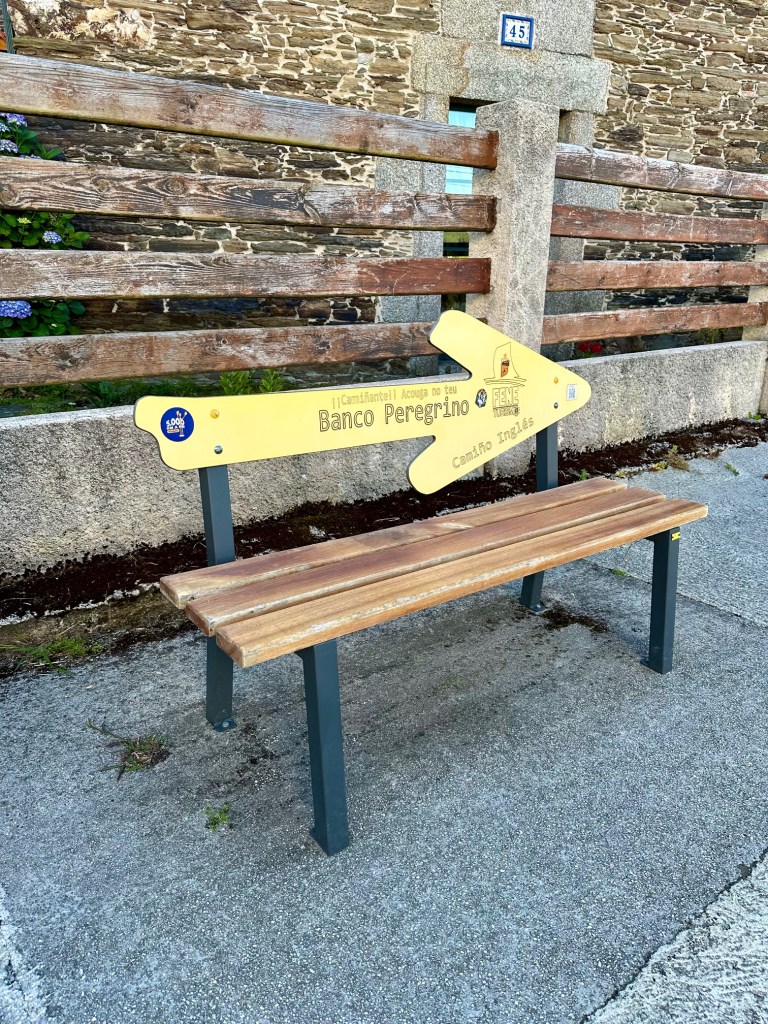
Day 1: Ferrol to Neda 9.3 mi.

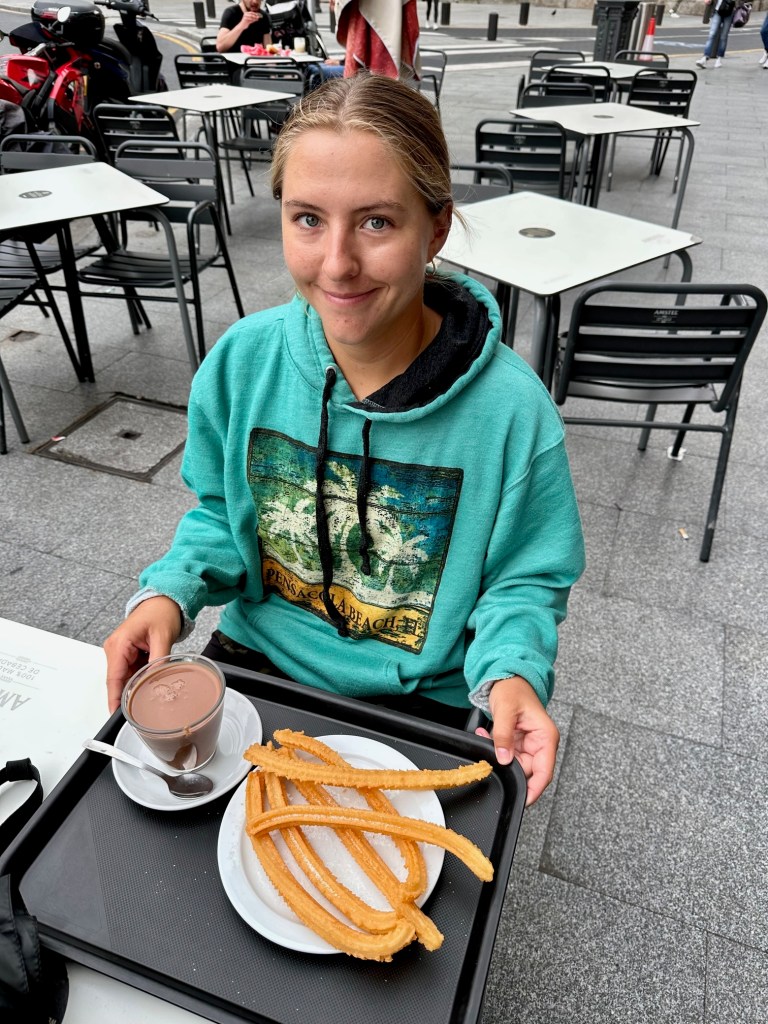
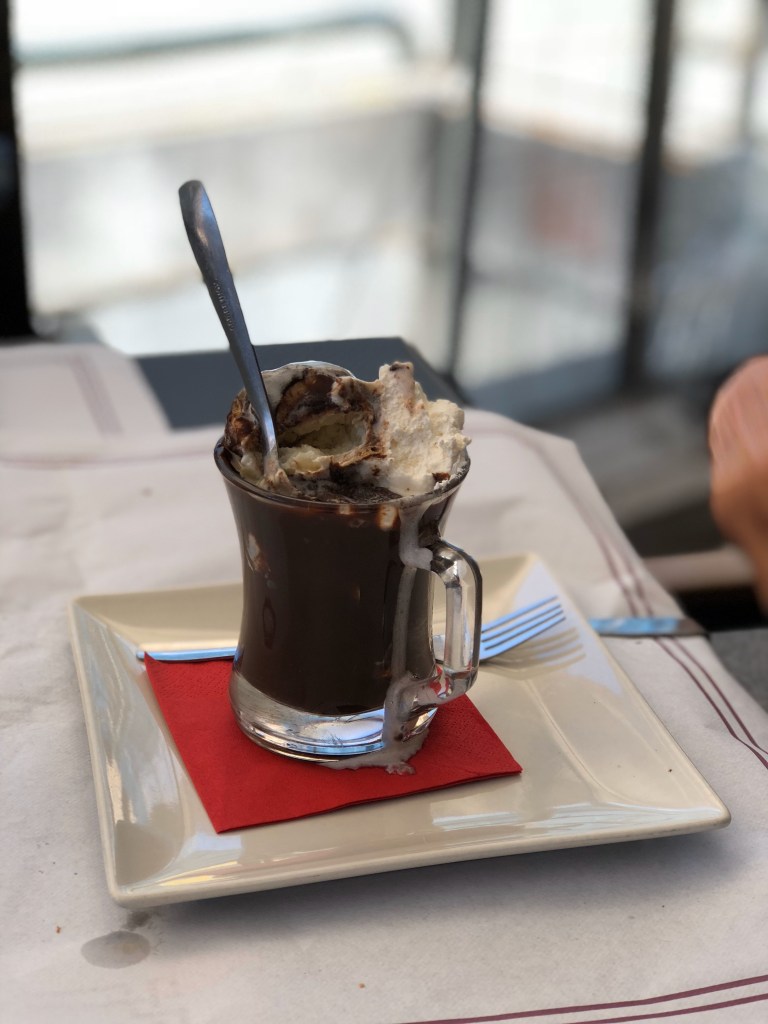
At Neda, we ate a wonderful pizza with Galician cheese, blue cheese, and smoked cheese—delicious!—along with homemade fries with aioli sauce, also very, very good. The fries in Galicia, I’ve found, are homemade, hot and crunchy on the outside and perfectly soft inside. The best part of the meal, though, was the Spanish hot chocolate I had afterward in a small cafe. Spanish hot chocolate is thick, served with a spoon, and tastes like my Aunt Nancy’s cocoa fudge. It’s like no other dessert I’ve found!
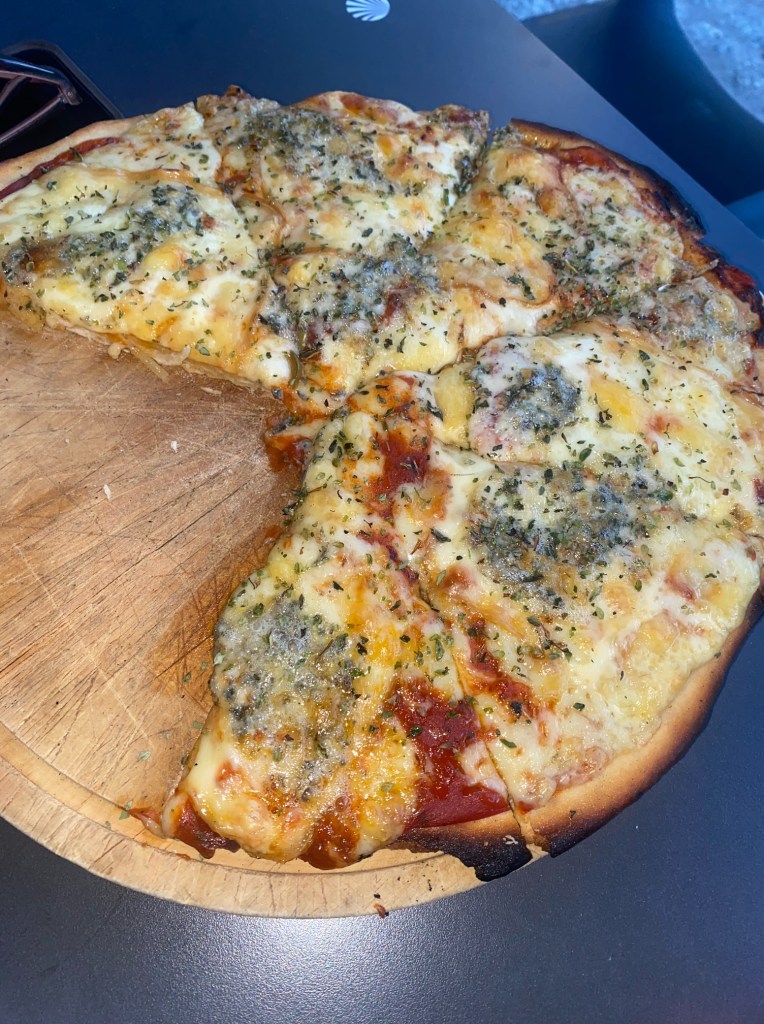
Galician cheeses are cheese made from cow’s milk. 38% of Spain’s cow’s milk is produced in Galicia. This three-cheese pizza was amazingly delicious!
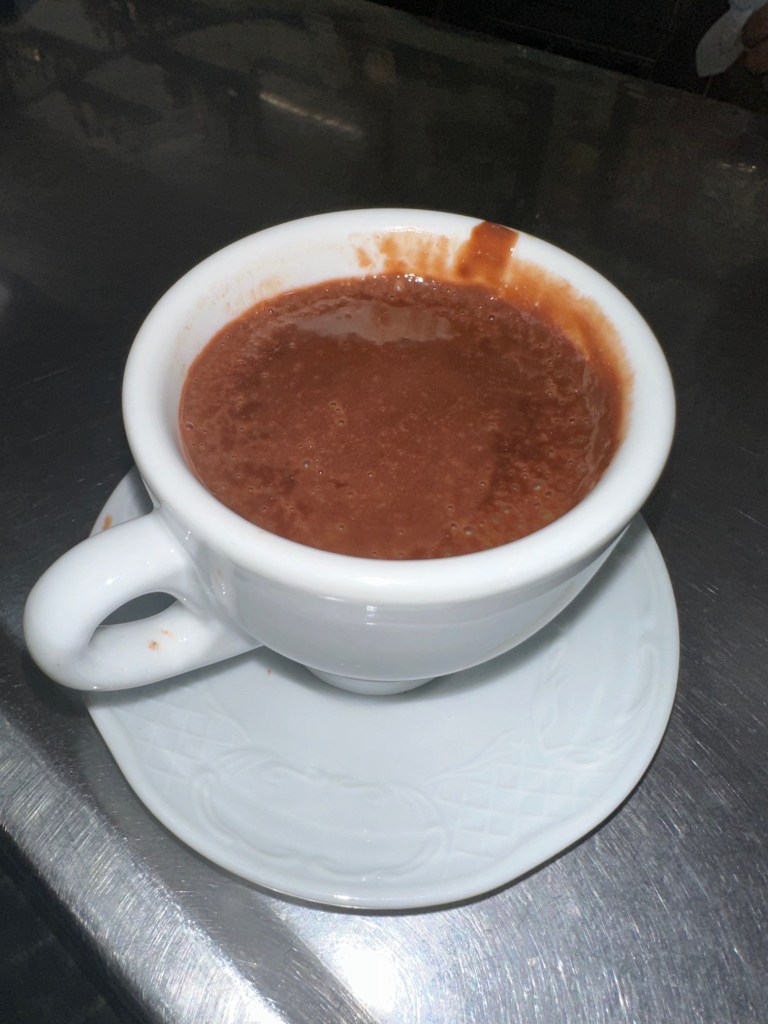
Spanish hot chocolate is a treat like no other!

Day 2: Neda to Mino 13.1 mi.

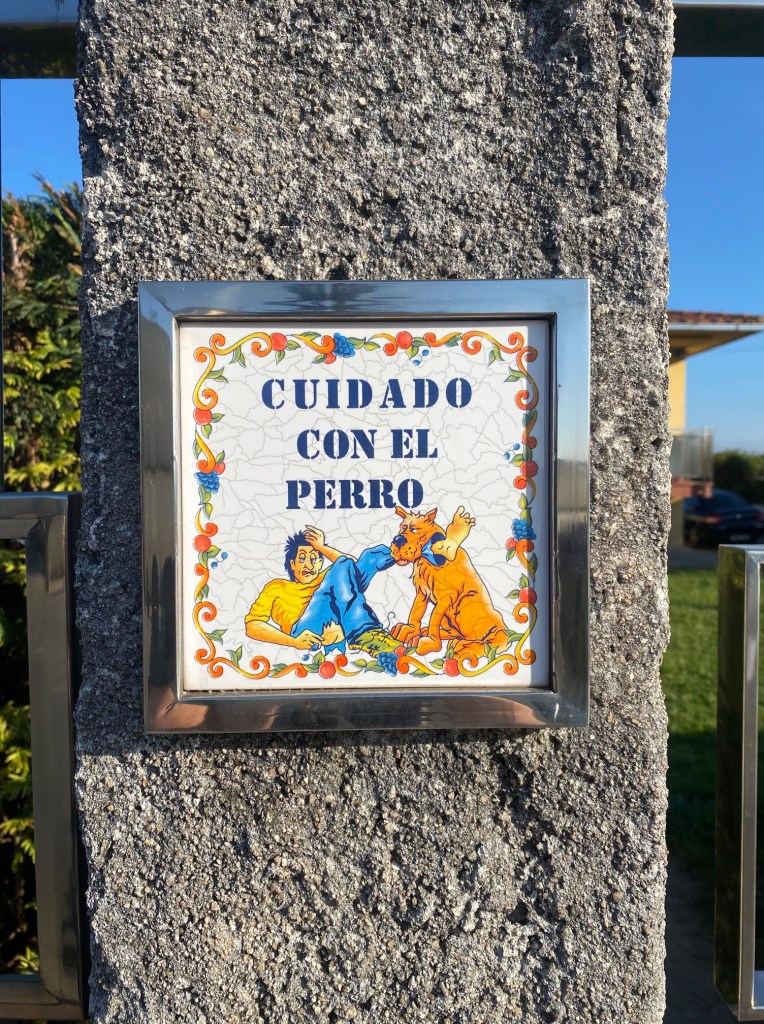
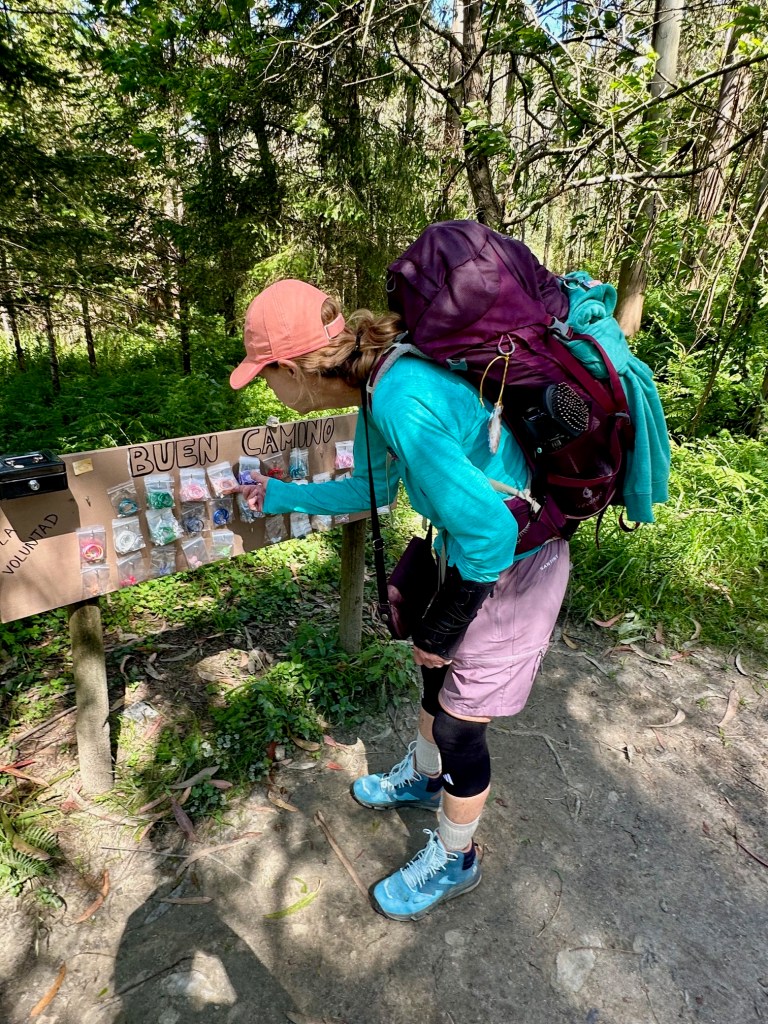
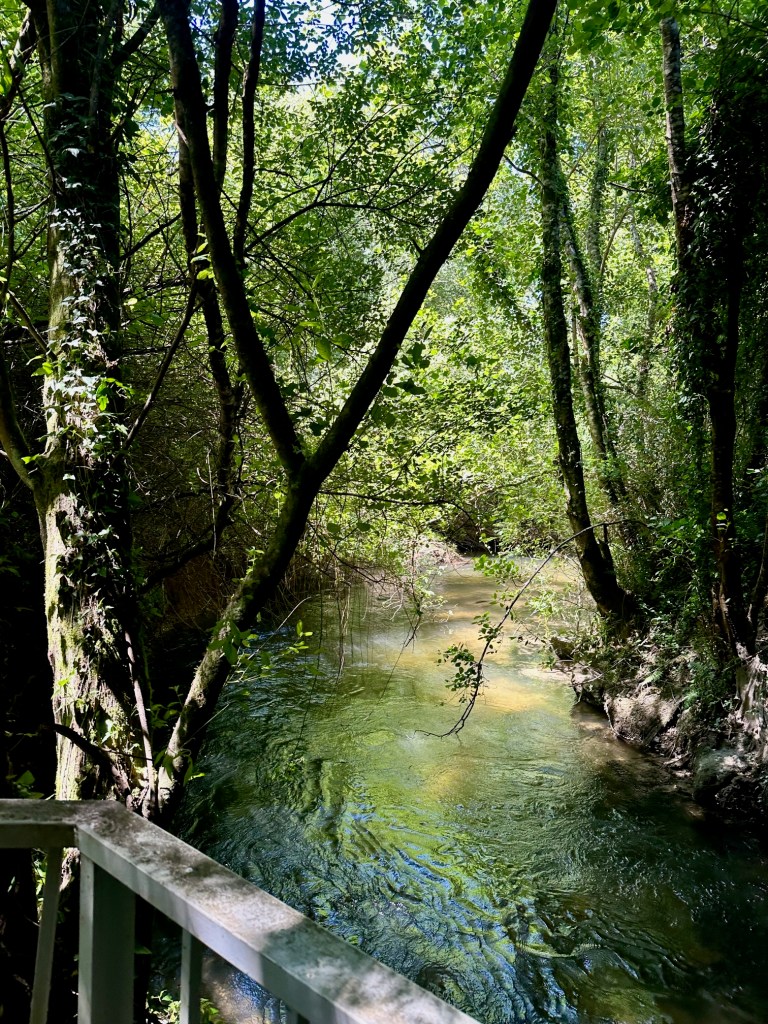
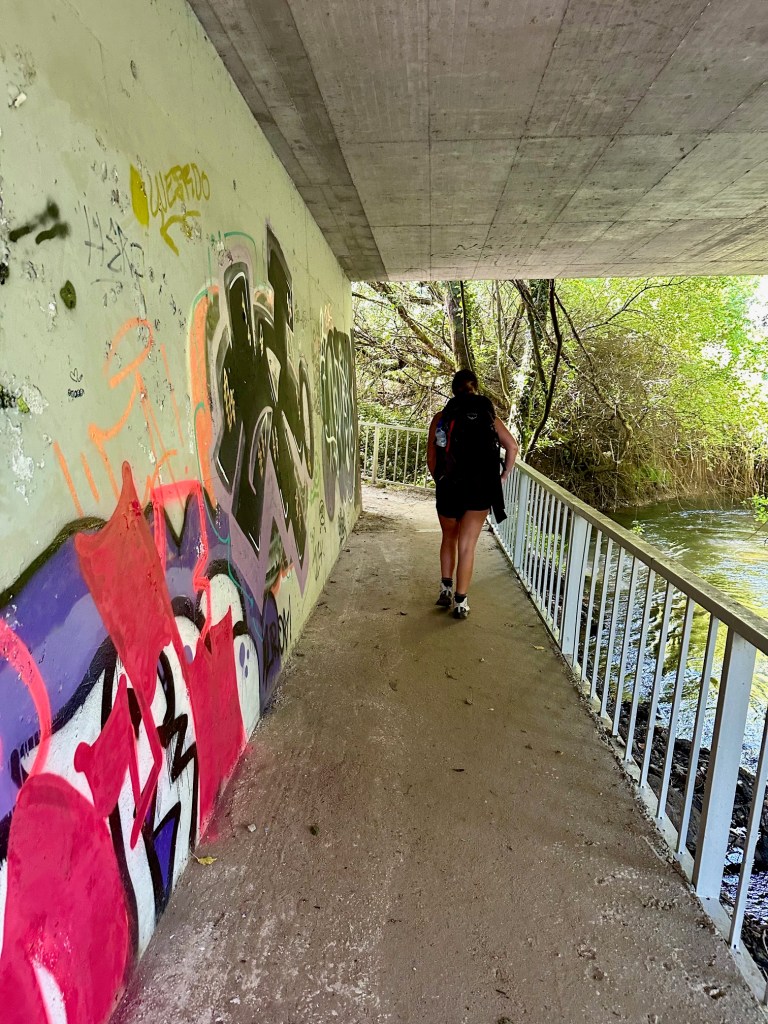
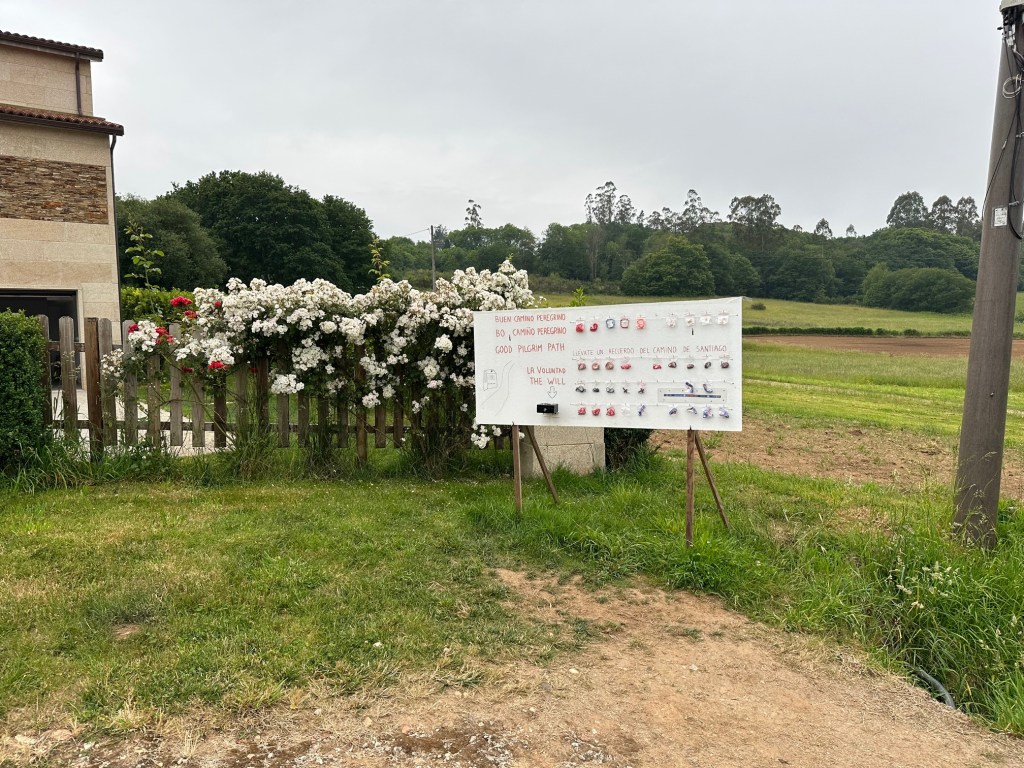
The sounds of the Camino today included bagpipes and church bells. Sights that awaited us were lots of “snowball” flowers and hydrangeas; “Be cautious of Dog” signs at almost every house, although the dogs we met were tail-wagging and smiling ones; fruit, juice, and souvenir stops, all Donativo (how nice!); farmland; woodlands with babbling brooks; ocean stretches; some stretches of highway and underpasses with graffiti; and steep, steep inclines, which I welcomed, as I had wrongly believed that the Inglis route would be quite easy—I enjoyed the challenges of this, as well as some other unexpectedly long and difficult days of climbing, on the Ingles Way!
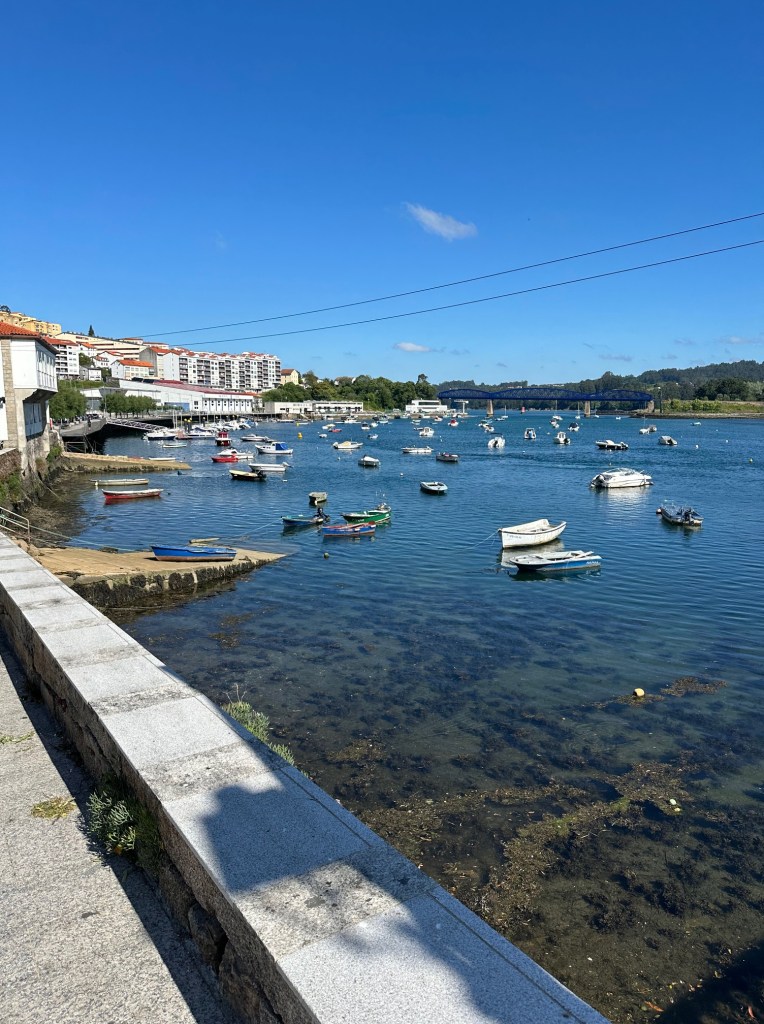
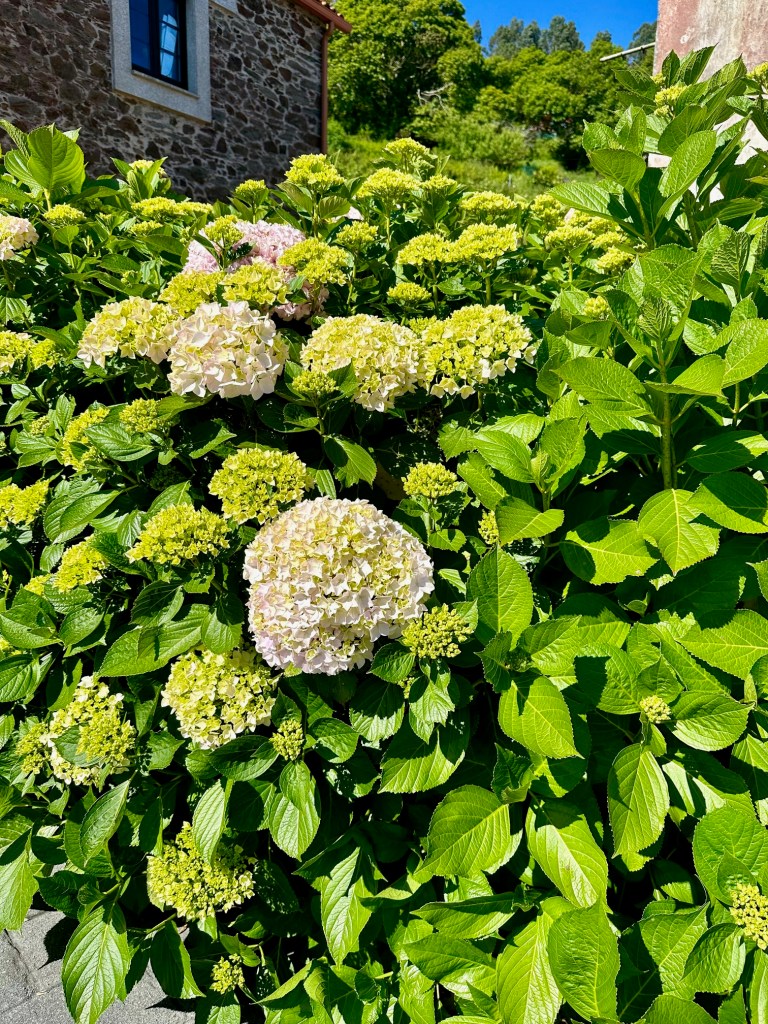
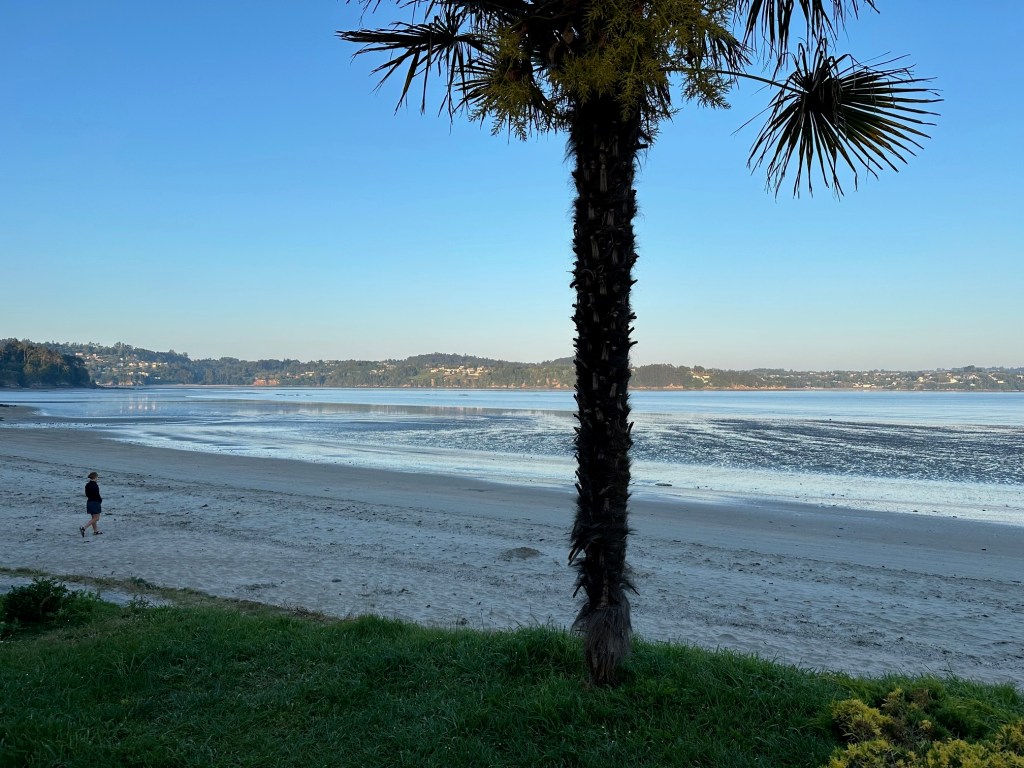
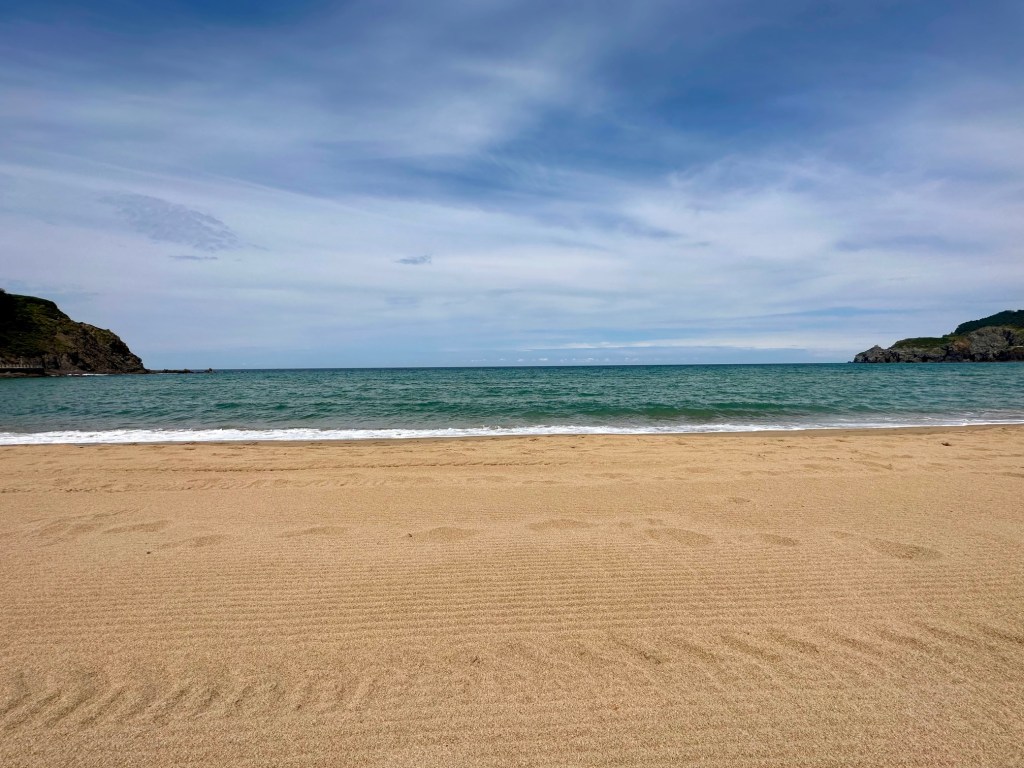
Our reward for a day of 4 out of 5 on the difficulty scale according to Stingy Nomads? The beautiful beaches of Mino!
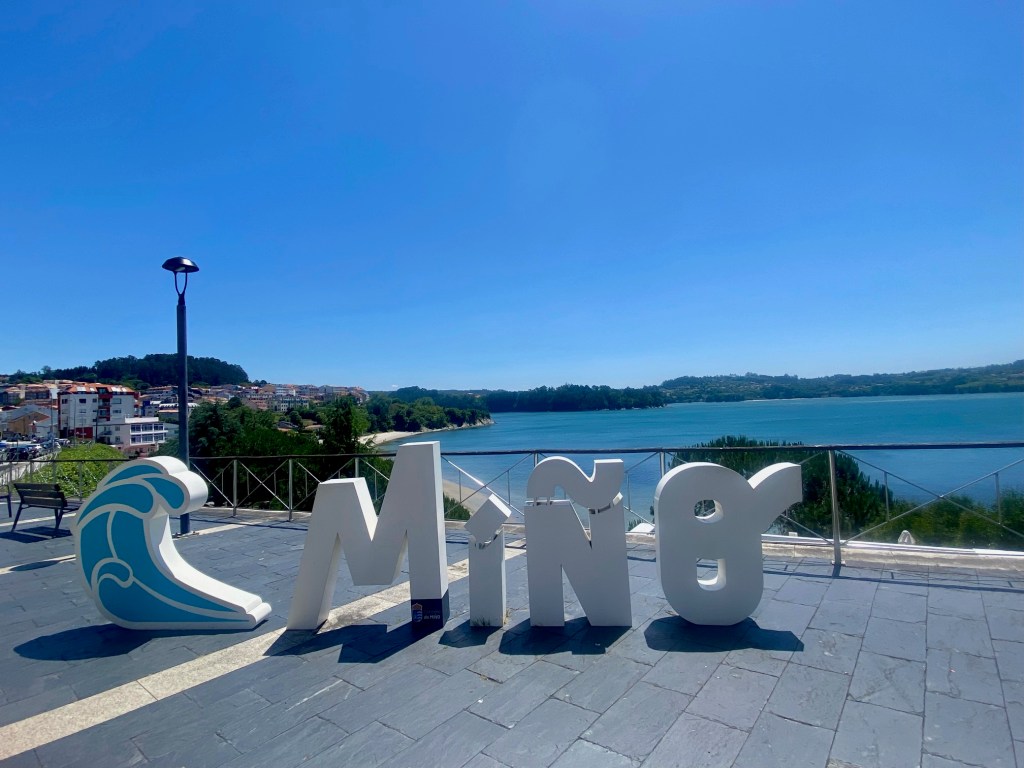
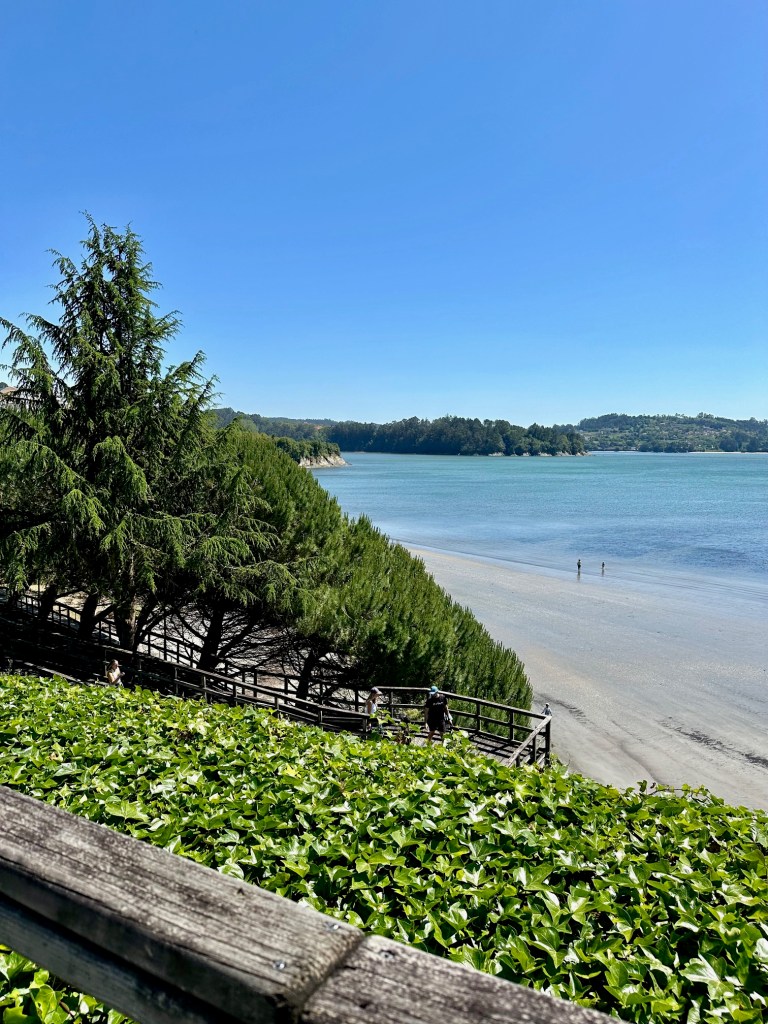
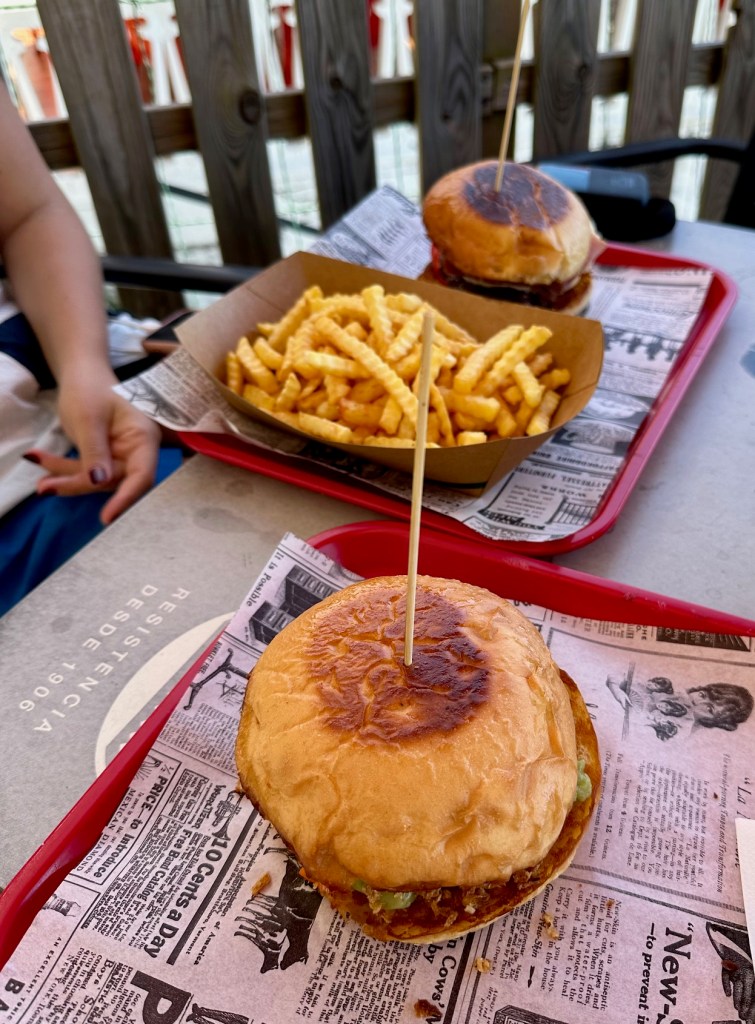
Lunch was huge hamburgers at a cafe overlooking the beach. Galician beef is unique and very, very good. Galician beef comes from retired dairy cows that live out a long life grazing in lush green Spanish pastures. This leads to exceptional taste and a deep red color of the beef, while also, it would seem, giving the cows a happy long life and contributing to a no-waste society!
Day 3: Mino to Presedo 14.2 mi.

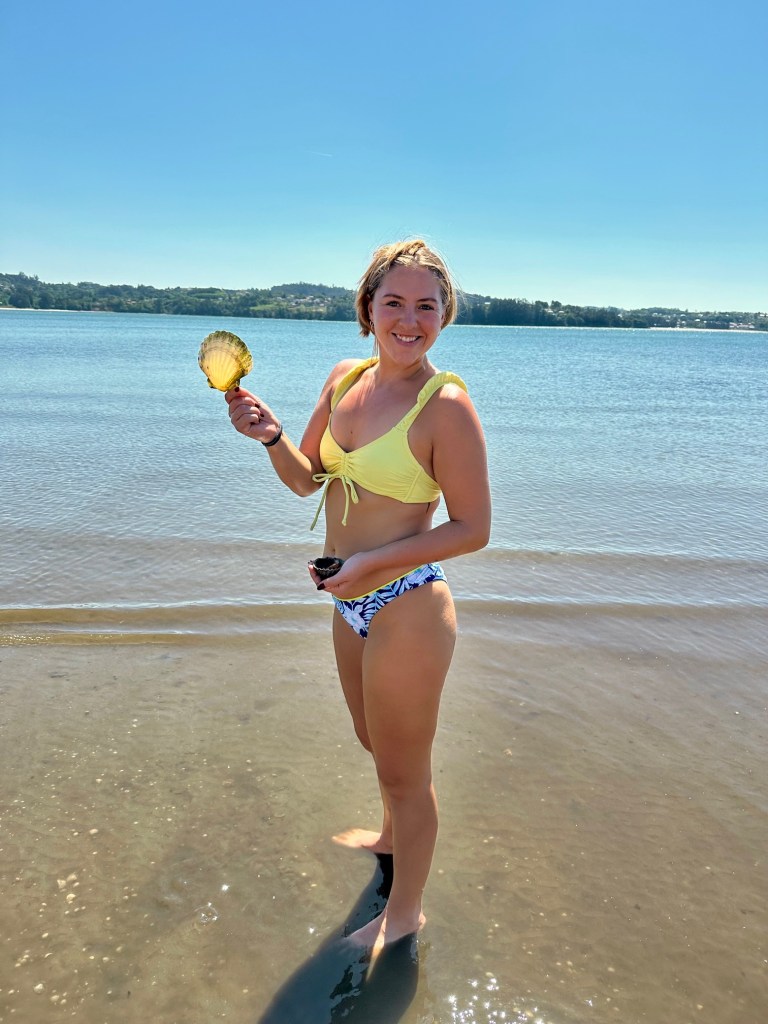
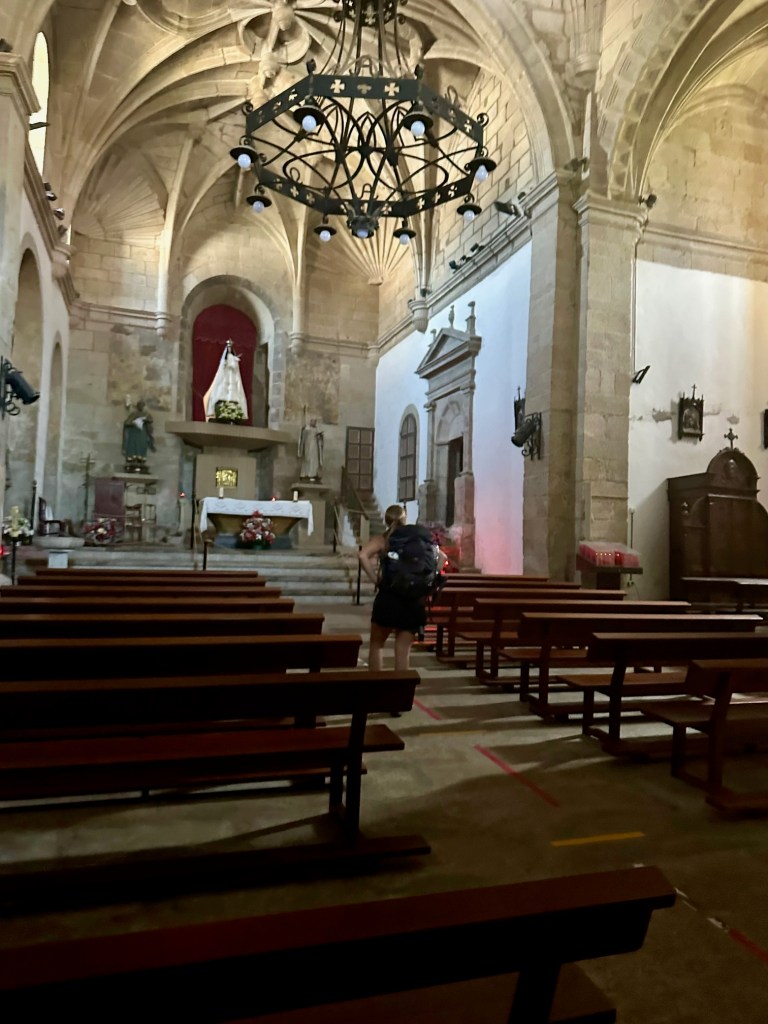
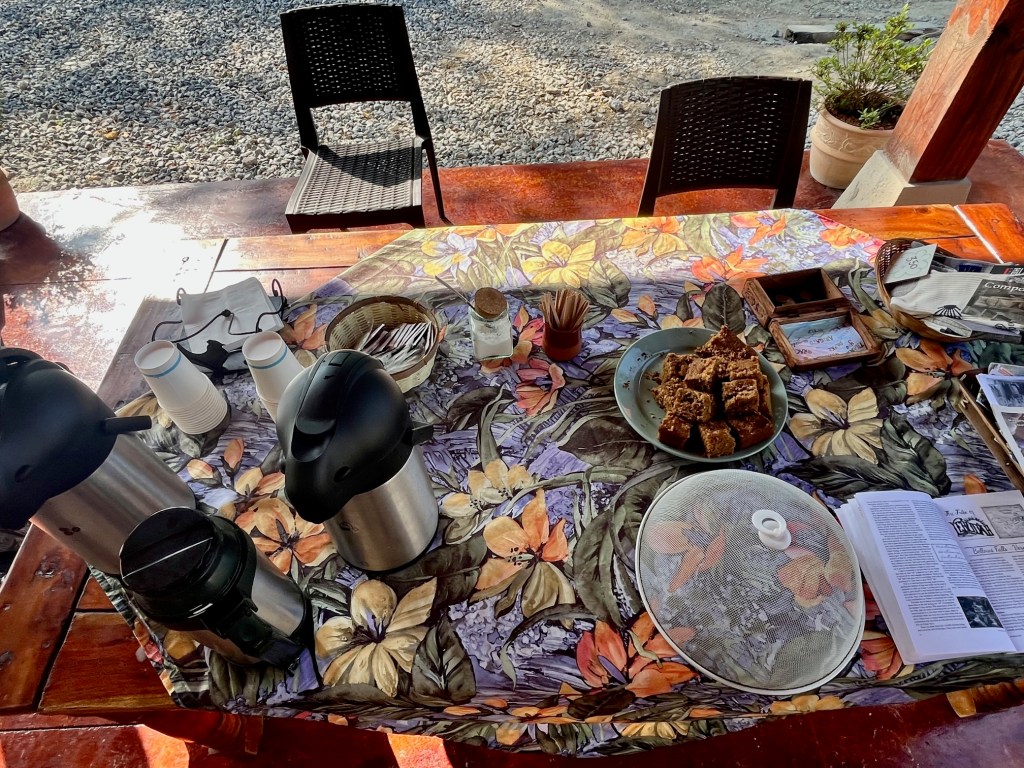
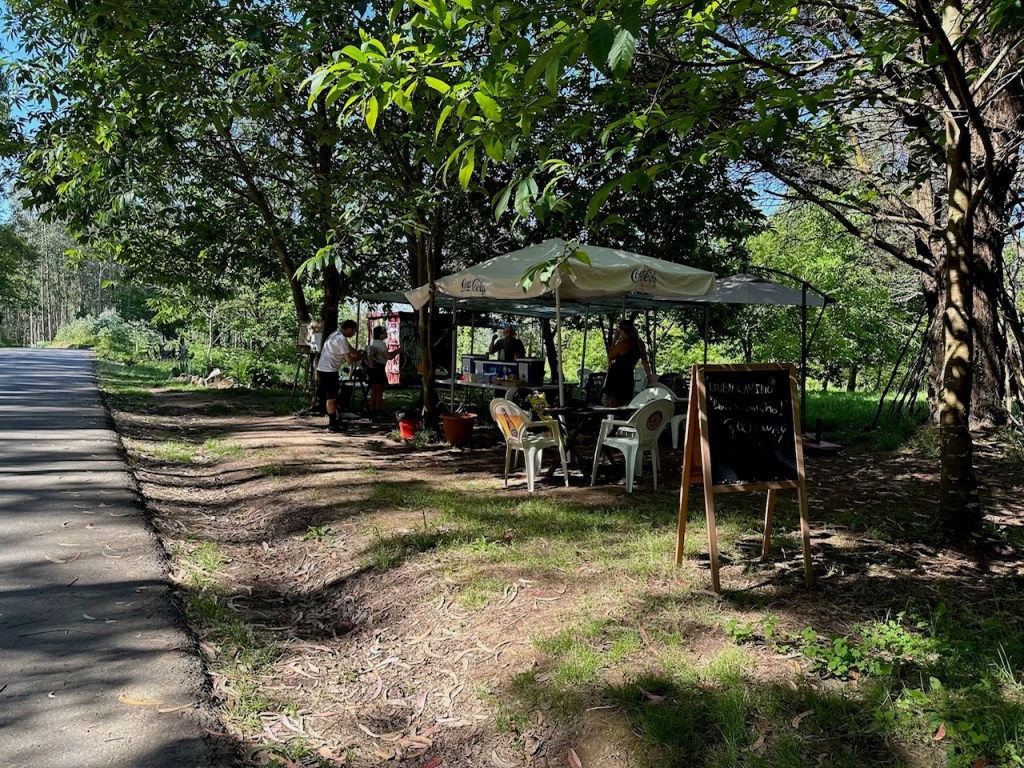
After an early morning trip to the beach to collect seashells, and coffee at a cafe, we headed out to begin our day’s hike. Walking through rural Galicia continues to be an interesting and fun experience. The day was challenging, scorching hot in the afternoon with many steep ascents. We stopped at stands along the way for, at one stand, coffee, muffins, and chocolate milk; and at others to peruse the homemade souvenirs—all donativo. We went inside an old church with many candles lit, quiet and nice to experience. We passed by cows, goats, and other farm animals. We stopped along the way for a picnic a few hours into the hike.
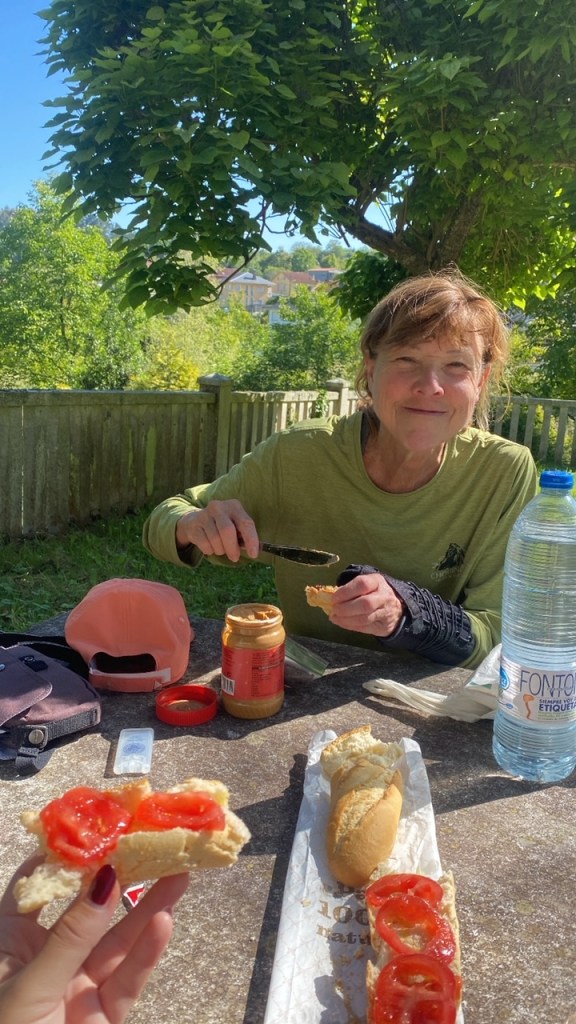
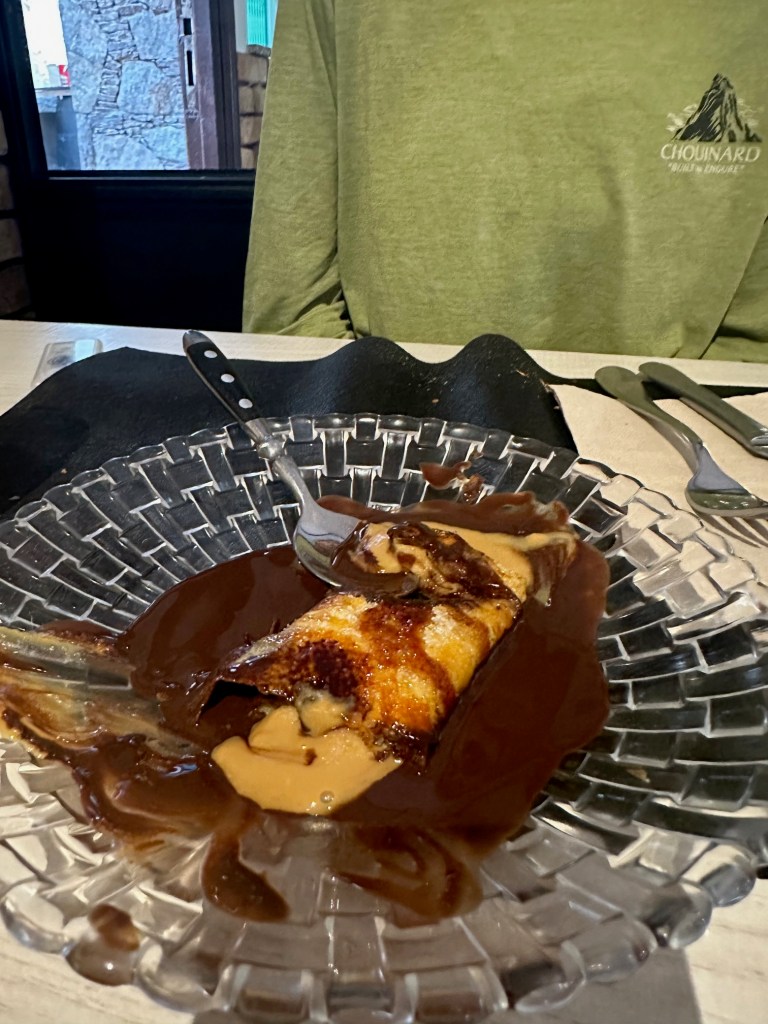
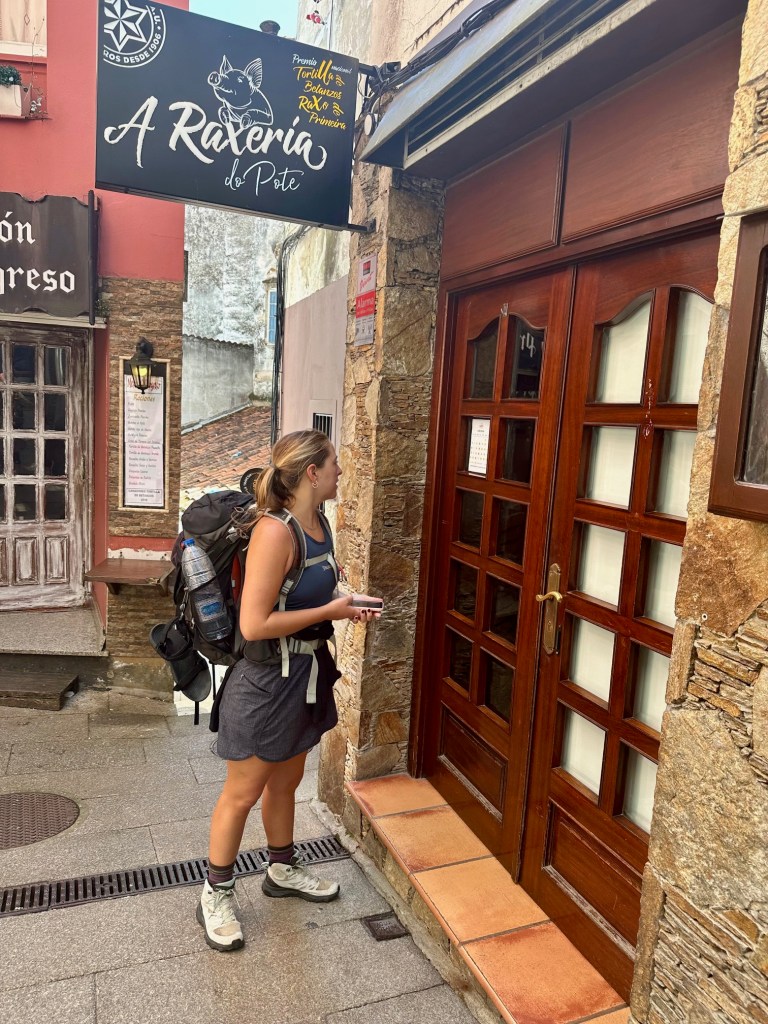
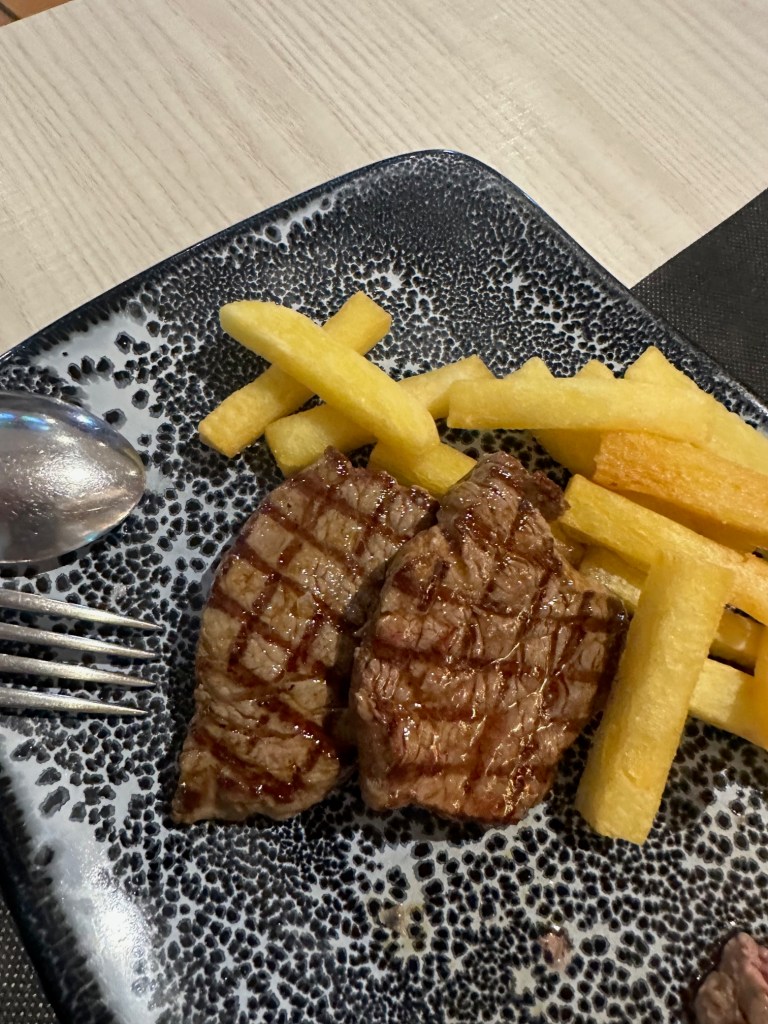
“Plopped” into the middle of rural Galicia (it seemed to me) was the large town of Betanzos, with many restaurants and shops. We went to lunch at the restaurant Meson o Pote that had been recommended to us for the “best tortilla in the world” (a tortilla in Spain being a dish made from eggs, potatoes, and cheese, somewhat like an omelette.) This was not only a person’s opinion; it had actually won several national and local awards for its tortilla! After having tried it, we agreed it was very, very good.(https://packingwithkayley.wordpress.com/2024/06/11/gastronomy-of-galicia/) We enjoyed the renowned Galician steak which comes from long-retired dairy cows, and fries, as well, then a decadent, fun dessert of thin pastry with Spanish chocolate and a creamy sauce inside! That, along with, always, “cafe”, energized me to continue our day’s walk.
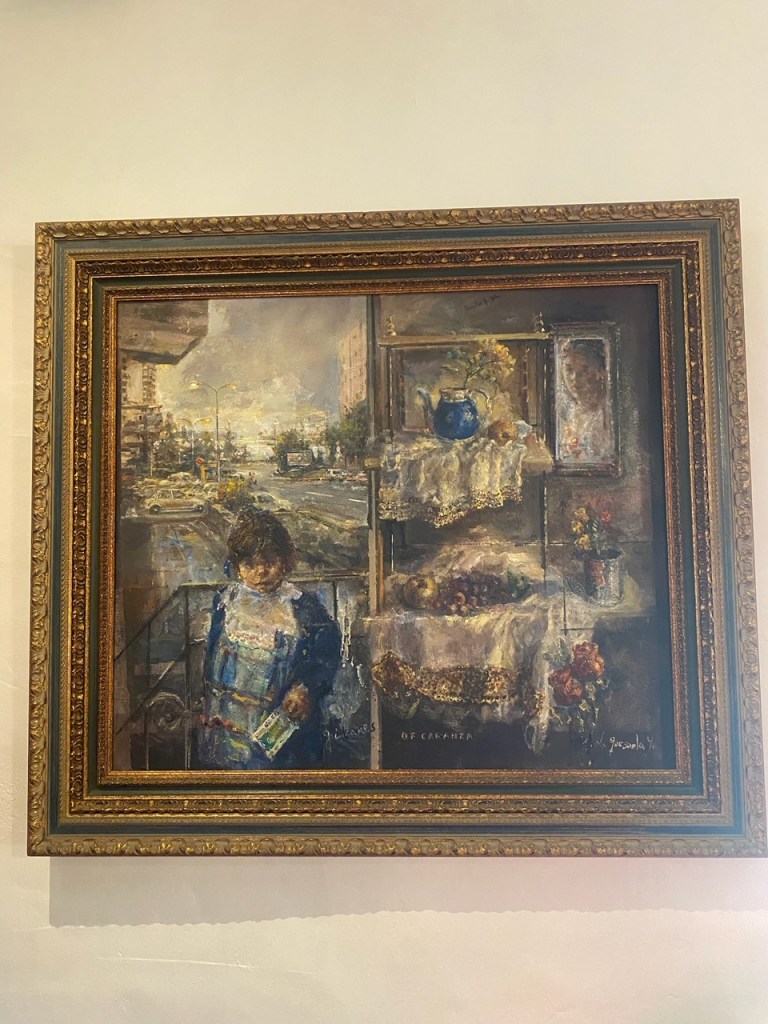
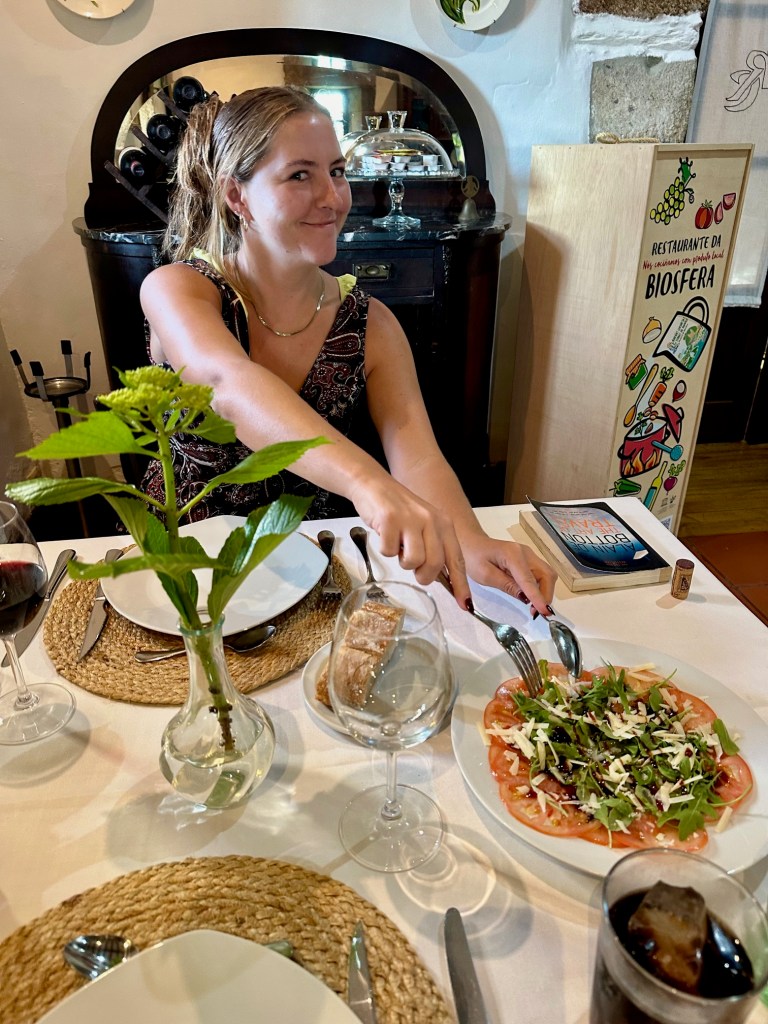
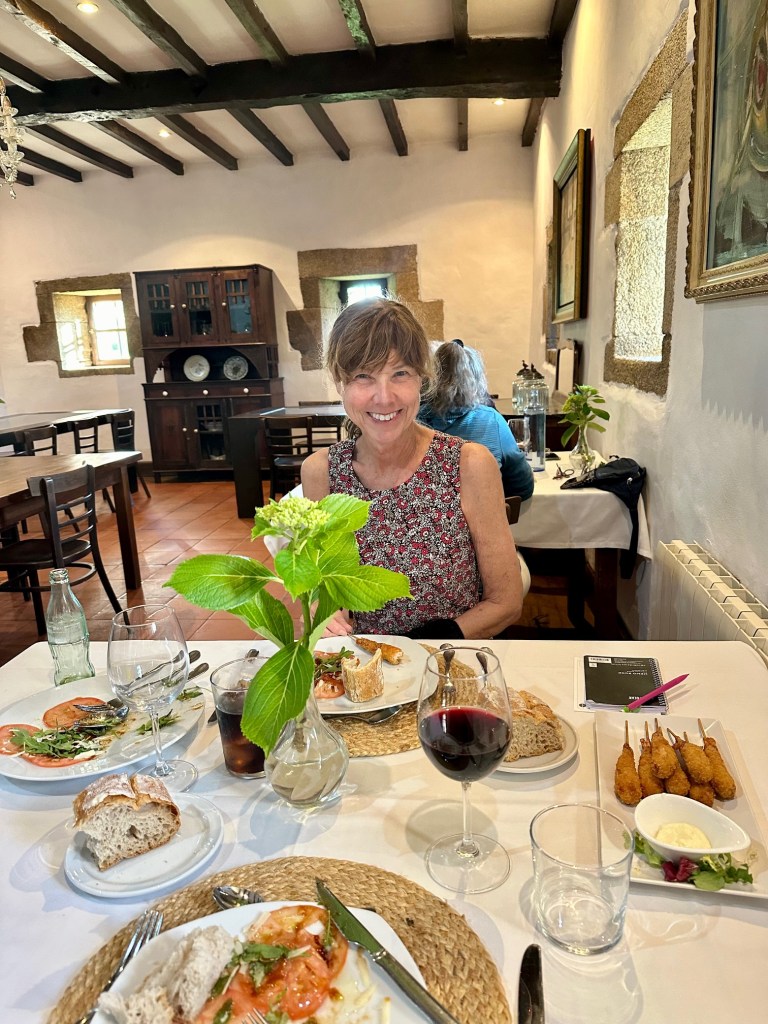
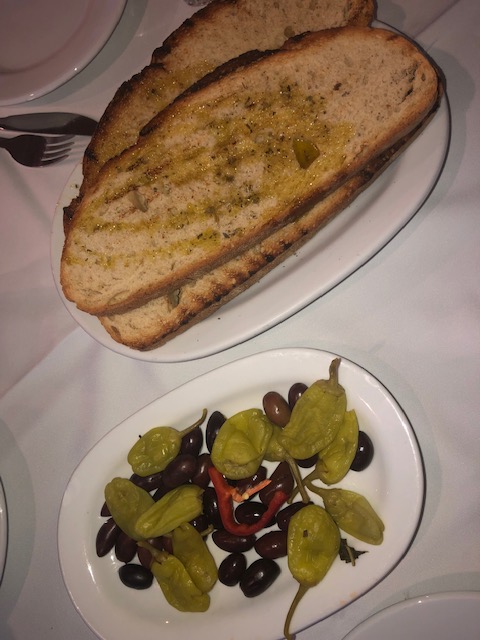
We left the Camino trail toward the end of our long and tiring day to find the old converted monastery at the Rectoral de Cines at Ozo dos Rios where we had reservations for the night. Oh my, my. This place was like a dream come true! We were lavished attention and personal touches at this oh, so beautiful setting inside and out! We were even asked at what time we would prefer our dinner! We enjoyed fine dining in the small restaurant there, after relaxing with a tray of olives, chips, and drinks prepared for us, and wandering around gazing at the “museum” of paintings on the walls, as well as the beautifully landscaped outdoor area. What a wonderful end to a day enjoying the goodness of Galicia!
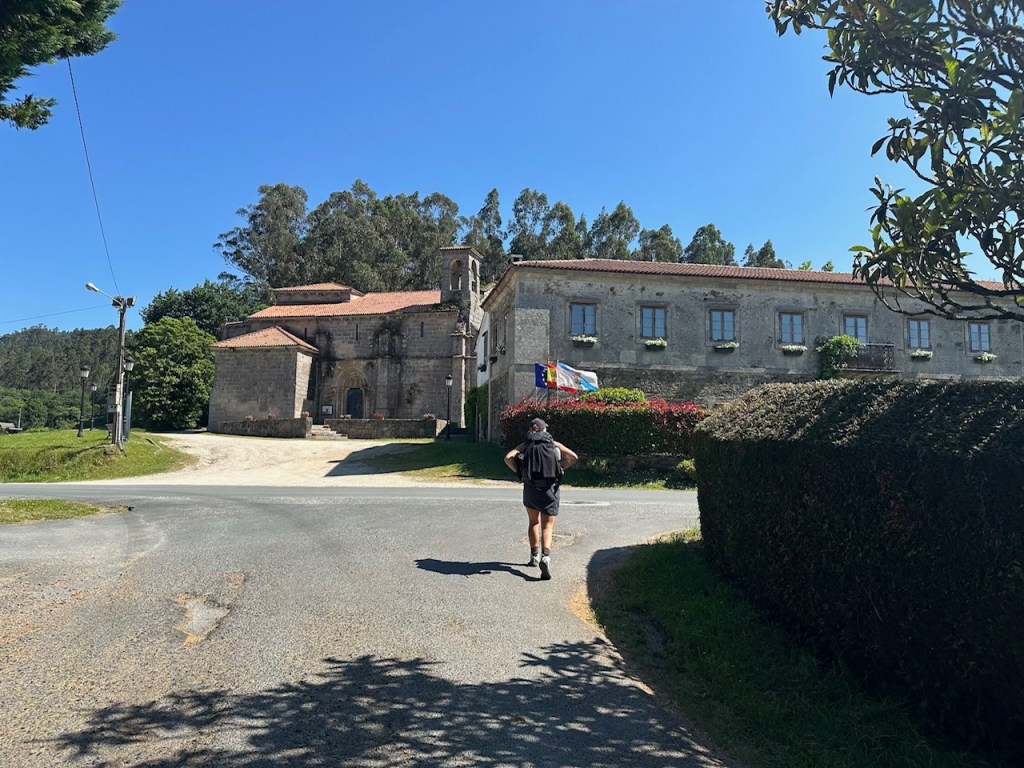
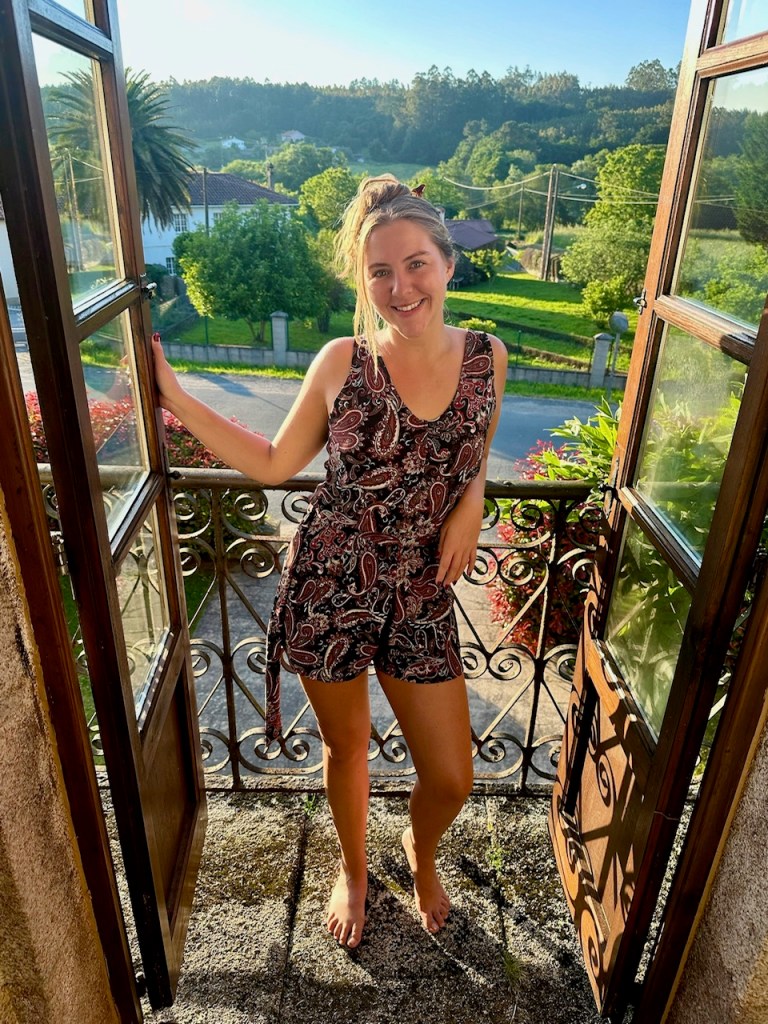
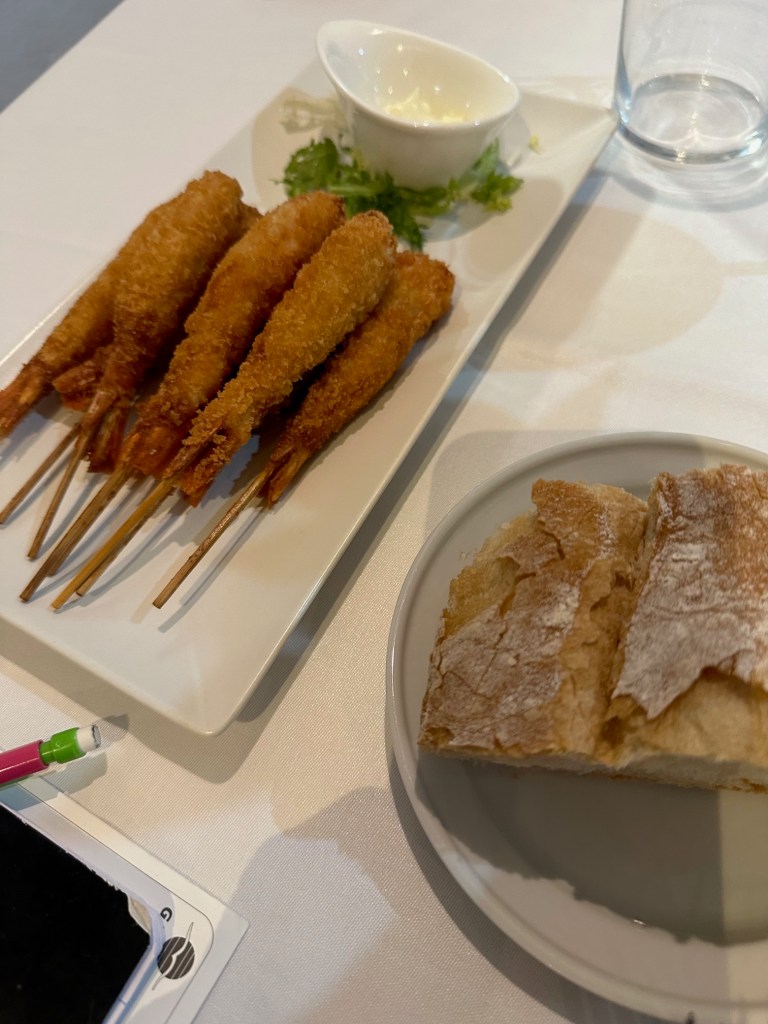
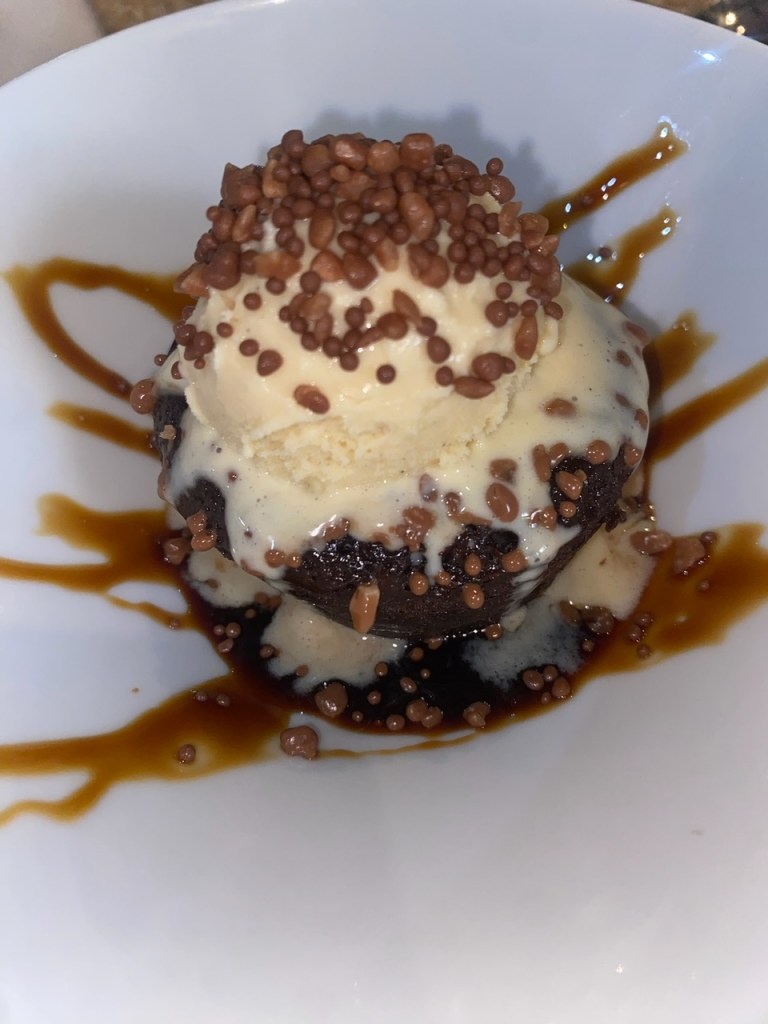
I highly recommend staying here if you have the chance! The restaurant served perfectly prepared foods including “crispy” (a Spanish term to mean fried) prawns on a stick—fun!—and a chocolate dessert with a surprise of pop rocks sprinkled on top! A delightful cold gazpacho was served before the meal, and our every need was taken care of throughout the dining experience, as during our entire stay there.

Day 4: Presedo to A Rua 14.2 mi.

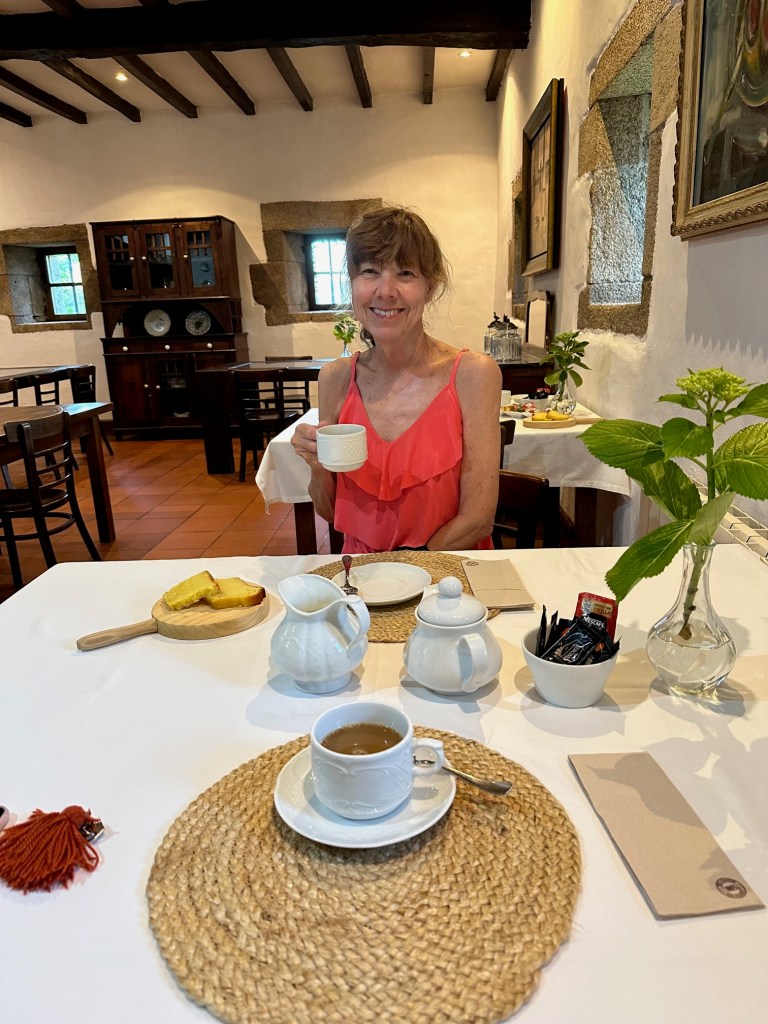
We had coffee in the pretty restaurant at the Rectoral de Cines, served with generous slices of lemon pound cake. After retrieving our neatly folded fresh laundry which had been done for us—did I mention we were treated royally here!—we got a taxi to the start of the next section of the Camino (remember, we had veered off course—and I’m so glad we did—to stay here for the night).
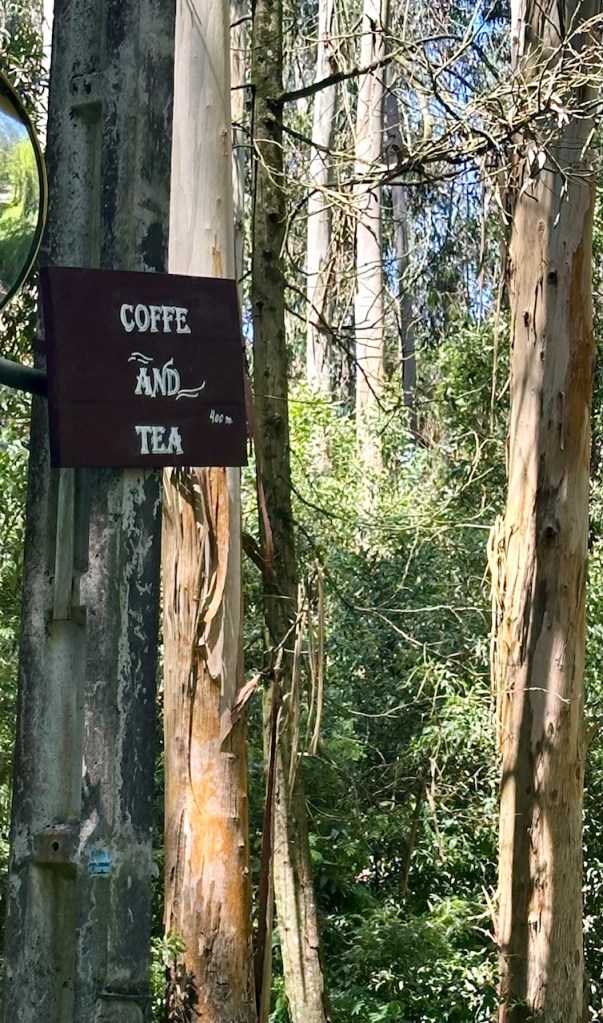
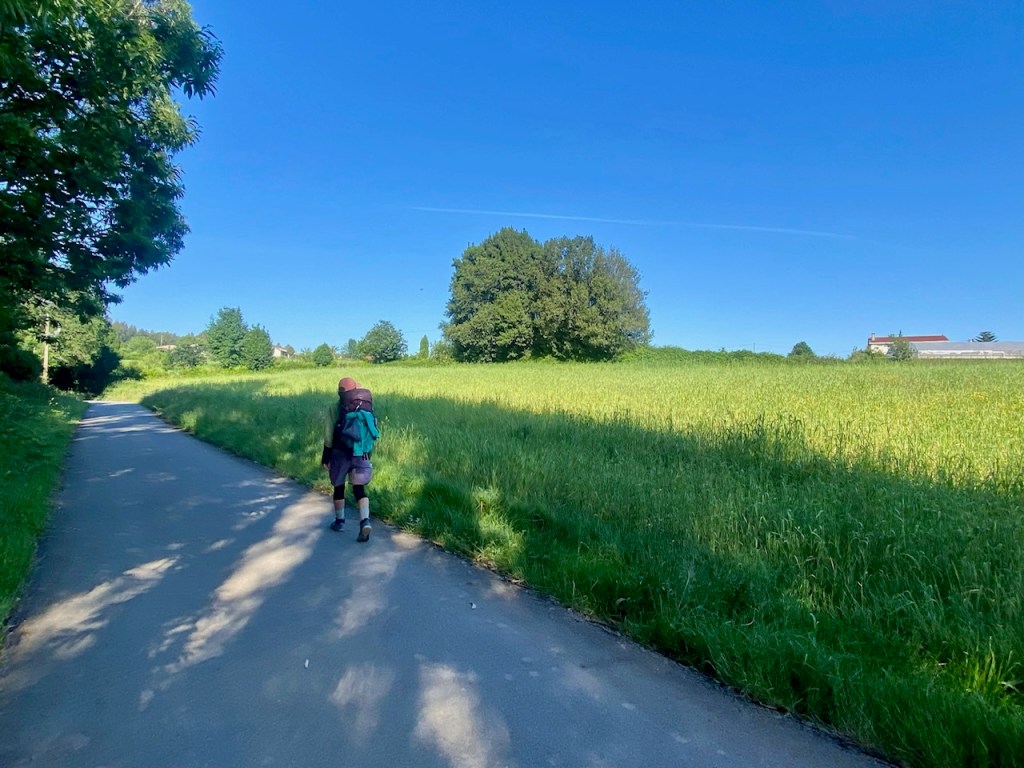
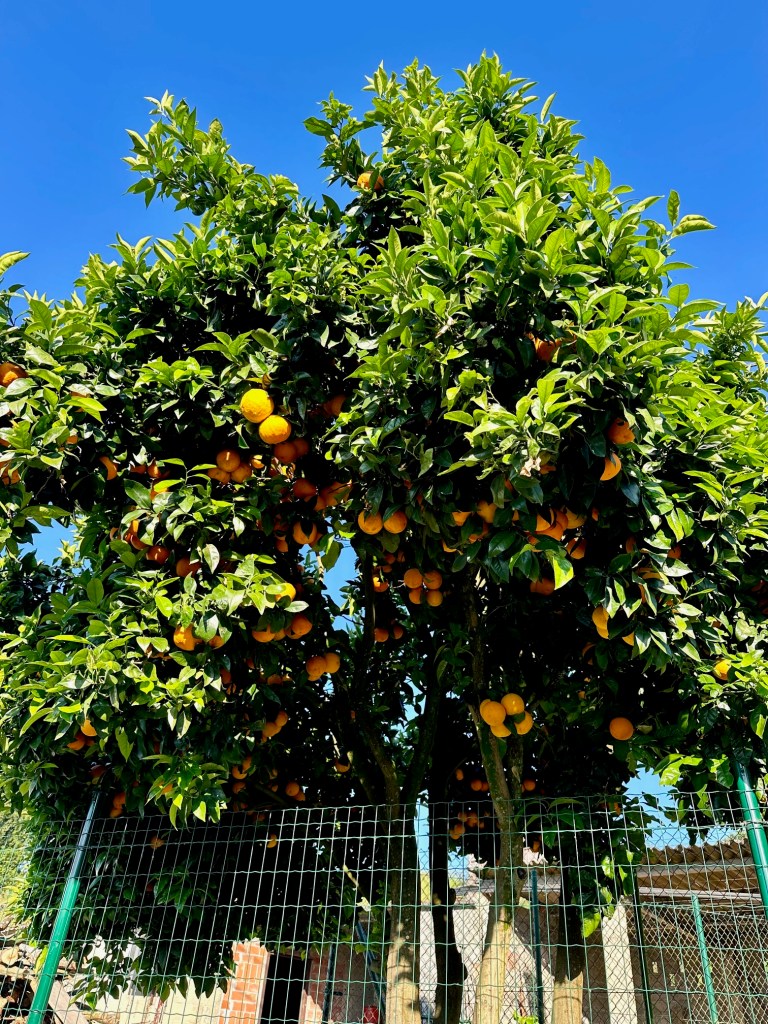
Again, a lot of ascents in the broiling sun, to the rewards of sights of lemon trees; beautiful old churches; and red-roofed houses made of rock; and to the sights and slightly minty smells of Eucalyptus forests—albeit, with some long stretches of highway in between to endure, as well.
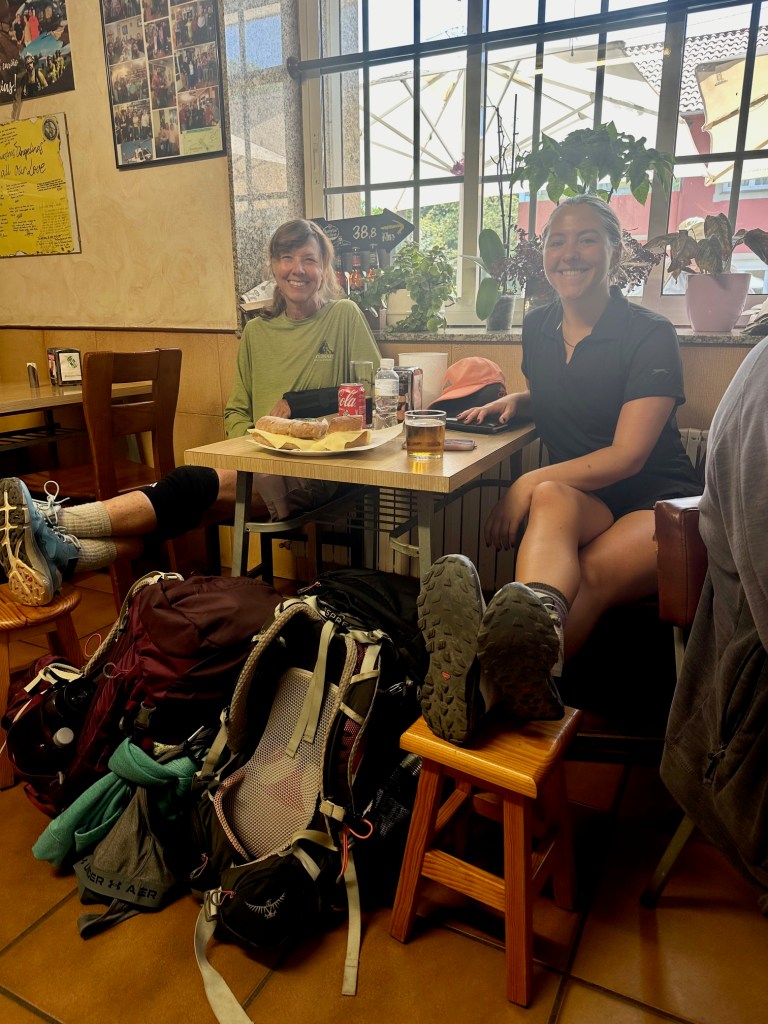
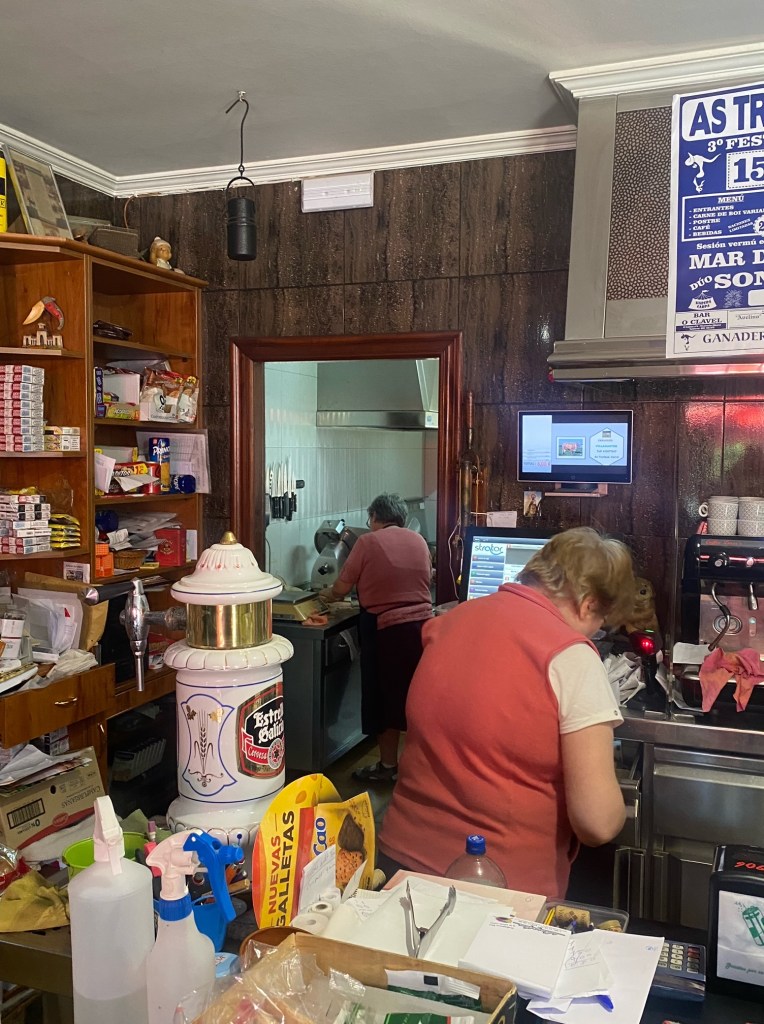
A welcome sight was Casa Avelina at 10 km into our day, a cafe where other weary, smiling “peregrinos” (the Spanish word for pilgrims) were relaxing or ordering food and drink. One of the two precious ladies who clerked and made the enormous sandwiches there came to pull over two footstools to us, and motioned for us to put our feet up! Don’t nice, kind people put a good feeling in your heart! I encountered so many of them on this walk!
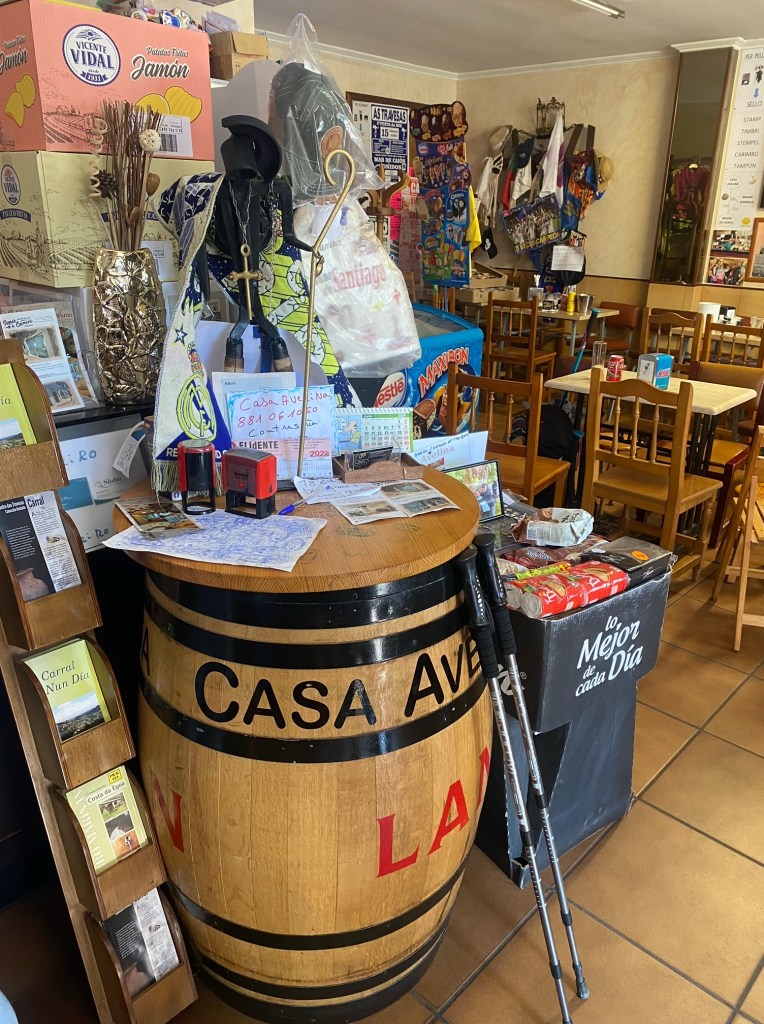
Each pilgrim has a “Pilgrim’s Passport” which they get stamps on along their journey to Santiago de Compostela. We got stamps here, as well as at other cafes, restaurants, hotels, and albergues.

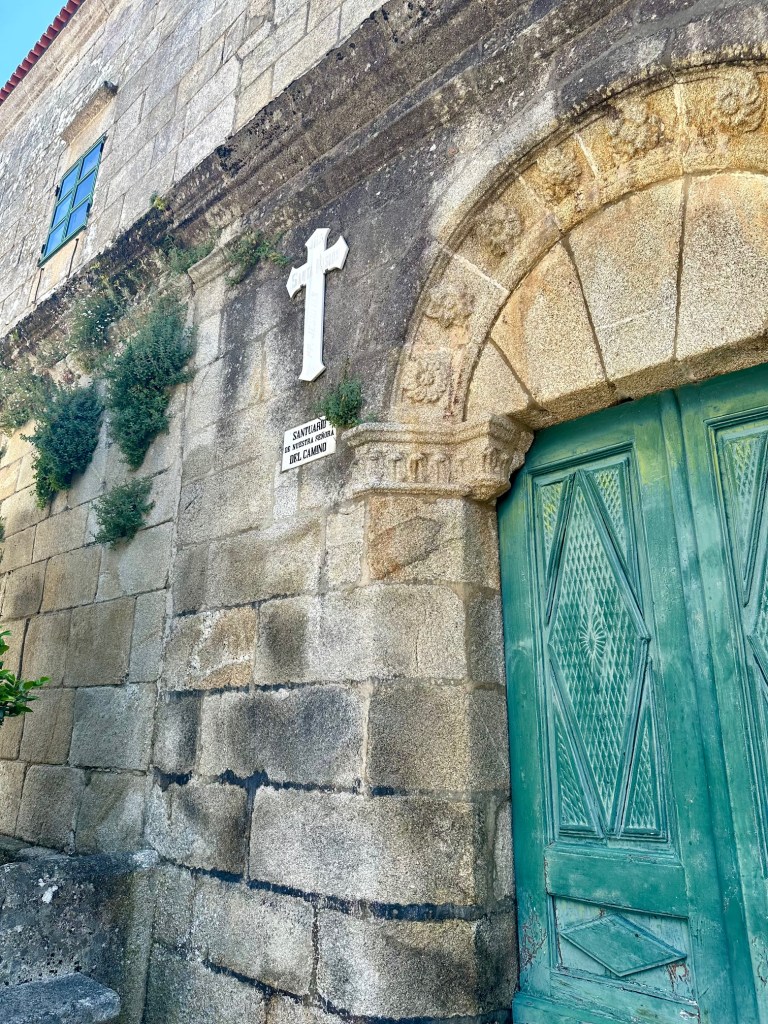
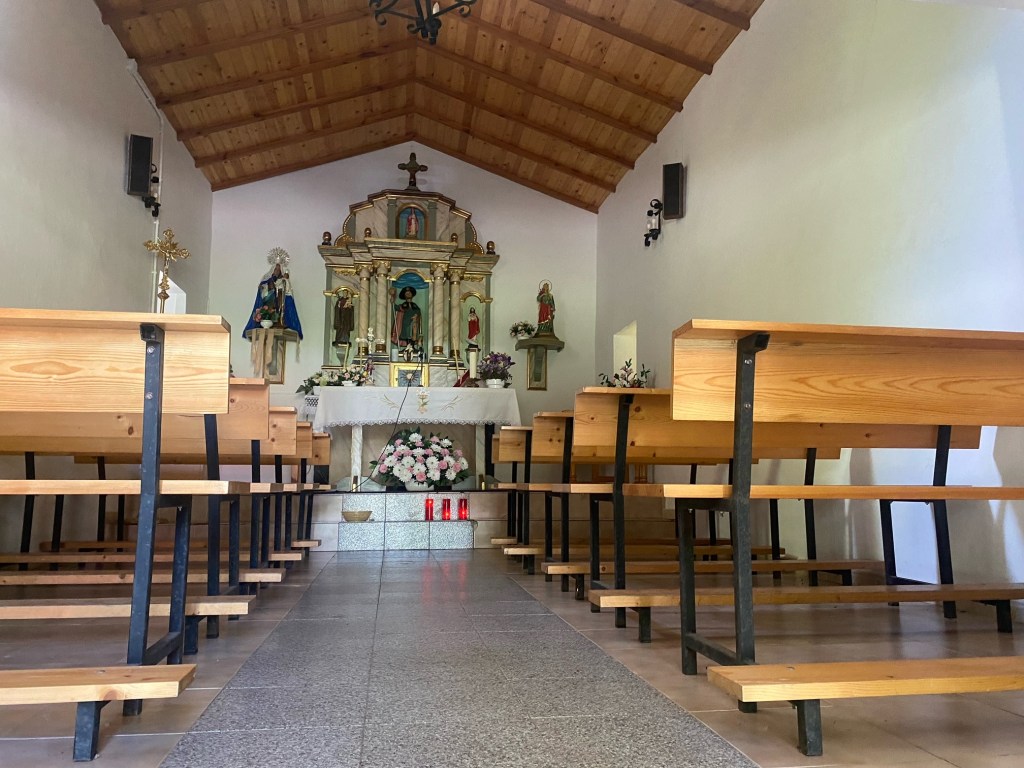
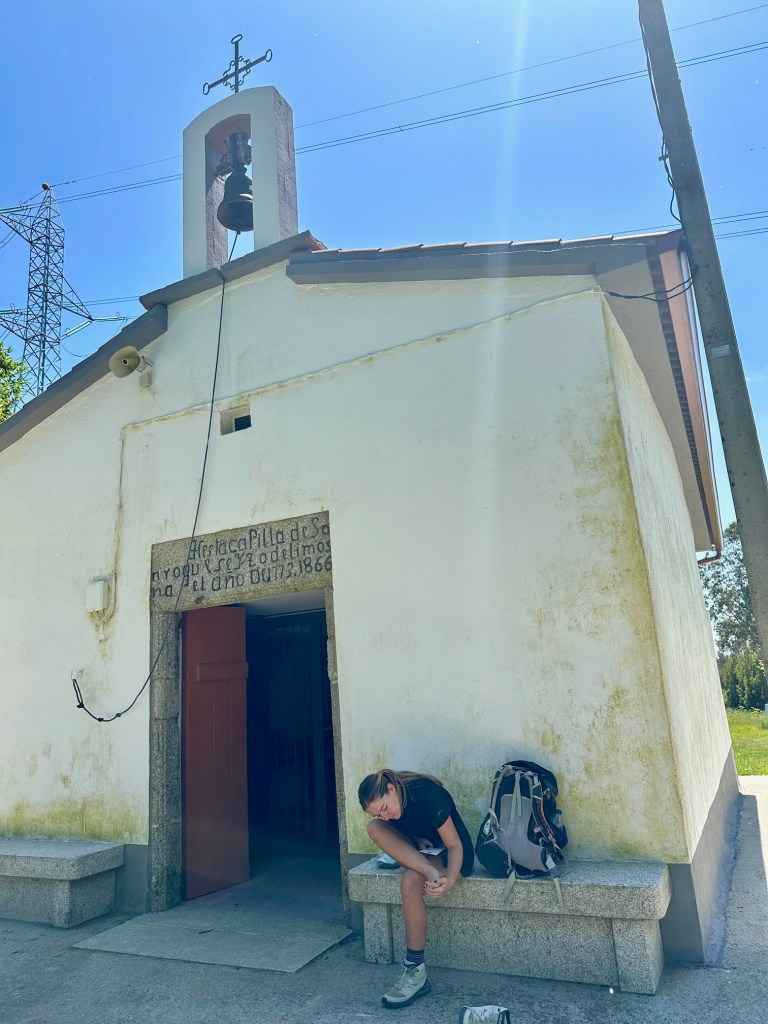
We stopped at the little church across the street from the cafe, and went inside for a minute.
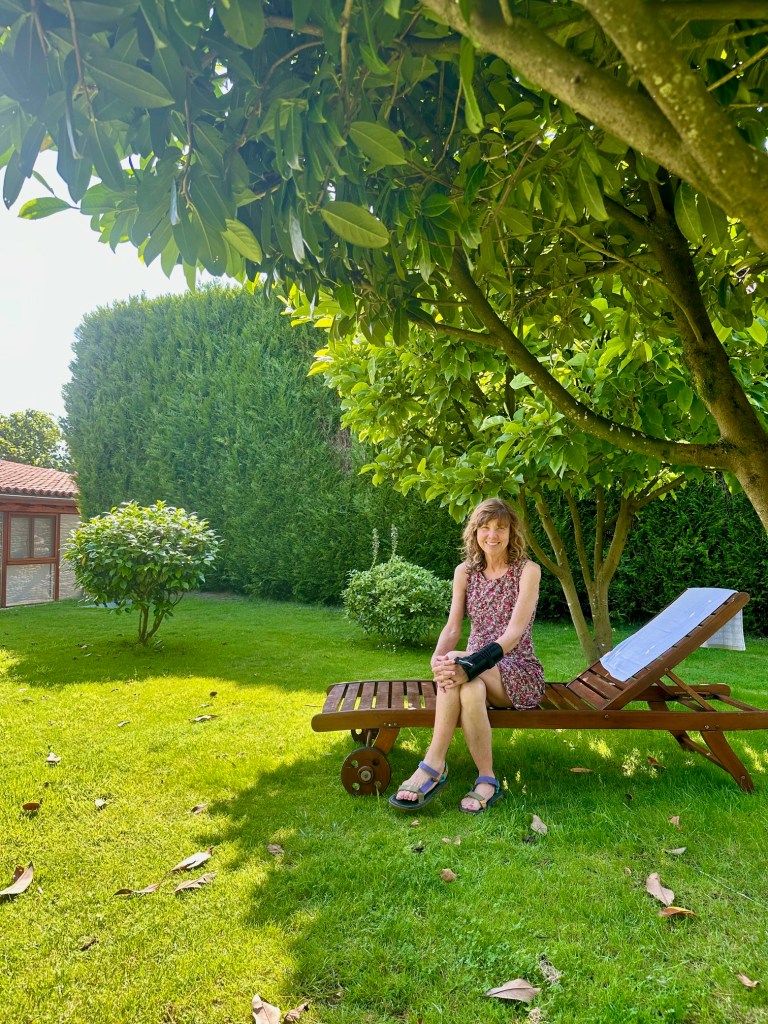
“And miles to go before I sleep…” After many more miles of forest paths, highway walking, a big tree that was proudly touted to be 200 years old, farms including some of the biggest cabbages I’ve ever seen, happy dogs, and friendly people, we saw the beautiful sight of our accommodations! Casa Rural Dona Maria was an outstanding and wonderful place, and conjures up beautiful memories of a large, spacious apartment just for us, a pretty garden outside our door, and staff ready to take care of any need, as well as a sitting room that was styled, the kind and pleasant owner told us, as a traditional Galician home would be. We relaxed in the garden, along with a couple of other pilgrims staying here, and ordered roast beef on toast, which was delicious. What a lovely place, but then, see for yourself!
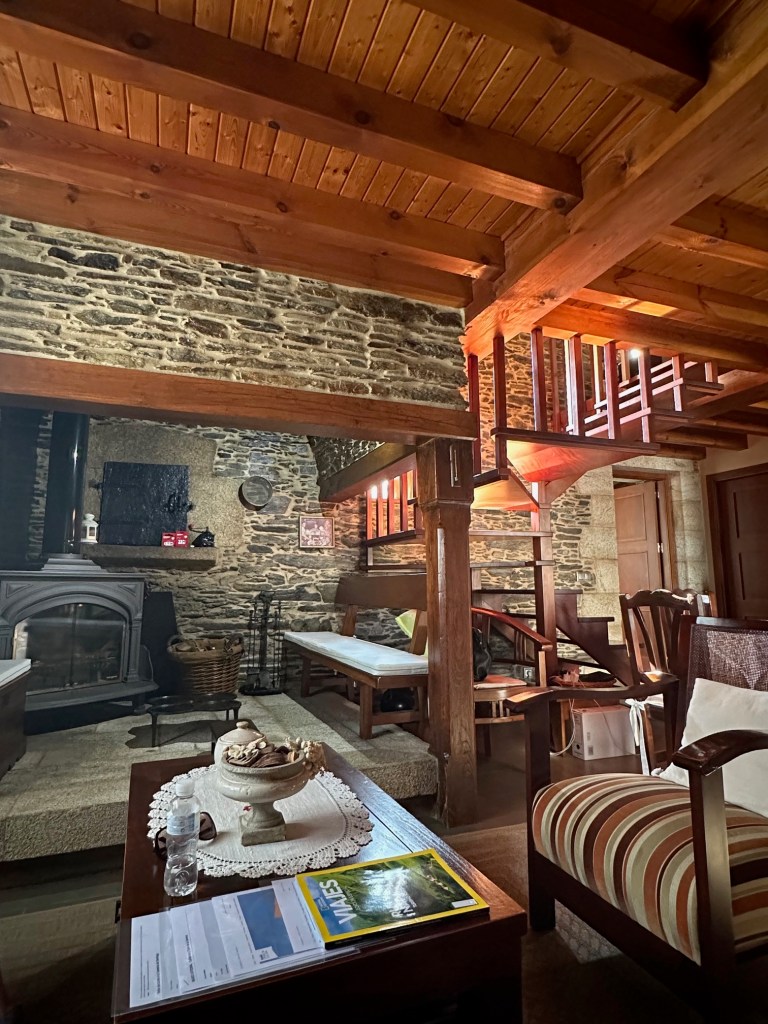
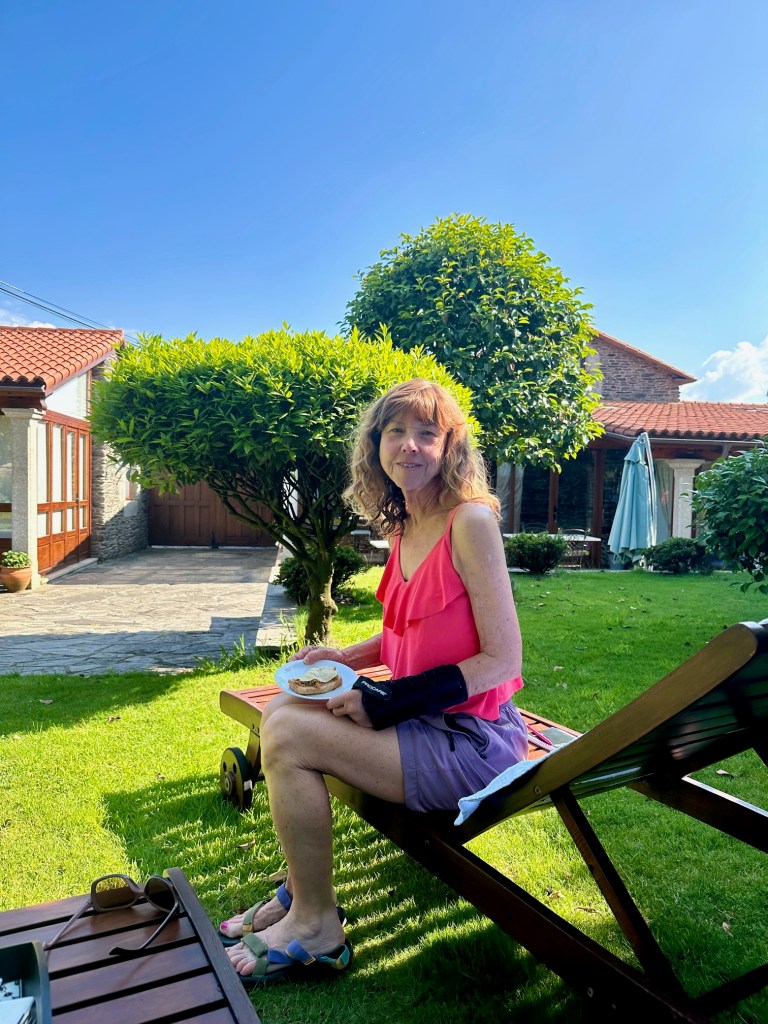
https://casadonamaria.es/en

Dinner was sandwiches in our pretty apartment, while watching the move “The Way” which neither of us had seen. A good movie, we agreed after seeing it, and a good and relaxing end to the day.

Day 5: A Rua to Sigueiro 8.8 mi.

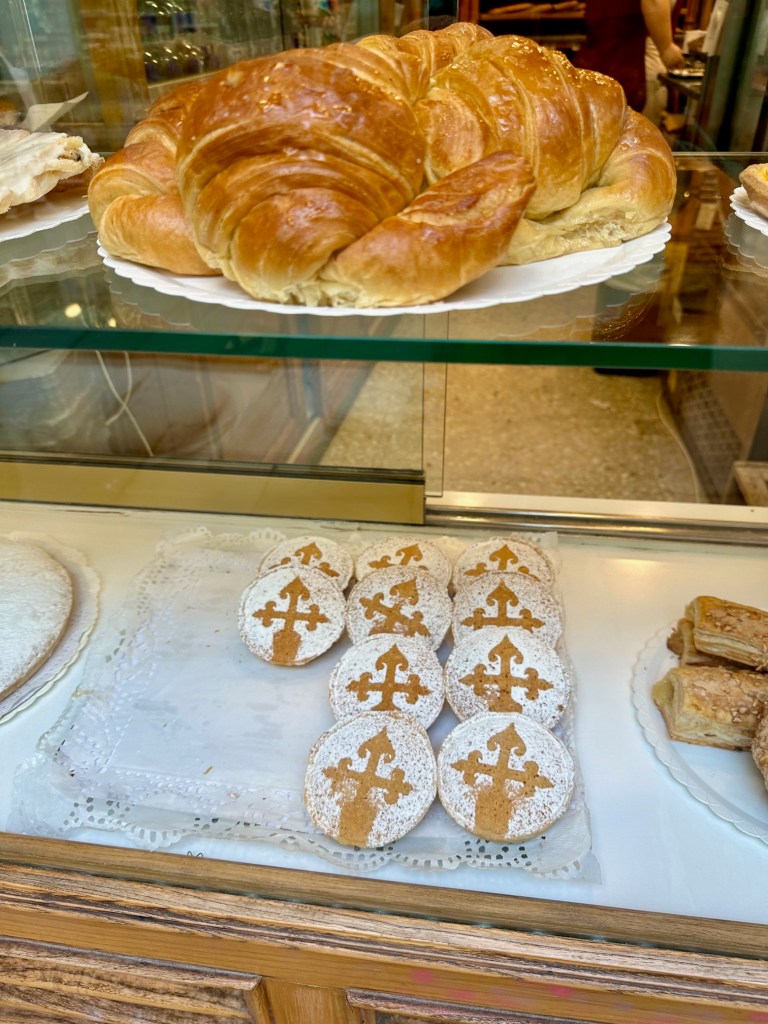
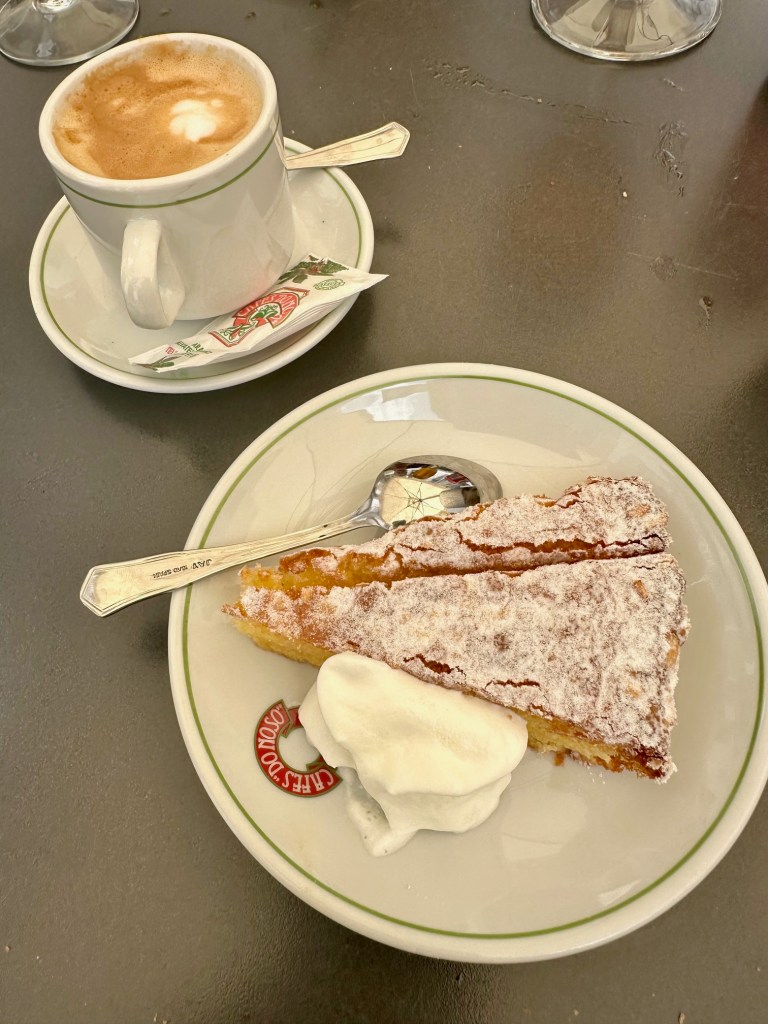
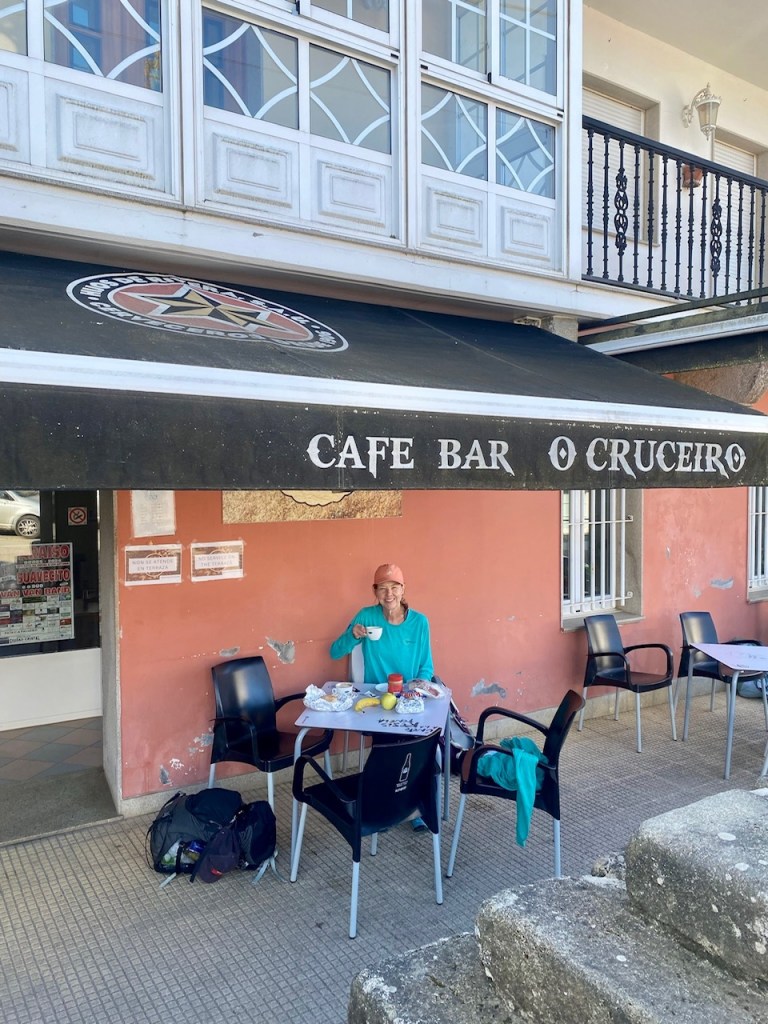
We woke up at our lovely apartment, and my daughter stepped out into the garden, around the corner and through the gate to ask for coffee. The much-desired coffee was sent, along with slices of tarte de Santiago, a specialty of the Galician region. The cake is light but nutty, made with almond flour and lemon, and is gently spiced. I found it to be delicious, and would enjoy it several more times on the trip. The cake is easy to spot in a bakery as each one has a cross stenciled on top of a dusting of powdered sugar. The cake is named after the Biblical apostle James (“Santiago”) and is said to originate from the Middle Ages from pilgrims who would bring the cake for an offering to Santiago de Compostela when they came to pay their respects to the tomb of Saint James.
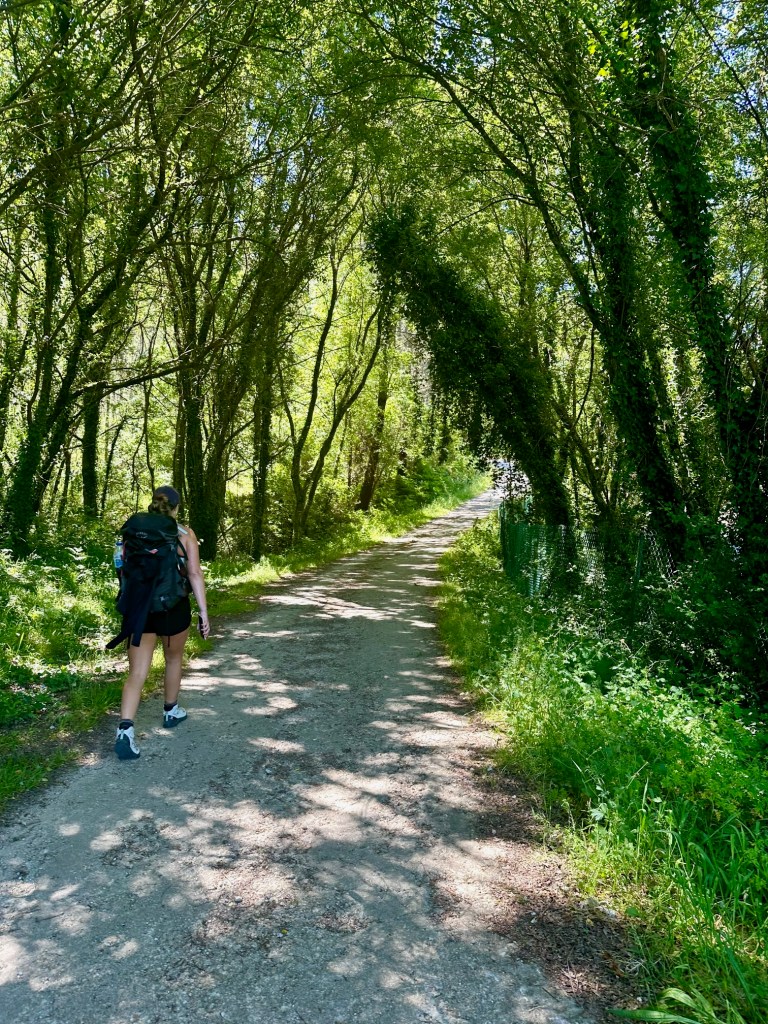
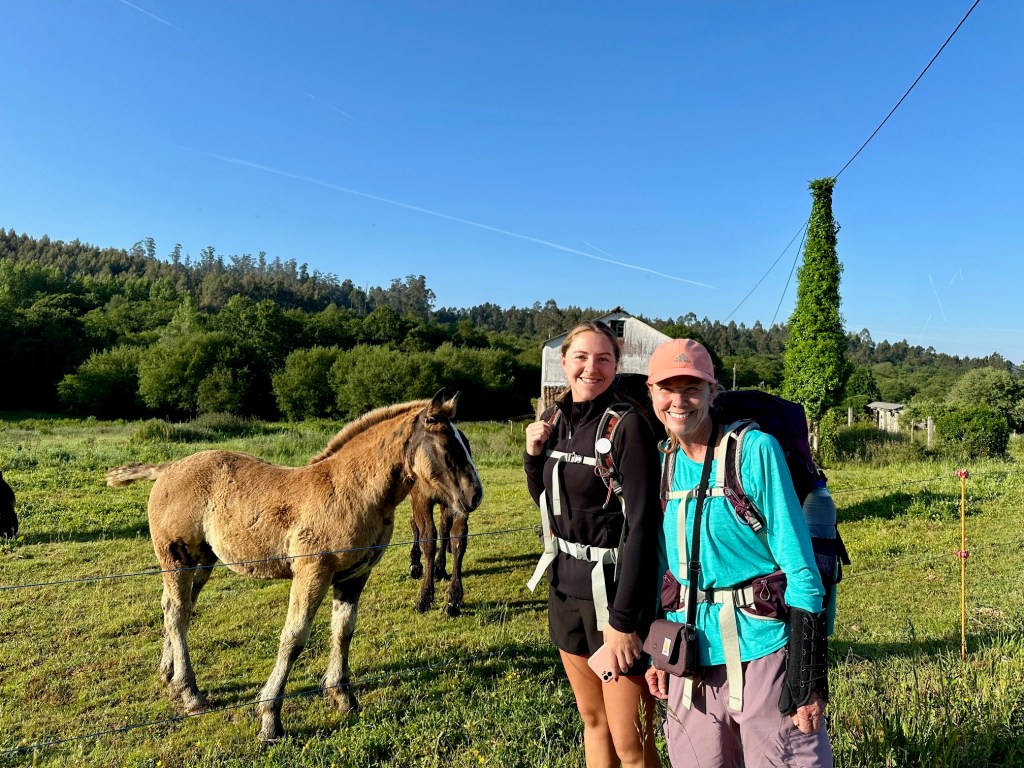
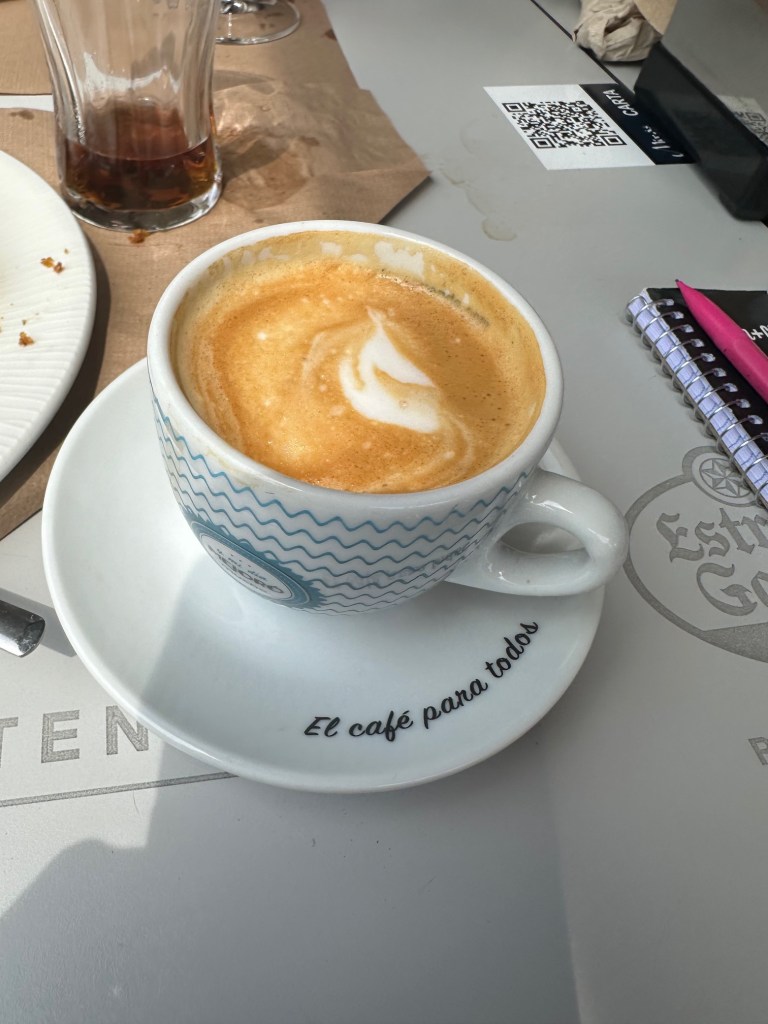
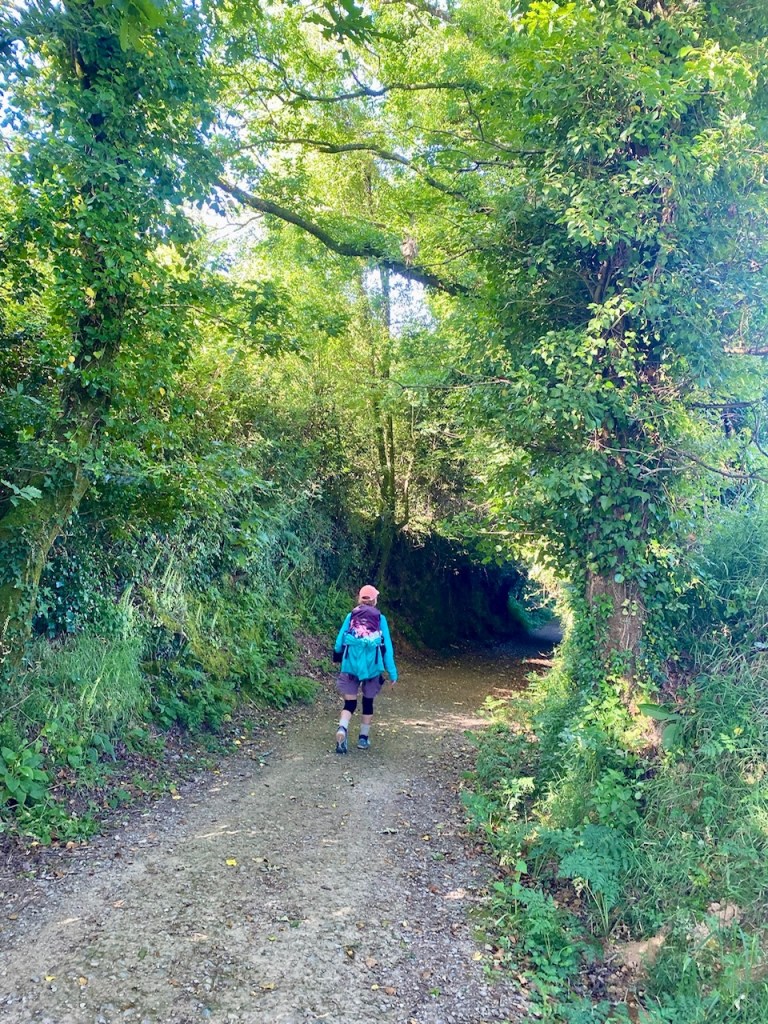
A gentle breeze was blowing on this mild to cool to warm day. The walk was not difficult and led through farms and forests and overhanding trees, sometimes that hung over the trail so that it seemed we were entering a cave. A puppy ran up a country road to greet us enthusiastically. We walked by two horses with their precious foals. Stopping at a little cafe for cafe con leche (espresso with milk, always a welcome pick-me-up along the hike) I had my staple snack which I kept in my backpack throughout, peanut butter on large crackers, sprinkled liberally with raisons.
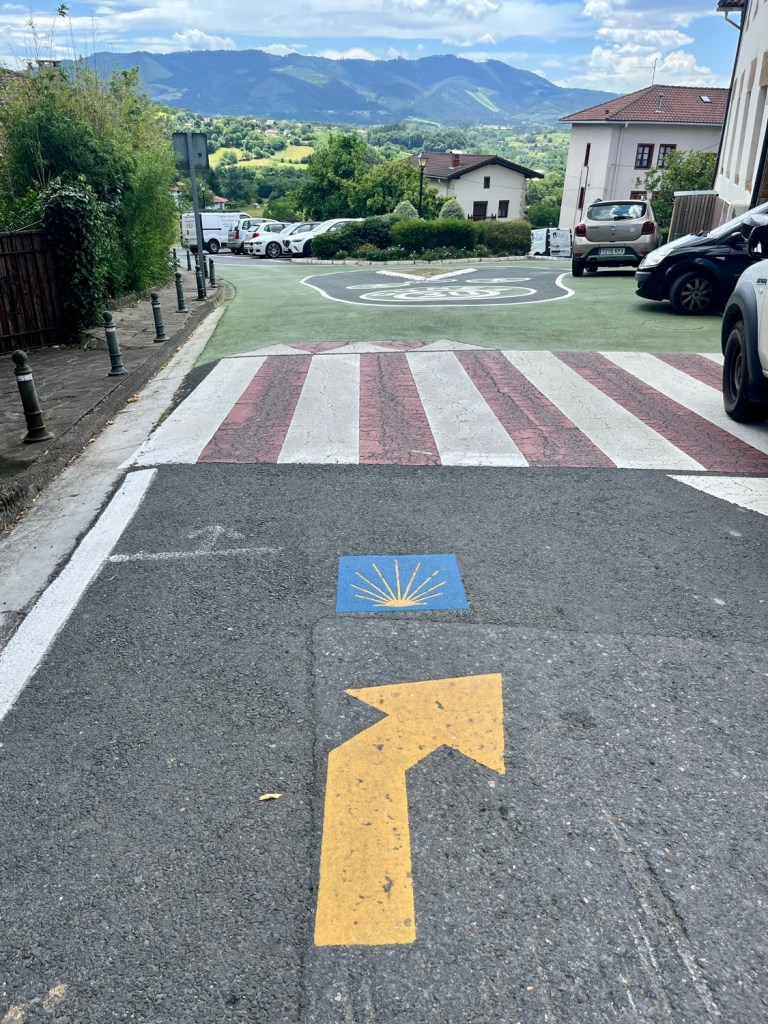
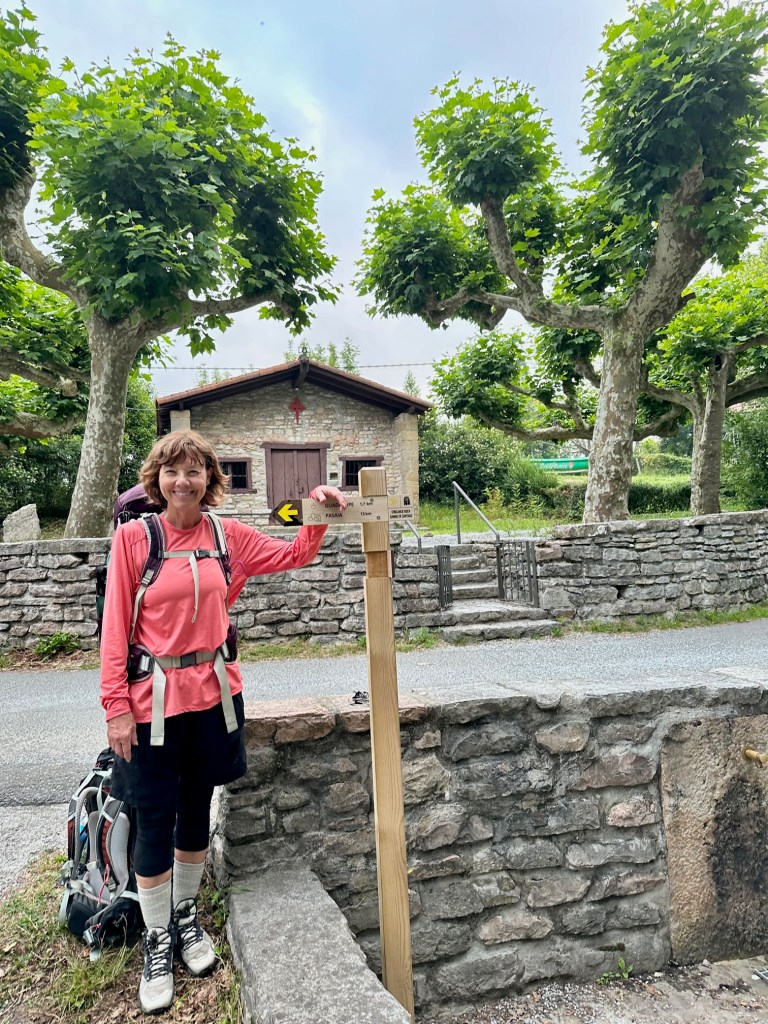
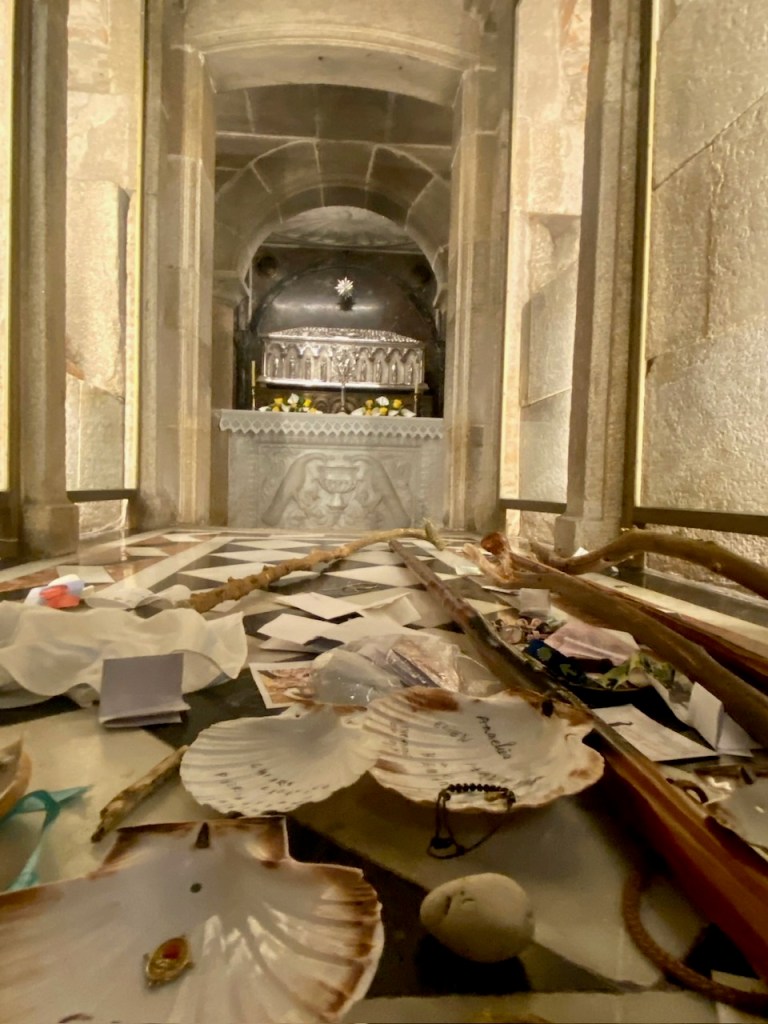
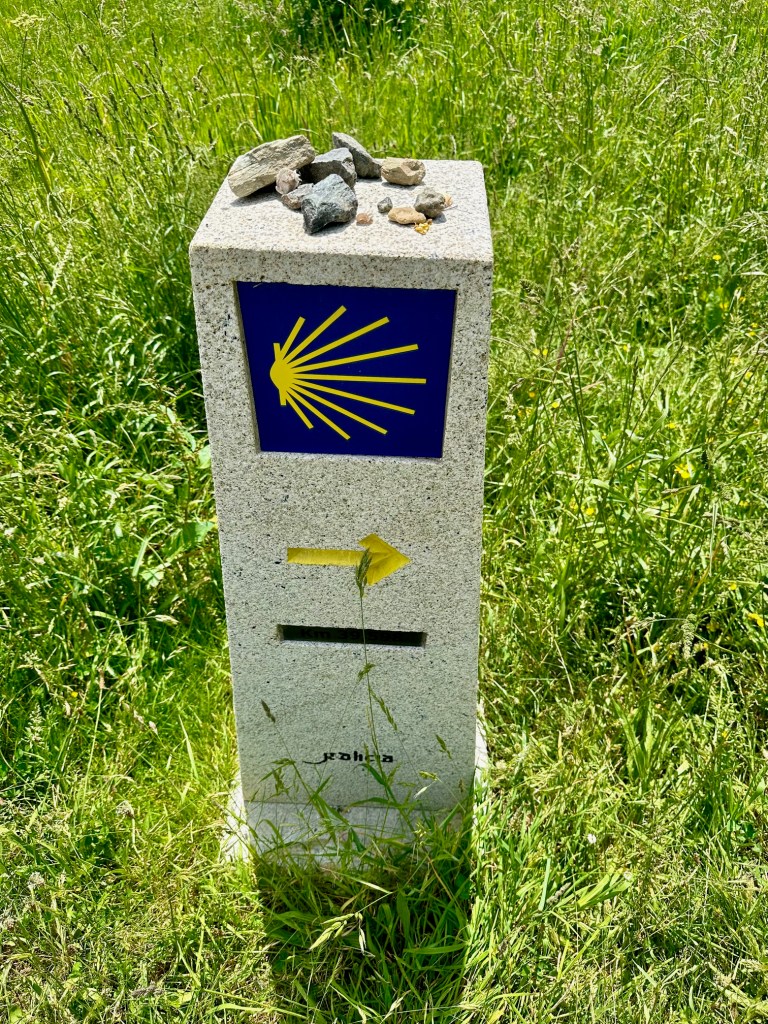
The Ingles way is marked clearly along the way not only with painted arrows and homemade signs but with these markers at regular intervals. Each tells the distance to Santiago de Compostela from that point. Pilgrims leave seashells, small rocks, and other tokens on top of them.
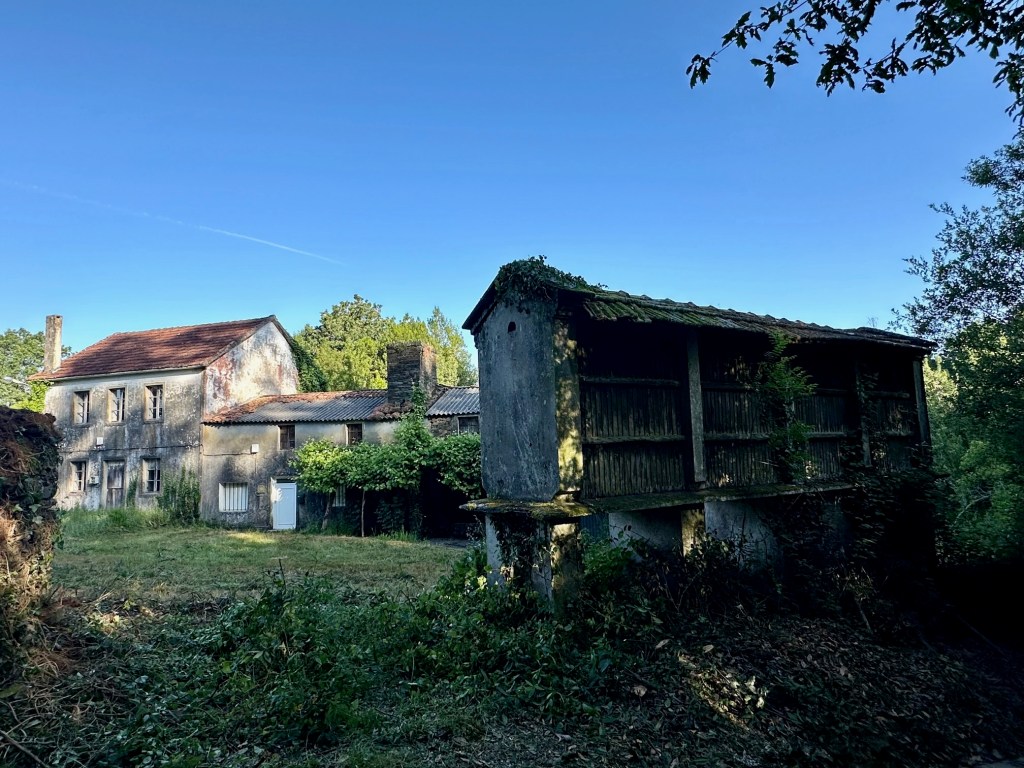
Along the hike, we had seen many small buildings set up off the ground on blocks, beside the homes we passed. Increasingly curious, we asked someone about them, and found out that they are “horreos” (pronounced “oreo”; think of the cookie)! These are structures that were used to store corn or grain after the fall harvest, set on the blocks to keep rodents out. Long ago, it was a sign of wealth. The bigger your horreo, the wealthier you were thought to be! Today they are mostly seen just as a symbol of Galicia, and some are used as storehouses…although there are a few that are still in use as granaries, too, we were told.
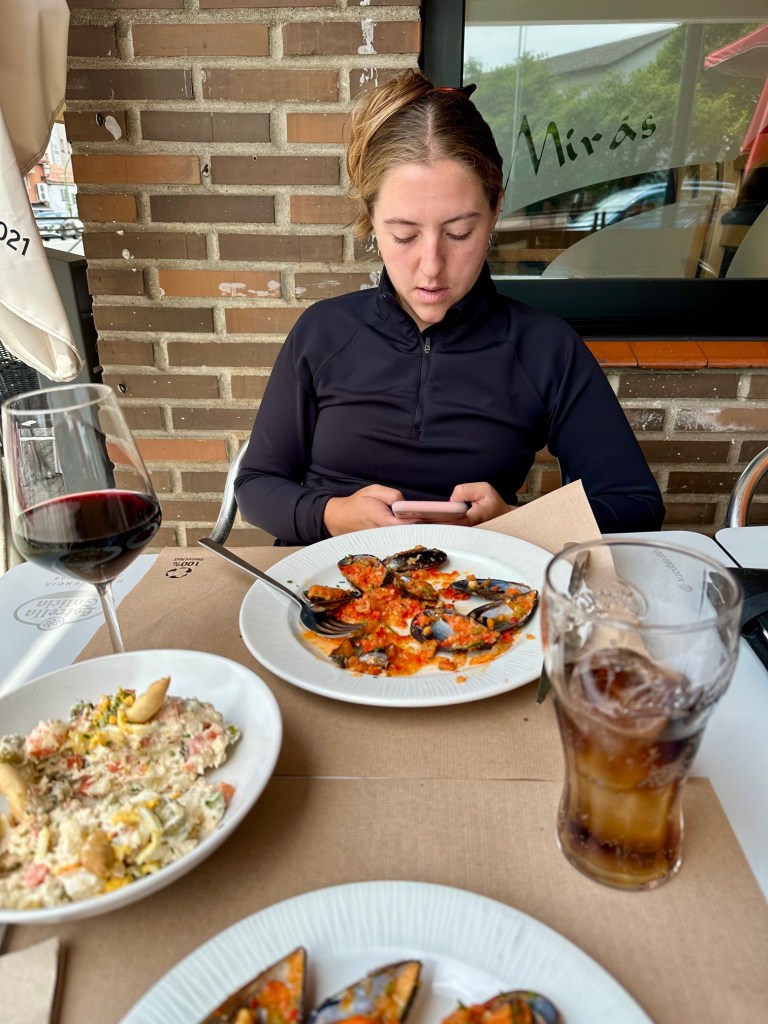
At the albergue in Sigueiro we were the first to arrive. We hurried to do laundry and take showers then settled into our room, where we were soon joined by another mother and daughter team of pilgrims, from Spain. They would be our roommates for the stay at the Albergue Miras which was a very, very nice place to stay with washing machine and dryer; super-clean bathroom, sleeping quarters, and all facilities; and a large sitting room alongside the kitchen.

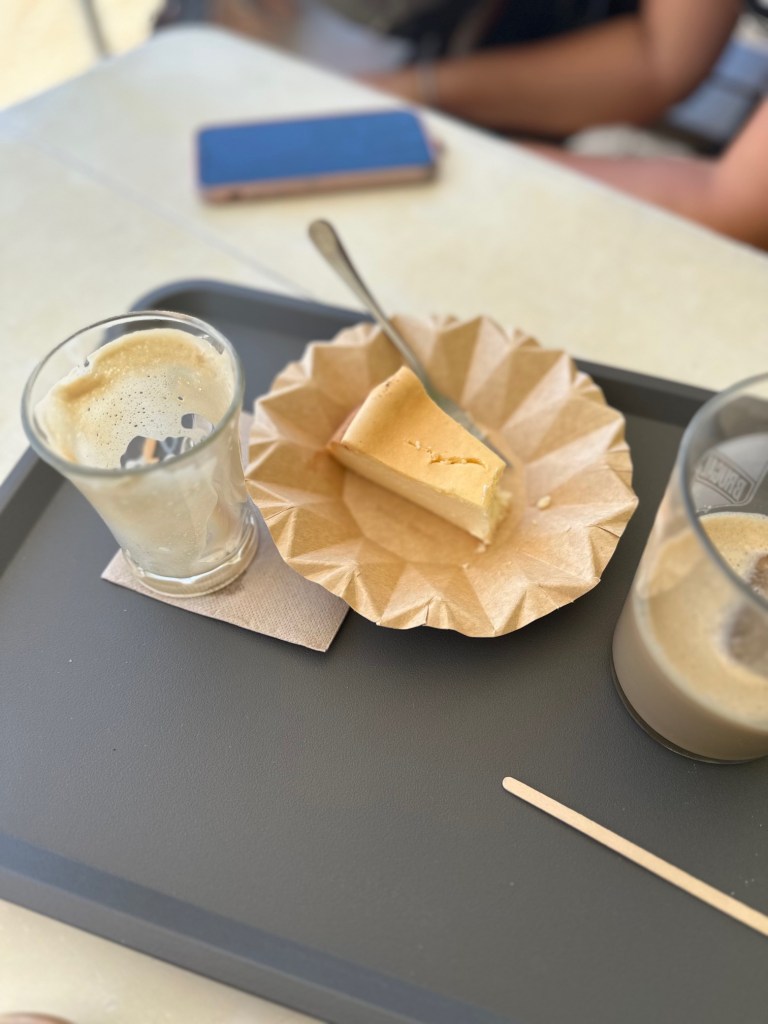
Downstairs from the albergue there was a cafe which, we soon discovered, served a wonderful Menu del Dia—that is, “Menu of the Day,” which is a meal in Spain usually served at lunch, with several courses, eaten leisurely, sometimes lasting an hour or more; I love-love-love a Menu of the Day! We shared pesto pasta, chicken wraps with yogurt, Russian salad (kind of a potato and egg salad with lots of vegetables, and olives, in it—very tasty), good patatas fritas (french fries), mussels, and the finale: cheesecake and carrot cake, with, afterward, coffee. We sat outside on this beautiful day warming our legs in the sun from time to time and enjoying every course, while conversing, writing, sharing news with family at home, and people-watching, too.
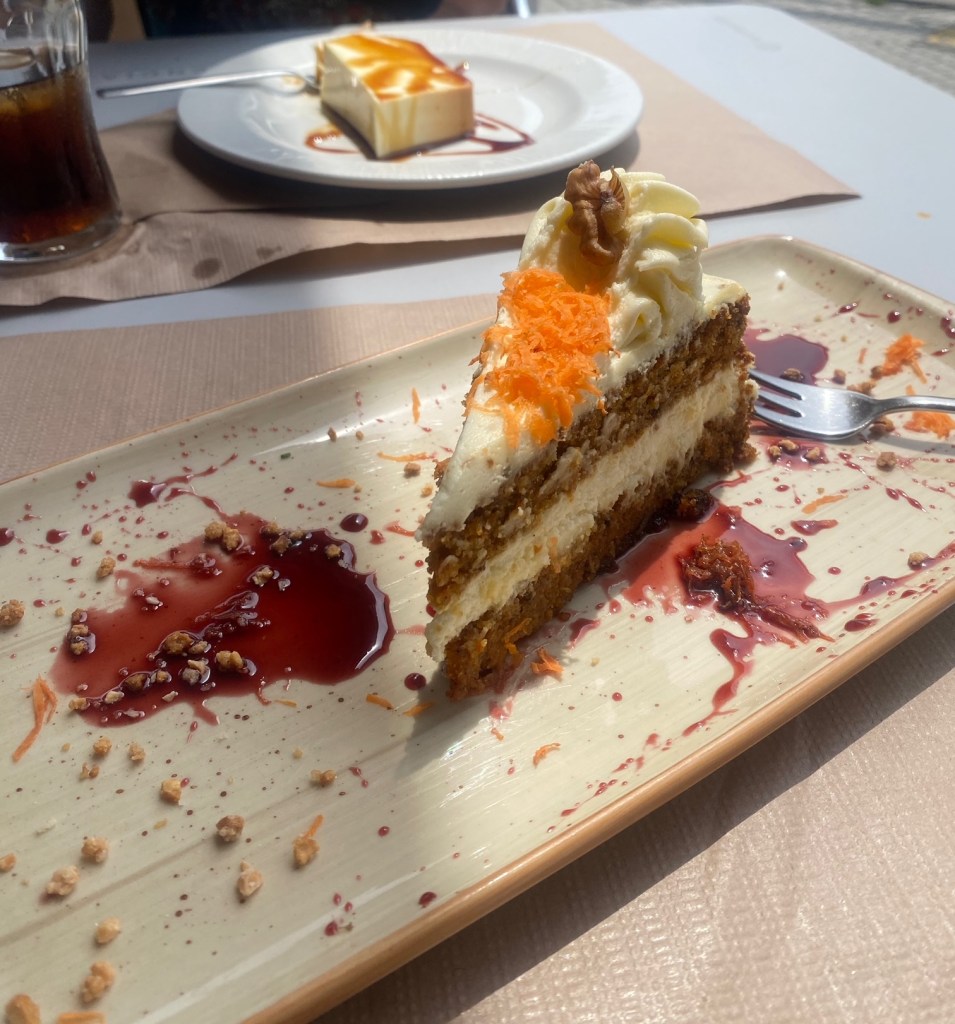
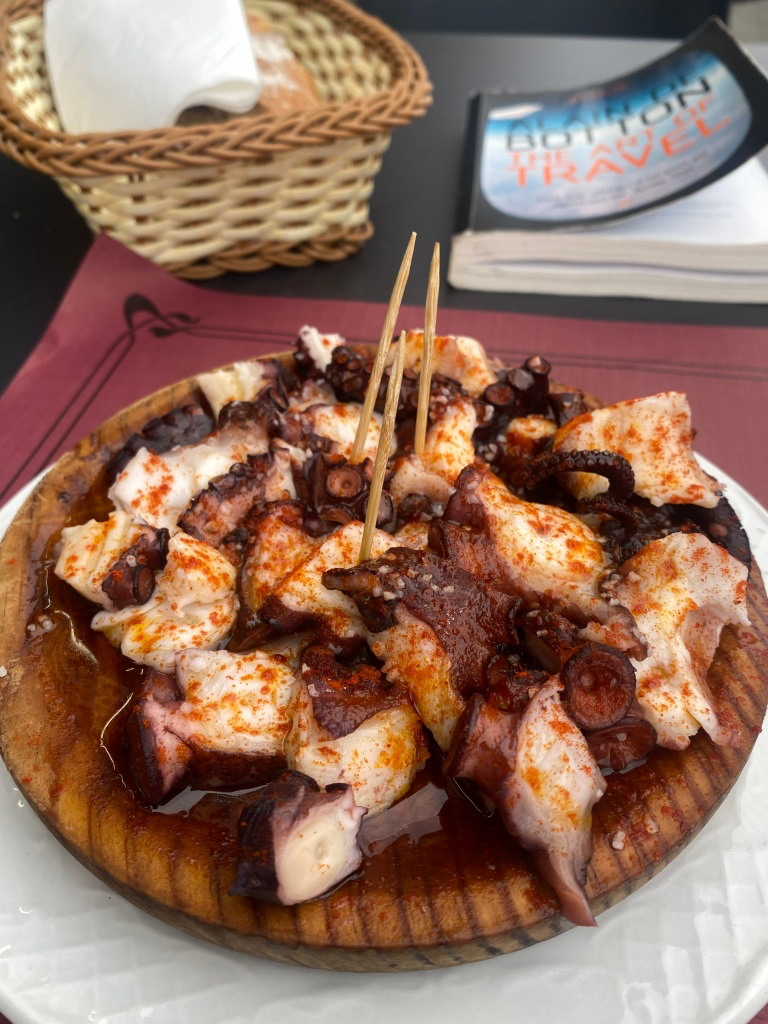
After the wonderful menu of the day, we, as many Spaniards do in the middle of the day, took a nap! Then we walked around the small town of Sigueiro. We went into a supermarket for a few things; spotted a candy store and went in for a variety of chocolates for me, and gummies for my daughter; looked for and found a hair salon for my daughter who’d wanted a trim; and saw a medieval bridge that I’d read about. We saw an Octopus restaurant later and my daughter decided to try. I looked on interestedly, but waved off offers to taste.
Day 6: Sigueiro to Santiago de Compestela 9.8 mi.

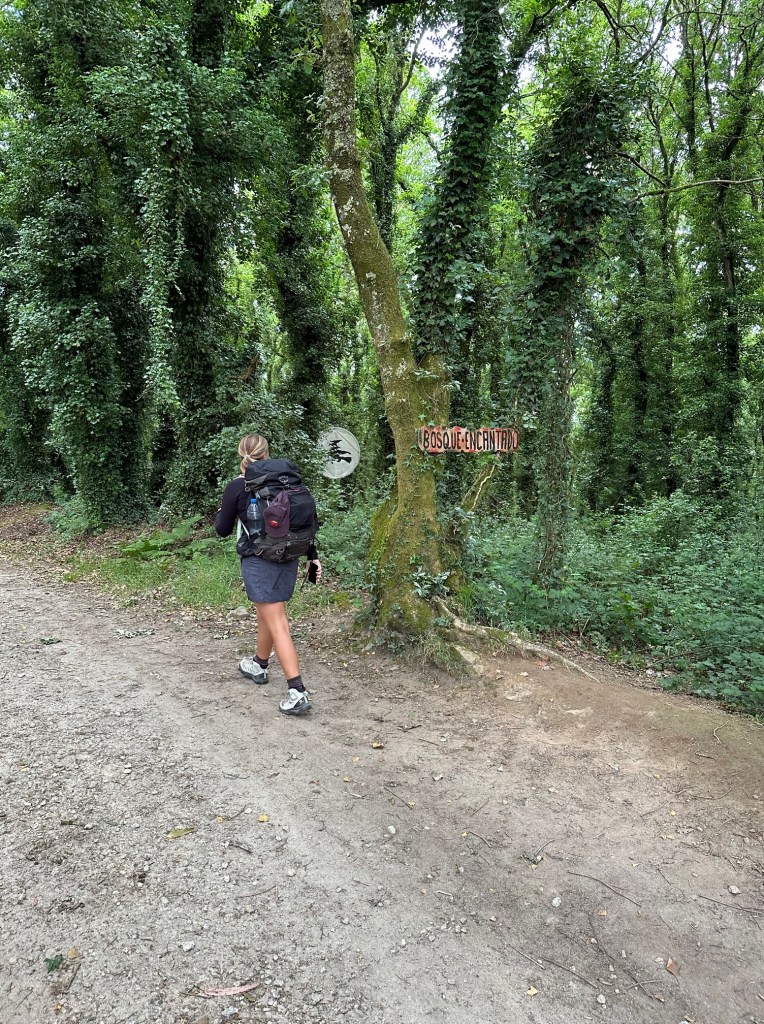
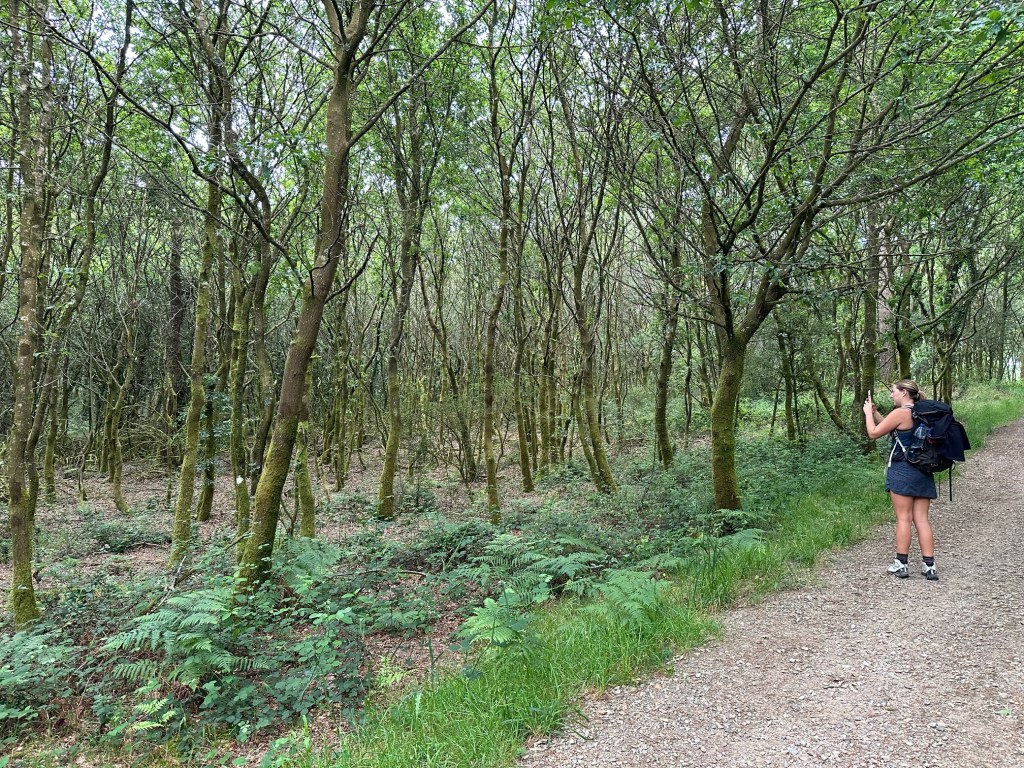
After coffees at the small bar across the street from the albergue, we headed into the morning for the last leg of the Ingles Way! There were some inclines, farmland, small towns…and forests including “The Enchanted Forest” (with a “witch” handing from a tree and a sign saying “The Enchanted Forest”)! But the next section of forest was one we agreed looked straight out of Hansel and Gretel, with lots of curvy, mossy limbs and trees and shadowy woods. The forests were short-lived, though, and it seemed no time until we were seeing suburbs with industrial buildings and traffic, and knew we were nearing Santiago de Compostela!
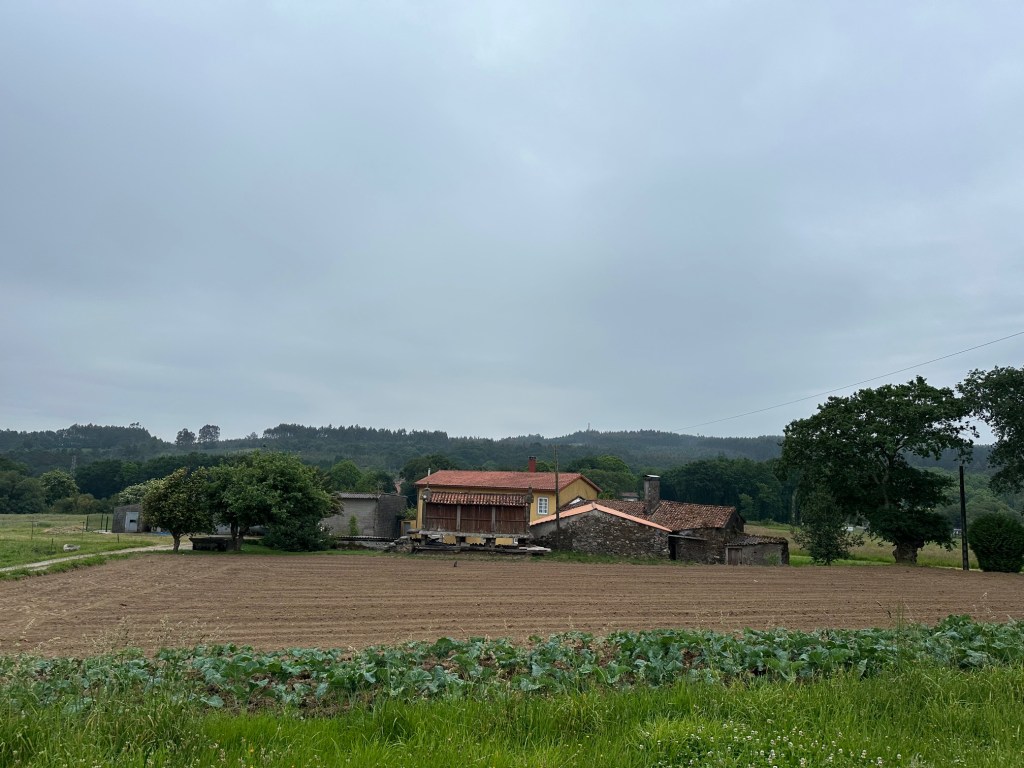
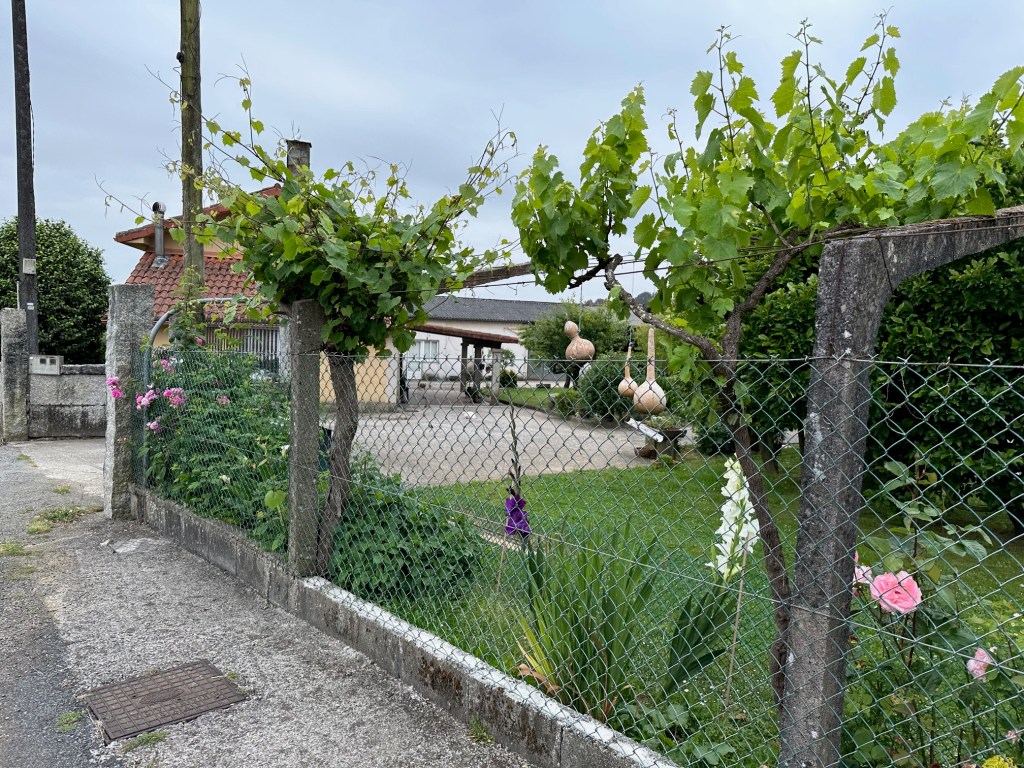
And then, just like that, our Ingles Way of the Camino de Santiago was over!
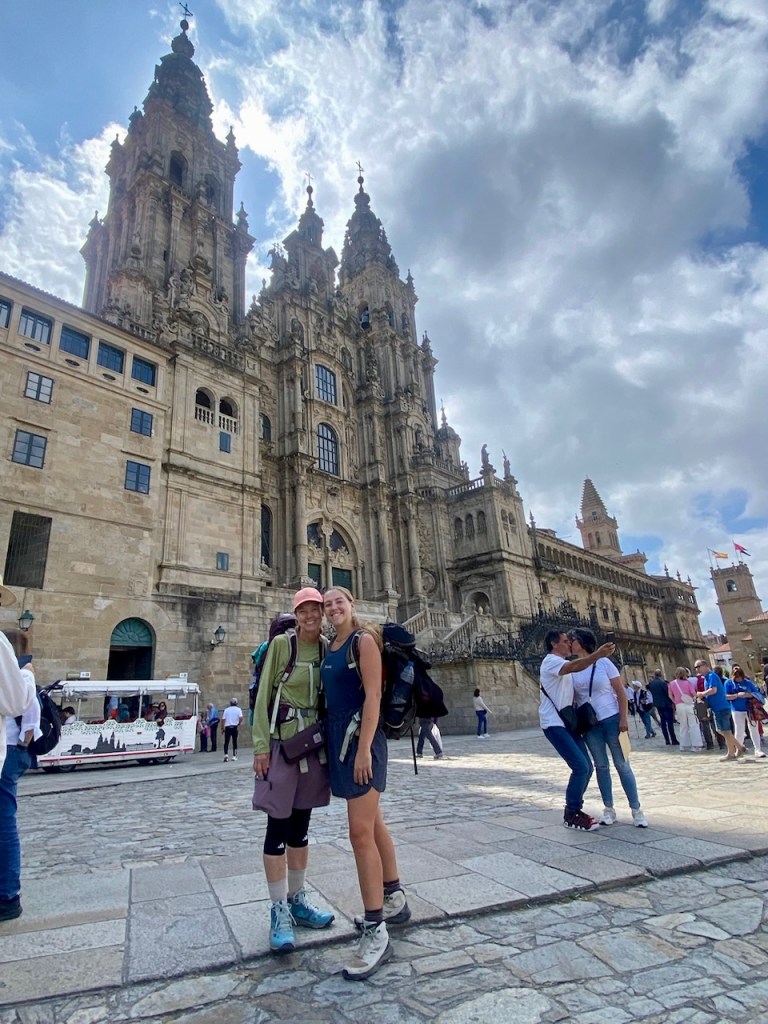
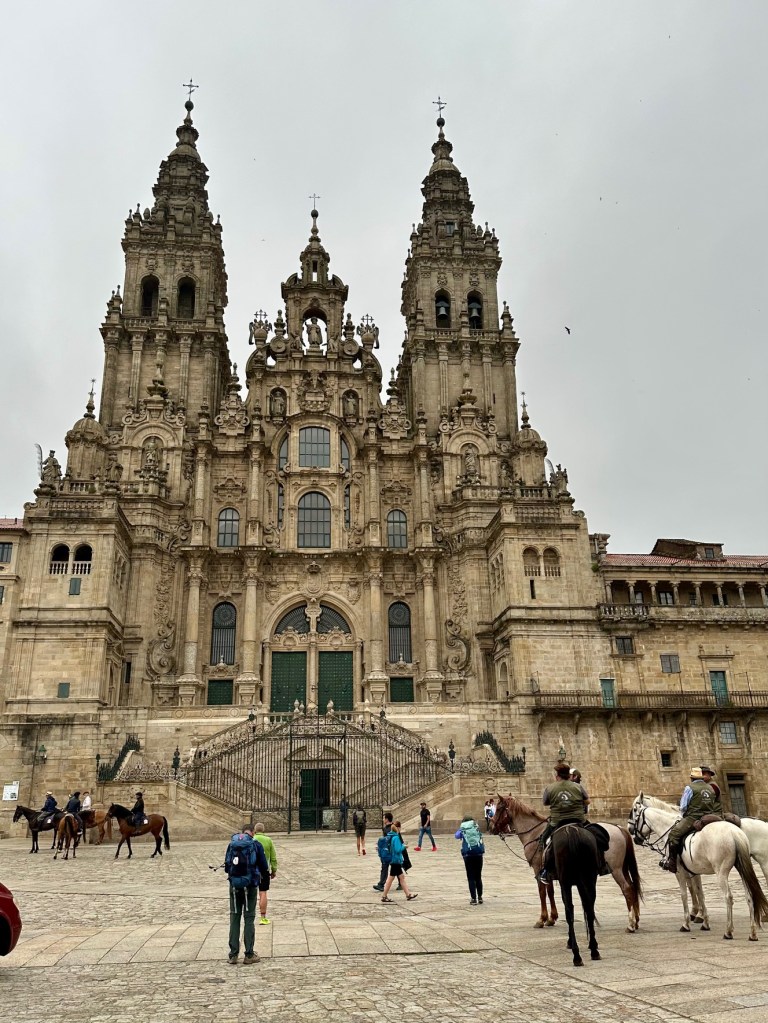
We stood in front of the awe-inspiring Cathedral de Santiago de Compostela and talked with other pilgrims, some of whom had just arrived after having walked for many, many miles, and weeks or even months. One man who had travelled for more than five weeks to arrive, when we told him we had been hiking the Ingles Way for the week, told us, with an eagerness in his manner that showed his need for us to understand, “It doesn’t matter! It doesn’t matter.” I remembered the entry in the guest book at our last albergue, written almost a year ago by someone named Ashley, and I knew what he meant. We’re all pilgrims on this road of life…here to encourage, help, learn, and love along the way.
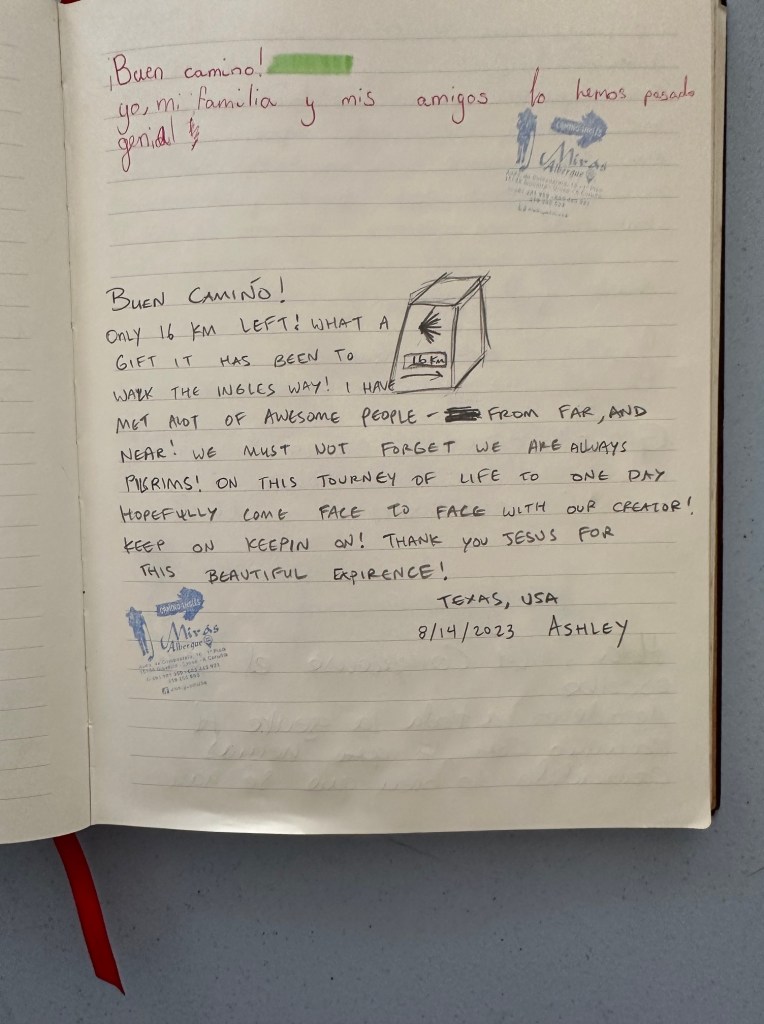
Buen Camino!
Featured

The Island Life: Tenerife

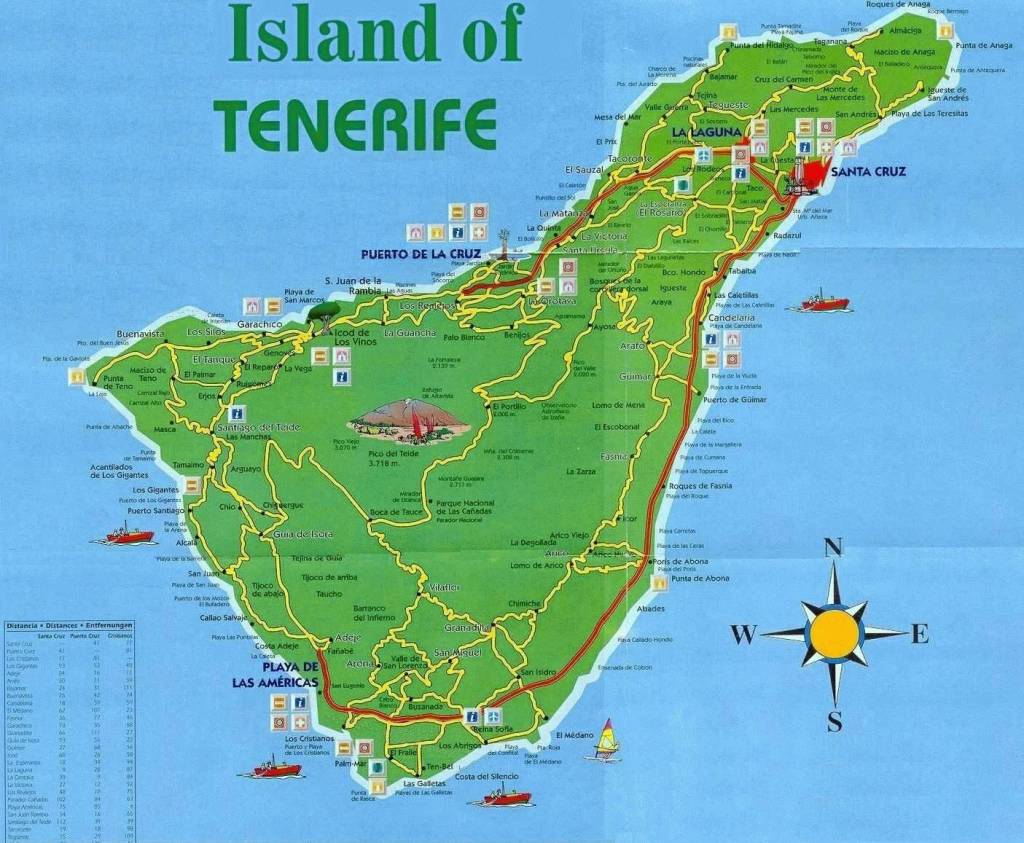
Tenerife is one of the eight Canary Islands. It is the largest of the islands, and very popular with tourists, especially those from European countries. My daughter teaches English there, and after our Camino hike and time in Bilbao, we spent the last week of our summer adventure in Tenerife.

Fun Fact: Even though the Canary Islands are part of Spain, they are actually closer to North Africa than continental Spain (with the nearest island, Fuerteventura, being 67 miles off the African mainland, and Tenerife 186.4 miles)!

Day 1: Playta Amarillo and Casa de Mary

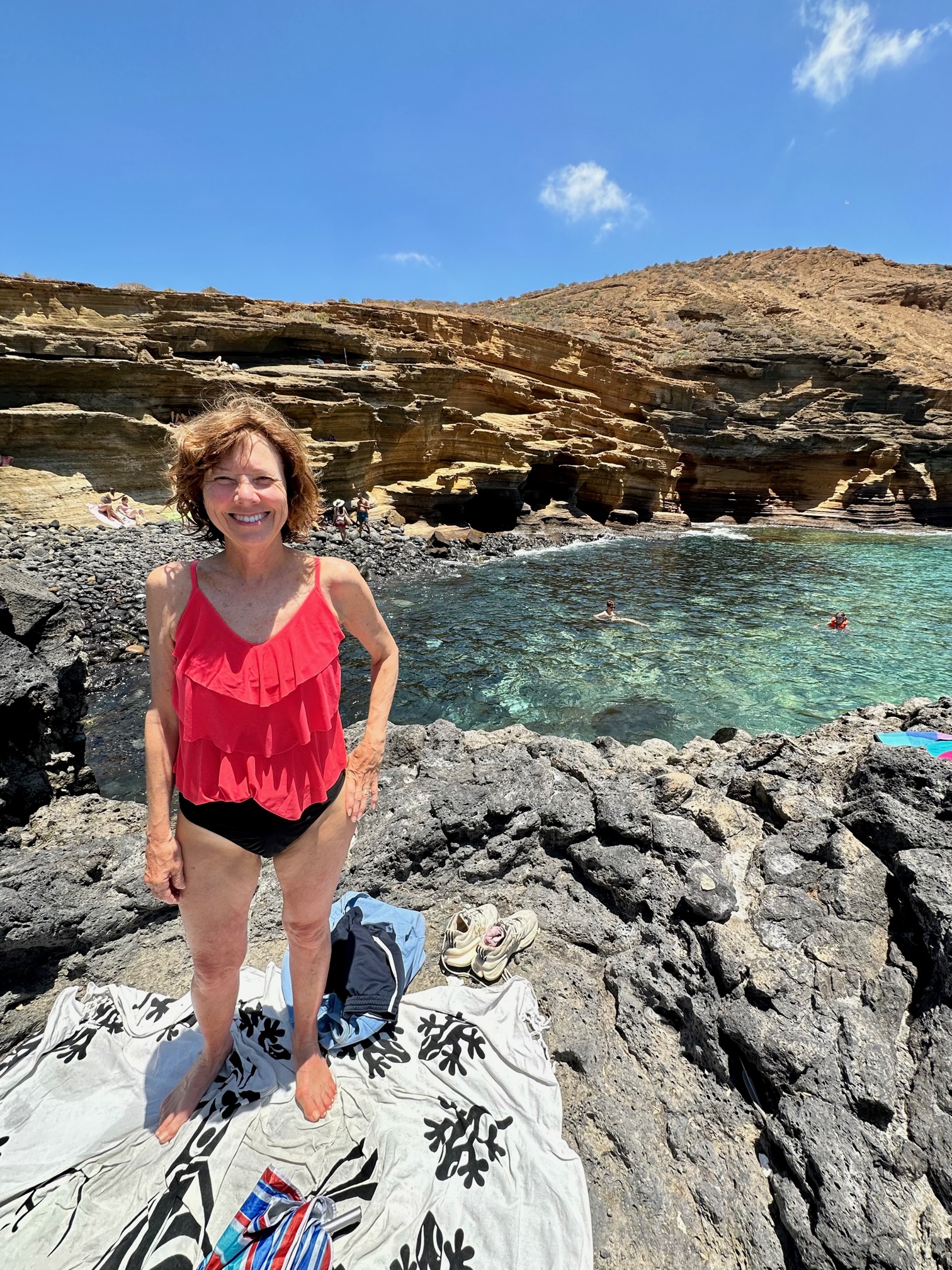
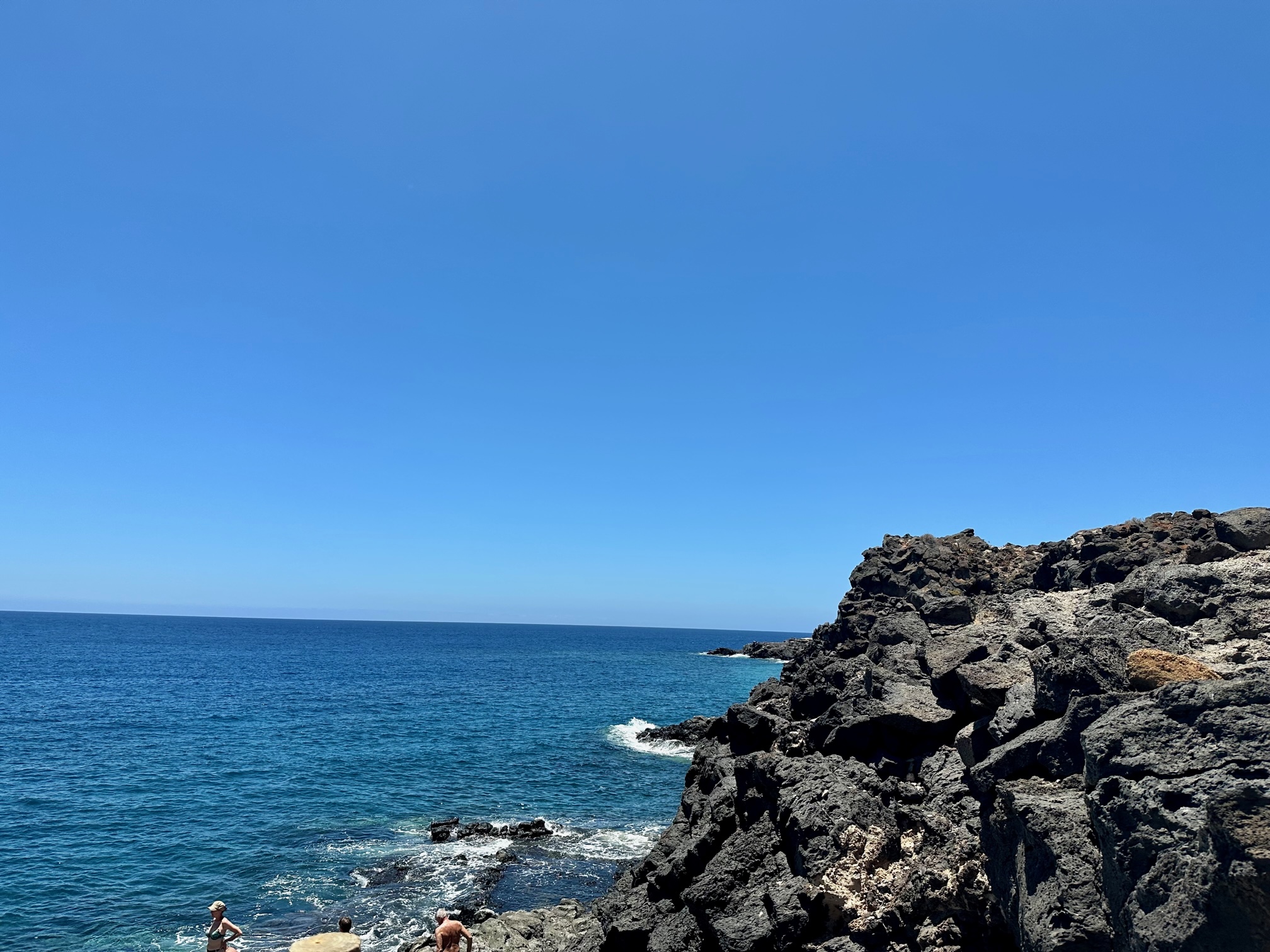
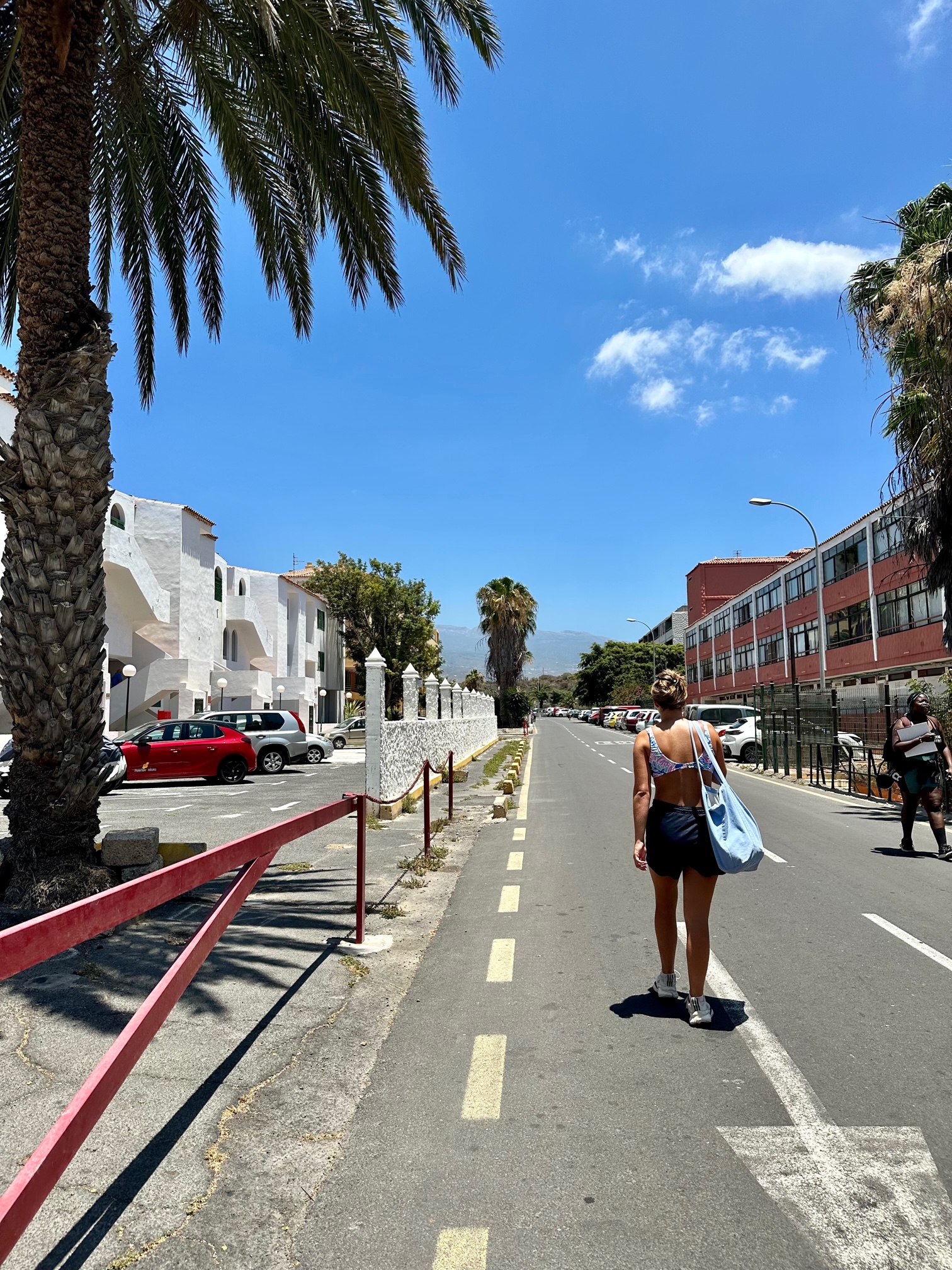
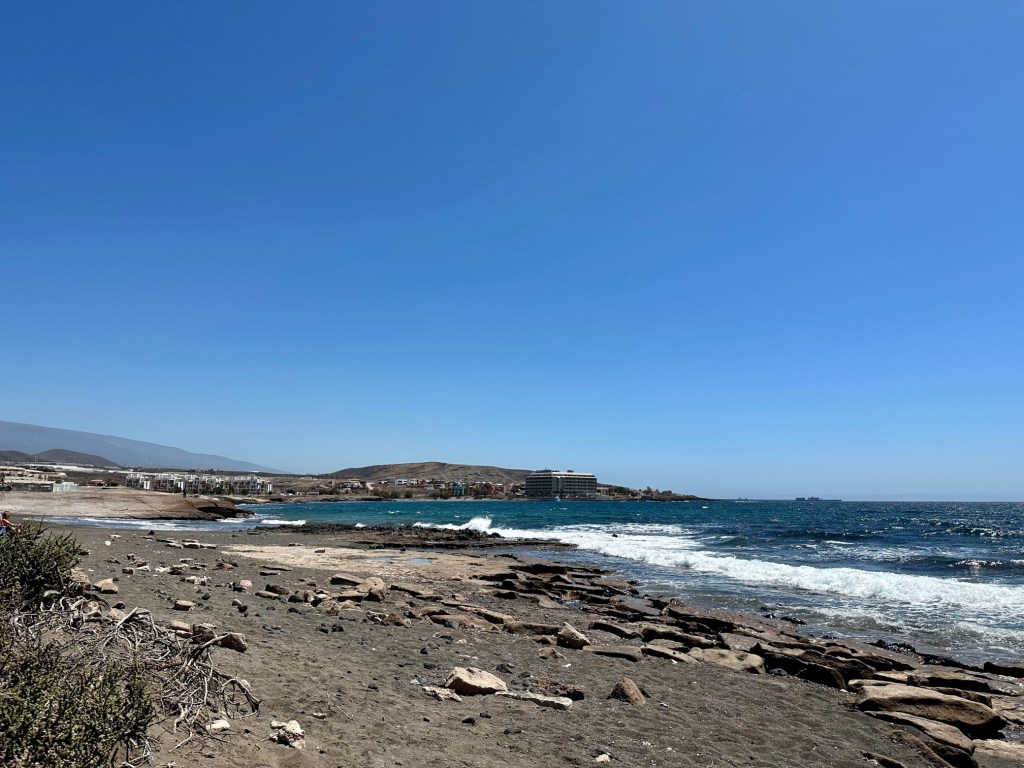
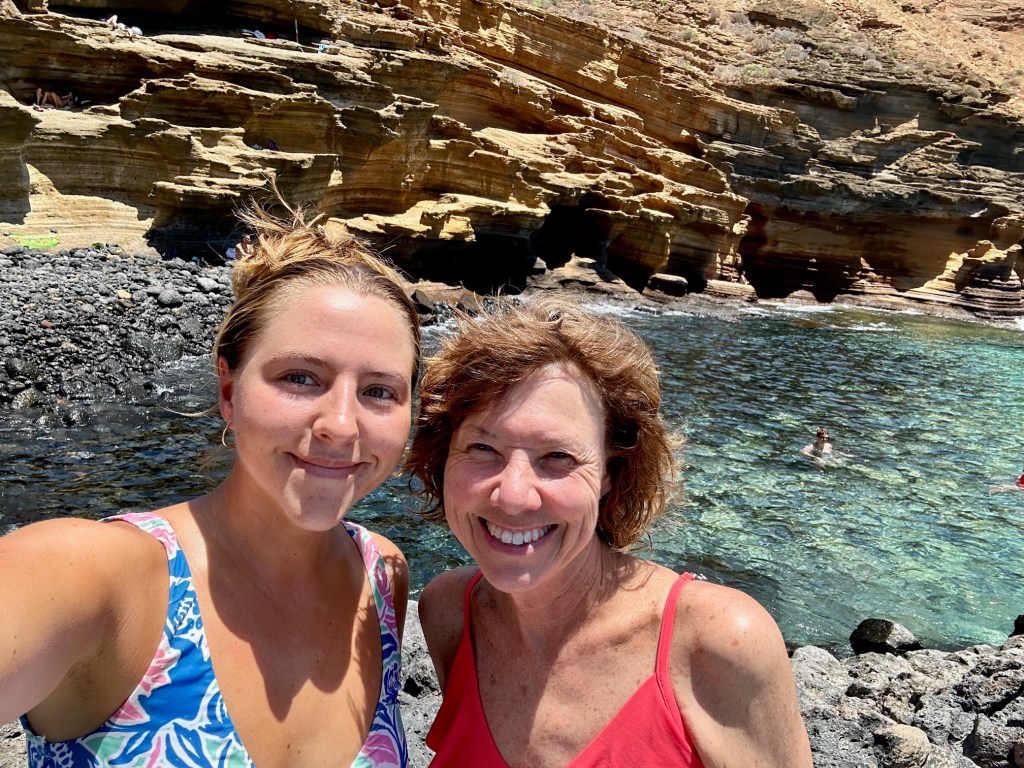
We took city busses (a major means of transportation in Tenerife, if you don’t have a car) from El Medano, then walked to get to Playa Amarillo. This is a black rock beach surrounded by yellow rocky cliffs, made by a volcano. The water is crystal clear. The yellow cliffs—eroded volcanic rock formations—around it have overhanging shelters (it’s almost like small caves) where people relax on beach towels underneath them. The only way into the water here is to jump from the diving board built off the small rocky area. The rocks are sharp and jagged, with swim shoes of some type a must! People lay out on the rocks and enjoy the beautiful water, sometimes snorkeling. We spread our towels on the black rock, jumped from the diving board into the cool and so, so clear water (wishing we’d brought goggles) then relaxed on our towels in the sun. We enjoyed watching a dog barking at a few fish in a small pool of water that had collected in a crevice of the rocks.

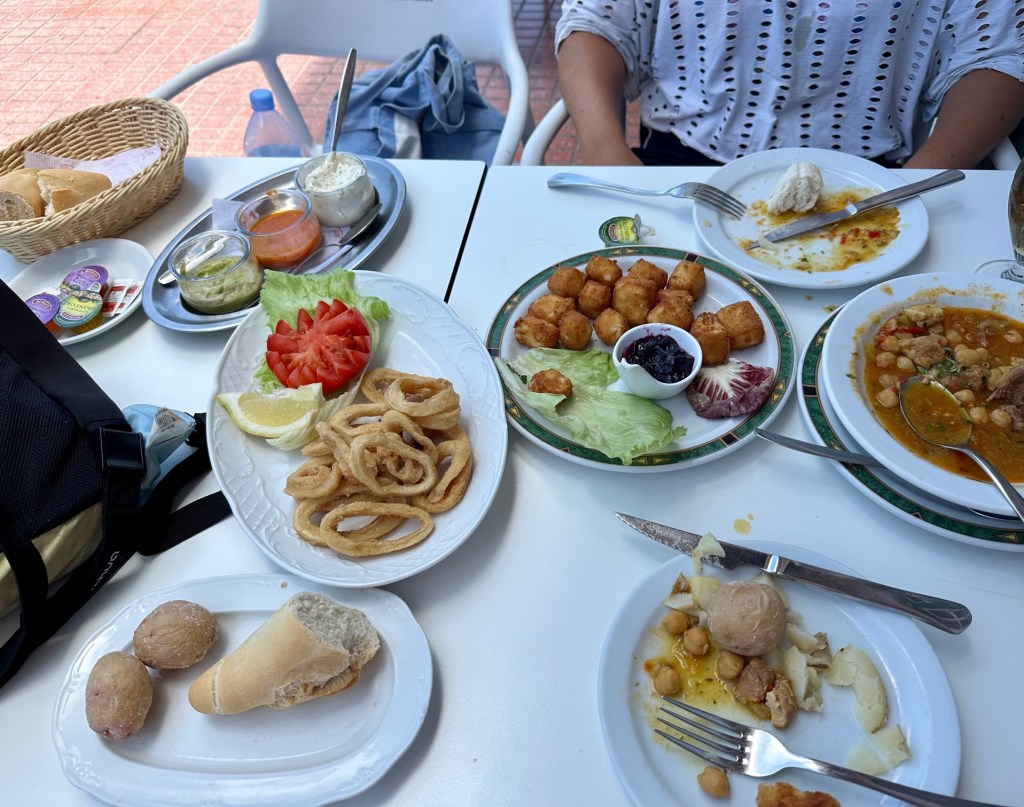
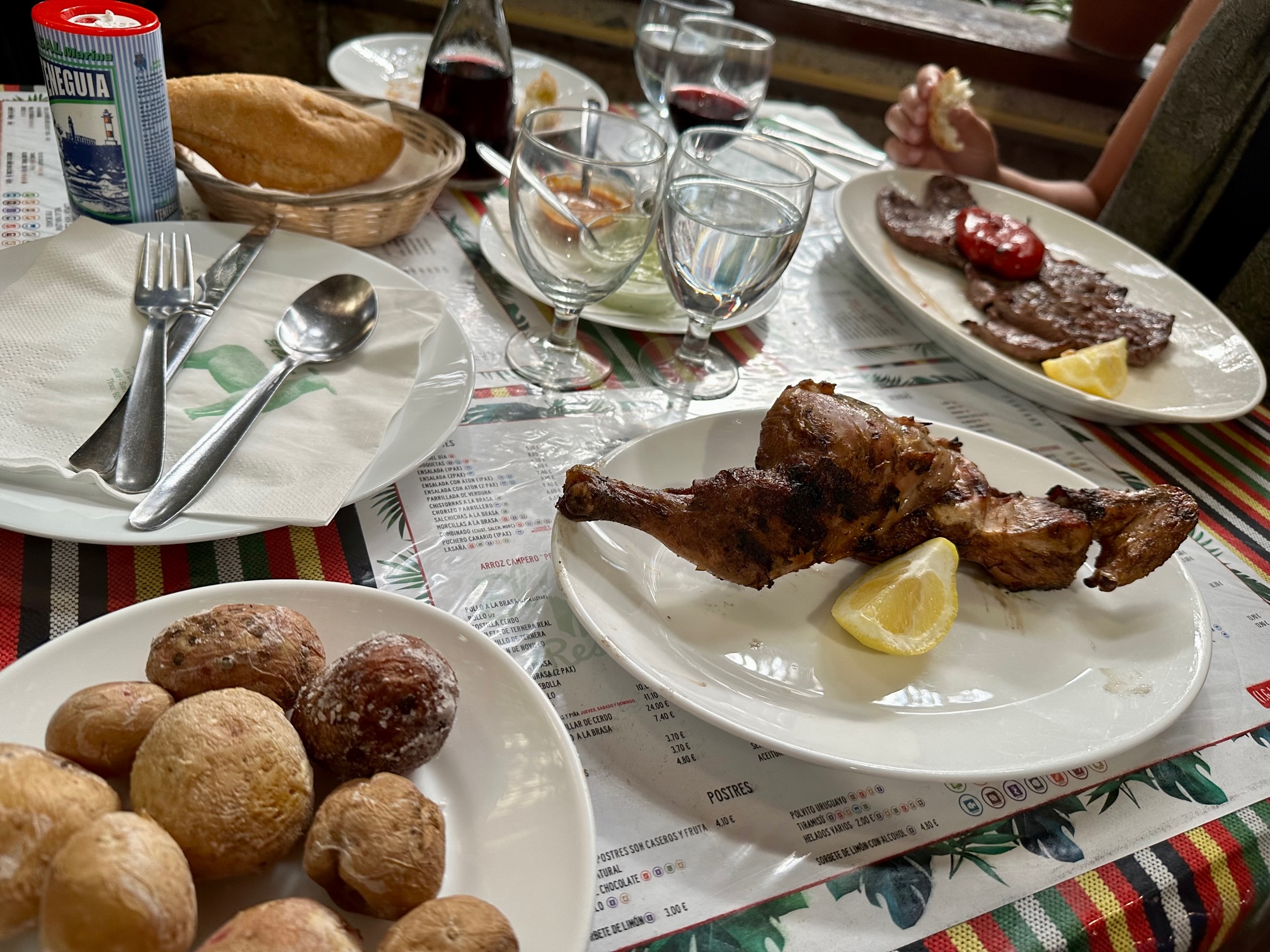
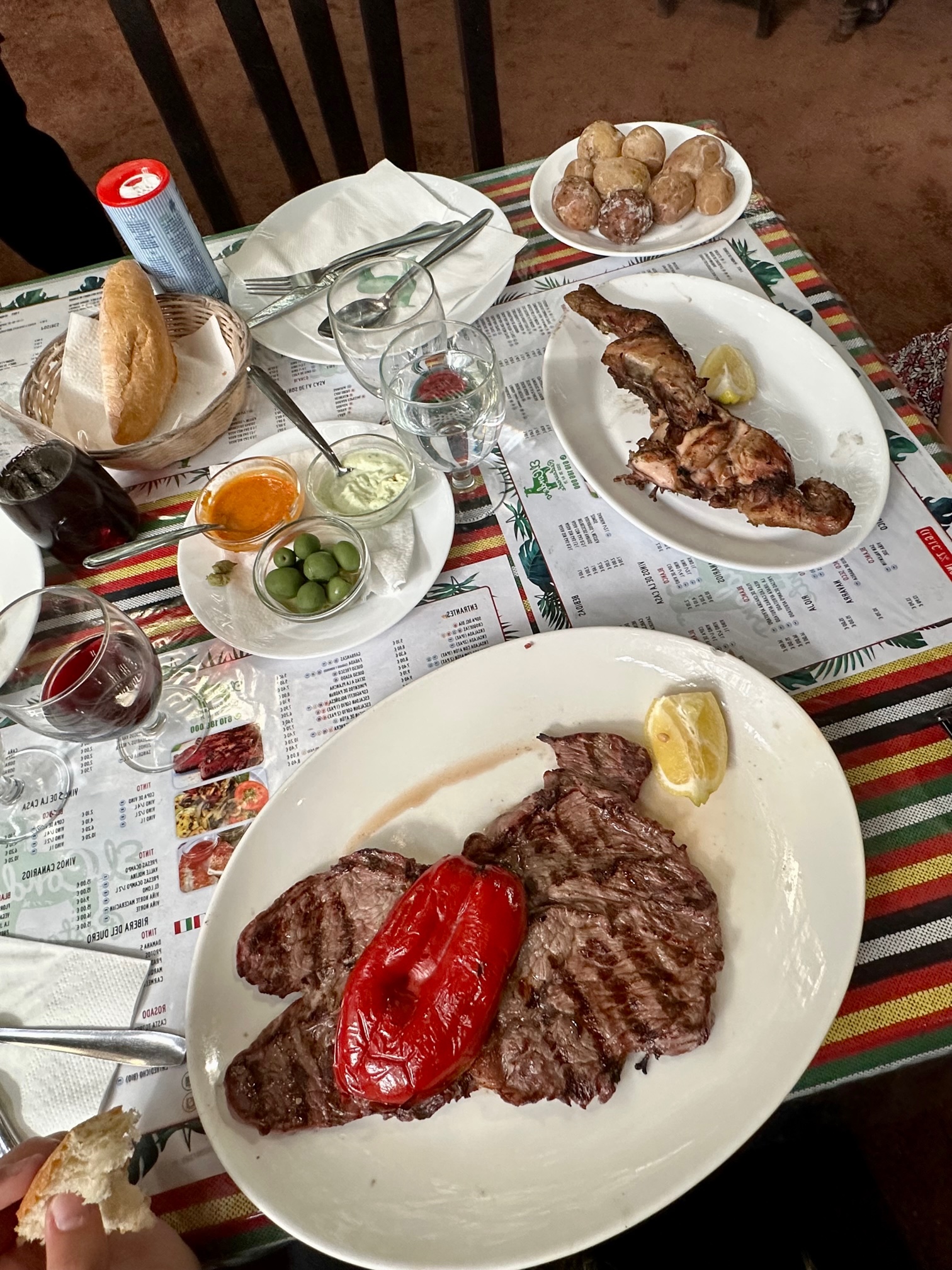
All too soon it was time to gather the towels, sunblock, and my umbrella, and walk to the village of Las Galletas (a 15 minute or so walk) to eat at a cafe that my daughter had selected for us to sample some tasty Canarian dishes for lunch. We decided on an array of appetizers which included Canarian potatoes—these small red potatoes, similar to those grown in the southern United States, are grown in a plentiful amount in the islands, and are served proudly at almost every restaurant and cafe—we also had fried cheese balls with jam; fried calamari; and garbanzo beans. There was, of course (as always anywhere in Spain!) fresh bread. And I sampled the green and red Canarian sauces that I would soon find are served at every meal in Tenerife (and the other Canary Islands, as well, according to my research)! The sauces are used to dip your potatoes or bread in, or fried cheese, or anything else, I learned! They are called Mojo sauces. The red mojo sauce is made from red chili peppers, the green from green peppers. Other ingredients found in both usually are garlic, olive oil, paprika, cumin, and vinegar. My research says that the Mojo sauces were probably invented in the Canary Islands because all the ingredients were at hand there: the chili peppers from South America, pimenton (paprika) and olive oil from Spain, and cumin from North Africa. Also, the Guanche people who lived in the Canary Islands some 1500 years before the Spanish arrived there in the 15th century, made a similar sauce with ingredients found on the island!

We had only enough time for quick showers and to change clothes, before walking a short distance to my daughter’s students’ 6th grade graduation! (She teaches English at a school there.) The building was beautifully decorated for the occasion. The graduation events included a talent show in which every member of the 6th grade class participated—in solo dance routines; comedy skits; group dance routines; and songs, as the audience clapped along to the beat of the music. Teachers, administrators, a parent, and students gave short speeches; and a teacher sang, beautifully, as the students and crowd joined in for parts of it. Teachers were called to the stage and given flowers by the students. A slide show of the year’s activities was shown. Then diplomas were awarded to each student. Altogether, the graduation lasted two hours! Refreshments were served afterward. Although our 6th grade graduations in the small town where I teach in the United States differ from this one (no “talent show” or crowd participation!) the smiles and pride on the students’ and parents’ faces and cameras flashing by all the happy grandparents, siblings, and friends were the same!

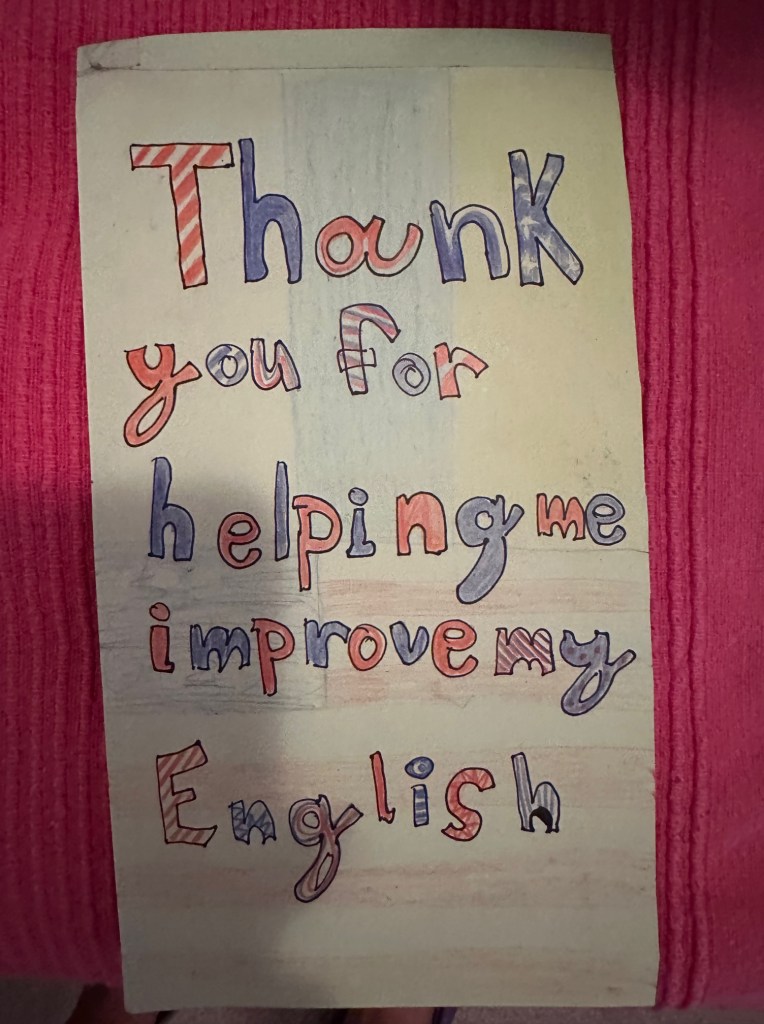
A note to my daughter from a student at her school

Day 2: Playa El Medano and Dinner at a Banana Plantation

The wind surfers were fun to watch at the El Medano beach. The mild weather and sunshine felt nice. The beach was rocky with a sharp, jagged drop-off at the water’s edge. There were more assessable areas a short walk away, though, to wade into the ocean. We’d stopped at a flea market at the village square and I’d bought a book about the Guanches who first settled in Tenerife in ancient times, so I read and napped instead. It was very windy. I was told that it is usually very windy here—much windier than other Tenerife beaches. I did my research after I got home, and discovered that El Medano is windier than anywhere else on Tenerife because it is on headland that juts out into the strong Atlantic tradewinds where the air speeds up when it pushes past El Tiede, the 12,198 foot tall volcano on the island.

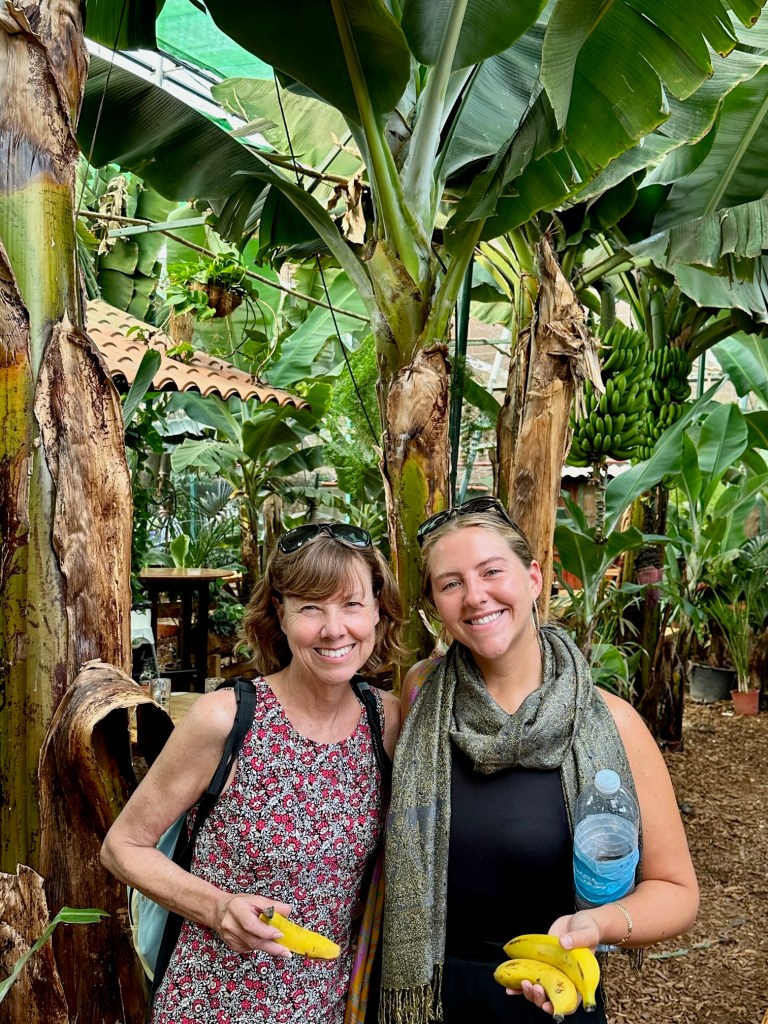
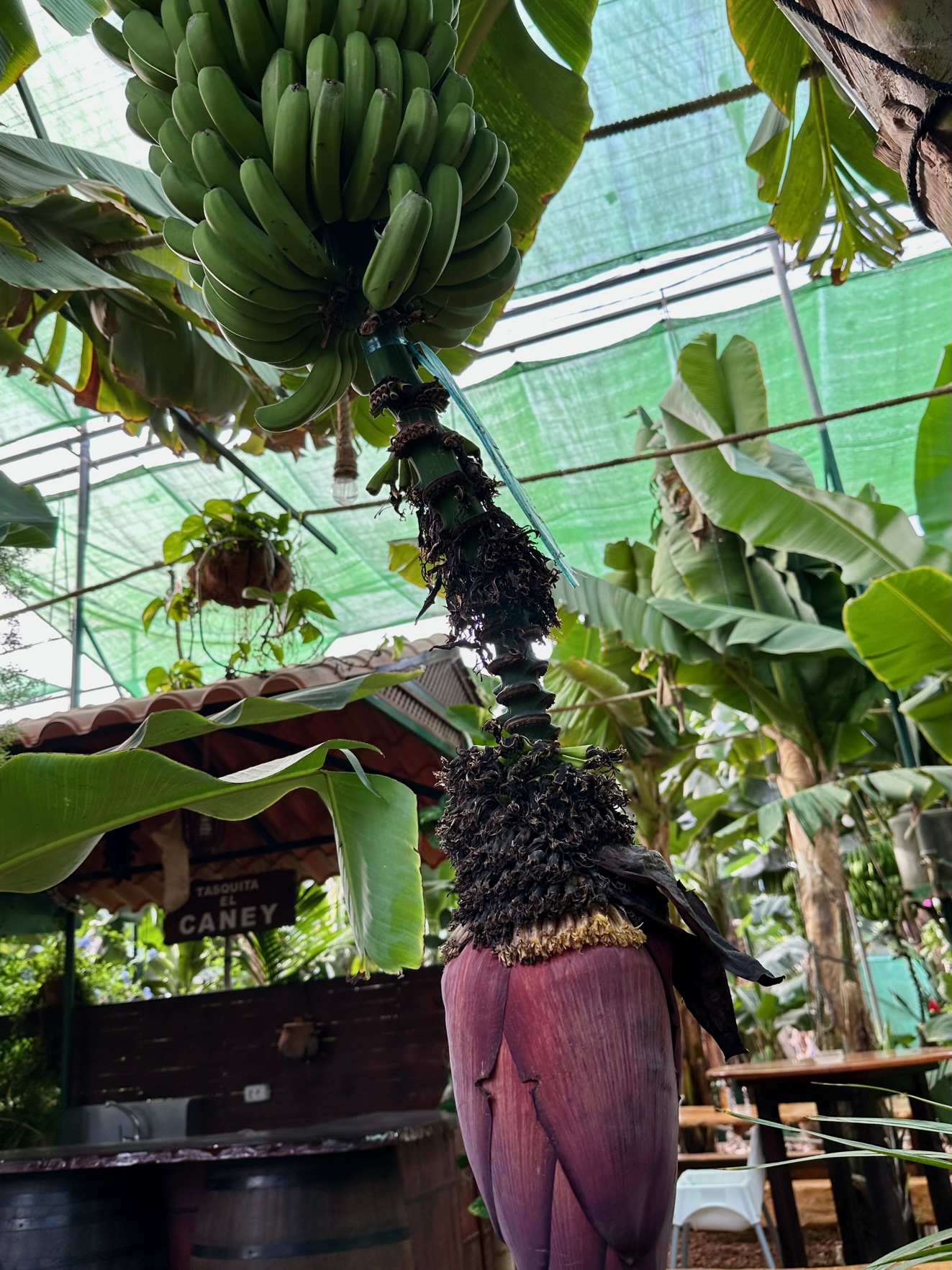
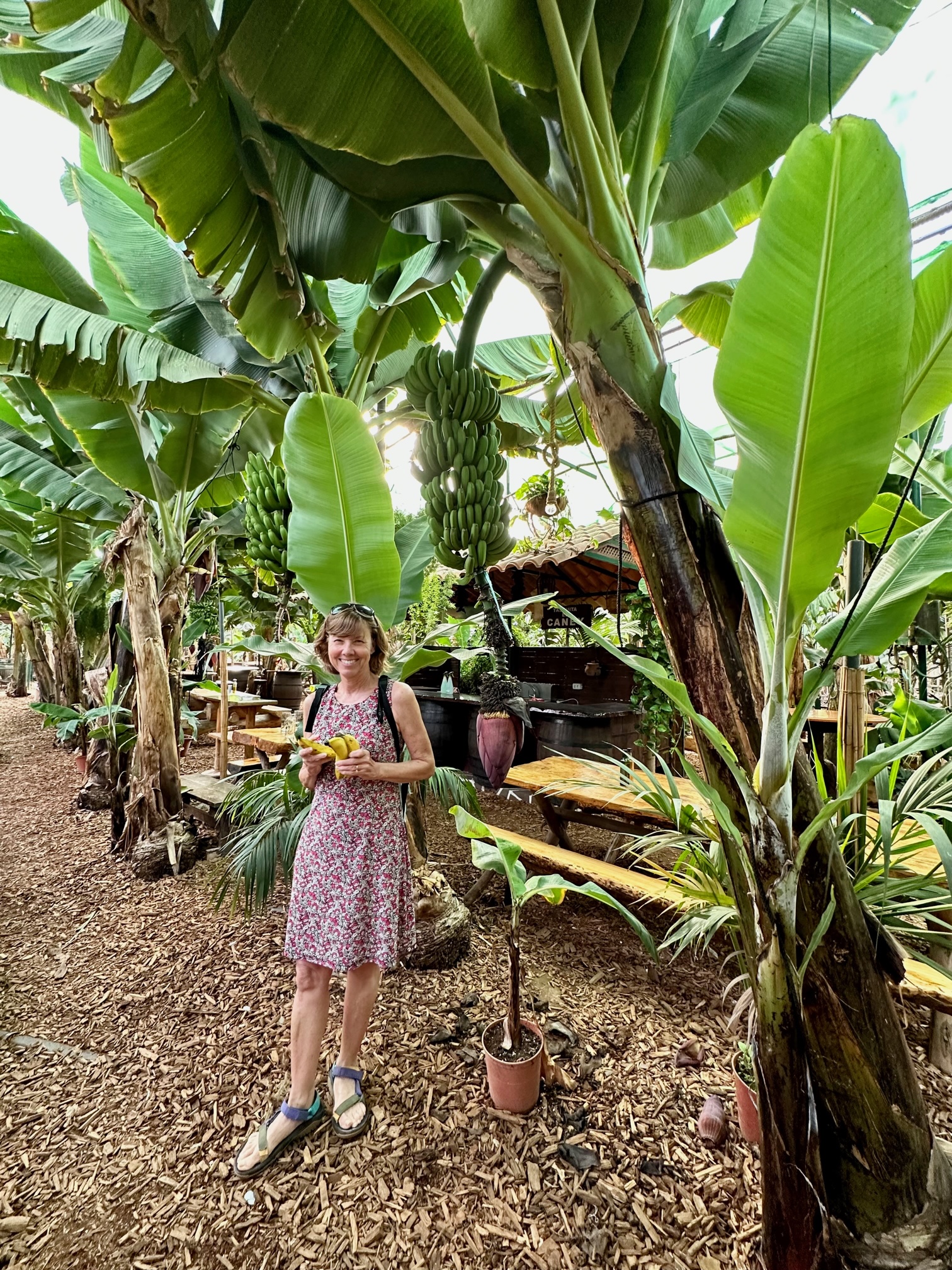
We had reservations for dinner at El Cordero restaurant—which is in a banana plantation! I had been seeing miles and miles of banana plantations on our bus rides, which was interesting to me, as I’d never even seen a banana tree at all before! The experience did not disappoint! After eating a fantastic meal in the spacious, airy restaurant looking into the banana plantation, we walked through the plantation, examined the banana trees and buds close-up, and took pictures. All restaurant customers are given a banana as they leave. It was a fun evening!

Day 3: Black Spaghetti; Los Cristianos; and Los Americas

My daughter does private “English Immersion” with children, and was gone this morning to do that. English speakers, it seems, are in demand for families to hire to play with and “baby-sit” their children, to introduce them to or enrich their English skills. On my own, I went to the beach, where a very nice couple saw me having trouble with my umbrella in the wind and the man anchored it in the sand for me. Don’t you love kind people!

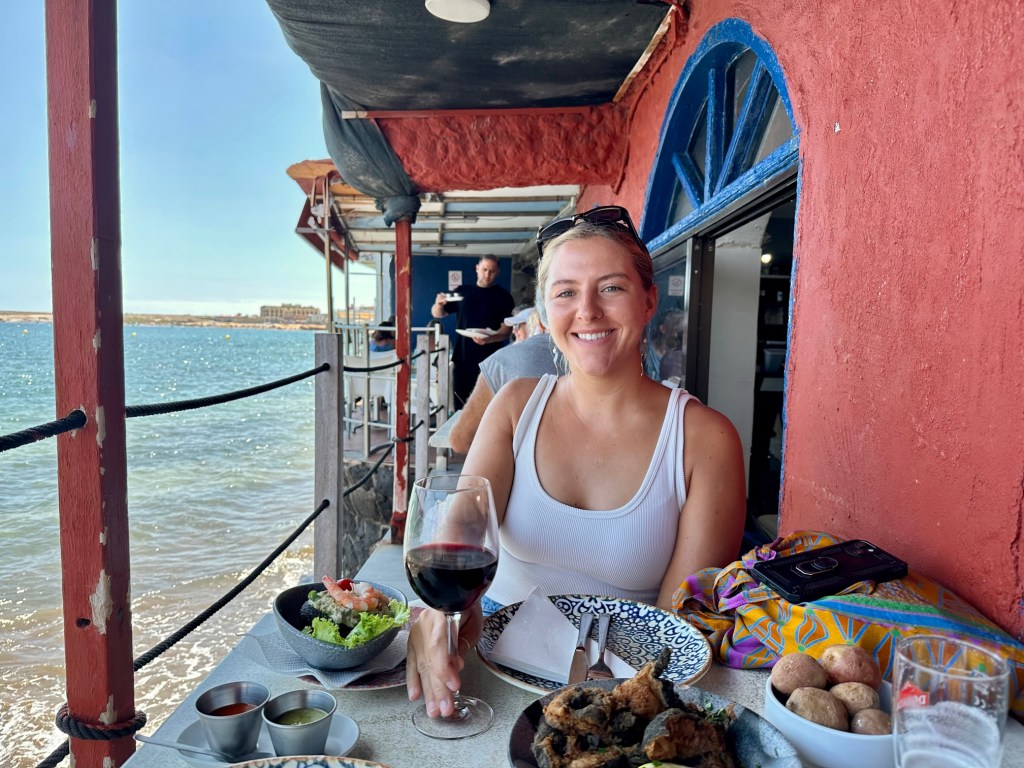
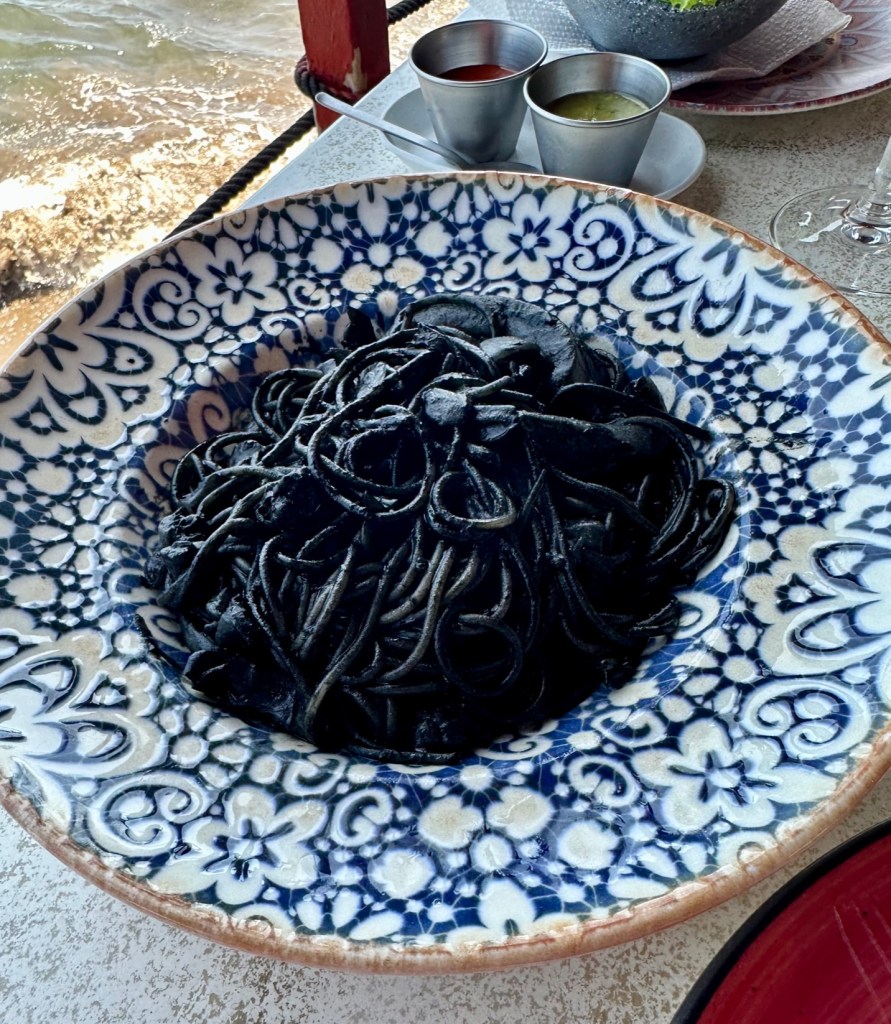
We’d made lunch reservations at Playa Chica, a restaurant on the sea front in El Medano. It was very pretty. We sat oceanside outside on a narrow strip of tables and chairs. The waiter handed our food and drinks out through the window! We tried seafood dishes we chose a bit randomly off the menu including “black spaghetti” which was spaghetti with squid and squid ink! It was quite good and I ate plenty of it!

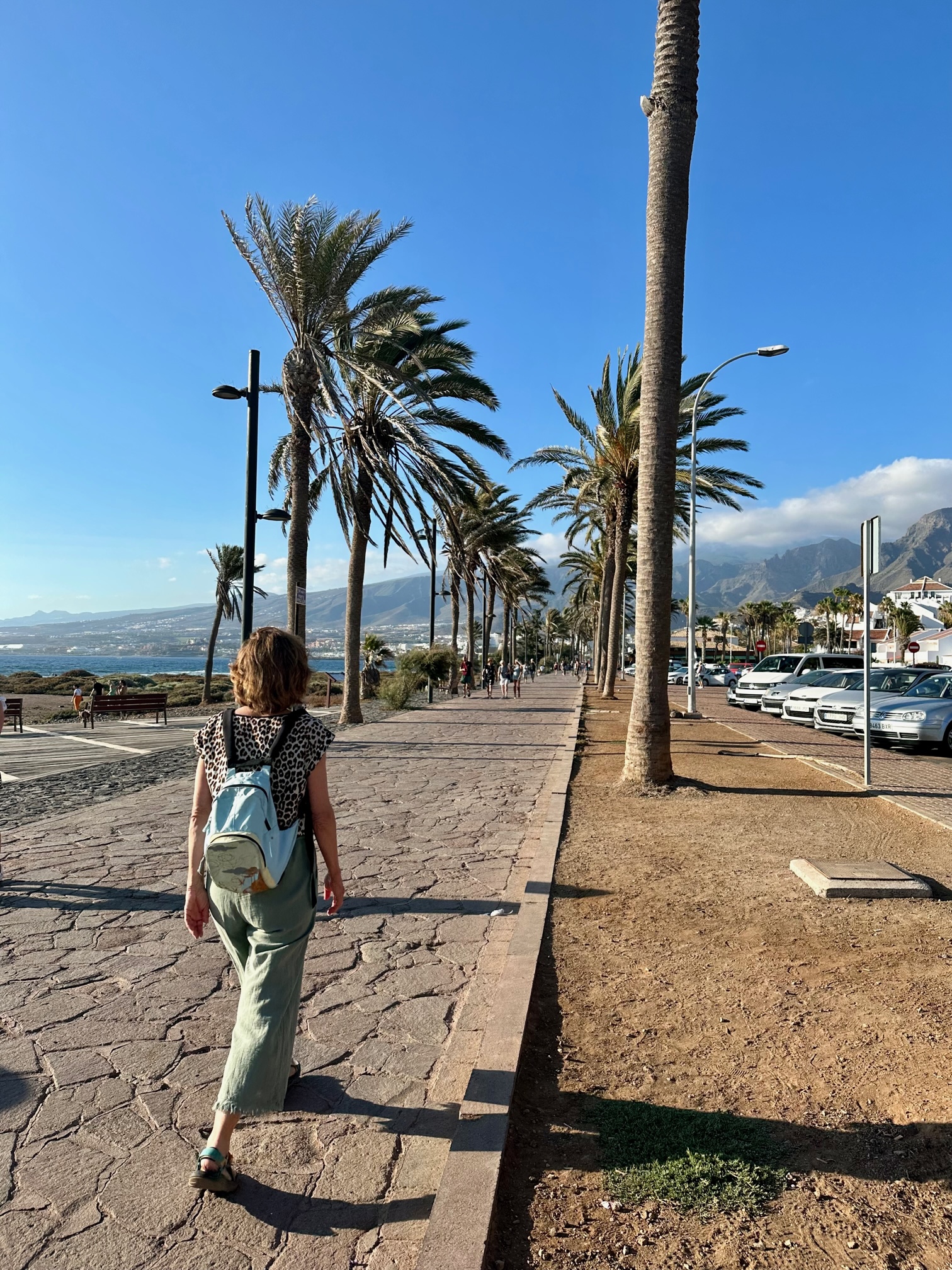
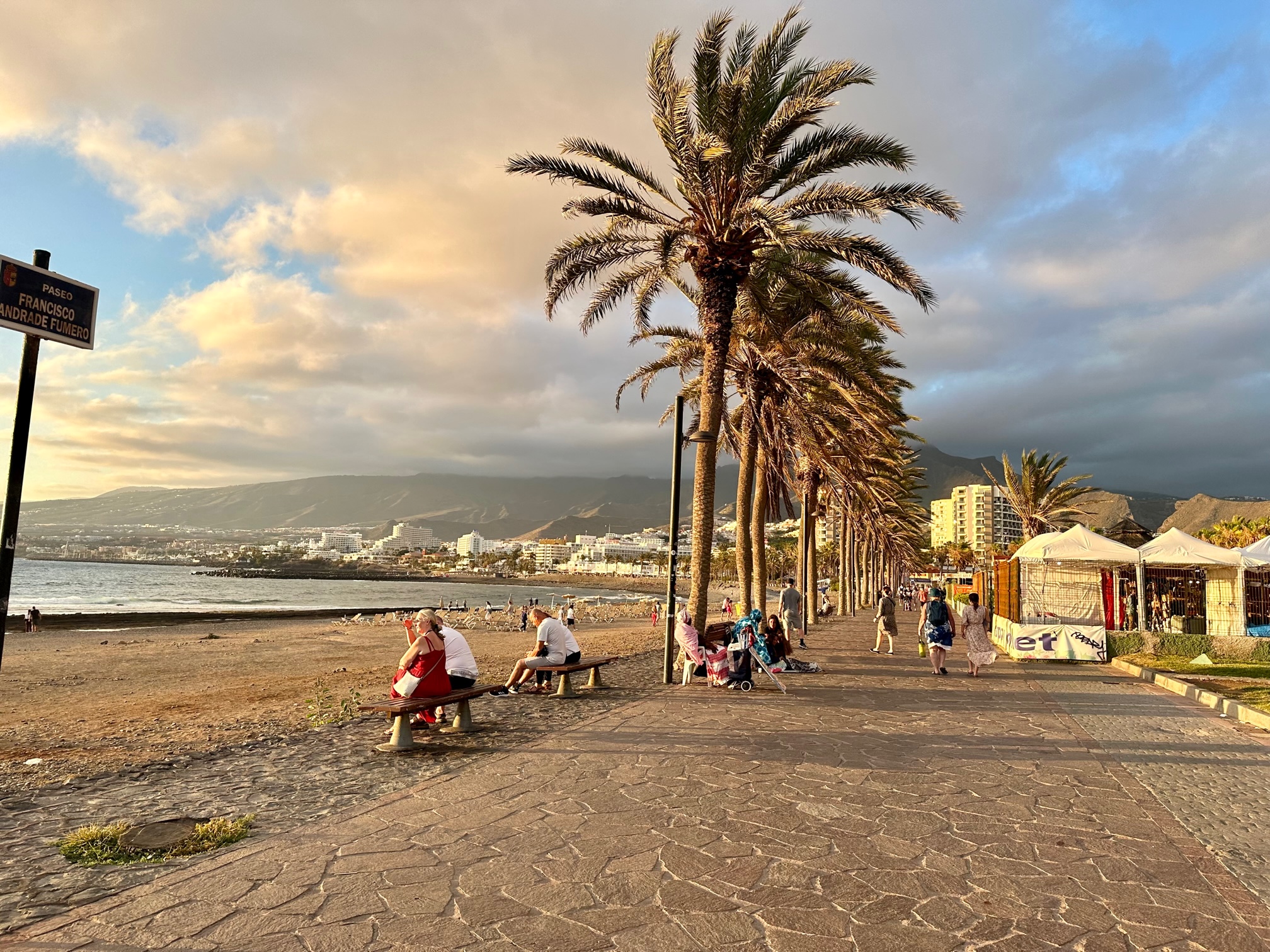
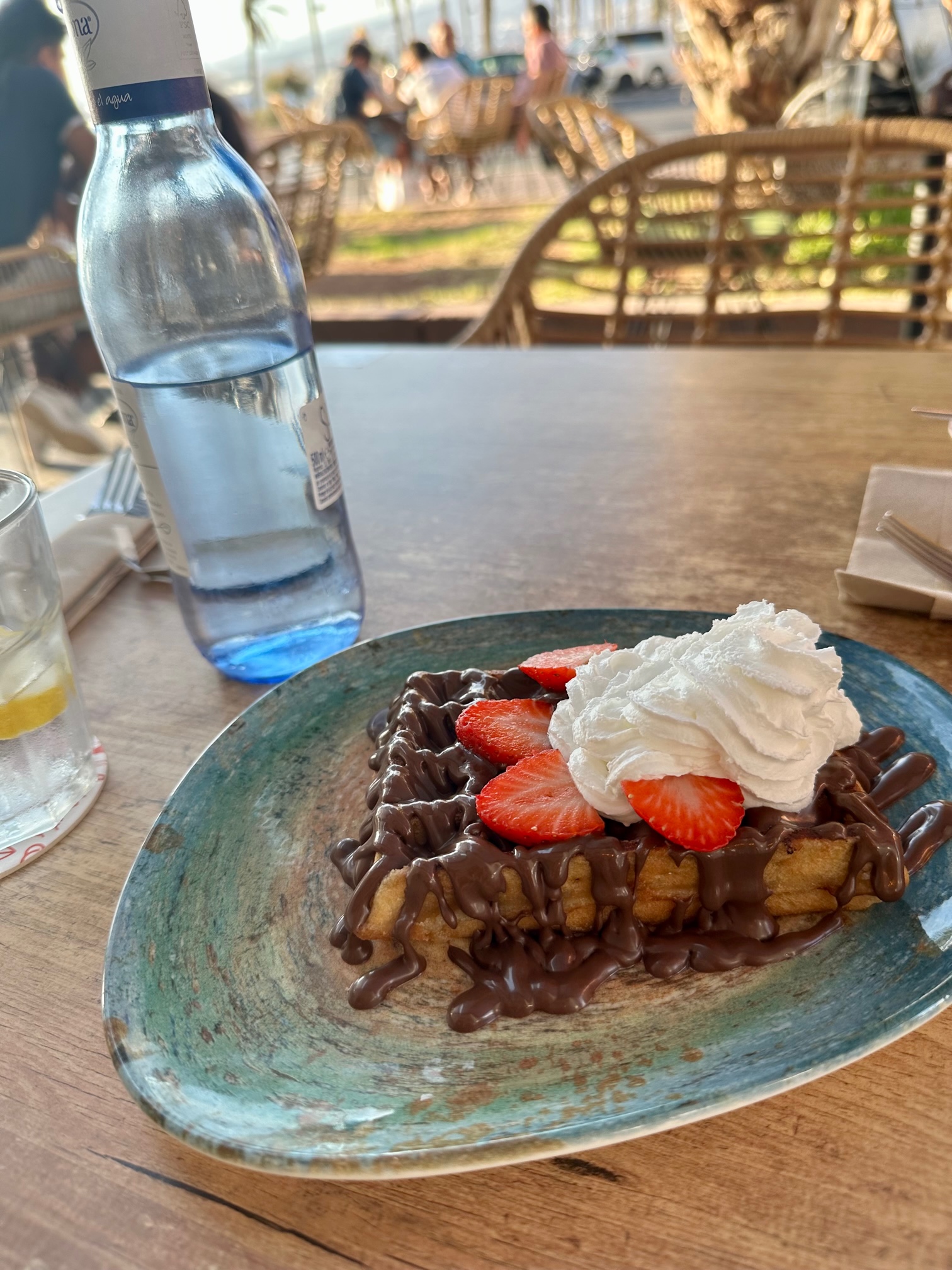
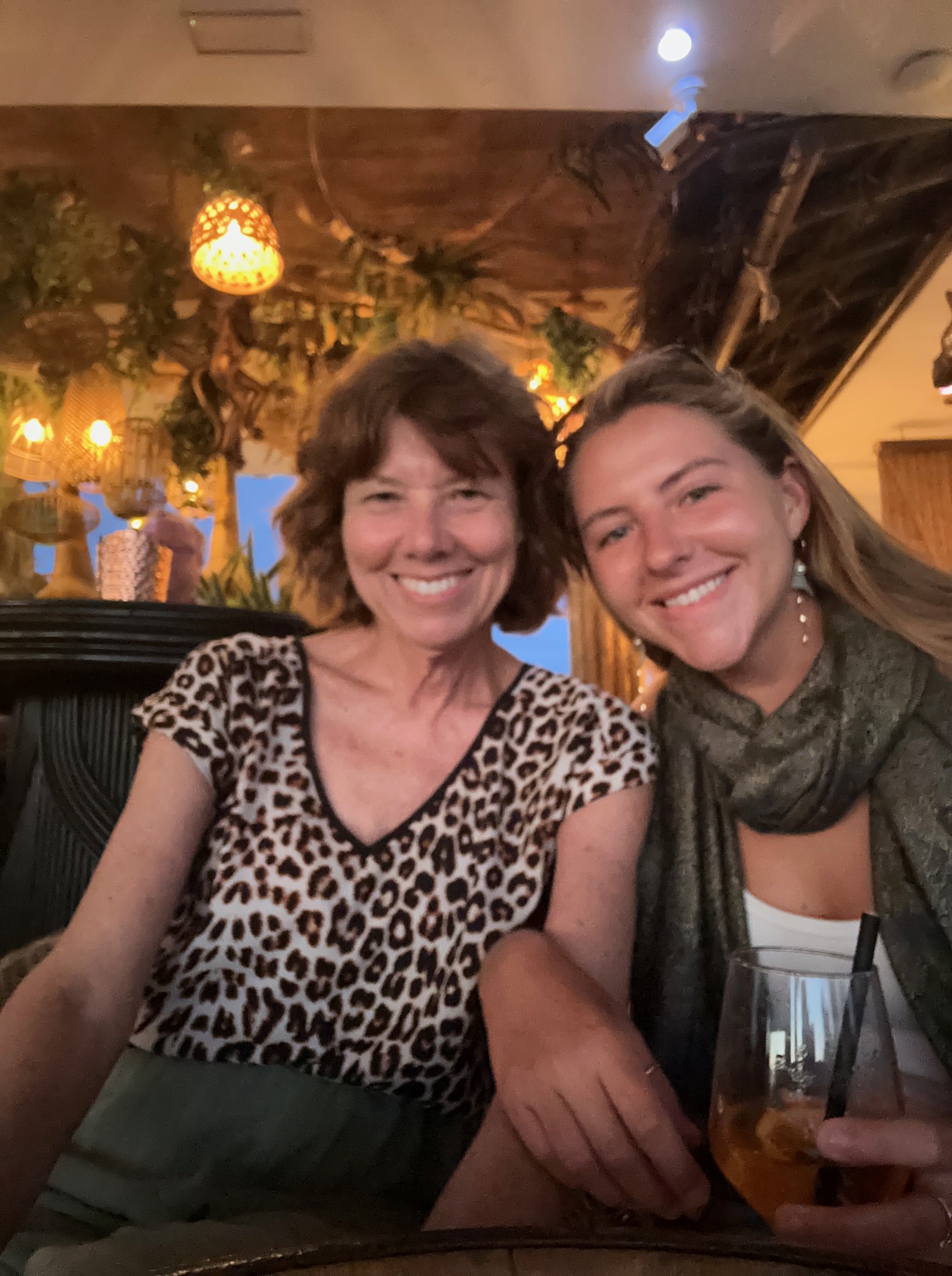
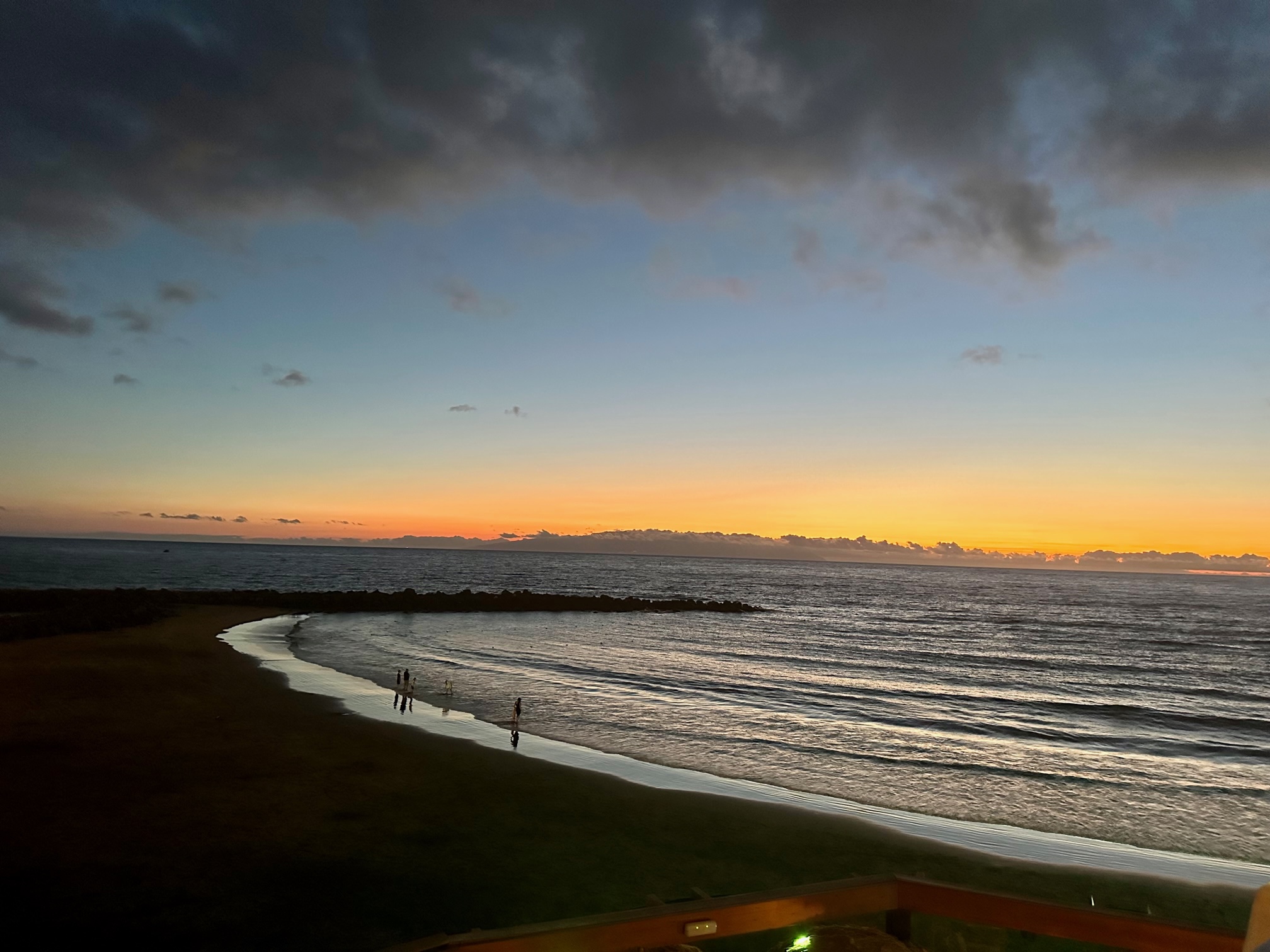
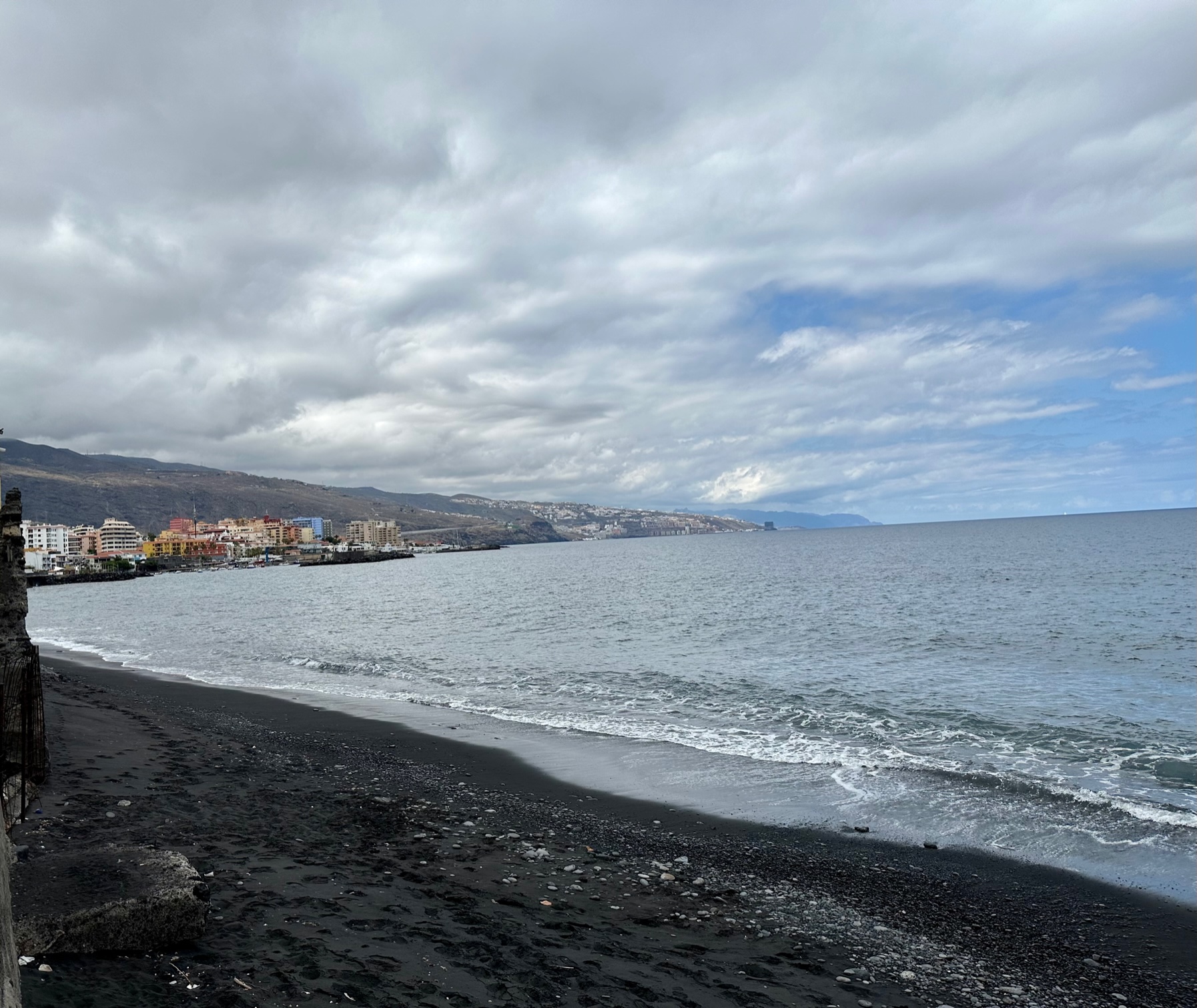
After our interesting and fun lunch, we travelled by bus to Los Cristianos which is described by Trip Advisor as “a playground for beachgoers from all over Europe.” We walked the boardwalk there, going in a few shops along the way, and stopping for a waffle with Nutella, strawberries, and whipped cream. (Nutella is very popular all over Spain, including Tenerife—although, surprisingly, peanut butter can be hard to find.) The mountains with the beach and clouds were very pretty. The boardwalk continues for many miles, through more towns including Los Americas (described by Trip Advisor as a lively, upbeat resort built in the 1960s) where we stopped at a “happening” jungle-themed bar and restaurant to watch the sunset and have something to drink.

Day 4: Candelaria and Santa Cruz

After souvenir shopping and beach time in El Medano, plus a crepe at a cafe there for breakfast; then a huge, messy, delicious pancake-like wrap with lots of vegetables (including corn!) in it for lunch—bought at a nearby cafe and eaten on the beach—we left for Candelaria.

Candelaria

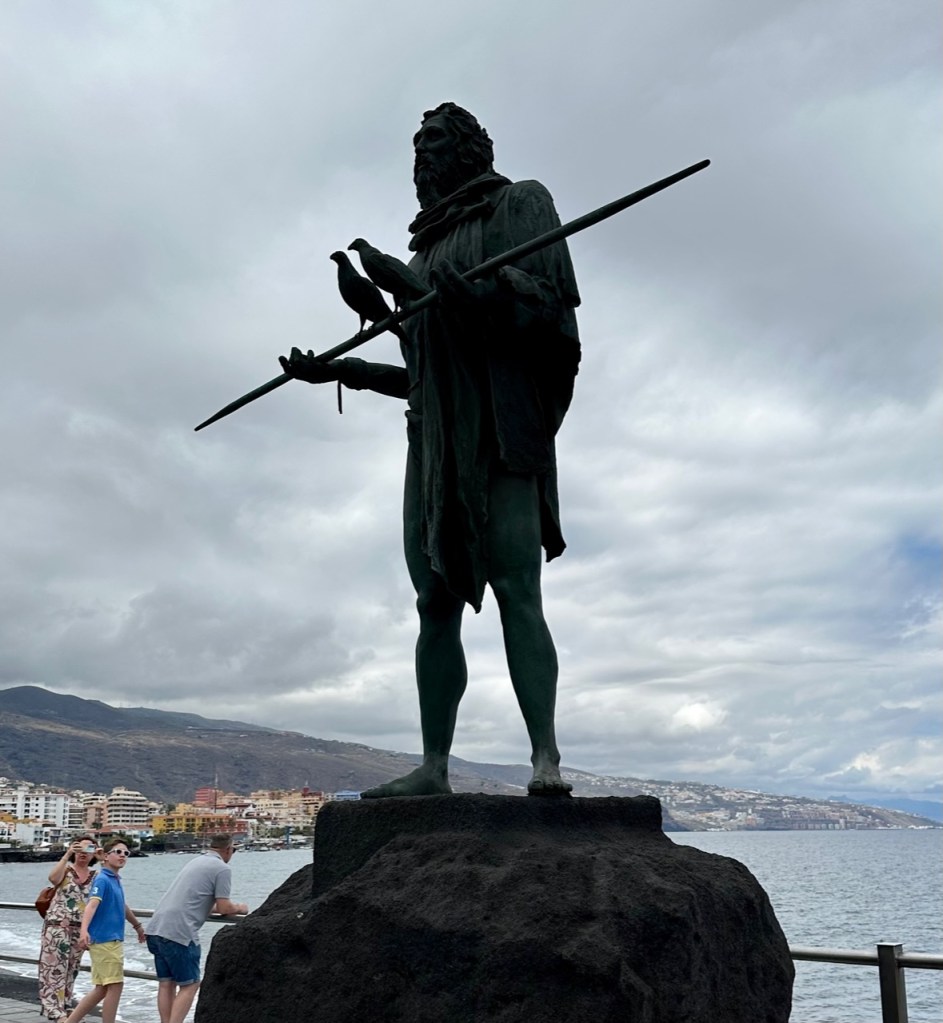
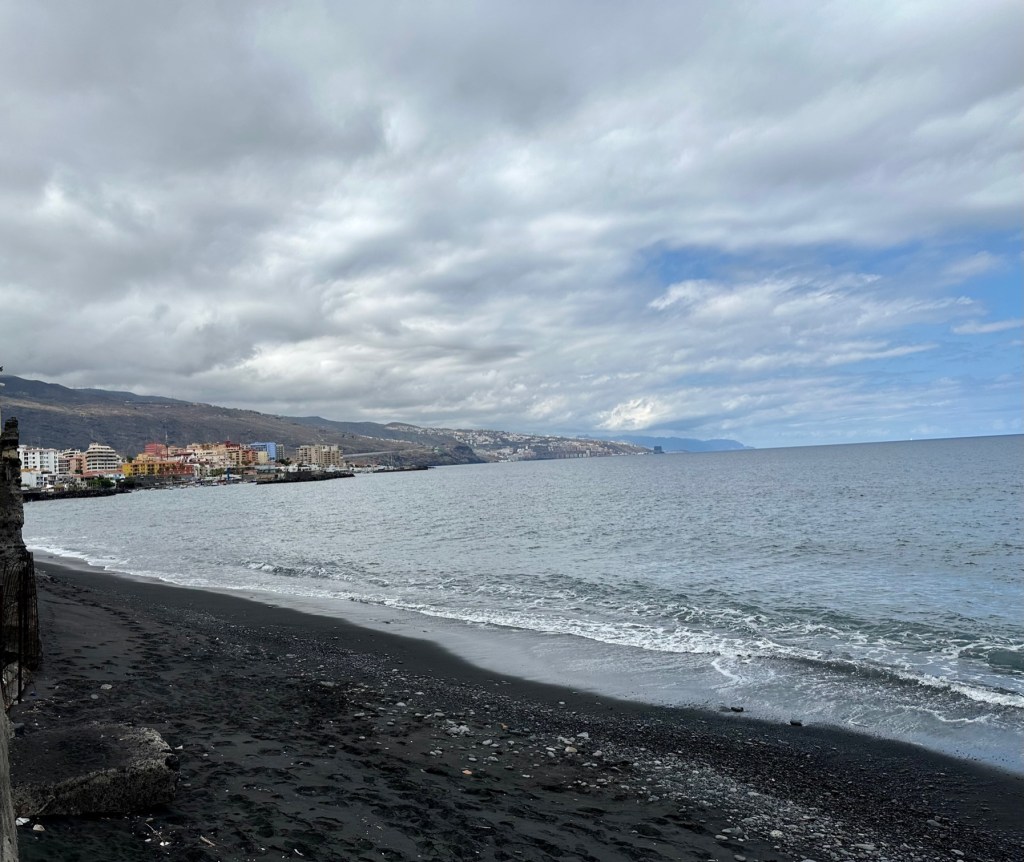
My daughter had an English Immersion baby-sitting assignment in Candelaria. One of mu daughter’s roommates kindly drove us there (around a 30 minute drive) having an appointment himself in the area. We went a bit early and walked around Candelaria, which is a very pretty Tenerife village with its black sand beaches surrounded by volcanic mountains. We walked by each of the 9 Kings of Tenerife statues.

The statues of the kings represent the nine Guanche kings who ruled the nine different kingdoms of Tenerife in prehistoric times. Currently there are bronze statues, which replaced statues made of volcanic rock which were transferred somewhere else (for safekeeping, I presume) in the late 20th century. I haven’t been able to find out when the volcanic statues were originally made and placed in Candelaria! If you like a challenge, please try to find out, and let me know too!
One of the 9 Ancient Kings of Tenerife Statues

We went inside the basilica there, called the Basilica of Our Lady of Candelaria. The historic statue of Mary there is somewhat uniquely depicted as a dark-skinned woman. She wears a gold crown and holds a gold scepter in one hand and a baby in the other. The statue was reproduced in 1830. The original one had washed up on Tenerife’s shores as early as 1400! The original “Black Madonna” as it is called, had blonde hair. No one knows for sure where the original one came from!
https://www.interfaithmary.net/black-madonna-index/tenerife

After coffees at a cafe, my daughter and I walked to her English Immersion job. I joined them for a while. The children (ages 3 and 5) were making a ‘cake’ with their mother, and my daughter. The cake was what I call a ‘pie’ and they were making the crust for it. Fun fact: In the United States, we measure flour, sugar, and other such ingredients, using measuring cups (or at least I do; don’t you)? But this mom used a scale to measure all, by each ingredient’s weight. As I’ve read up on it, it turns out weighing is much more accurate than measuring. This method is used especially by professional bakers. It is also used in most homes in Spain, according to at least one blogpost I read.

In Spain we work by weighing the ingredients, especially in baking.” -Miss Blasco Blogpost

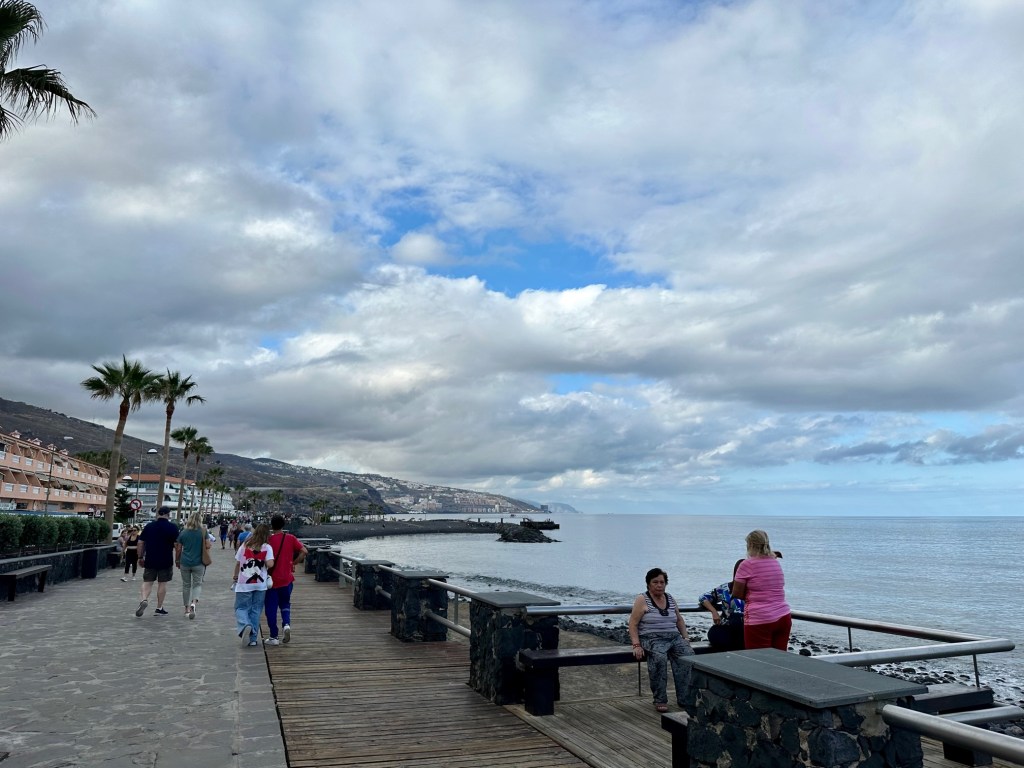
While my daughter continued her baby-sitting, I left to walk down the boardwalk in Candelaria. It was nice with not too many people, and cloudy, mild weather. The setting is beautiful, the city nestled in between the mountains and ocean. The boardwalk stretches on and on, with shops and cafes and restaurants as far as you can see, and beyond the boardwalk more shops, cafes, and restaurants. I stopped for something to drink and a snack, and took time in the otherwise empty outdoor cafe to call home.

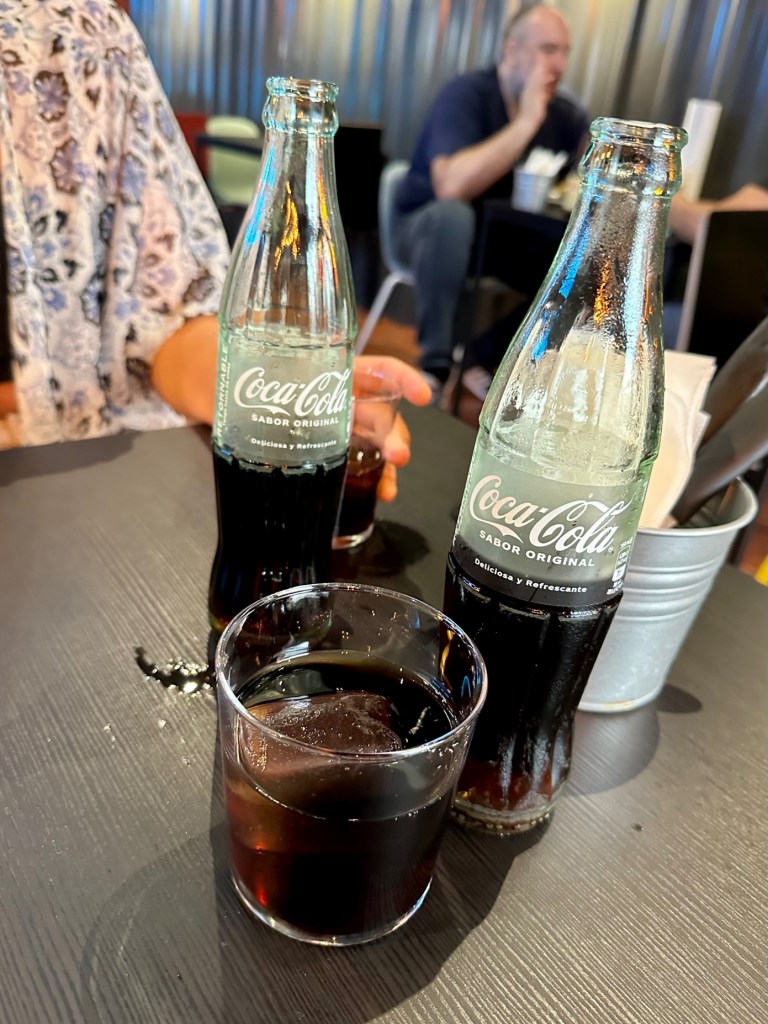
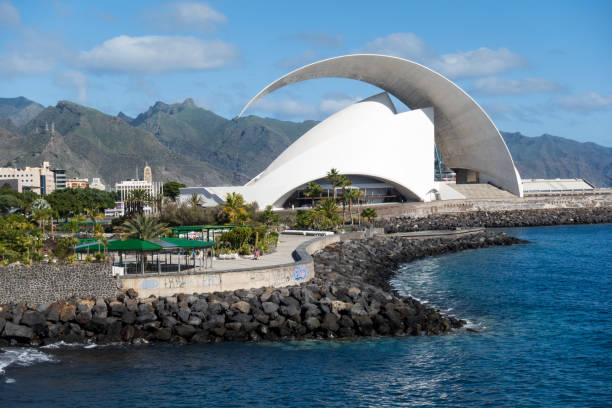
When my daughter finished, we got a bus to Santa Cruz (a 30 minute or so bus ride from Candelaria). Santa Cruz is the capital city of Tenerife, and one of the capital cities of the Canary Islands, the other being Las Palmas on Gran Canaria island. We walked around in Santa Cruz. I noticed the big trees there unlike the palm trees I was used to seeing in the beachfront towns we’d been in. There is an amphitheater in Santa Cruz, called the Auditorio de Tenerife, that is a replica of the Sydney Opera House. After walking around enjoying the sights of the capital city, we stopped for a hamburger and fries; an appetizer of French fries with guacomole, cheese and beans atop them—much like our “nachos” but with French fries instead of tortilla chips; and coca-colas. We did a little shopping at a huge department store where I found and bought the style of tennis shoes I’d been looking for. Then we caught the bus to El Medano and settled in for the long (hour or so) bus ride.

(picture of the Auditorio de Tenerife)

Day 5: Los Gigantes; Hell’s Valley; and El Teide!

Barranco del Infierno: Hell’s Valley

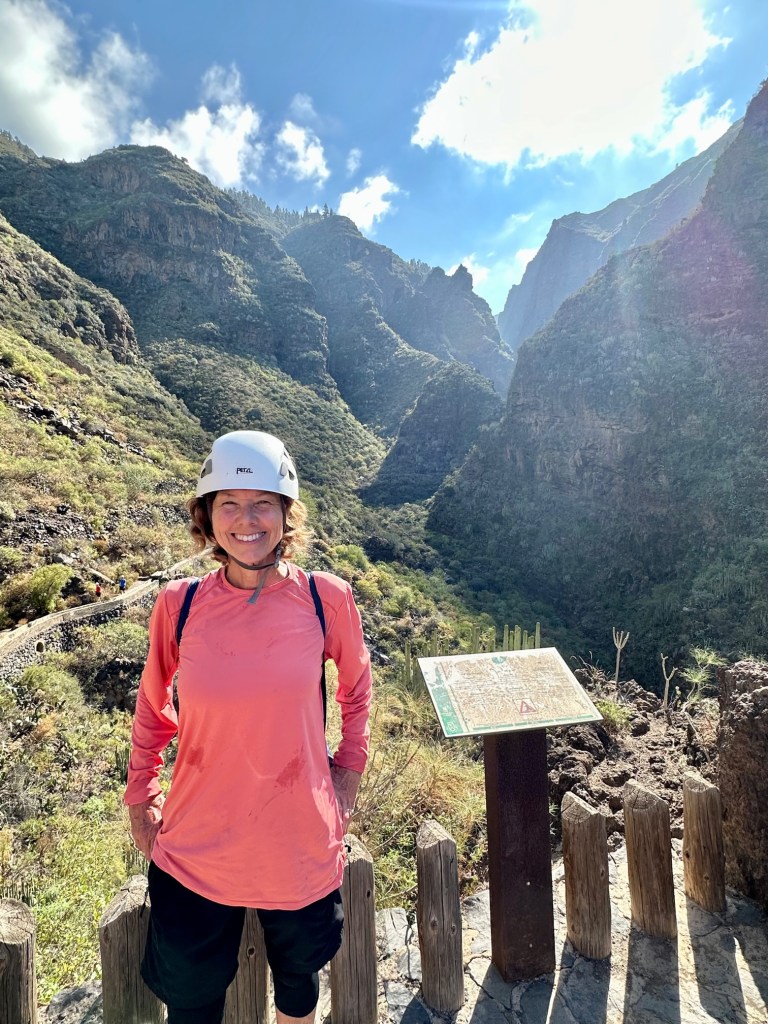
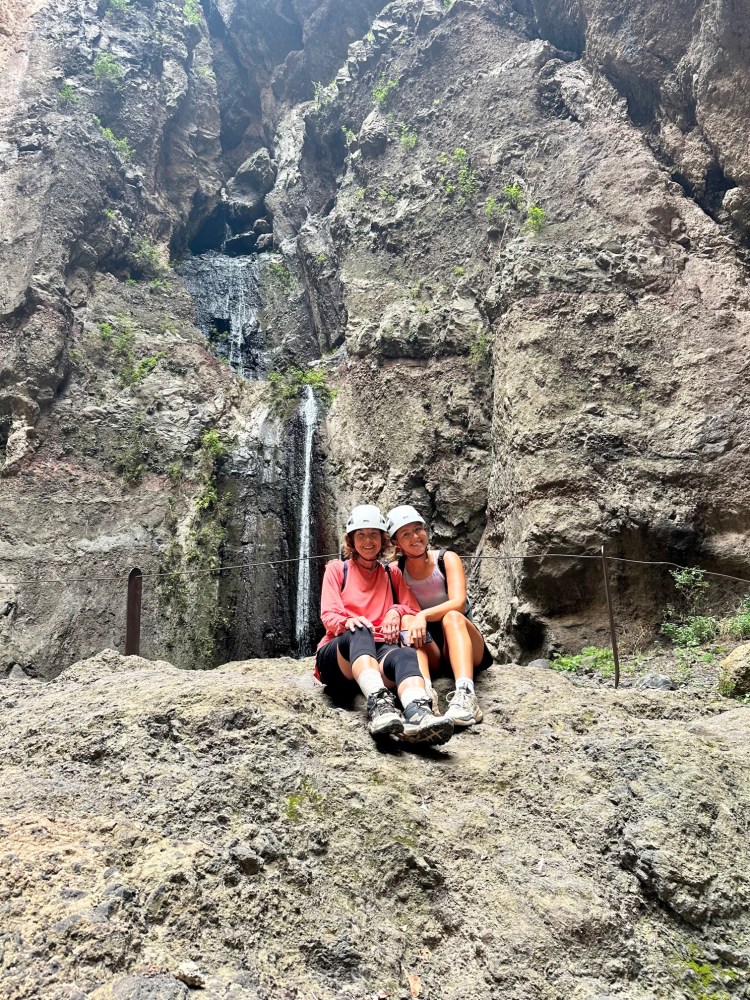
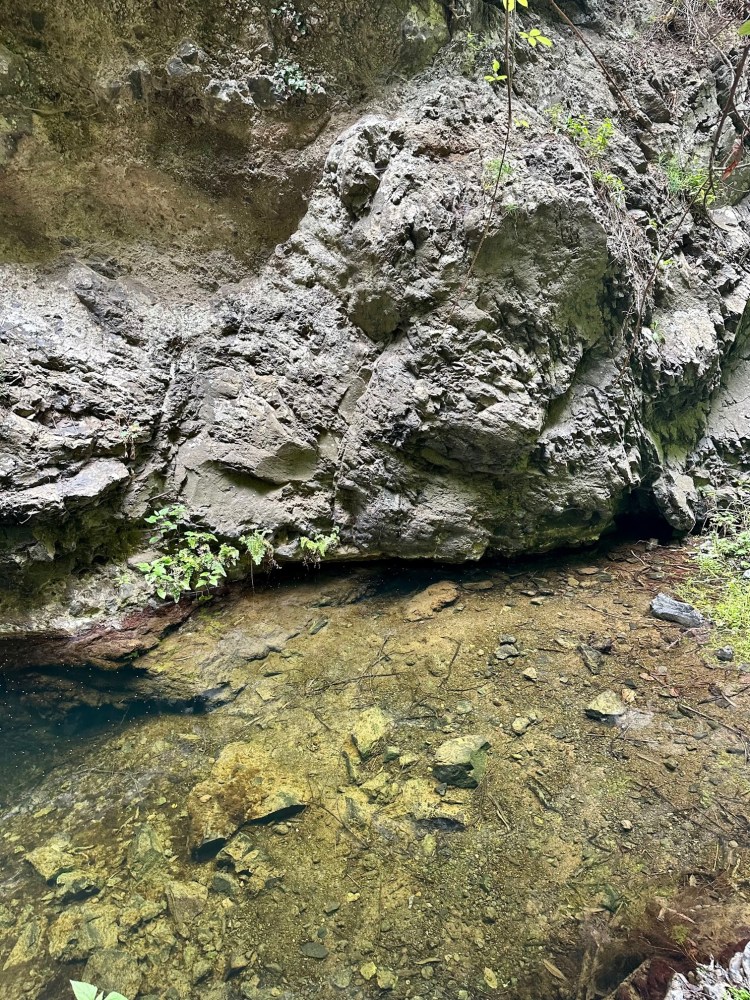
My daughter, a friend of hers, and I started the day by going to hike the gigantic gorge named Barranco del Infierno—Hell’s Valley! Would it be aptly named? We started early and I wore my knee sleeves, just in case! We were required to wear helmets, as there is a chance of falling rock. It was a beautiful hike—there was some shade along the way and it wasn’t too hot; we were used to the steep climbs from our week on the Camino; and the 3 hour or so experience was, I might say, the exact opposite of “Hell’s Valley”! I had a great time and enjoyed every minute! There is a waterfall at the top of the canyons which signifies time to turn around and go back. We had our snack we’d brought, while at the waterfall. The hike was awesome, with canyons, streams, cacti, and jungle-like parts, too. Beautiful and so much fun.

Slideshow:

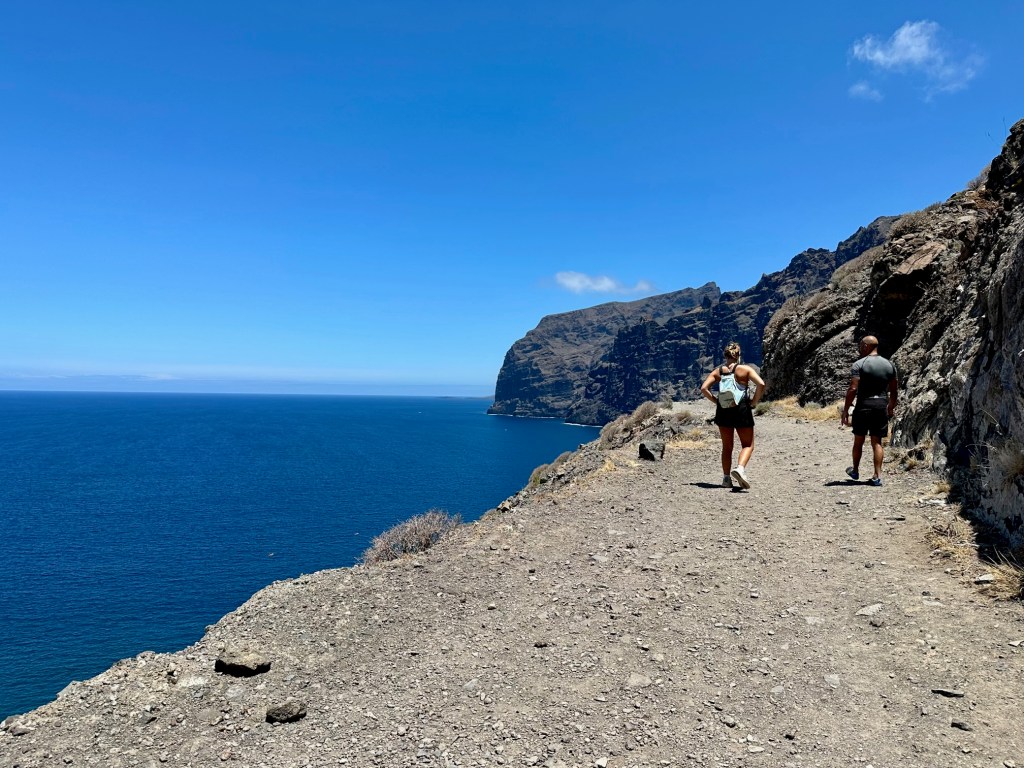
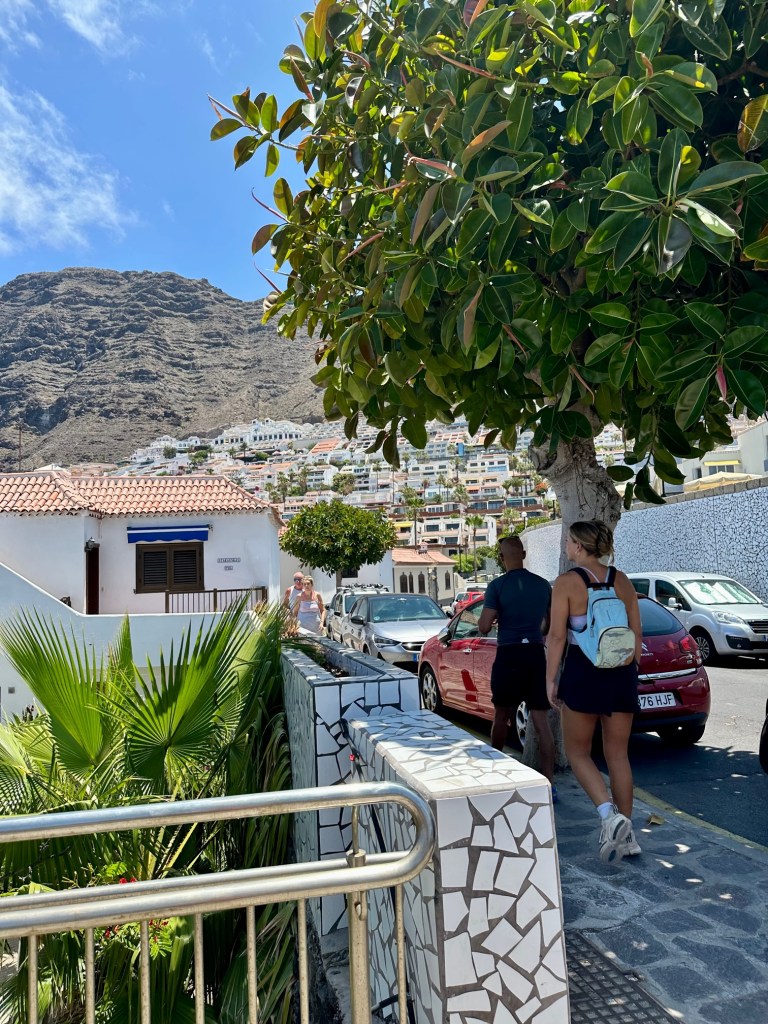
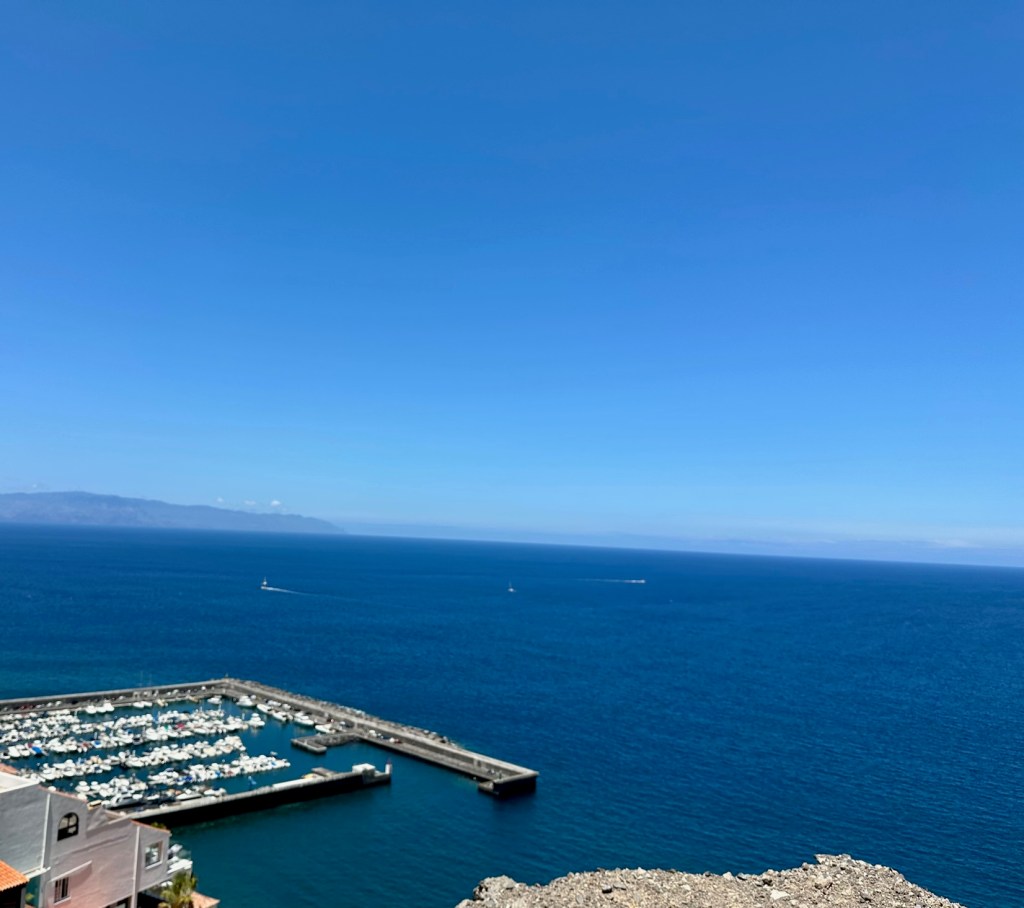
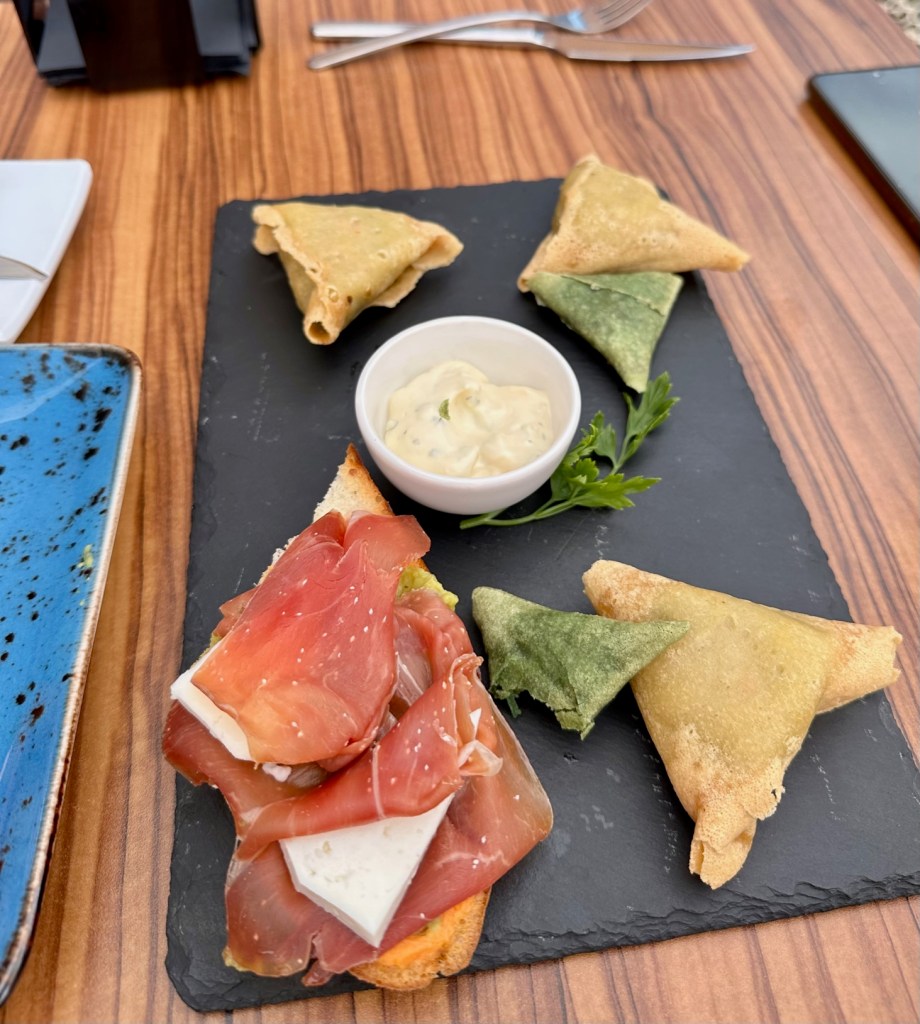
Still psyched from the awesomeness of the Hell’s Valley hike, we drove to Los Gigantes, which is a resort town famous for its gigantic volcanic rock cliffs that plummet straight down into the sea. The cliffs are, I later read, 1970 feet high, and, because of their enormous height, unique geologically. I didn’t have to do any research, though, to tell you they are a majestic sight to see! We stopped on the outskirts of the town of Los Gigantes to walk around, amazed by the beauty of the area. We had a crazy-hard time finding a parking place in this town, but it was well worth it to walk around then settle at a cafe looking out on the cliffs and crystal-clear ocean, where beach-goers relaxed and swam. We had an outstanding lunch there—I was expecting perhaps typical touristy food but everything we ordered was very tasty. I ordered samosas which were new to me. They were delicious! They were thin triangle-shaped hot fried pastry, some filled with chicken, some with fish, and some with vegetables. I would definitely order them again; so good! Funny story: I thought I was ordering guacamole and cheese toast with jam, but it was ham. I’m accustomed to seeing “jamon” (the Spanish word for “ham”) but the menu had read “jam”. I looked for my jam for a minute before realizing what had happened.

(Notice the ham, not jam, on the guacolmole toast!) The samosas (pictured) were wonderful!

Interesting: Whenever we stopped to fill up with gas, a gas station attendant would come out to pump the gas! A “blast from the past” for me! I did a little research to see if that was an anomaly, and I read that in rural areas in Spain, the majority of gas stations are served by attendants who, yes, come out and pump your gas for you.

Ready for one more fun fact? I bought a package of cookies at the grocery store (“supermercado”) that were called “granola with milk chocolate”. Turns out “granola” is our “graham cracker”. These chocolate-covered grahams were extra-good! Better than any I’ve had.

After the spectacular sights we’d seen today, you’d think we might’ve called it a day; but the grand finale was yet to come…

El Teide/ Above the Clouds:

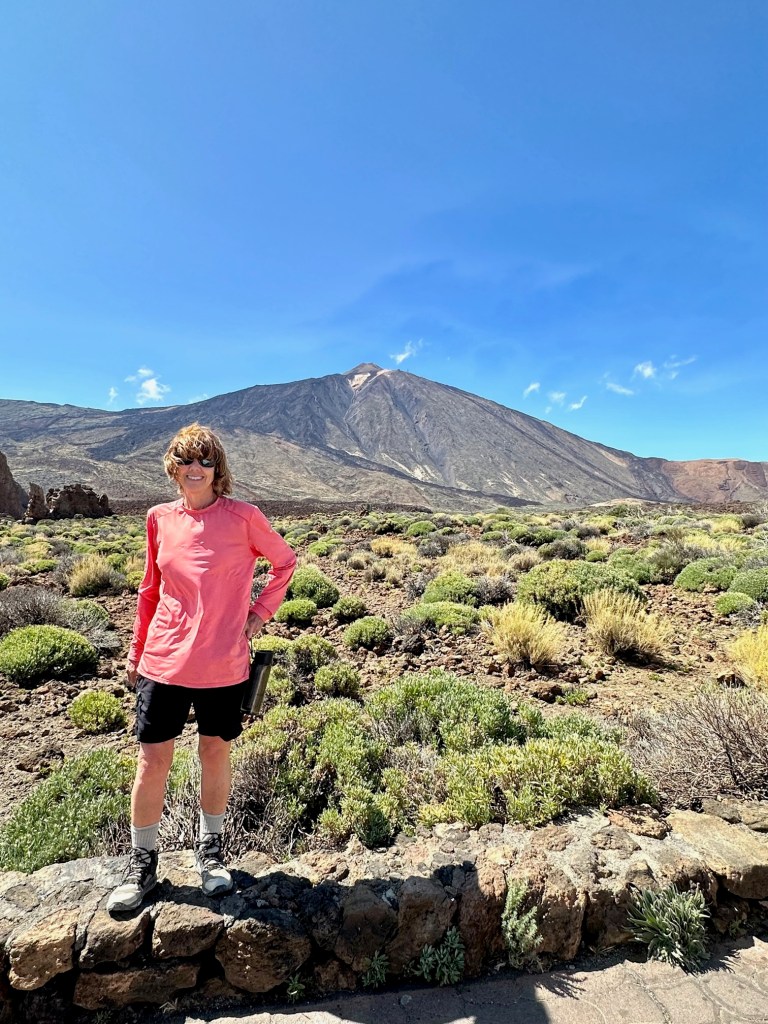
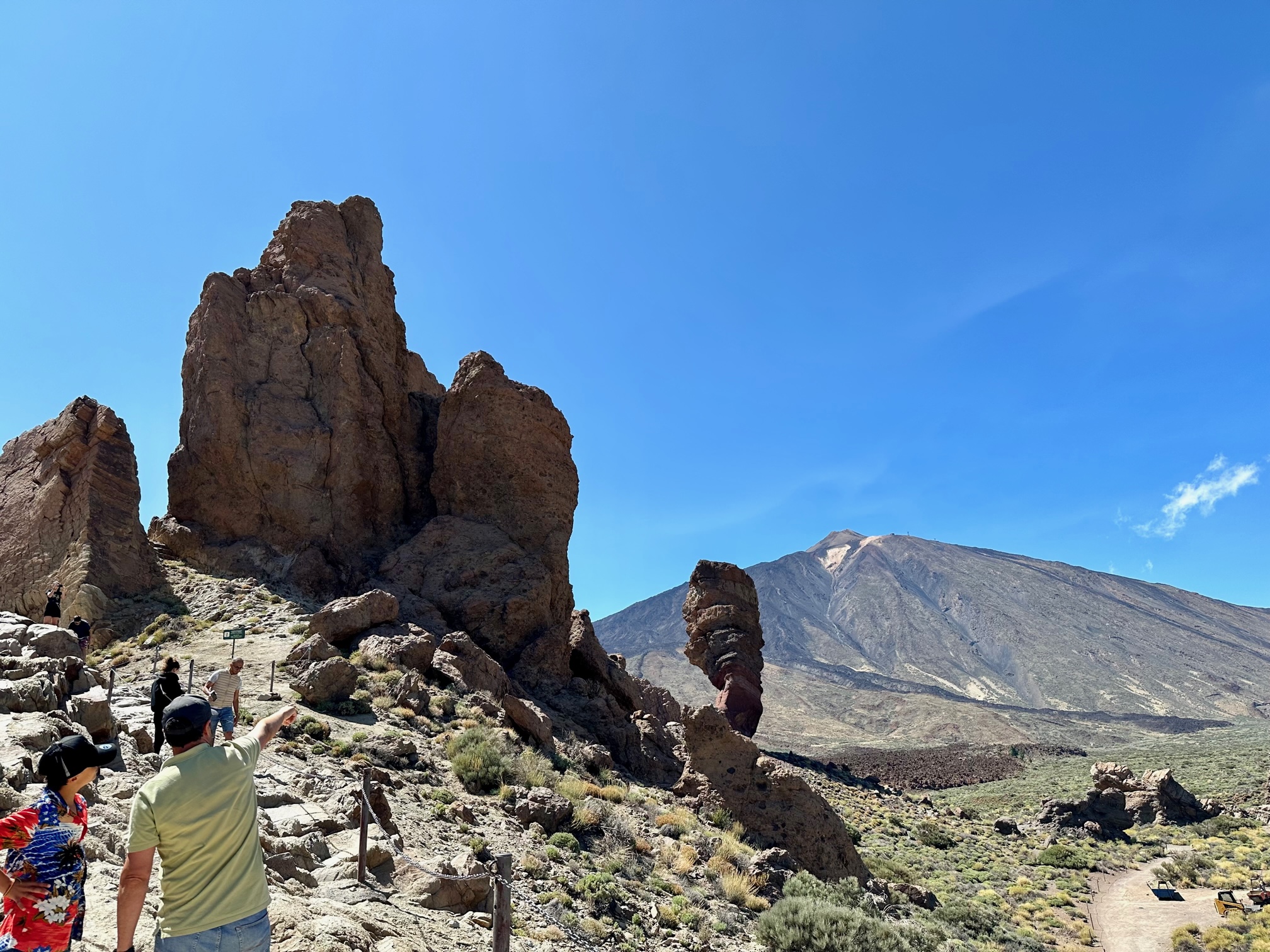
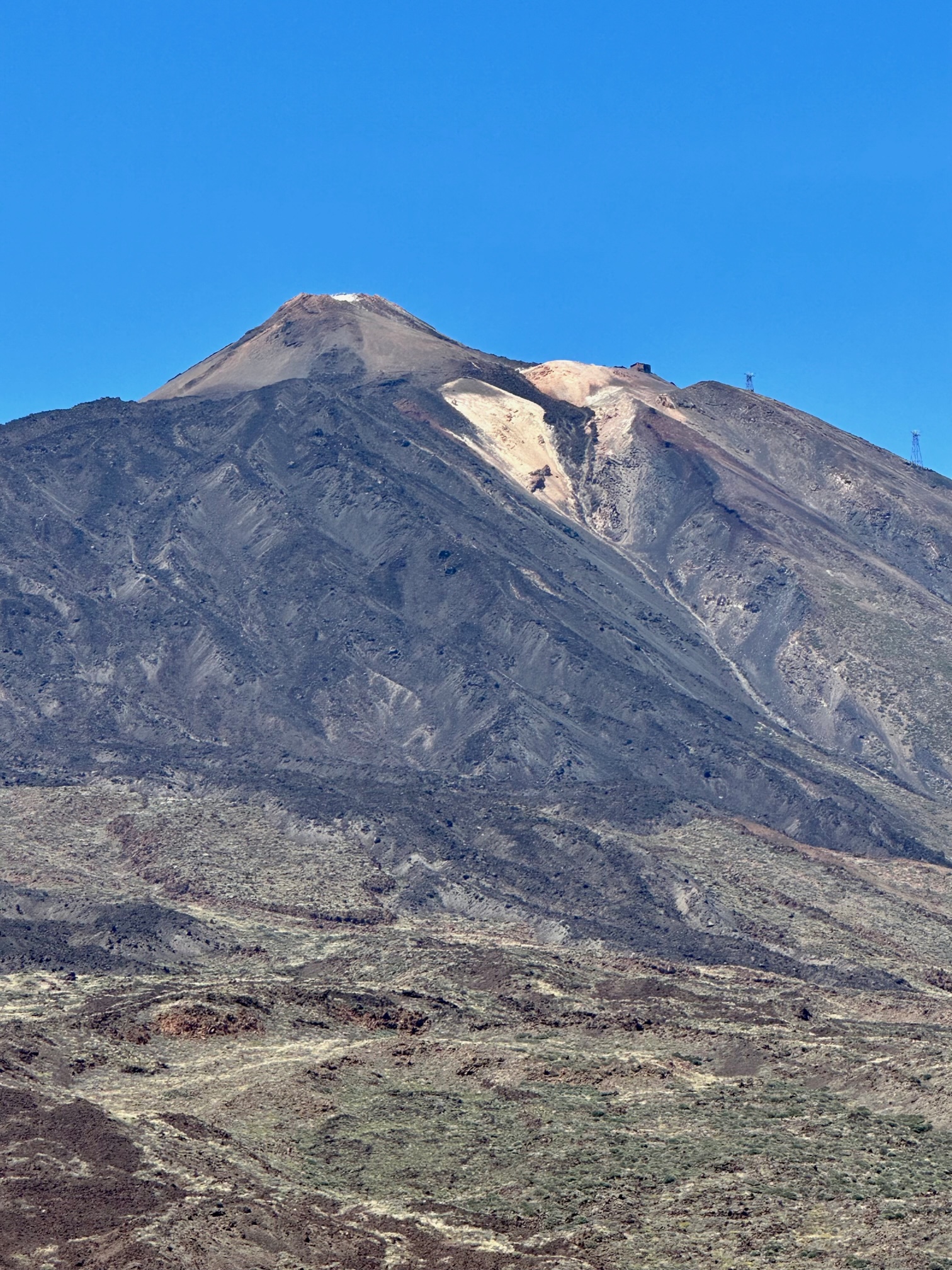
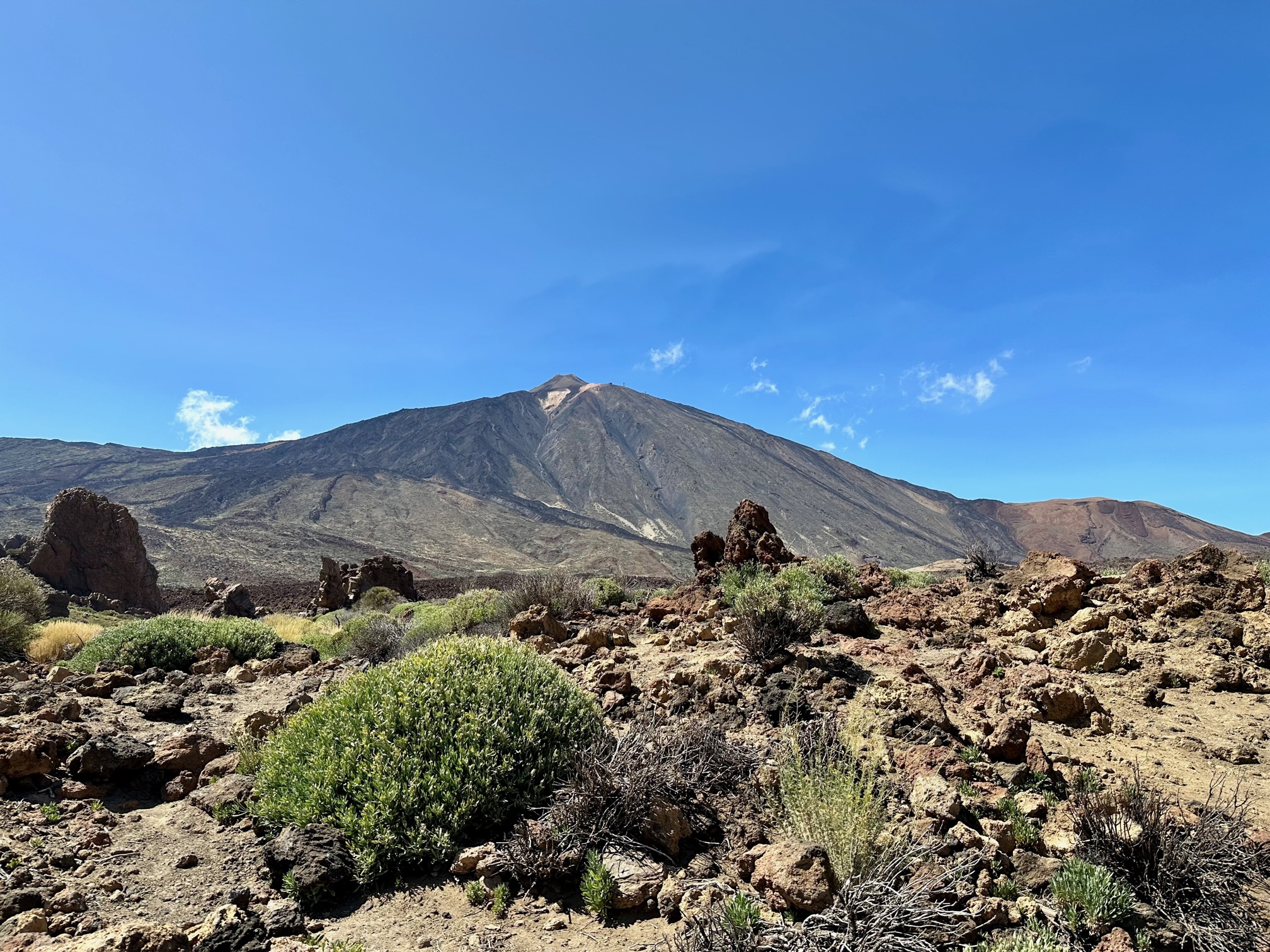
El Teide, the volcano on Tenerife, is at its summit the highest point in Spain, and the highest point above sea level in all the islands in the Atlantic Ocean. Its elevation is 12,198 feet. It’s an active volcano, not extinct. Its last eruption was in 1909.

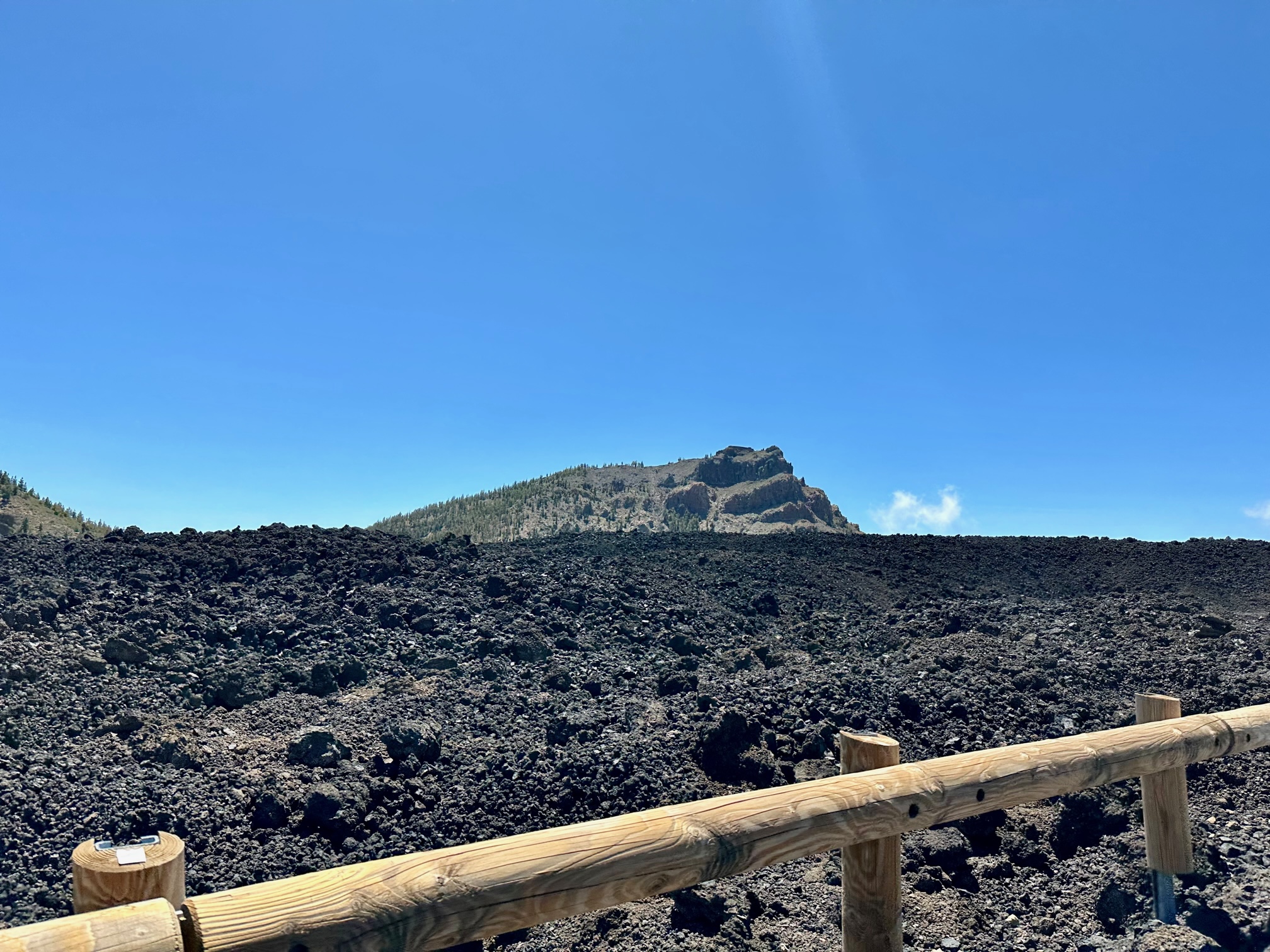
We drove to the base of El Teide, about a 30 minute drive from where we were. Up, up, and up! The terrain became increasingly interesting, at times with lots of big black rocks as far as you could see, and always El Teide in the background (or forefront). It looked like we were driving across Mars!

We got out at the Visitor Center, as well as at several overlooks, and places to hike. The entire area was the National El Teide Park, and there were several opportunities to explore within it.

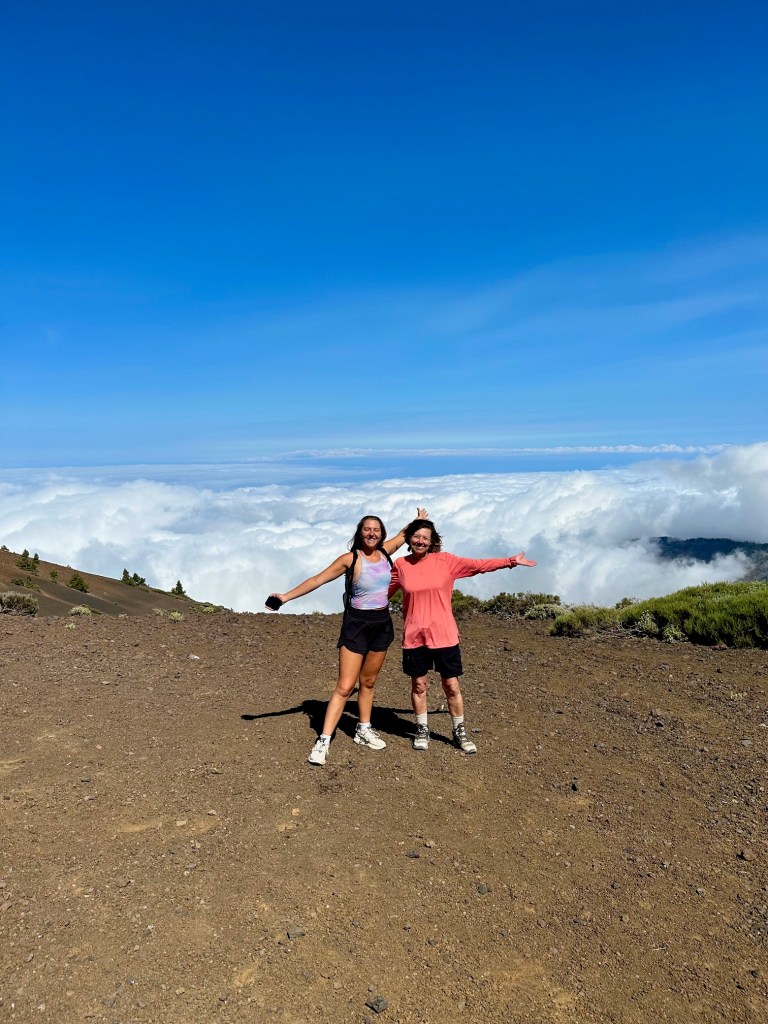
We continued the drive over the high mountains, at one point parking the car at an overlook and jumping out to exclaim over the billowy clouds beneath us—we were at such a high elevation that we were “above the clouds”!

We drove on across the mountains all the way to Santa Cruz (the capital and main city in Tenerife, you may recall, and about a 45 minute drive when we were out of the National Park of El Teide area). My daughter and I had wanted to shop for a suitcase to take souvenirs and other things home. We found an inexpensive one fairly quickly at a large department store, and were on our way back to El Medano, around an hour’s drive.

What a spectacular day, ending a spectacular week with my spectacular daughter as host! I would love to do it all again, this island life for a week on Tenerife in the Canary Islands!

Featured

North Route- Irun to Bilbao

(A week hiking the foothills of the Pyrenees Mountains in the Basque Country of Spain)

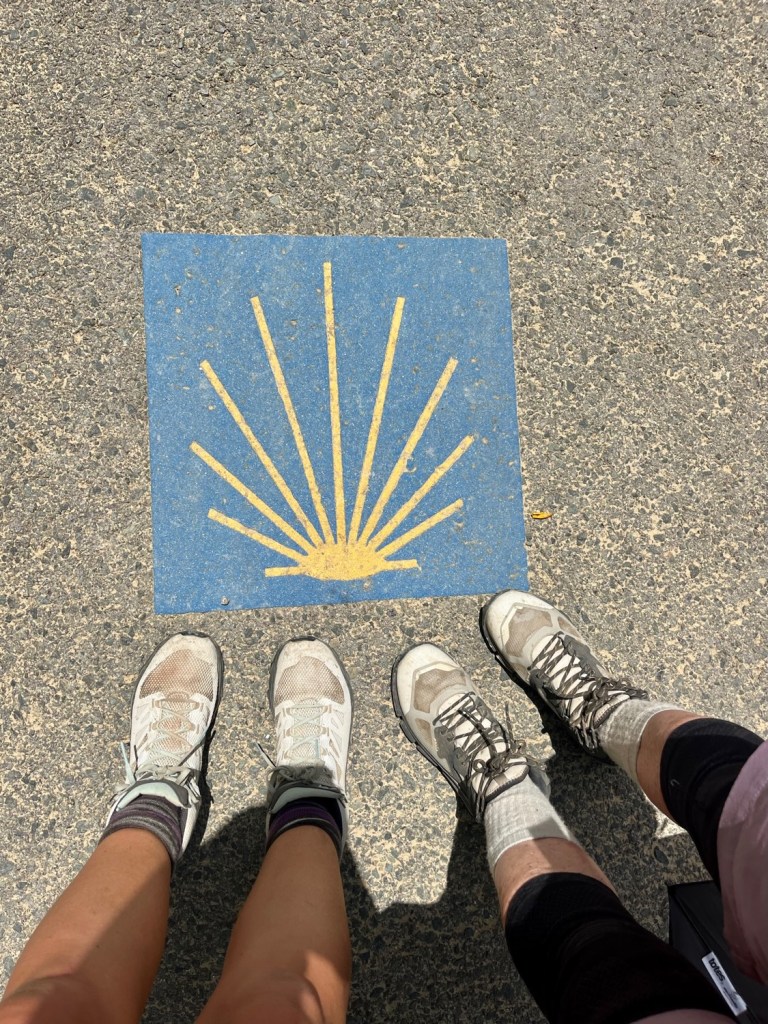
The Camino de Santiago, or the “Way of St. James” is a pilgrimage to where the apostle from the Bible James’ bones are said to be buried in Santiago in Spain. Pilgrims have made their way there for over a thousand years! People still walk there for religious reasons, but also for adventure, for personal peace, and other reasons. Regardless of their reasons, all are called “pilgrims.” There are seven main routes, each taking around four weeks to accomplish the entire trip, with beginning points in Portugal and France, besides Spain. Yellow arrows and seashells painted on roads, signs, and trees, among other things, show the way!

The North route of the Camino de Santiago is considered the most difficult of the seven Camino routes, and the first week of the North route the most difficult of the North route! We chose this route because it is also considered the most beautiful route. And I’m so glad we did!

Day 1: Irun to San Sebastian (16.1 miles): A Beautiful Beginning

My daughter and I had taken a bus from Bilabo to Irun to begin our week on the Camino. In Irun we stayed at the Albergue Ondarreta, La Sirena. (An albergue is a Pilgrim hostel.) We shared dinner items and stories/expectations with other pilgrims there before climbing into bed for (me, anyway) a sleepless night awaiting out adventure!

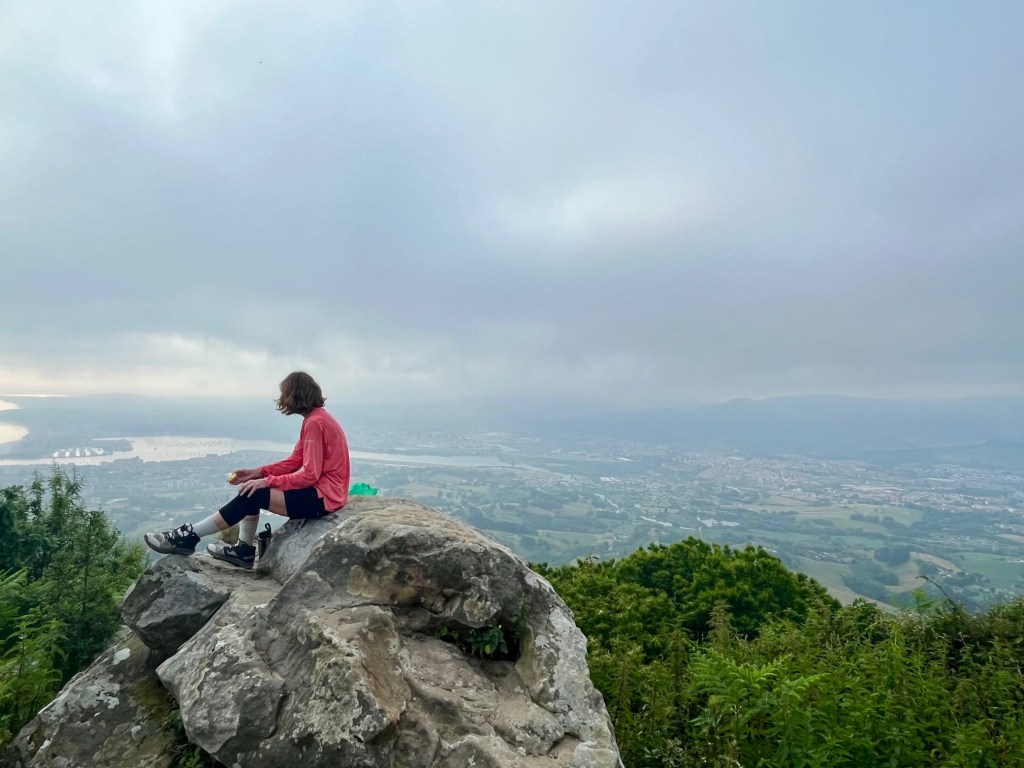
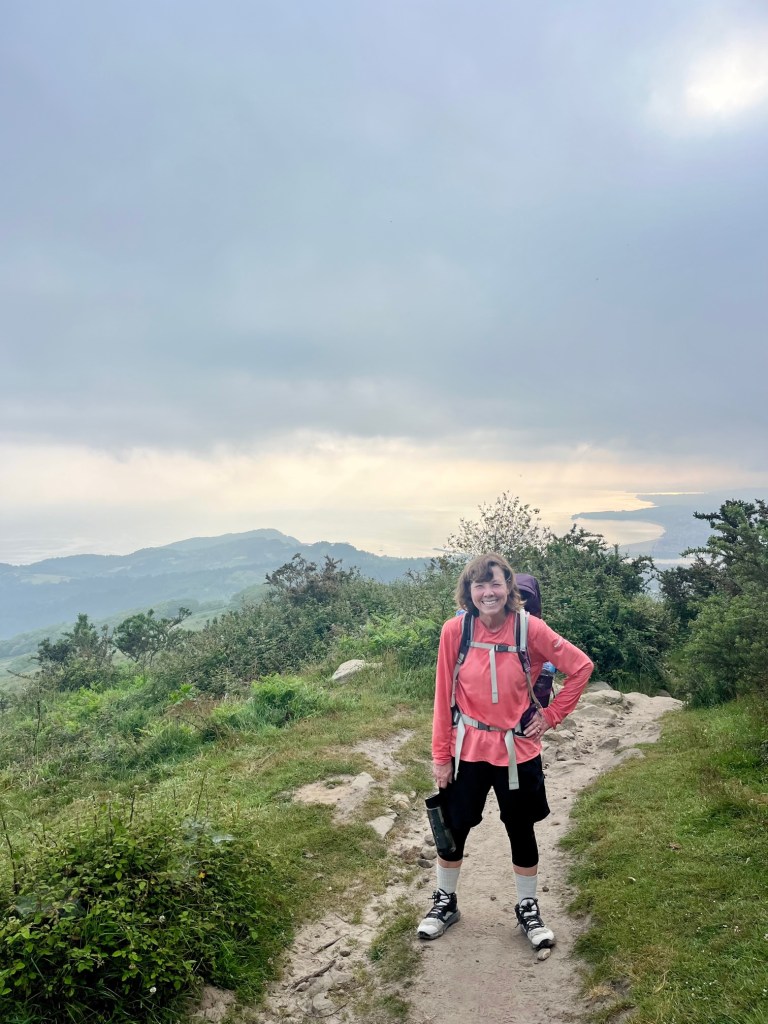
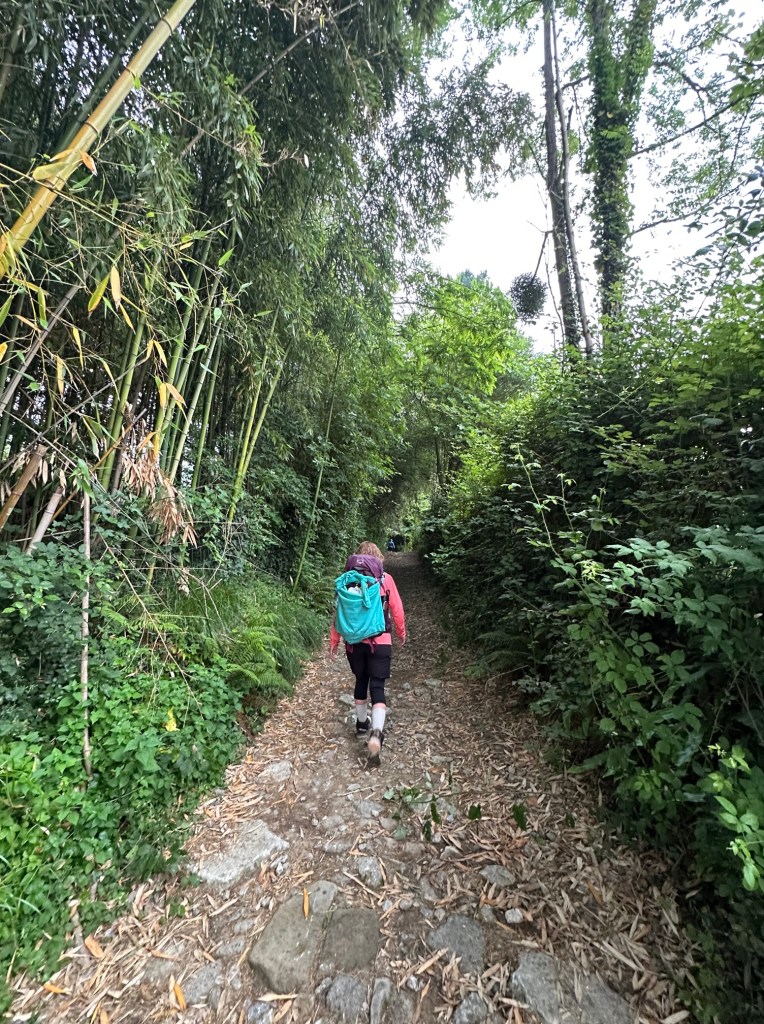
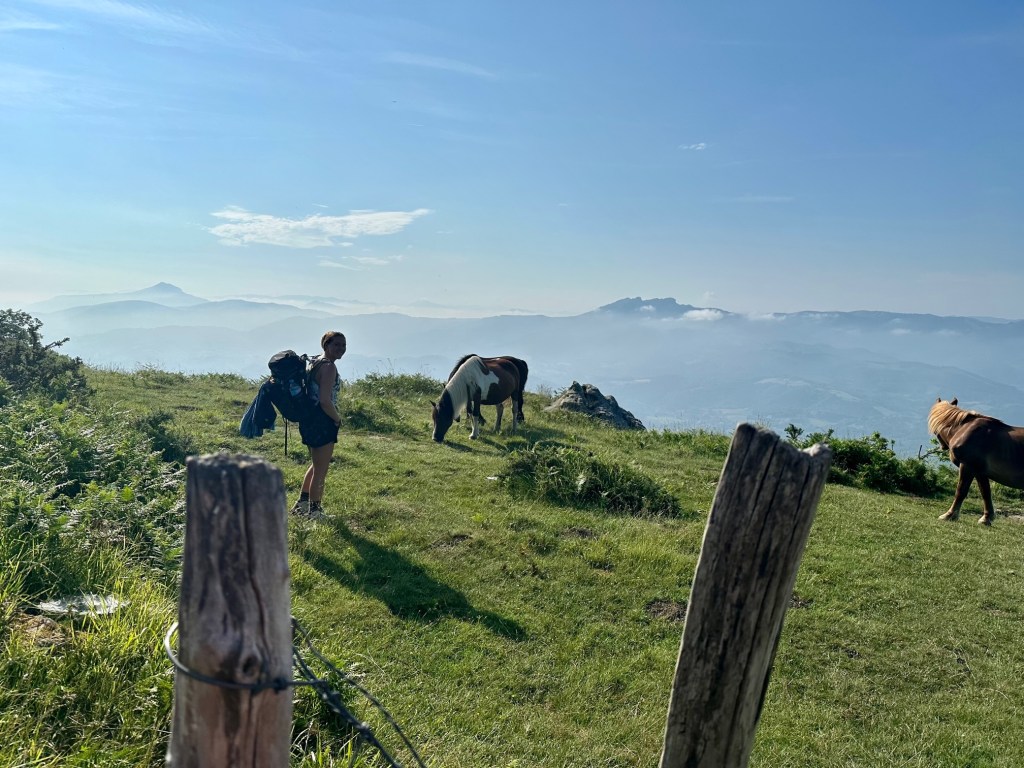
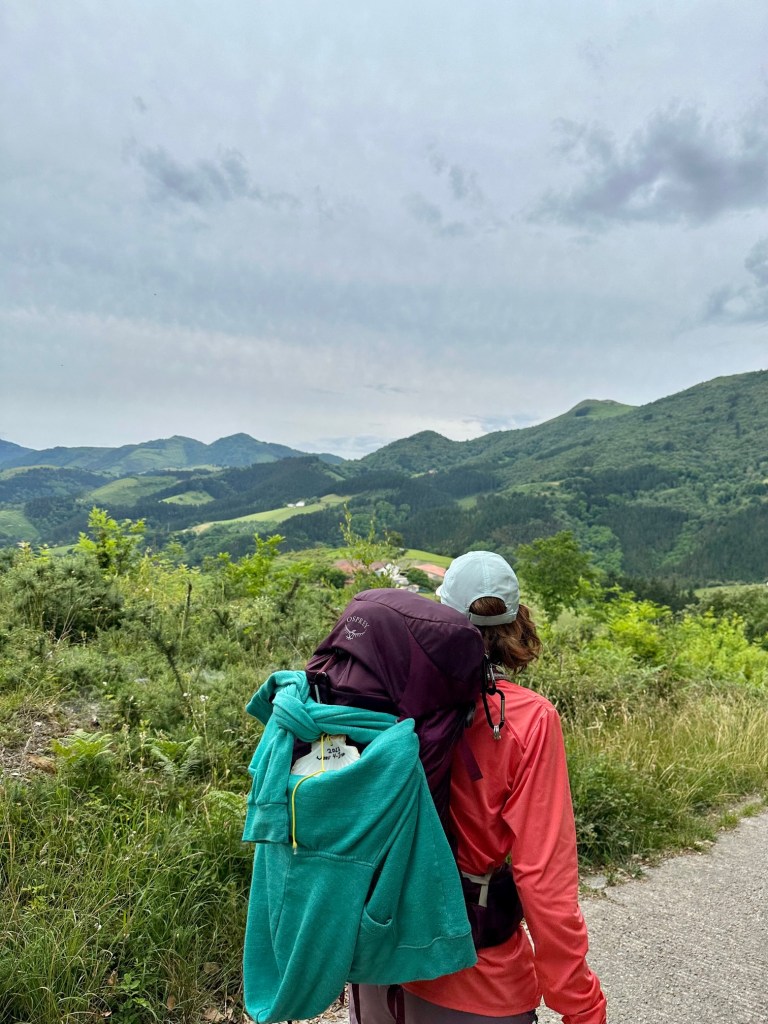
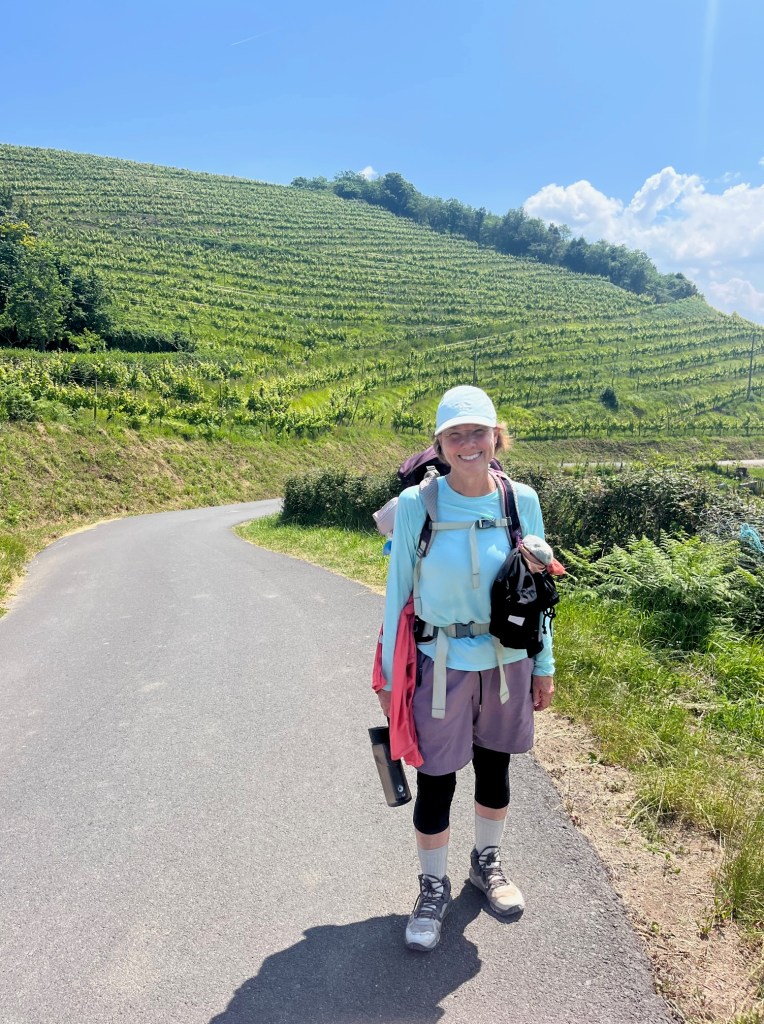
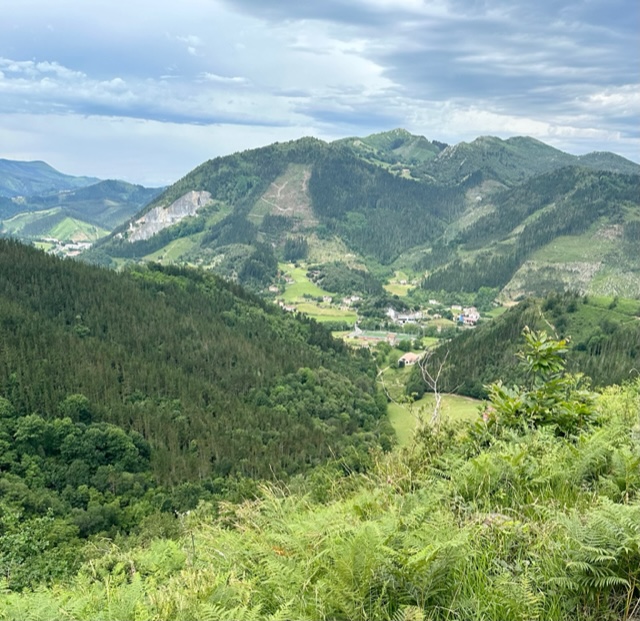
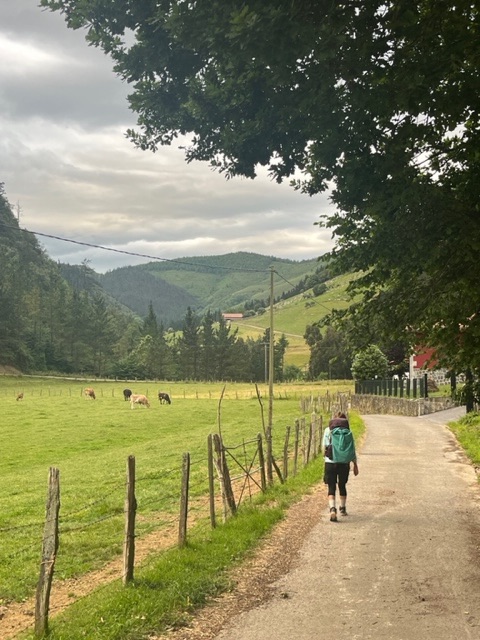
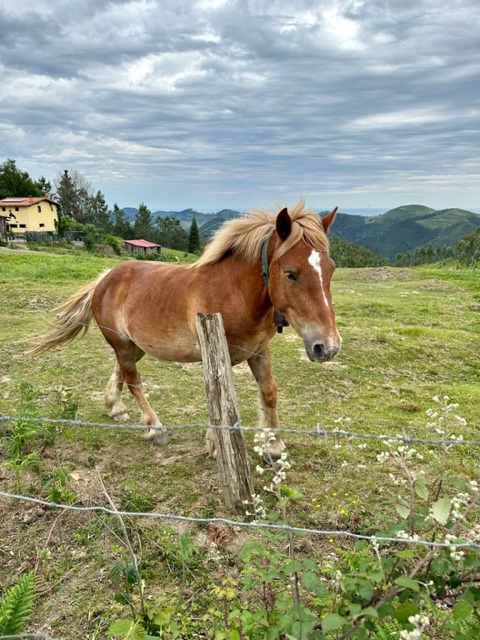
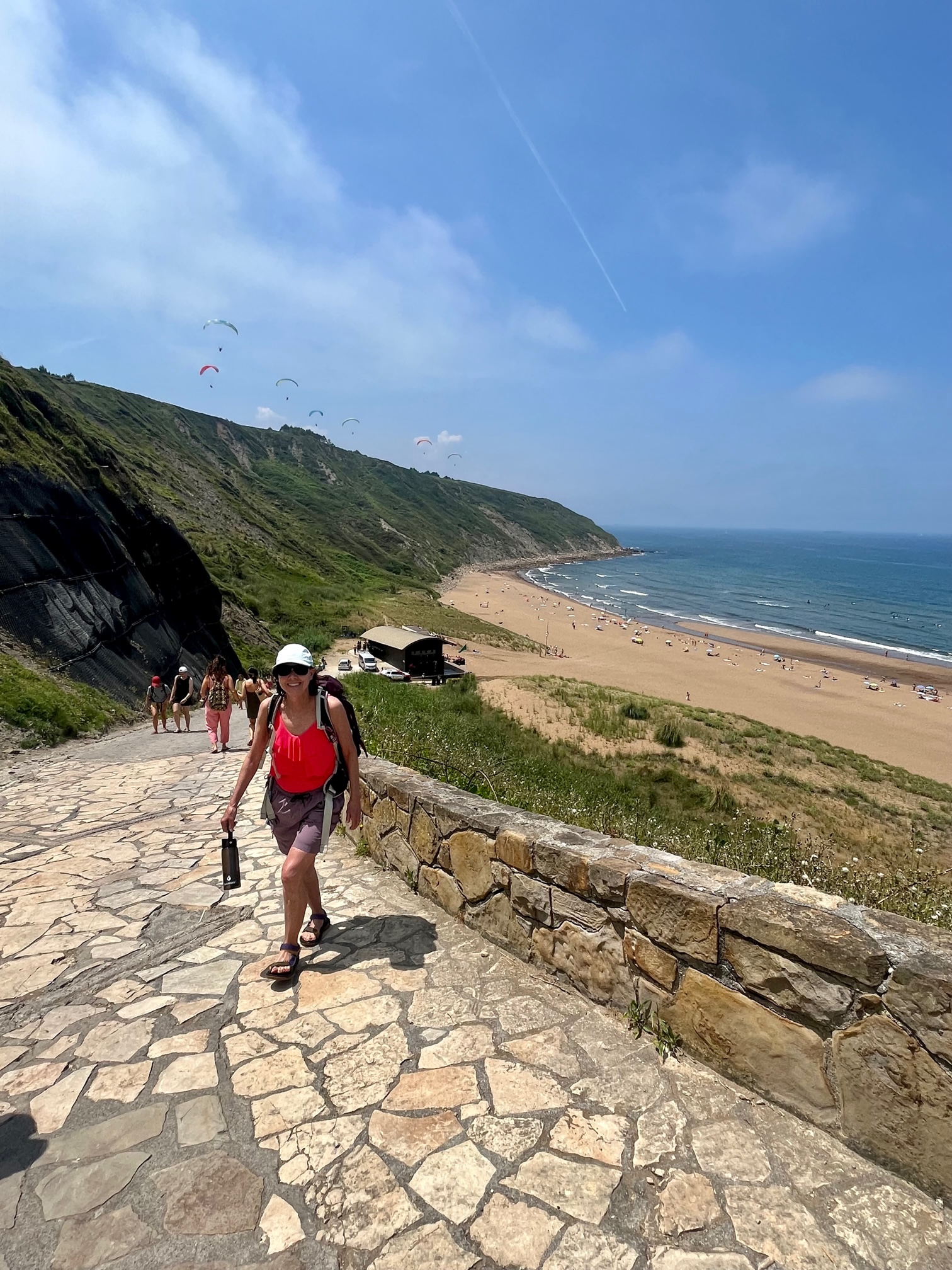
The first day on the Camino held beautiful and wonderful sights all day! It was all I’d dreamed of and more, with horses, goats, sheep, cows, farms, ocean that blended into fog and sky and eased into grass; jungle-like forest from time to time; hills and mountains and valleys. The beauty and tranquility was astounding. So many steps; oh, so many steps, up and up and up seemingly forever!

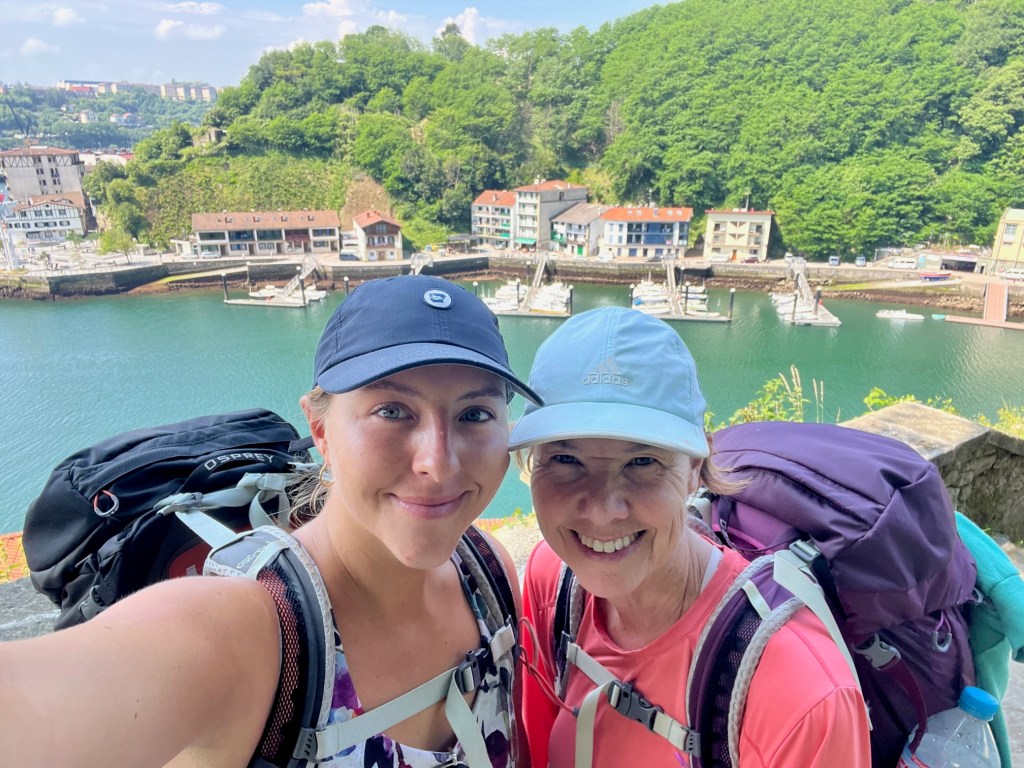
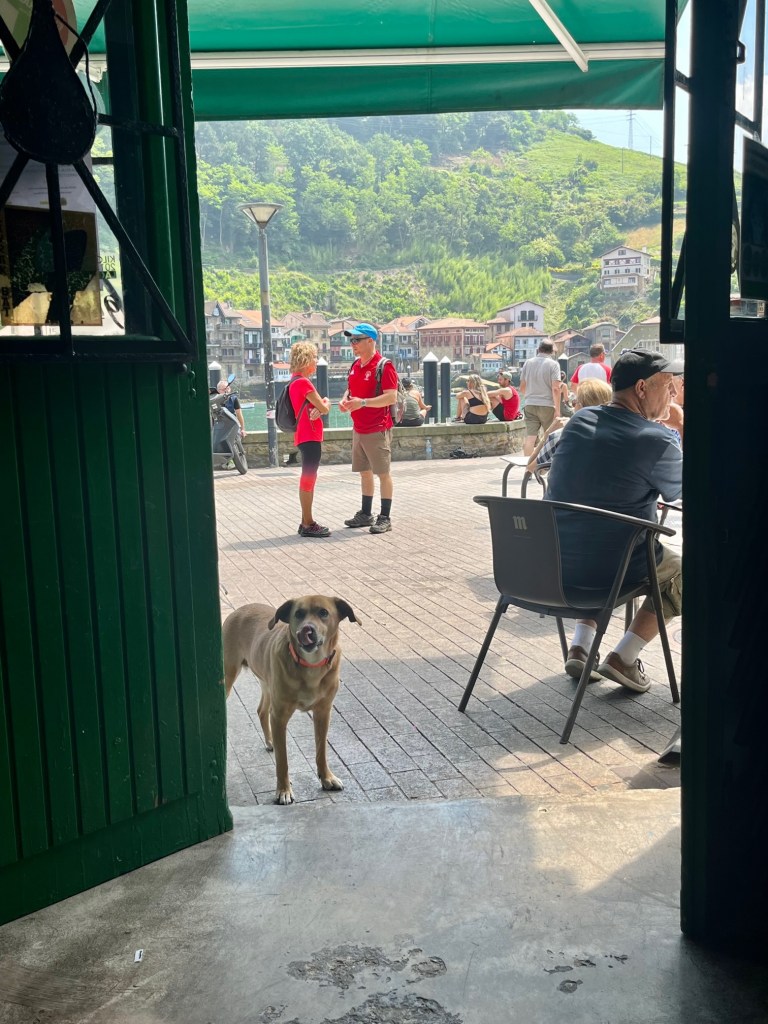
At the port city near Pasaia, we had to take a short ferry ride to begin the last leg of our first day’s hike. We had the most wonderful tuna sandwich at the cafe Taberna Muguruza Ardoak at the port where the ferry deposited us. The tuna was piled high and topped with anchovies and peppers; it was served with cheese and bread; and drinks.

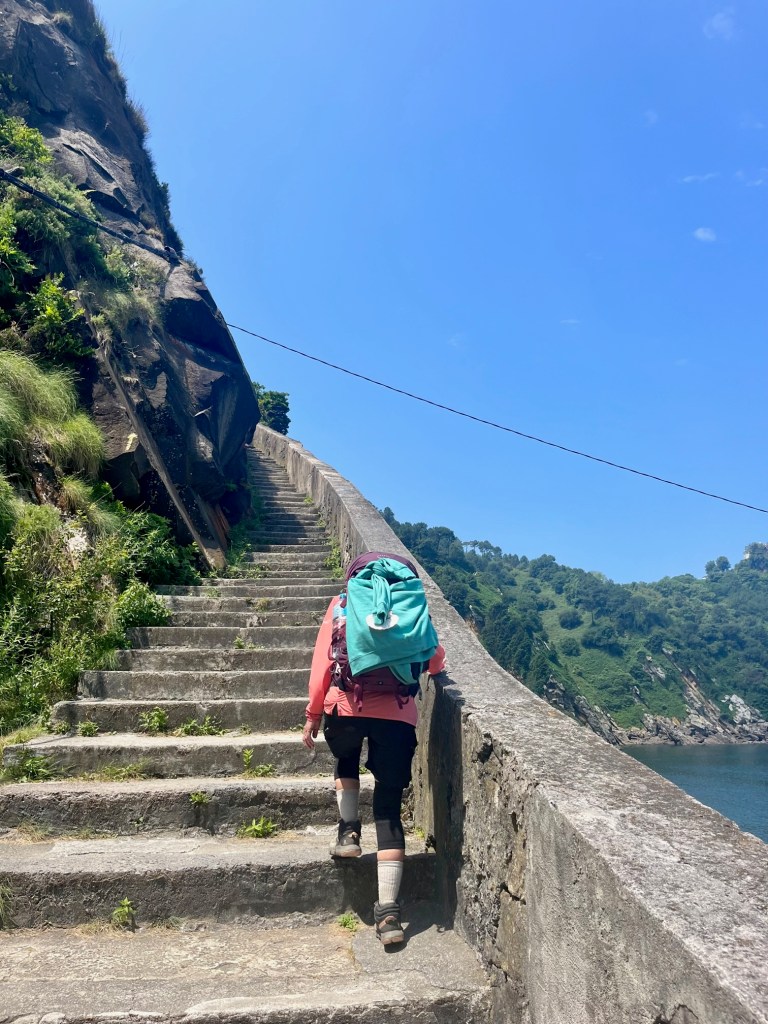
At each port city, we would descend endless steps down to the city then of course more steps up to continue the way!

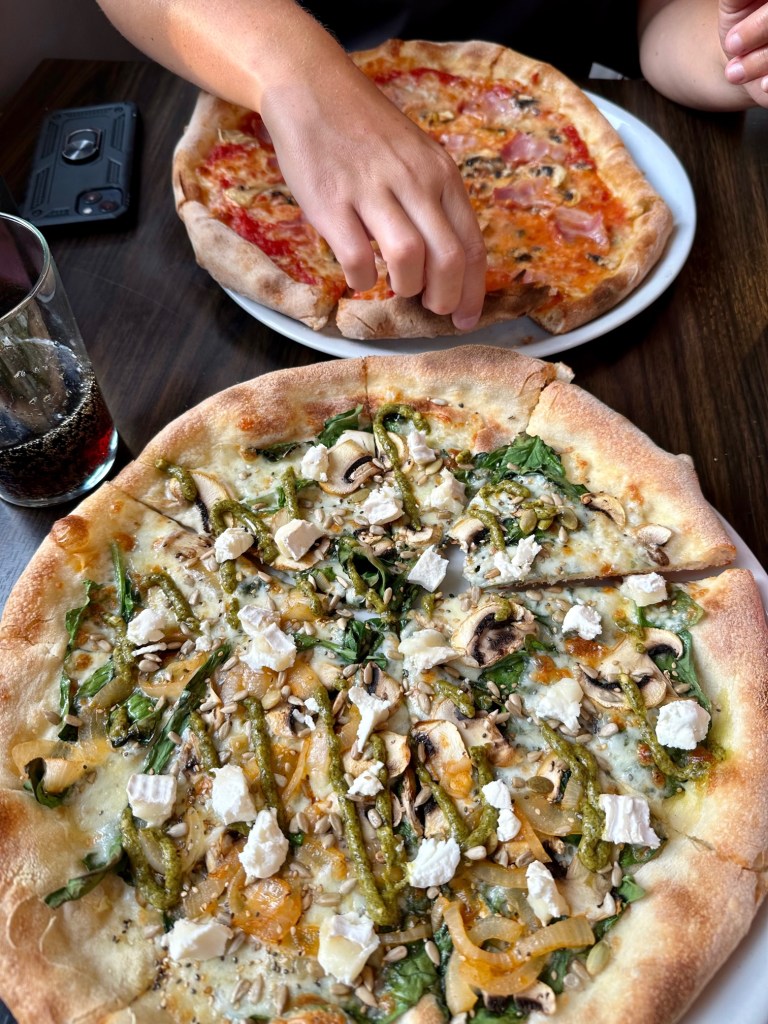
Then time to climb more hills and oh-so-steep mountains to finally arrive at San Sebastian! We spent the late afternoon hours at the beach. Ahh so nice after this incredibly grueling, but wonderful, day. Dinner was pizza at a pizza restaurant in San Sebastian—I chose one with spinach, goat cheese, pesto, and sunflower seeds; delicioso!
Day 2: San Sebastian to Getaria (15.7 miles): In love with the Basque countryside

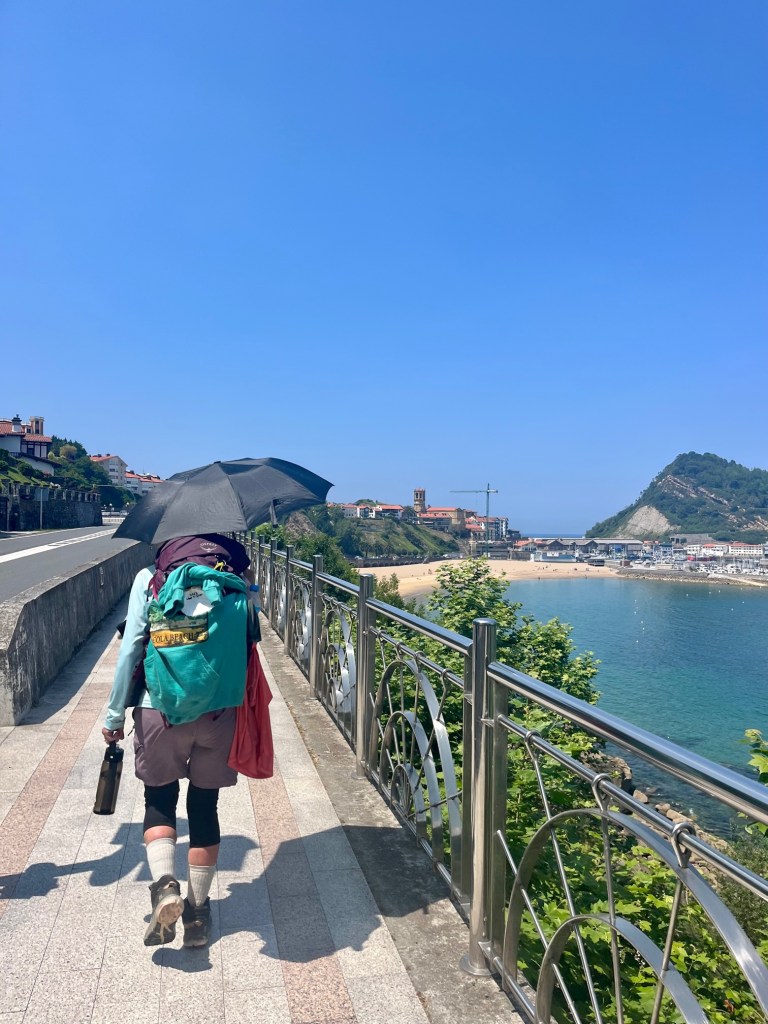
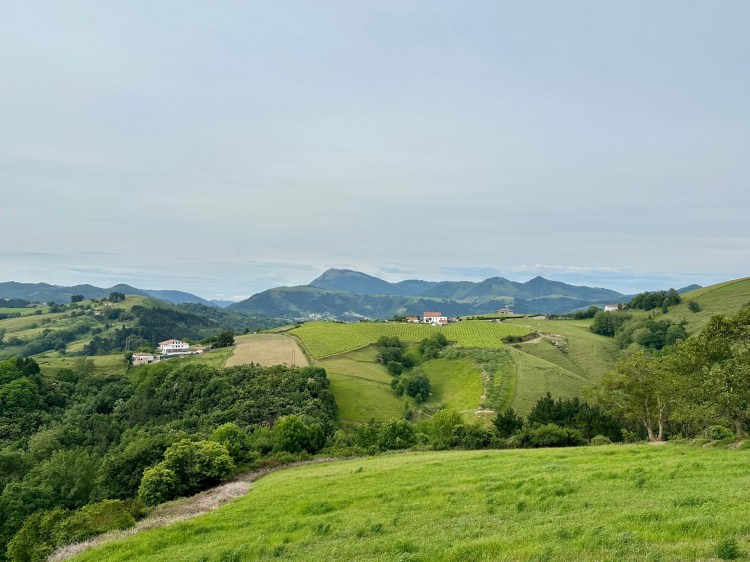
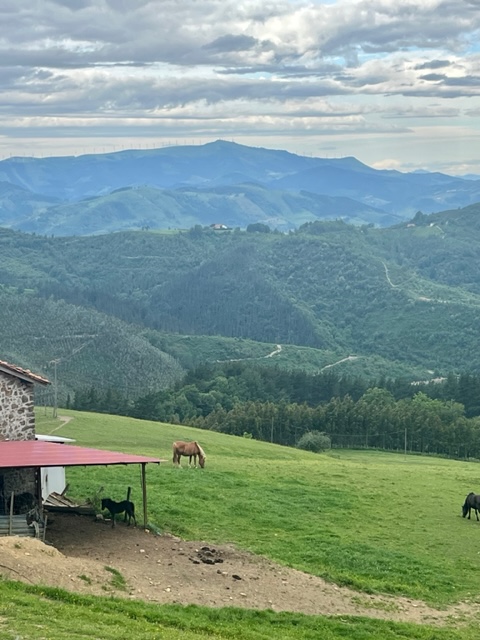
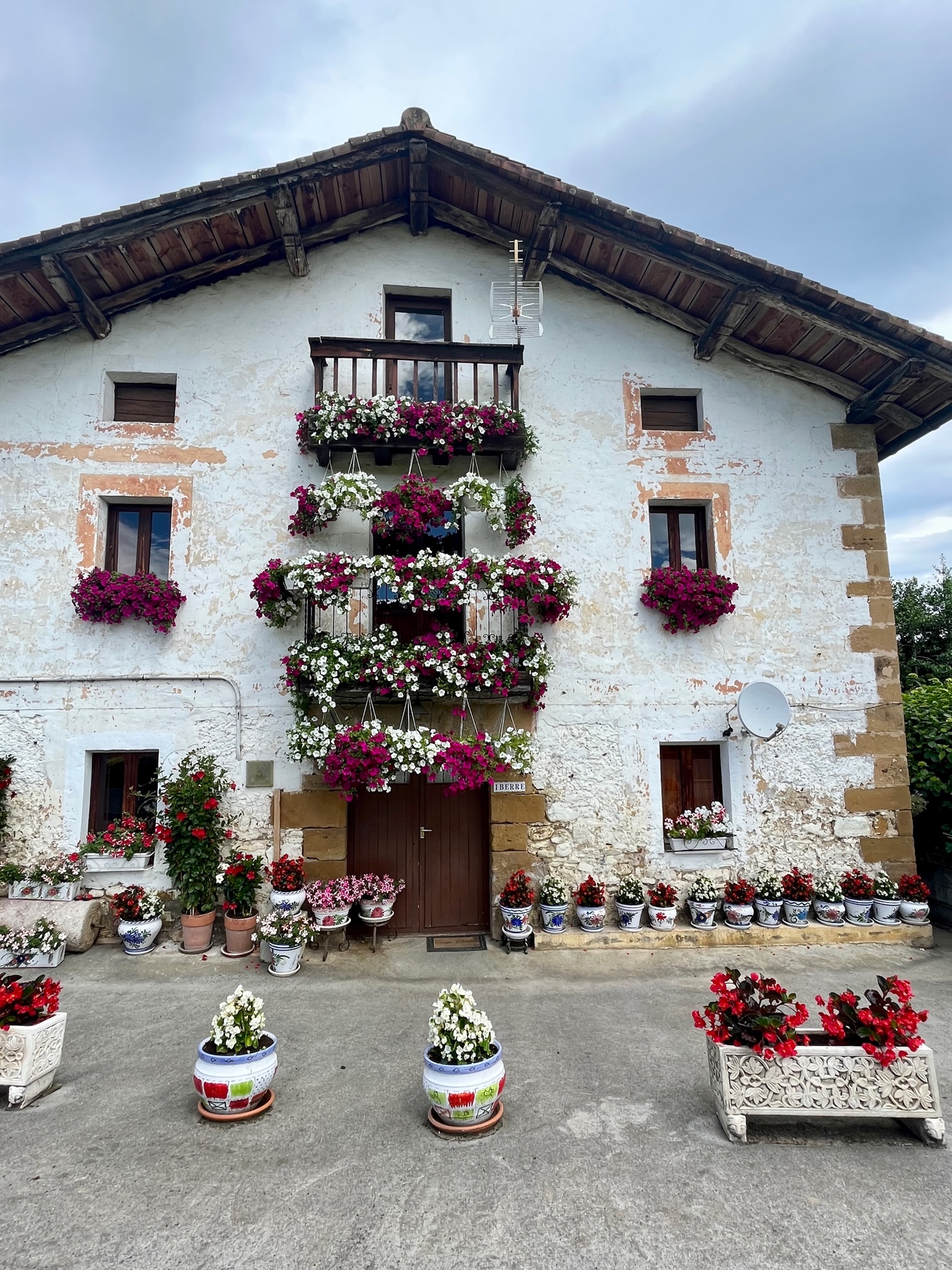
Have I mentioned that I am absolutely enthralled by Basque Country? With its hills, valleys, cropland; old rock homes with red roofs, all adorned with pretty flowers; friendly people happy to wave and say “Hola” or “Buen Camino” (‘Happy Walk to you’) ; stunning ocean views cropping up along the way…it’s like stepping into a fairytale.

Fun fact: “Hello” in the Basque language is “Kaixo” pronounced kie-sho. Most people in the Basque country, it appears to me, speak Spanish. As my daughter speaks fluent Spanish, we conversed easily along the way. Signs are often written in Basque language, though. My research shows that the Basque language is taught in schools throughout the Basque Country. The Basque Country is a part of Spain and France, but has its own language, traditional foods, and customs, including the sport ‘pelota’ which is similar to squash. We saw people playing it a couple of times against rock walls along our way. It is thought that the Basques may be the oldest ethnic group in Europe. It’s believed they inhabited the south-western corner of Europe since before Indo-European peoples came to the area some 5,000 years ago!
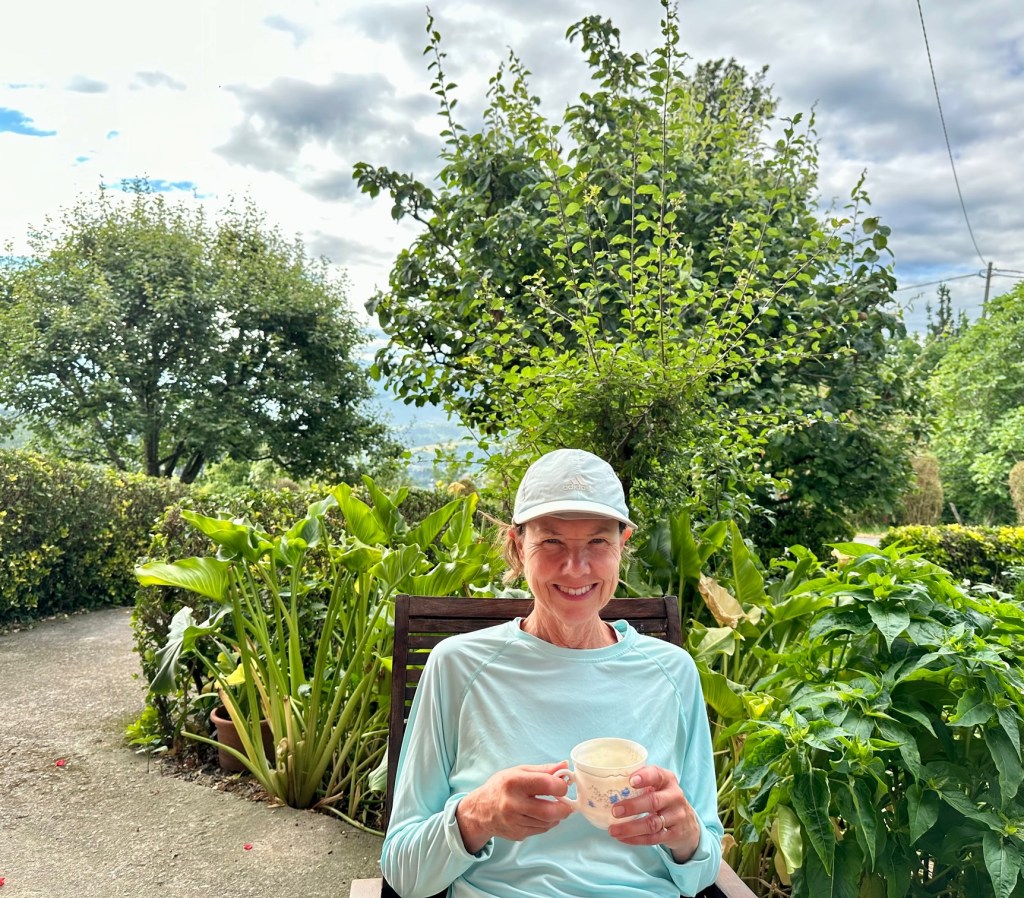
Which to do first, take my backpack off or pour a cup of coffee! The coconut cake was as good as it looked, too. This was the sight that awaited us in the late morning at an albergue we came upon. Since we, as the other pilgrims, had had an early morning start, to say that the sight of coffee was welcome would be a vast understatement! And all “donativo” (for donation.)

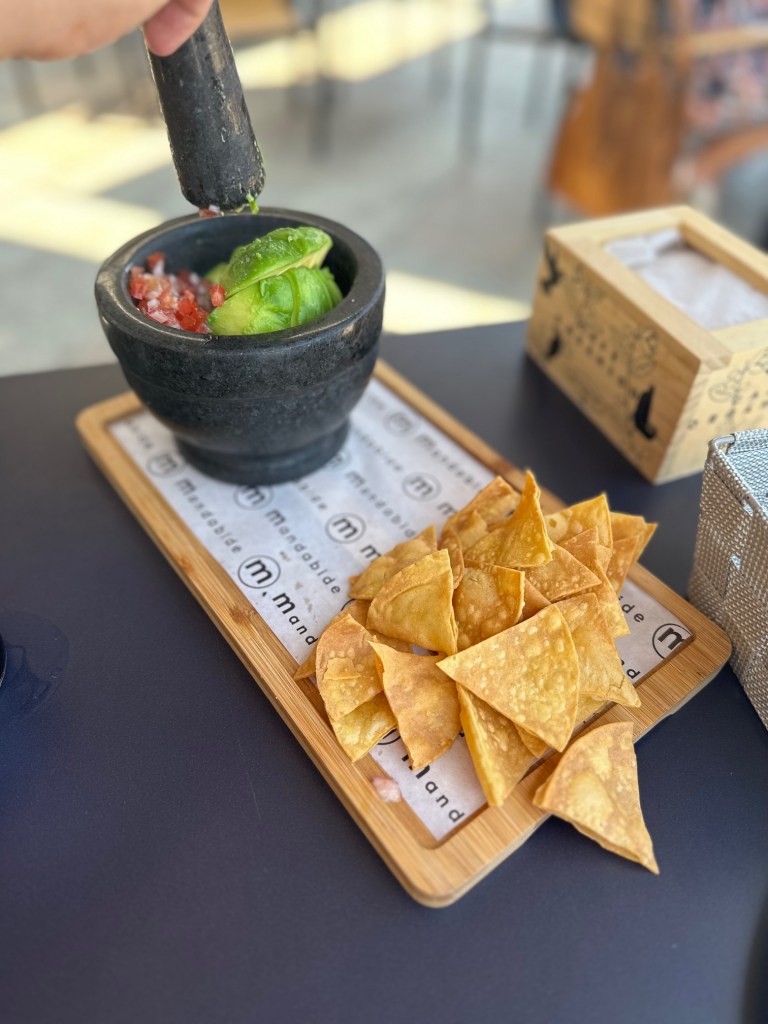
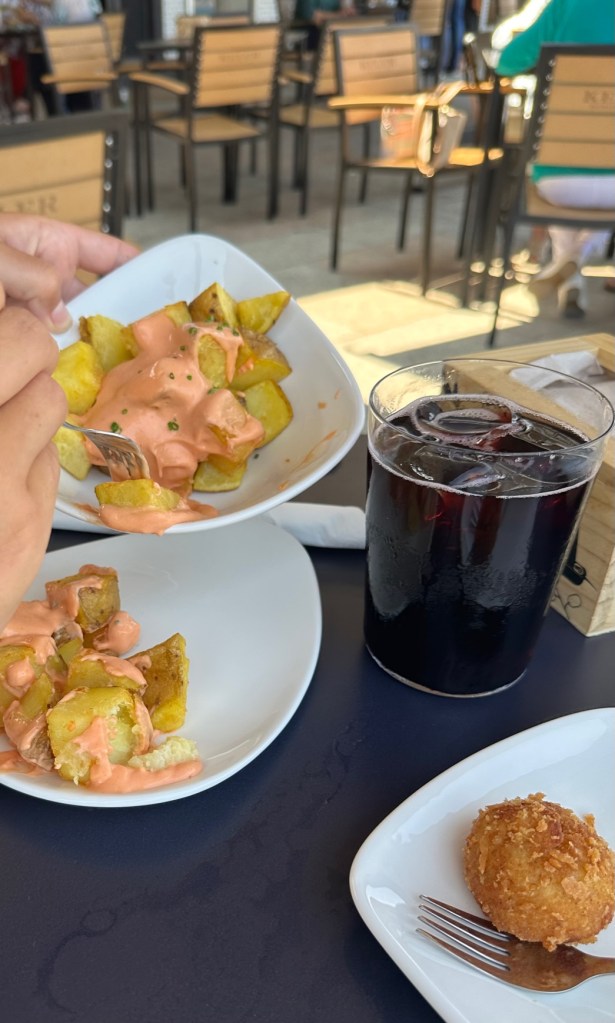
Several hours later, we came to the town of Orio where we had a great lunch oceanside at a restaurant there. With fresh guacamole and chips, an assortment of the “croquetas” (small fried croquettes filled with minced meats and a creamy milk and flour paste, very popular in the Basque towns) potatoes served with a spicy sauce, and drinks, we felt wonderfully revived for the last leg of our day’s journey.

Then came the long hot walk for many shade-less miles down the boardwalk then stretches of highway. I found myself extra-glad I had stuck a lightweight umbrella in my backpack! Never was it needed more! On to Zarautze, then Getaria.

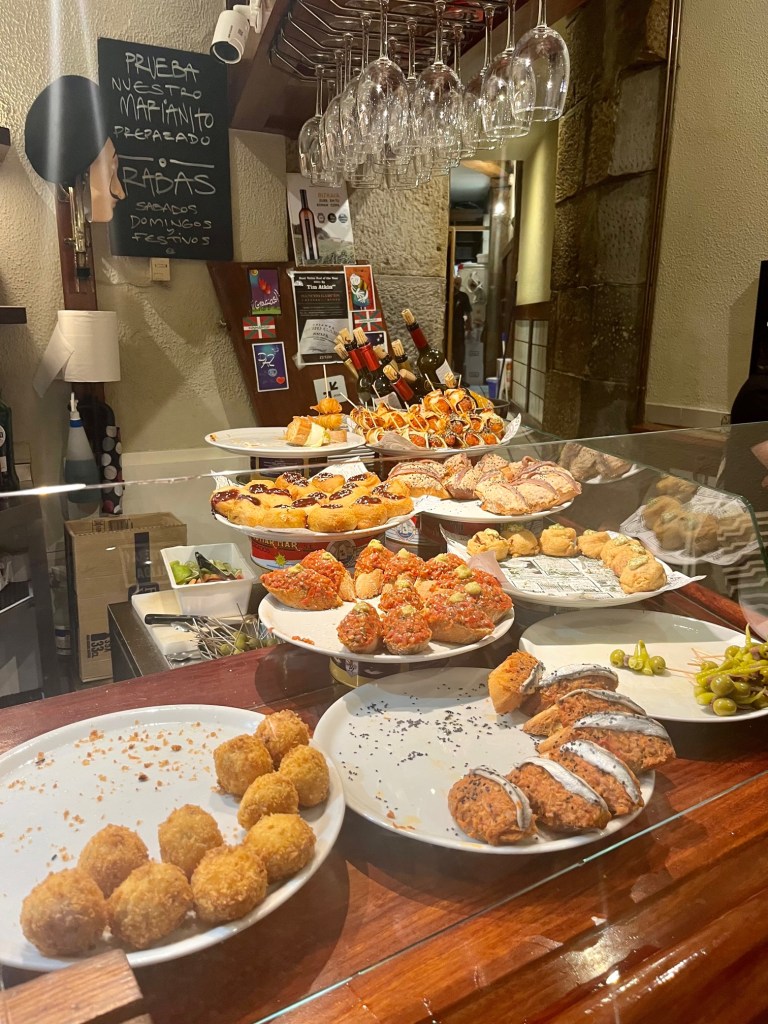
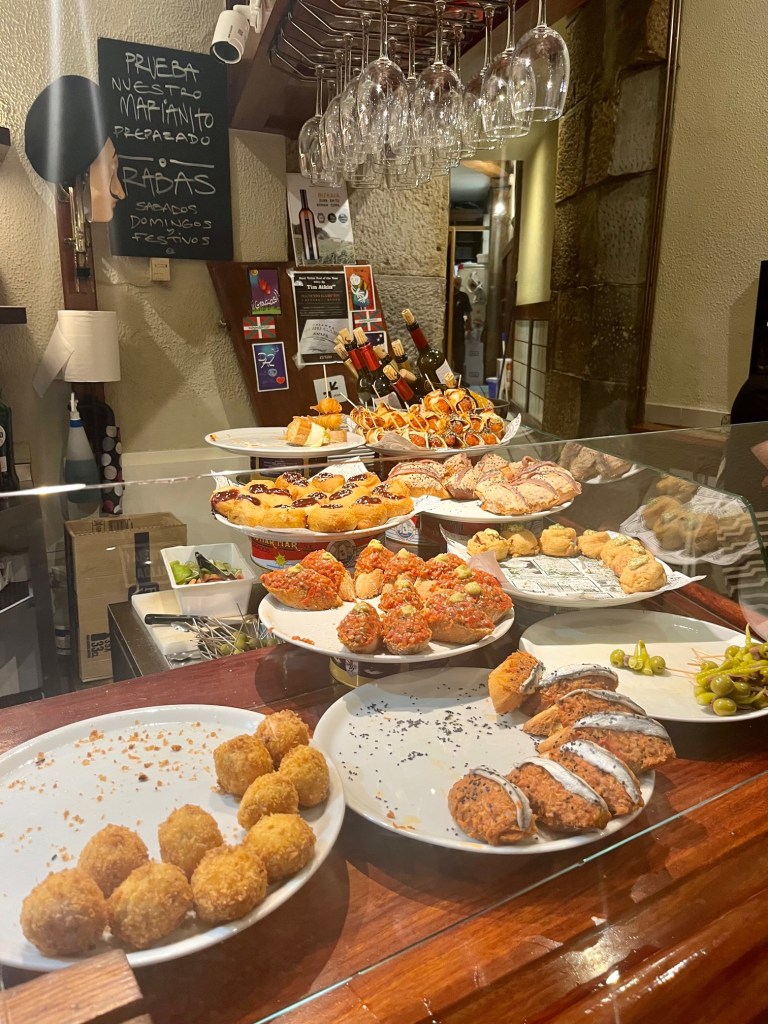
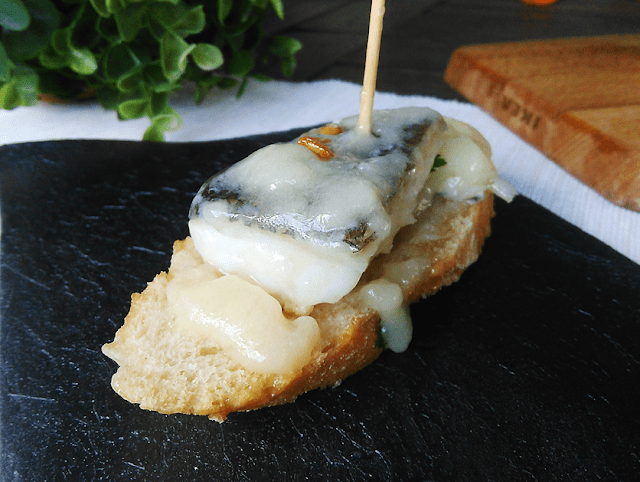
After a long and glorious yet very difficult day of ascending high peaks and walking in the hot sun, we managed to climb the enormous hill to our albergue in Getaria to find it closed! We found another albergue where we got two of the last beds available, AND they had a washing machine and dryer! After laundry we headed to the beach. So, so, so nice to dip into the beautiful blue water of the Cantabrian sea then lay on the sand. Dinner was Pintxos in Getaria, which are bite-size or small portions of food, prettily prepared and served with a short drink. Ordering several different Pintxos is a good way to try new and different foods, and to sample the well-reputed Basque cuisine.

(Pinxtos pictured from a Bilbao restaurant)

Day 3: Getaria to Ibiri Auzoa (15.1 miles): So Many Mountains to Climb!

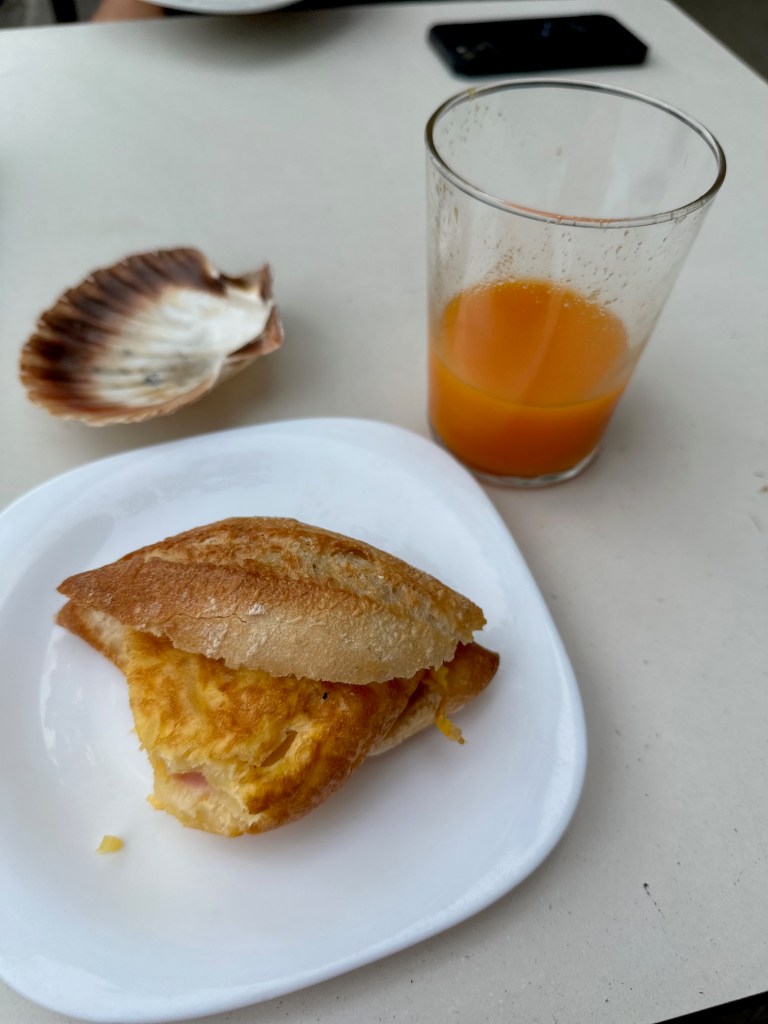
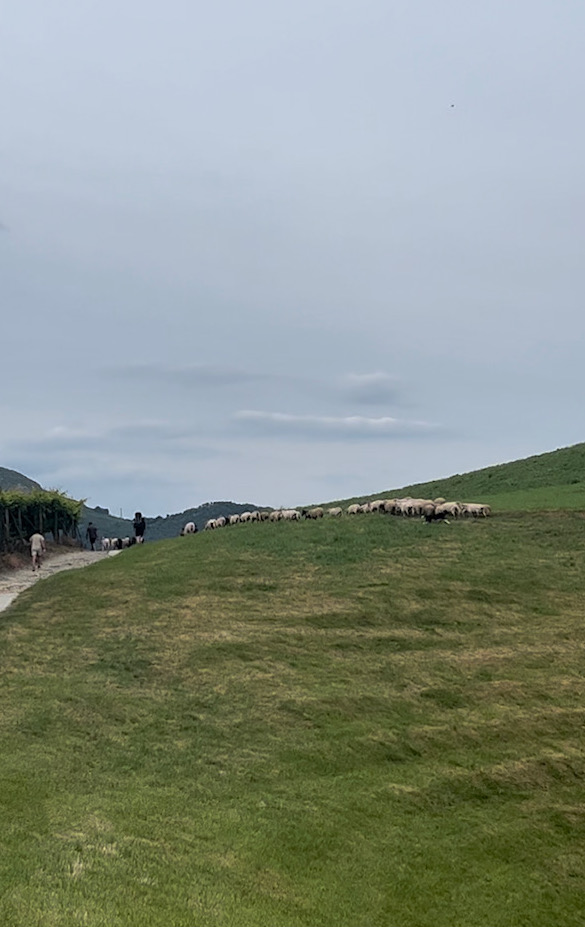
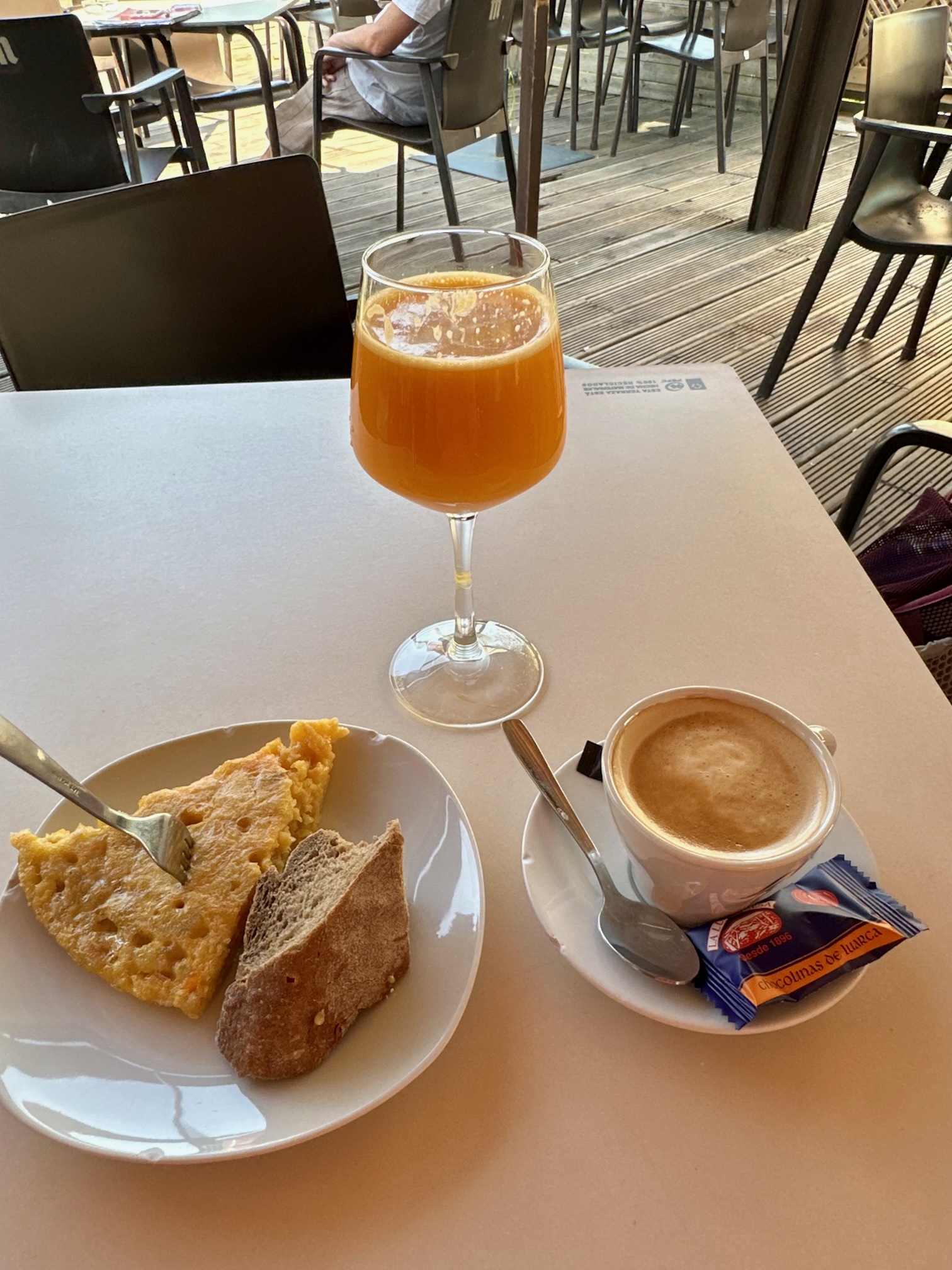
From Getaria to the little town of Zumia was an hour’s walk. Breakfast was at a cafe there—we ordered the staple that’s an option for any meal in Spain, which is “tortilla” (eggs, potatoes, and cheese in a type of delicious omelette) also bread, and orange-carrot juice. Then we were back on The Trail, where we looked around us in wonder throughout the day at its indescribably unworldly scenic views, while listening to sounds of bells on the goats, sheep, and other farm animals. We saw a shepherd and his sheep dogs herding a flock of sheep; very cool! Had a scare with a few pit bulls along the way; whew! Snacked on apples, nuts, and raisins. It was a long way (around 10 miles) from Zumia to Deba, a port town with many options for a late lunch. We chose a “menu of the day” which is a meal served by many Spanish restaurants, usually at lunch, and includes several courses including dessert, and “vino or cervaza”, for a set price. (My coca-cola always is an extra charge!) The meal was excellent—and so much food! I had forgotten we had other courses coming after the wonderful empanadas and pasta with chorizo. I was prepared to have my ‘cafe’ and dessert when the waiter brought out a huge plate of chicken and french fries! When we finally got to the end of the meal, the Basque desserts of apple pie, and a cake with a custard cream filling, along with my cafe con leche, of course, were the perfect end to the perfect meal. We still had miles to go to our albergue in Iberia Auzoa, though, and the miles were, as almost all the terrain so far on the North route had handed us, difficult miles (perhaps especially after the enormous meal, you might be thinking, and would be correct). Finally we arrived to the sight of other smiling pilgrims at the alburgue sitting at tables in the yard, cervazes in hand, calling out greetings.

Many of the small farms dotting the landscape of the Pyrenees Basque hillsides appear to be (and it was confirmed by our tour guide in Bilbao later) self-sufficient. There are also larger areas of cropland that are industrialized, including beautiful vineyards along the way.

Day 4: Ibiri Auzoa to Markina (12.5 miles): Rewarding splendorous views continue!

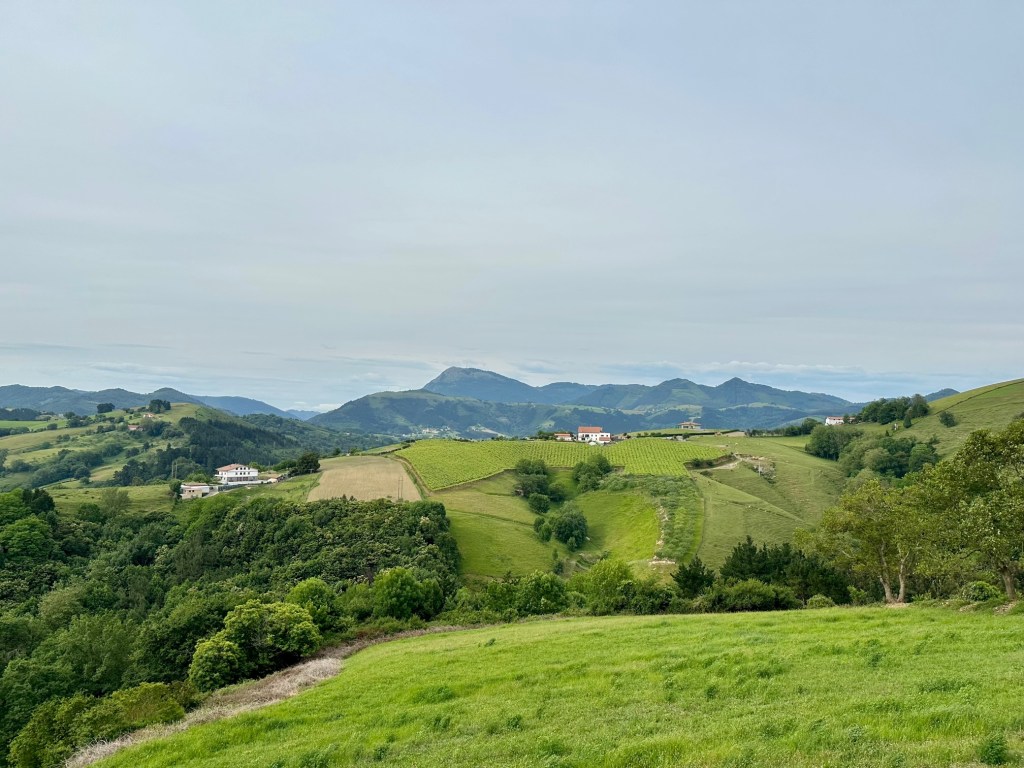
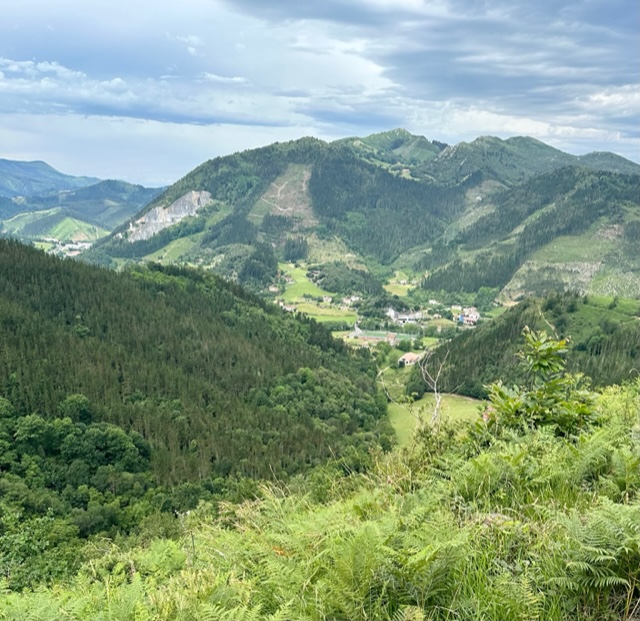
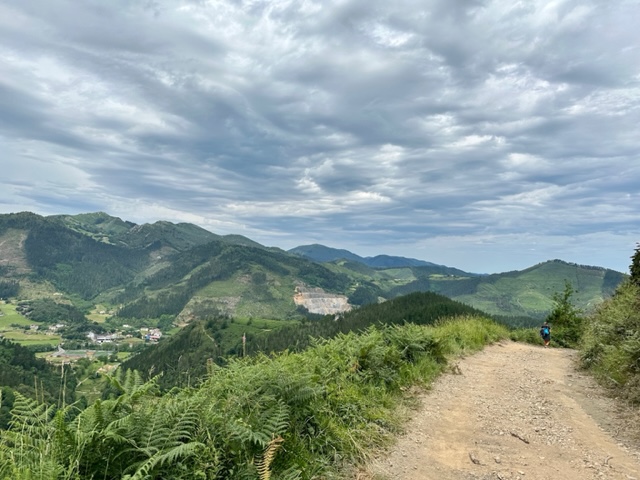
Every day remains absolutely consistent in both difficulty (miles and miles of hiking straight up mountains) and the reward for it: panoramic views of God’s creation!

Slideshow:

The Pyrenees Mountains form a natural border between France and Spain. Although many associate the Pyrenees Mountains with France, the greater part of them, and the majority of Pyrenean villages—such as those we passed through in the foothills of these mountains—lie on the Spanish side.

Day 5: Markina to Guernika (15.8 miles): A Fairytale World and a Sobering Museum

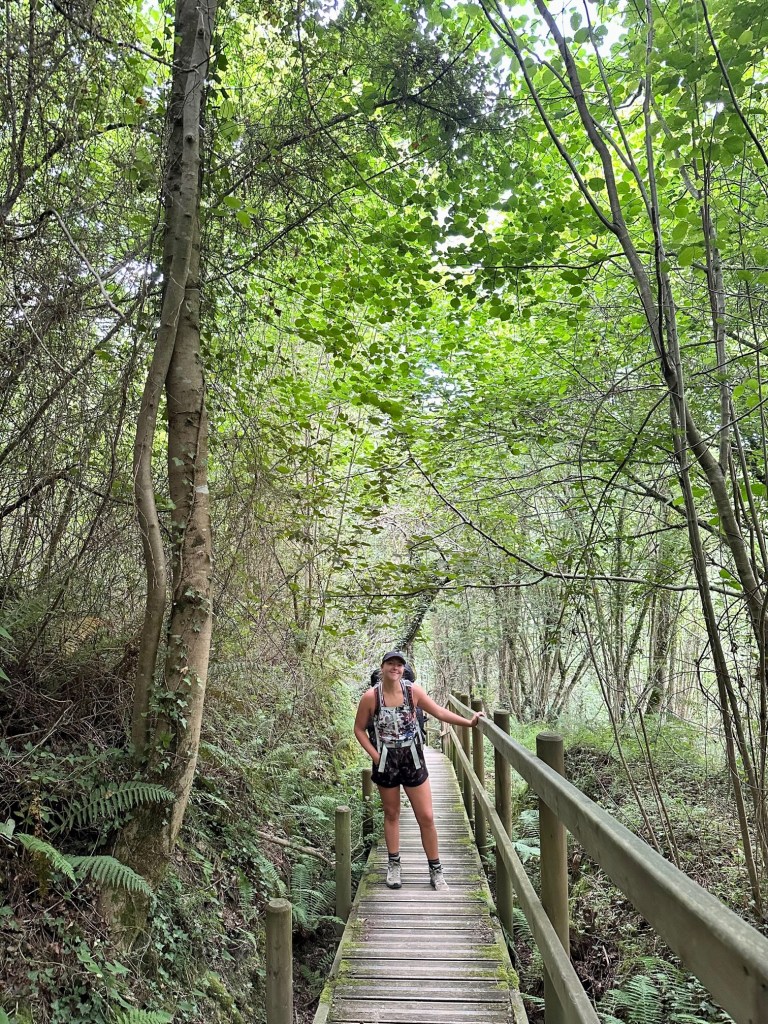
Breathtaking scenery, beautiful quiet picturesque towns, smiling people…the things that have come to represent Basque Country to me…also walks into the jungle-like (mixed) forest with its tall thin trees, narrow trails, and streams:

Lunch was much needed halfway through, as the cloudy breezy day had turned into hot and miserable stillness that made the mountains seem even steeper. We had packed peanut butter sandwiches and Pringles, which, along with our (always) trail mix, kept us going.

In Guernica we splurged for a hotel room—a private room, bathroom, and shower!—up several flights of stairs, of course. We went to the Gernika Peace Museum this evening. Guernica is the site of a terrible bombing during the Spanish Civil War, in 1937. Many civilians died. The bombing is the subject of the painting by Pablo Picasso entitled “Guernica.” The museum had glass floors which showed broken pieces of furniture, assorted shoes, broken pieces of dishes, toys, and other things that you might have seen after the wreckage of the bombing. We saw photos of the aftermath of the bombing, and relics. In one room we watched video of eyewitnesses who shared their personal stories of horror, heartbreak, confusion, and loss.

https://3d.raumgang.de/es/tour/k9ce4npfqt

We got a pizza to “take away” and ate it in our (did I mention, private!) room. We also took this opportunity to make phone calls home.

Day 6: Guernica to Larrabetzu (10.8 miles): Coffee in a Pretty Cup

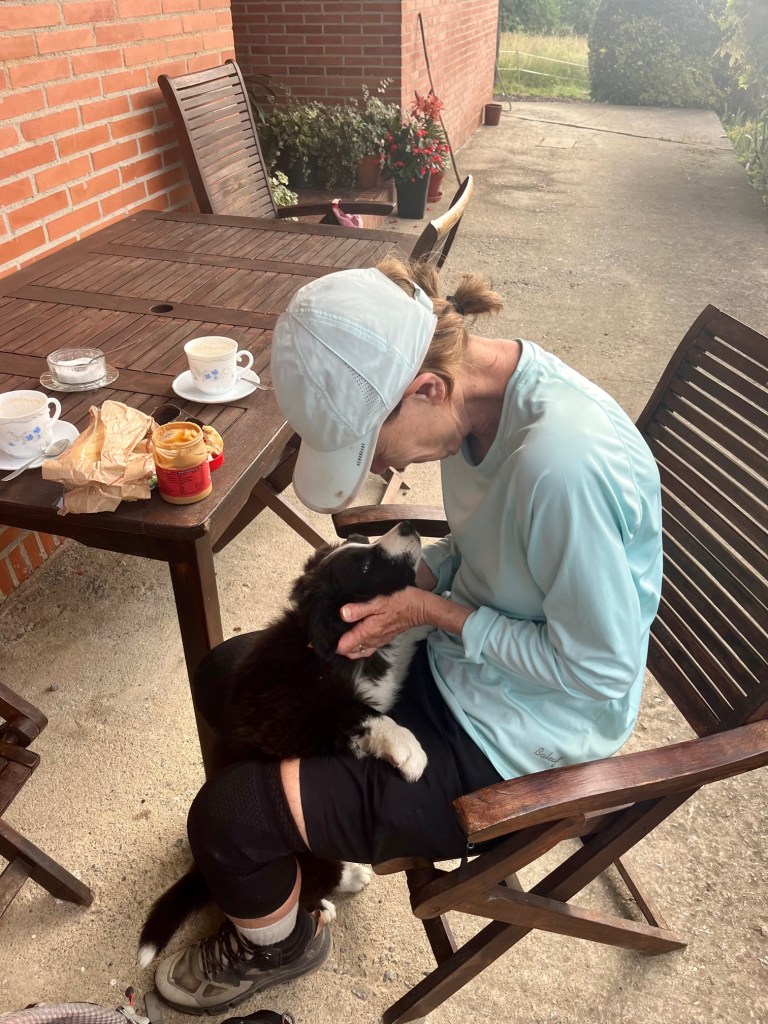
We passed a house with a table of prettily packaged fruits and nuts trailside, for sale, and were invited to the front porch for coffee. We sat on the front porch of the pretty house while our host made fresh coffee, then enjoyed our wonderful cafe con leche in pretty, delicate china cups, as we looked out at the same splendorous scenery we had seen all week, but now from a porch instead of the trail. A 3 month old Border Collie puppy ran up suddenly to give us puppy-kisses. The lady and her husband smiled and talked a bit with pride about their dog and puppy. A cup of coffee had turned into a fun and rejuvenating experience.

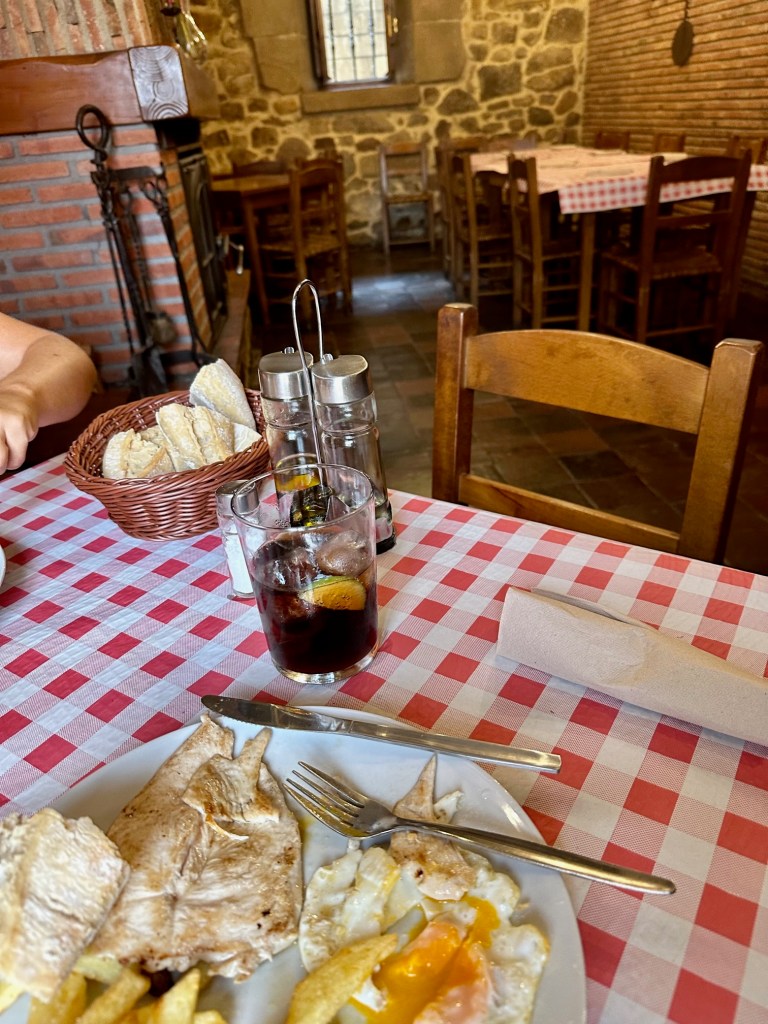
With today’s hike less miles, we got to Larrabetzu and our albergue at 1:00. Until our alb ergue opened, we passed the time by having some pinxtos, including mussels, and cafe con leche, before ending up at a cafe for lunch. As it wan’t the typical lunchtime, we were the only ones in the restaurant, and sat by ourselves in a room with old rock walls, big log beams, and a fireplace—quaint and pretty. I had chicken, french fries, and a fried egg; very tasty bread; and coca-cola with lime.

We were able to get into our albergue after lunch, a little early. After checking in and showers, we went back out to explore the small town. We ended up chatting with a group of other pilgrims, from several different areas of the world; and had dinner together with them that night. Back to the albergue before 10:00 curfew (the doors are locked then) and good night.

Day 7: Larrabetzu-Bilbao (9 miles): A Rainy Descent into Bilbao

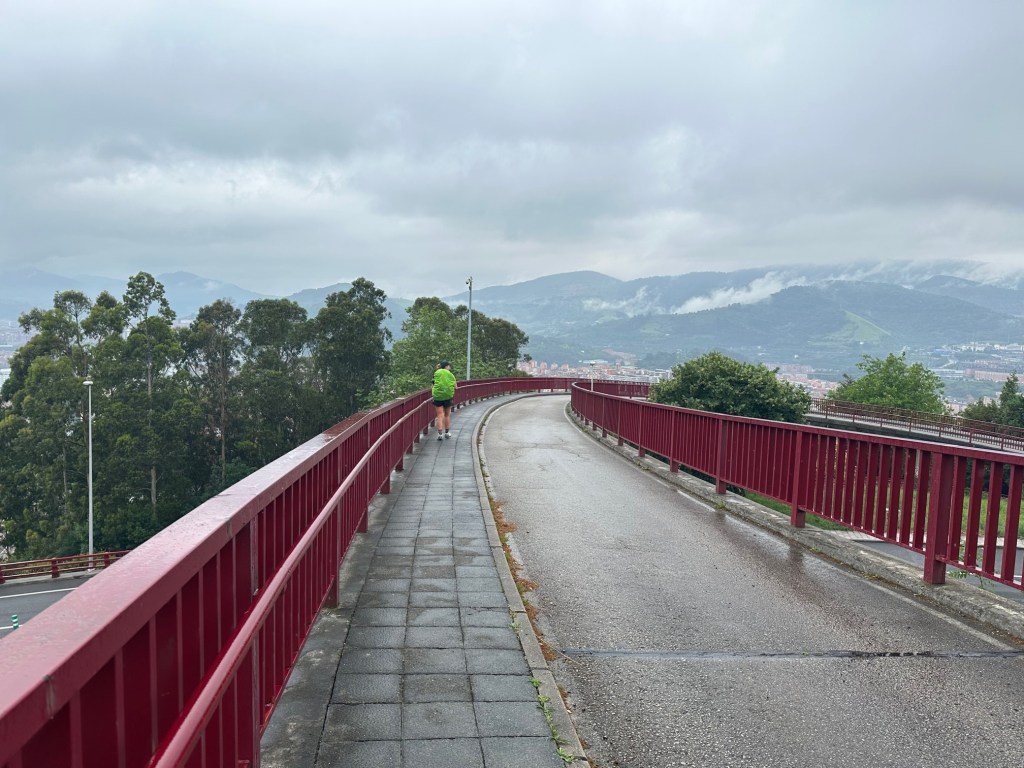
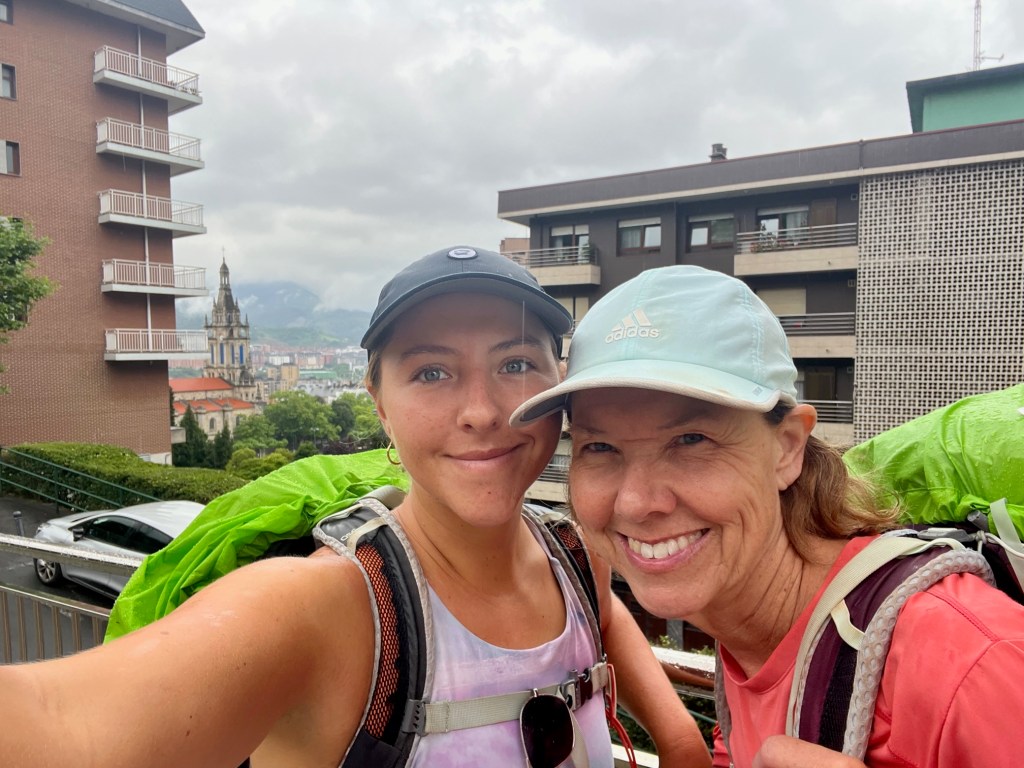
Again, steep hills to climb; and at the end (with a light rain falling) a big descent into our destination of Bilbao! And with that our week on the Camino de Santiago North route is complete!

“And I think to myself…what a wonderful world!” -Louis Armstrong

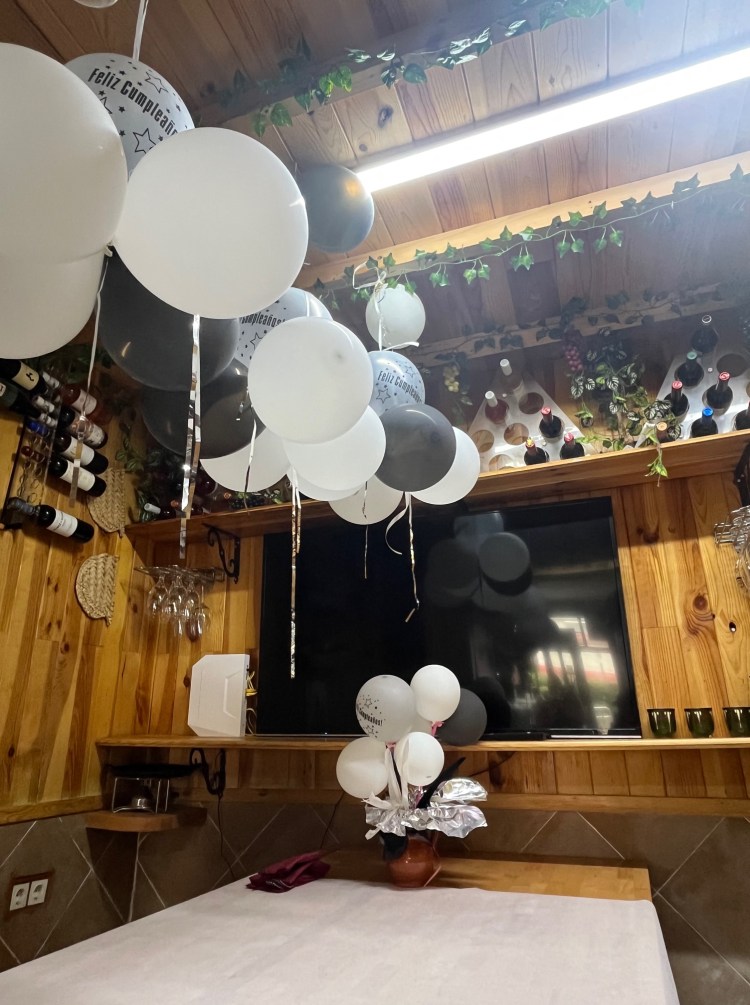
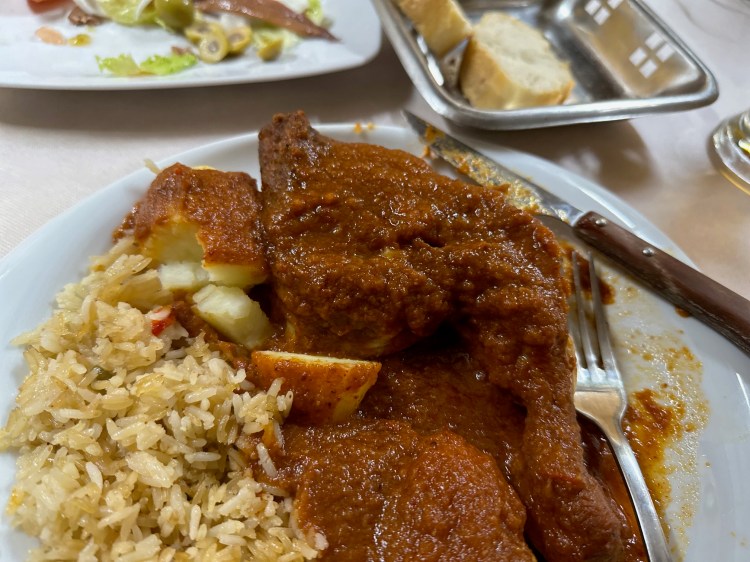
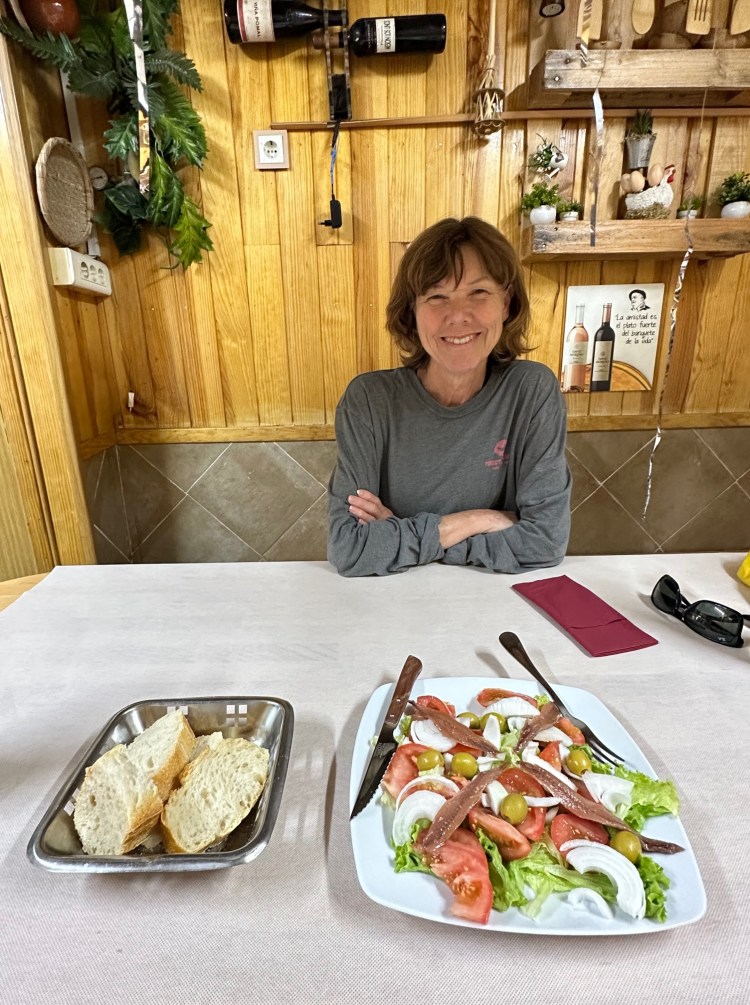
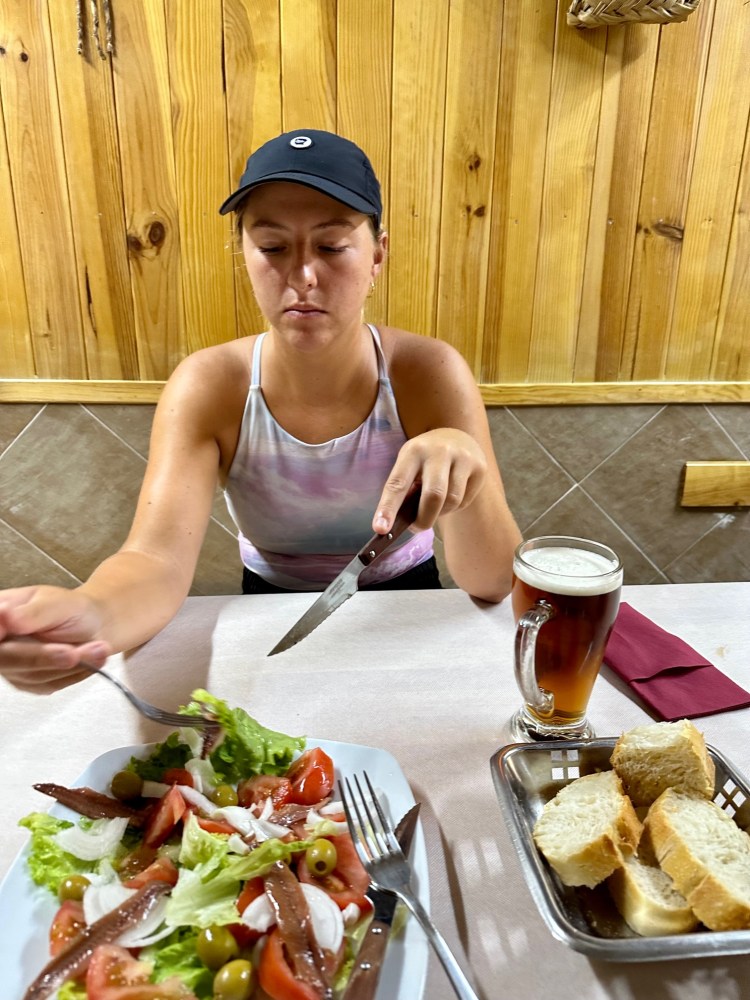
In Bilbao, we had an hour or so walk to our Airbnb. After settling in and chatting with our what would prove to be outstanding, exceptional host Idoia, over a cup of coffee, we went out to find somewhere for a celebratory lunch! We found a gem, which was a Bolivian restaurant. We were the only customers for lunch, as it was the off-hours (once again) and the restaurant owner led us to our table—decorated with balloons and celebratory streamers! It turns out the table had been used for a birthday party the night before. We felt it suited us perfectly. My meal was amazing, with half a chicken, and potatoes, covered with a rich red spicy chili sauce unlike any I’d ever tasted; rice, fresh bread; and a huge plate of fresh tomato slices, onions, and olives. ‘Perfecto’!

Slideshow:

Then by a bakery where I “accidentally” got a traditional Basque bakery treat that was incredibly perfect! It was a roll, light and fluffy (similar to what your bread-making relative might make for Thanksgiving dinner) but was filled inside with a cream. These are called “Bollos de Mantequilla” or “Butter Buns.” Each bite was so very delicious!

https://buber.net/Basque/2021/09/05/basque-fact-of-the-week-the-butter-buns-of-bilbao/

In our wonderful air-conditioned room at our Airbnb, we spent the rest of the afternoon watching TV before getting out to explore a bit and get our Pilgrim Passports stamped at the tourist office.

What an experience this week has been! My life has been enriched and changed for the things I’ve seen and experienced—for the panoramas of the simple tranquility and beauty of the Pyrenees foothills of the Basque Country that have been absorbed into my soul; and even for the difficulties of it!

“Yes, I think to myself…what a wonderful world!” -Louis Armstrong

Upper Left Pacific Northwest USA: Prepare for Adventure!

My July trip to the upper left Pacific northwest in the state of Washington, USA was to include a short stay in Port Angeles then a 4-day backpacking trip through the Hoh Rain Forest of Olympic National Park!

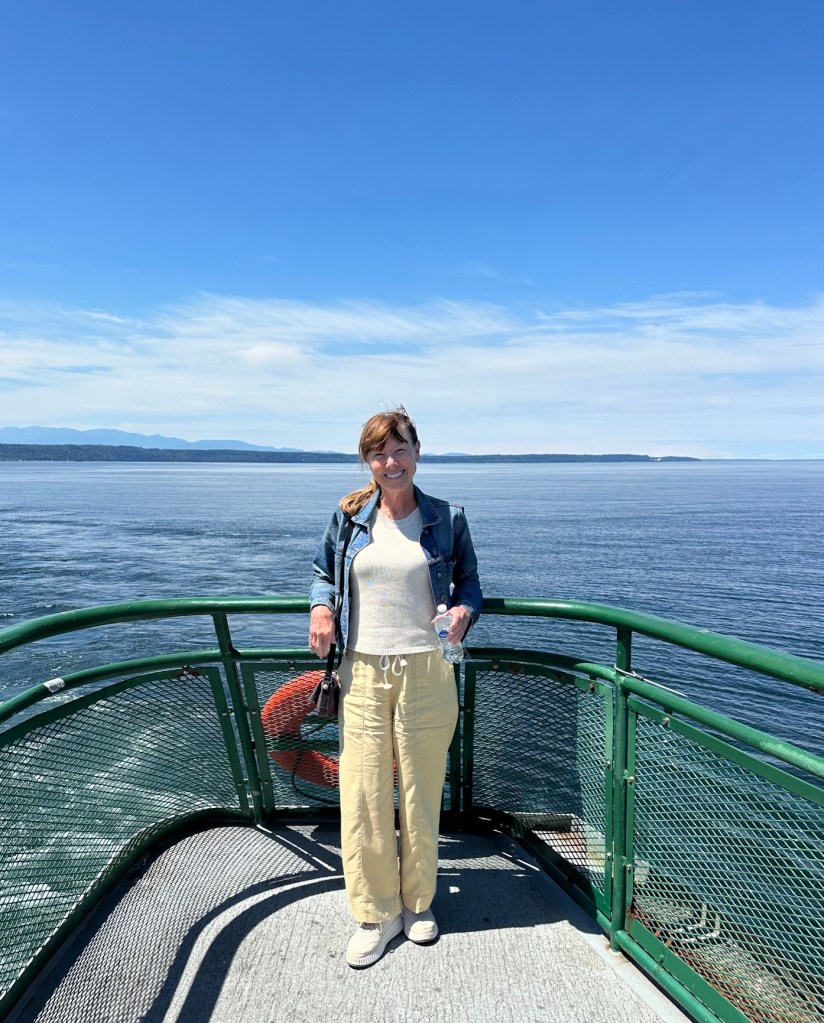
I chose the Dungeness/Greyhound bus to travel from Seattle to Port Angeles, about four hours with stops along the way. I was pleasantly surprised when I saw that the bus was boarding a ferry! Bus passengers got out to enjoy the view on the deck for the 20 minute Bainbridge Island Ferry ride, which, as it turns out, is the shortest route from Seattle to Olympic National Park.

Port Angeles…Day 1-Charmingly and Welcomingly Delightful!

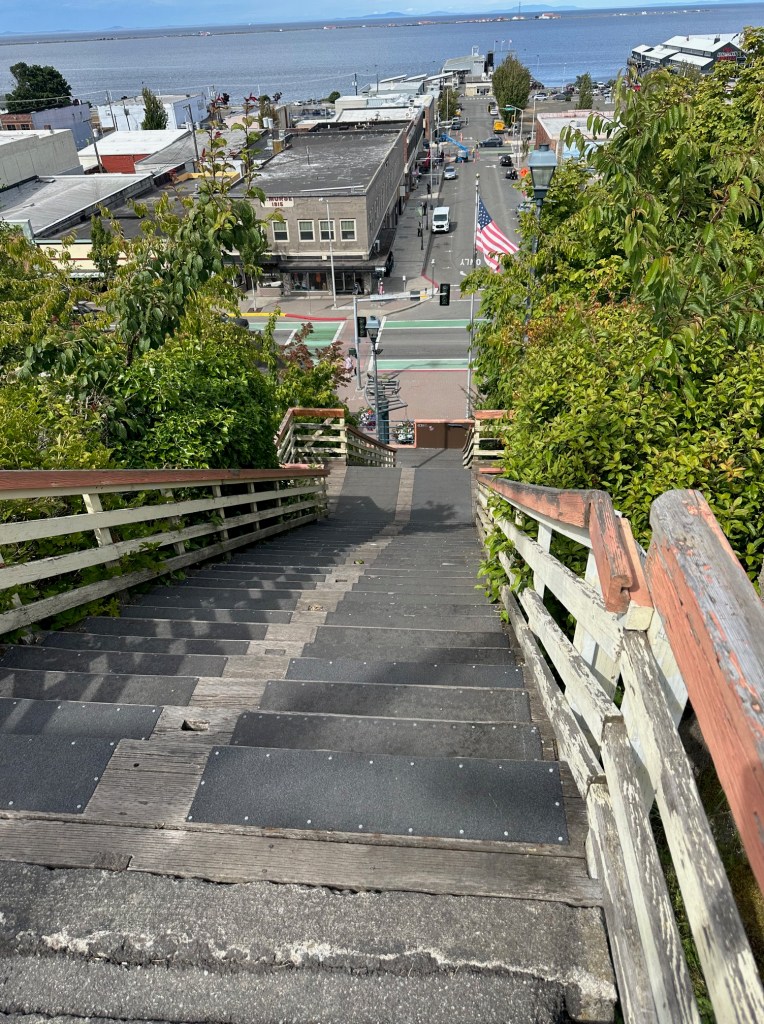
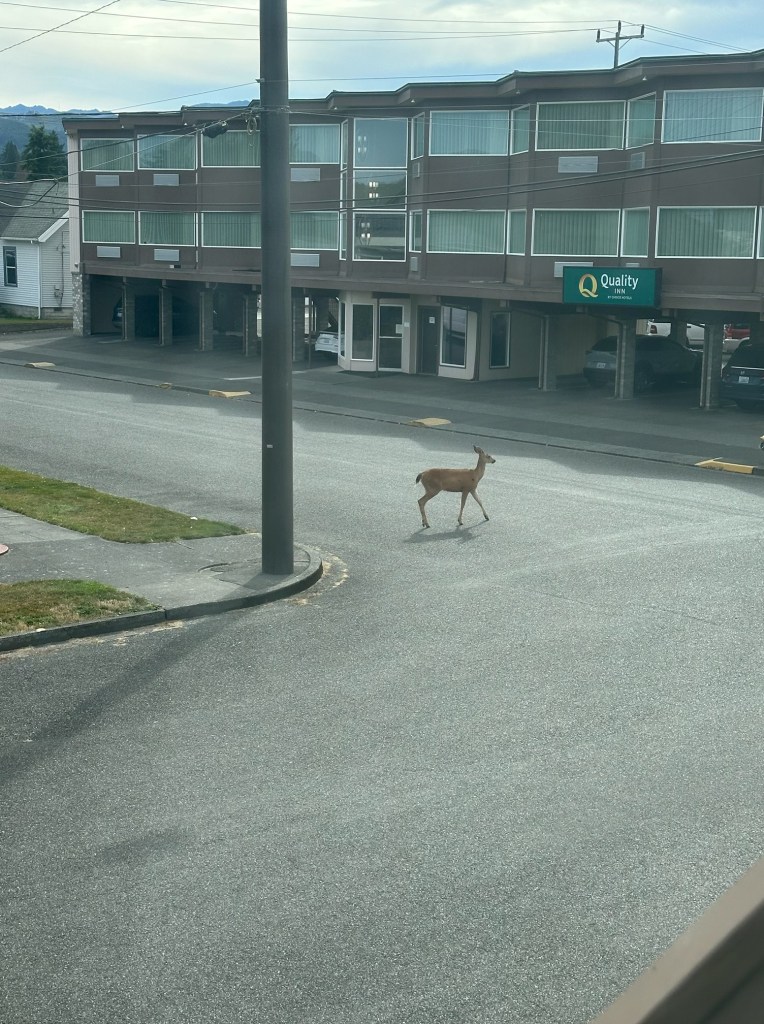
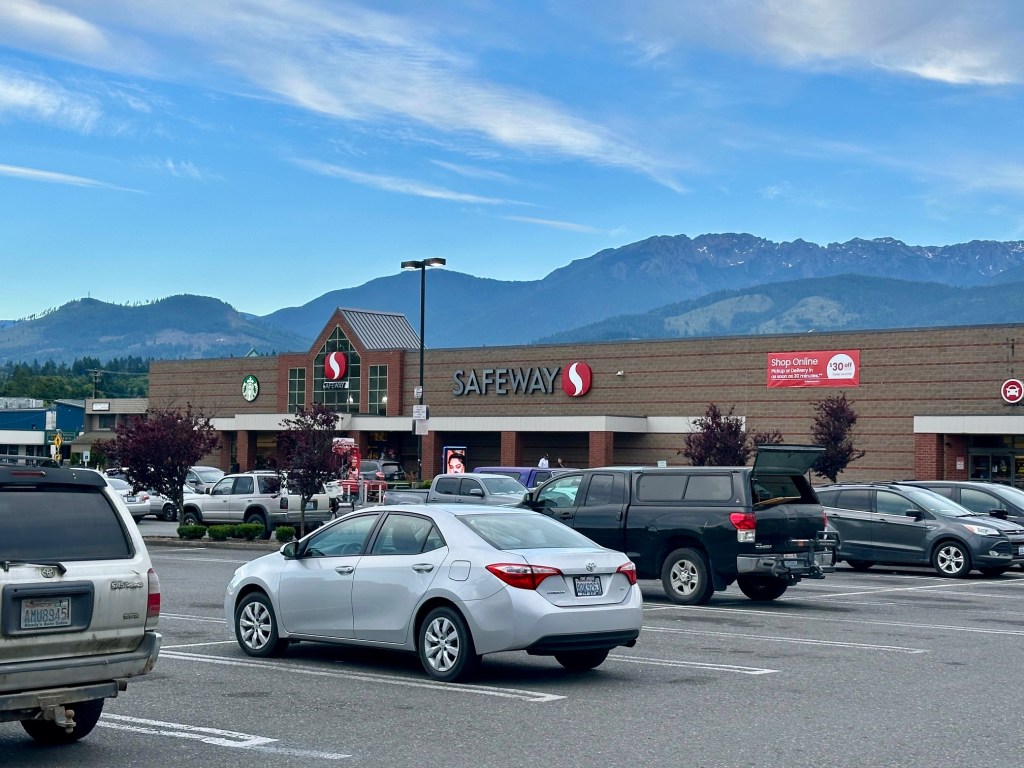
My stay at the Quality Inn in Port Angeles was very nice. There was a multitude of steps leading up a high hill to the motel, which was located in a quiet and charming neighborhood: I saw a little deer each morning and evening from my window, as well as a beautiful view of the surrounding mountains; church bells rang out gently from time to time; there was a Safeway grocery store a block down; and the wharf of Puget Sound was three minutes away!

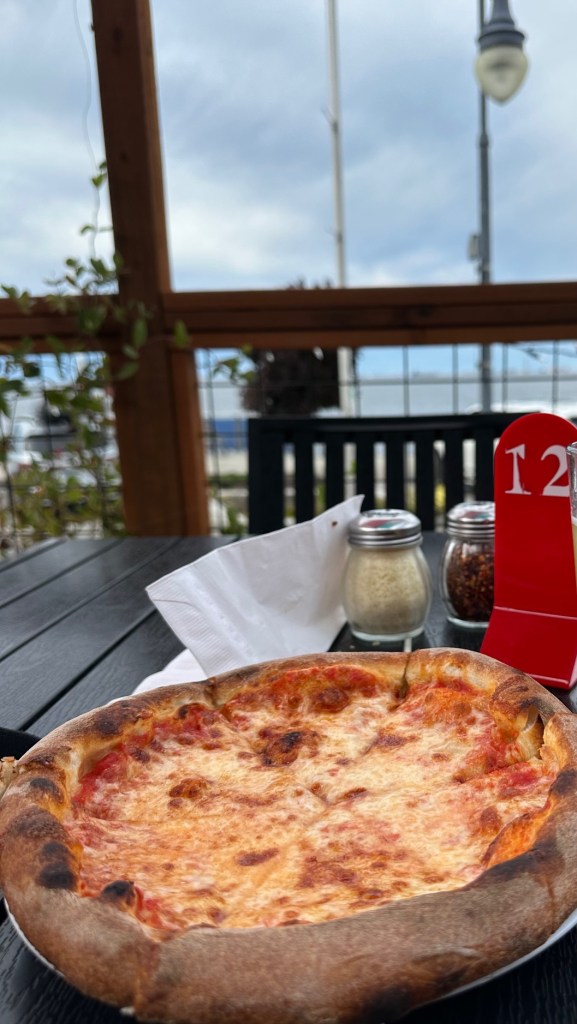
The first evening I was there, I wandered around the wharf and shoreline, and through the pretty little town. I decided on pizza at “Barhop” which was a great decision! The pizza was very good, and it was peaceful sitting on the patio, watching and listening to the seagulls and looking out at the ocean inlet that is Puget Sound.

Port Angeles…Day 2-Whale Watching and a Glimpse of the Canadian Border

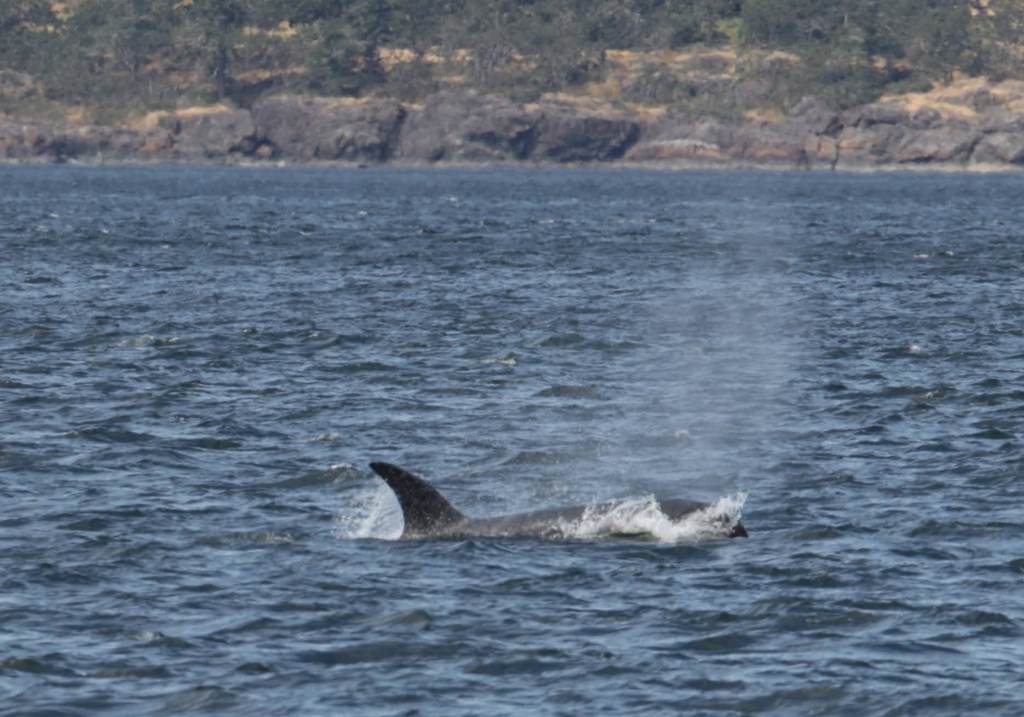
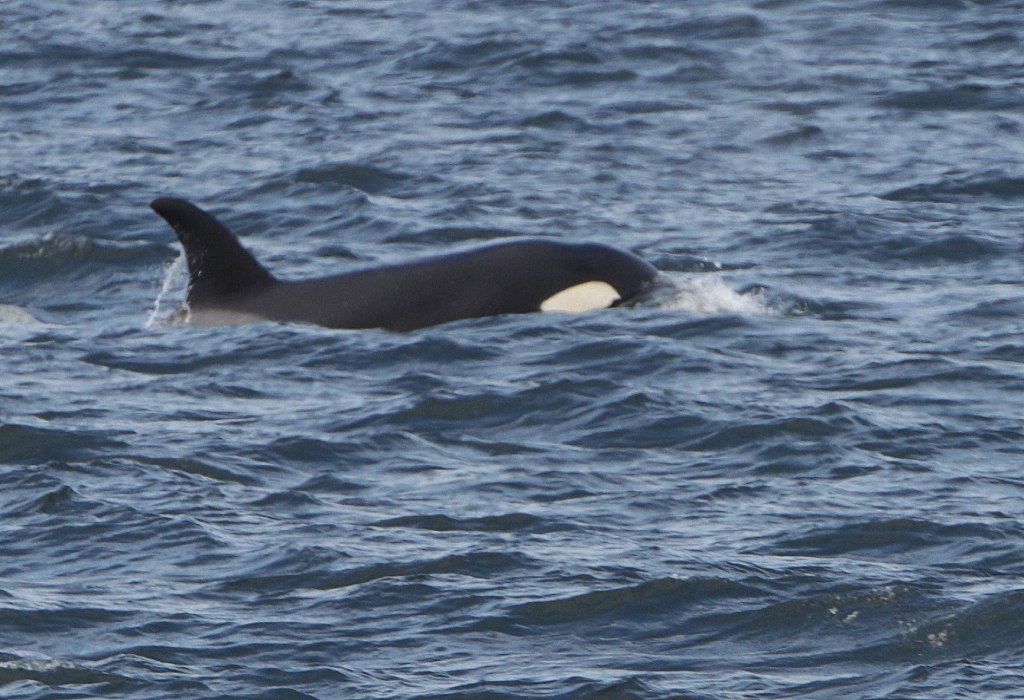
The whale-watching tour was fun! We saw humpback whales and killer whales. I also liked that I got to see the Canadian shoreline up close! (Does this mean I can say I’ve been to Canada?) The pre-ordered sandwiches on the boat were delicious and huge. We got tons of information throughout about whales, and opportunities to ask any and all questions. I highly recommend this half-day (4 hour) tour!

Into the Rainforest…4 Days, 32 miles, 2600 ft. Elevation Gain…

HOH RIVER TRAIL TO ELK LAKE, OUT AND BACK

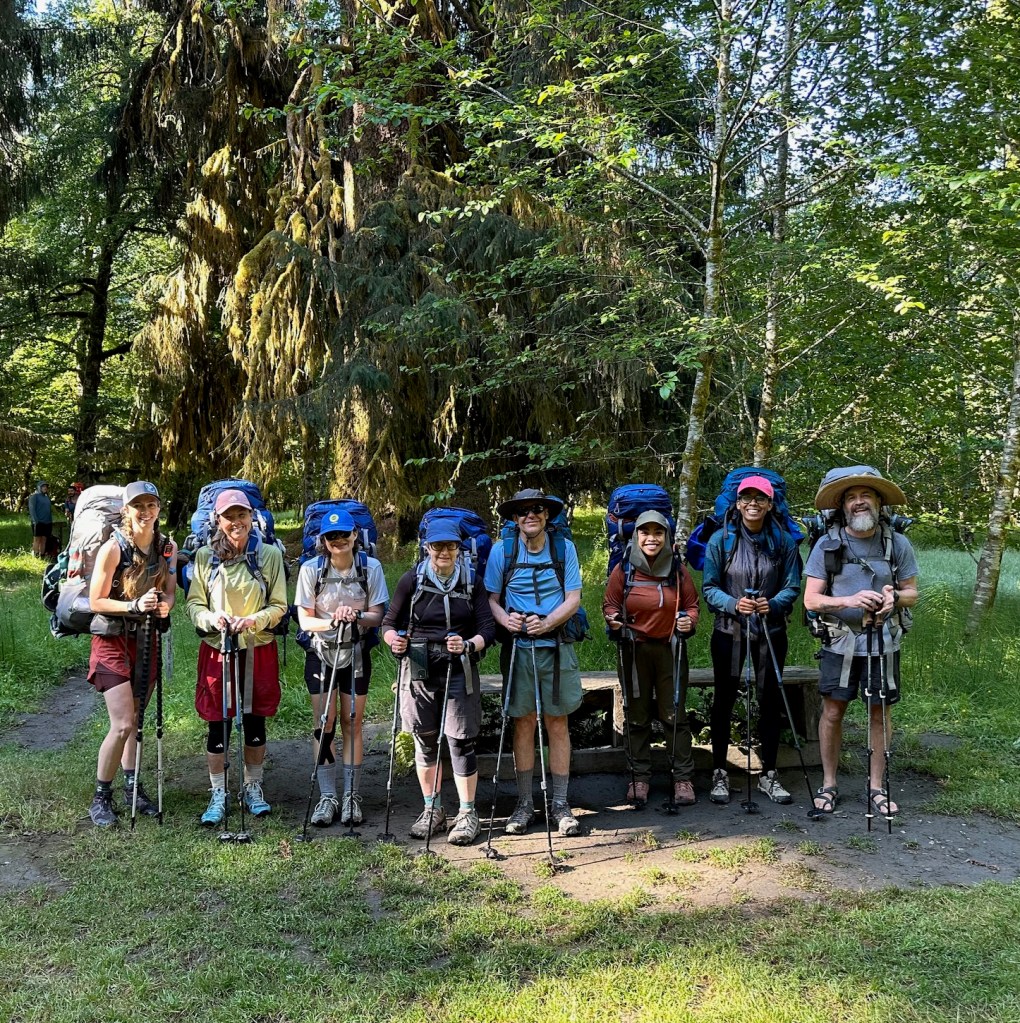
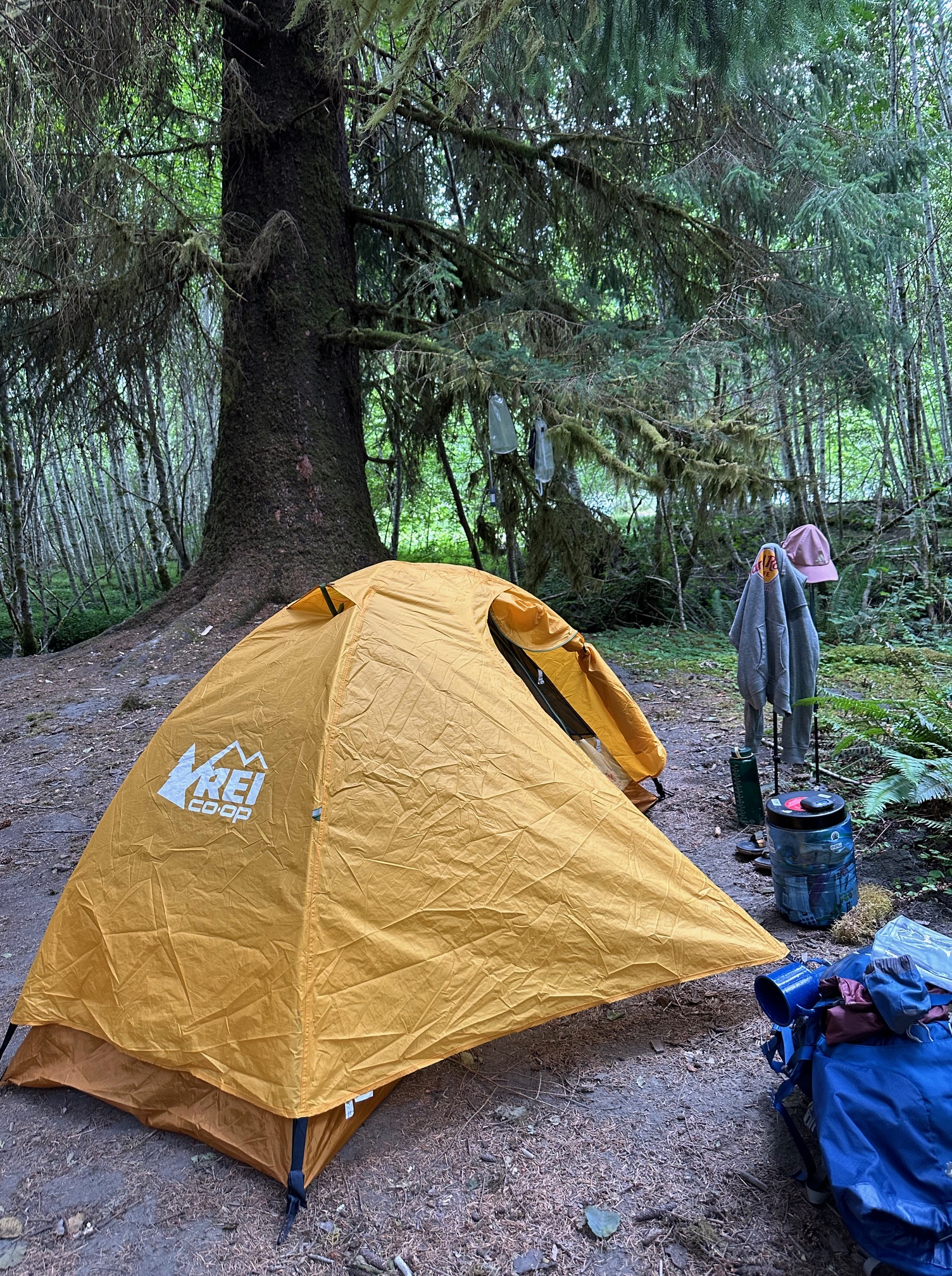
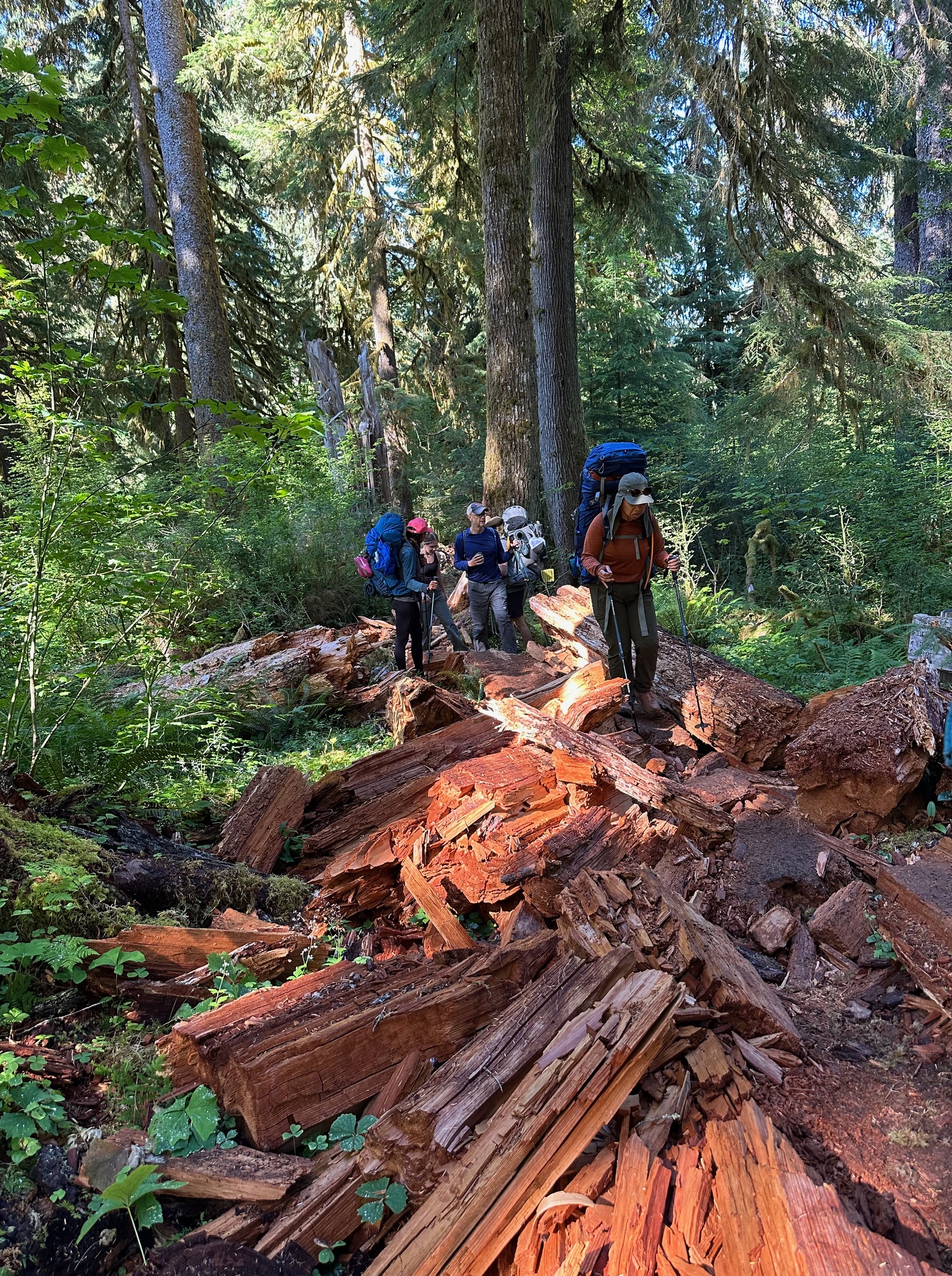
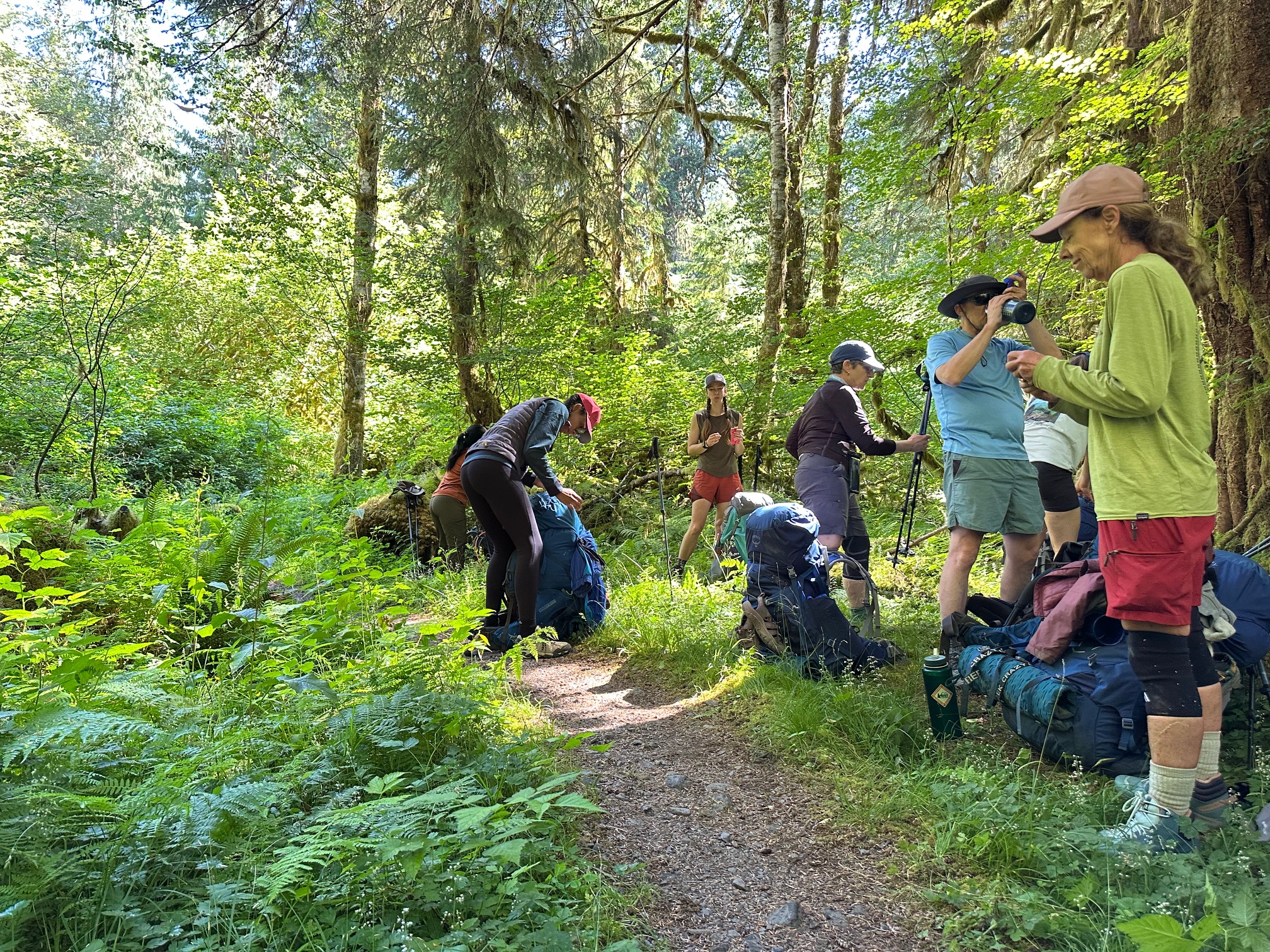
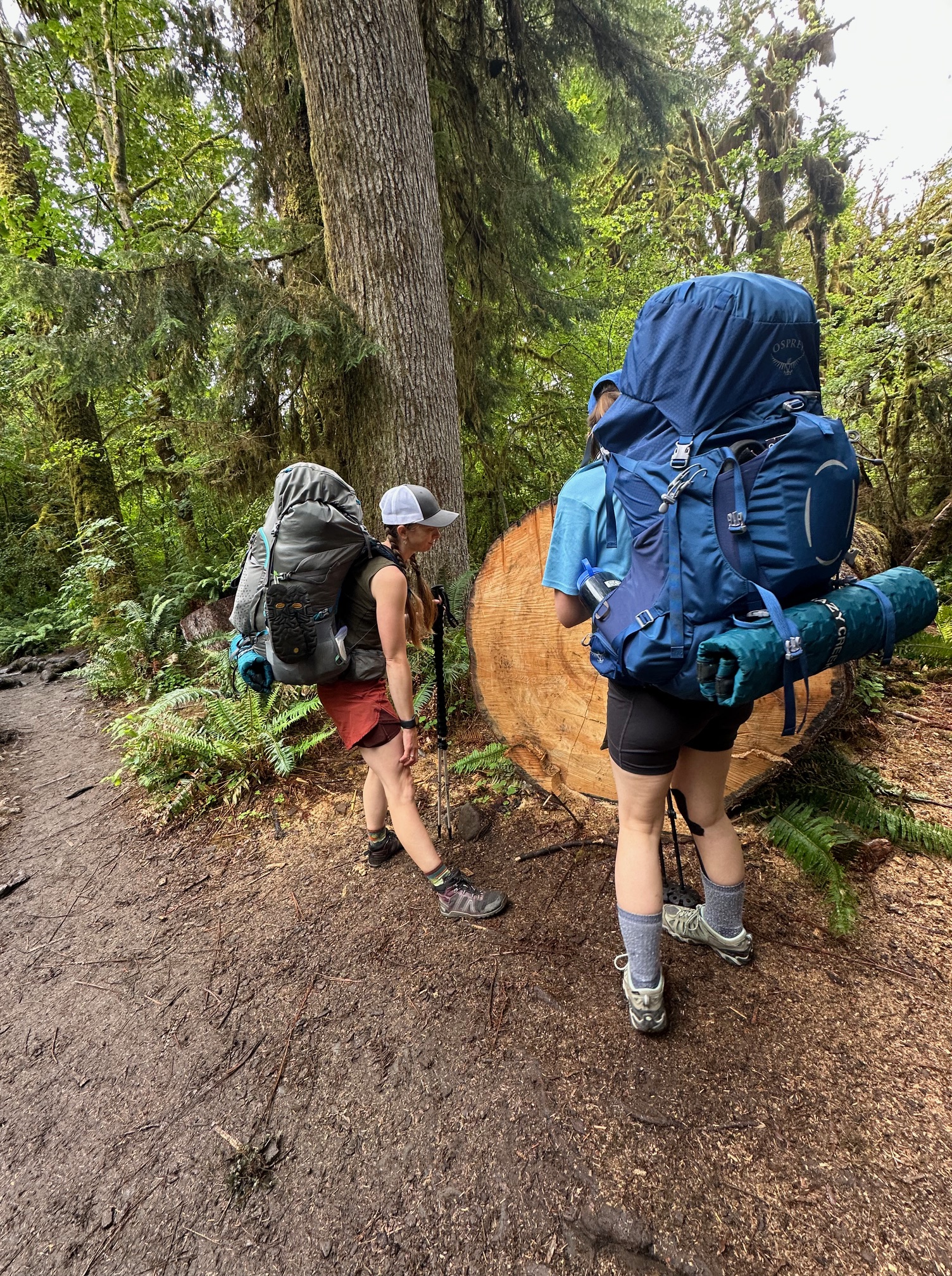
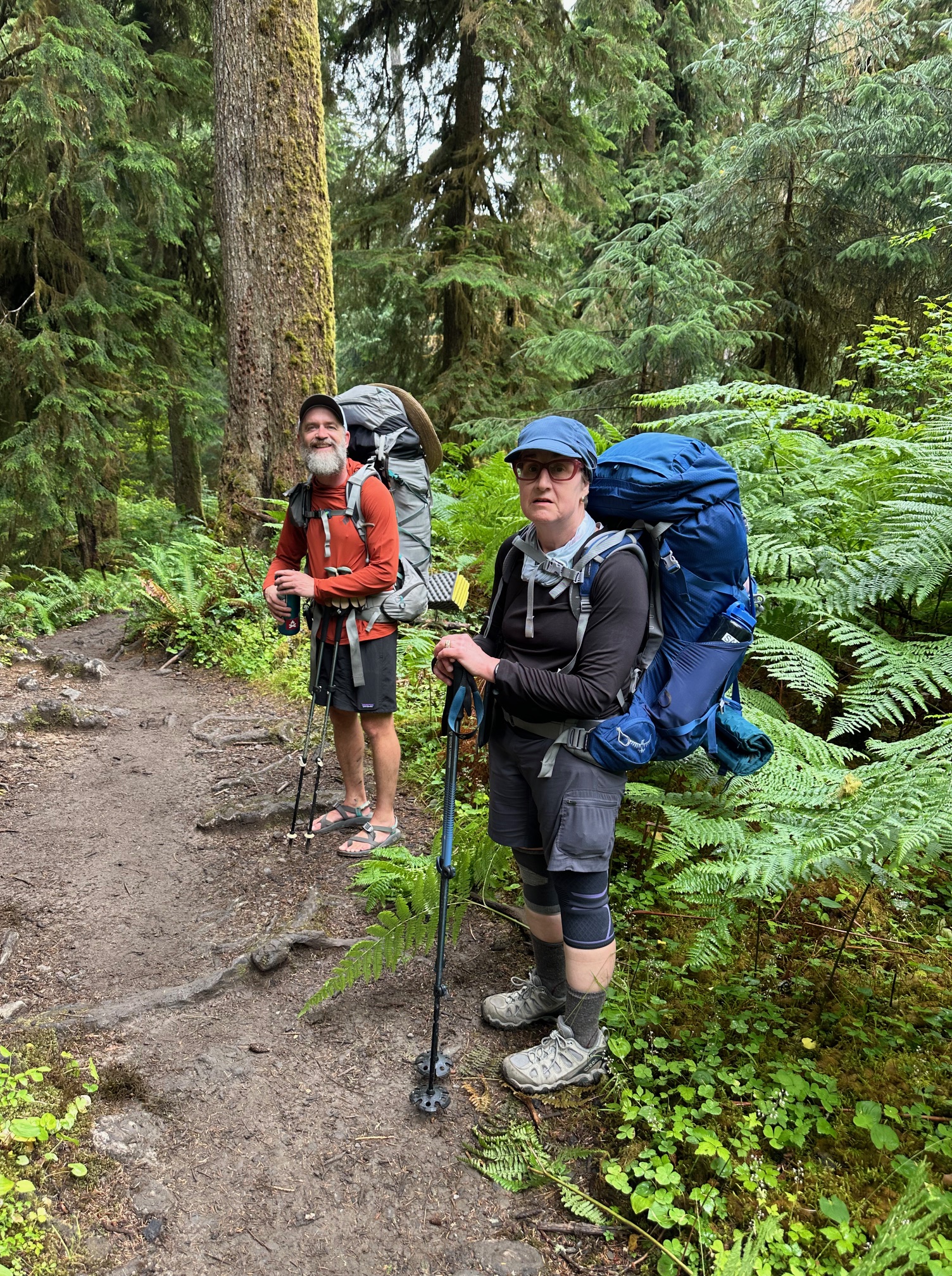
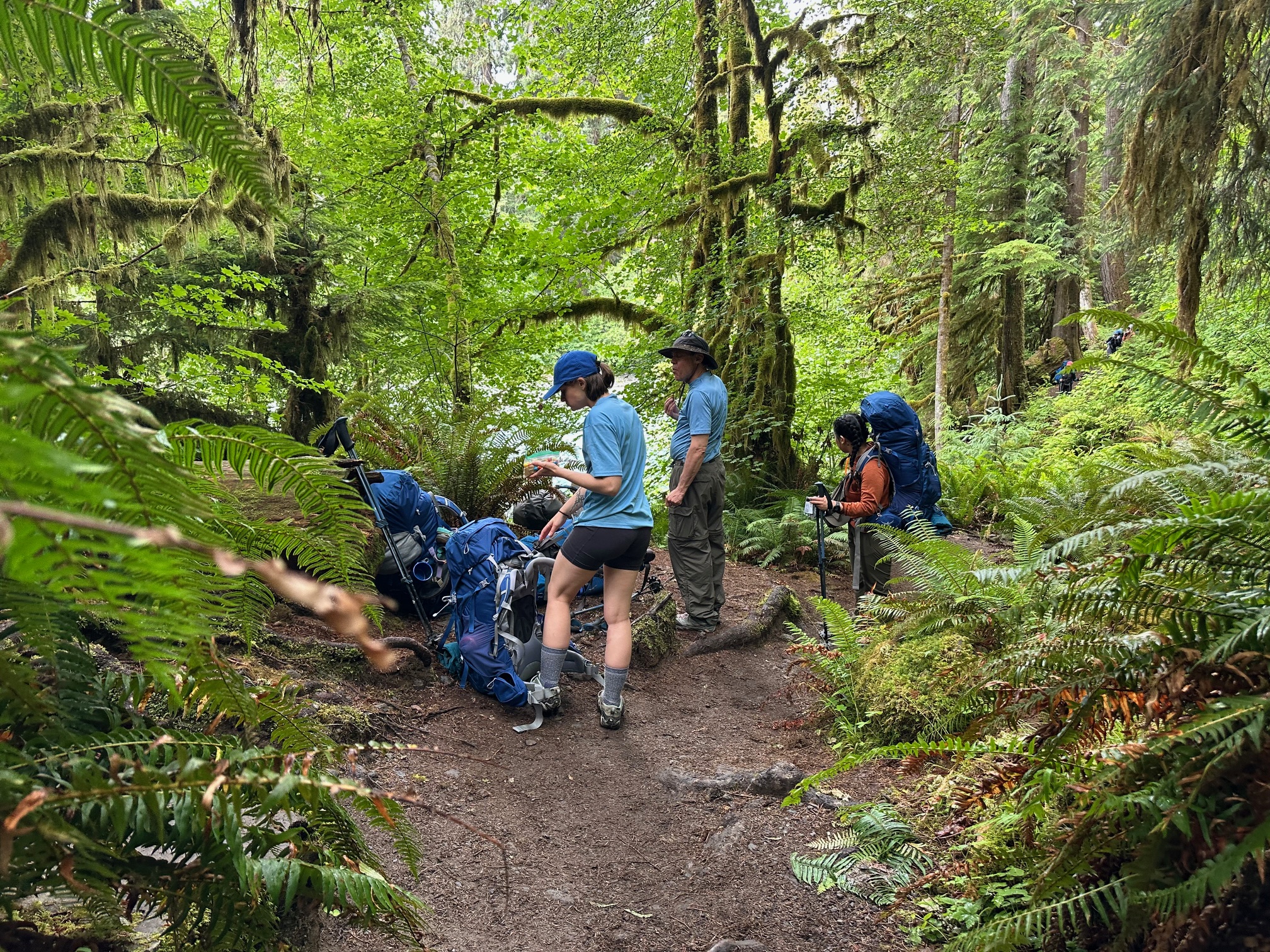
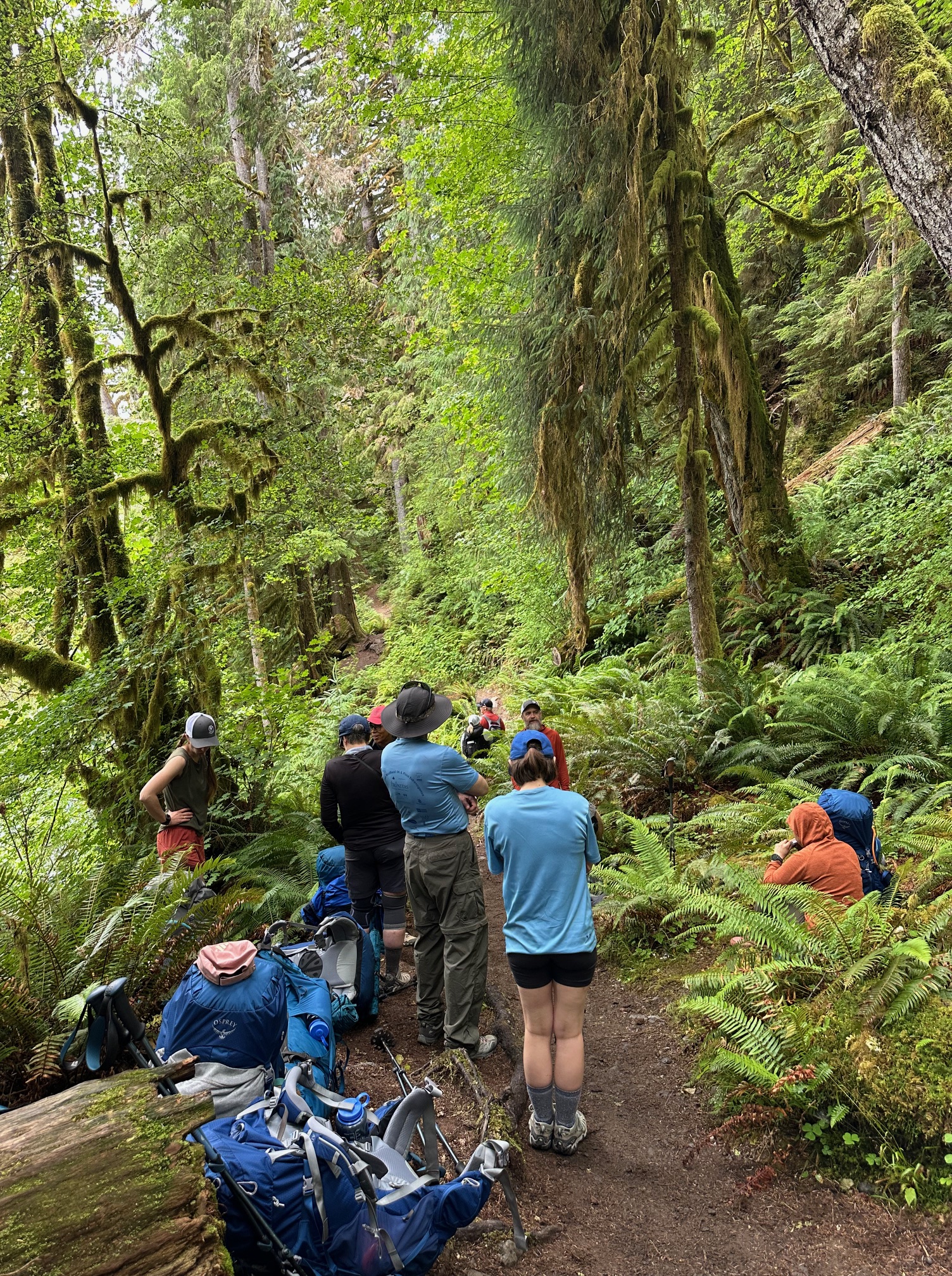
Our hiking group included six hikers of varying ages, and two guides from the Olympic Hiking Company. I had booked the hike well in advance, and our group had already become acquainted via a Zoom meeting, then had met up the evening before to pack backpacks, learn a few essential skills (like setting up the tent, and how to pack a backpack, for those of us who were new to backpacking) and make lunches. I can’t say enough great things about the Olympic Hiking Company. I went on this trip with the desire to learn all I could, and guides Casey and Amy were wonderful educators throughout the trip! The hike, considered “hard” by AllTrails; “difficult” by GAIA GPS, was yes, demanding, but definitively worth it!

Day 1: Moss-covered Trees and a Glacier-fed River

9.1 miles, 375 ft. elevation gain

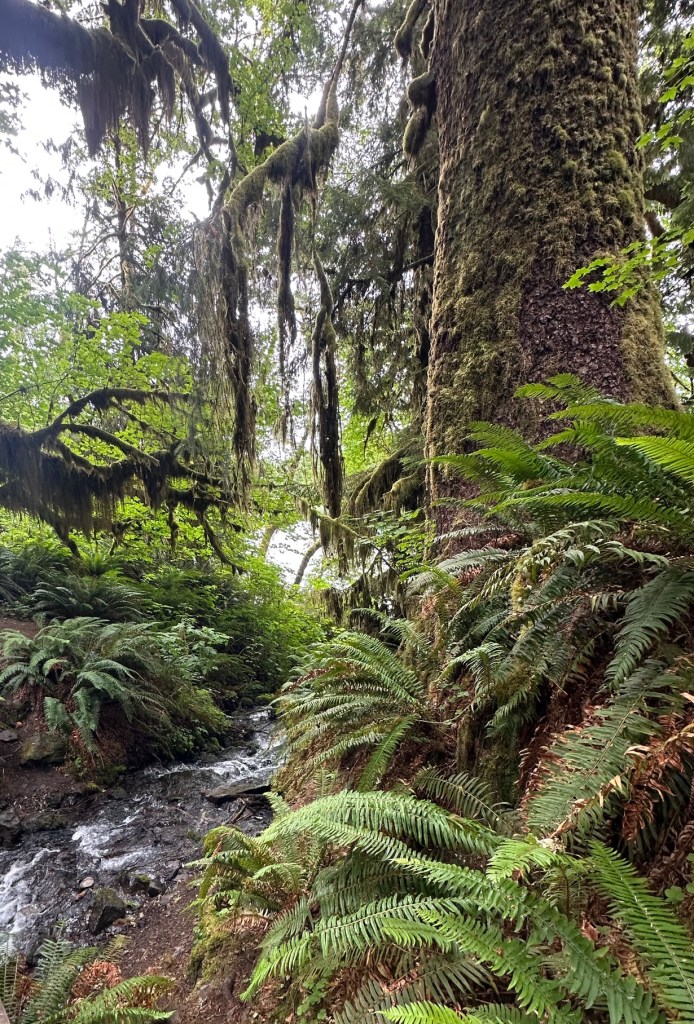
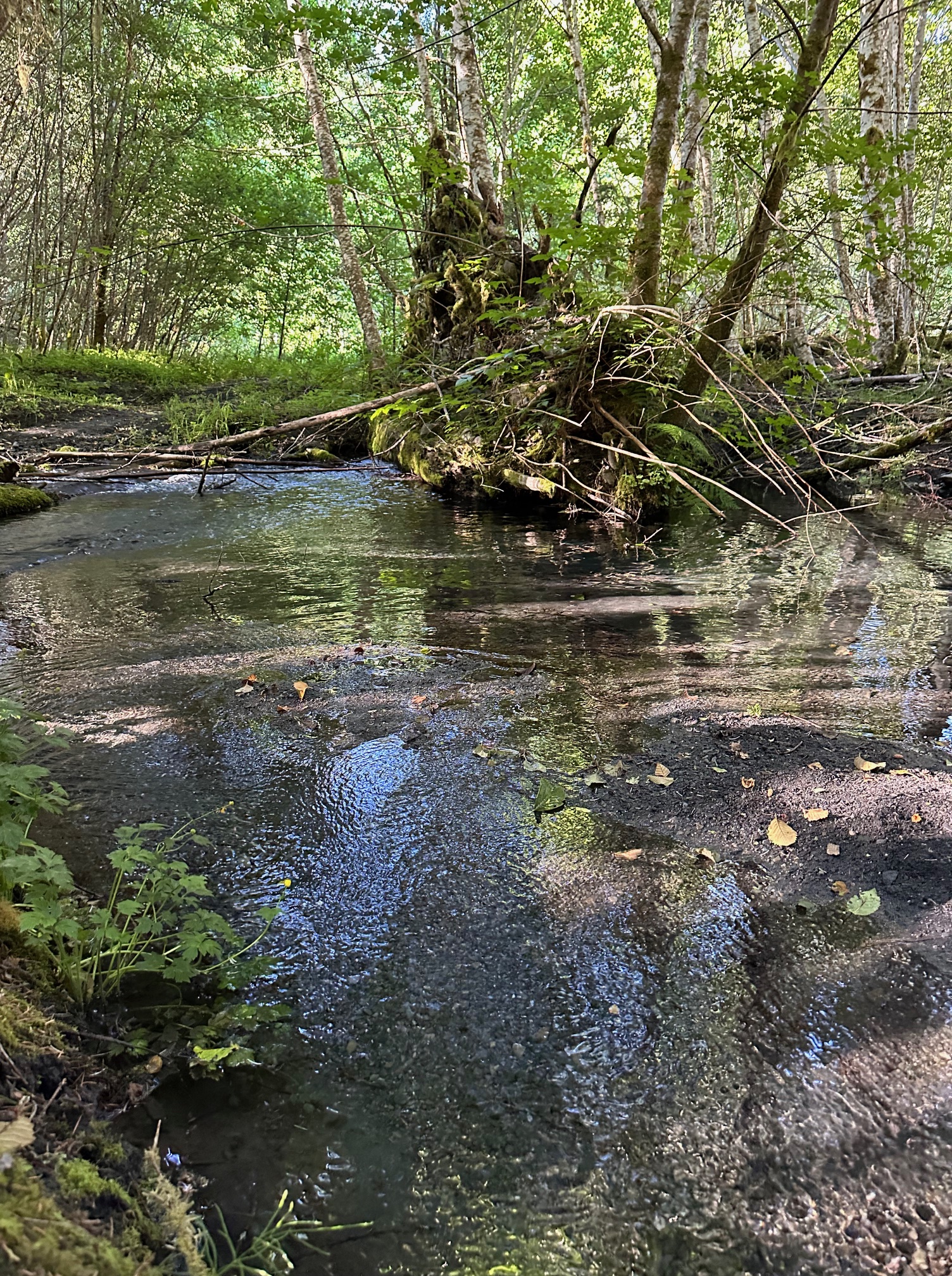
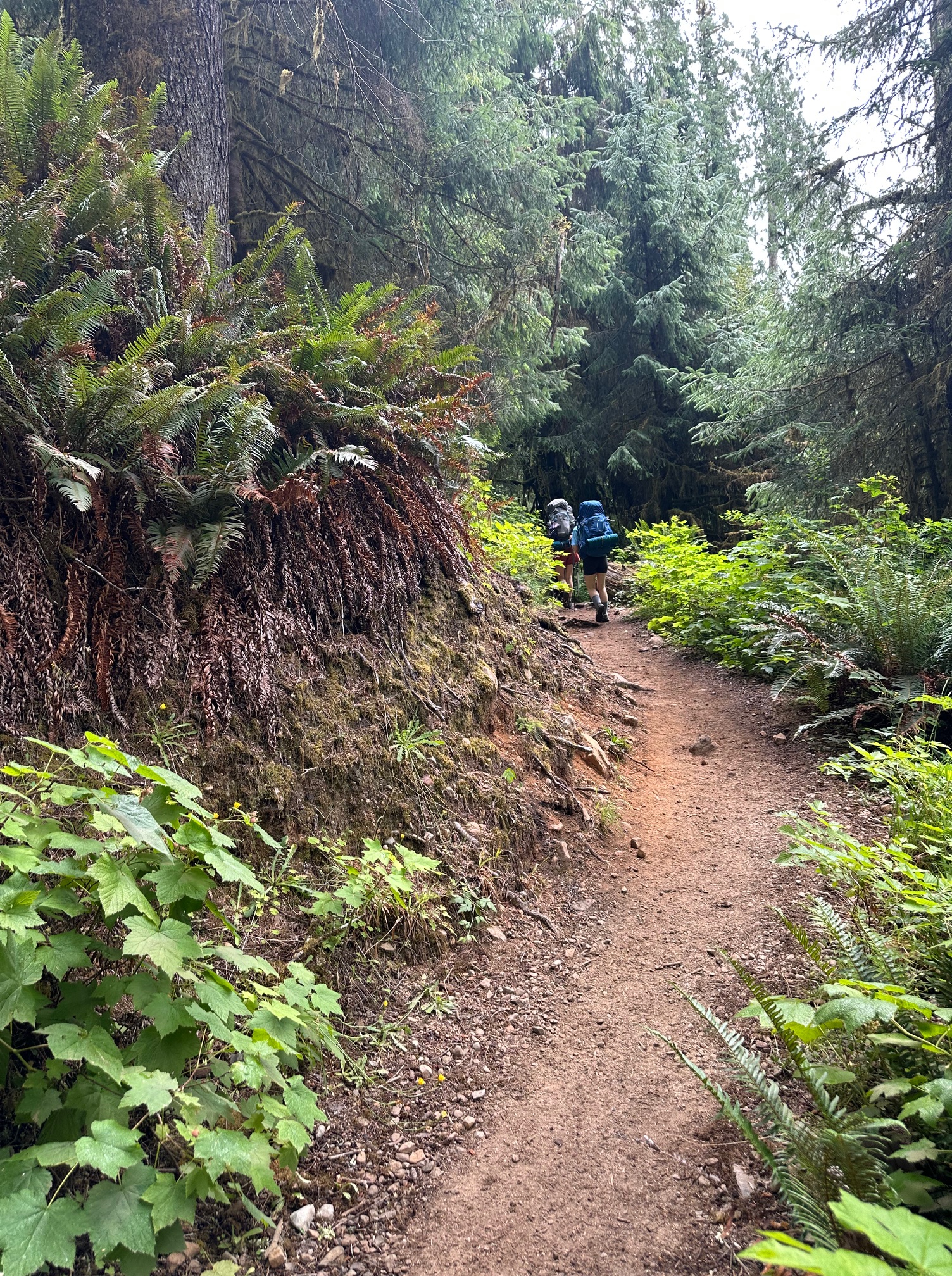
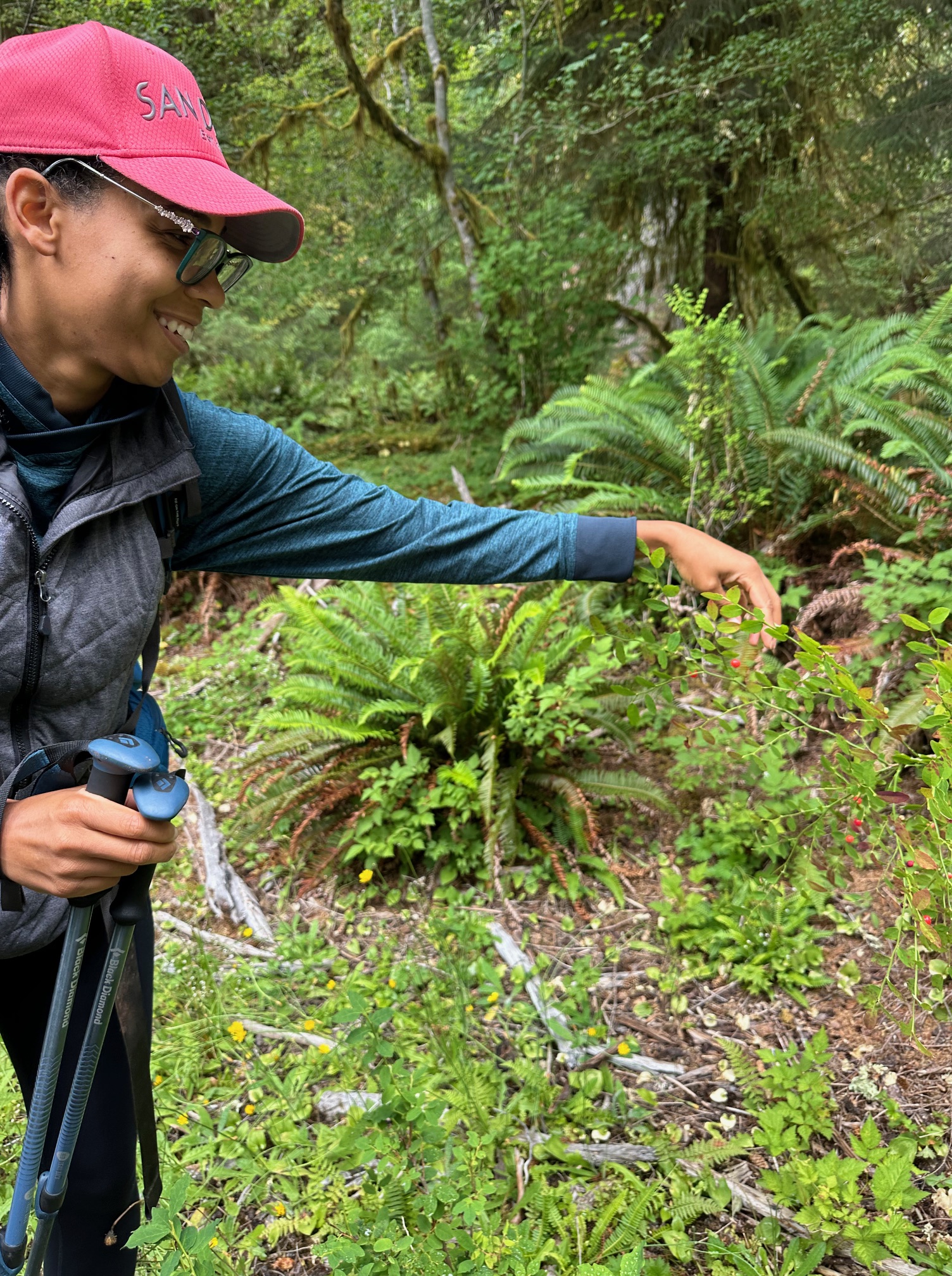
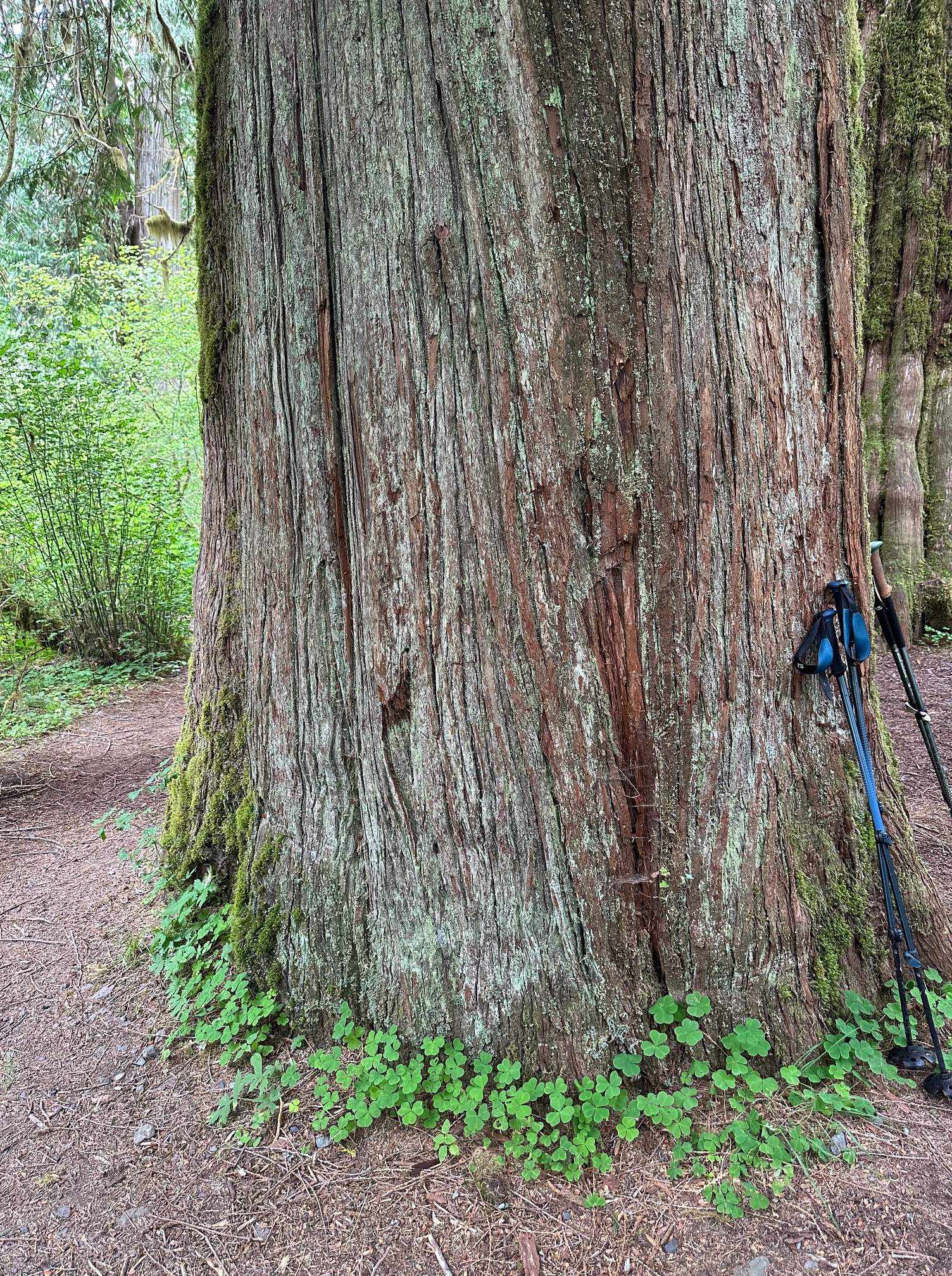
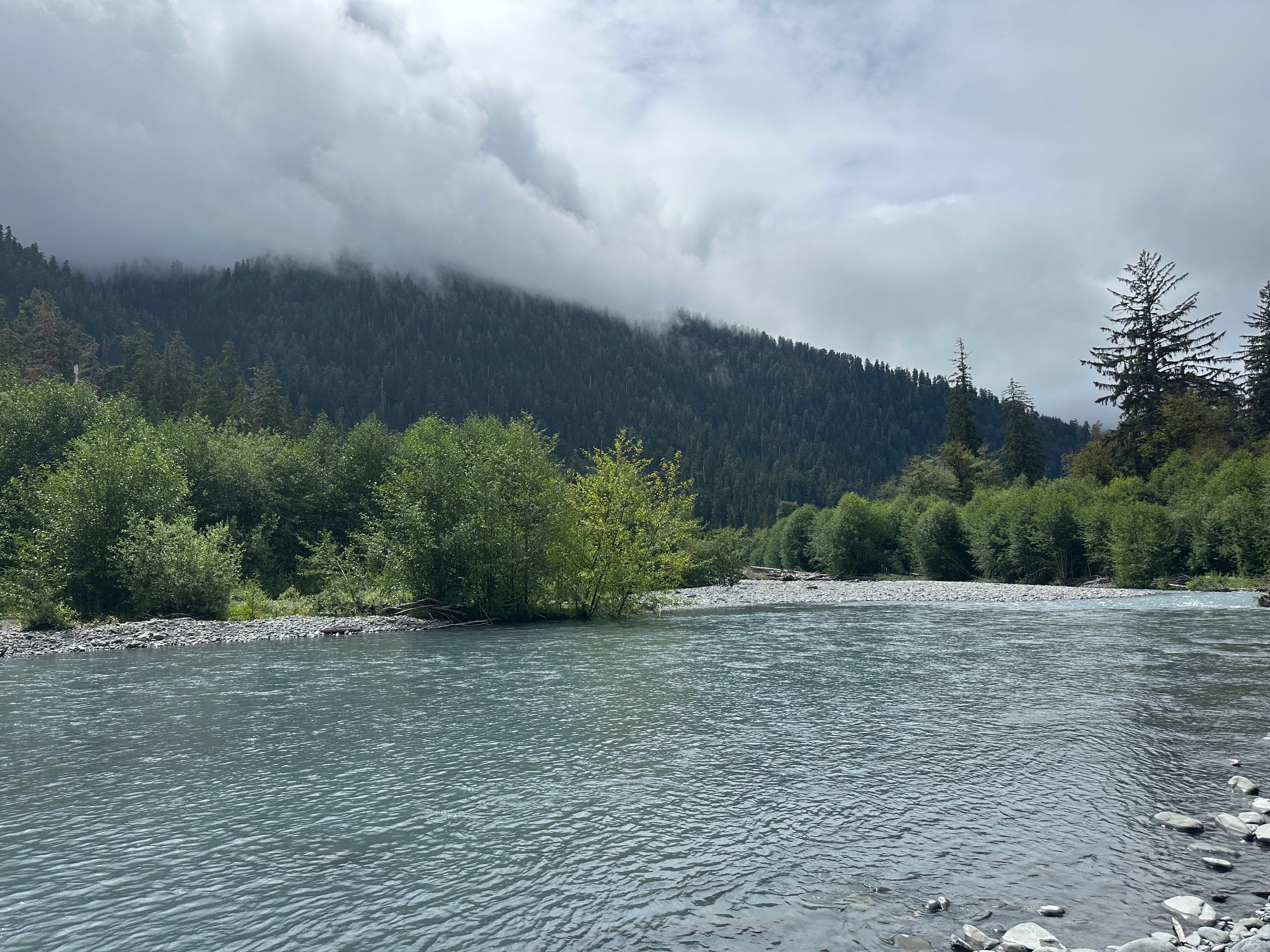
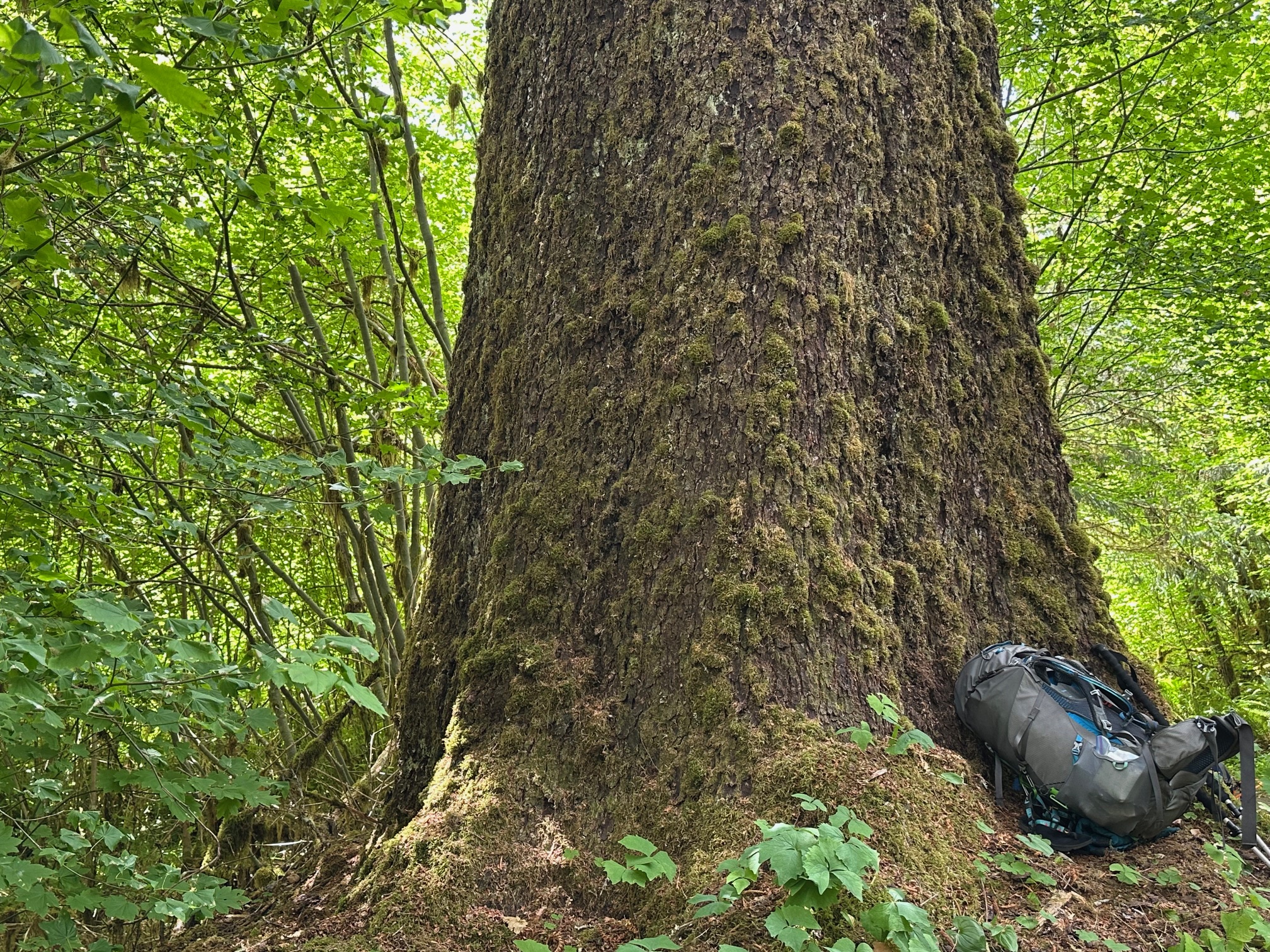
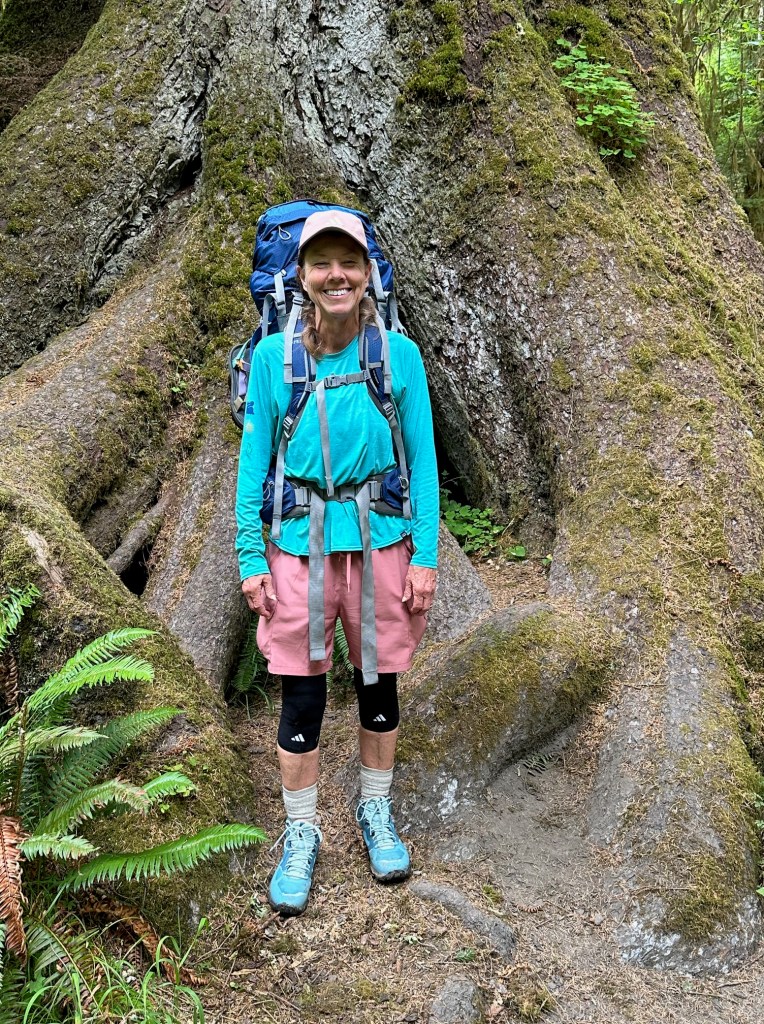
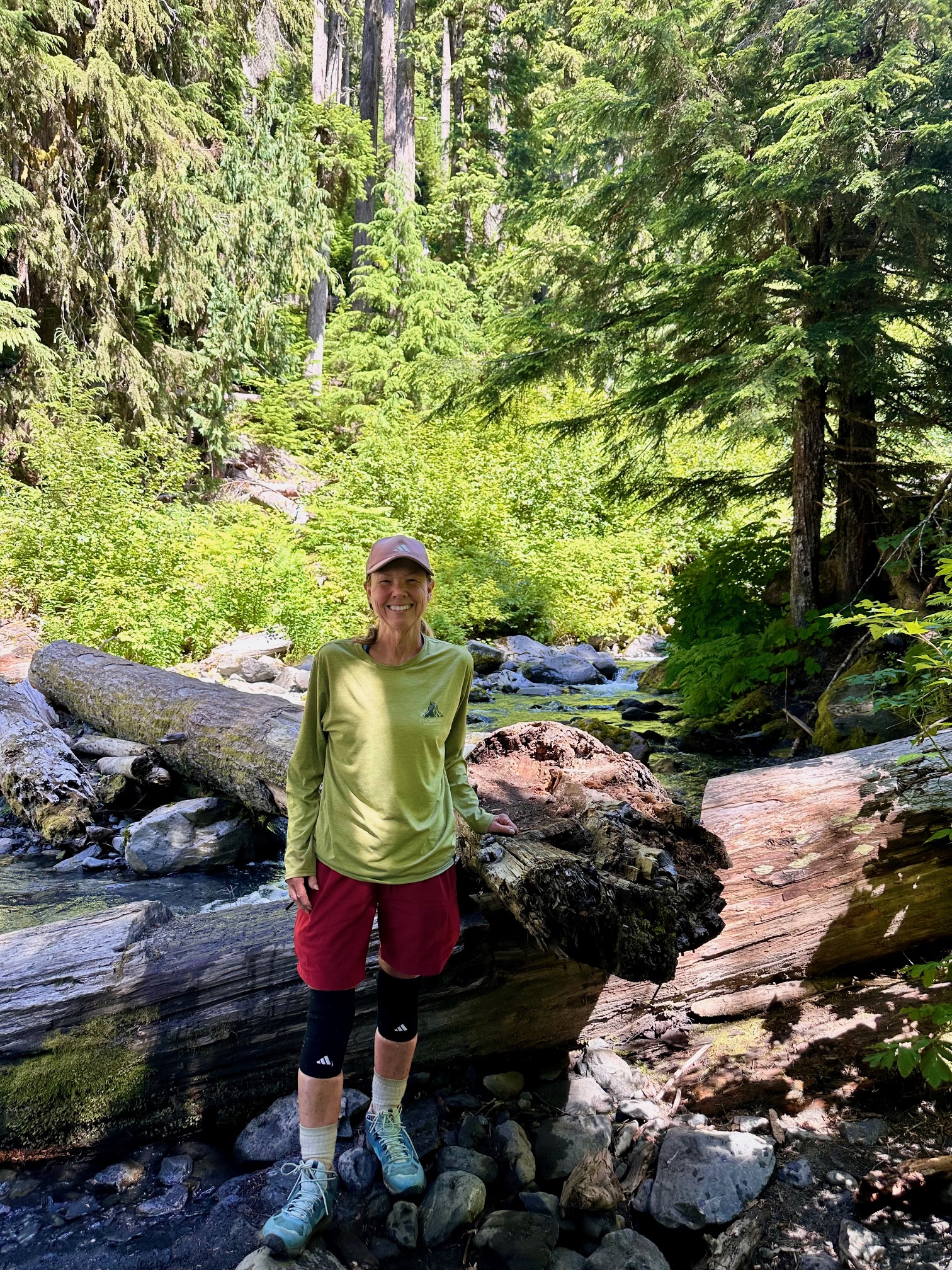
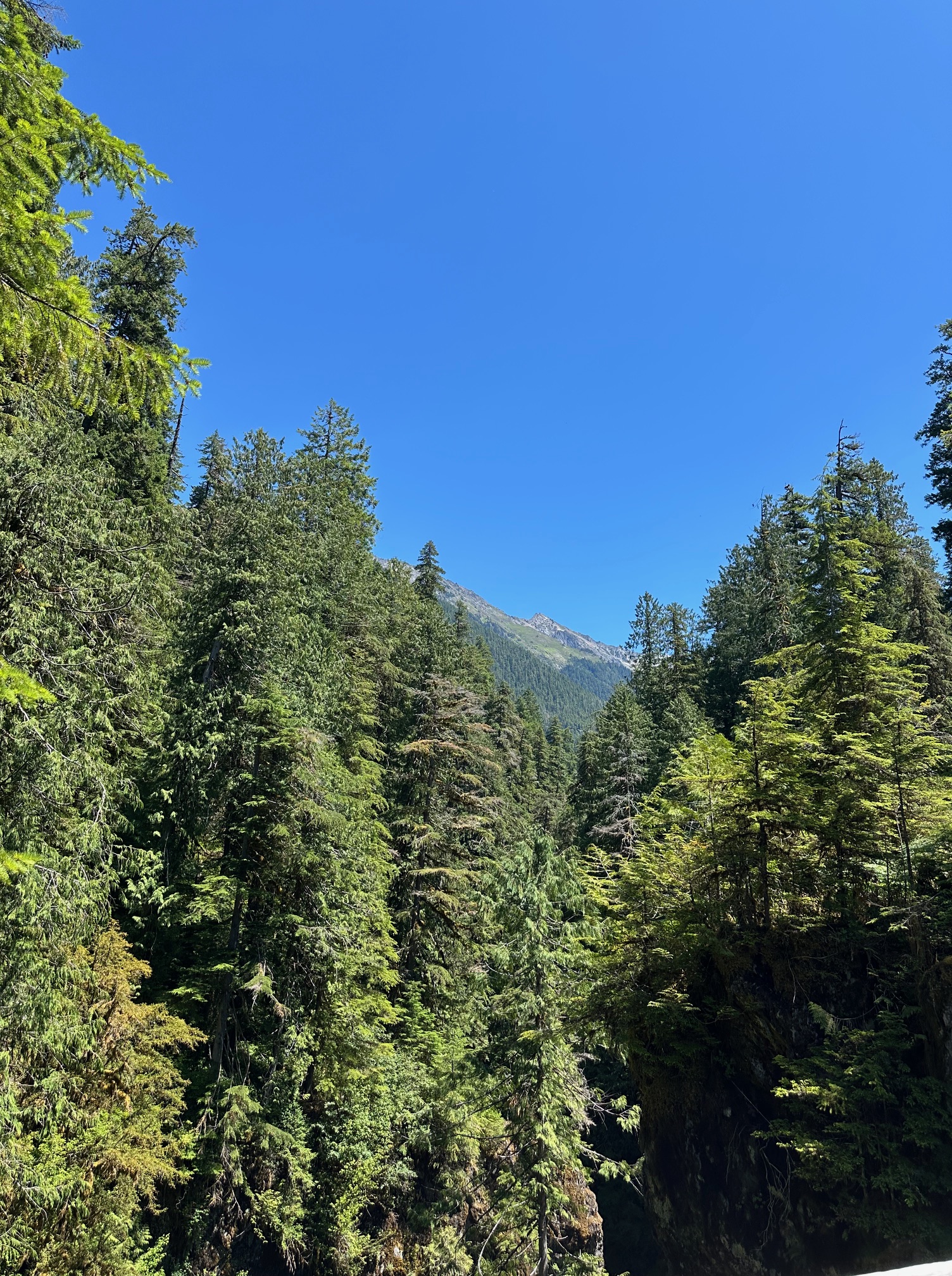
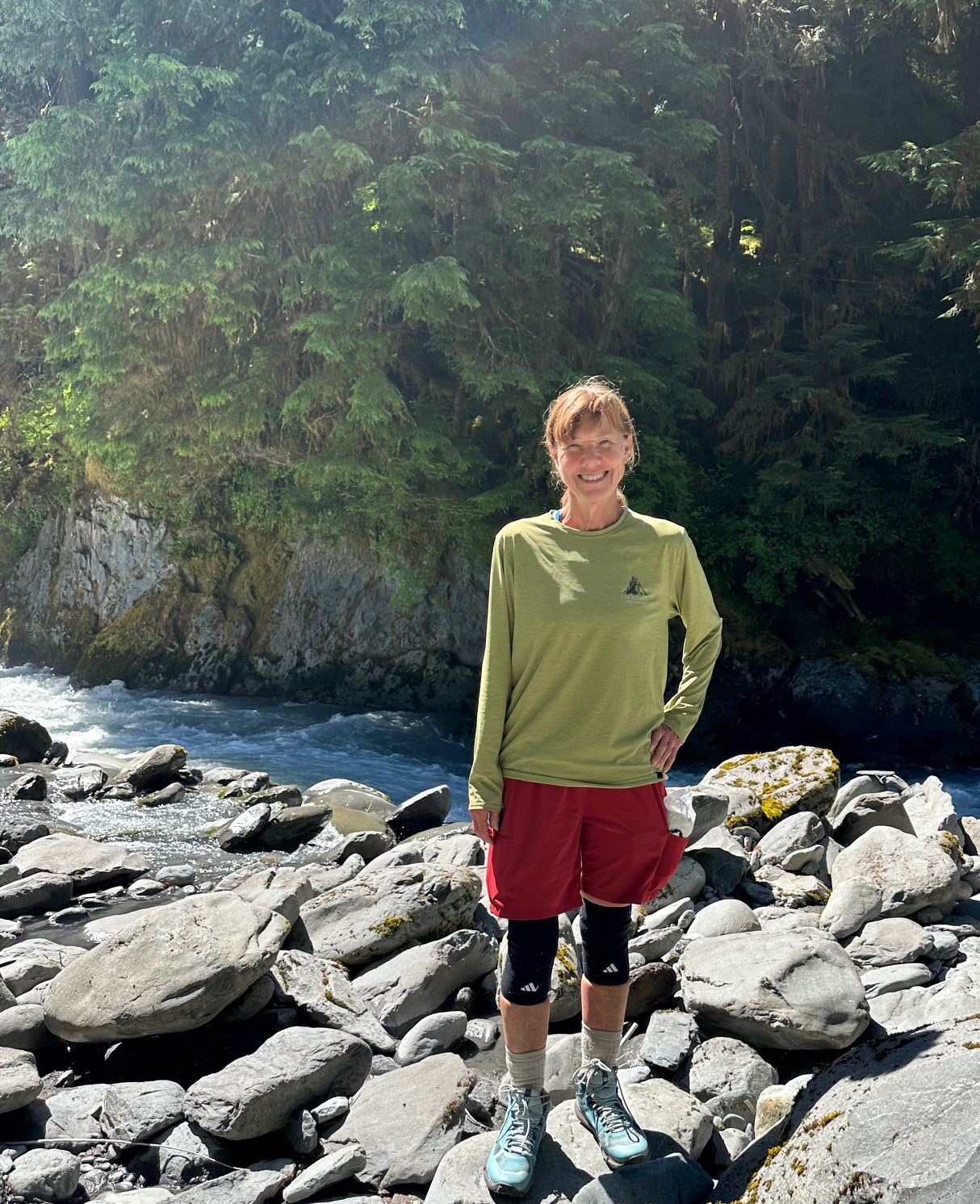
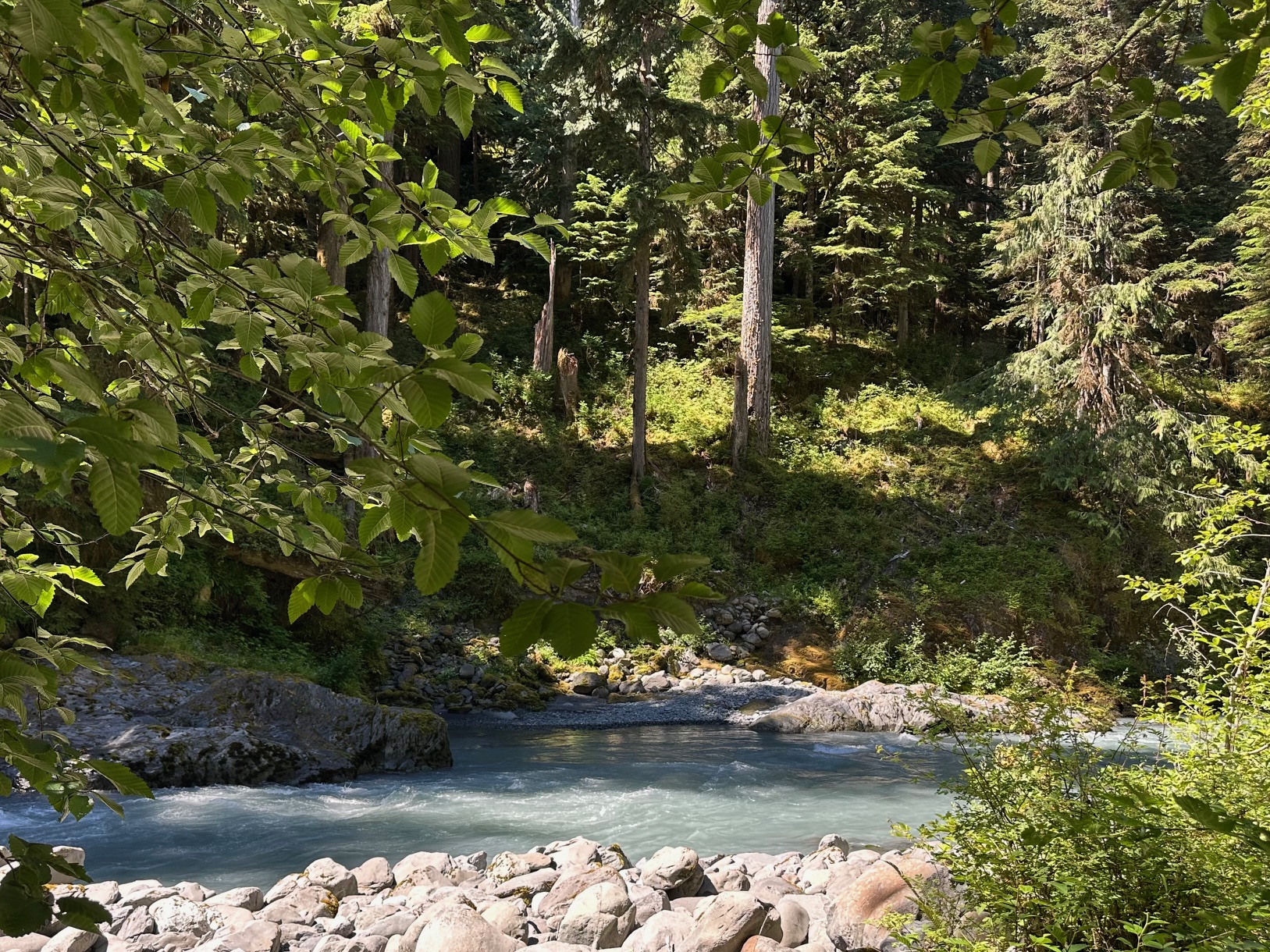
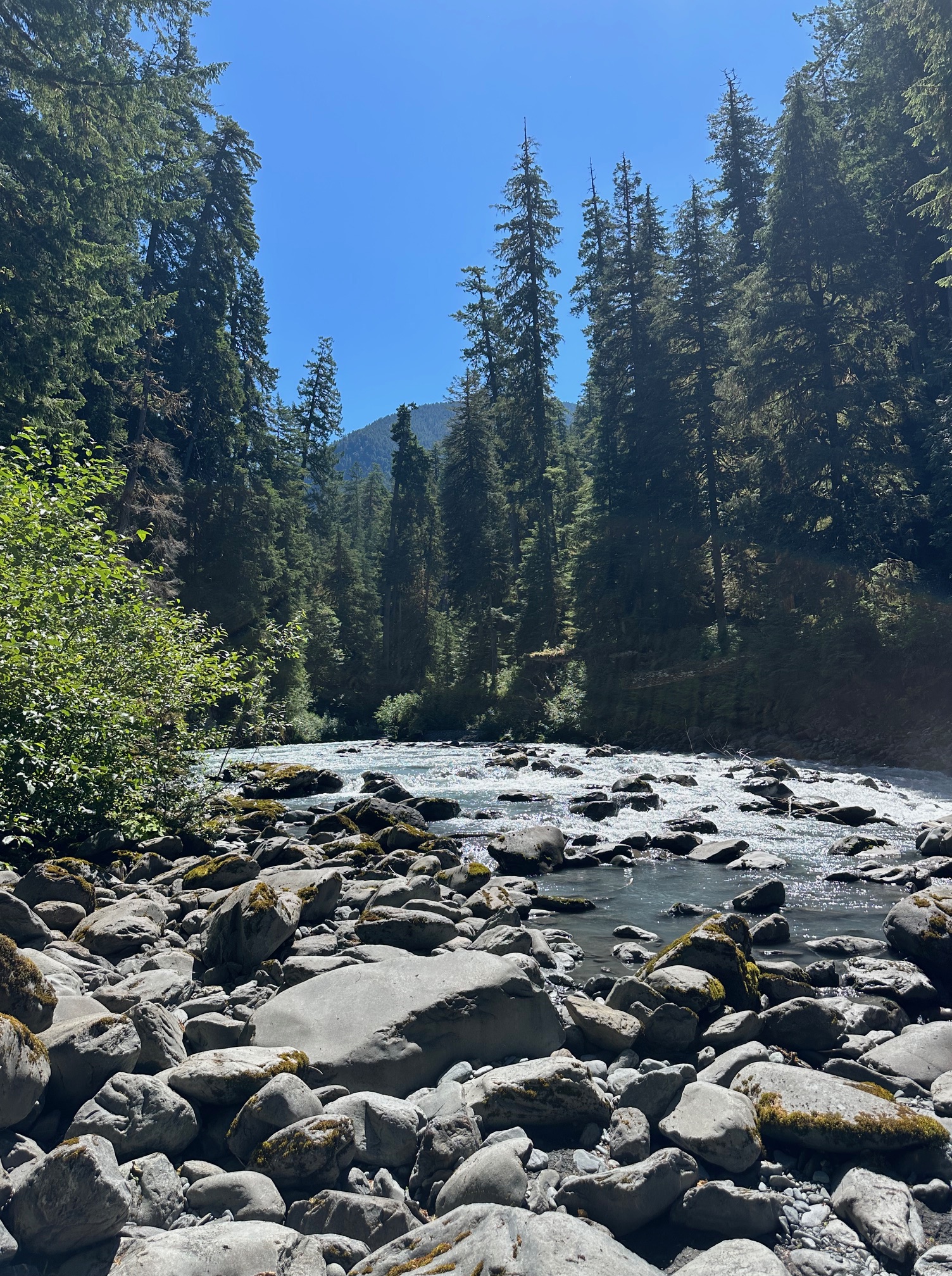
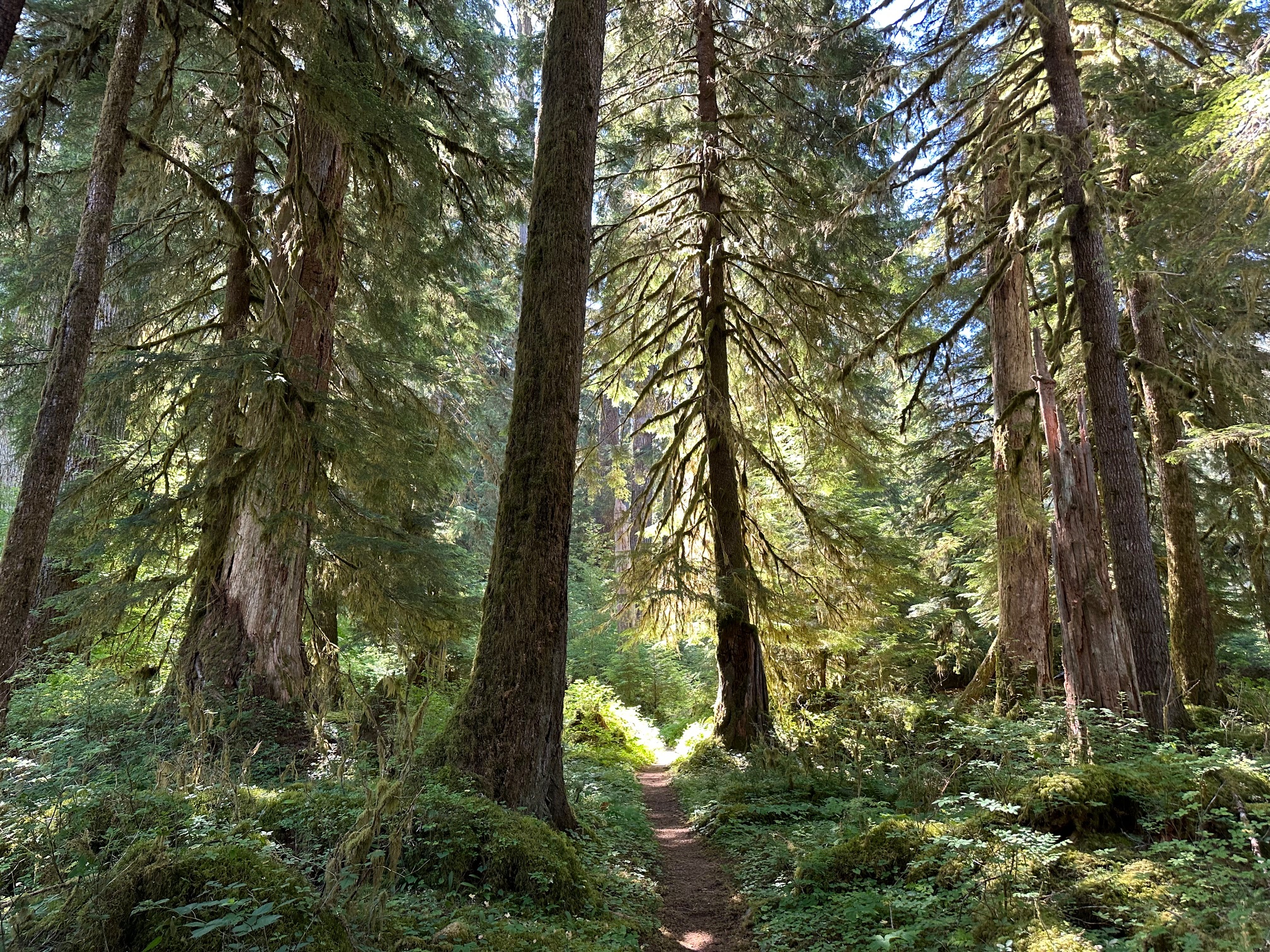
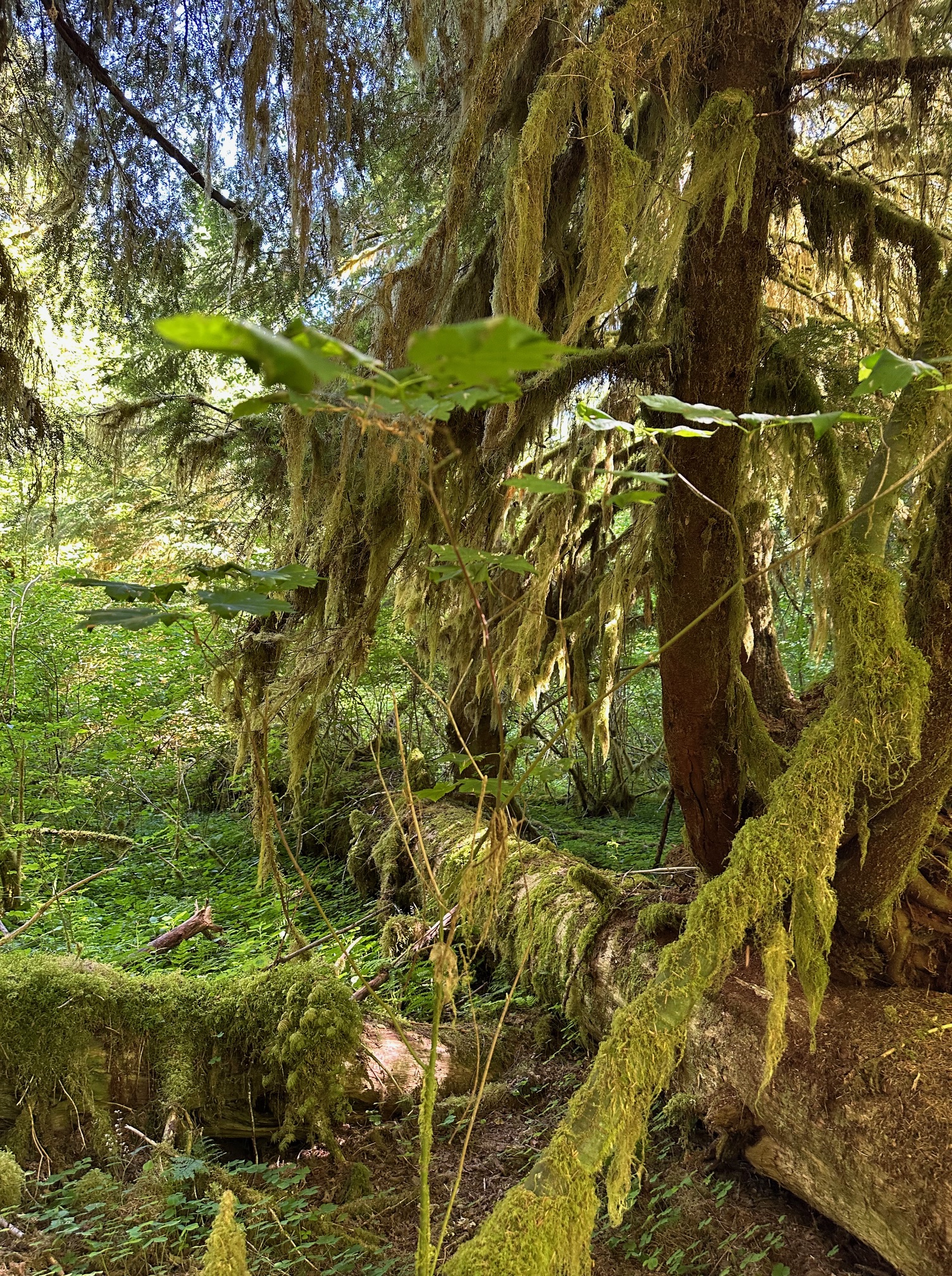
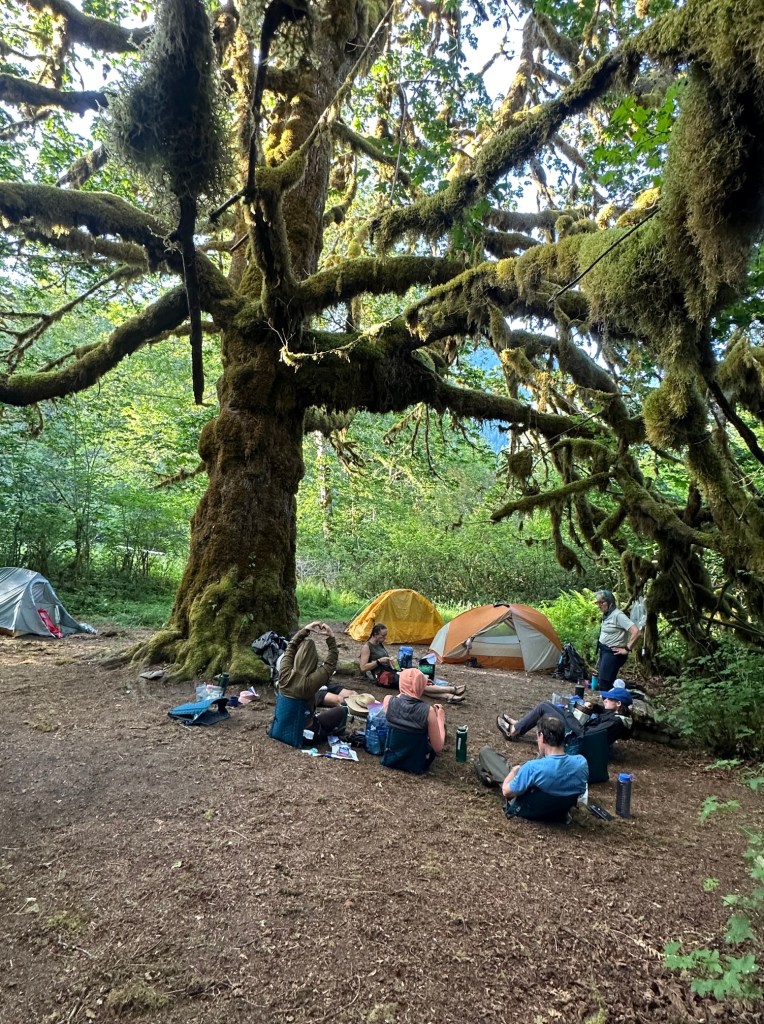
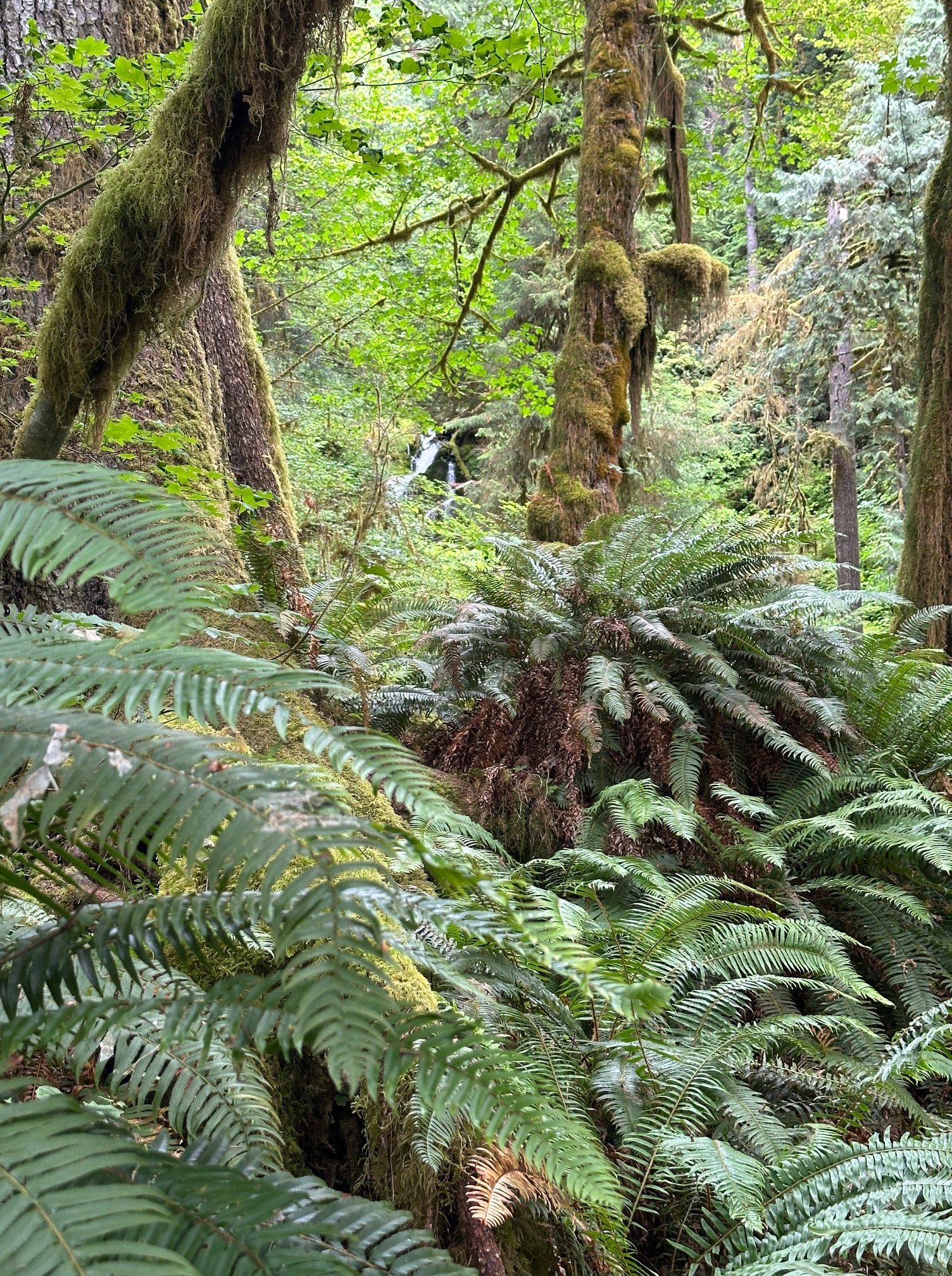
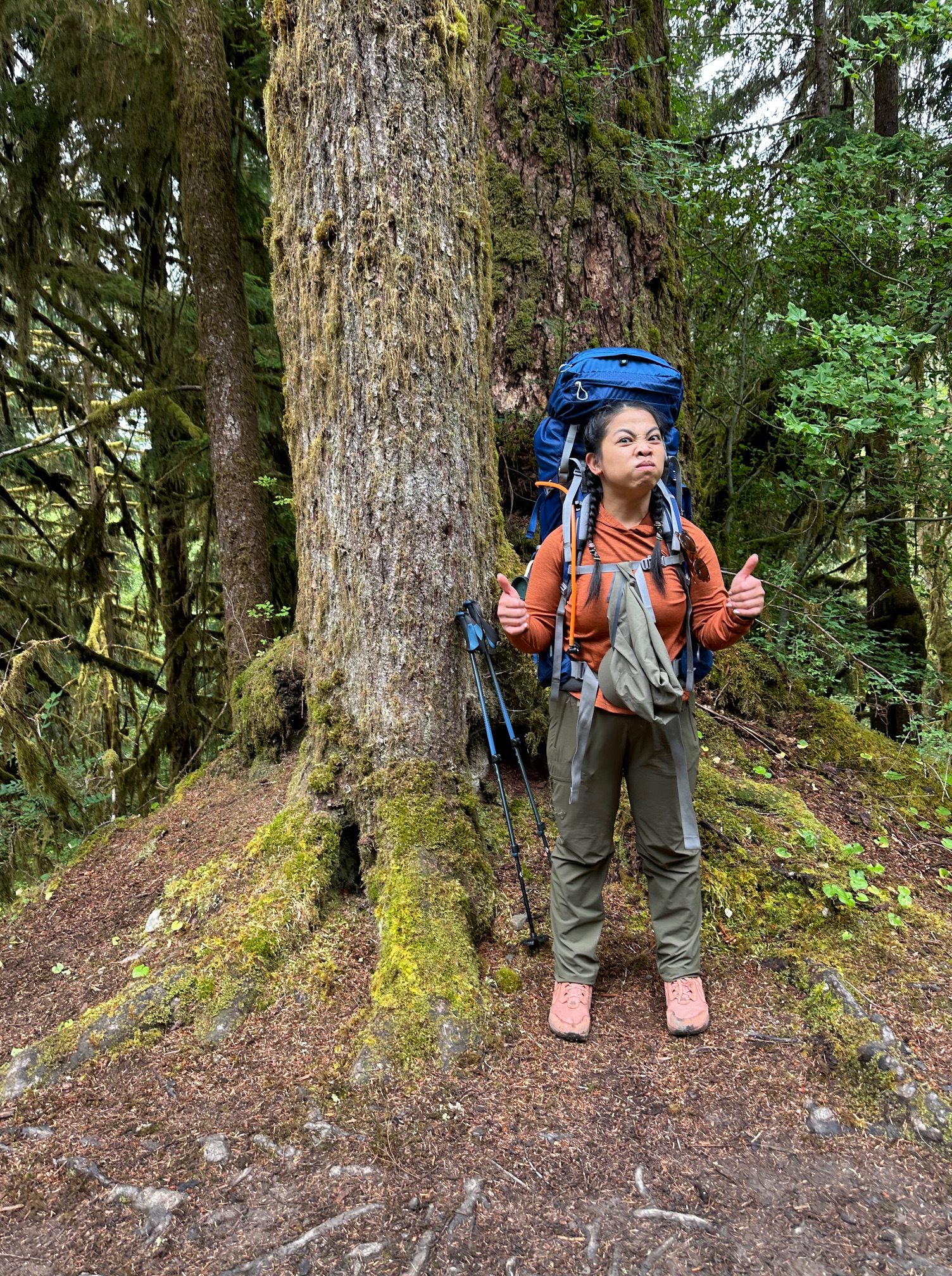
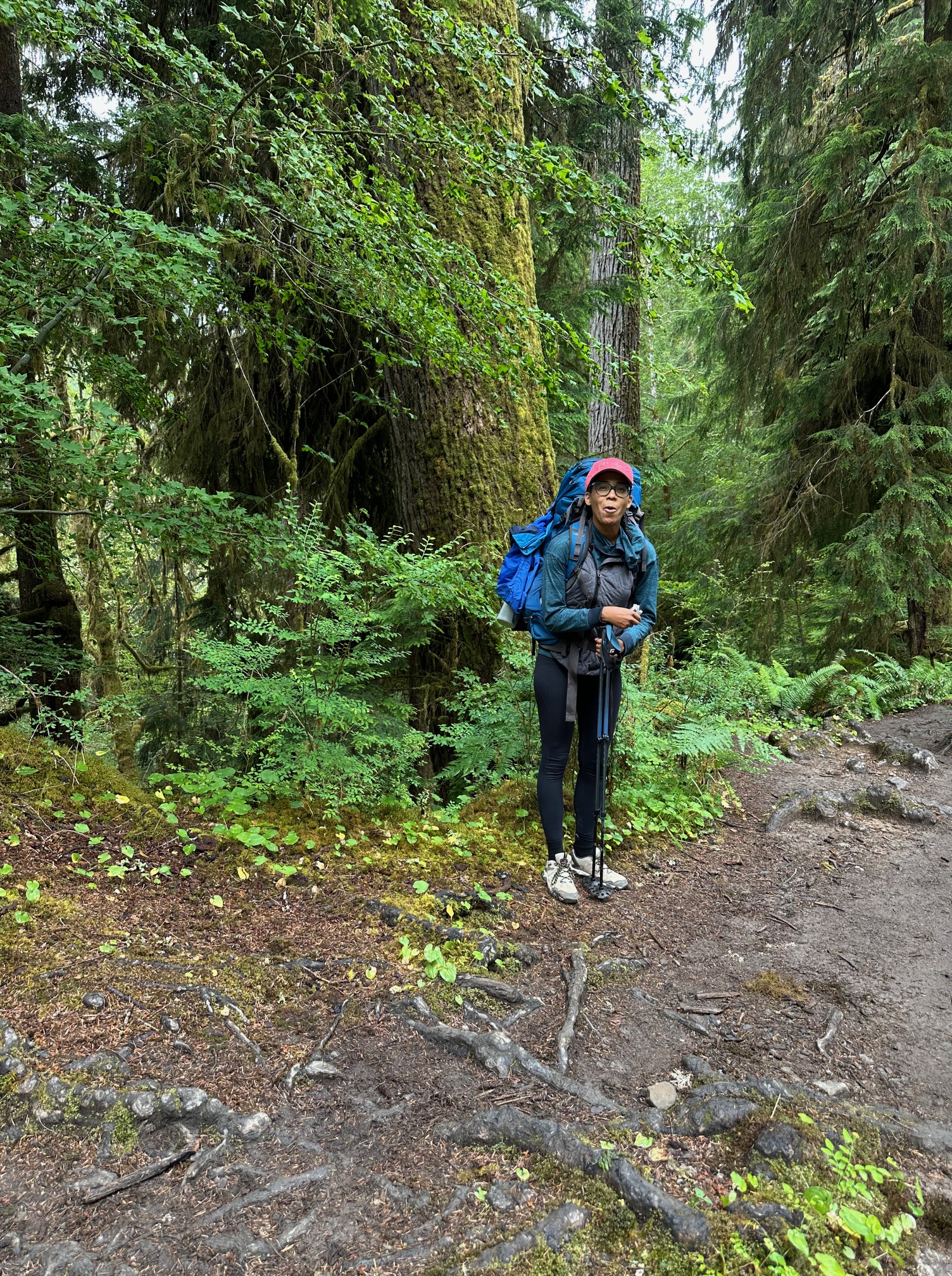
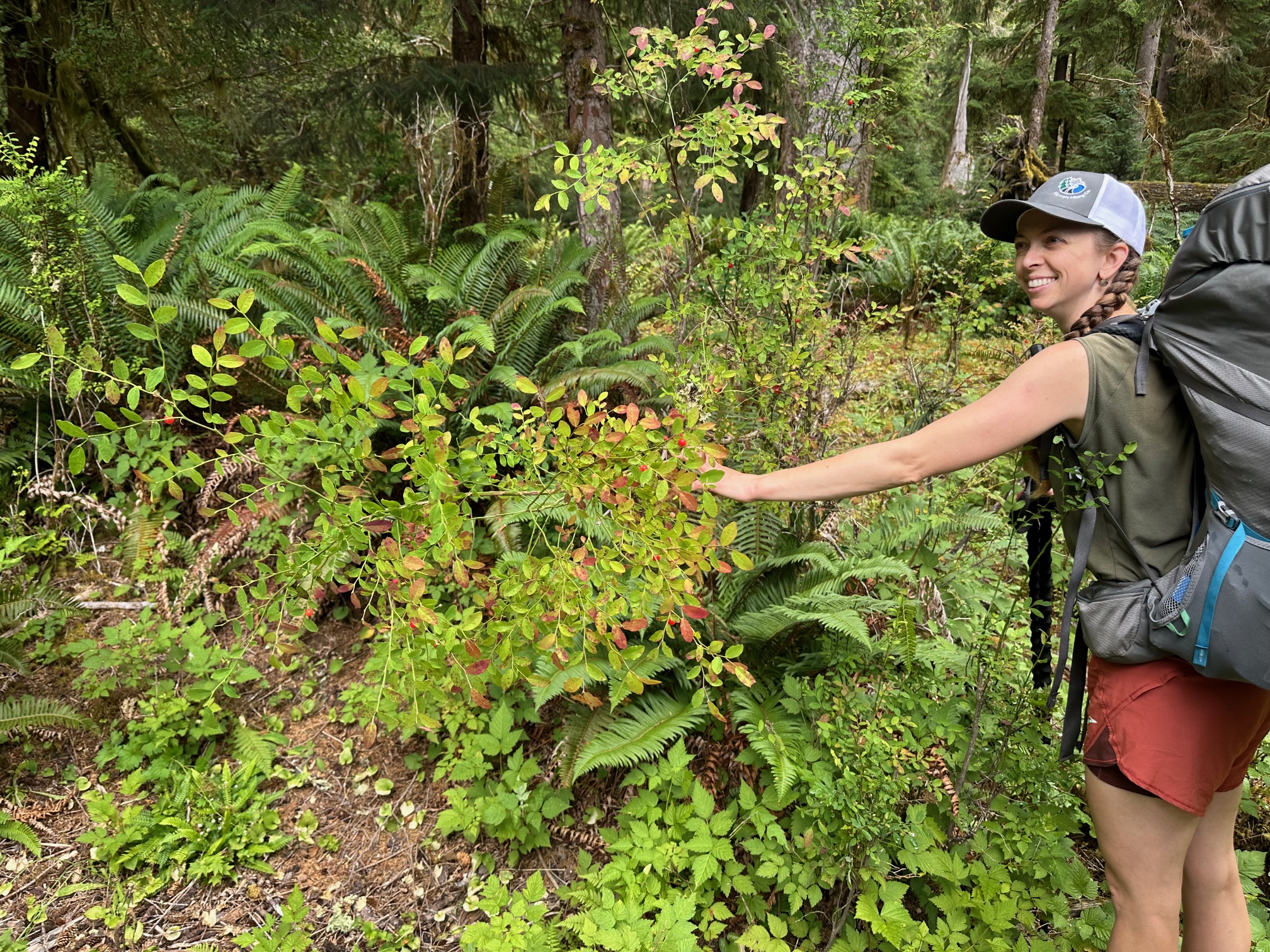
The Hoh Rainforest is a temperate rainforest, meaning it has a milder, cooler climate than the tropical rainforests which are the more prevalent rainforests worldwide. Incredible and wondrous are the huge moss covered trees; the other-worldly twining together of ferns and vines; and gigantic nurse logs (a nurse log being a fallen tree trunk that acts as a nursery for new plant growth). On our first day, we saw a large herd of Roosevelt elk including adults and calves, getting a drink across the river. The Hoh River, because it is fed by Mount Olympus’ Blue Glacier, is a unique milky grayish-blue color from a distance; and sparklingly clear up close. It is also, because of being fed by the glacier, numbingly, icily cold, as I found out on our two river crossings the first day! Our guides pointed out salmon berries and huckleberries, which I happily sampled along the way.

Day 2…Going Up-Up-Up and a Splendorous View From a Bridge

6 miles, 1652 ft. elevation gain

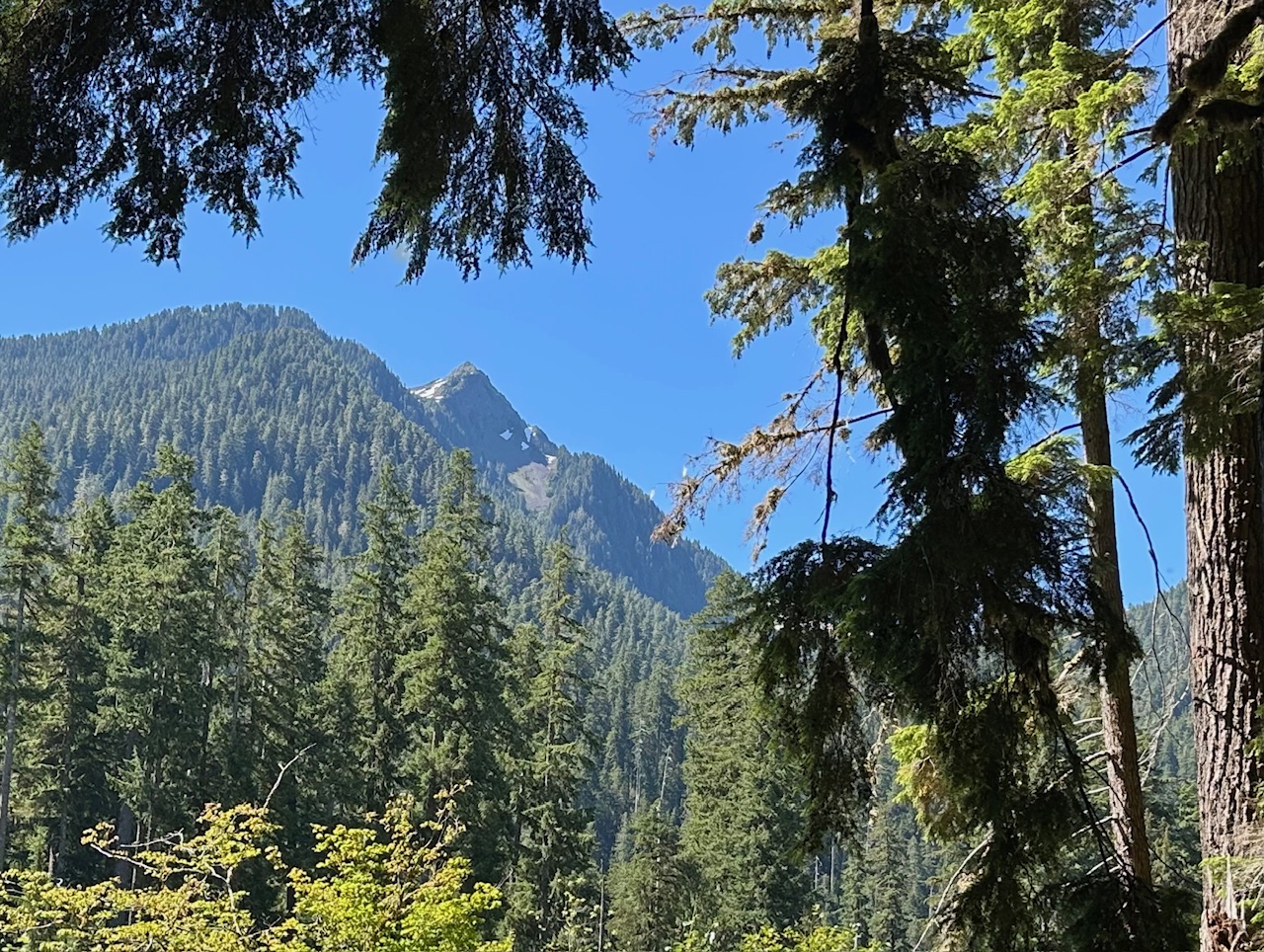
Snow-capped mountains; slender tall white trees among the big mossy ones; entwined ferns and vines; the pretty, uniquely creamy-blue water…river crossings including jutting splintery logs; rocks; and a big fat log…and always up, up, up! Over cliff-like terrain and boulders and logs and big steps of rock and dirt…continuing up, up, up

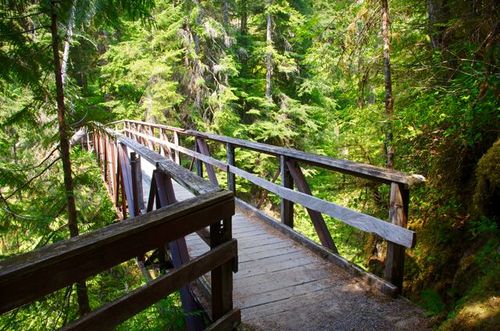
and our reward? the astonishing view from the High Hoh Bridge, which is over 100 feet above the river! Looking down in awe from the High Hoh Bride, you see the High Hoh Gorge—with the Hoh river rollicking down the river bed, surrounded by the Hoh’s forest life reaching up from far below to beyond the small humans looking at that narrow gorge in wonder from the bridge.

“It is a worthy destination in and of itself,” says OregonHikers.org of the High Hoh Bridge; and I agree!

Day 3…Let’s Talk Food! + Views of the Sky

4.6 miles, 1573 ft. elevation loss

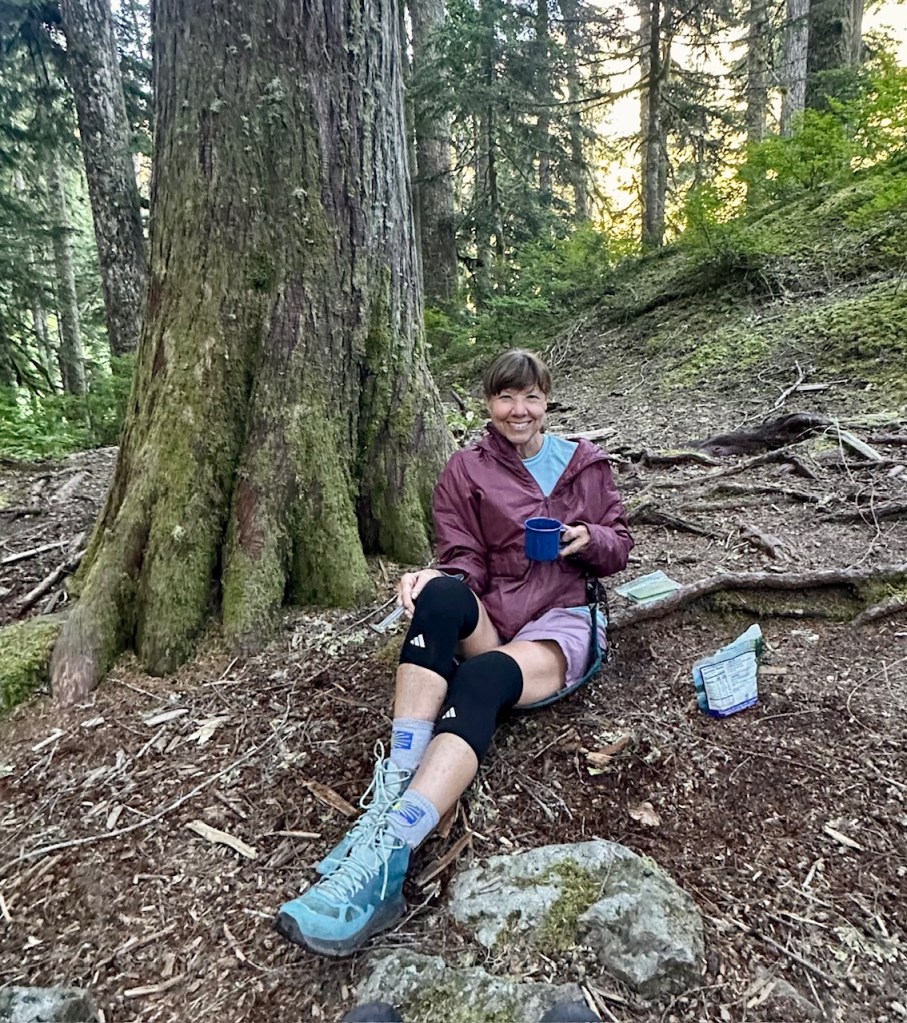
Our meals were from Backpacker’s Pantry and Mountain House, dehydrated meals to which we added boiling water—glacier water from the Hoh, filtered, then heated using a small camp burner. The meals were very tasty, and filling! My choices were peanut butter and banana oatmeal for breakfasts; and chicken fettuccini alfredo for dinners—and always, coffee (which was Starbucks Columbian instant). Snacks included trail mix; granola and Cliff bars; fruit, date, nut bars; and electrolyte drinks, as well as energy chews (small gummy-type chewables with electrolytes). Lunches were pre-made sandwiches, mine being peanut butter with banana chips.

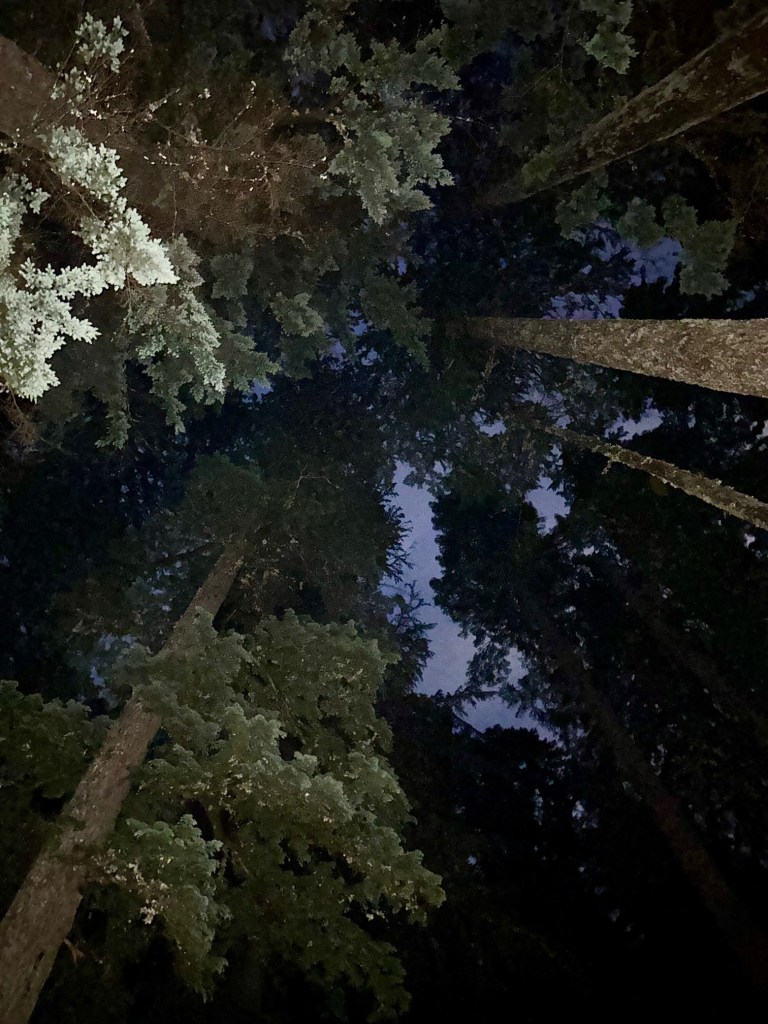
I opted to leave the outer liner off my tent on this our last night, to be able to see up into the tall trees reaching into the twilit sky, from my sleeping bag. Nice!

Day 4…Out of the Rain Forest and Goodbye to New Friends

10.5 miles, 454 ft. elevation loss

With heat and mosquitos combined with tired muscles and dreams of a shower and pizza, it was a somewhat brutal long hike out of the rainforest…goodbye to the beauty, mysticism, and rareness of the biosphere that is the Hoh Rain Forest; and goodbye to new friends and comrades who encouraged, supported, shared, and sweated alongside me on this truly awesome adventure…

“The clearest way into the universe is through a forest wilderness.” -John Muir

Belgium: Mons and Brussels

I visited Mons and also Brussels while in Belgium with one of my daughters.

Mons: A Charming City

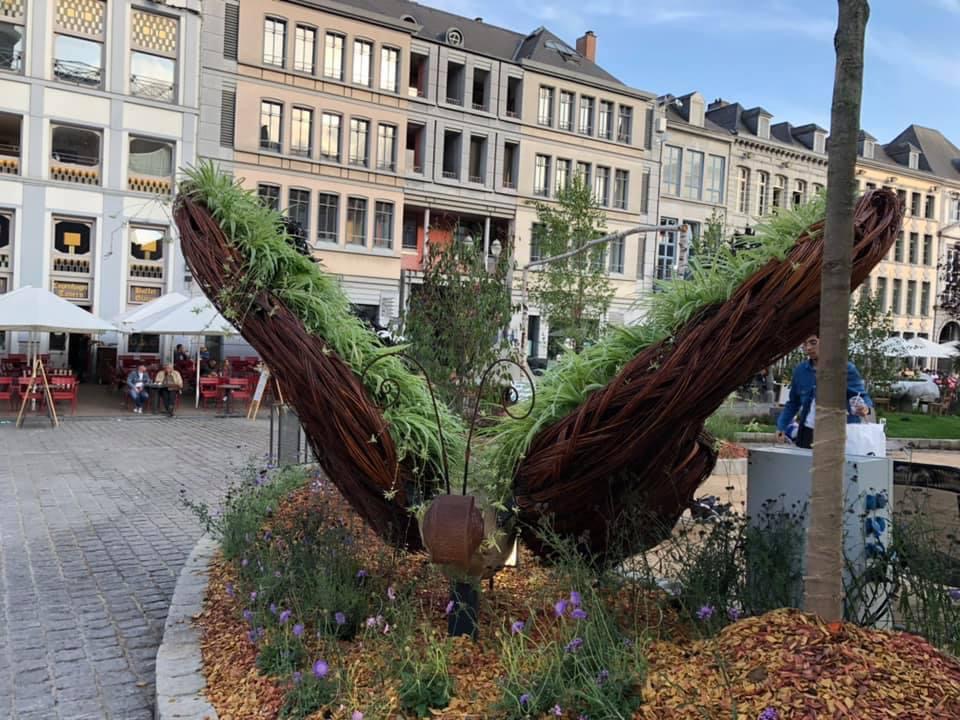
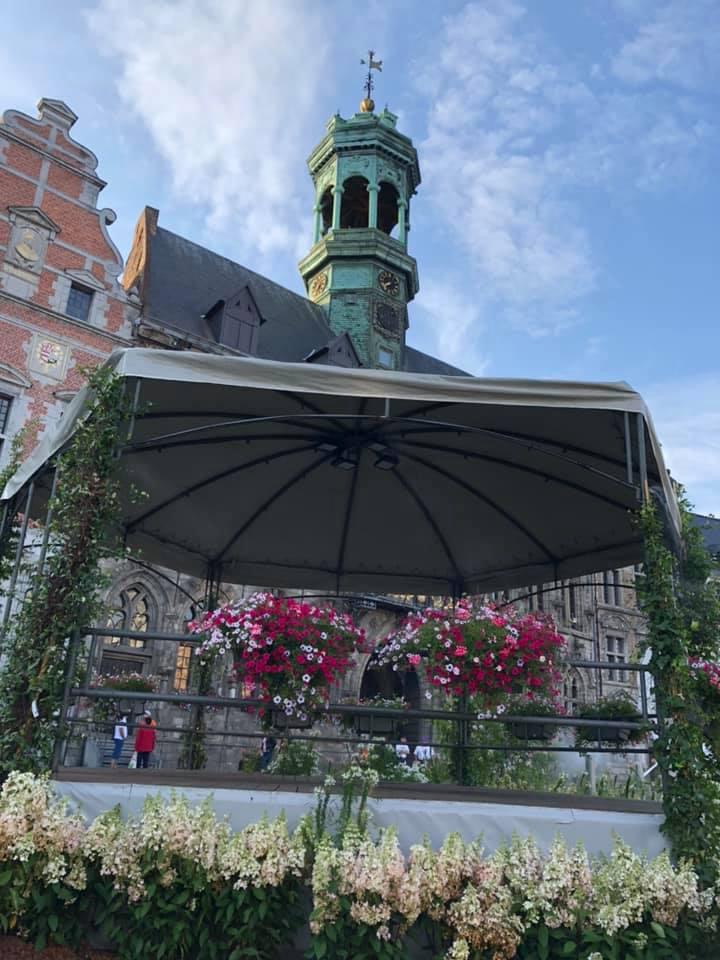
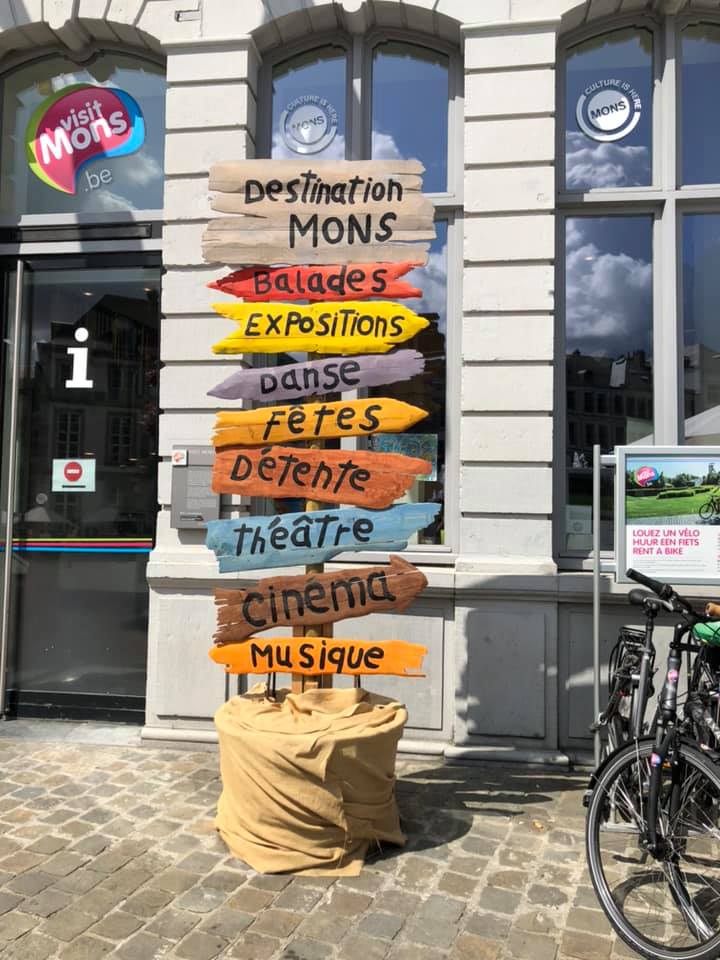
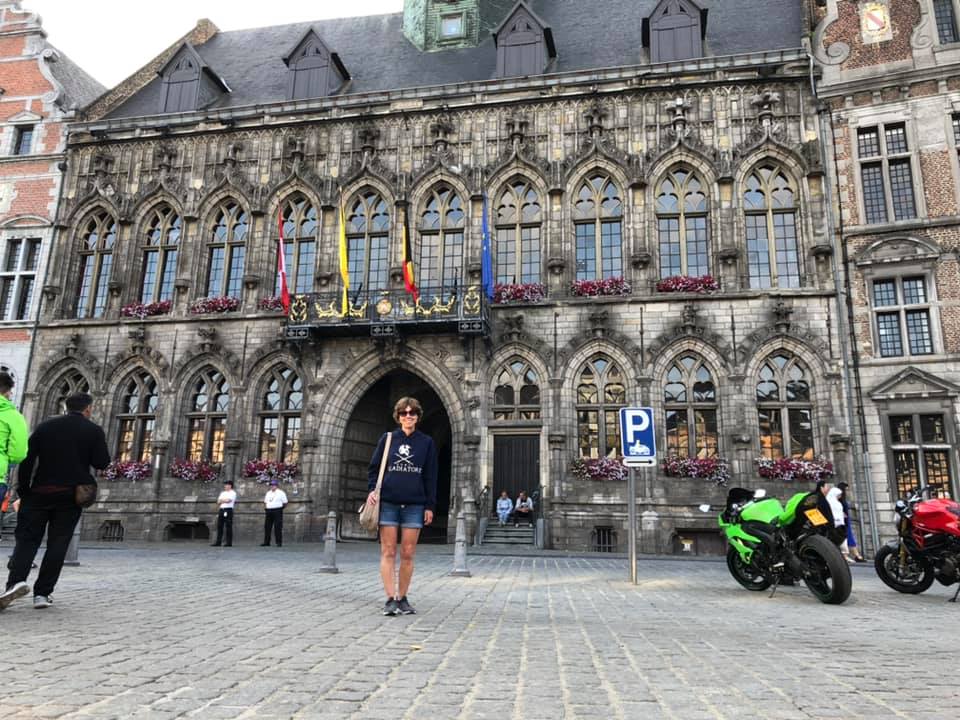
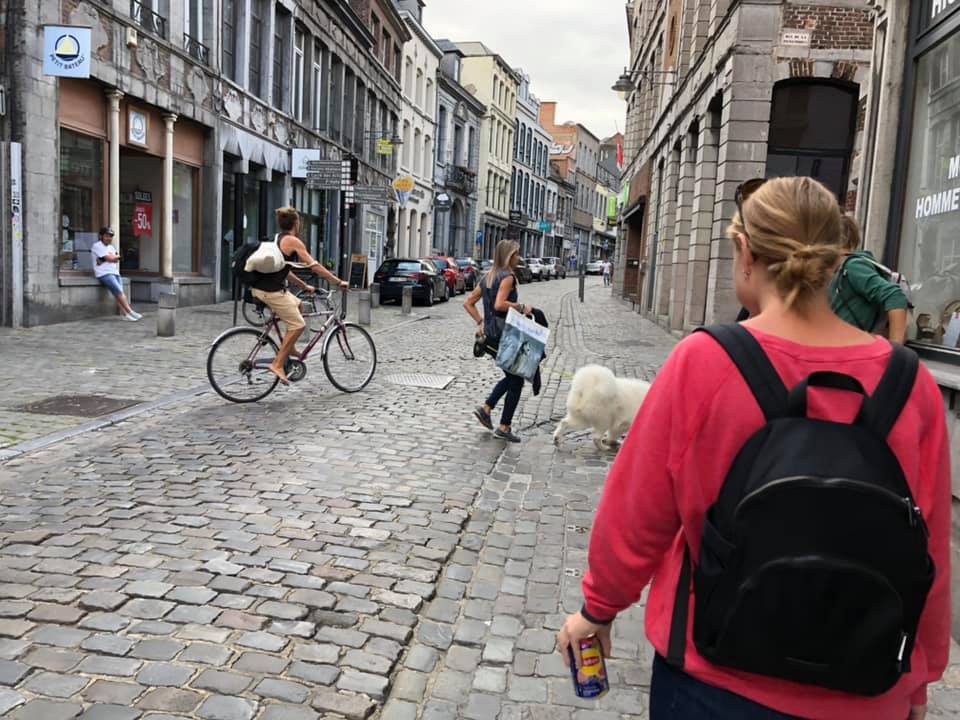
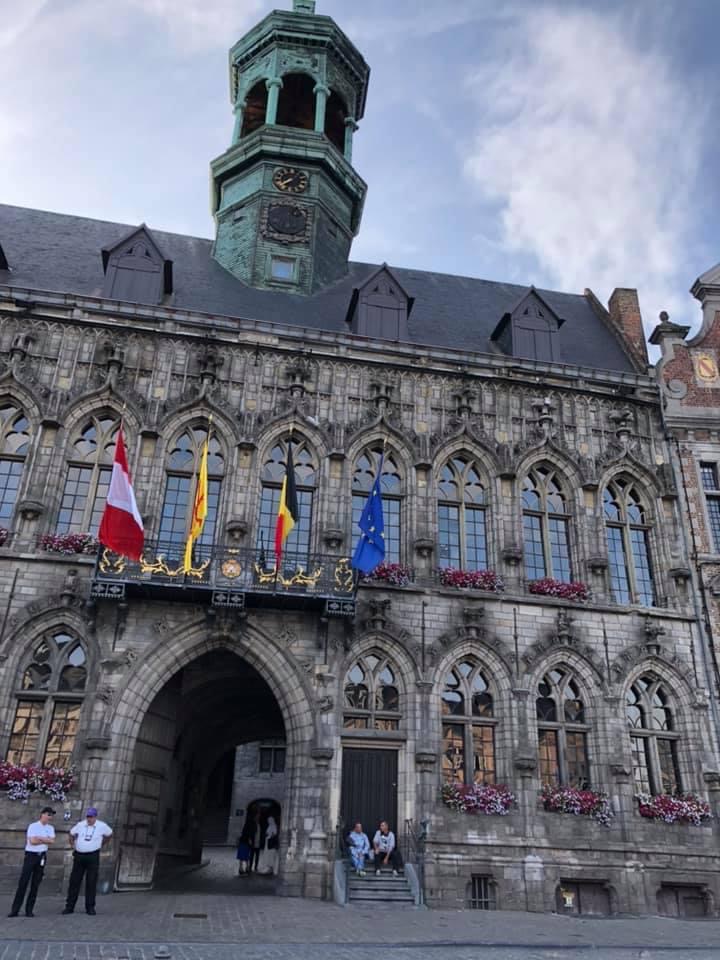
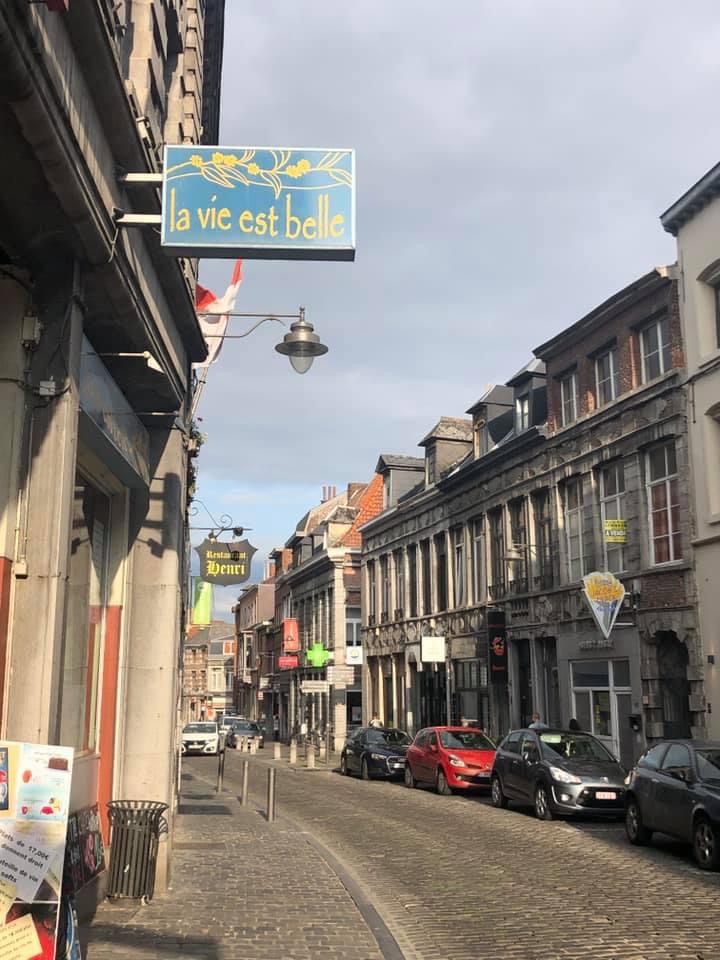
Mons is in southwestern Belgium, about 45 miles south of Brussels. It is a charming city, noticeably clean and very pretty, with a city center that is downright charming. French is the spoken language in Mons.

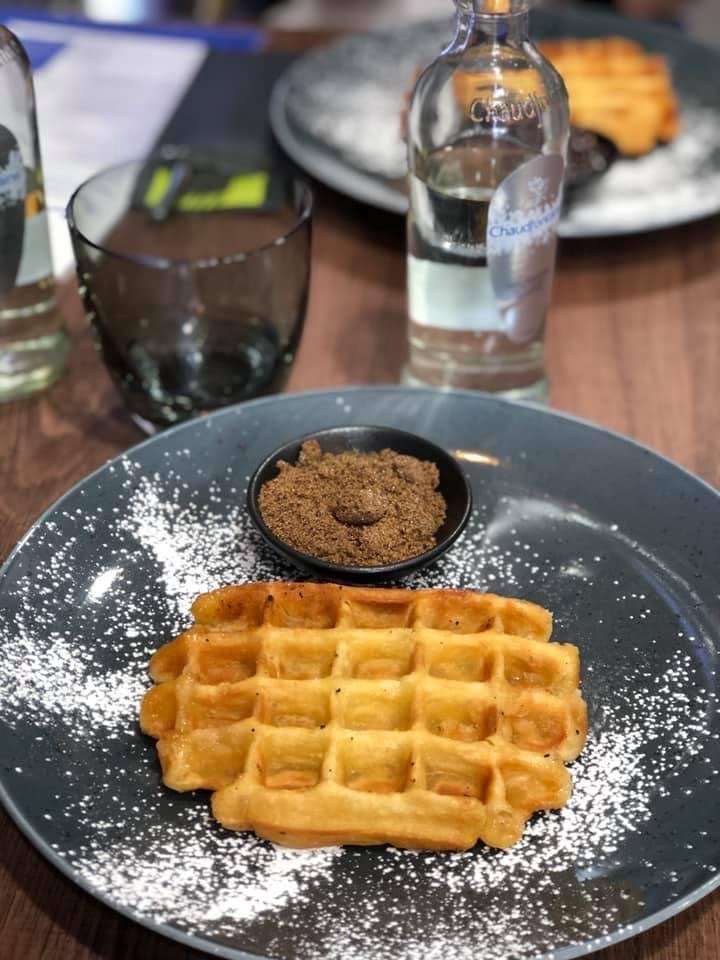
Belgian waffles certainly lived up to my high expectations! My research tells me that Belgian waffles are different from waffles in other countries because they’re made with yeasted batter and pearl sugar. They also have deeper pockets, the better for filling with your ingredients of choice. A variety of toppings were offered to choose from at the waffle shop we went to. I chose brown sugar. Oh, my…deliciousness in every bite!

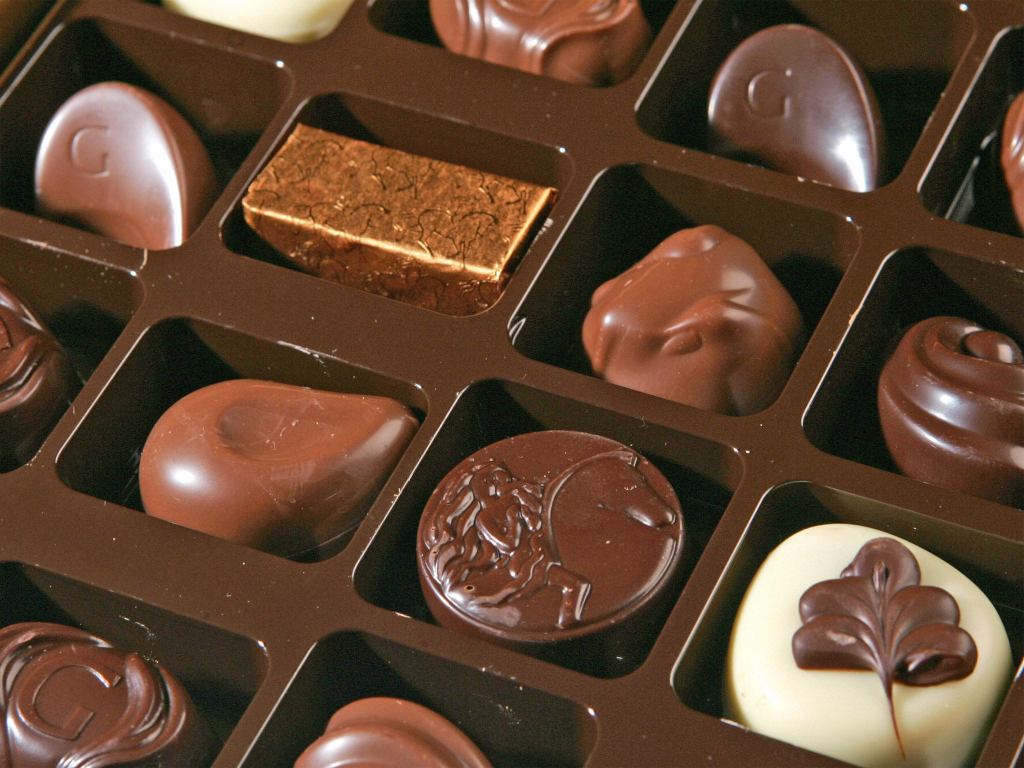
Belgian chocolate also “measured up”! It was decadently delicious! We brought some back for gifts for family. (After all, who doesn’t like chocolate, especially when it is the best of the best!)

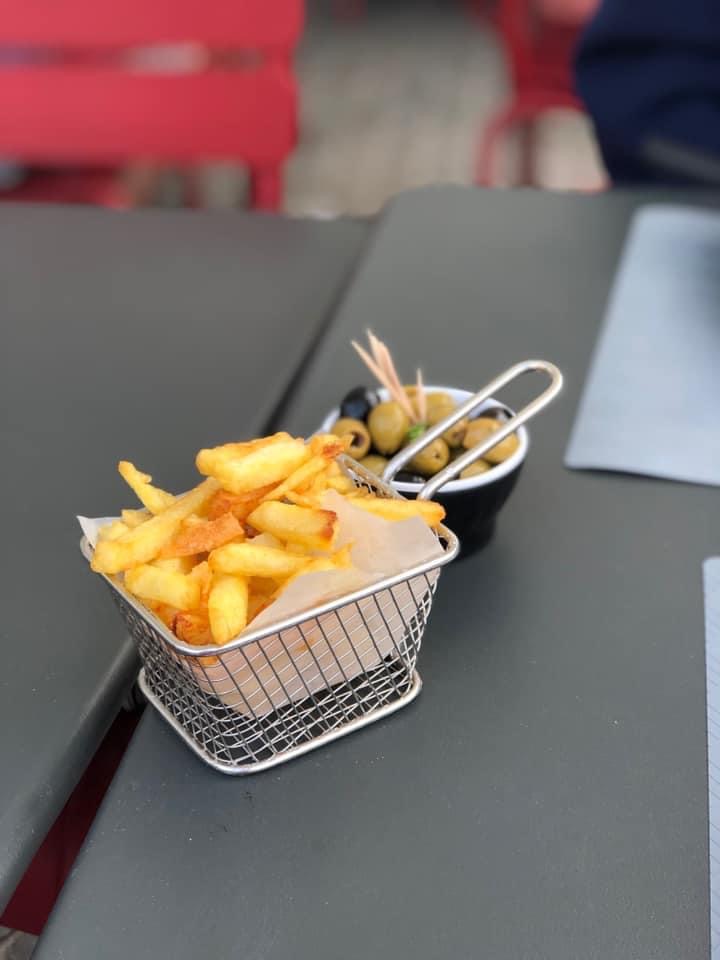
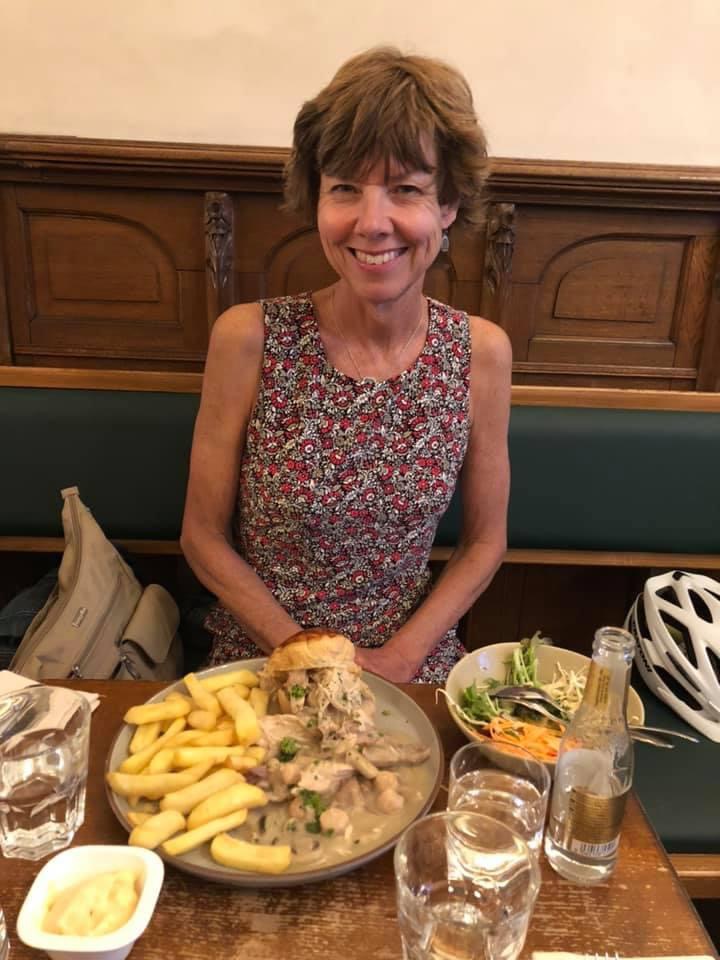
French fries in Belgium are like none other! They are amazingly wonderful. They are, I have found out through a bit of research, twice-fried, so that they’re extra-crispy outside and soft and perfect inside. Belgian French fries are served with not catsup but mayonnaise! Try it, you may be surprised: it’s good!

Brussels

After moving my daughter into her apartment in Mons where she would be living for a while, and exploring and enjoying Mons for a few days, we travelled to Brussels to spend the next few days of our time together.

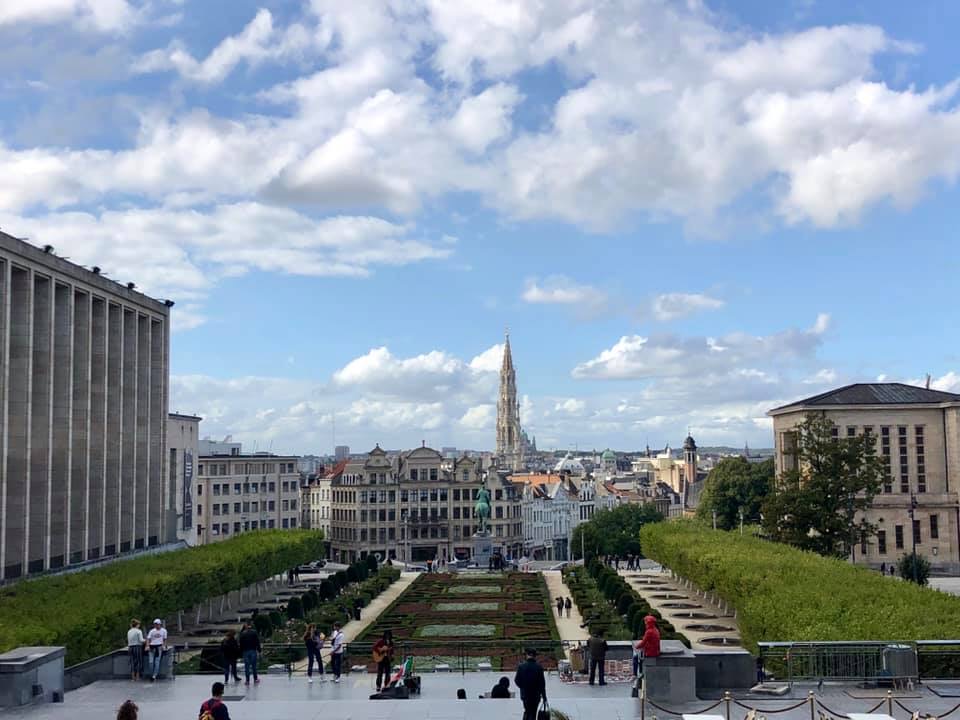
Besides being the capital city of Belgium, Brussels has also been called the Capital of Europe, because it is the headquarters of several different international institutions including the EU, and NATO. In Brussels, people speak mostly French and Flemish Dutch. (In some other parts of Belgium, German is spoken; it’s the 3rd language spoken in Belgium after French and Flemish Dutch.) Brussels is a top international cultural center with many art, dance, and music festivals ongoing throughout the year; and many museums, and art and cultural centers. It also is a gastronomical center, with—fun fact—138 restaurants per square mile!

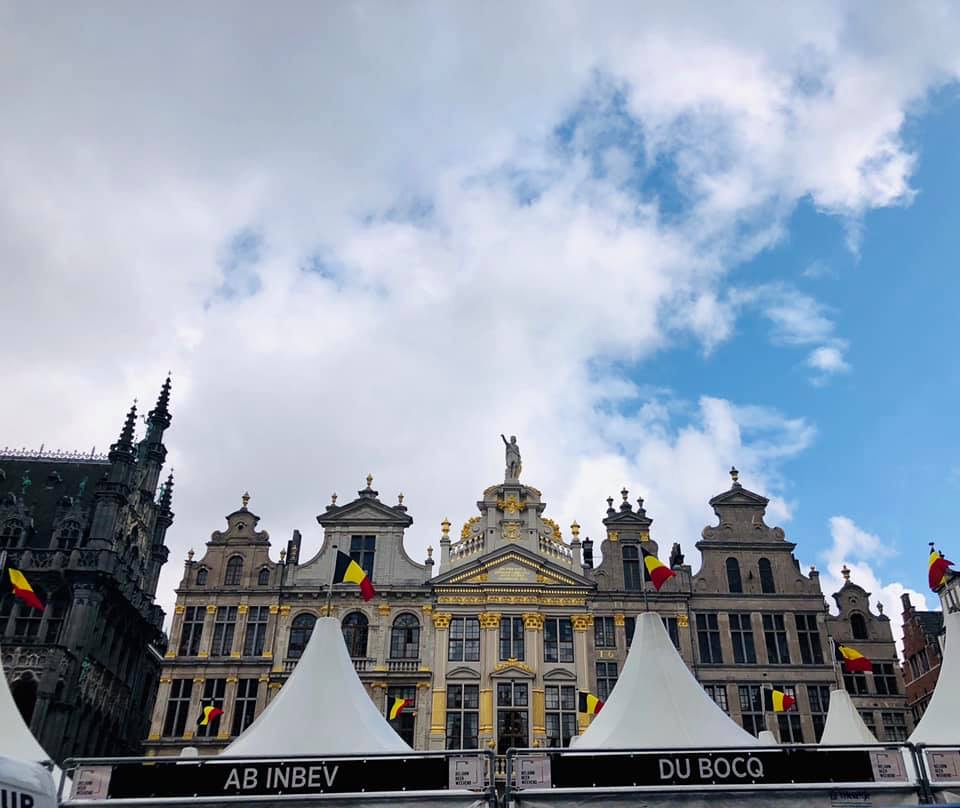
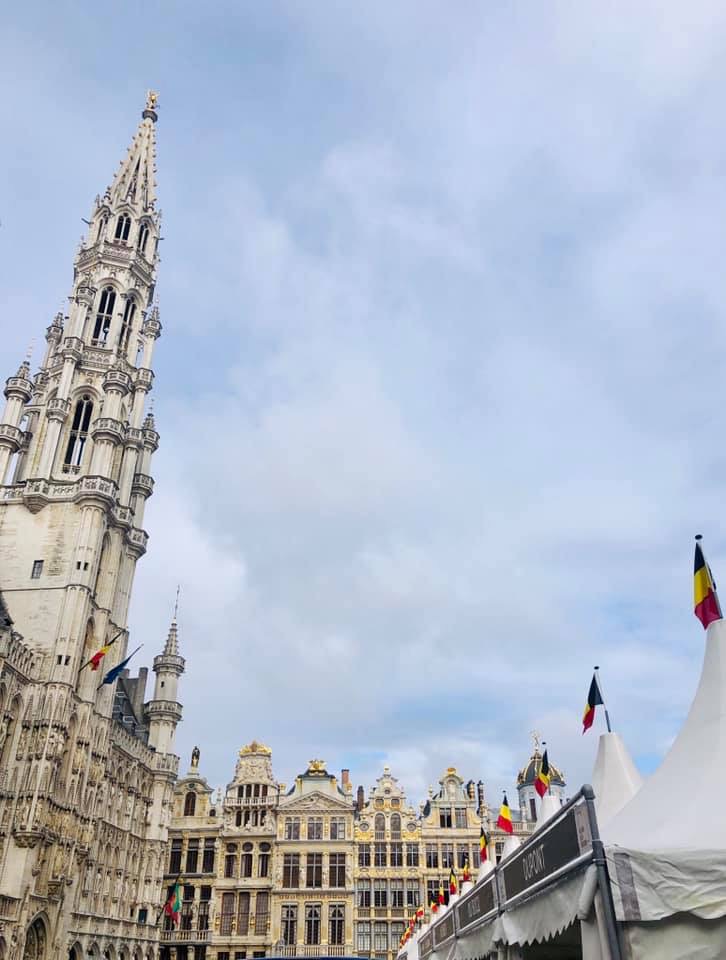
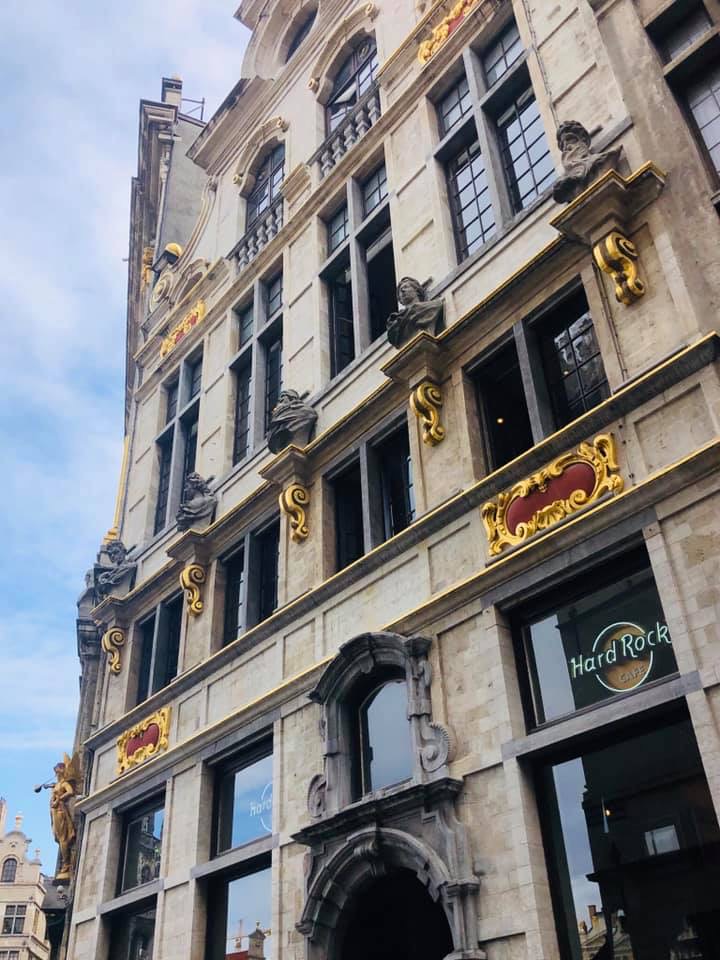
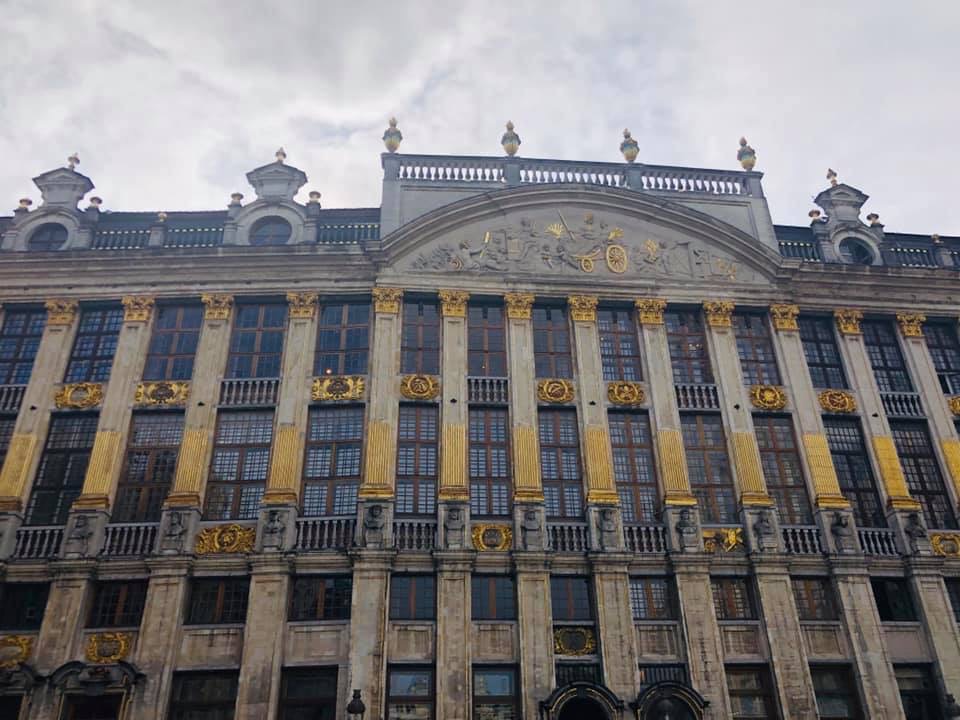
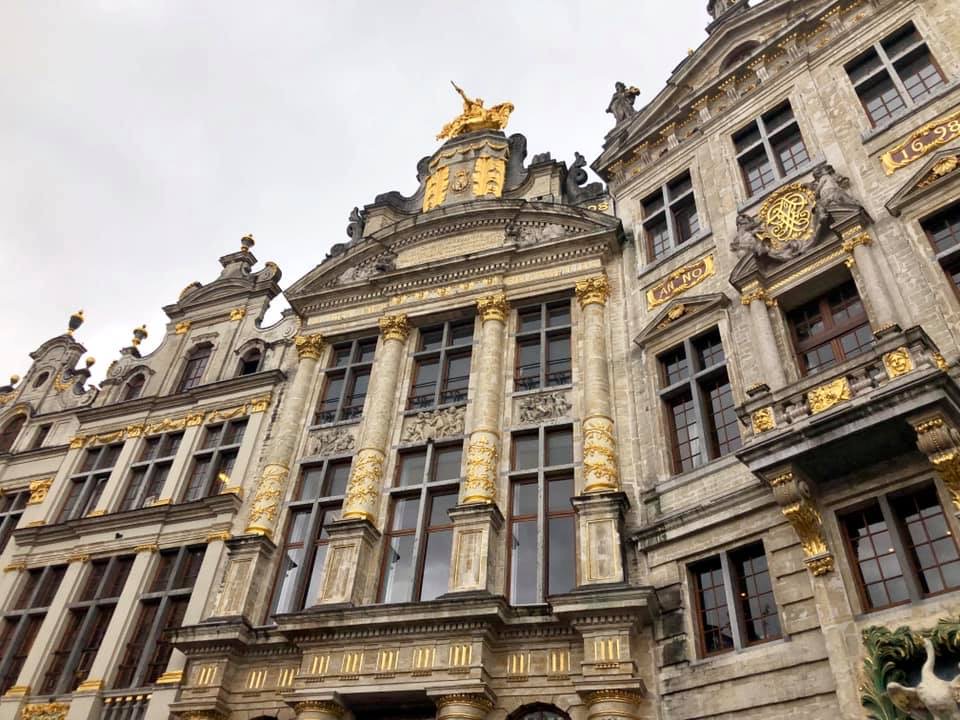
The Grand Place in Brussels is an enormous square surrounded by beautiful, elaborate, grand buildings. It is a UNESCO World Heritage Site. From what I’ve read, the Grand Place started at the end of the 11th century as an open marketplace, and it just continued to grow through the centuries!

I opted for chicken pie at this restaurant. It was huge and delicious! Note the French fries, which are served with most meals, and the mayonnaise served alongside.

My Favorites

There were many favorites from this Belgium trip, one being just being with my daughter, of course, on an adventure! As a food connoisseur (and I’ll admit I just Googled a fancy name for a foodie) my favorite experiences with my daughter in Belgium were the good food, chocolates, and those out-of-this-world waffles!

And with this blog post at its end, I think might just do a bit of research and try to make some Belgian waffles right now!

London

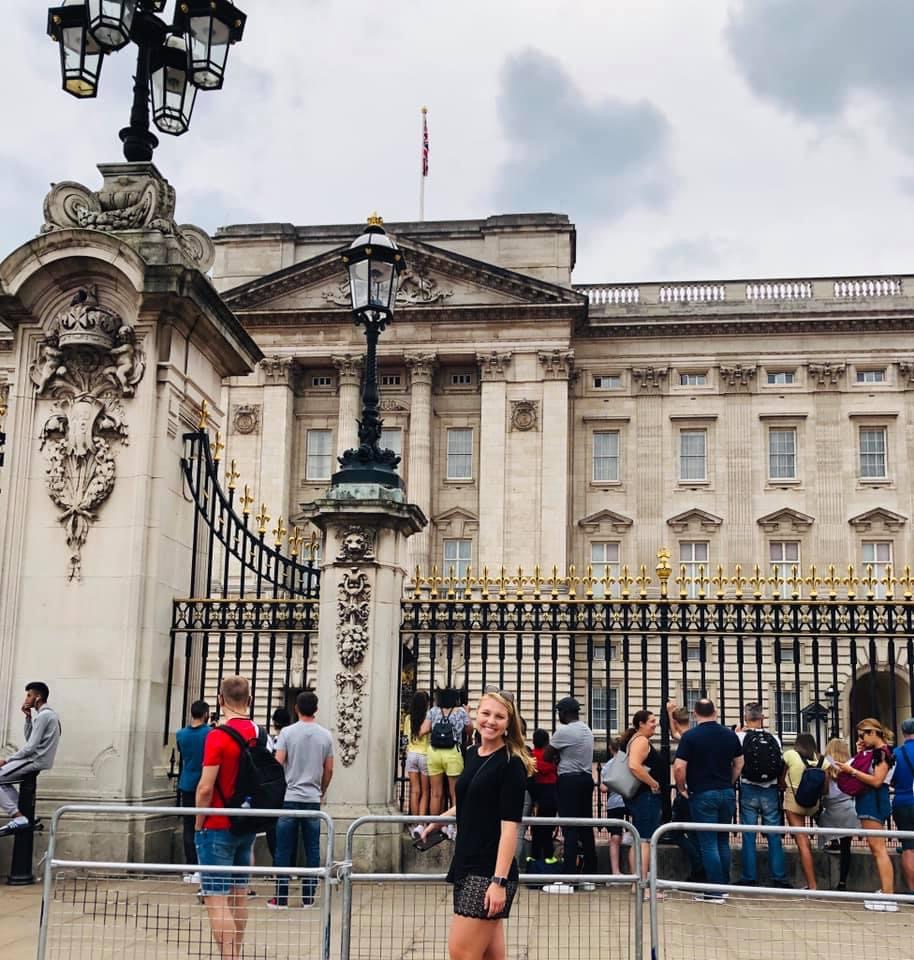
Buckingham Palace

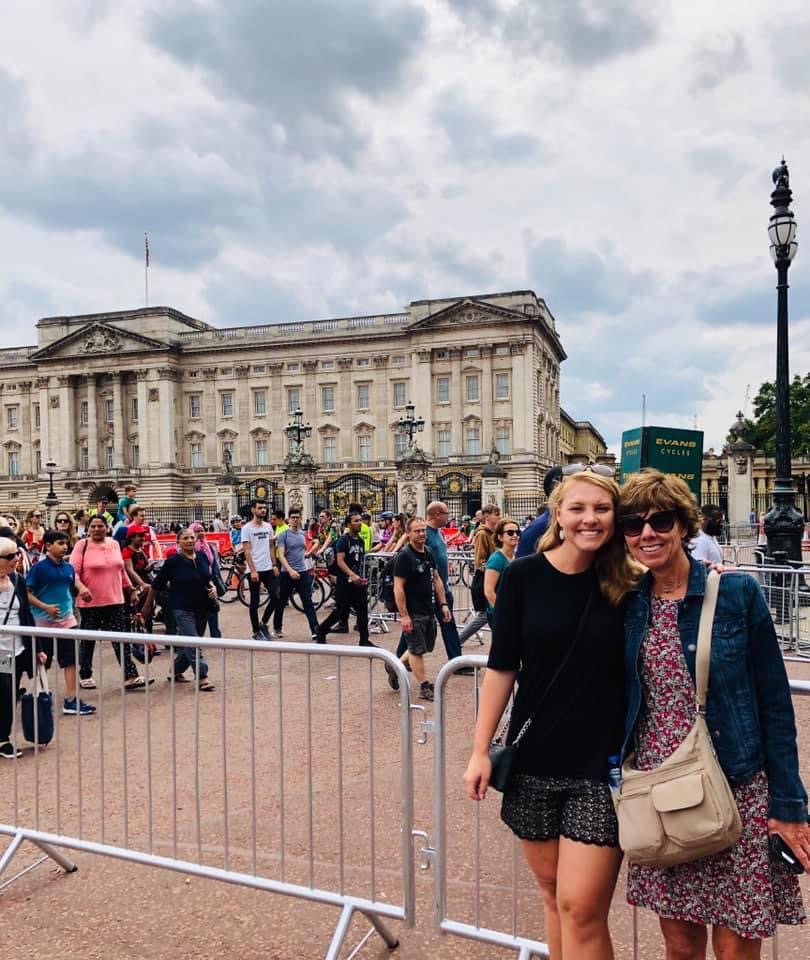
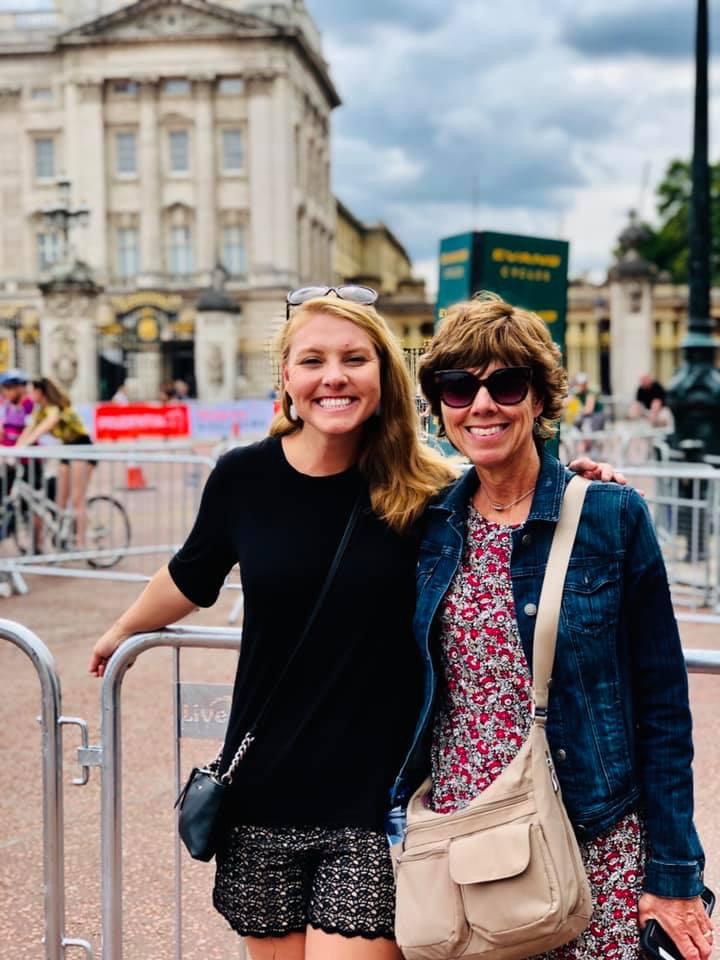
Buckingham Palace is the royal residence in London, which is the capital city both of England and of the entire UK. According to my research, it is unlikely that any of the royal family actually reside here, although there are rumors to the contrary, so who knows! In addition to being considered the home (when desired) of the royal family, it is also a place where state government occasions, including lavish banquets, are held. My Google search revealed that government visitors are housed there during their stay in London, (lucky ducks)!

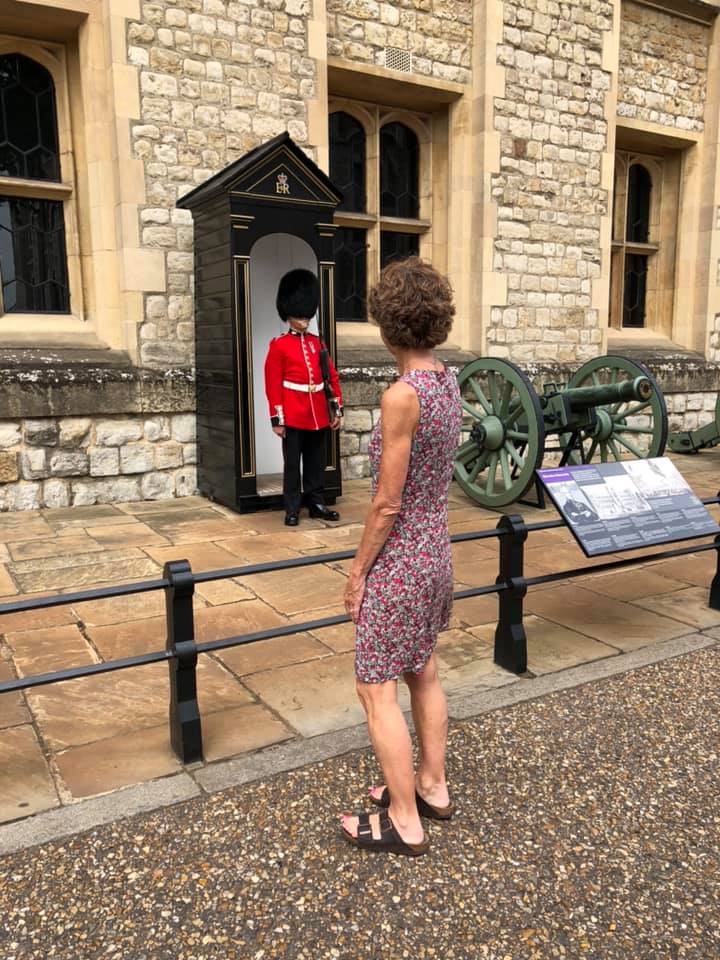
Members of the royal King’s Guard stand stoically outside of Buckingham Palace 24-7! Smiling is forbidden and—this would leave me out—toilet breaks are also forbidden!

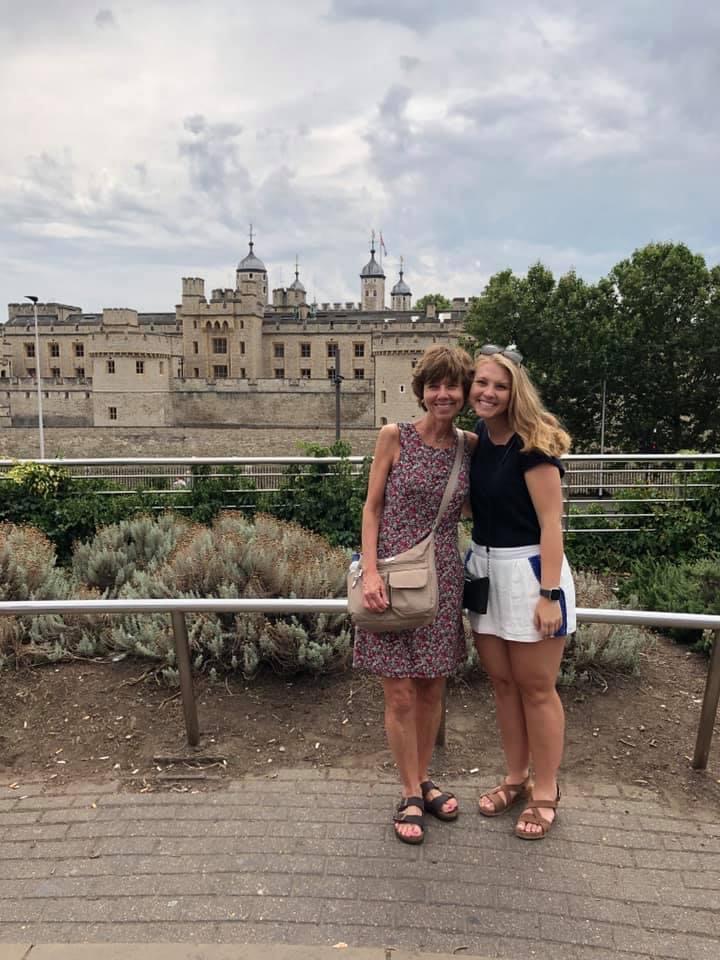
The Tower of London

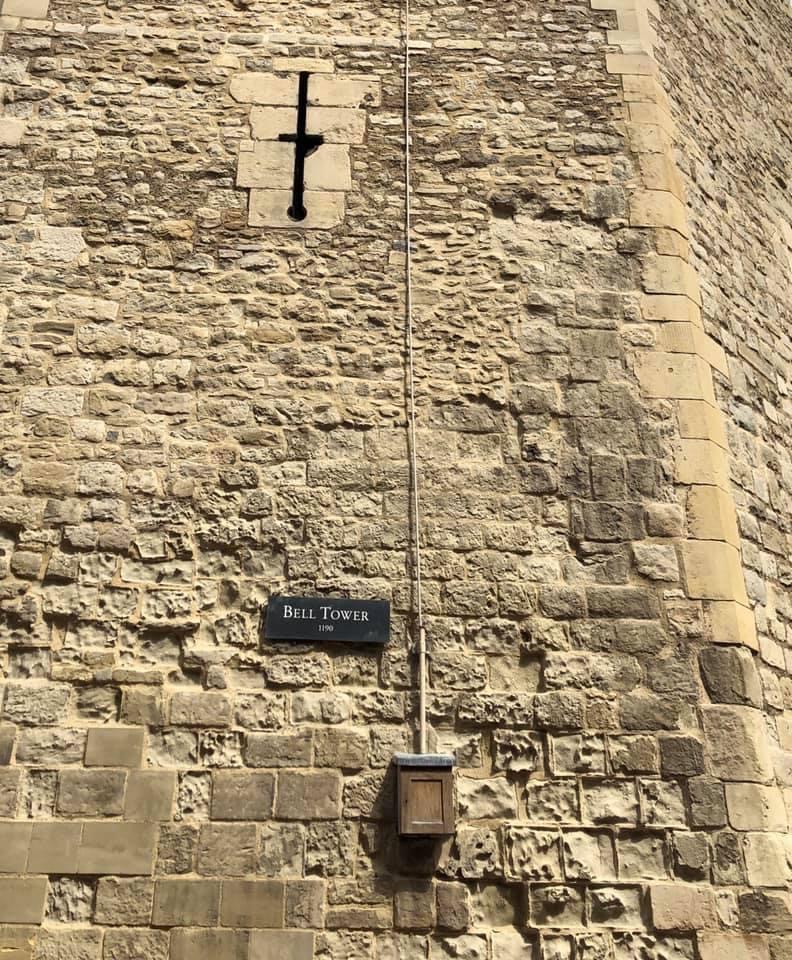
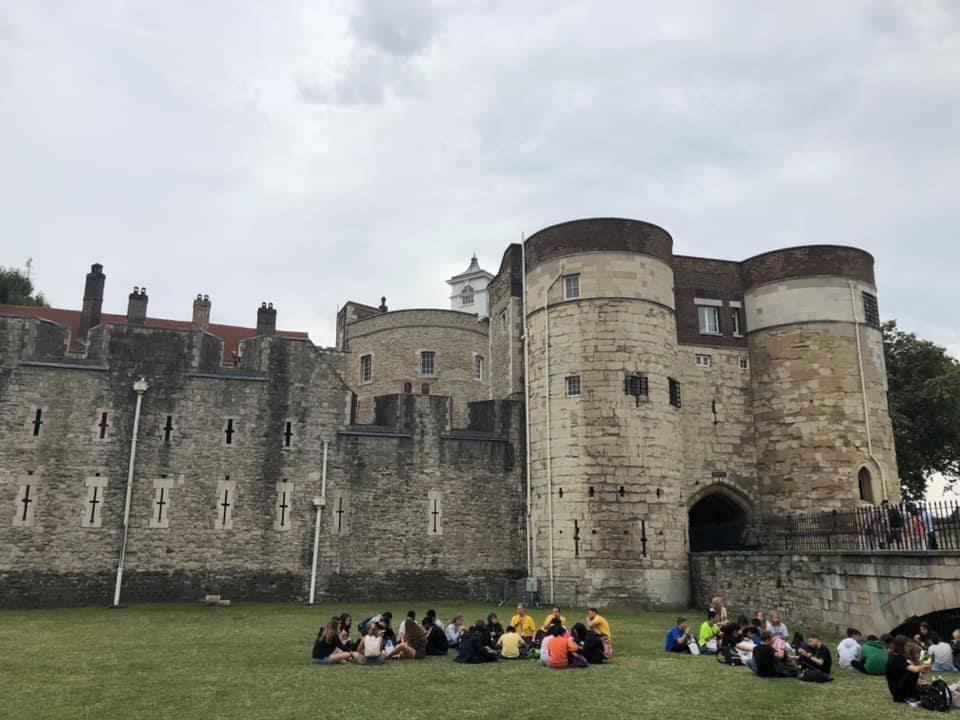
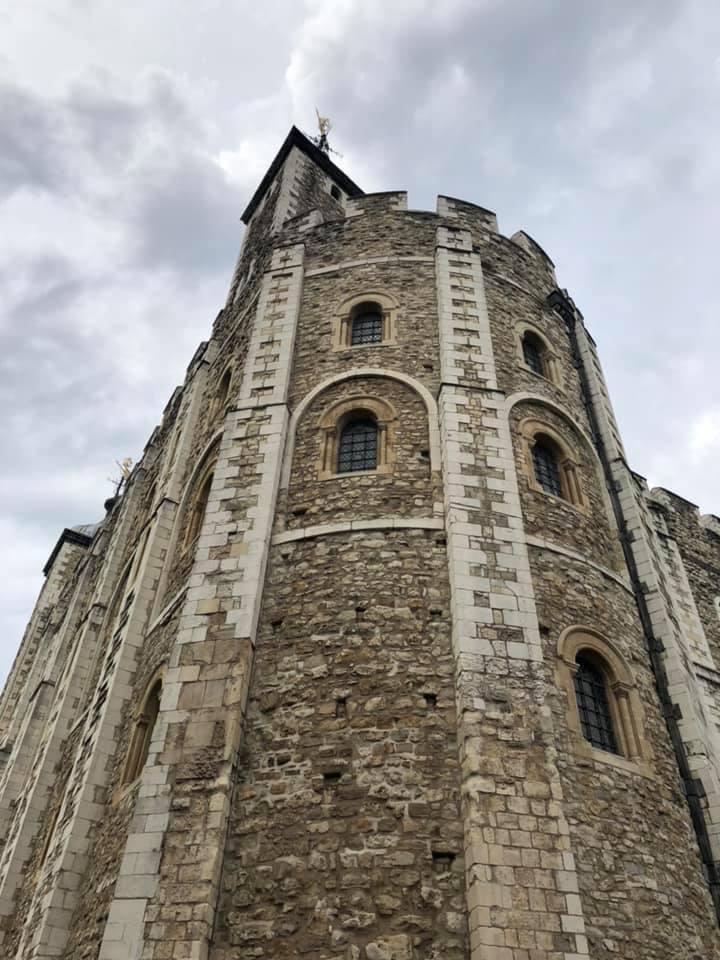
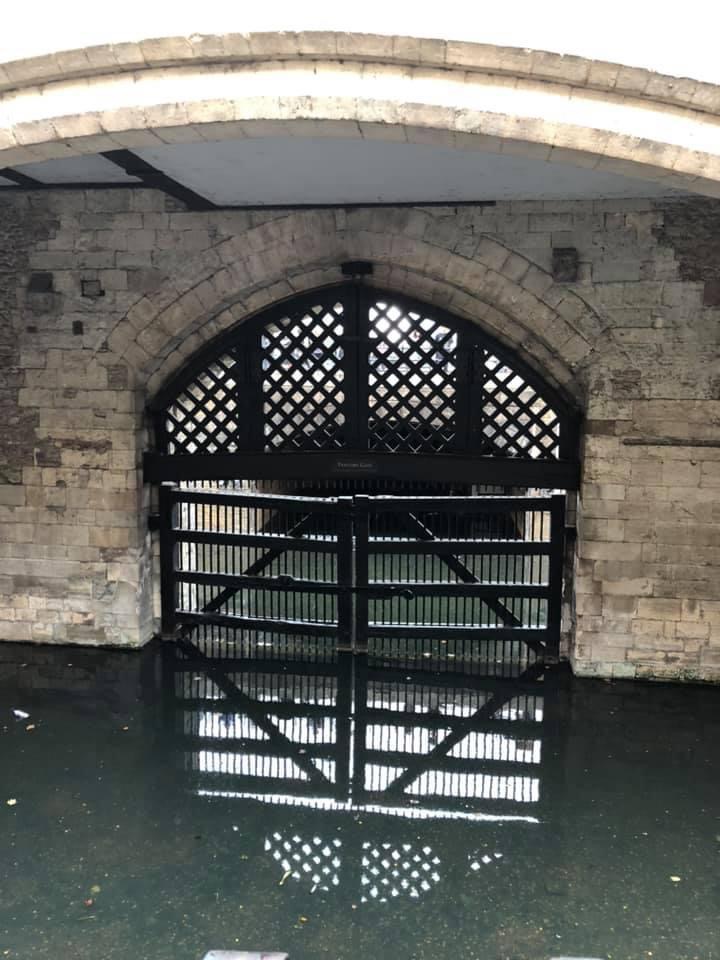
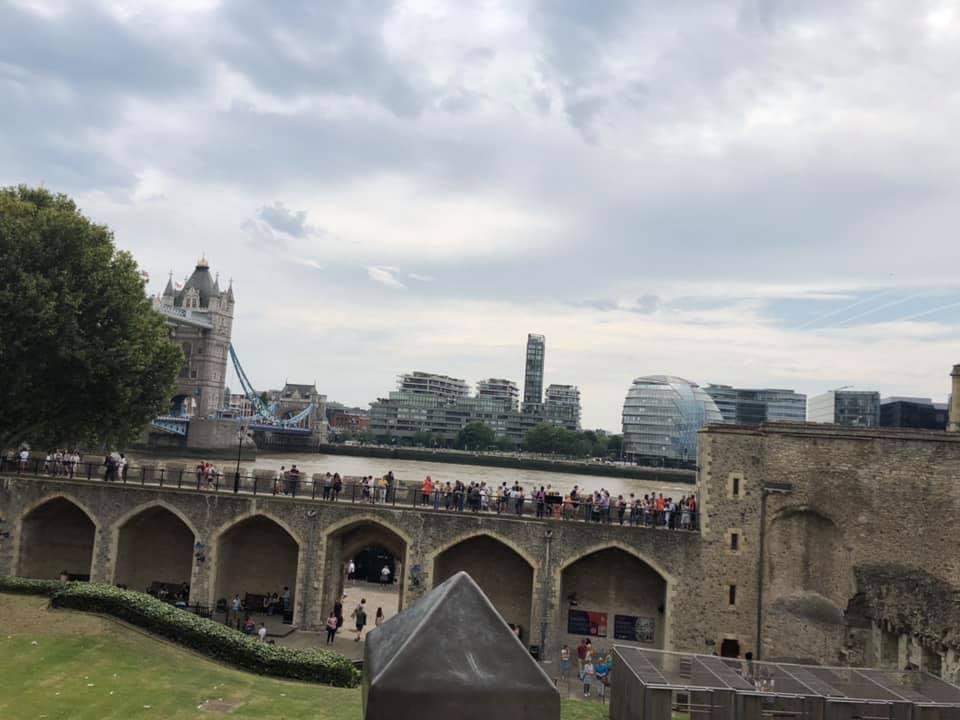
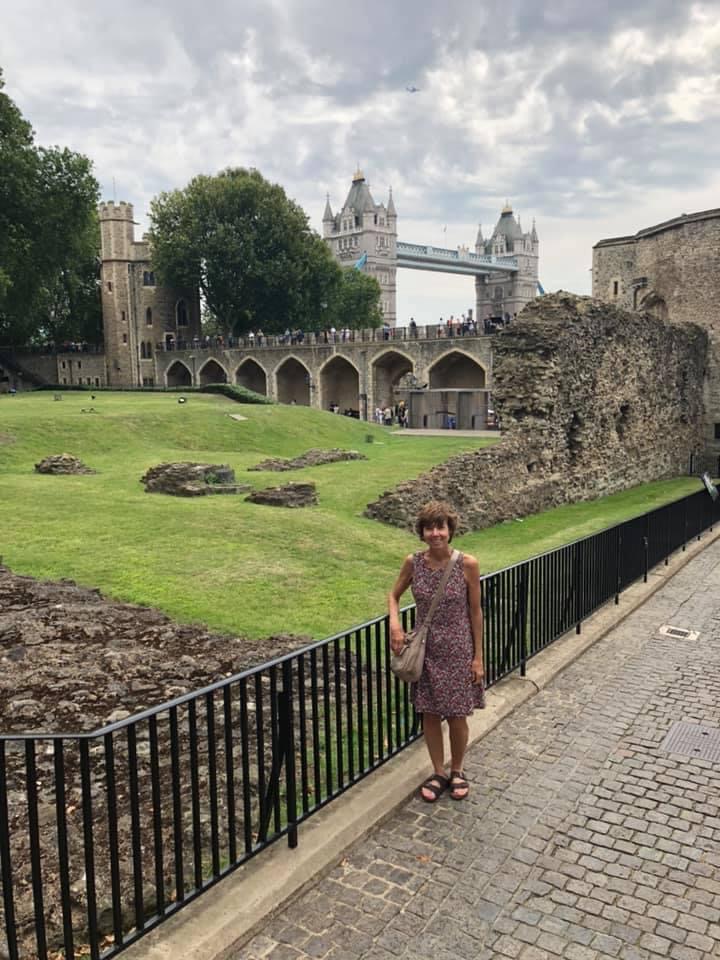
The Tower of London, a historic castle, has served as—get ready—a fortress, residence for royals, prison, a mint, site of public offices, an observatory, place of military barracks, place of execution, and a zoo! Wow. Now that is a place with a disparate and fun history!

The Tower of London Museum

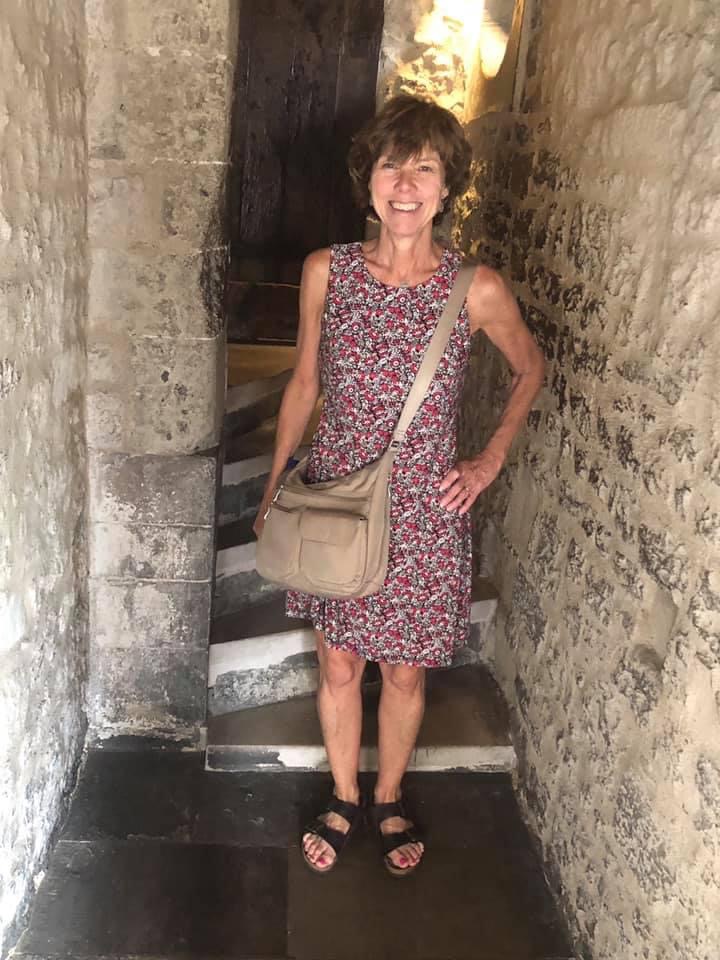
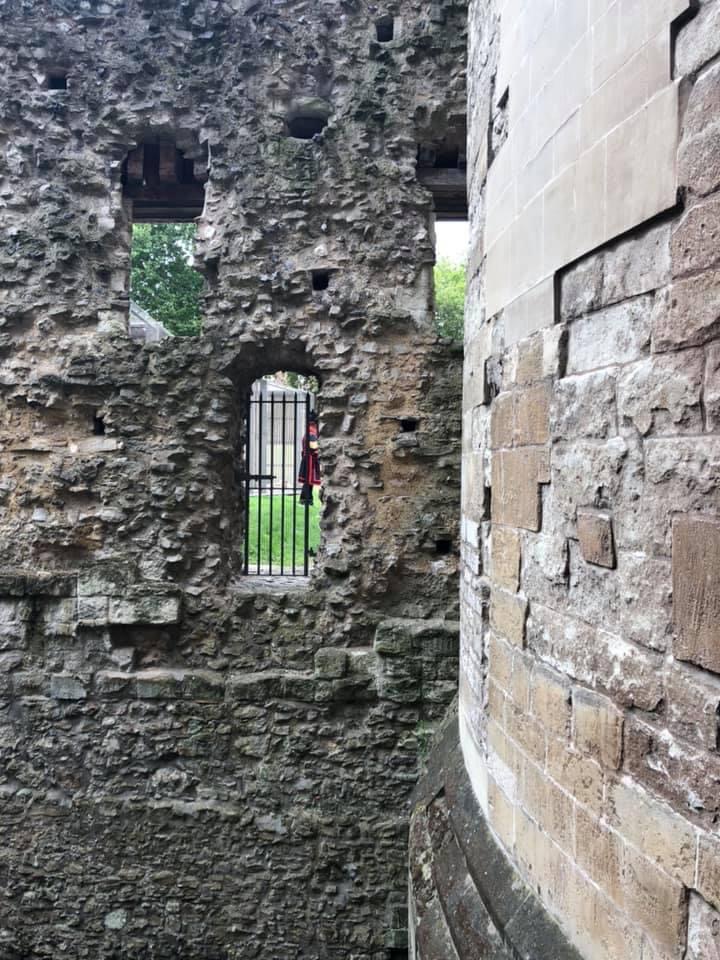
Going into the Tower of London was one of my favorite things to do in London! Climbing the many ancient, unevenly placed to slow attackers in olden times, stairs was—crazy, I know—so much fun to me. I loved seeing the many artifacts and royal relics in the museum, but mostly loved the feeling of being in an ancient castle.

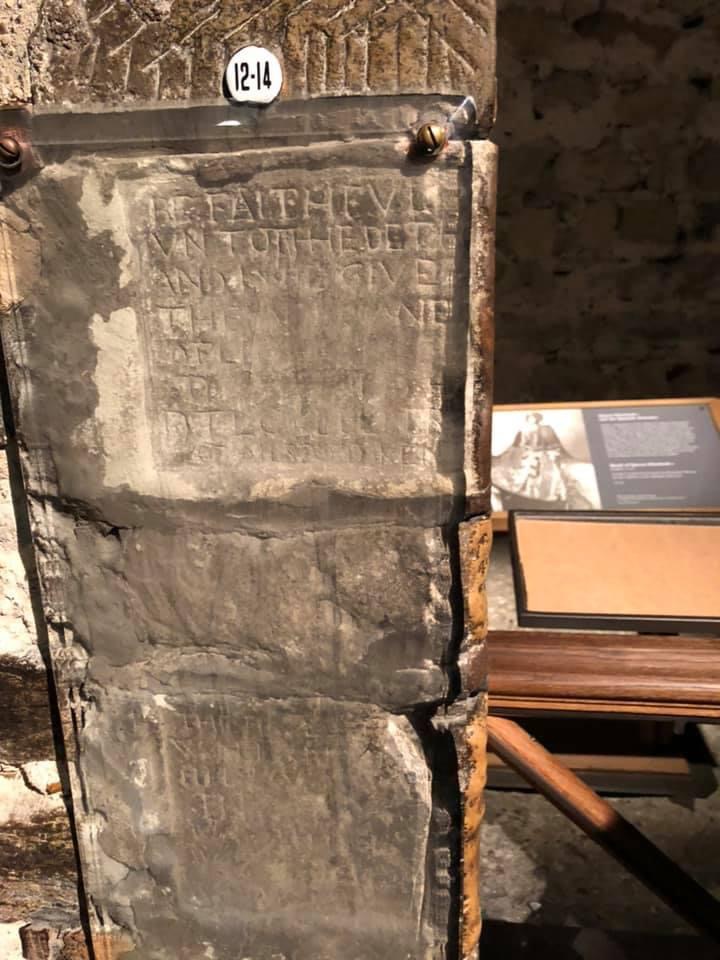
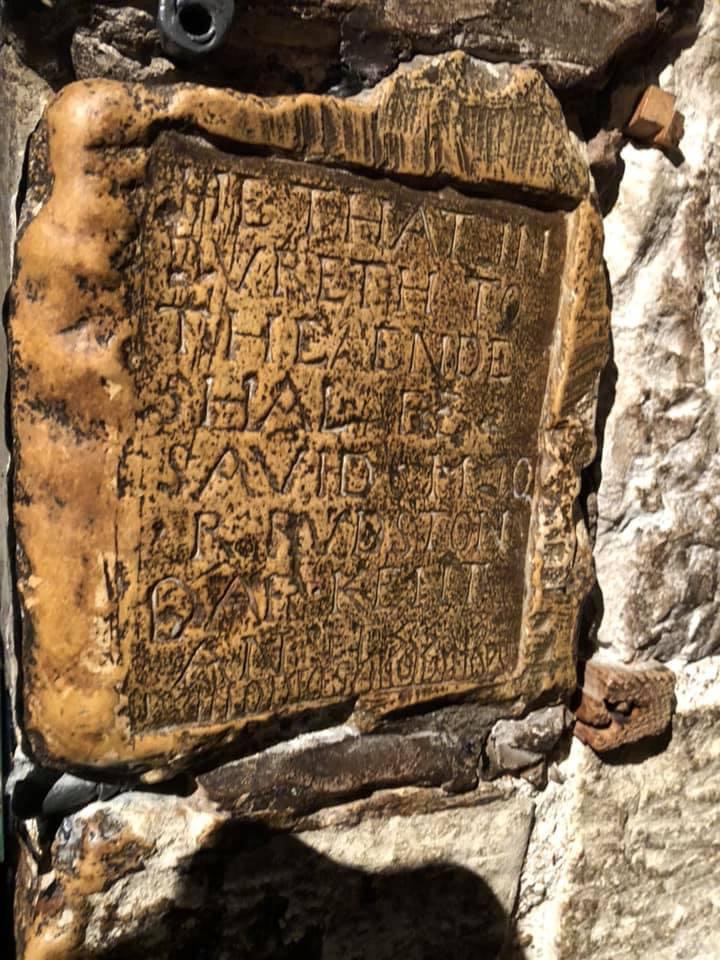
The inscriptions shown here were carved by two prisoners who raised a rebellion in Kent against Mary 1, in 1554. Robert Rudston and Thomas Culpepper were both sentenced to death, but later released in return for heavy fines. A placard nearby told me that the inscriptions read: “Be faithful unto the death and I will give thee a crown of life”; and “He that endureth to the end shall be saved”.

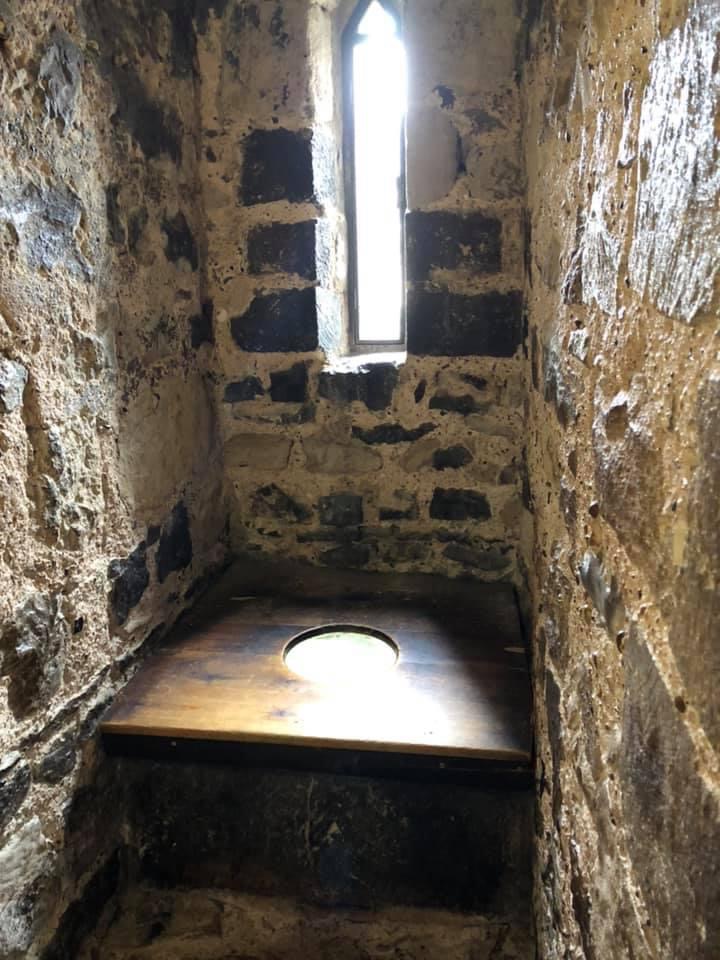
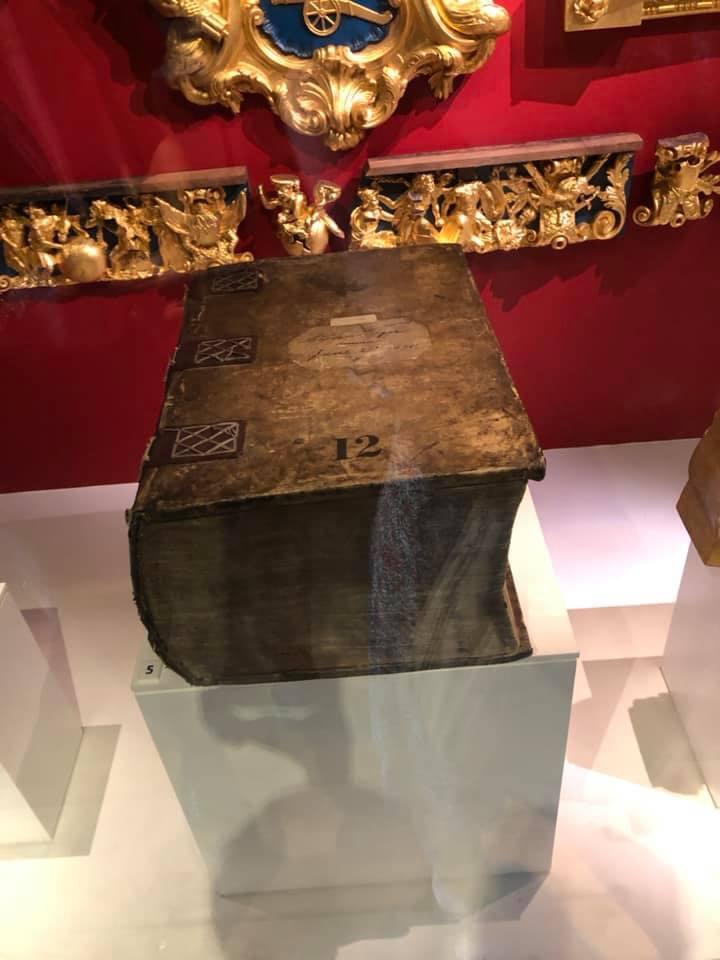
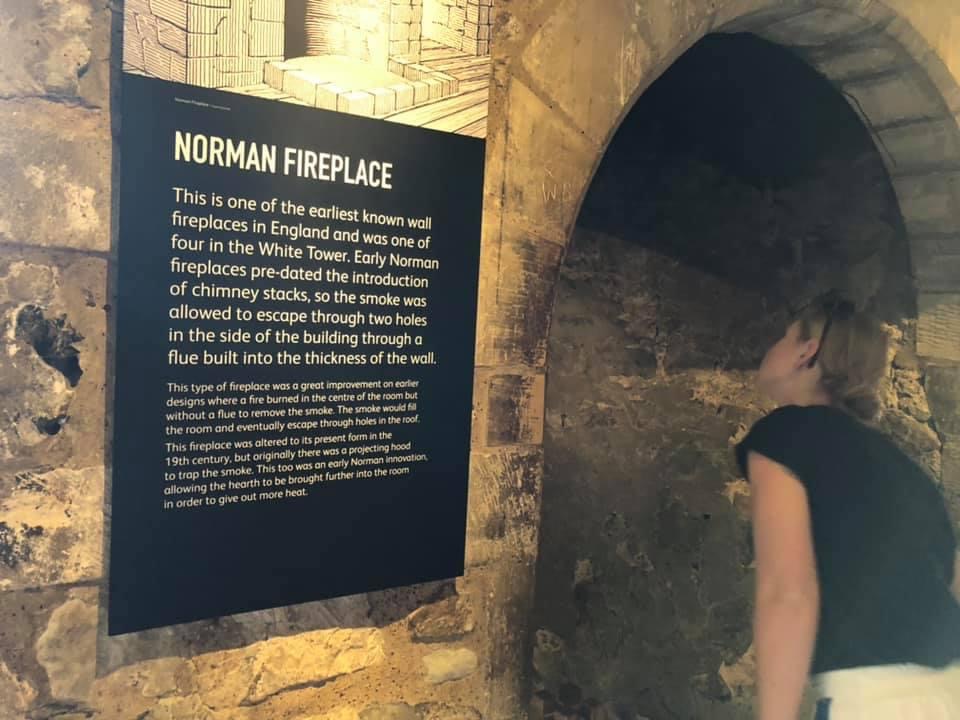
Many other interesting things awaited us in the Tower of London, such as the chapel of St. John, which was built by William the Conquerer and has been used for prayer by kings, queens, and other Tower residents for over 900 years; ancient books; knightly armour; one of the earliest known fireplaces in England; and even a royal commode, which was built onto a corbel and in which the waste fell below into the castle moat!

Yorkshire pudding and More

I loved the foods of London, dining, trying, and sharing different menu items from wonderful restaurants that our host, my daughter’s good friend from college, recommended, made reservations for if needed, and led us to!

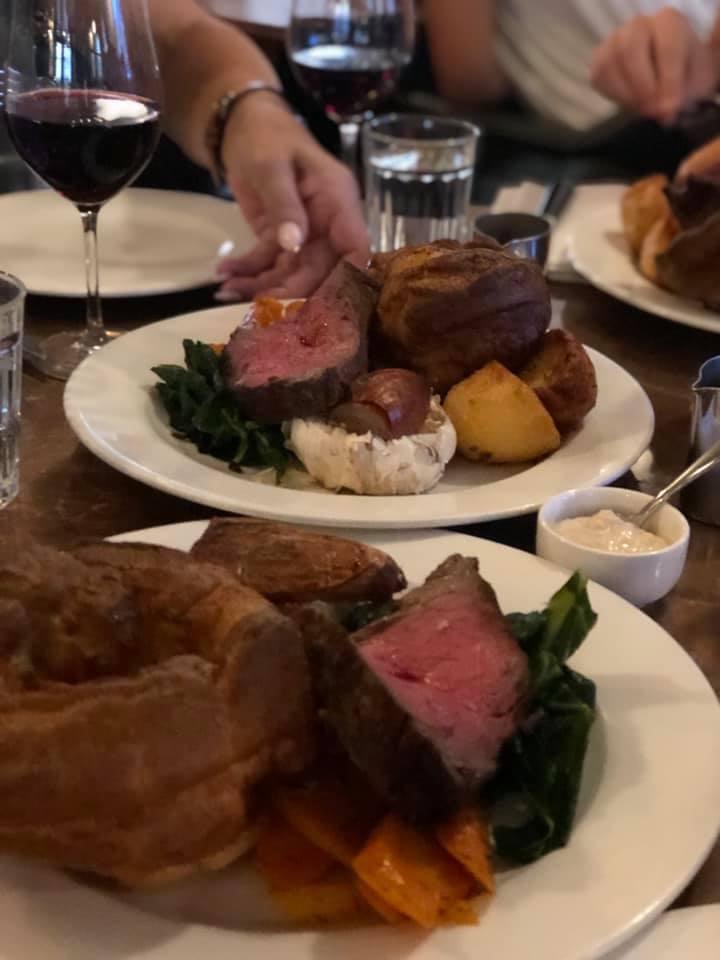
Yorkshire pudding, pictured here alongside the roast beef, was not at all what I’d supposed it to be! Laugh if you will but I had actually assumed it was a pudding and would be served for dessert! It is instead more like a delicious bread. My research shows the ingredients as a list of things that I would use to make pancakes. It’s a bit similar to a souffle. Yorkshire pudding is traditionally served with roast beef in England, and it is very, very good.

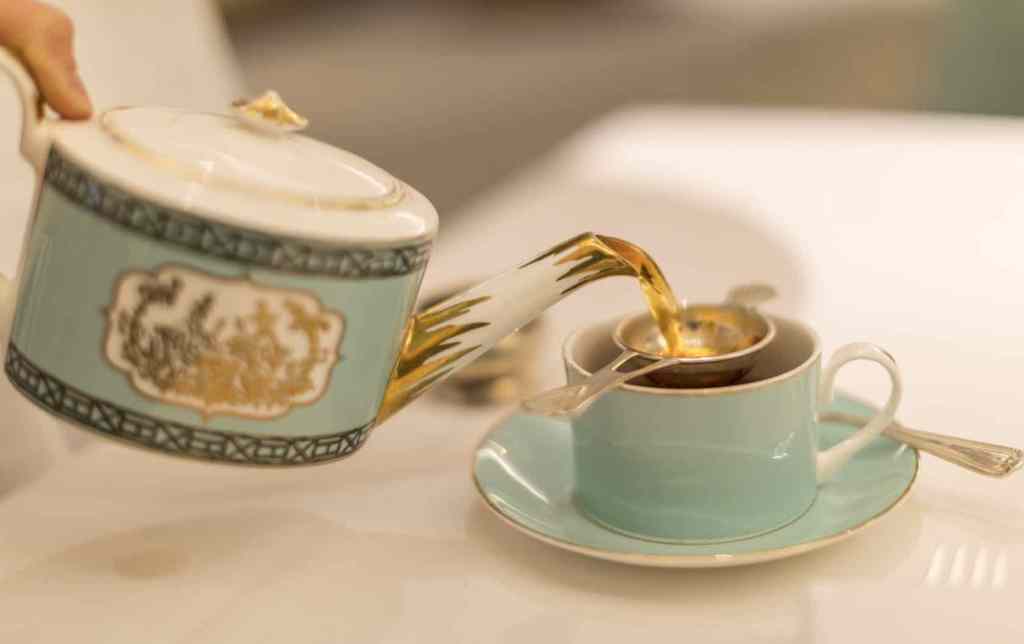
Other things that were new to me included mussels, which I liked a lot and have had many times since; and hot tea instead of coffee in the mornings (I still prefer my coffee but enjoyed the hot tea nonetheless!)

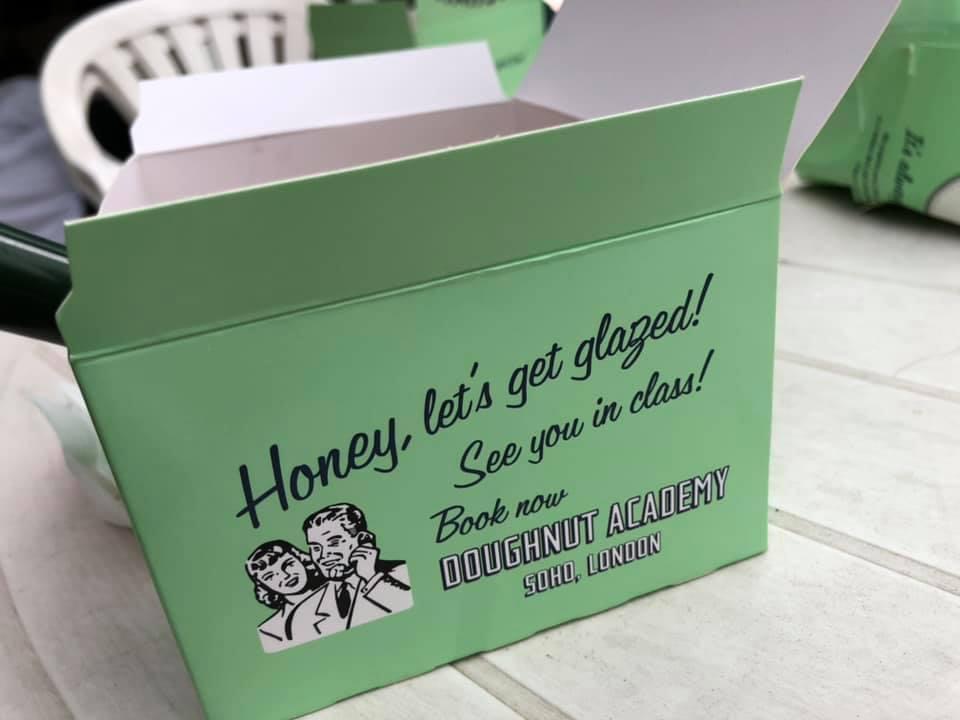
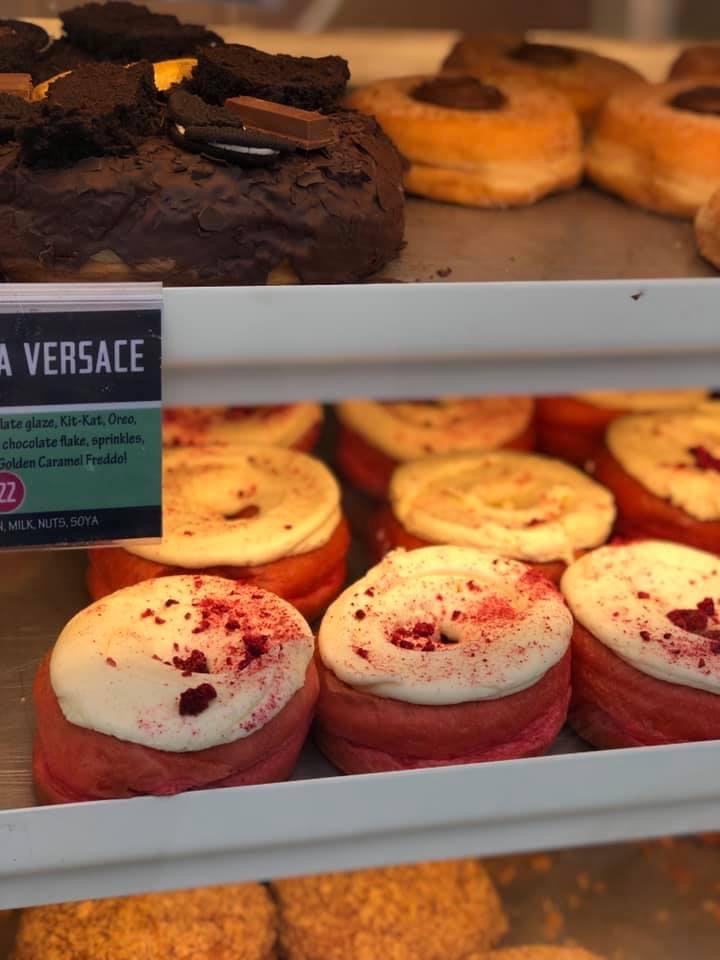
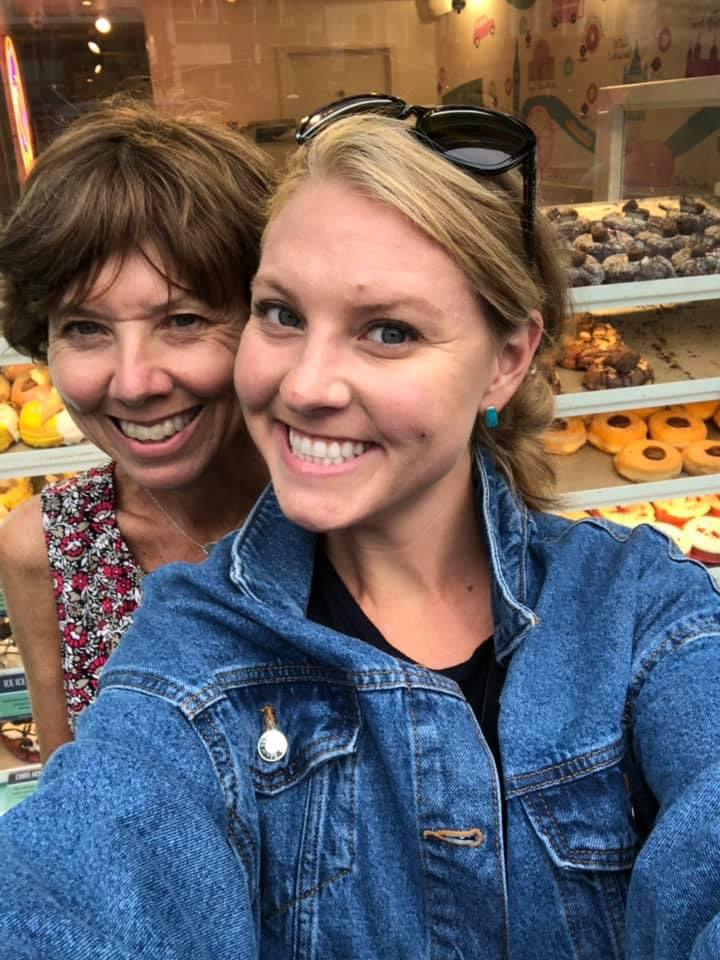
Apparently London’s doughnut scene is a force to be reckoned with! Popular day or night, a wide variety of doughnuts filled with an array of different jams or creams can be found in doughnut shops throughout the city. We enjoyed stopping for some to take to our Airbnb, after a night on the town.

Lavish London Entertainment

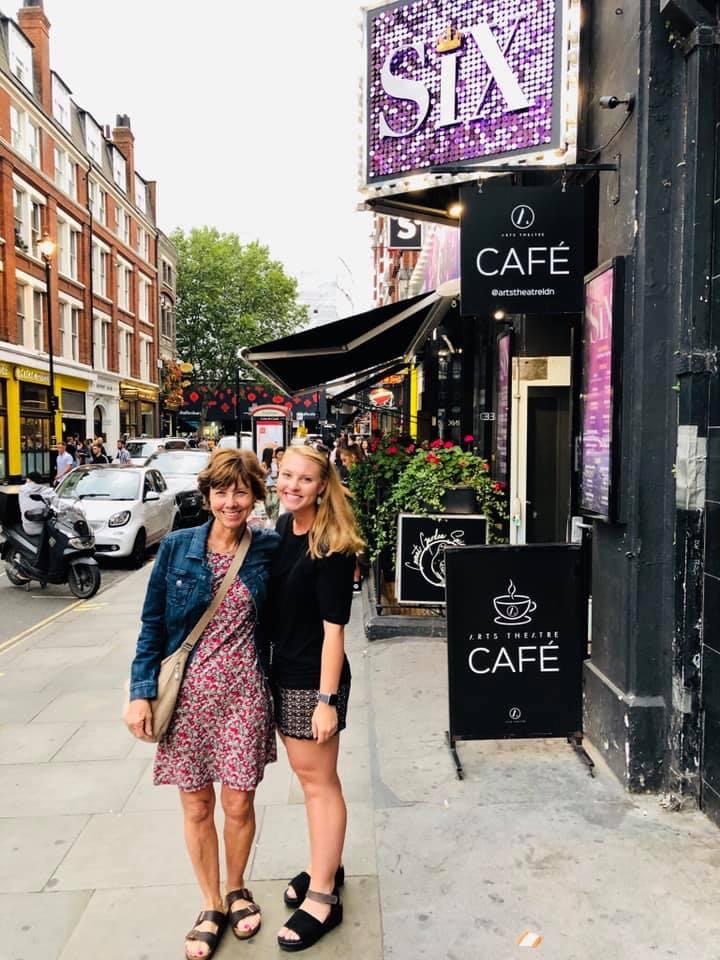
We went to see the musical Six! So much fun. We saw it in a small theater, and it could not have been a more electrifying and fun atmosphere, and of course the theater performance was absolutely amazing. Outside after the performance we met and took photos with the performers who’d played the wives of King Henry VIII!

The Six originated there, in the West End district of London, and has since gone around the world to much acclaim. I feel lucky to have seen it in the West End to the wild applause and fun-ness of the theater there.

The Tower Bridge of London

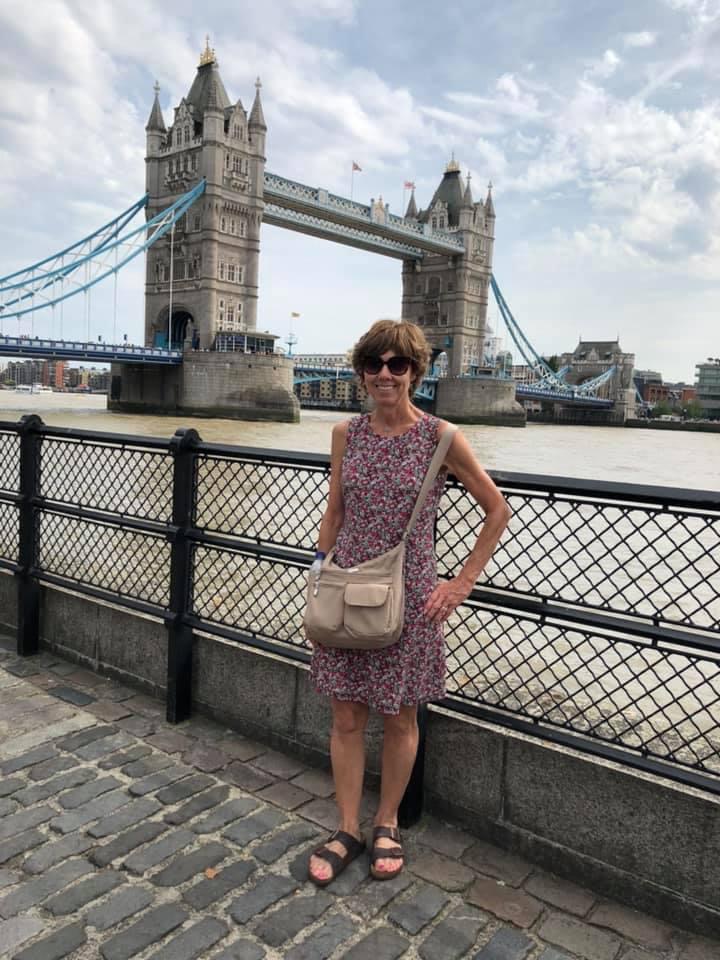
The Tower Bridge of London stands as it was built in 1894. It was built by design to blend in with the medieval Tower of London castle. This was a request of Queen Victoria, in order to make sure it wasn’t an eyesore. I’m thinking that the Queen likely had no idea of what a landmark the bridge itself would become! The bridge is a “bascule” bridge, meaning it can open and close for sea vessels to pass through.

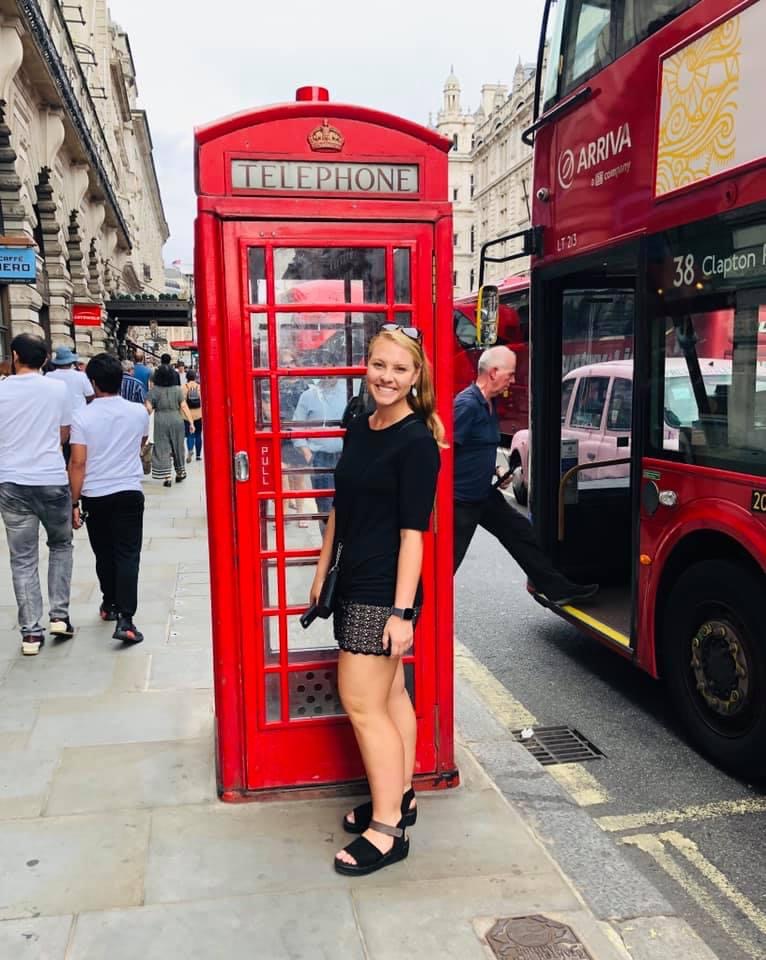
The red telephone booth, or “telephone box” as it’s known in the UK, first appeared in London in 1926, and these became populous across the city and the UK. The red color was to make them easy to spot. You can still spot them across the city as part of the city’s cultural heritage, a symbol of London.

There were lots more icons and fun things to see and visit in London…

(but my favorite thing remains climbing up those ancient uneven stairs and peeking around inside the medieval castle of the Tower of London)!

London is an adventure waiting to happen!

Mount Magazine, Arkansas USA

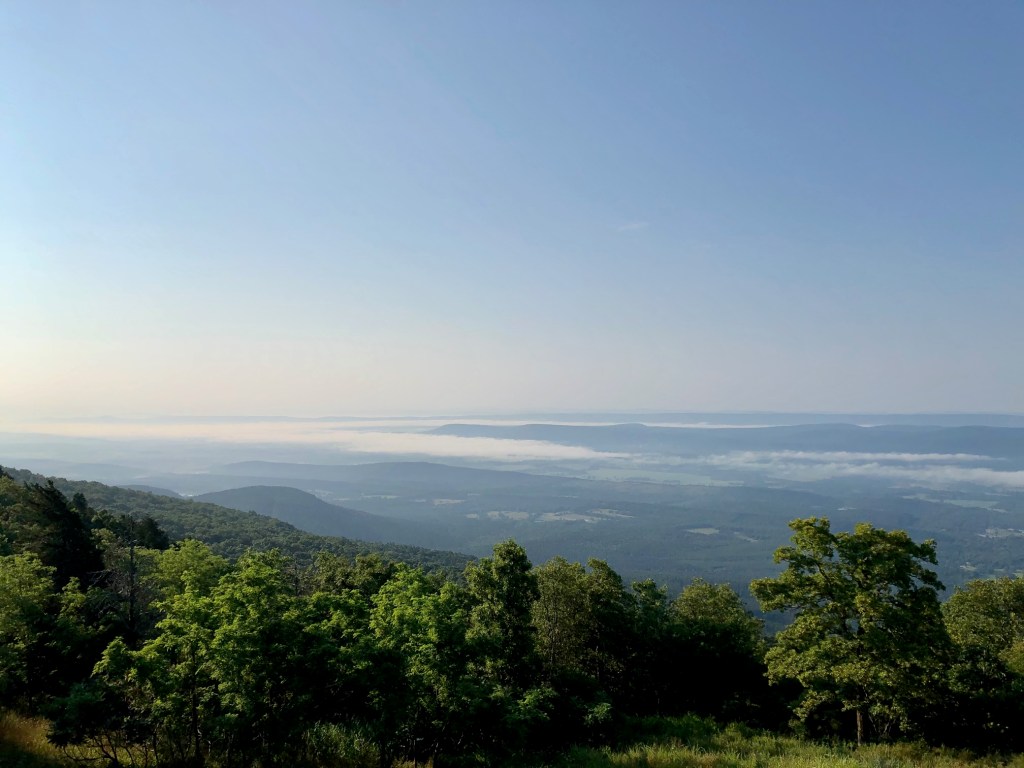
I was lucky enough to grow up at the foot of majestic Magazine Mountain in Arkansas USA. I wanted to share a little bit of the reason, to me, that it’s so special to so many!

“Winter Wonderland”

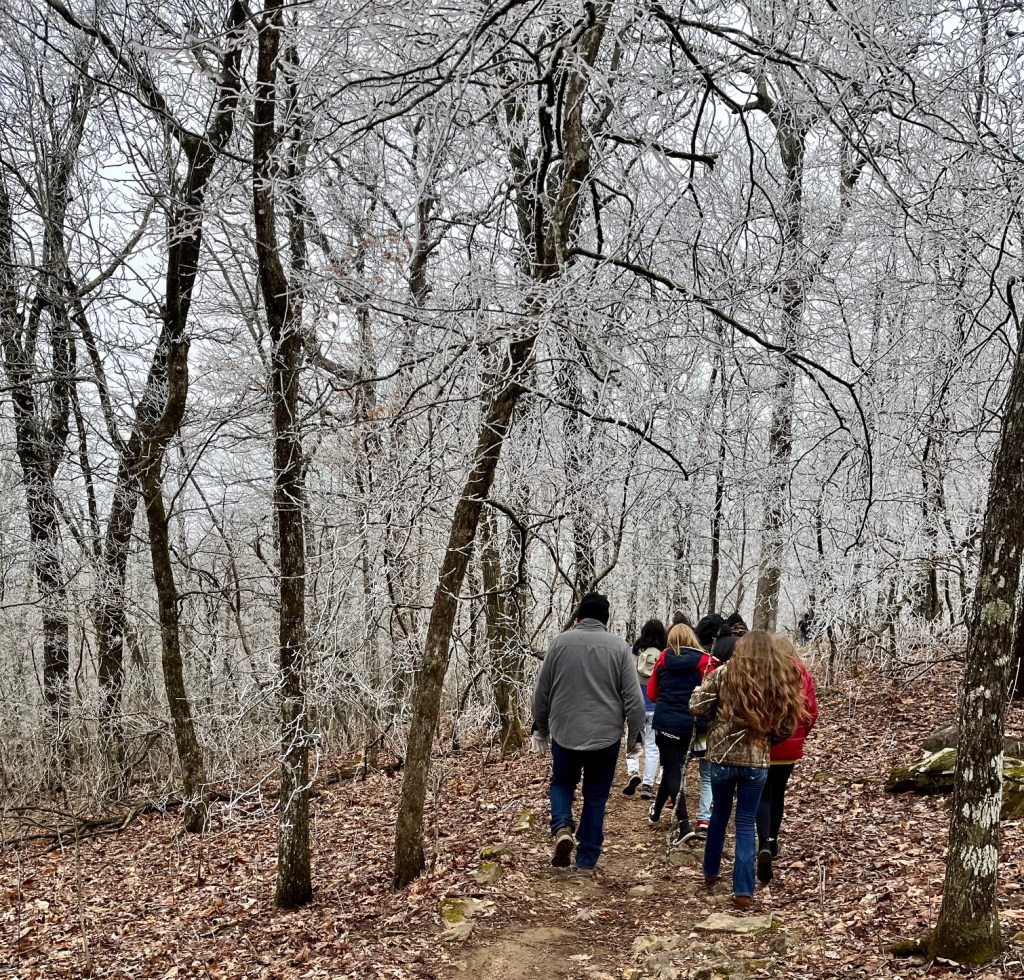
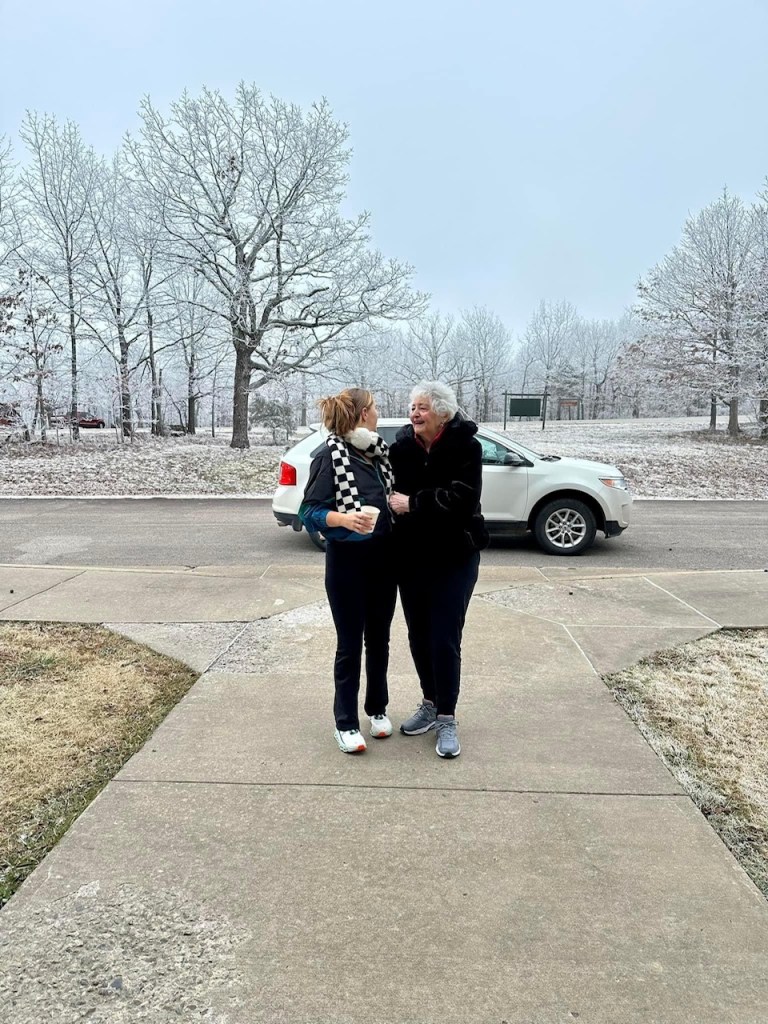
Mount Magazine, located in the Ozarks mountain range of north central Arkansas in the United States, is spectacularly beautiful in the winter!

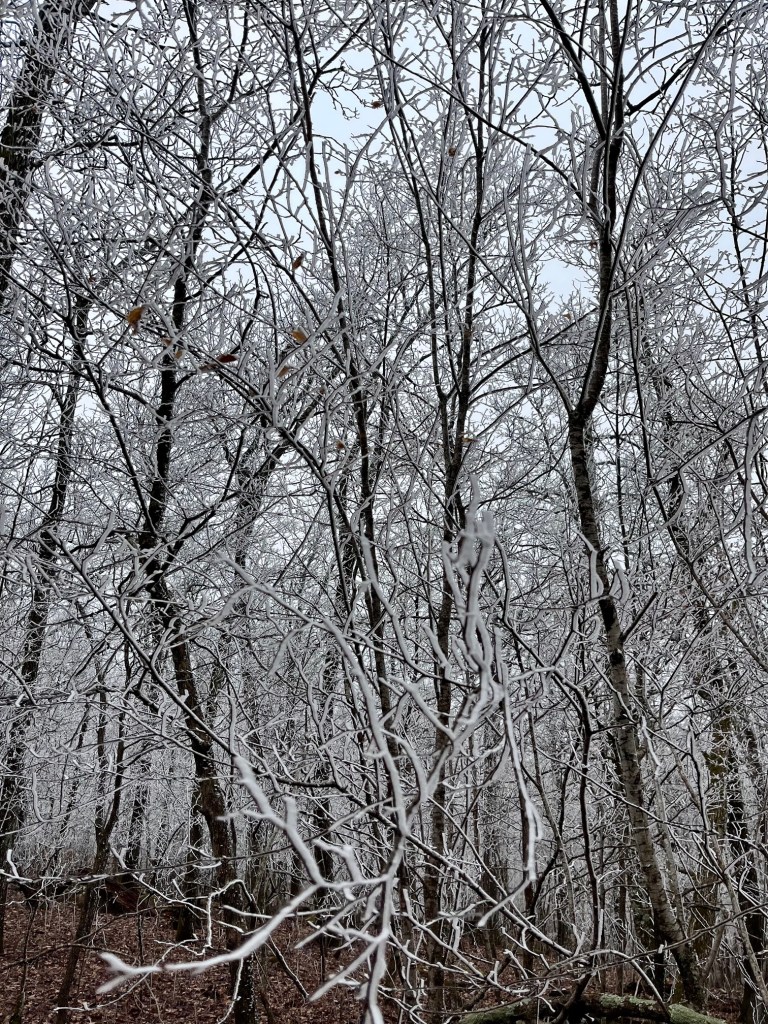
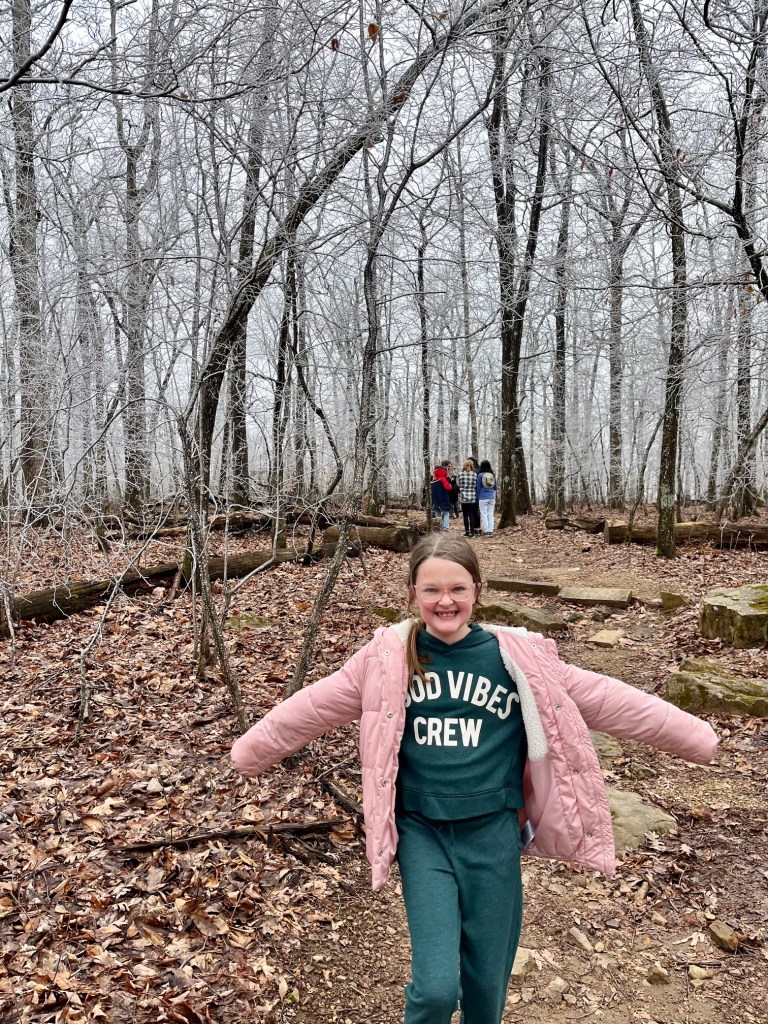
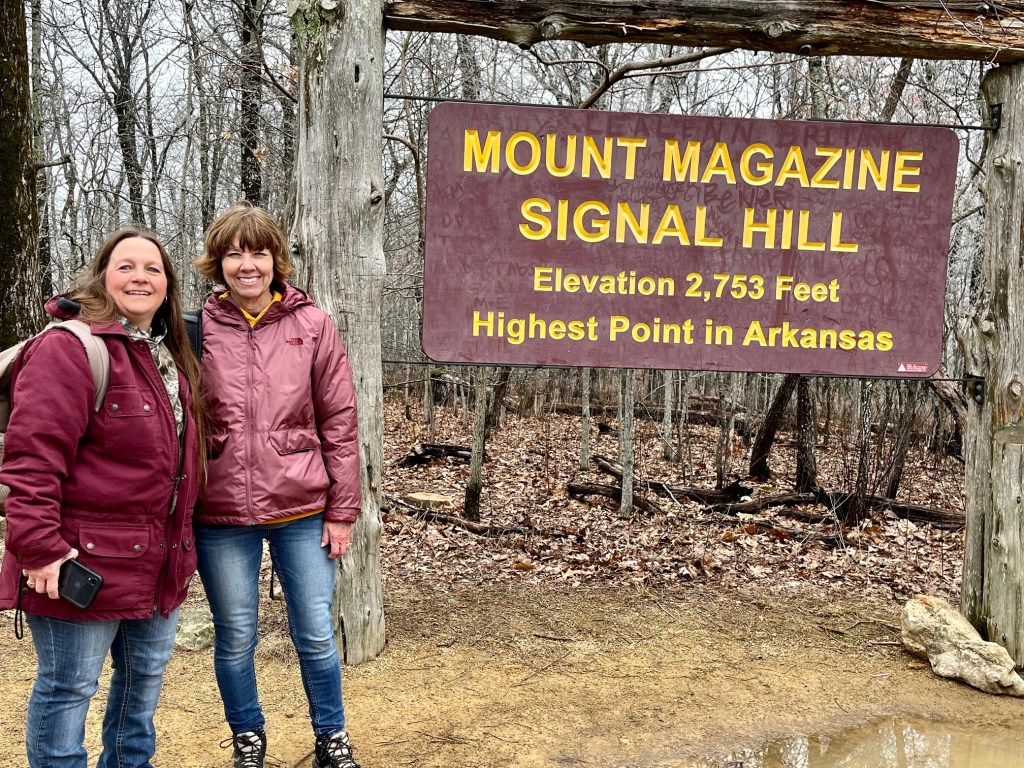
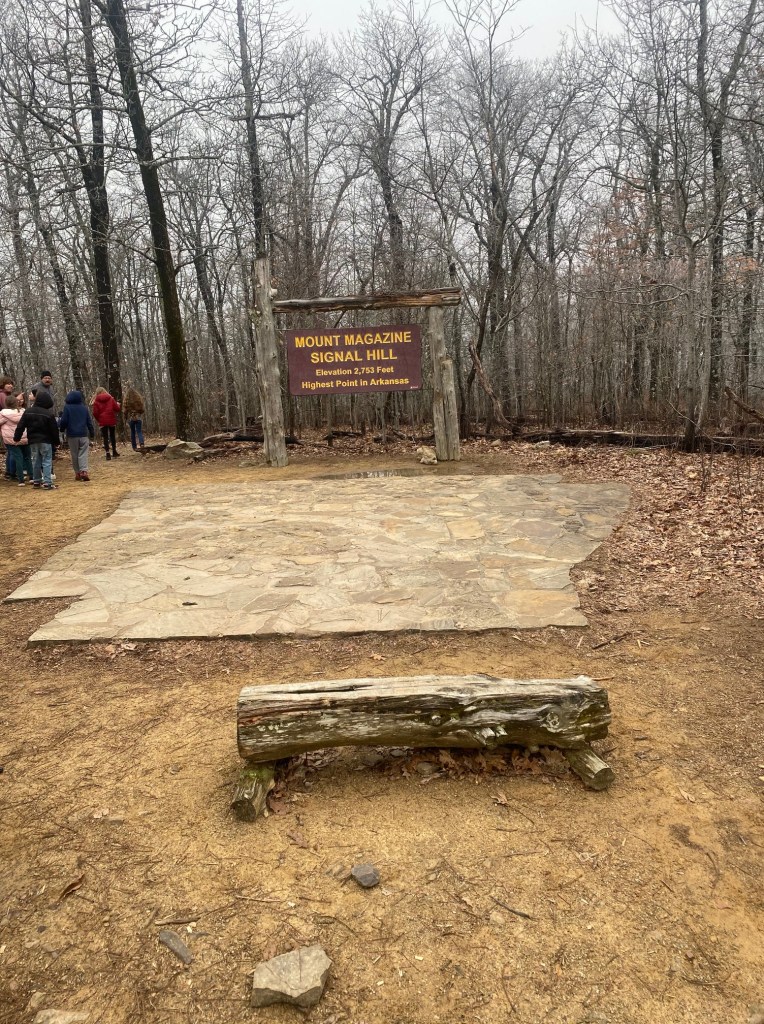
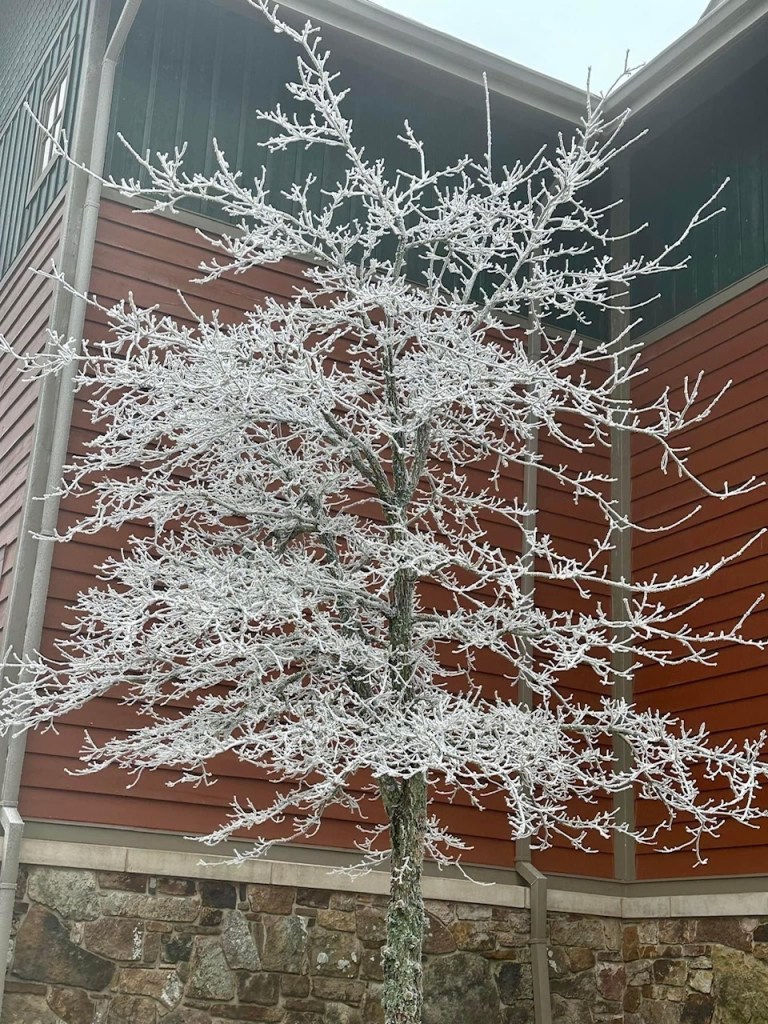
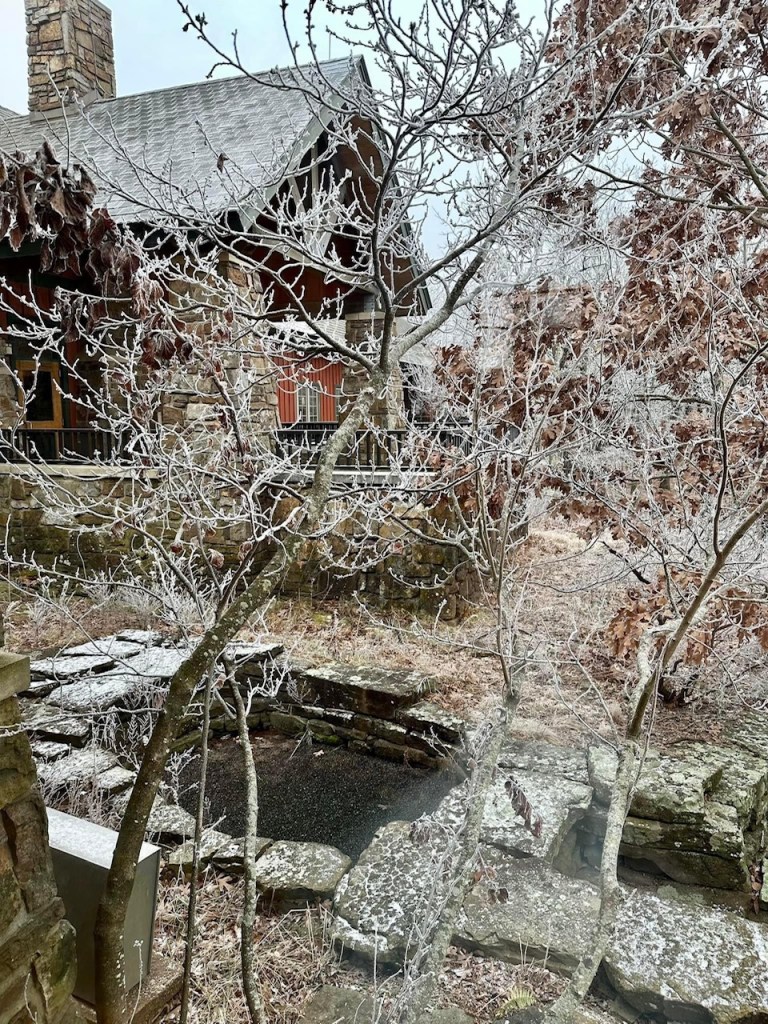
On a walk to Signal Hill, the highest point on Mount Magazine and in Arkansas, my classes and I, along with another class during a field study, enjoyed the sights of ice-covered glistening trees as the temperature dropped due to the high elevation as we climbed higher along the way! It was a winter wonderland!

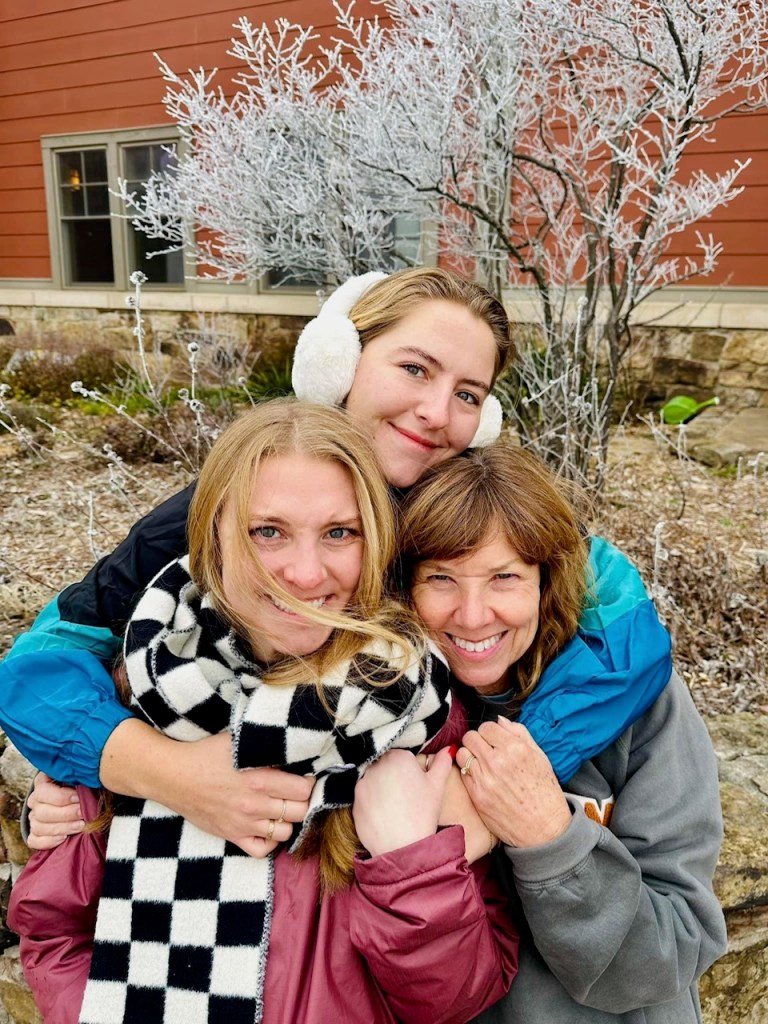
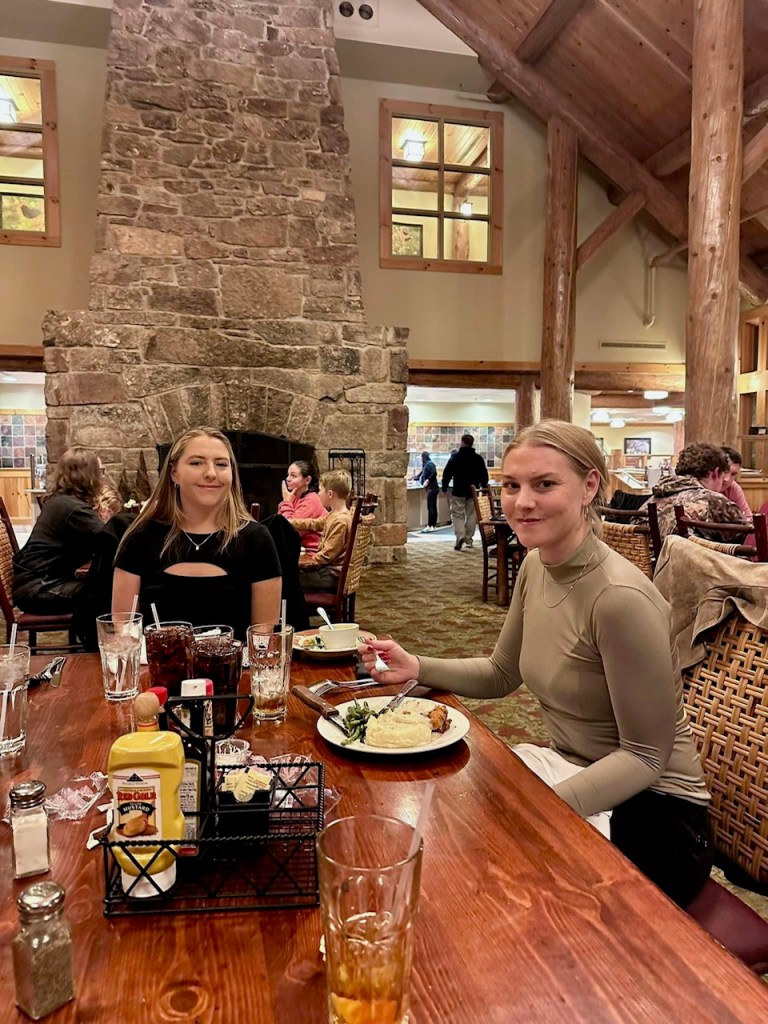
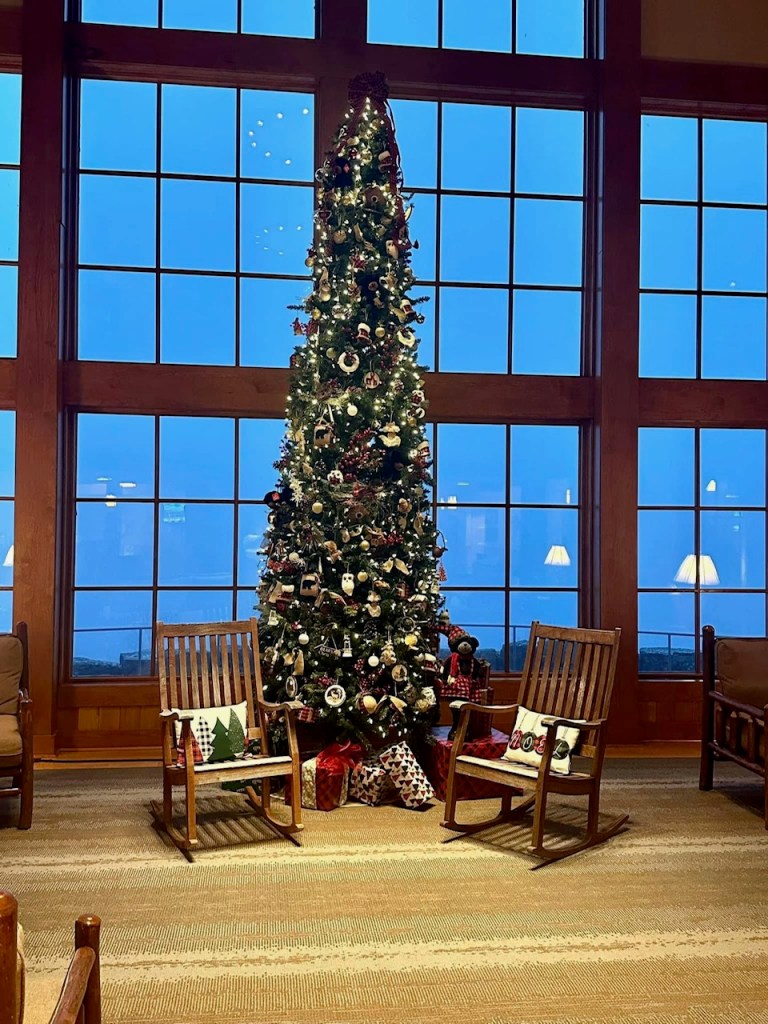
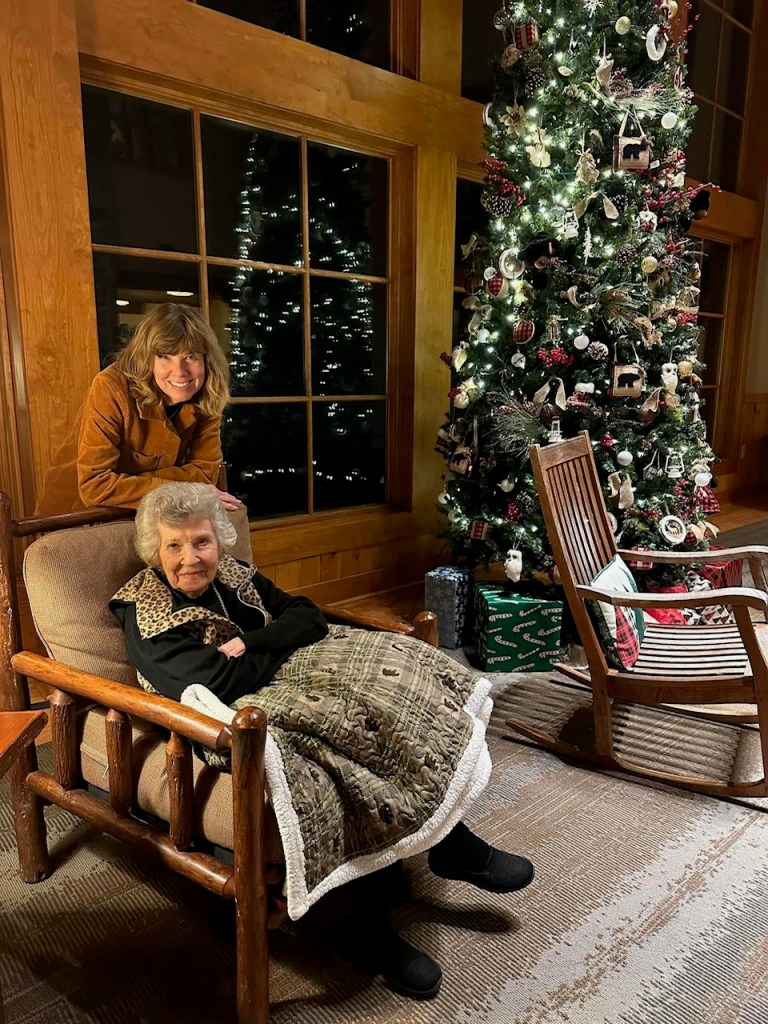
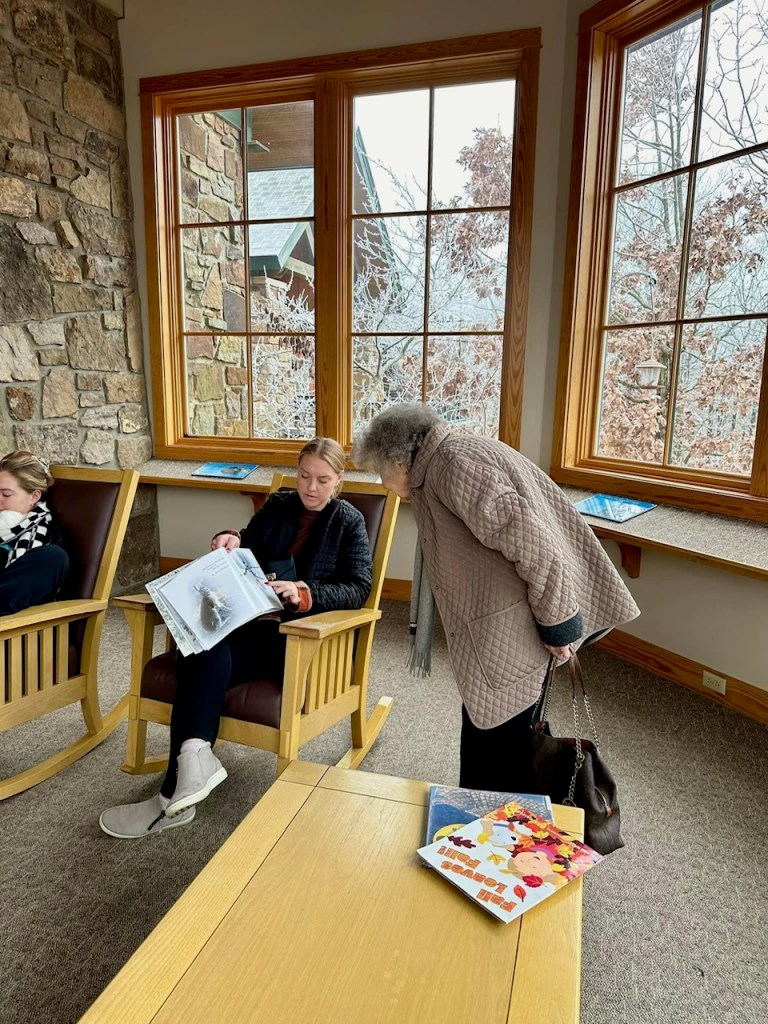
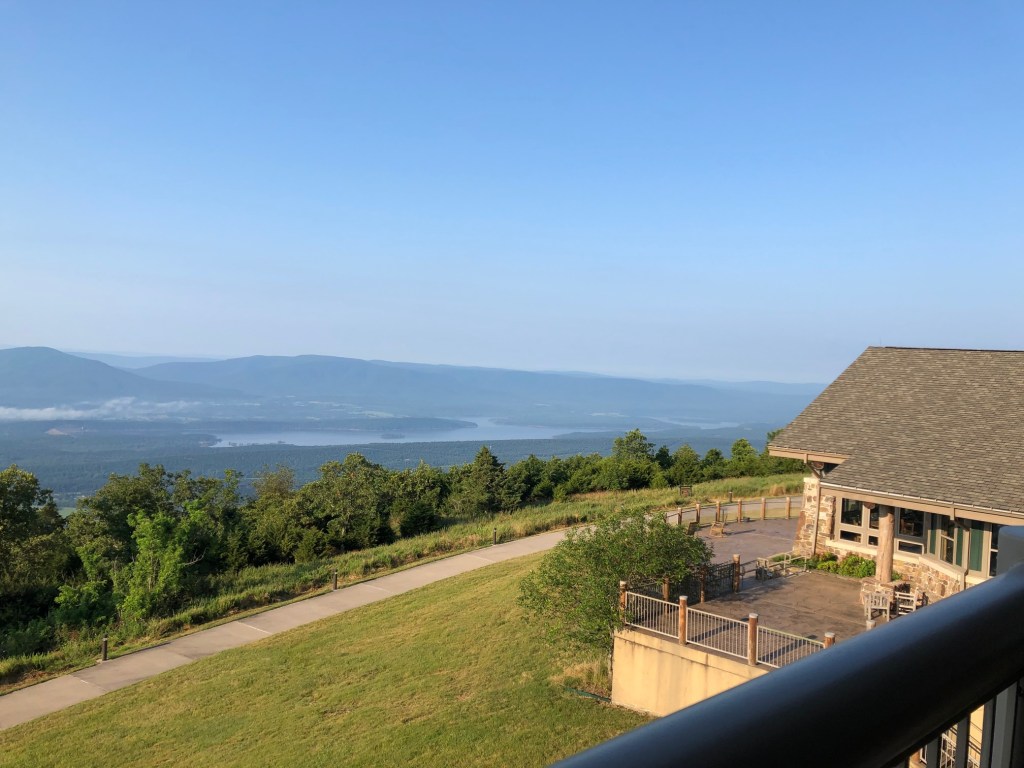
During a winter visit with family, we stayed at the rustic-styled elegant and picturesque Mount Magazine Lodge. Beautiful snow scenes awaited us outside the large picture windows from our balcony; the communal fireplace sitting room; and restaurant. The lodge is beautifully decorated for each season, including fun and elaborate decor at Christmas-time.

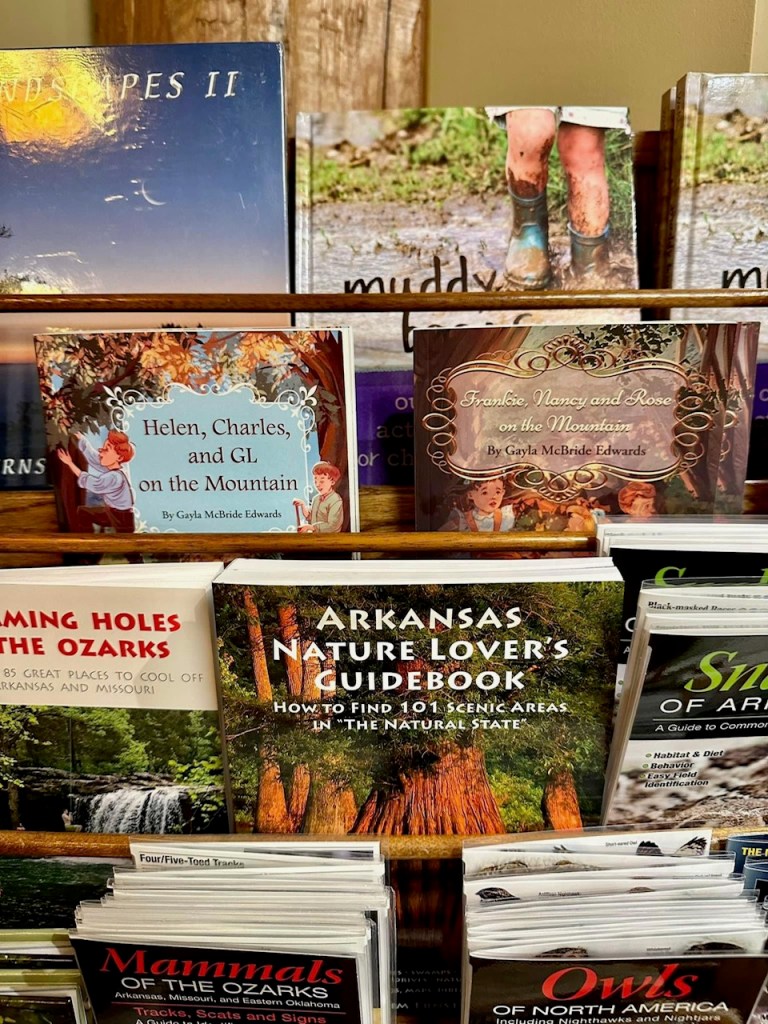
The Mount Magazine Visitor Center contains a delightful museum of history and culture of the mountain, as well as a patio wildlife-watch area and gift shop.

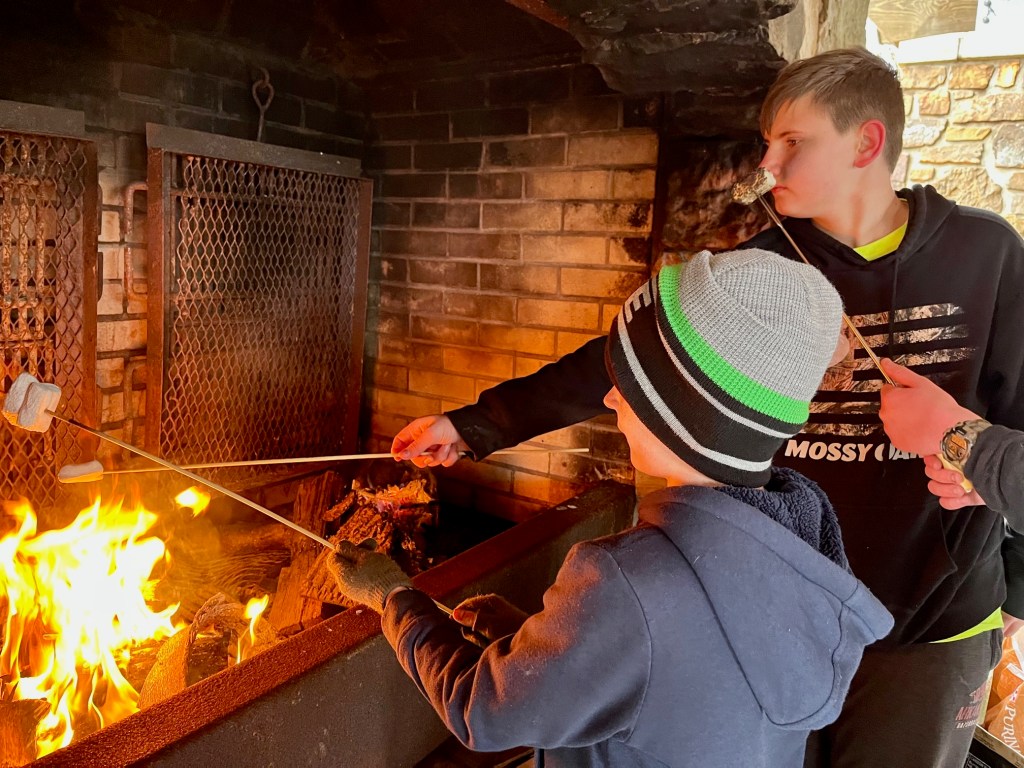
The Benefield Picnic Area is located across the street from the Visitor Center. During a class field study, we roasted hot dogs and toasted marshmallows for s’mores in the large fire pit there. Fun times!

Area historian, author, and educator Dr. Curtis Varnell has been a guide and teacher for many class field studies on the mountain through the years.

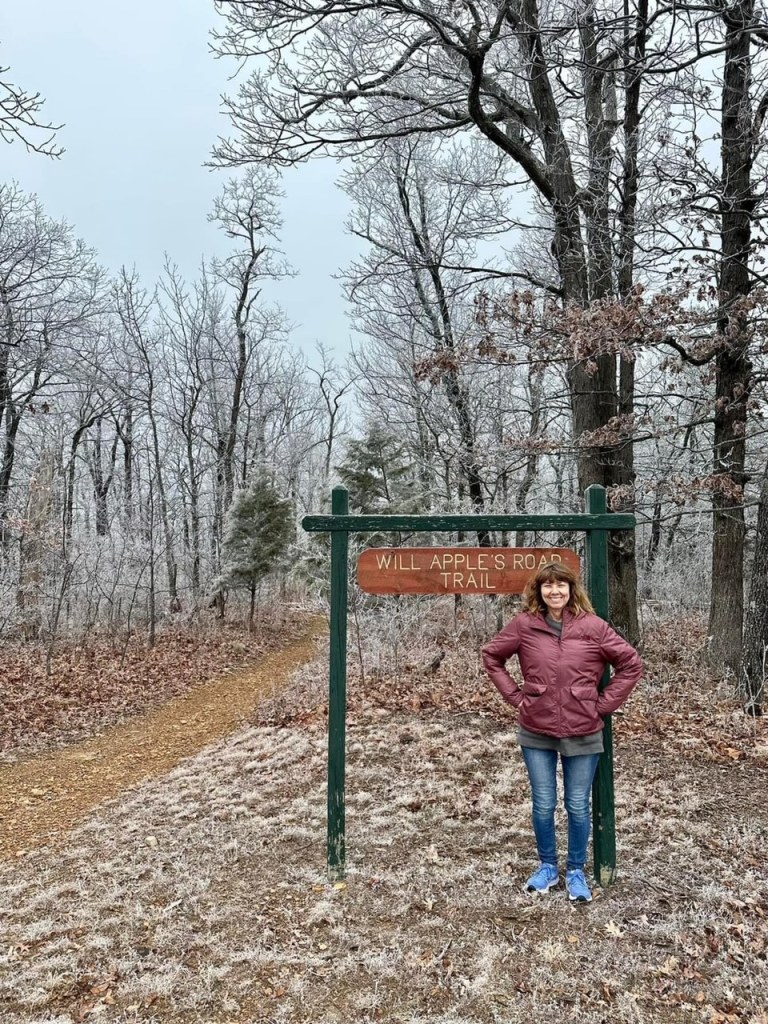
There are many hiking trails of varying difficulty levels on Mount Magazine, with guided trail hikes available from the lodge, and brochures outlining each one available at the lodge and visitor center. The Will Apple’s Road trail begins at the Visitor Center. It ends at the horse camp field, and is 3.3 miles to the horse camp and back. It is named for my great grandfather Will Apple, who homesteaded on the mountain and peddled beautiful fruits, vegetables, and mutton from his large farmstead, on this road in the early 1900s!

“If you’re lucky enough to live on a mountain, you’re lucky enough…”

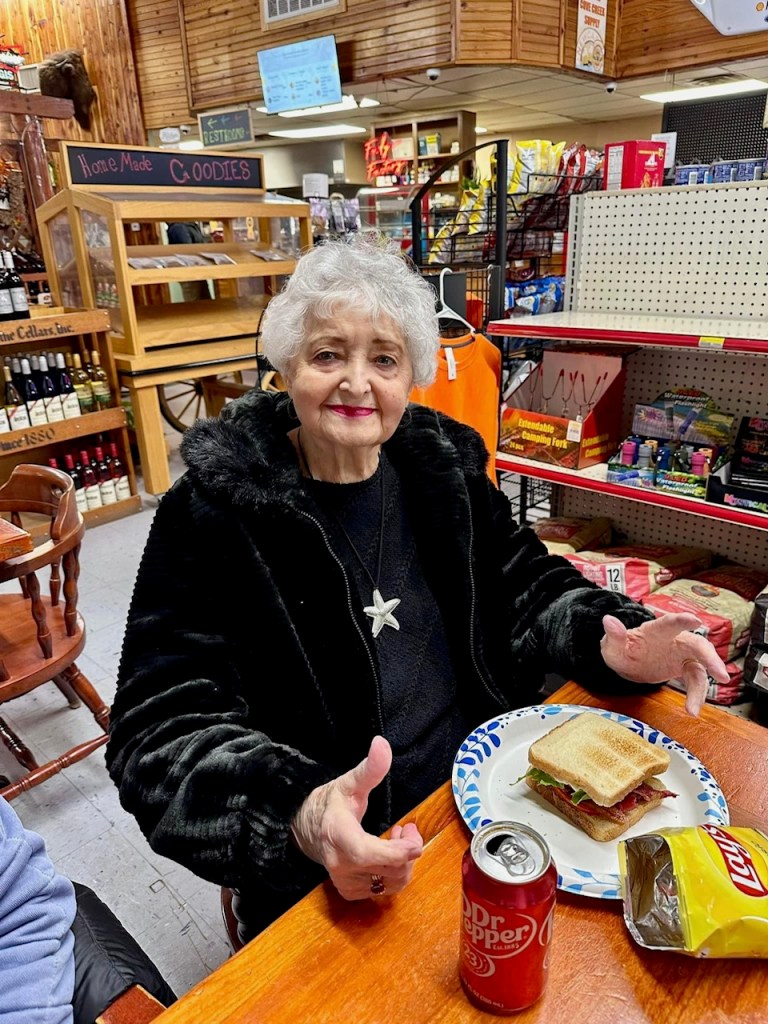
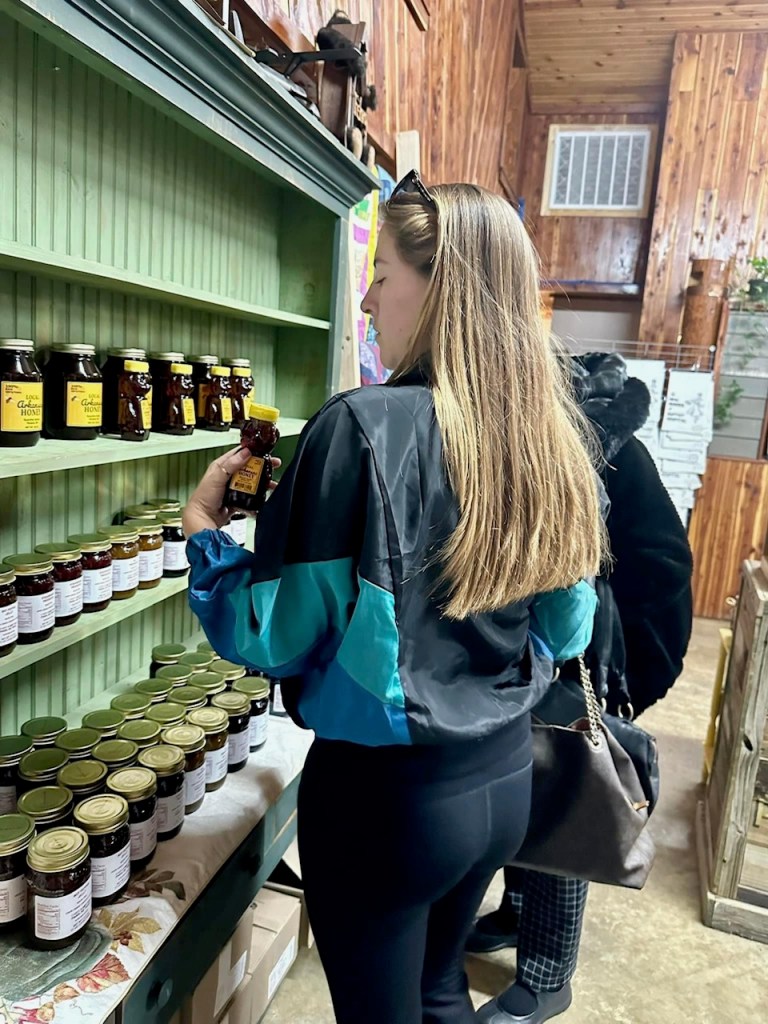
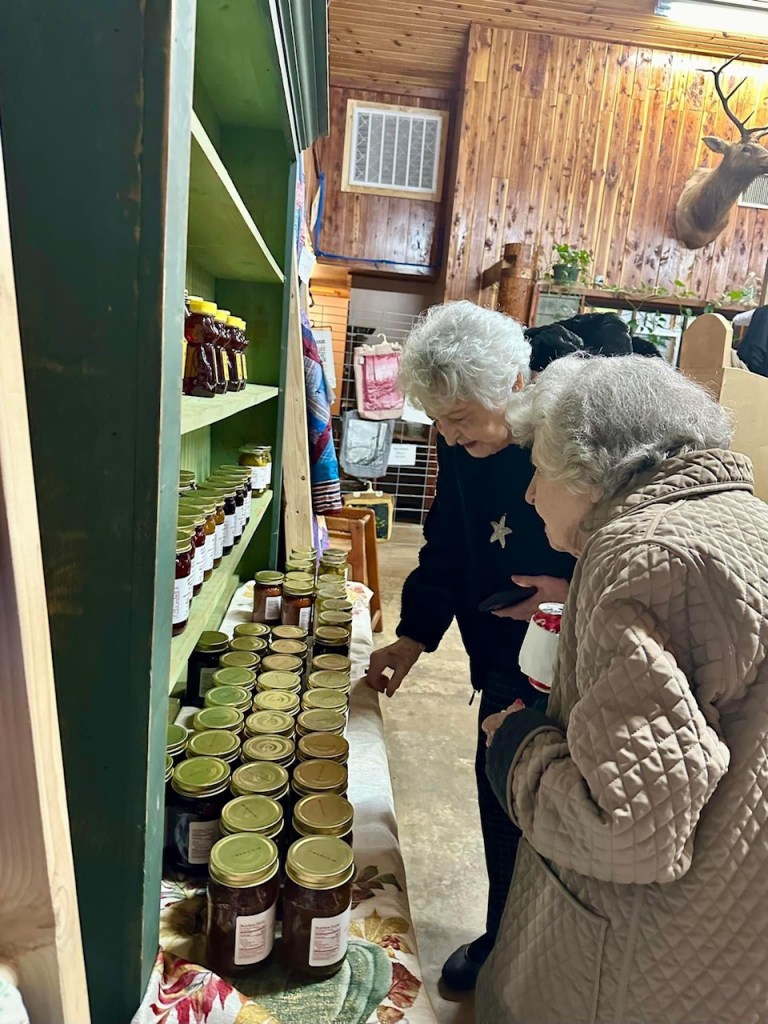
Cove Creek Country Store, located just down the road from the lodge in the mountain community of Corley, serves a variety of wonderful southern style sandwiches, including smoked bologna; bacon, lettuce, and tomato; and ham. Petit Jean meats are used for their sandwiches, which are amazing and a true taste of mountain culture! Besides their great lunches, Cove Creek Country Store has hand-made gifts, candies, jam, wild honey, t-shirts, and novelties for your shopping enjoyment or a glimpse into Ozarks crafts and foodstuffs.

“Shades of Spring”

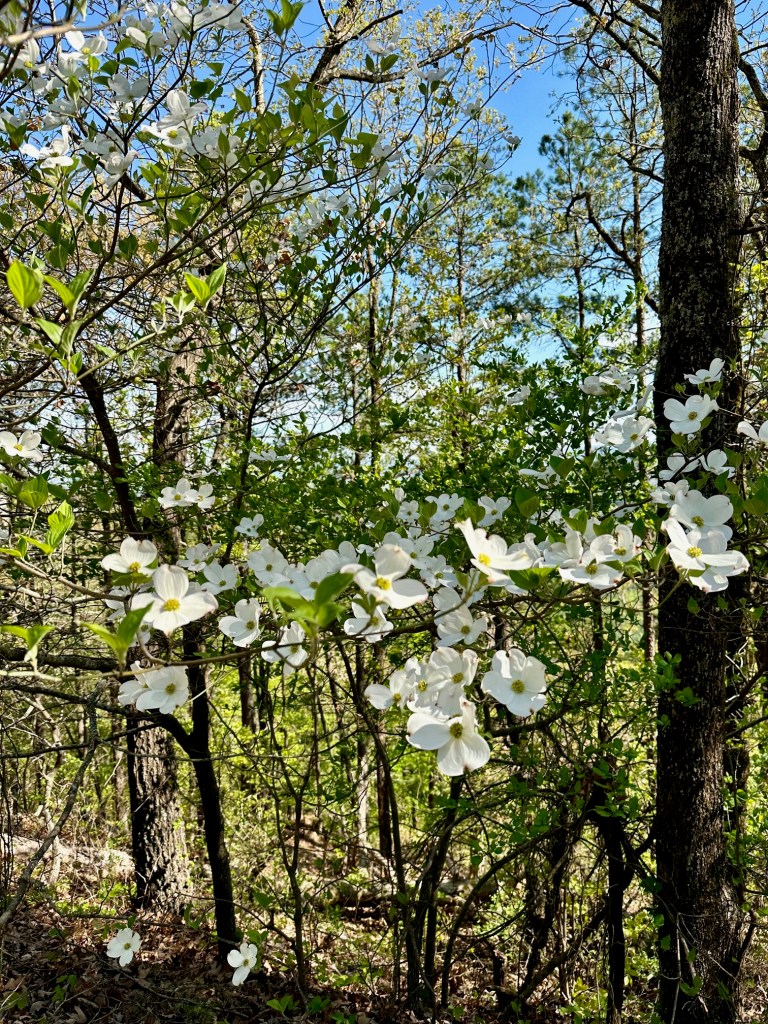
The dogwood is one of the first trees to bloom in the spring in the Ozarks. Along with the returning of migratory birds, the dogwood is a sure sign of spring on the mountain!

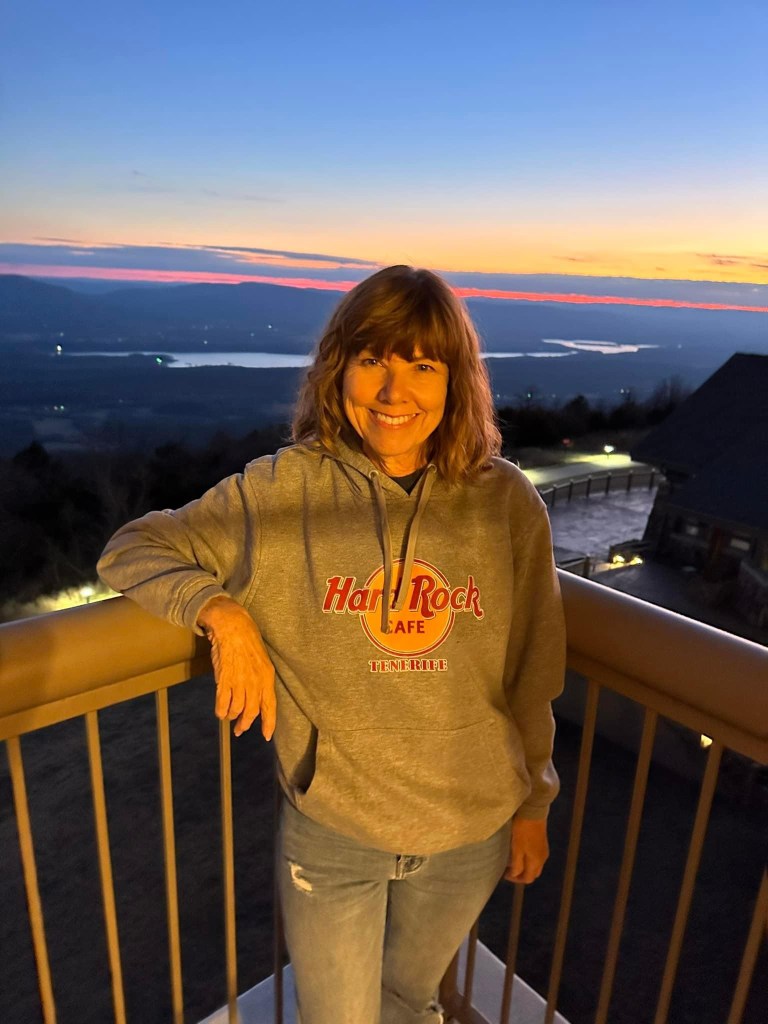
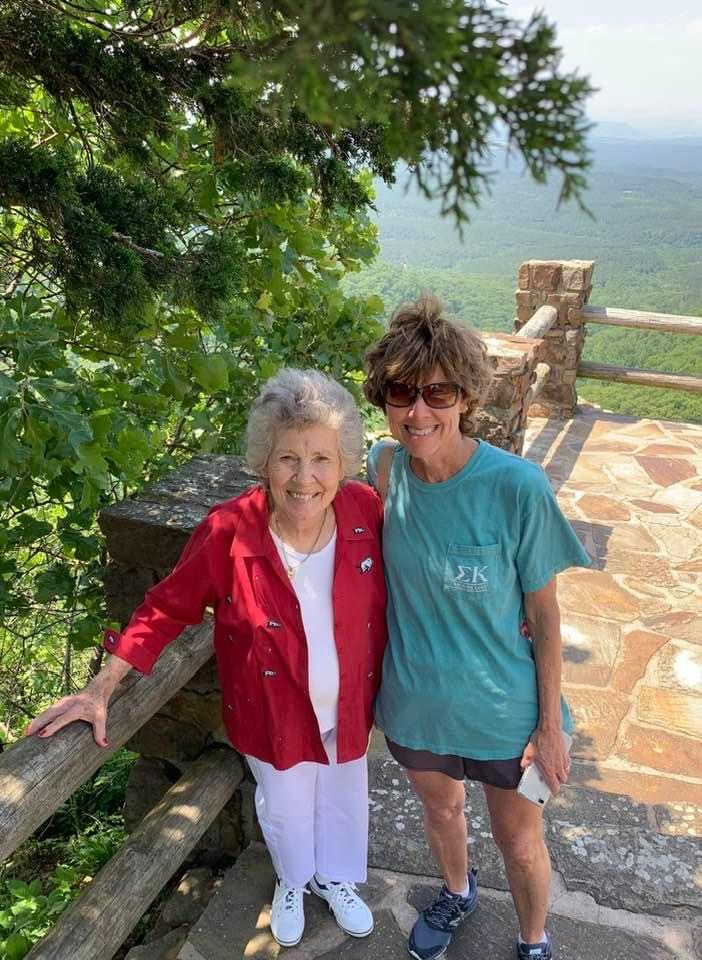
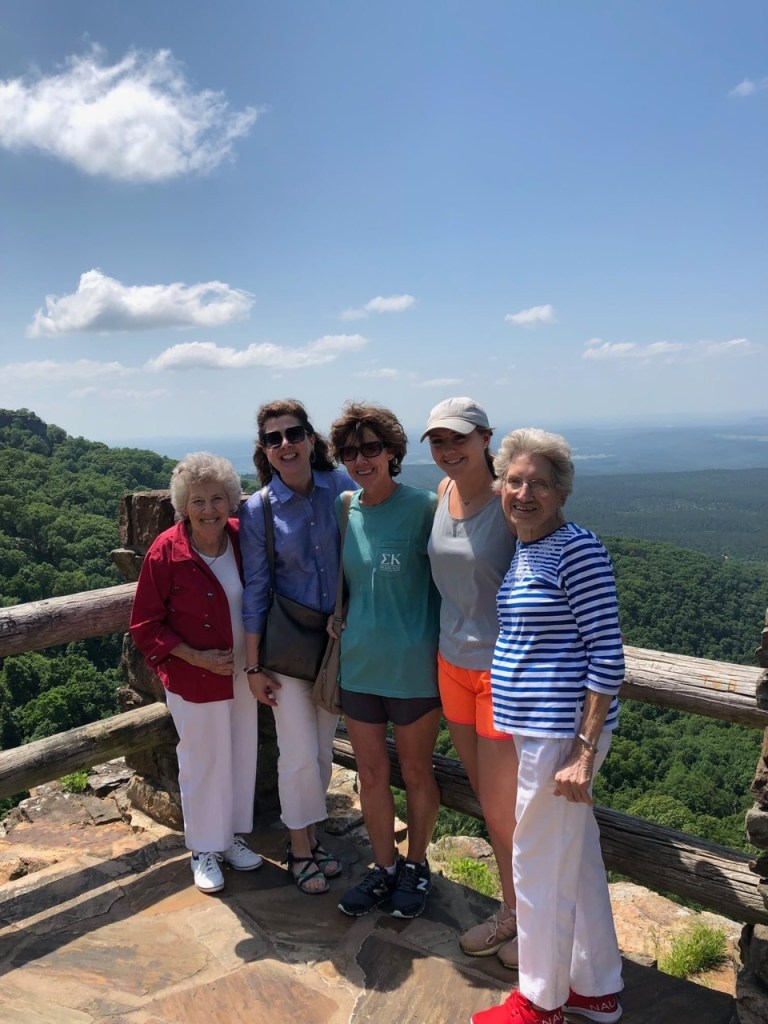
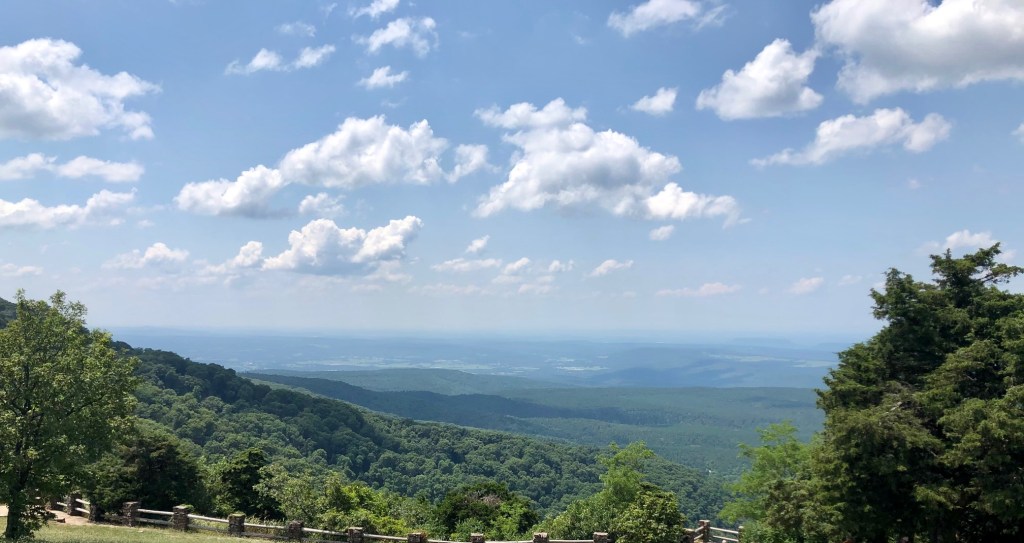
So many shades of green! I love standing at one of the many overlooks on the mountain, to gaze at God’s creation! Pictured with me here are beloved family, whose roots grow deep in this mountain!

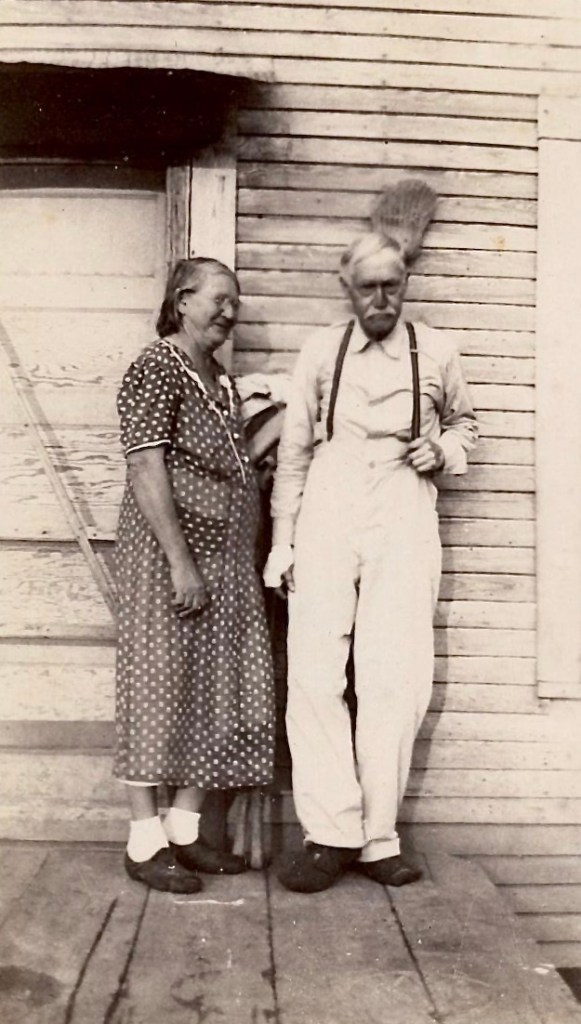
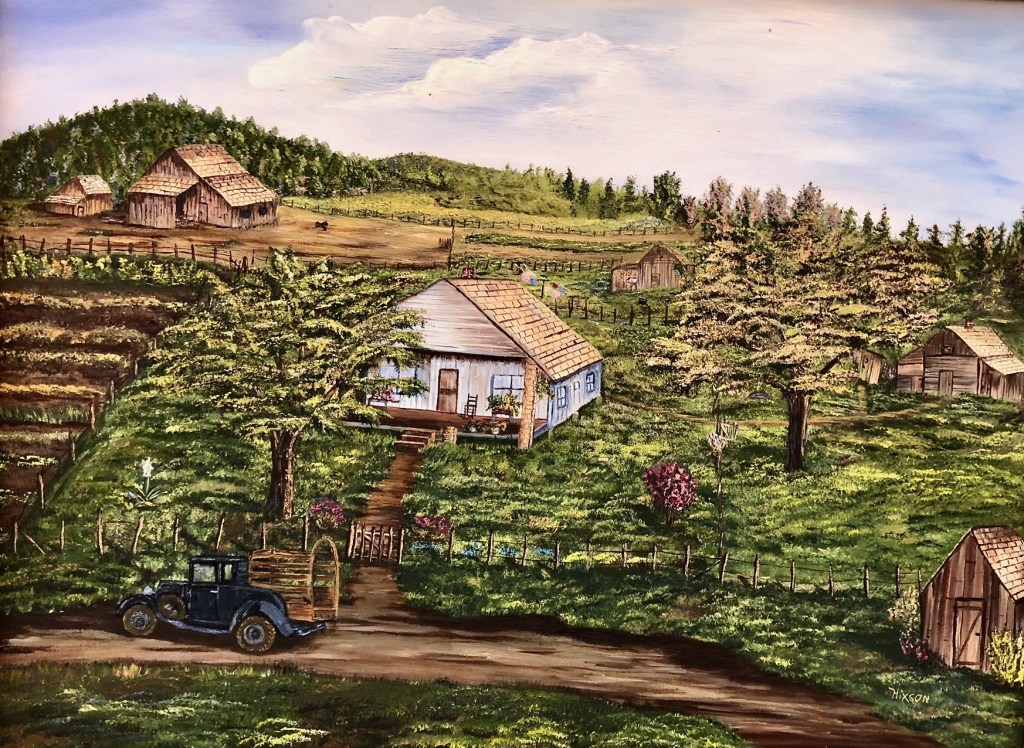
My great grandparents, Will and Corelia (“Cordie”) Apple, pictured here, were homesteaders on Magazine Mountain in the late 1800s and early 1900s.

This painting by their granddaughter Mary Apple Hixson, shows the Apple homestead from around 1940.

“A Mountaintop Summer”

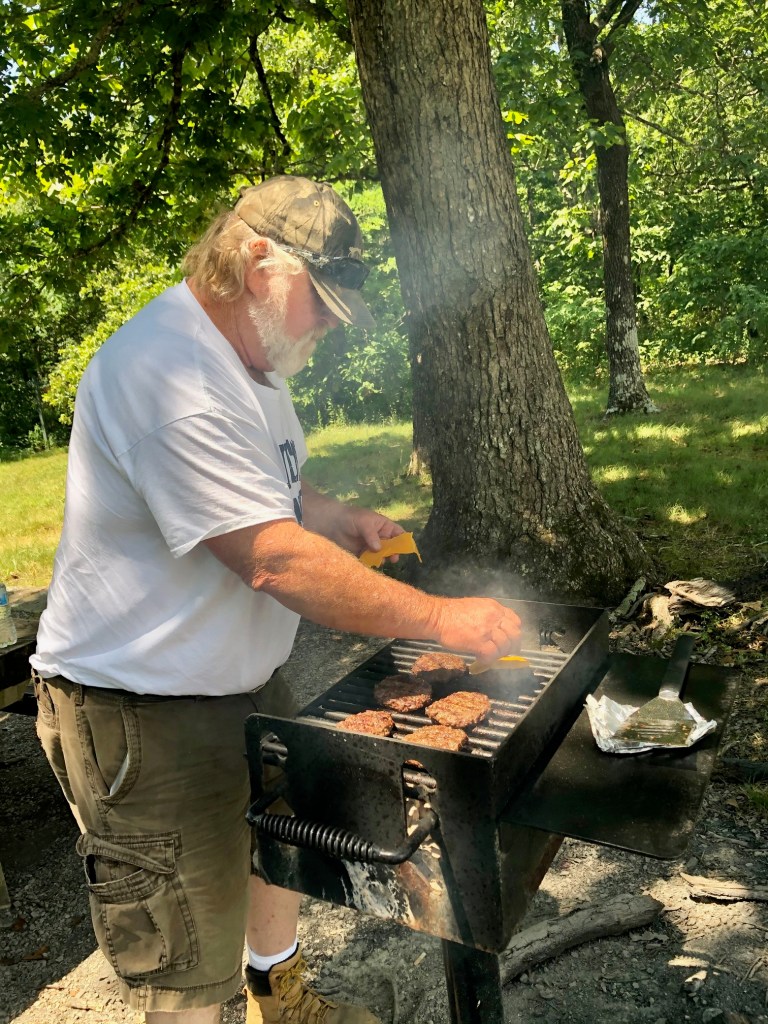
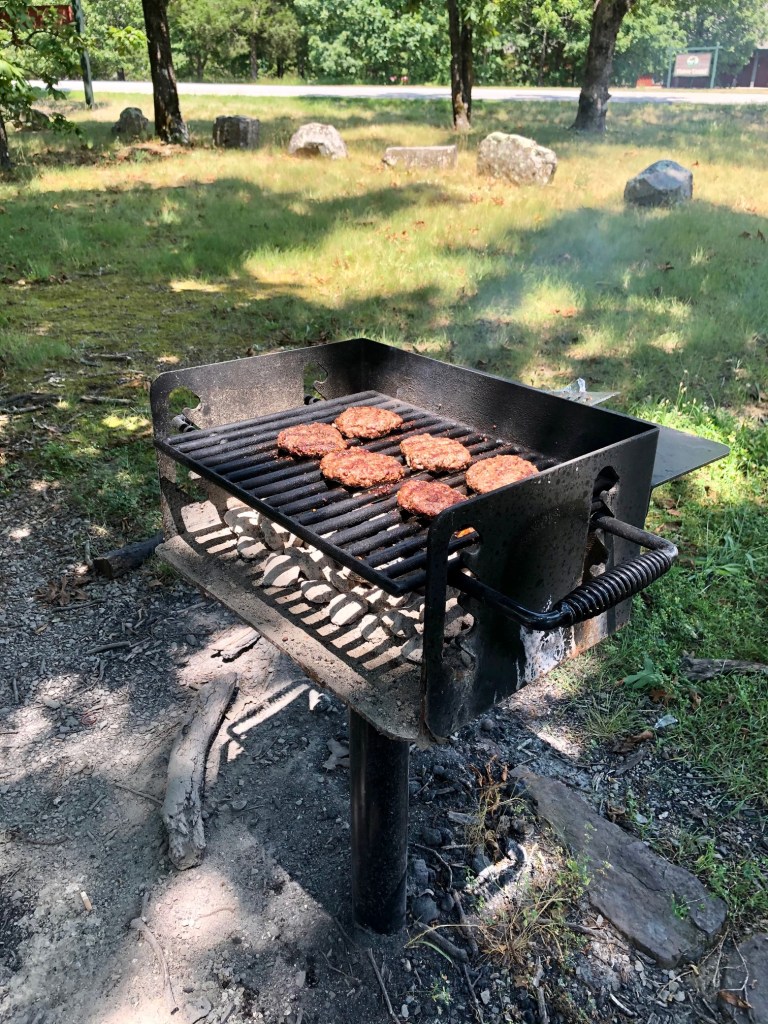
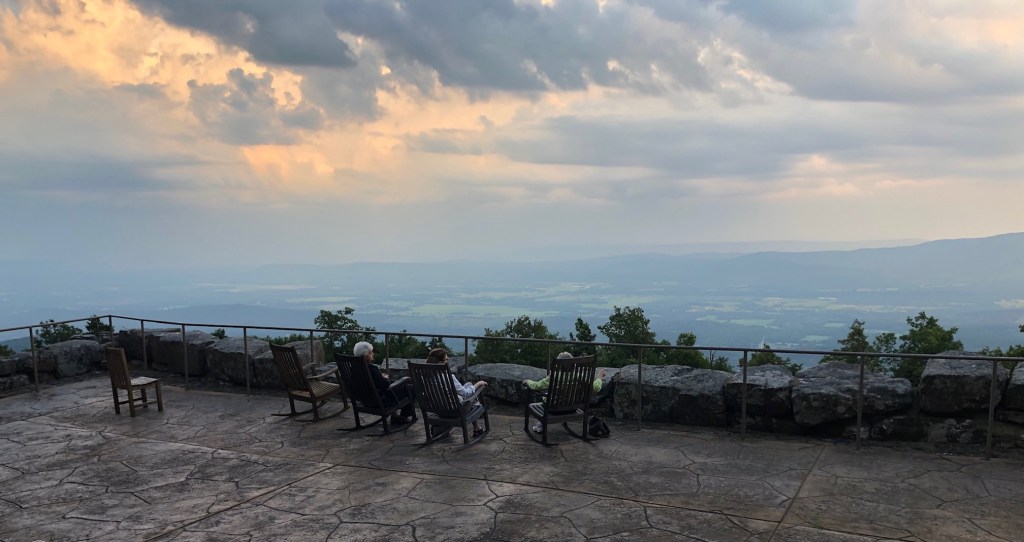
Summer is the perfect time to fire up the grill at one of many camping and picnicking spots on the mountain to choose from. With the temperatures on the mountain steadily around 10 degrees cooler than in the towns and cities below, it’s a good place to escape some of the heat and enjoy the serenity of the mountainscape.

Our family looks forward to these peaceful times relaxing together in the rocking chairs at the lodge in the beauty of the sky and valley scene on a summer evening.

“The Golden Fun of Fall”

Autumn on the mountain is: taking in the majesty of breathtaking color on the trees; having fun exploring in the newly-cool weather; drives to see places you’ve heard of or want to revisit; and dipping toes into the icy waters of Shoal Creek on those unexpectedly warmer fall days!

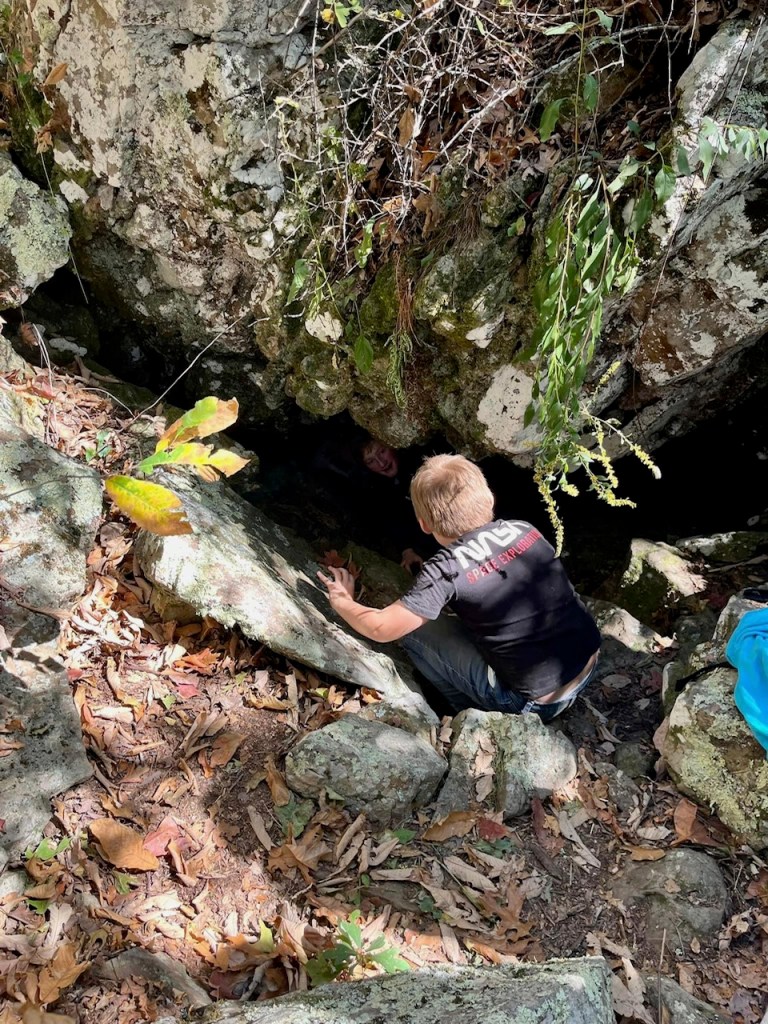
There are lots of wild caves on the mountain! Use the buddy system, let someone know where you are, and watch out for bears or snakes…

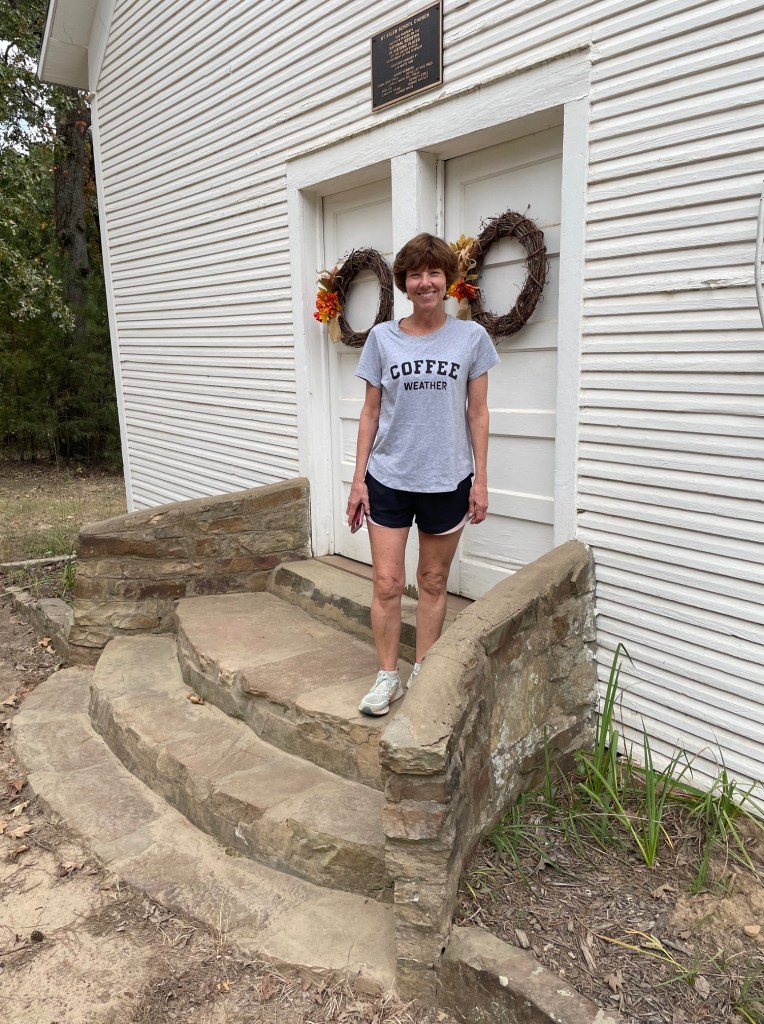
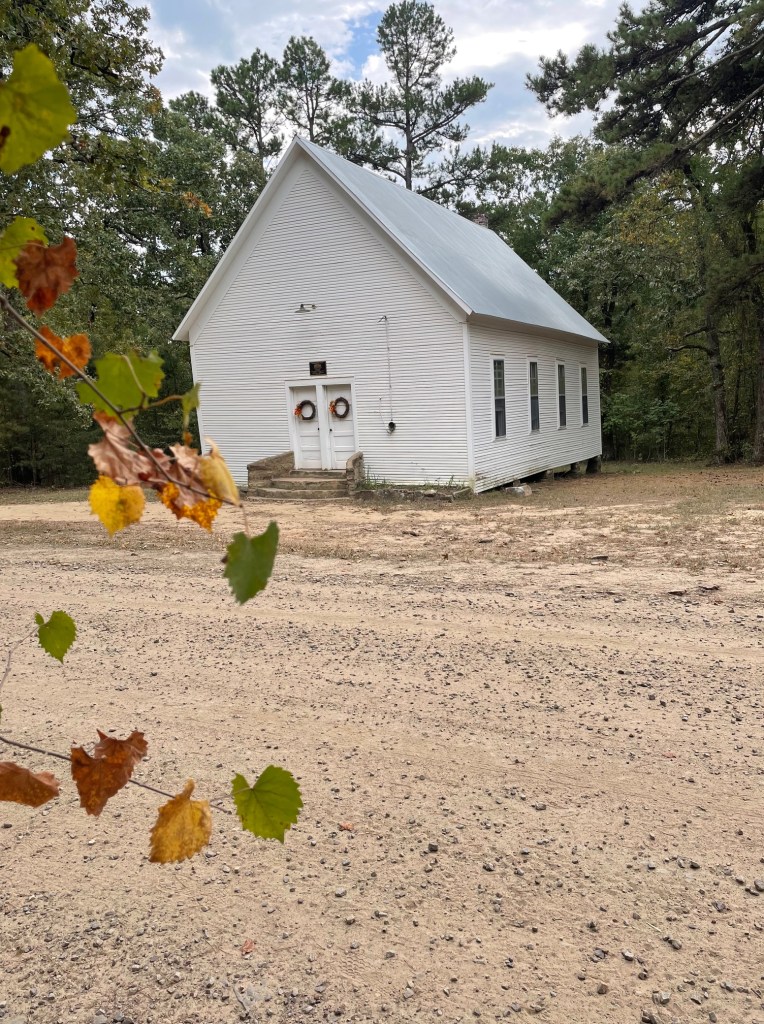
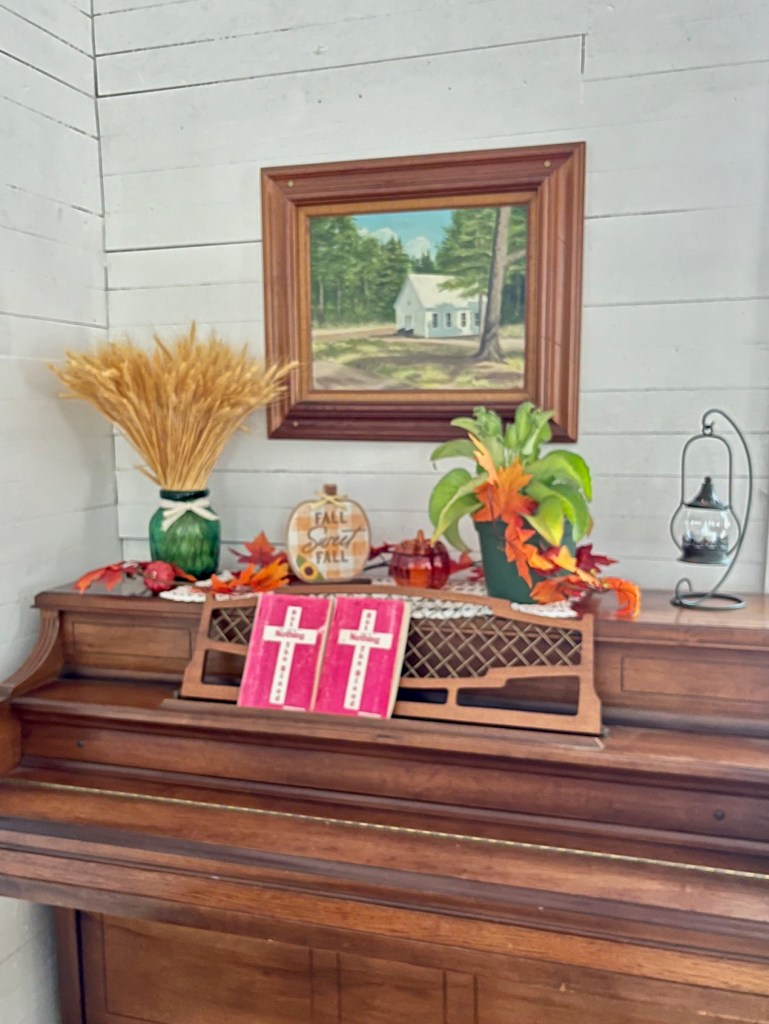
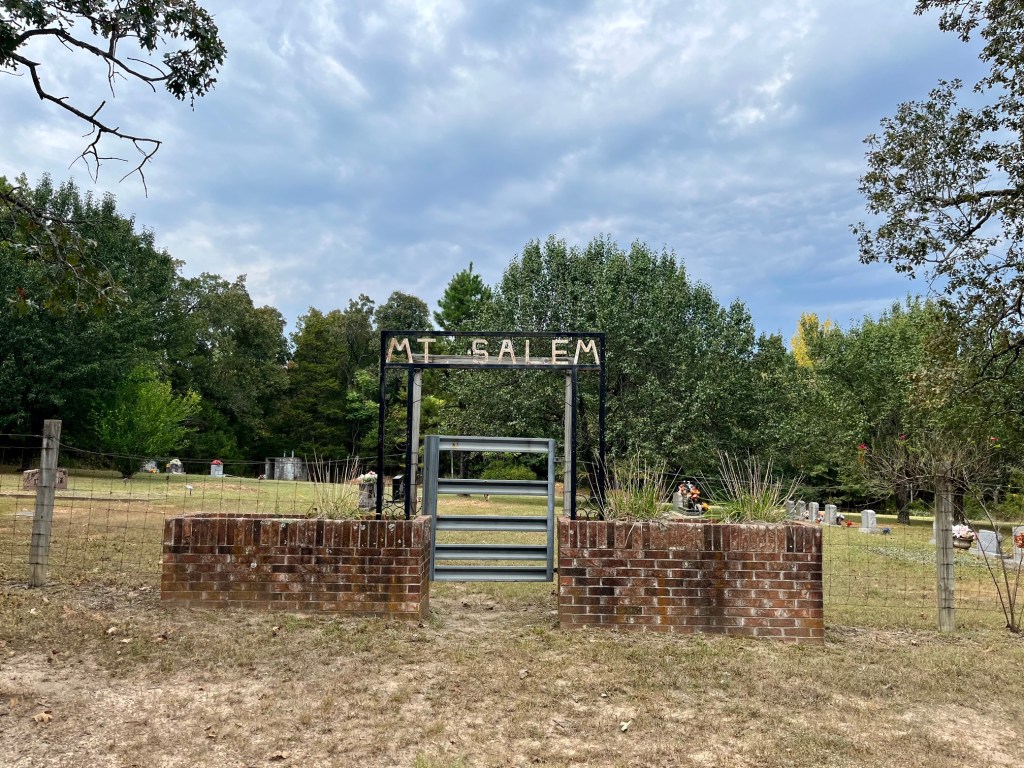
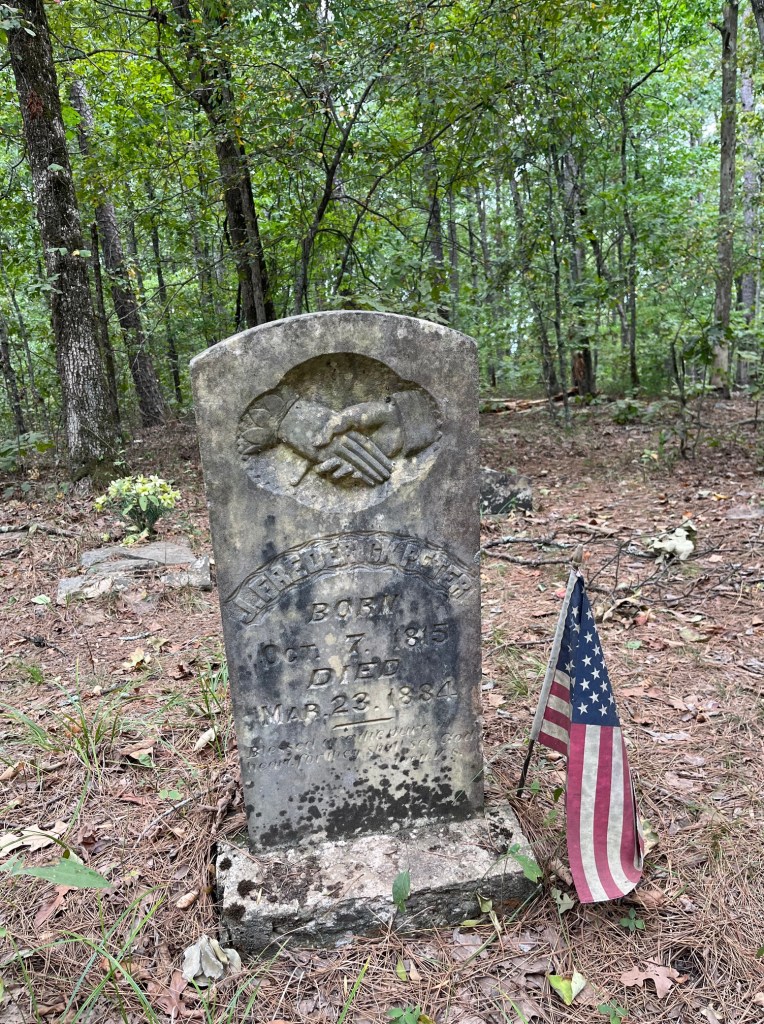
The beautiful and historic Mount Salem Community Church on Mount Magazine is now on the National Register of Historic Places. The church doubled as a one-room school house in it’s early history. Mount Salem Church continues to welcome those who wish to attend services held on holidays or special occasions. You’ll feel the kindred spirits of Christians who’ve gathered to praise God and worship here since the late 1800s!

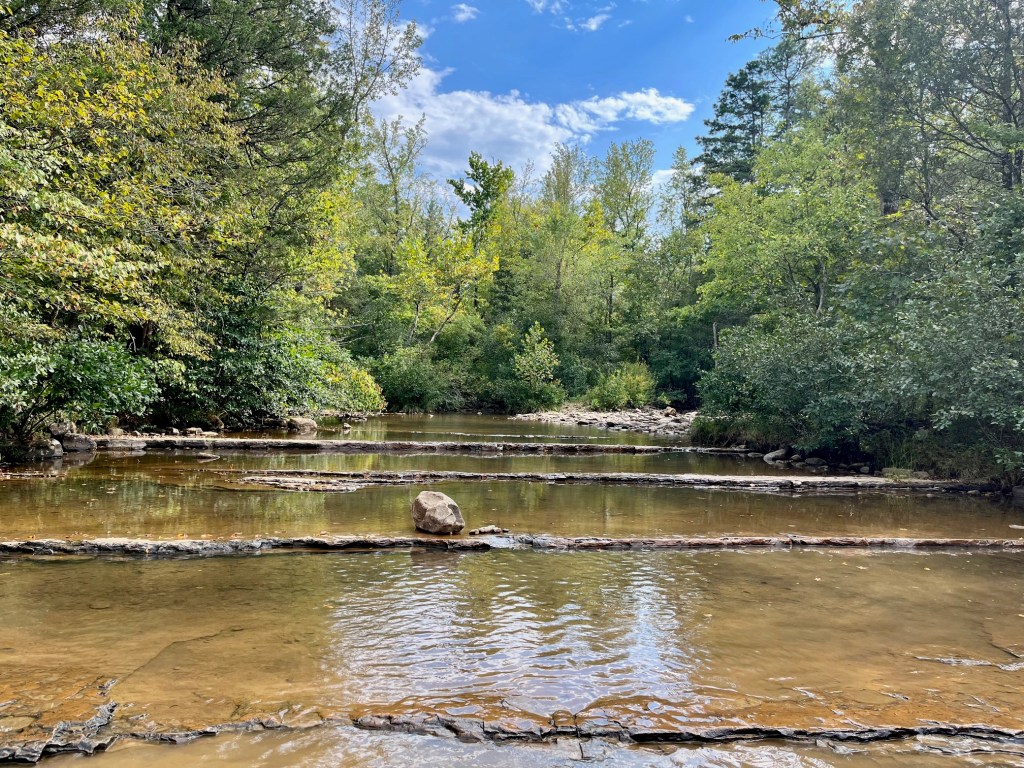
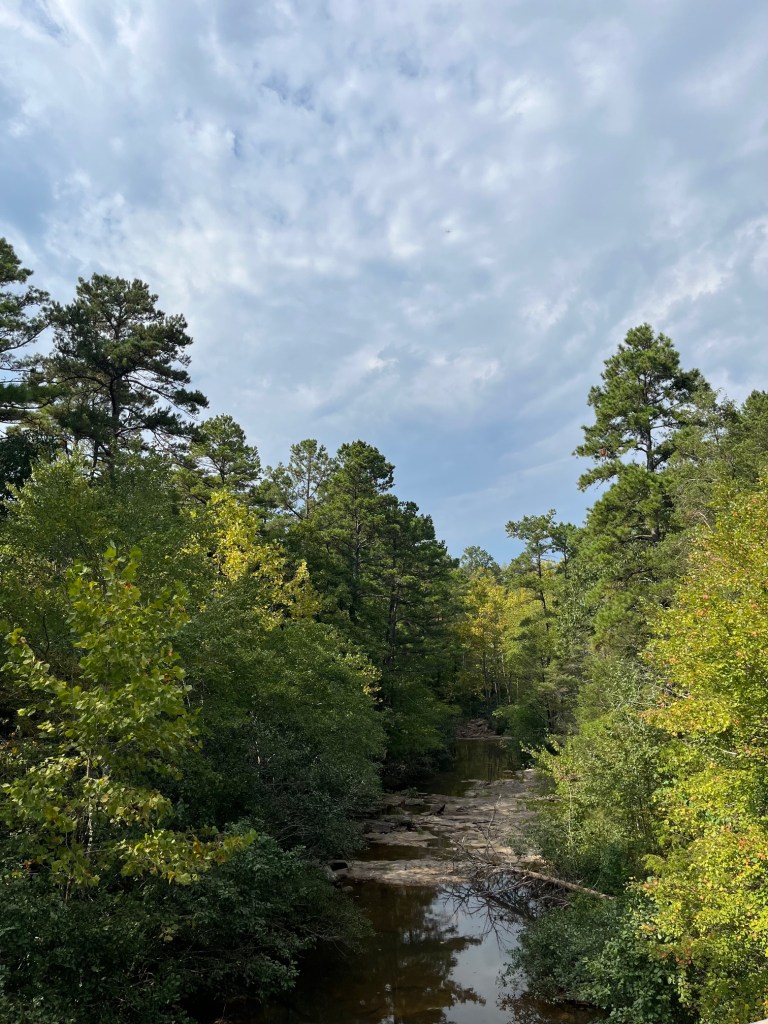
Shoal Creek on Magazine Mountain is a fun and relaxing destination!

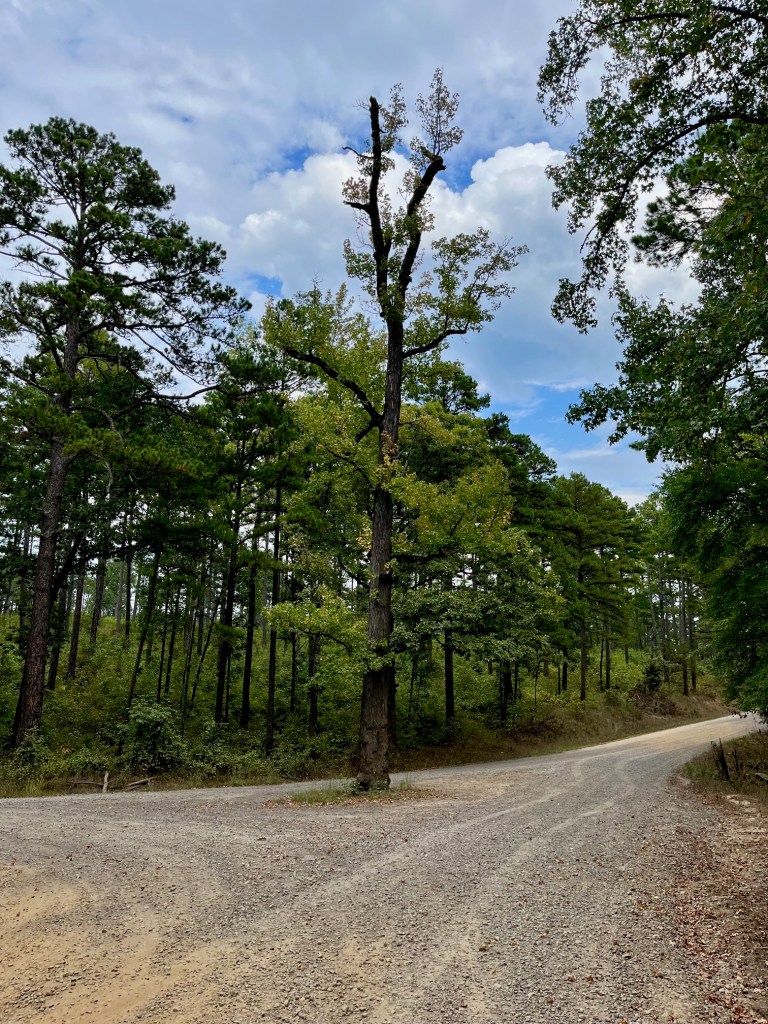
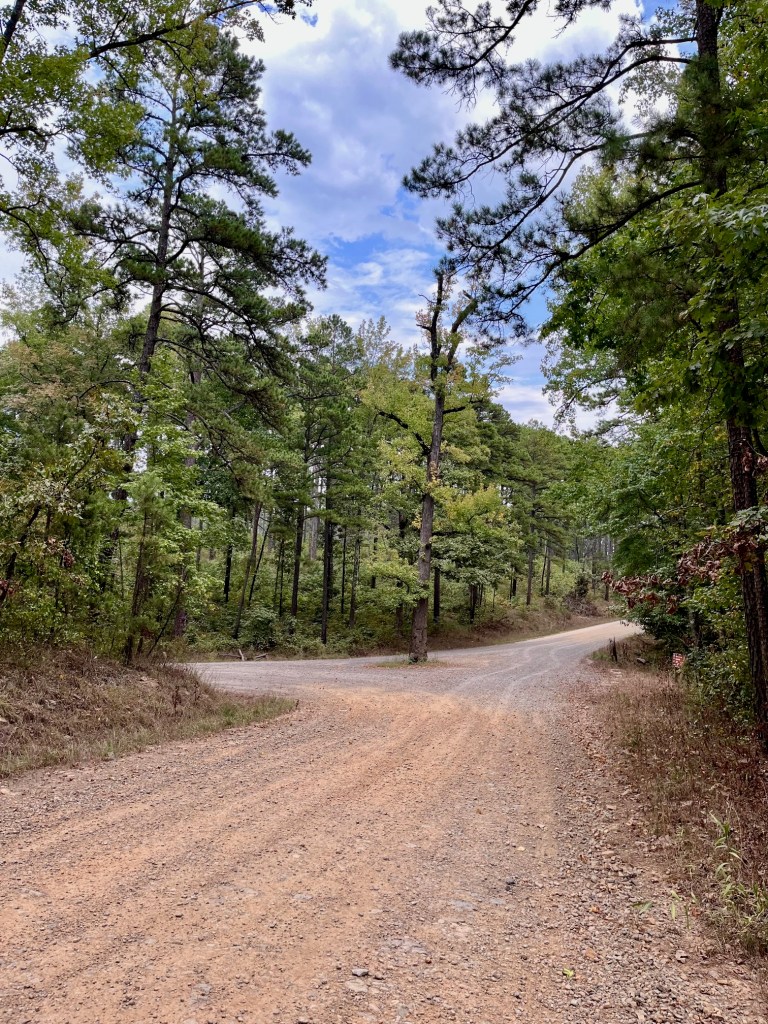
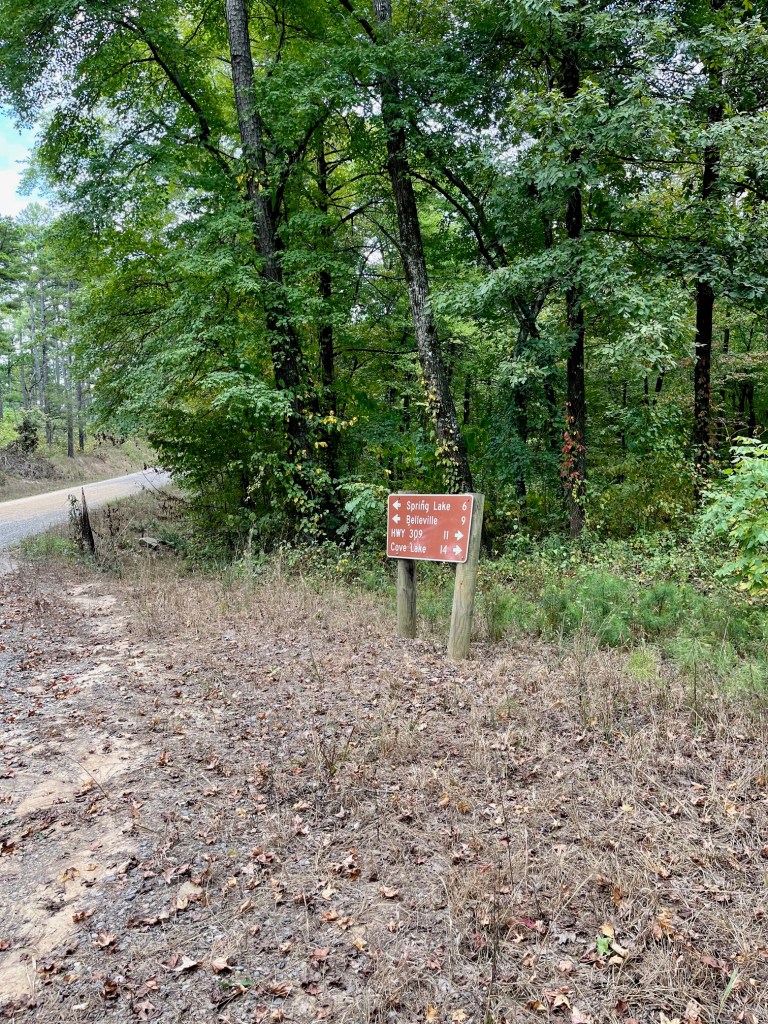
The Old Gum Tree, as it is known by local residents, has stubbornly held down roots since the early 1900s. Before telephones on the mountain, in the 1930s and 40s, notes were pinned by nails on a table that encircled the gum tree. “The Apple family will be at Spring Lake today until 4:00 or so” one might have read; or “My coon dog is missing. He answers to Bo.” The tree continues to be a landmark betwixt the intersection of these country roads.

“In Any Season…”

And that’s a little bit of the reason this mountain is so special, to so many!

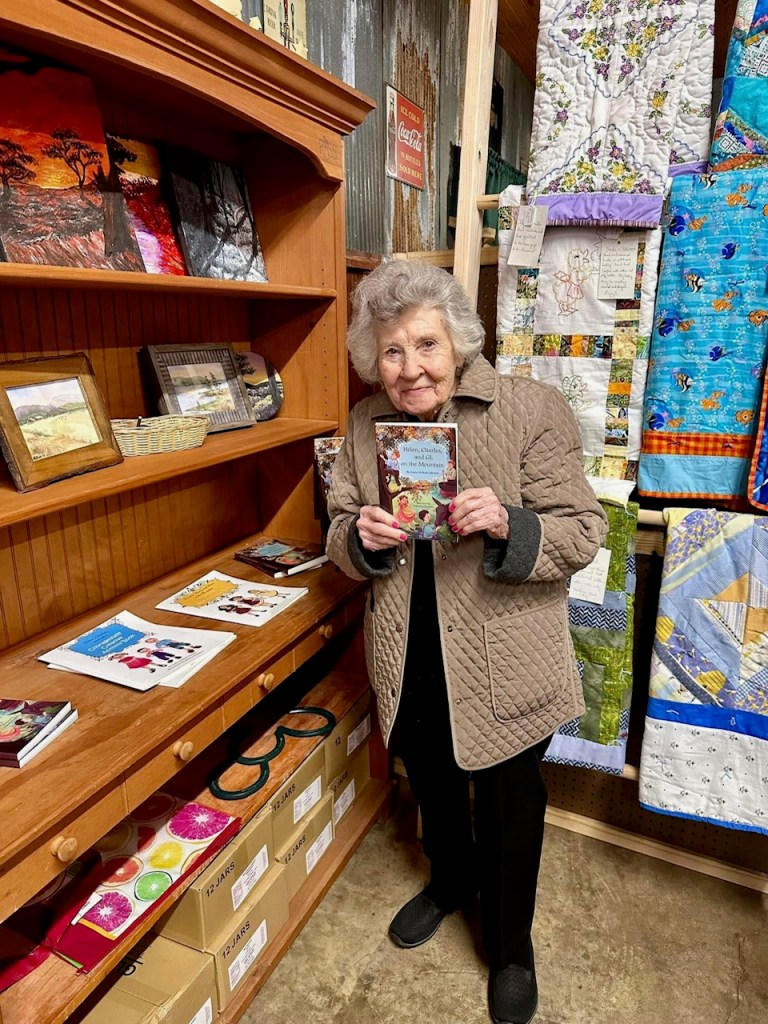
Delve into the wonderful cultural history of Mount Magazine by visiting my website to learn more about the “On the Mountain” books (based on true stories of the Will and Cordelia Apple grandchildren, and for all ages of reader) that I’ve written, as well as a history club for kids and curriculum guide for teachers and parents!

Day Trip: Finisterre and Muxia

My daughter and I booked a day trip from Santiago de Compostela, Spain to Finisterre and Muxia after finishing the Ingles Way of the Camino de Santiago. We wanted to see the “End of the World” (as the ancient Romans thought Finisterre and Muxia were)!

Our 9 1/2 hour bus tour, booked through Get Your Guide, was a lot of fun! I recommend it to anyone staying for a few days in the city of Santiago!

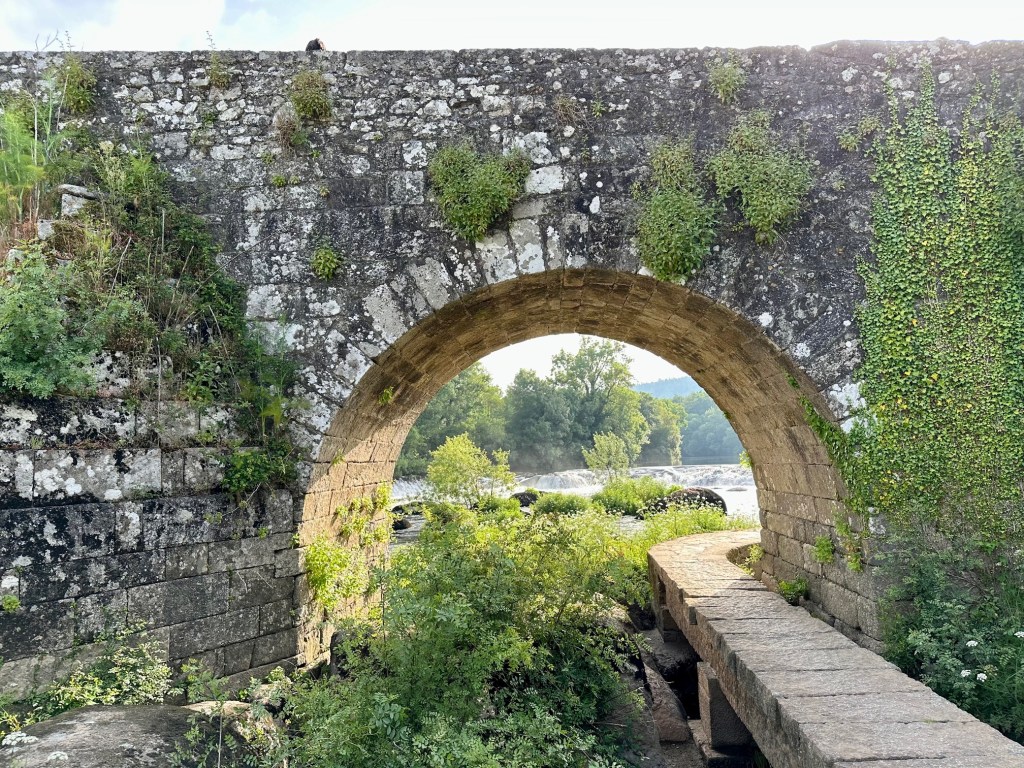
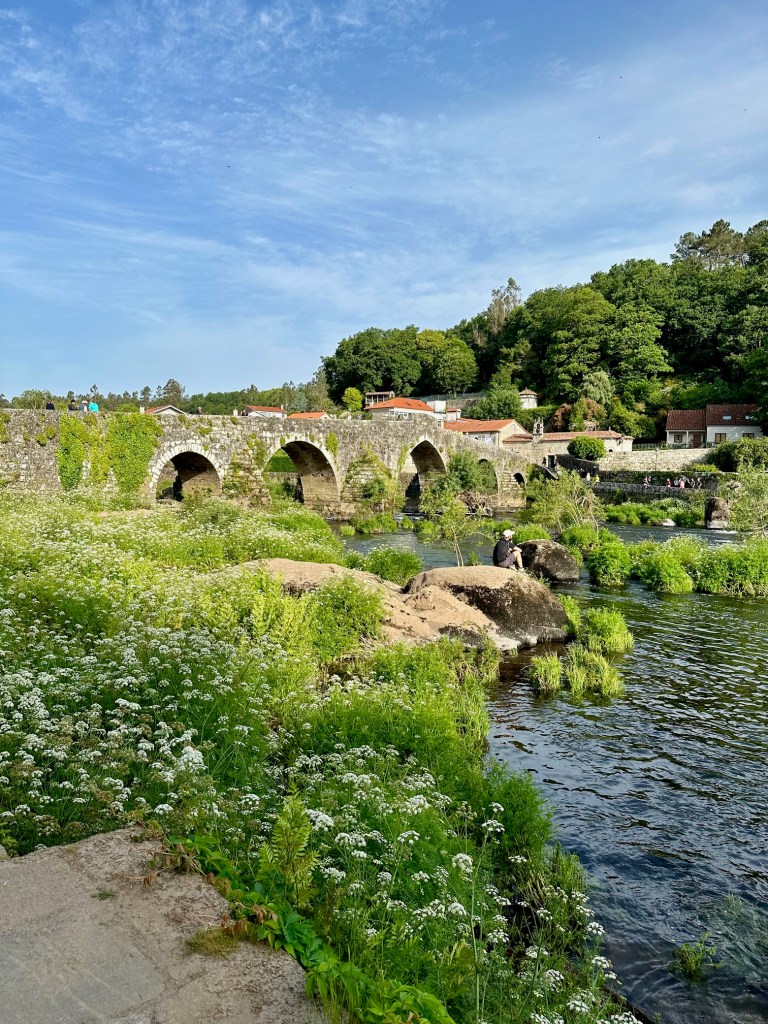
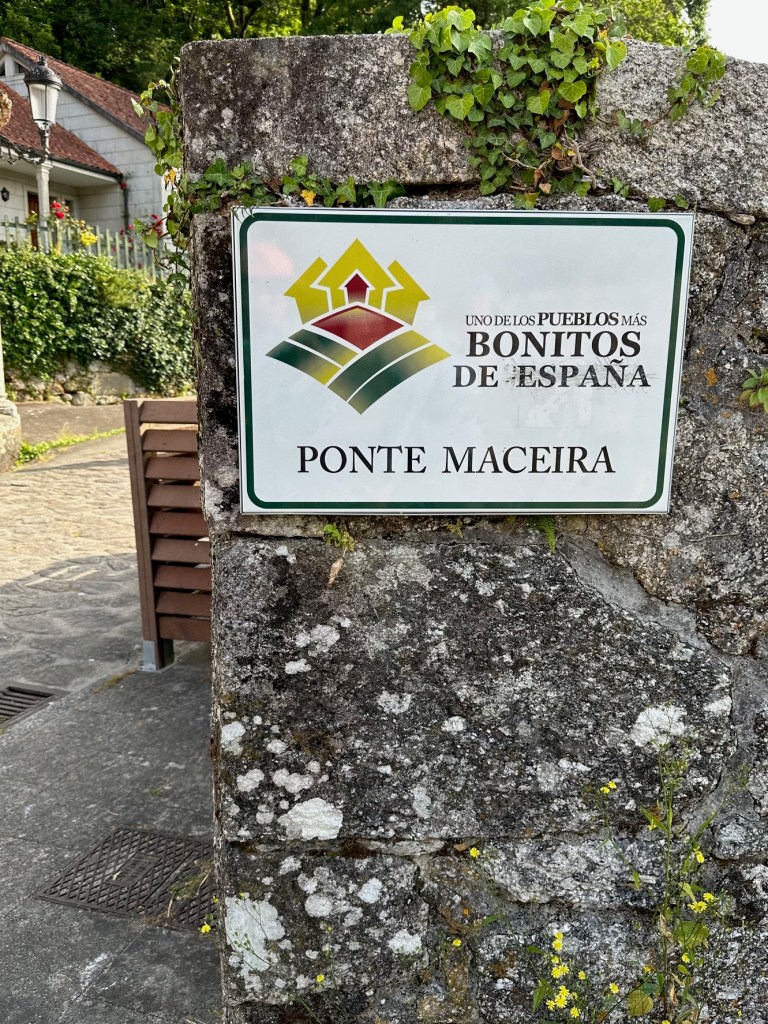
Our first stop of many that day was at a medieval Roman bridge in the town of Pontemaceira. It was fun scampering around the rocks amidst the ancient pillars under the bridge!

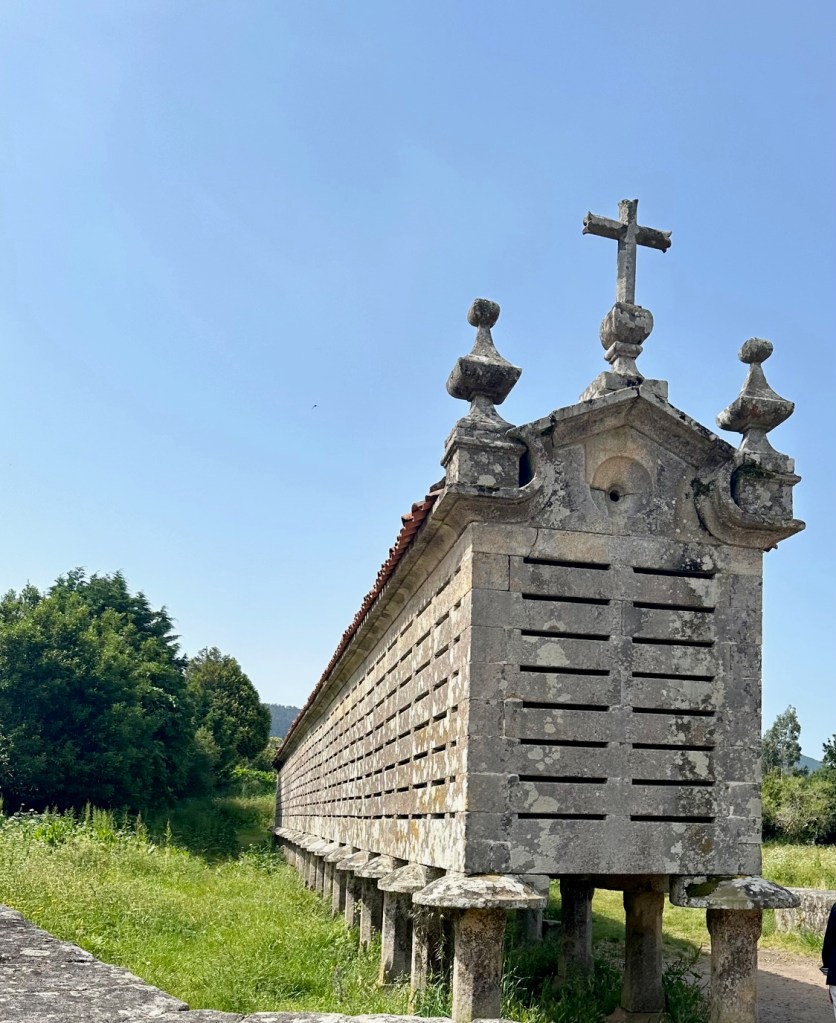
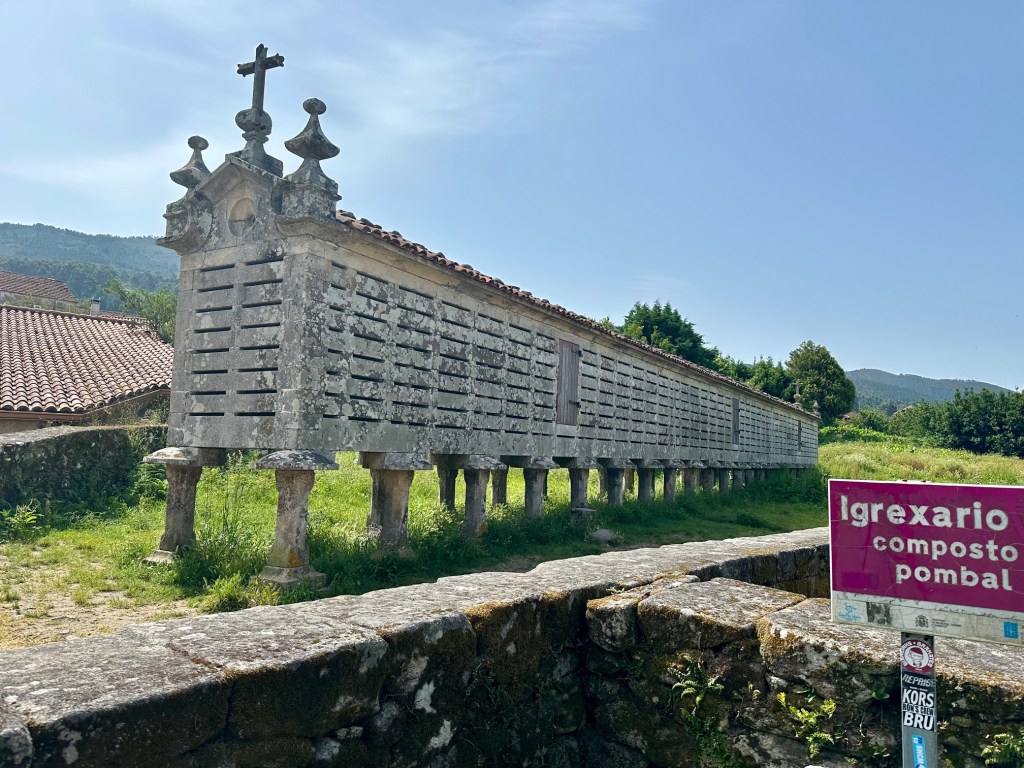
The next stop was in the tiny rustic town of Carnota, where the longest horreo in all of Spain can be found. (An horreo is a traditional structure in Spain, and especially in Galicia, that was used to store grain and corn.) This Horreo was built in 1760 to 1783, in two stages in a competition with another small rural town, and is 108 ft long!

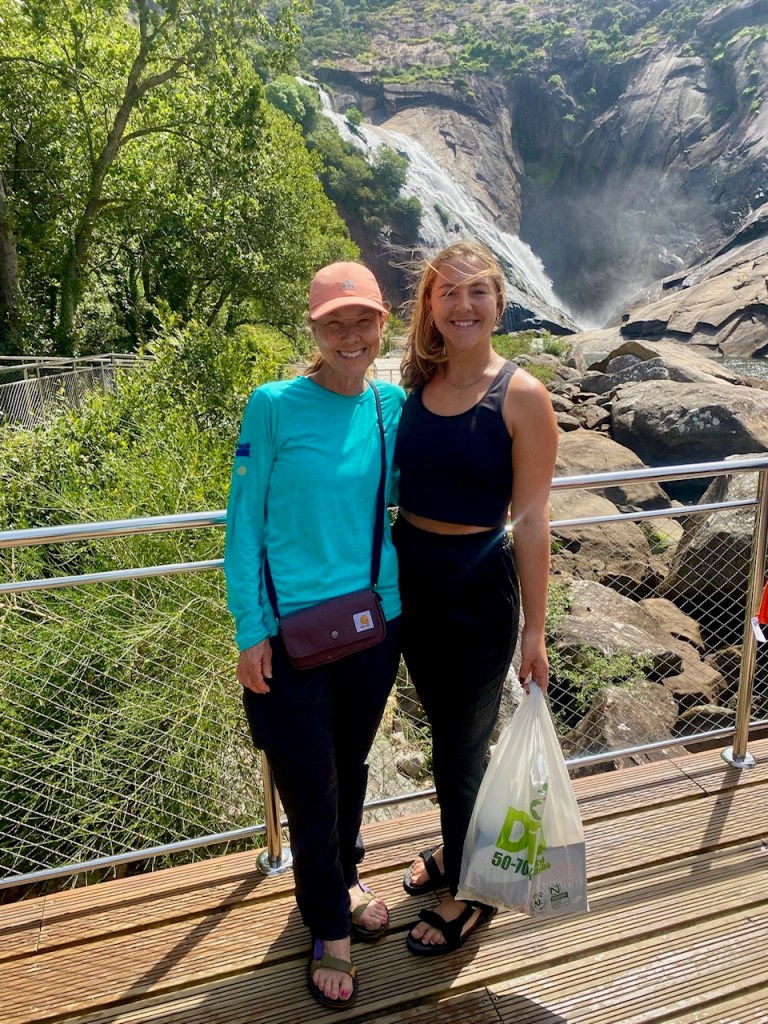
Next was a stop at the breathtaking Fervenza do Xallas, the only waterfall in Europe, we were told, that empties directly into the ocean. It was spectacular to see!

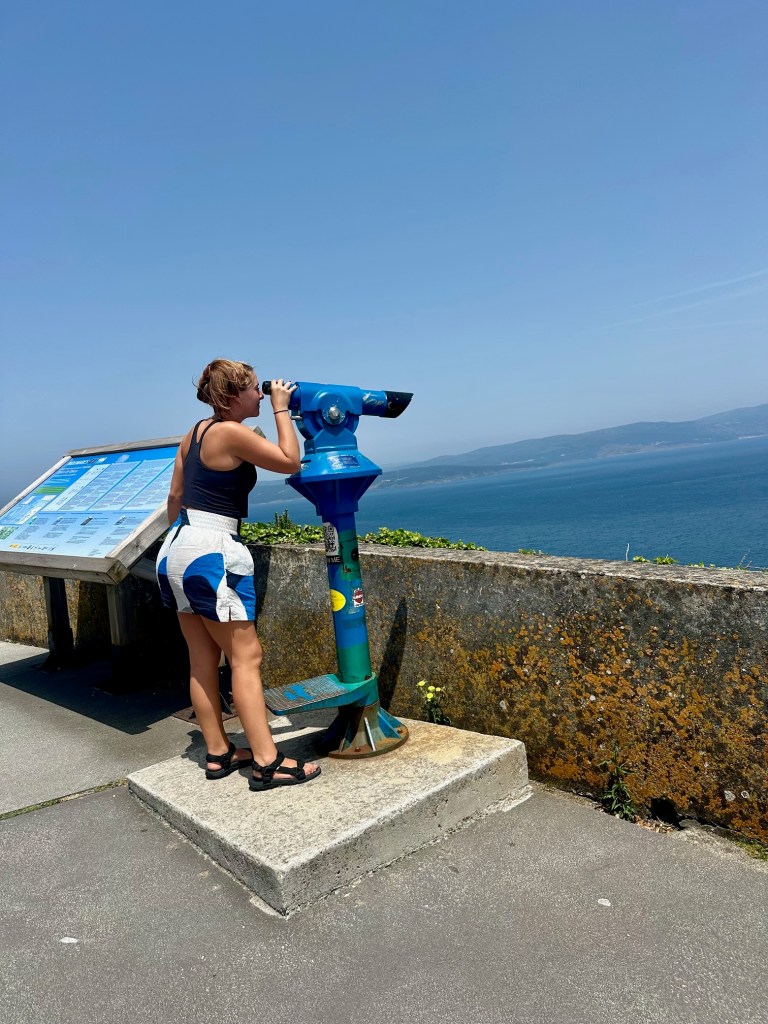
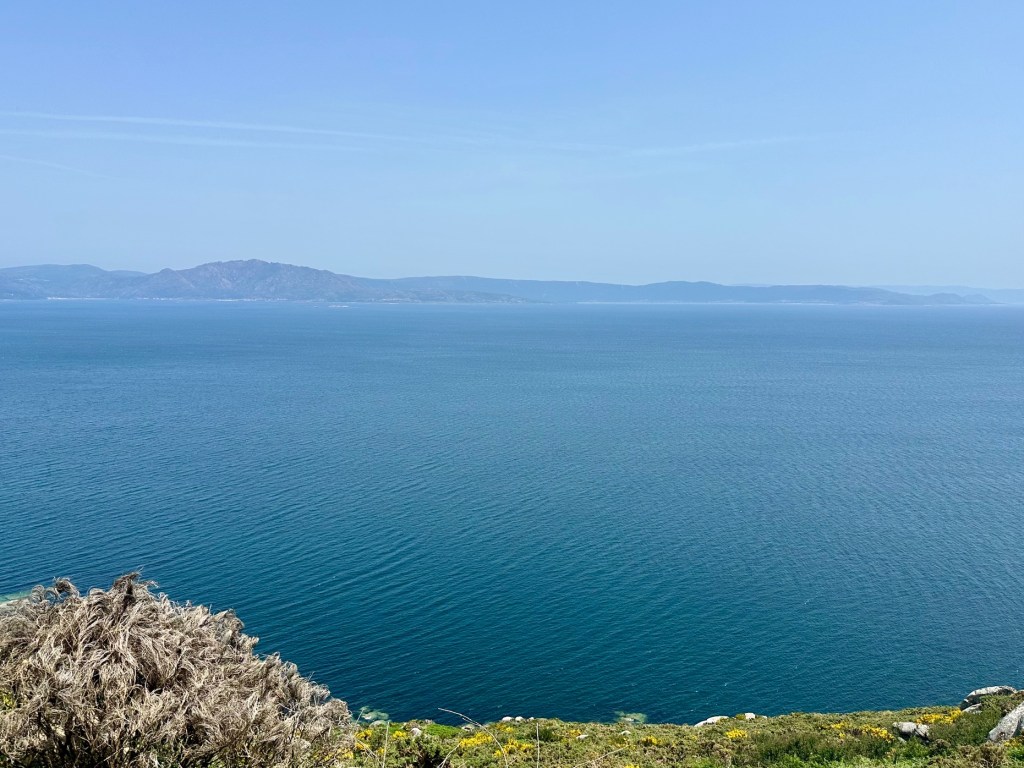
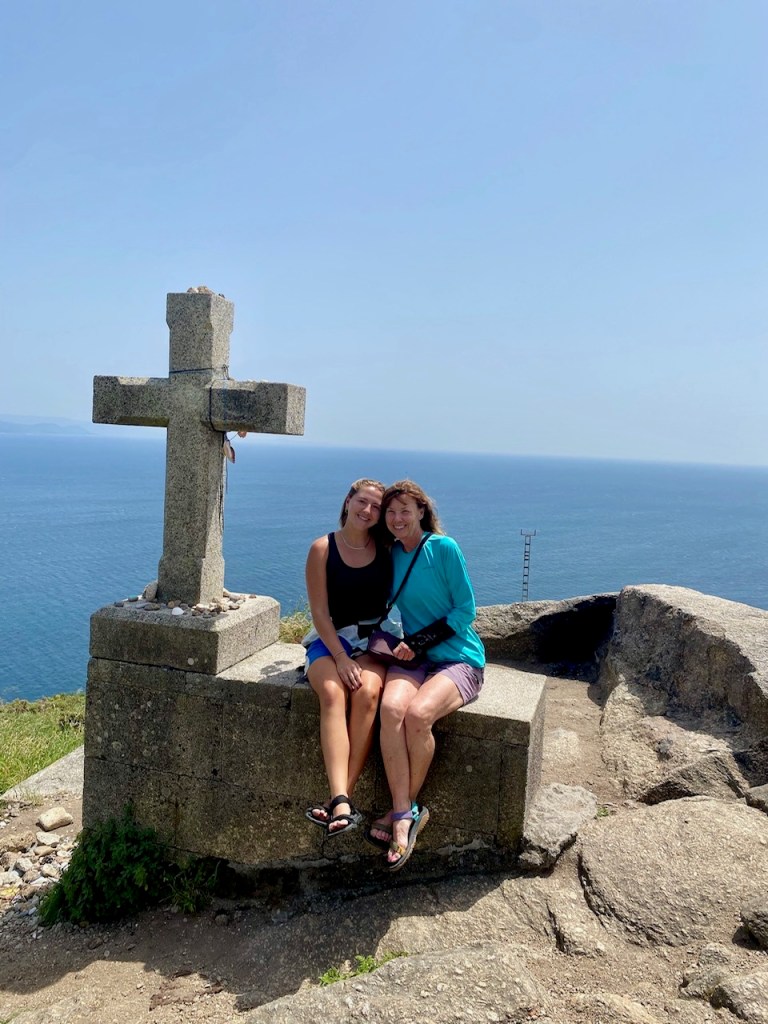
Then to Cape Finisterre (“Fisterra” in the Galician language)! Said to be the end of the world by ancient Romans, its name in Latin means “end of the earth.” We had lunch at a restaurant there in this beautiful picturesque setting of ocean meeting sky.

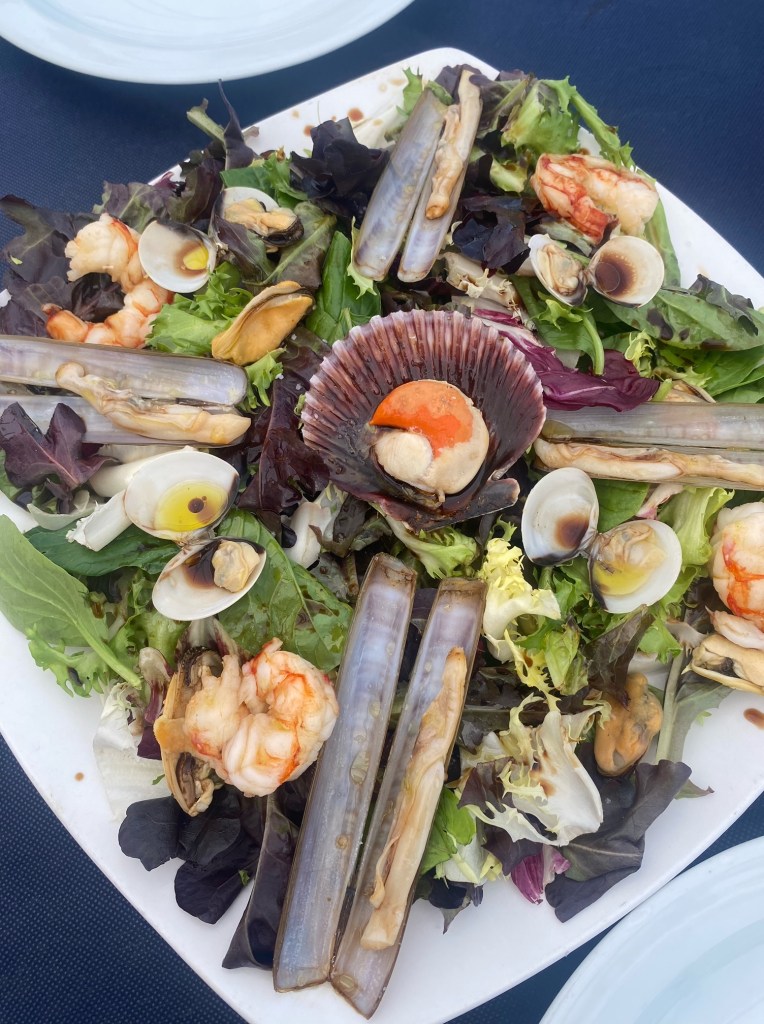
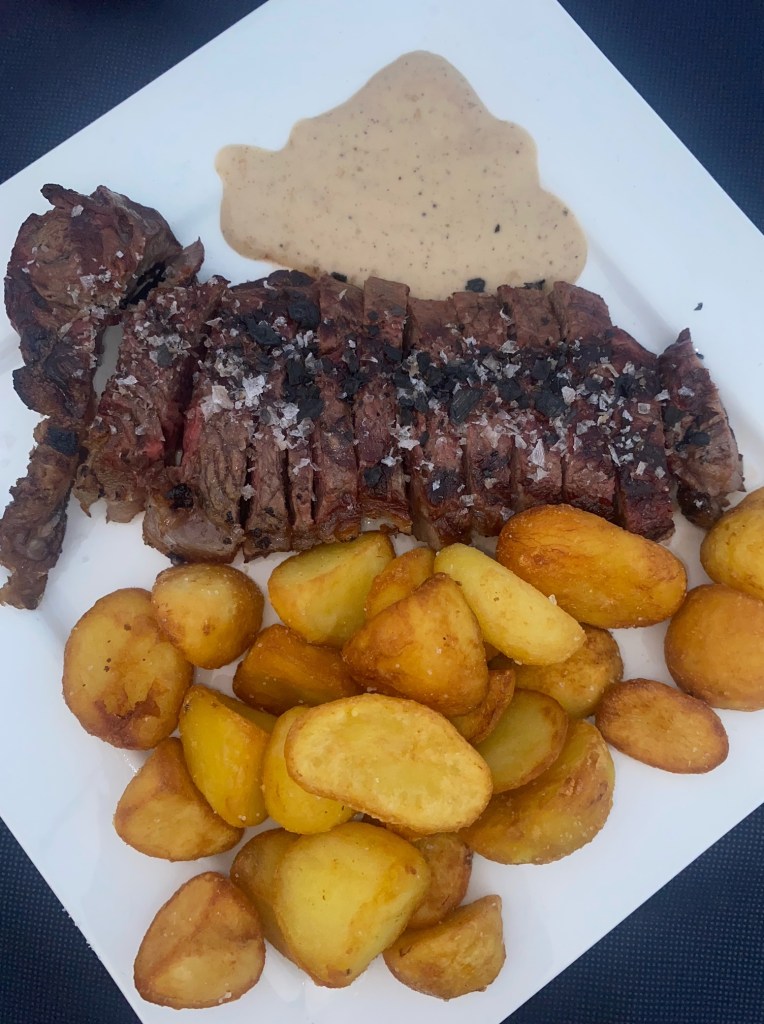
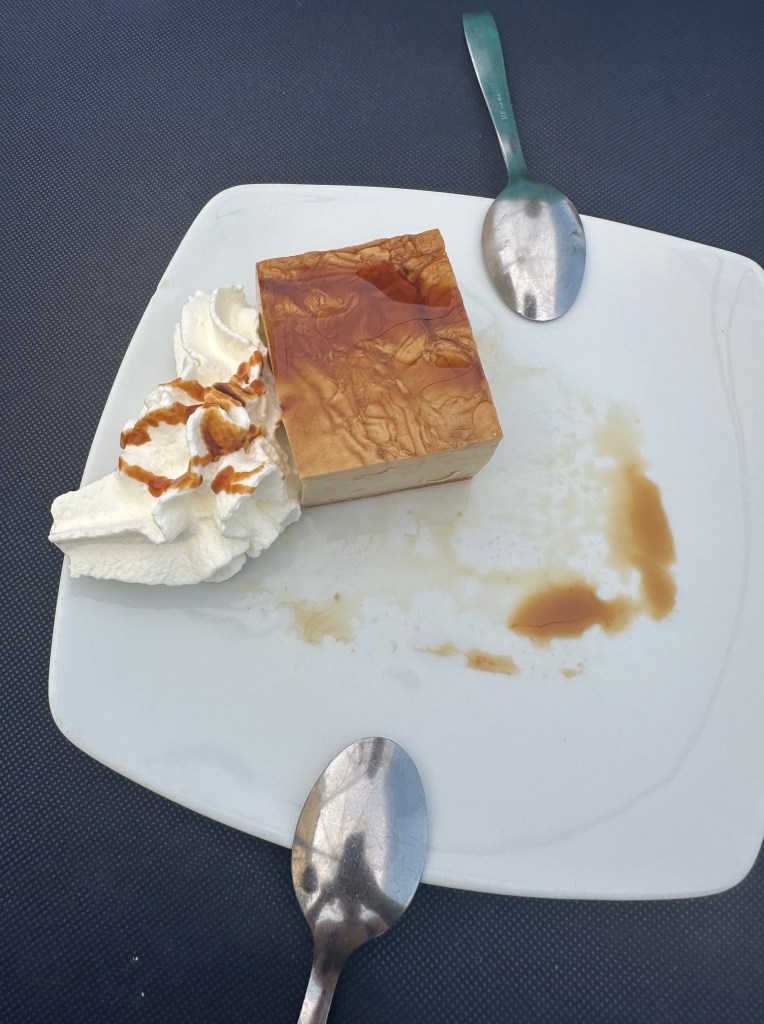
And oh, the lunch we had! The restaurant we chose was El Puerto—it was the one that our tour guide and bus driver had chosen, so we followed their lead. It was an amazing meal! My daughter and I, as usual, shared all dishes. The seafood salad was beautiful, delicious, and fun, as we tried an assortment of seafood atop the fresh garden lettuces. The huge salad platter included razor clams, clams, prawns, mussels, shrimp, and zamburinas, which are a type of small scallop about half the size of other scallops. All the seafood was excellent! We also had one of the best steaks I’ve ever had (with apologies to my husband who grills some really good steaks)! This ribeye was perfectly seasoned, tender, and had been brushed with coarse pieces of sea salt. There were perfect fried potatoes, so good! Our coffee-flavored flan, and coffee, finished afterward, we walked around the pretty harbor at the ‘end of the world’ until time to bus-ride to our next destination!

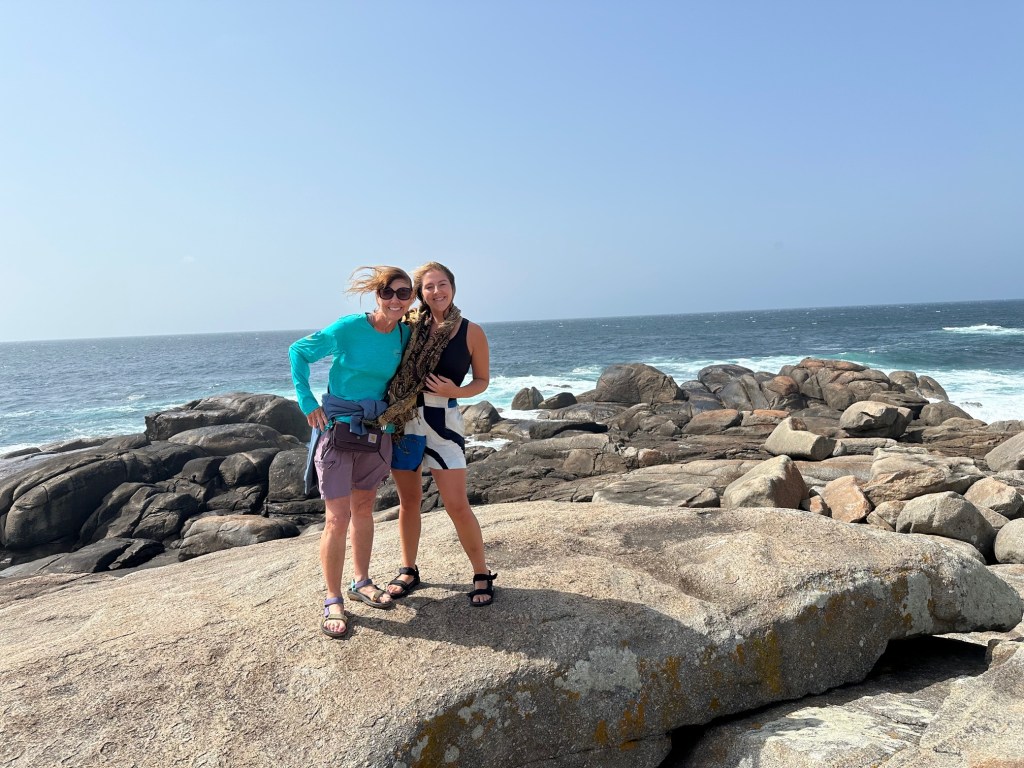
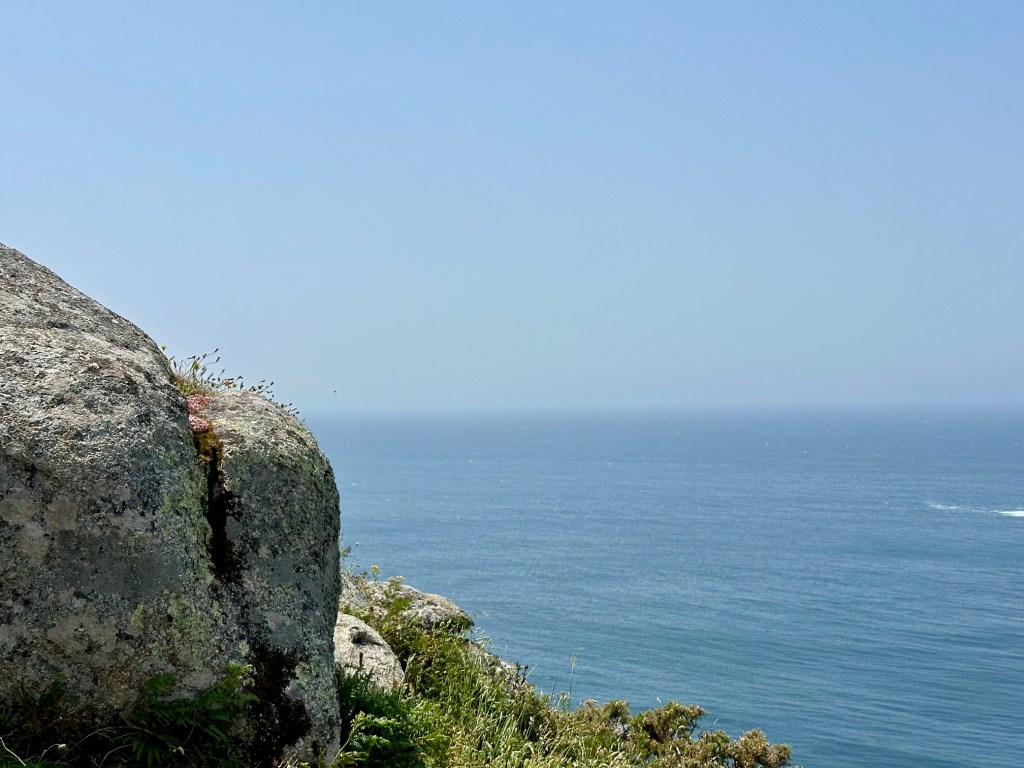
This day trip had been absolutely wonderful so far, so we were complacent about upcoming Muxia, expecting to round out our day with yes, another great stop. But Muxia (it’s pronounced Moosh-ia’) to me, was more than that, it was the Grand Finale, and a memorable experience for sure! The wind was super-strong, the huge waves violently crashing against the rocks at this “world’s end”. We climbed around the big rocks, taking in the sounds of wind and crashes of ocean against rock; the sights of it all with ocean meeting sky in the distance; and, for me, the touch of the big rocks on my hands as I steadied myself on them against the enormous wind!

“Nature proclaims God, and when we enjoy nature, we enjoy God.” (Kristinkayjohnson.com)

Beautiful Santiago de Compostela

Arriving in Santiago de Compostela:

We arrived in Santiago de Compostela the first of June in order to ride by bus to our starting point for the Ingles Way of the Camino de Santiago, which was the port city of Ferrol. We would be returning to Santiago de Compostela a week later to end our walk at the Cathedral! We made the most of the evening and next morning in the beautiful city of Santiago before our bus-ride to Ferrol.

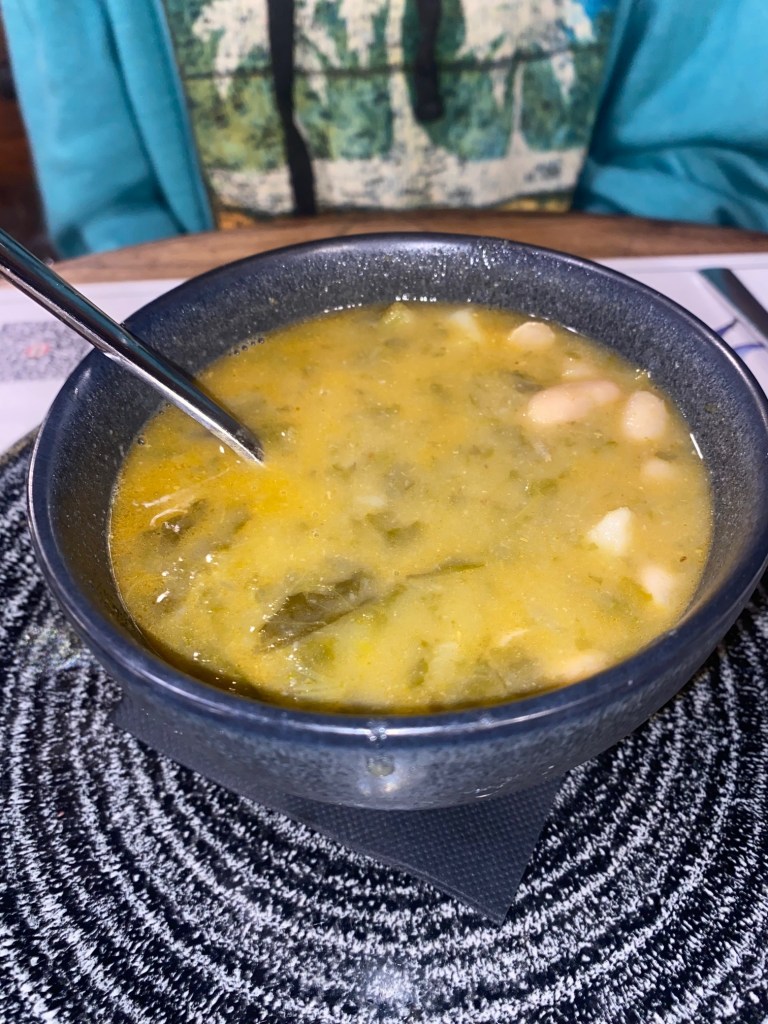
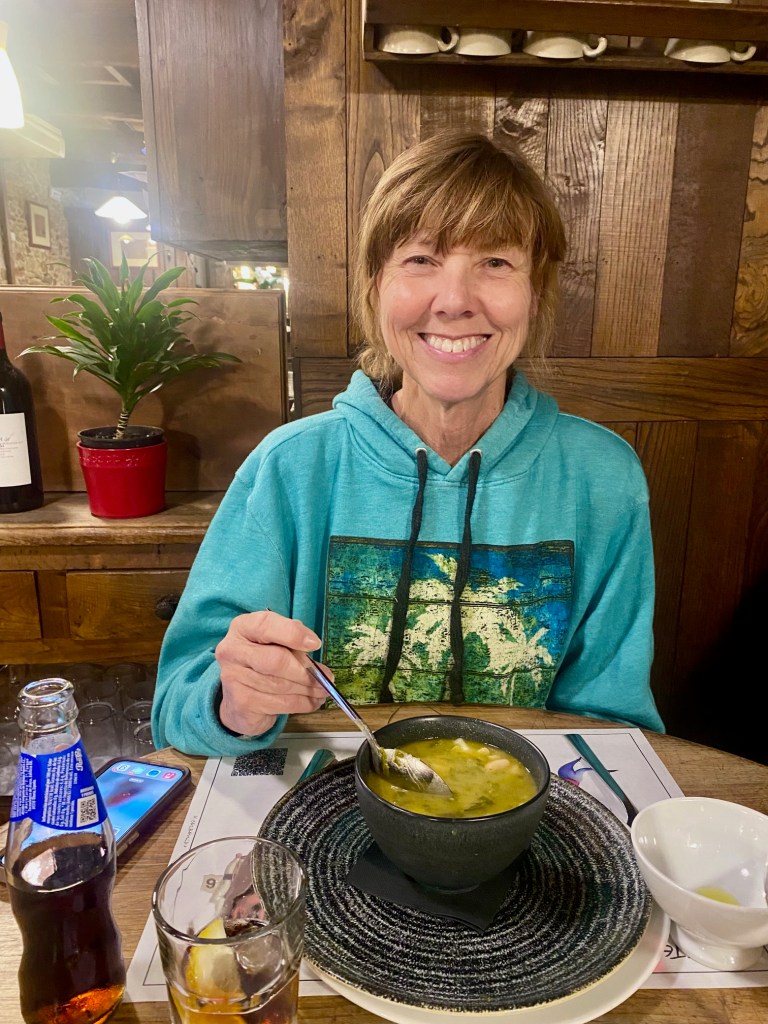
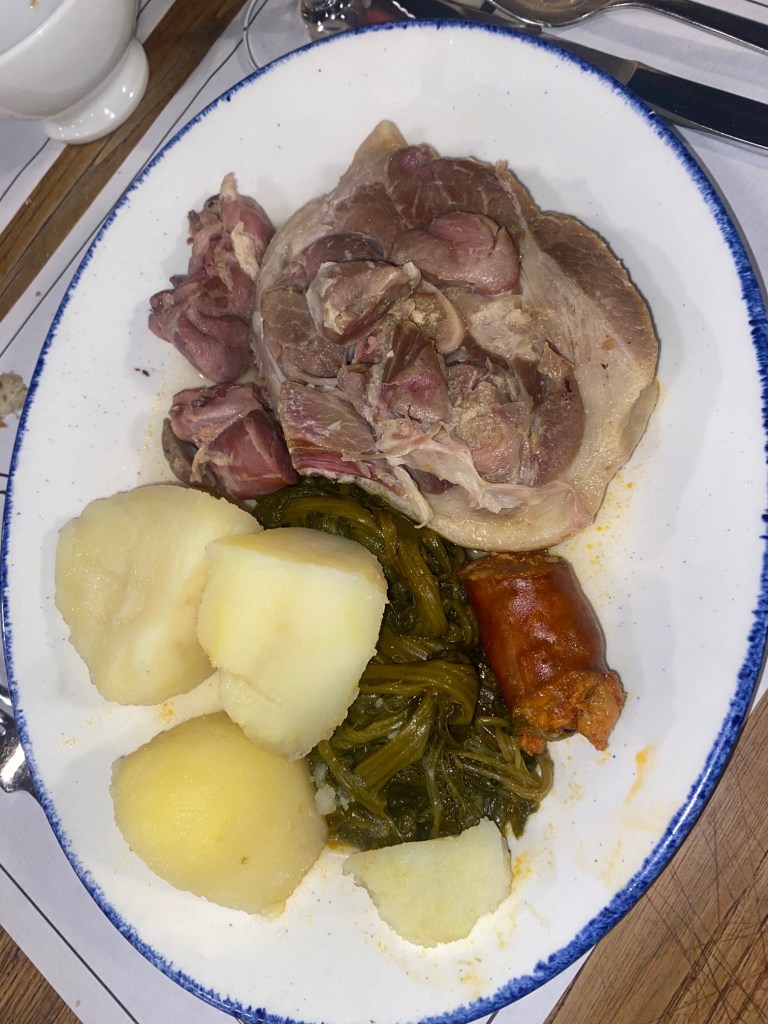
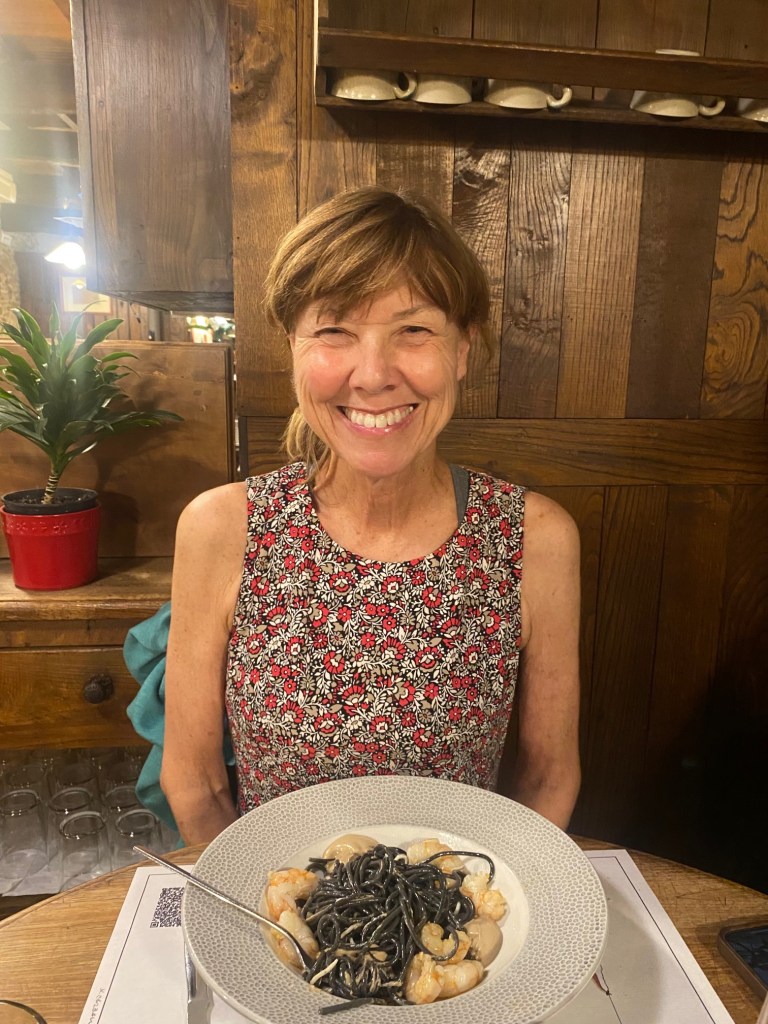
At the restaurant Casa do Xantar, I tried a Galician stew. Galicia is well-known for their stews. As the weather in the city was quite cold with a strong wind this evening, hot stew sounded like the perfect choice. It came in a very big bowl and was thick with broccoli, potatoes, beans, and other vegetables. Very tasty! I had prawns, as well, and spaghetti with squid ink, all very good, and a coca-cola served with slice of lemon, to drink. My daughter, meanwhile, opted for “lacon con grelos” which is one of the most famous Galician dishes, according to my research, and consists of pork shoulder or ham hock with turnip greens.

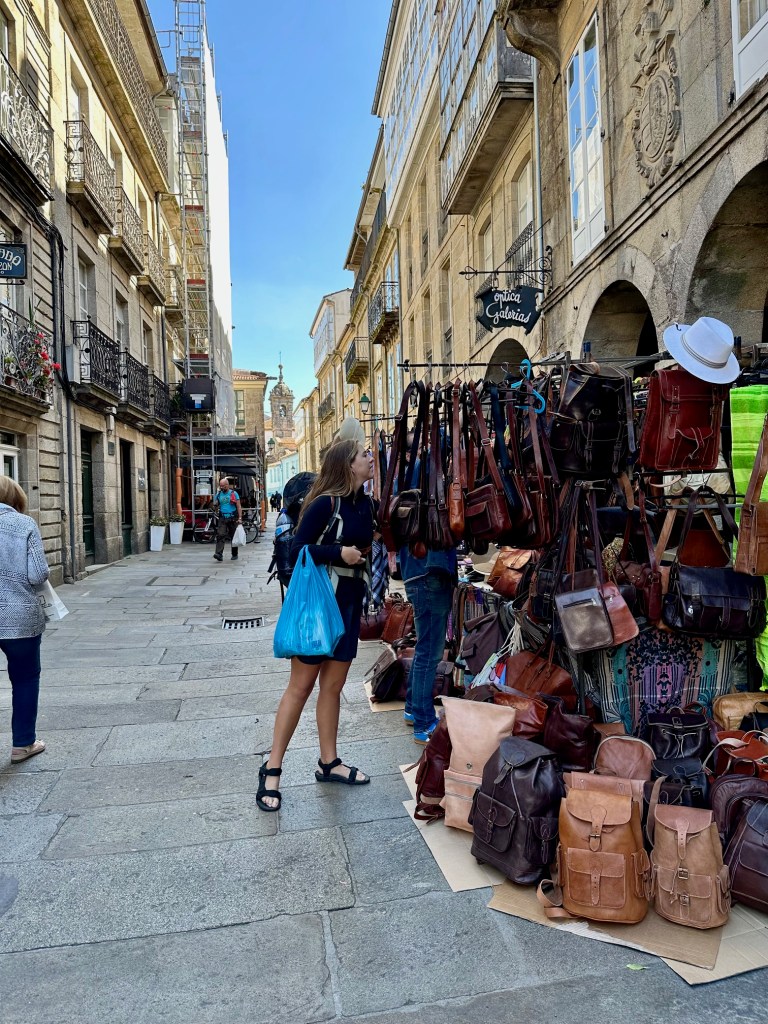
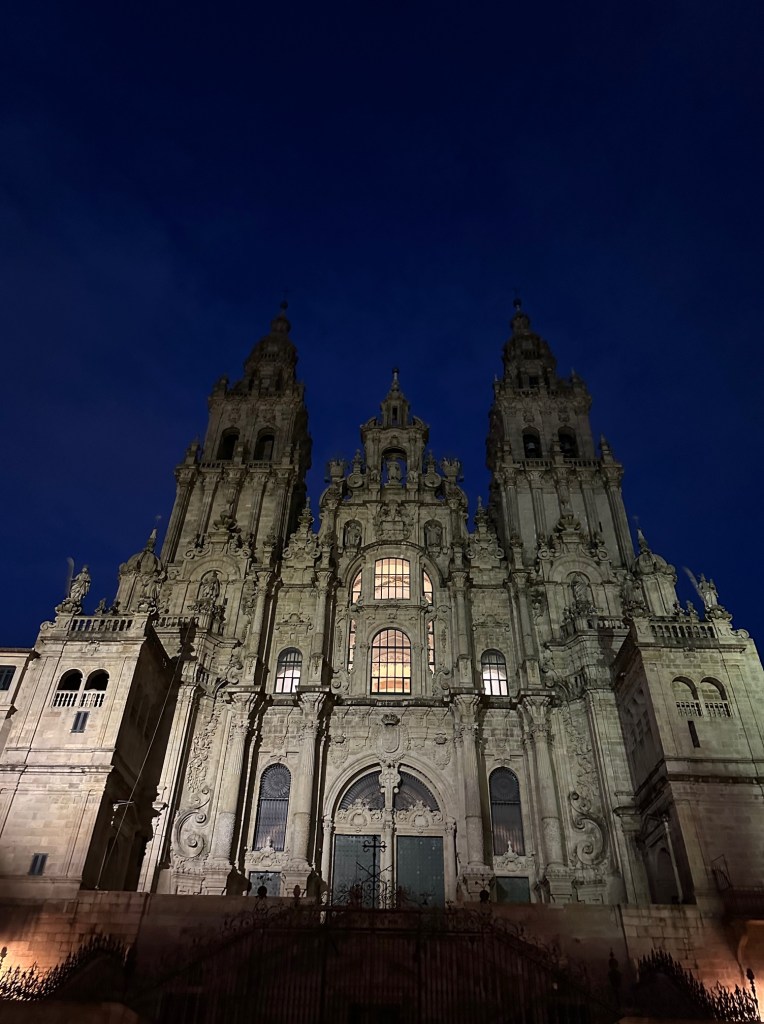
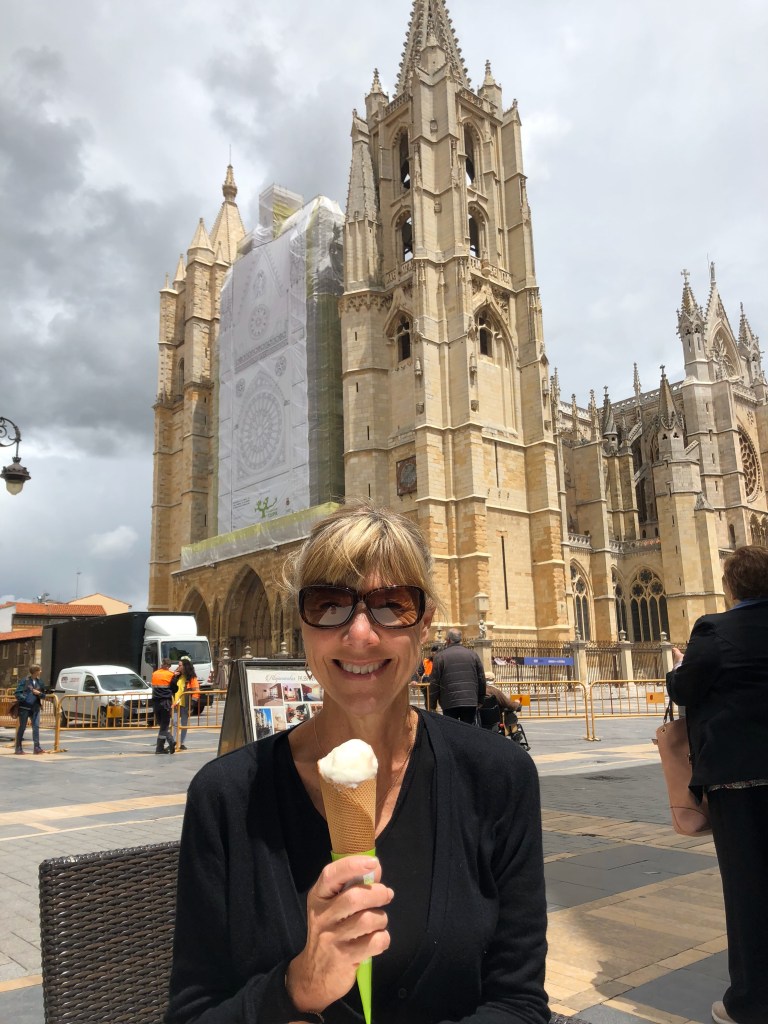
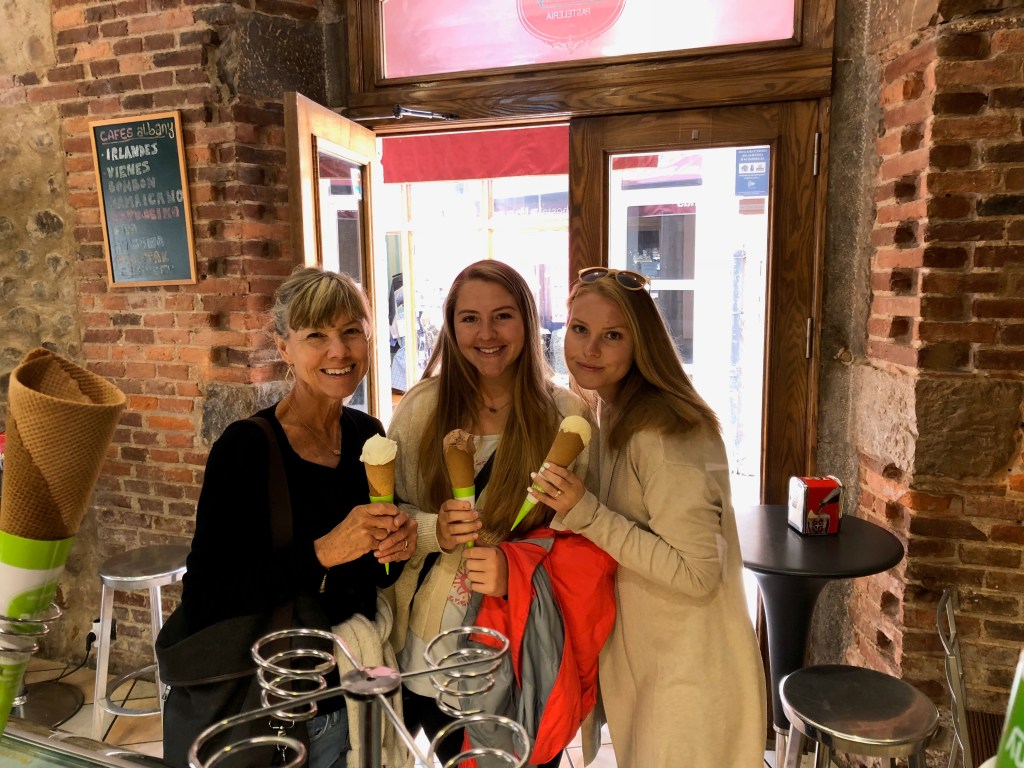
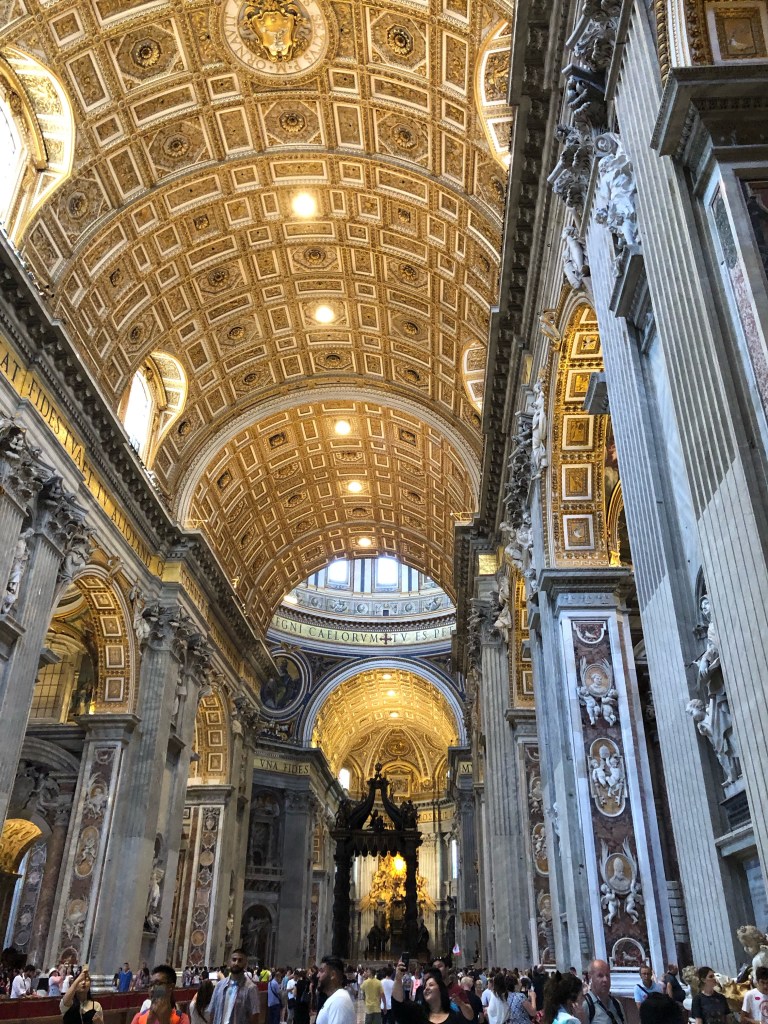
We walked around the beautiful Old Town in Santiago, taking in the legendary Cathedral de Santiago de Compostela; and the many shops, outdoor markets, restaurants, and bars. We sat on the steps of the Cathedral to write postcards, and take in the sights of people passing by this evening—tourists, locals, and pilgrims—and the sounds of outdoor music, people talking and laughing, and a dog’s bark from time to time. We would sit on these same steps next week having an ice cream cone and reflecting on our walk!

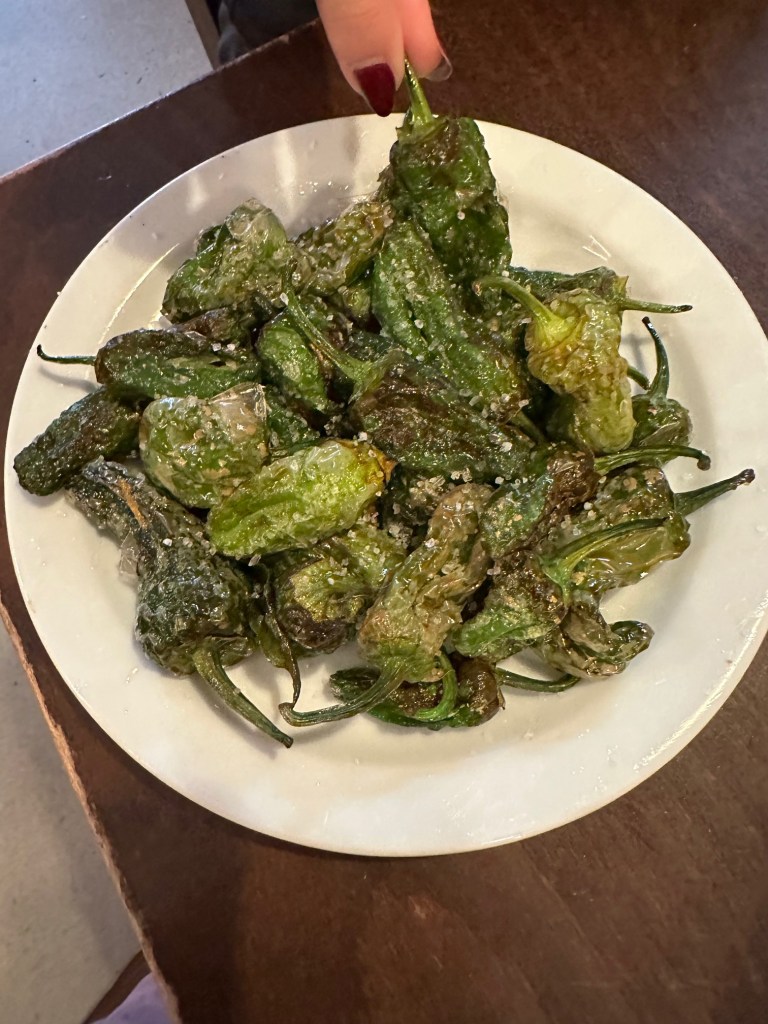
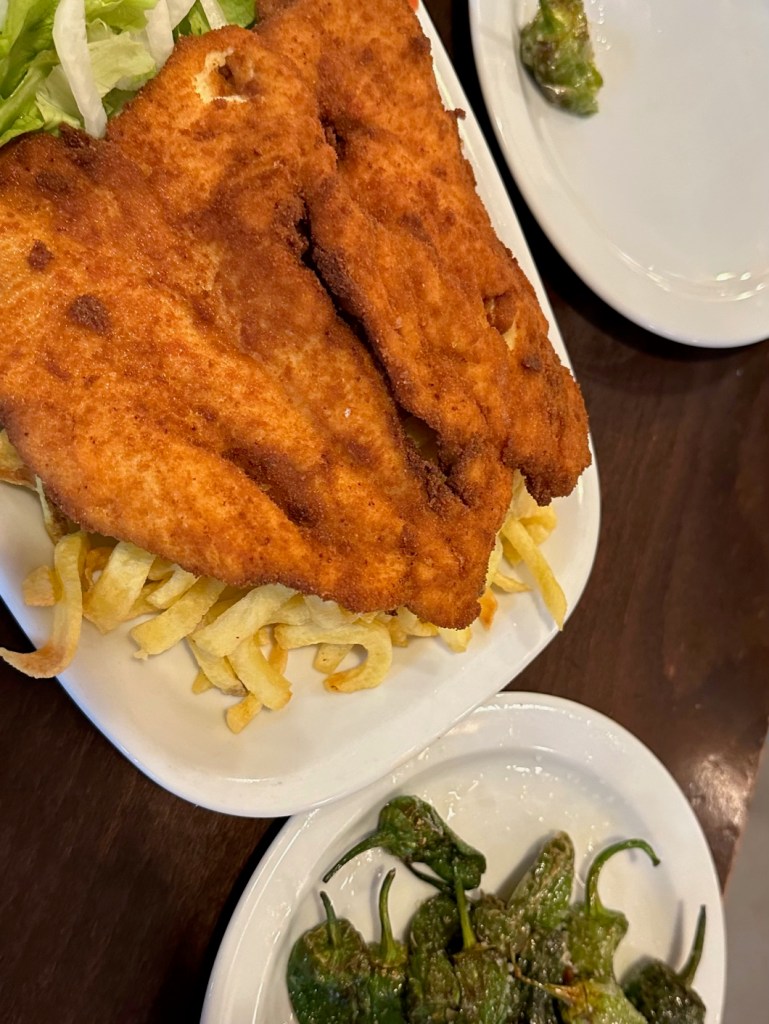
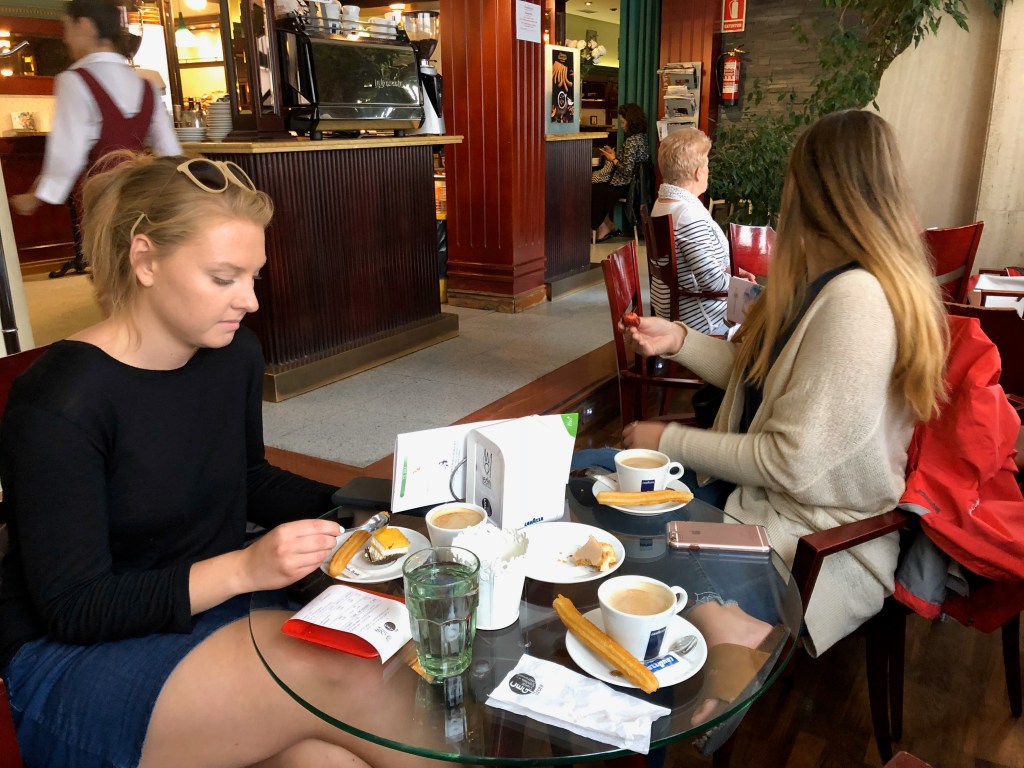
The next morning, after coffee and croissants at a small cafe, we walked around the city some more, and stopped for lunch at the cafe Cafe Bar Gaiola, which served up a wonderful meal! I chose crispy chicken, which was pounded, lightly breaded, and fried, and perfectly delicious, served with fries. We also chose pimento de Padron to share. These are a snack we’d had before in Spain and love with any meal. They’re small green peppers (“pimentos”) primarily grown in the Galician town of Padron, grilled or baked with olive oil and sea salt. Fun, and a must-try if you’re in Spain.

After the delicious meal, it was time to catch our bus to Ferrol to begin our Camino de Santiago walk (see my blog post “The Inges Way: The Goodness of Galicia“!) The week of walking was fun, difficult, adventuresome, inspirational…and over in no time, it seemed!

“Time flies, but at least you get to be the pilot!”

Back in Santiago de Compostela After Walking the Ingles Way:

Day 1:

After seeing the splendorous Cathedral de Santiago when we finished the Ingles Way of the Camino De Santiago, and taking in the atmosphere of triumph, tears, hugs, and shouts from other pilgrims, we went to find a Menu del Dia to celebrate!

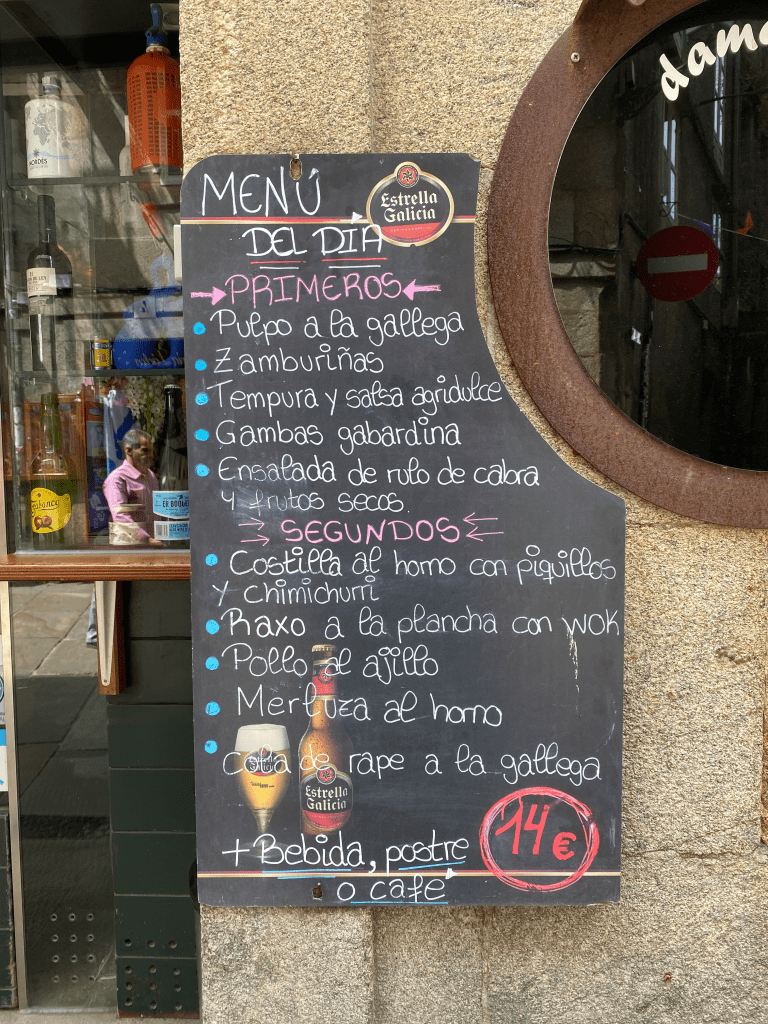
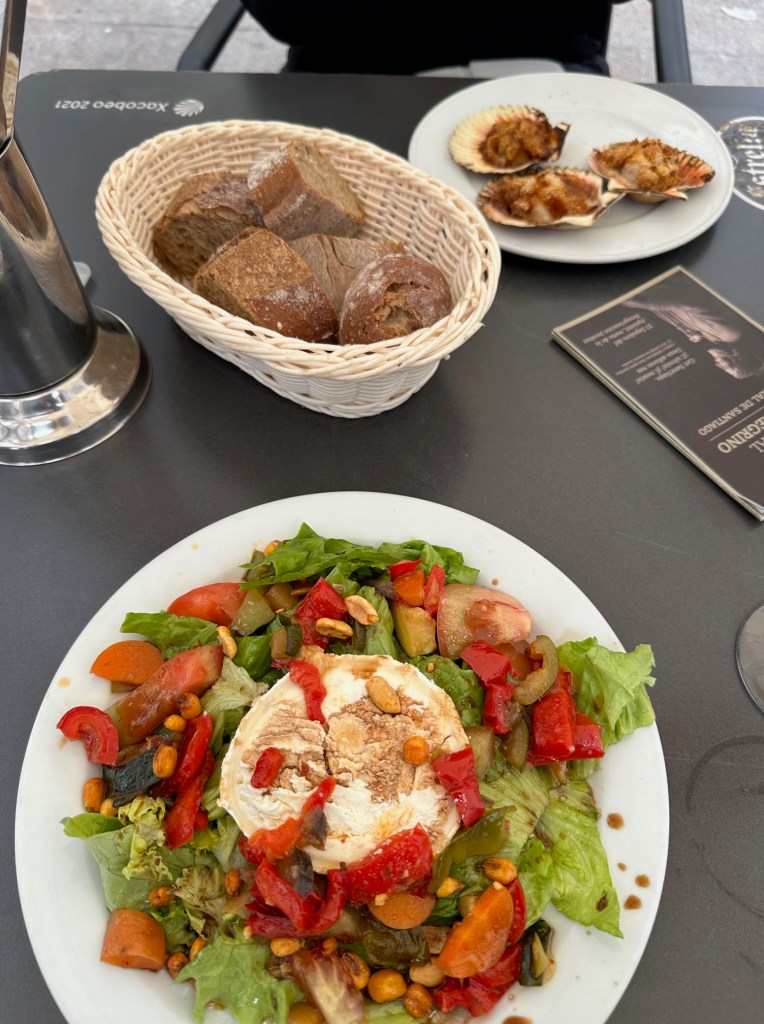
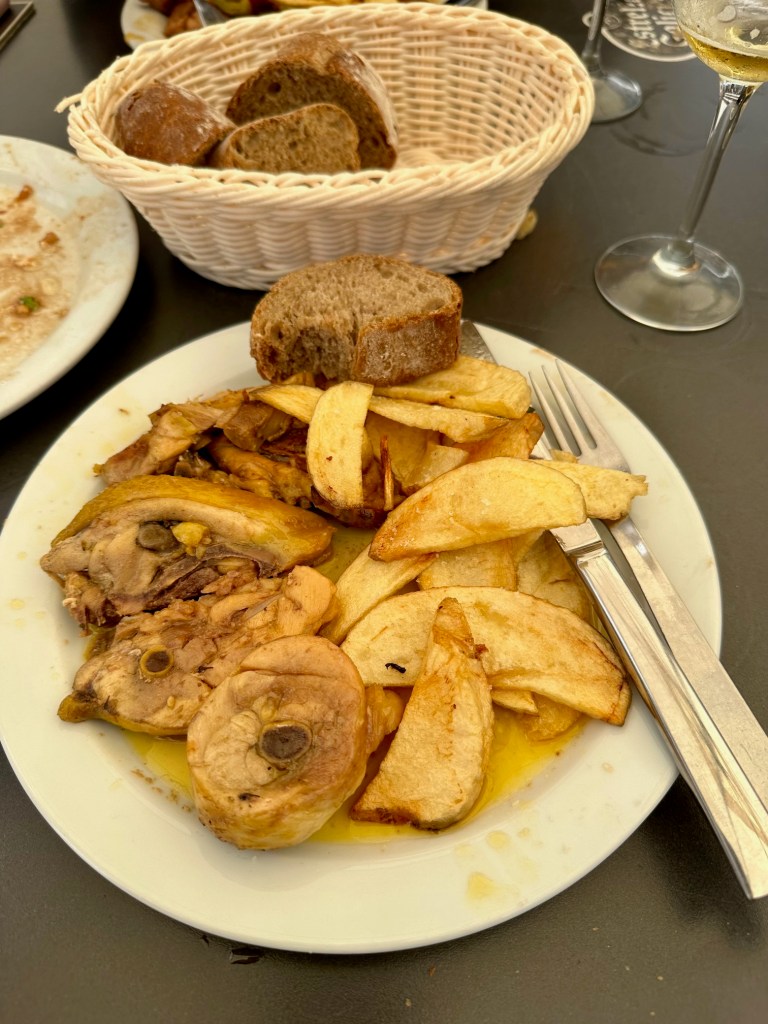
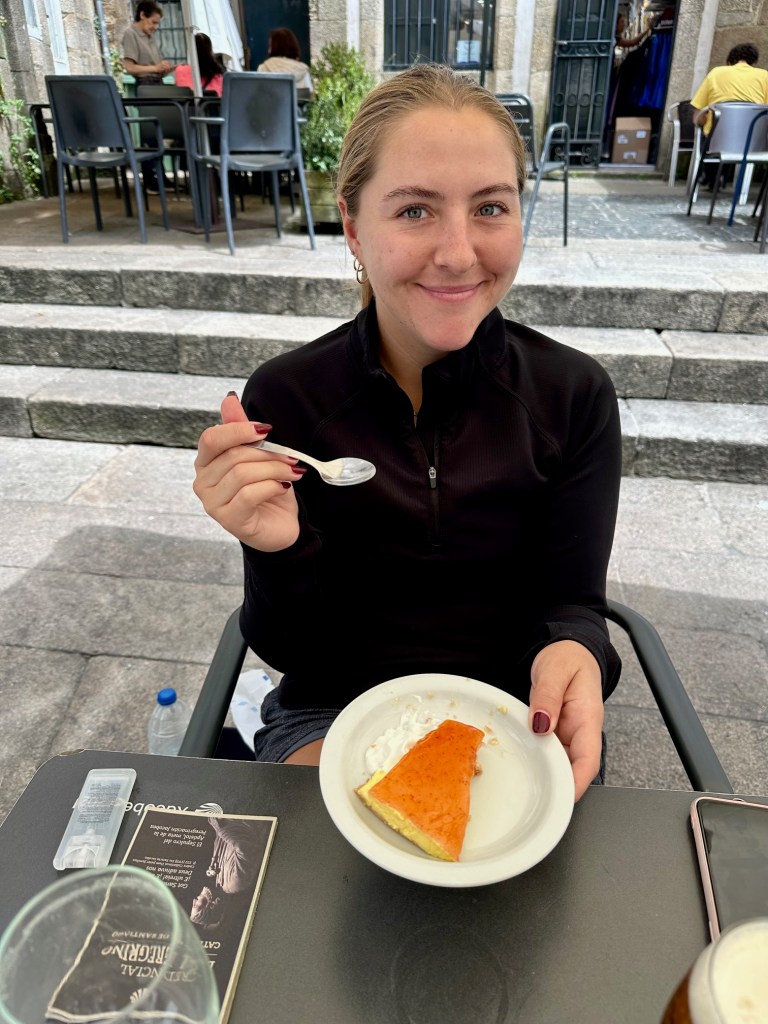
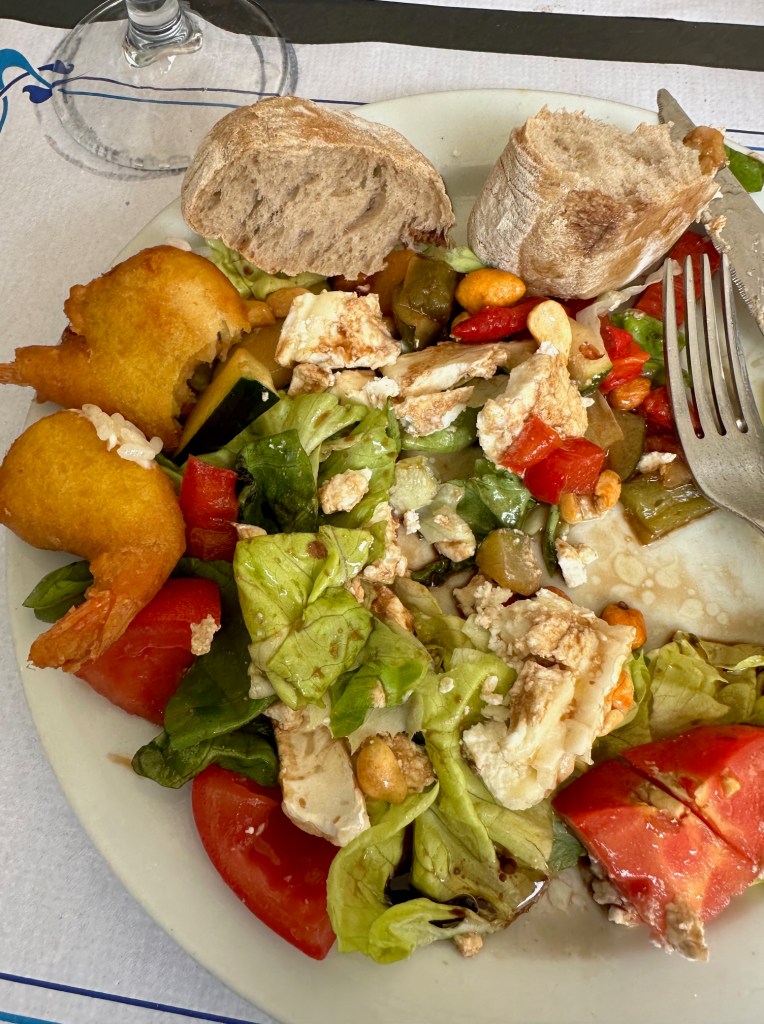
We found the perfect one, too! A family-run restaurant called Damajuana, where the friendly and delightful chef, Maria, was our server, turned out to be such a wonderful dining experience that we even came back another day. Everything we chose from the menu was amazingly delicious. We started with a beautiful salad with lettuces, vegetables, nuts, seeds, and good goat cheese crumbled on top, with a wonderful dressing, slightly spicy, a bit sweet, very unique. The surprise on the salad was corn nuts sprinkled on it—fun! Then we tried zamburinas, which are scallops. They were served in pretty shells, and were very, very tasty. Then came my chicken in a garlic sauce (magnificent!) and the most wonderful fried potatoes, perfectly made. The pork that my daughter had ordered was also delicious. (We shared all courses.) The brown bread was excellent lightly dipped into the good sauces in all the dishes that were served. Dessert was tarte de Santiago and cheesecake, both perfect, and coffee. Have I mentioned that I LOVE a Menu of the Day!

On to our Airbnb! As I re-live memories of Santiago, I’m feeling very, very fortunate to have stayed at the Airbnb hosted by Reina! She, along with Luis, were exceptional as hosts! Not only were our accommodations everything you could ask for, our hosts were available for any and all questions, with helpful recommendations and friendly conversation. The location? Perfect! As we stepped out the door, we stepped into the historic, beautiful old town part of Santiago which we loved so much, with the Cathedral a few minutes stroll away, and the large outdoor market, shops, cafes, and restaurants close by, as well.

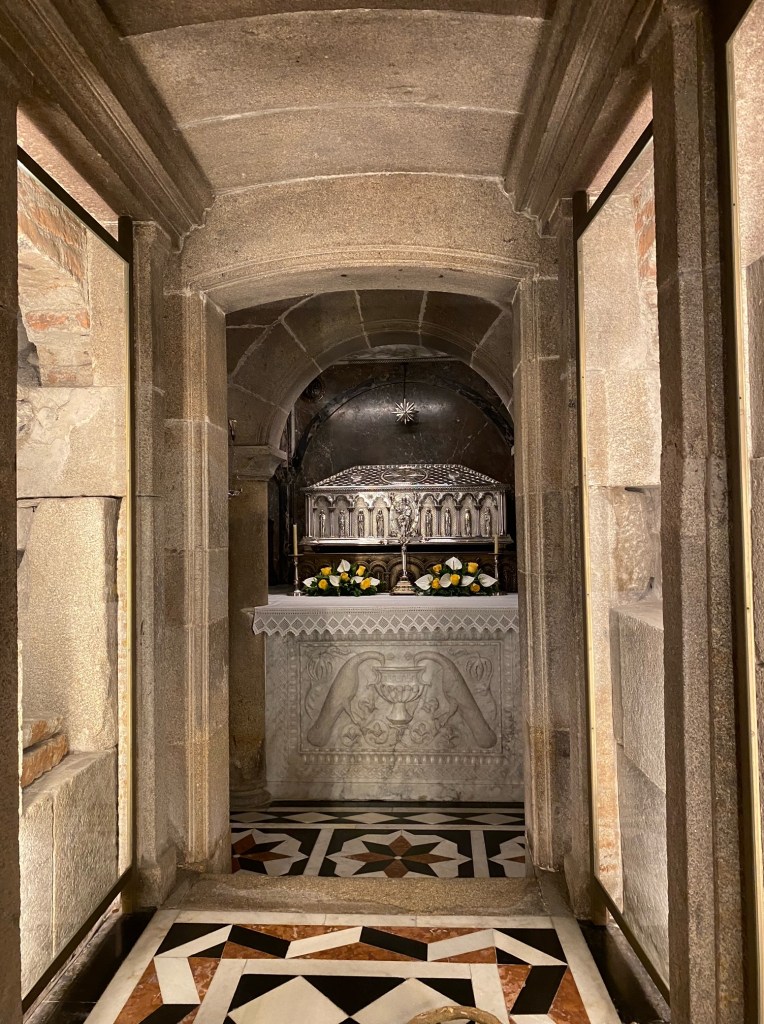
In 1985 the city’s Old Town was named a UNESCO World Heritage Site due to its richness in history including that of the tomb said to be of the Biblical apostle James, which was uncovered in 813 AD. Countless pilgrims have travelled on foot to the site since that time. “Pilgrims” still flock there, some for religious reasons but many others for adventure, curiosity, or other reasons. In 2023, nearly half a million people walked the Camino De Santiago (although not all of those completed the pilgrimage to Santiago). The city is beautiful…it is awesomely ancient, yet vibrant with culture as well as nightlife.

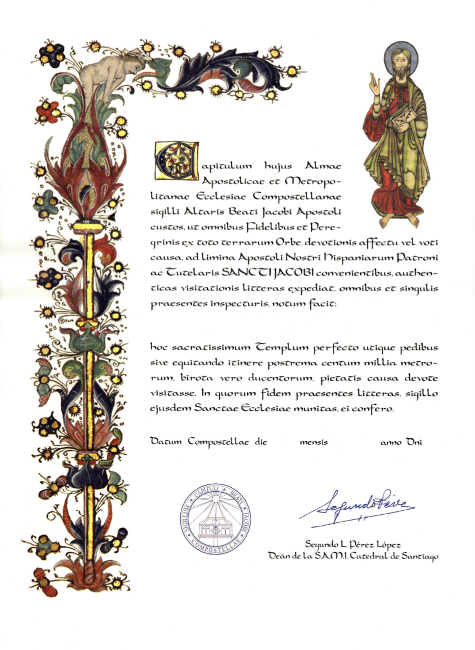
We took time to go get our official Compostela certificate at the Pilgrims’ Office! In the 13th century, the certificate was introduced, as the Camino walk was used oftentimes as penance for criminals, who would need proof upon their return that they had completed the walk! Interestingly, the seashell symbol of the Camino De Santiago originated in much the same way. They had been required to go on to Finisterre to the “end of the world” to retrieve a seashell as proof they had completed the walk.

(Example of a Pilgrim’s Certificate. Each is typed in Latin and uses the pilgrim’s name in Latin, as well.)

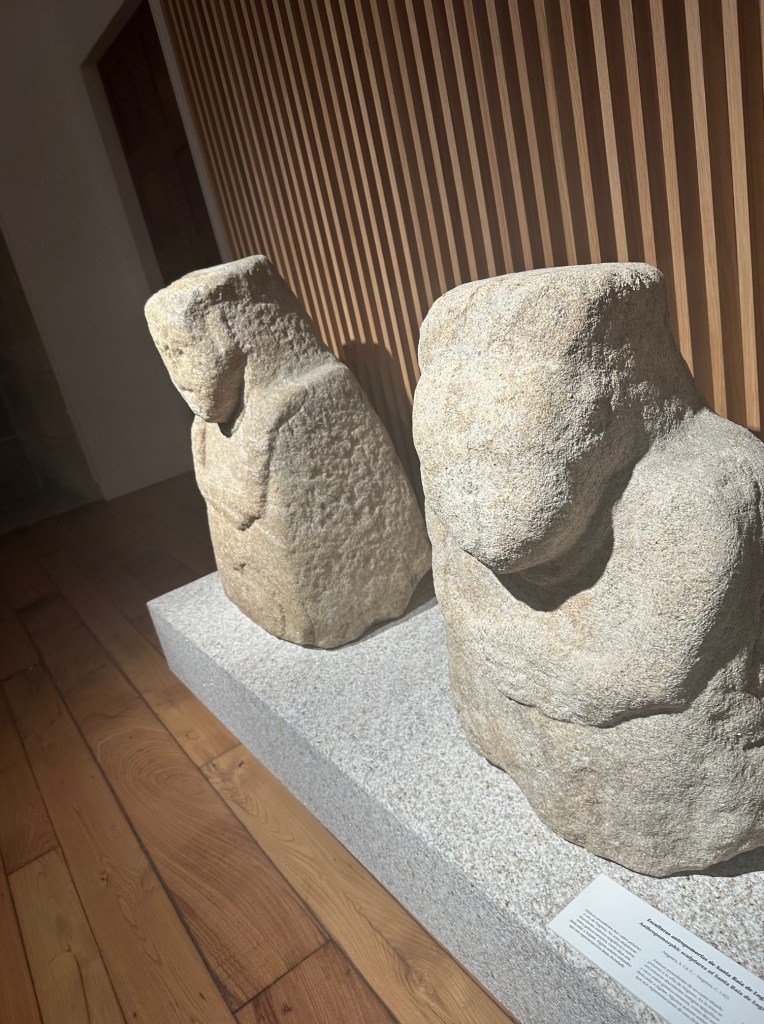
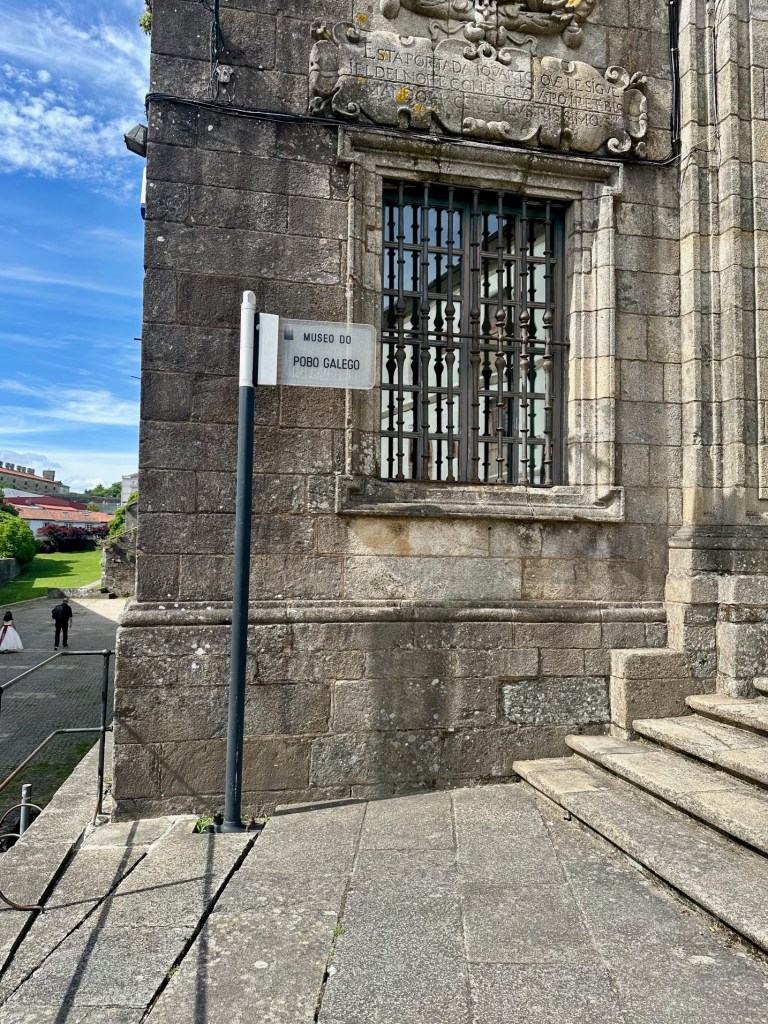
On then to the “Museum of the Galician People,” recommended by our Airbnb host! Here we learned that the first human beings arrived in Galicia at least 300,000 years ago (in the Lower Paleolithic). They were followed by the megalith builders (around 4500 BC) then the hill forts (800 BC) and finally the Romans (137 BC) who gave the country its name due to the Celtic tribe called Gallaeci, who lived there when the Romans conquered it!

Day 2:

The next day was our bus tour to Finisterre and Muxia, considered to be the end of the world by ancient Romans. There were several interesting and fun stops along the way, as well. Stay tuned to read about it in my next blog post!

Day 3:

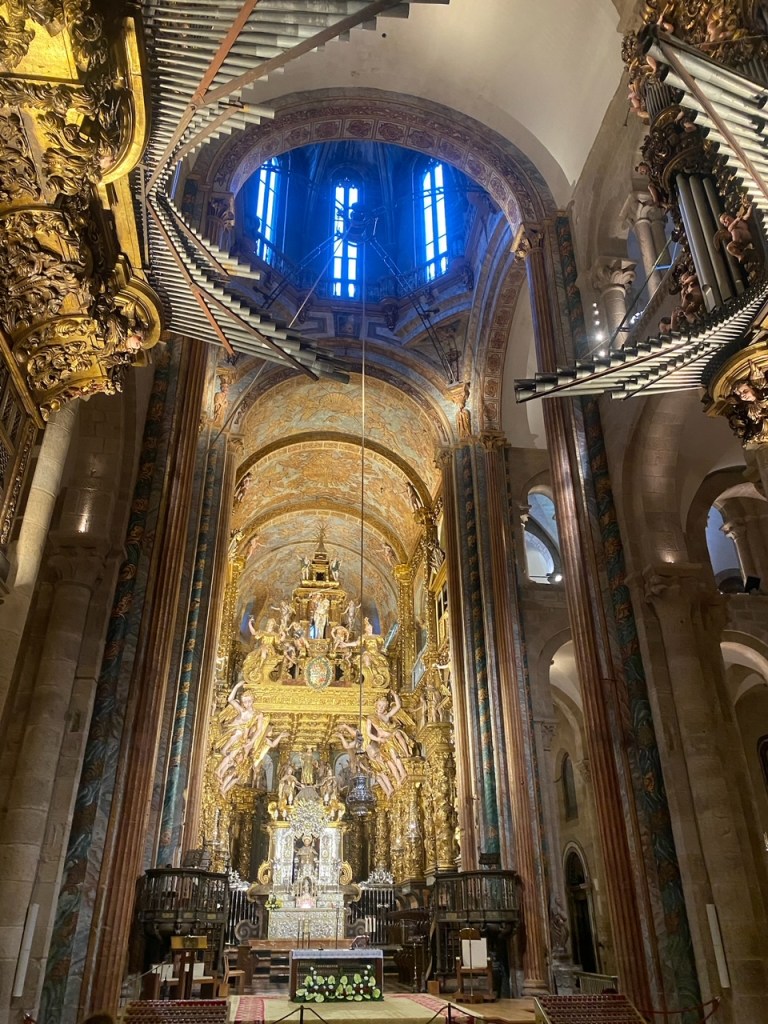
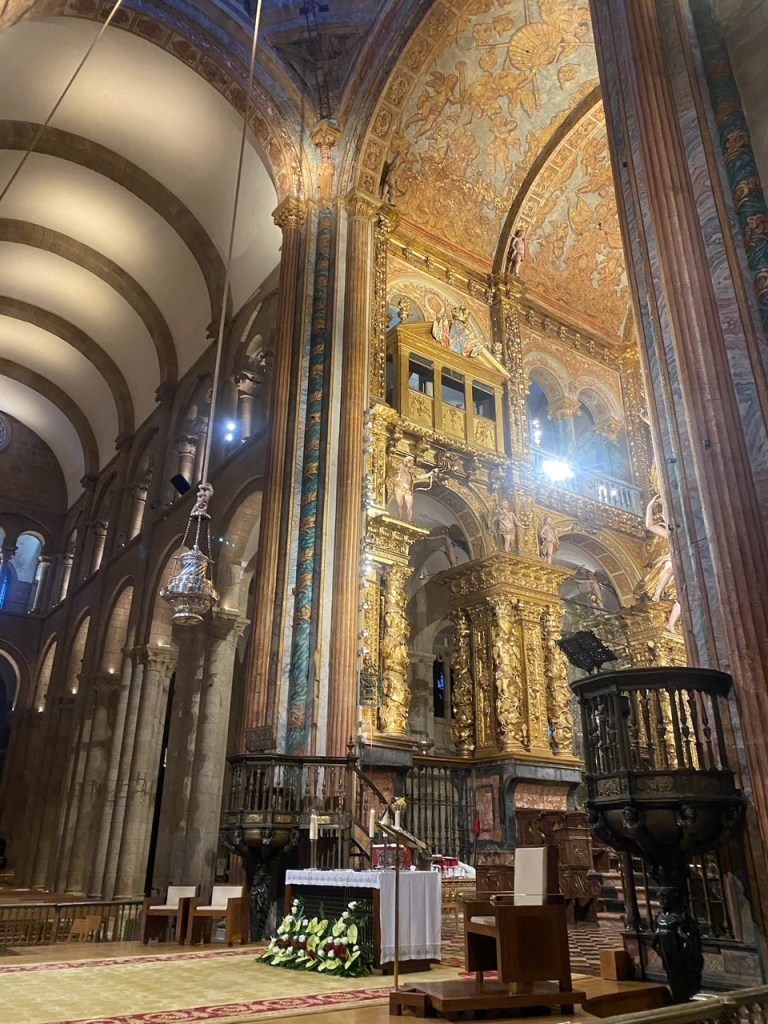
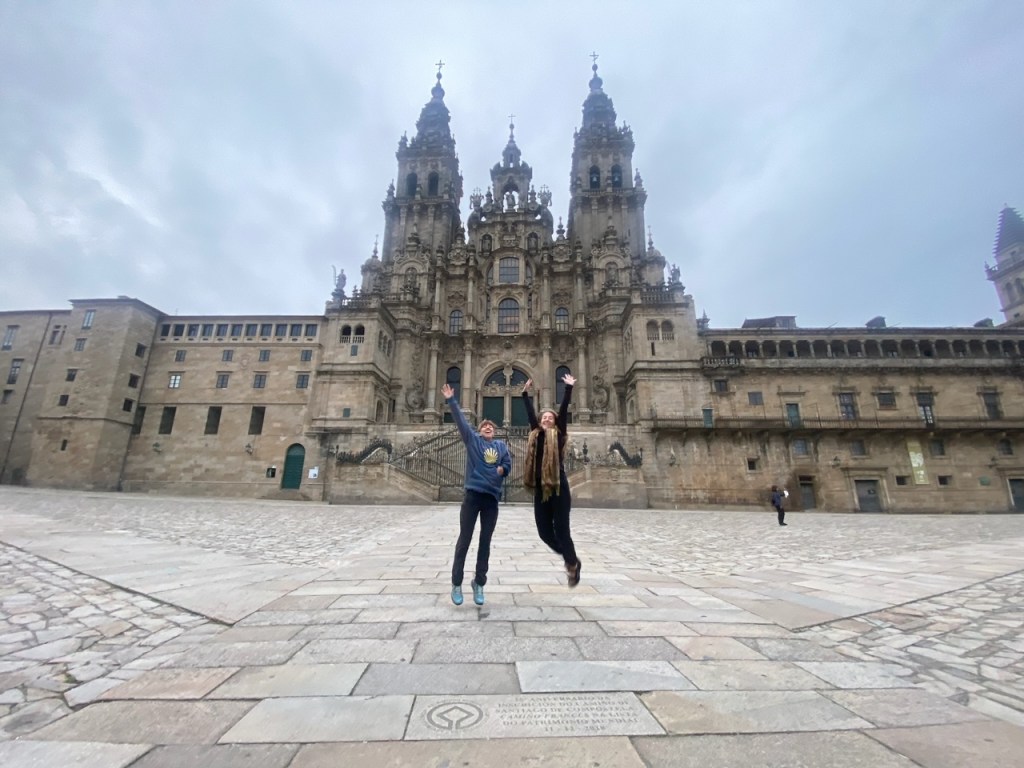
We started the day with the early morning Pilgrim church service in the Cathedral. The inside of the Cathedral was astoundingly ornate and beautiful. The message was in Spanish, but my daughter filled me in afterward that it was a very nice blessing of all the pilgrims.

We took advantage of less crowds outside the Cathedral in the early morning to have a photo made.

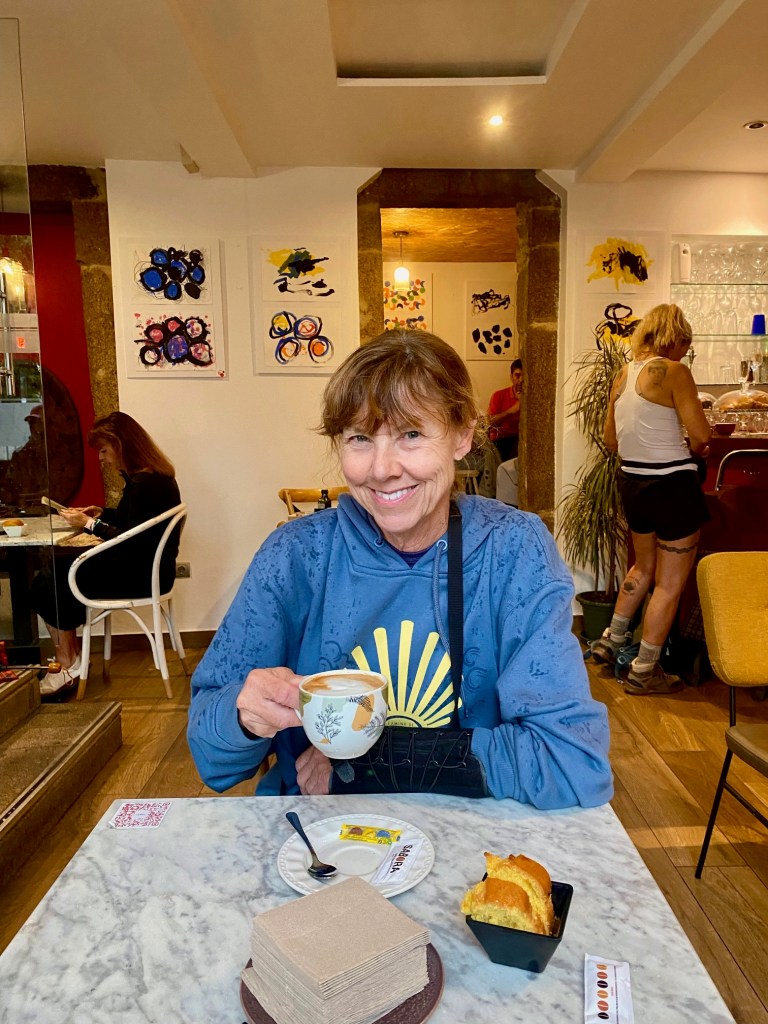
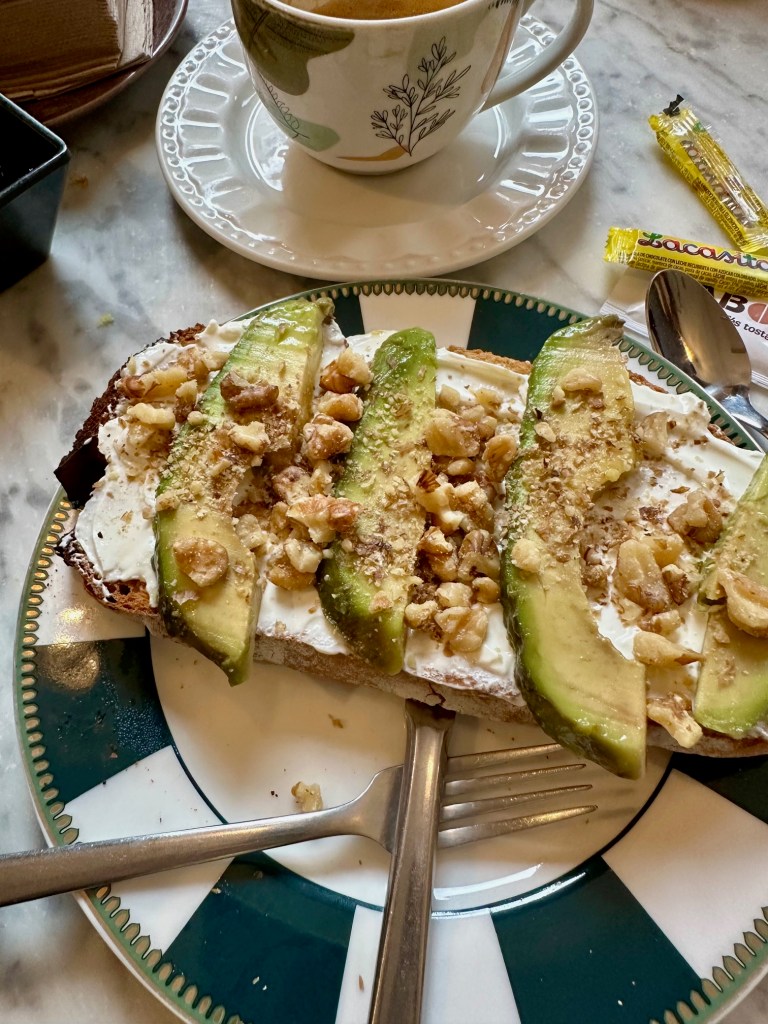
Then to breakfast at a nearby cafe. The tapa served with our coffee was bizcocho. My research tells me that this is a “lemony sponge cake served across Spain”. Ours was very good! I ordered toast with avocado and cream cheese; also very tasty.

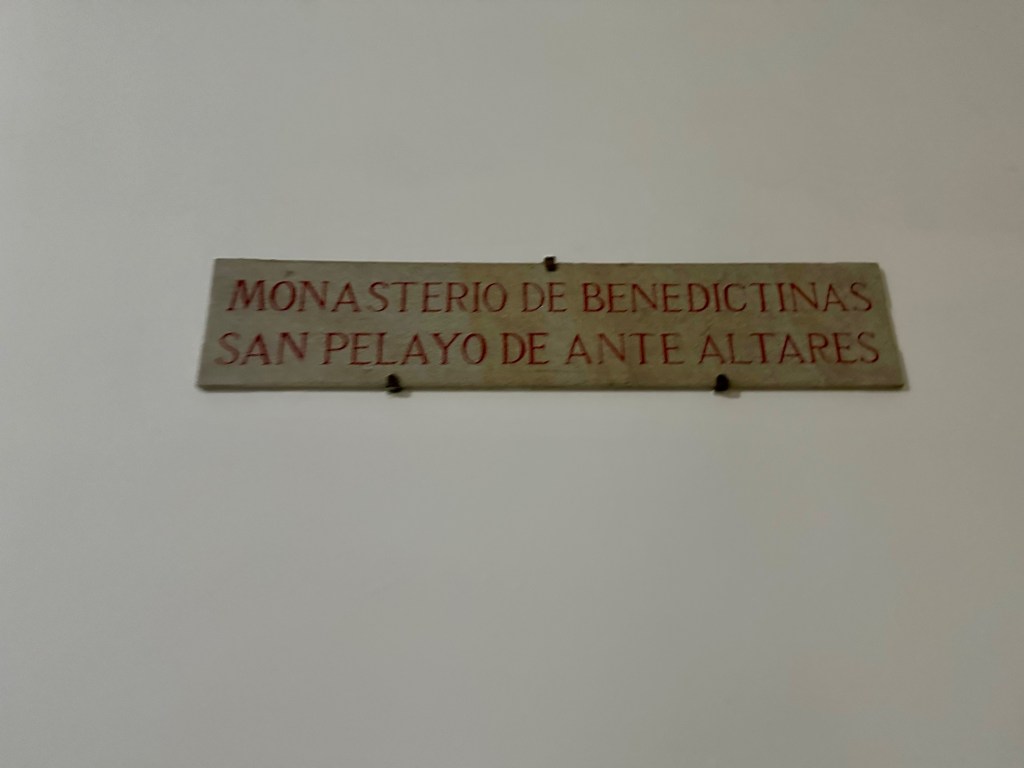
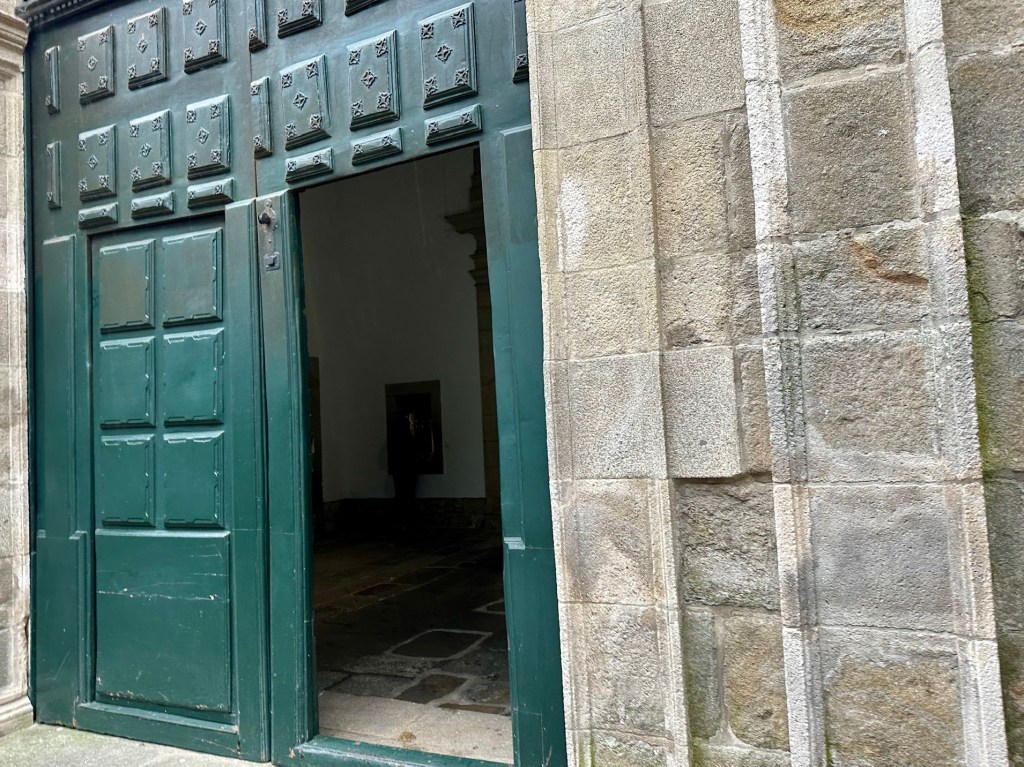
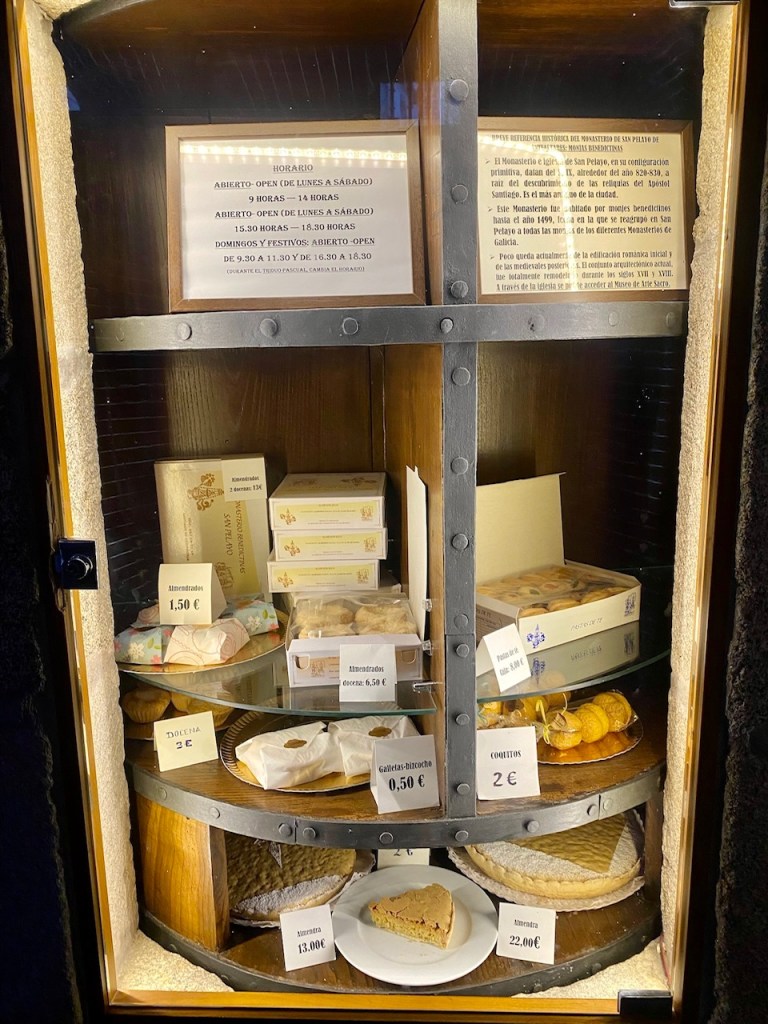
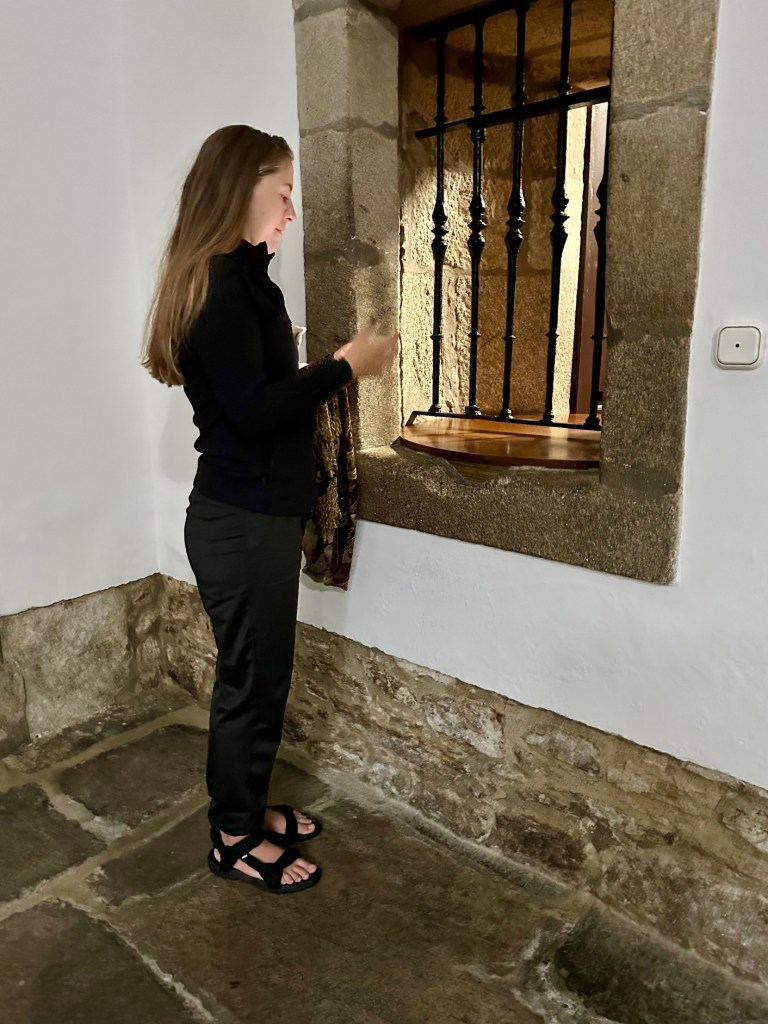
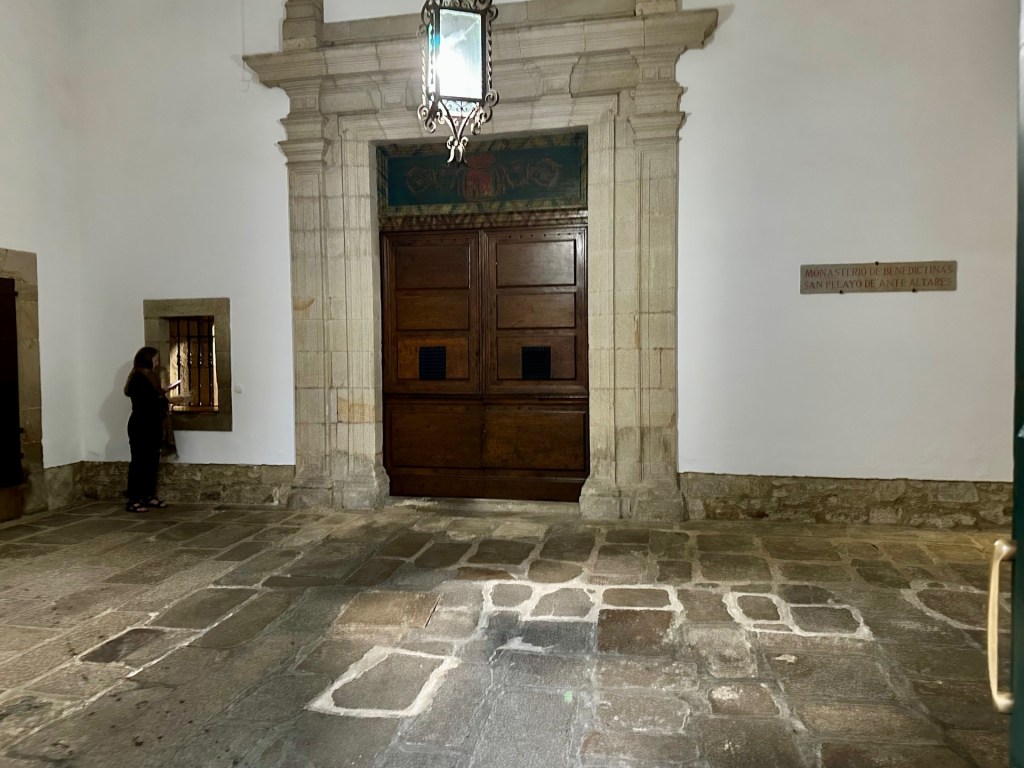
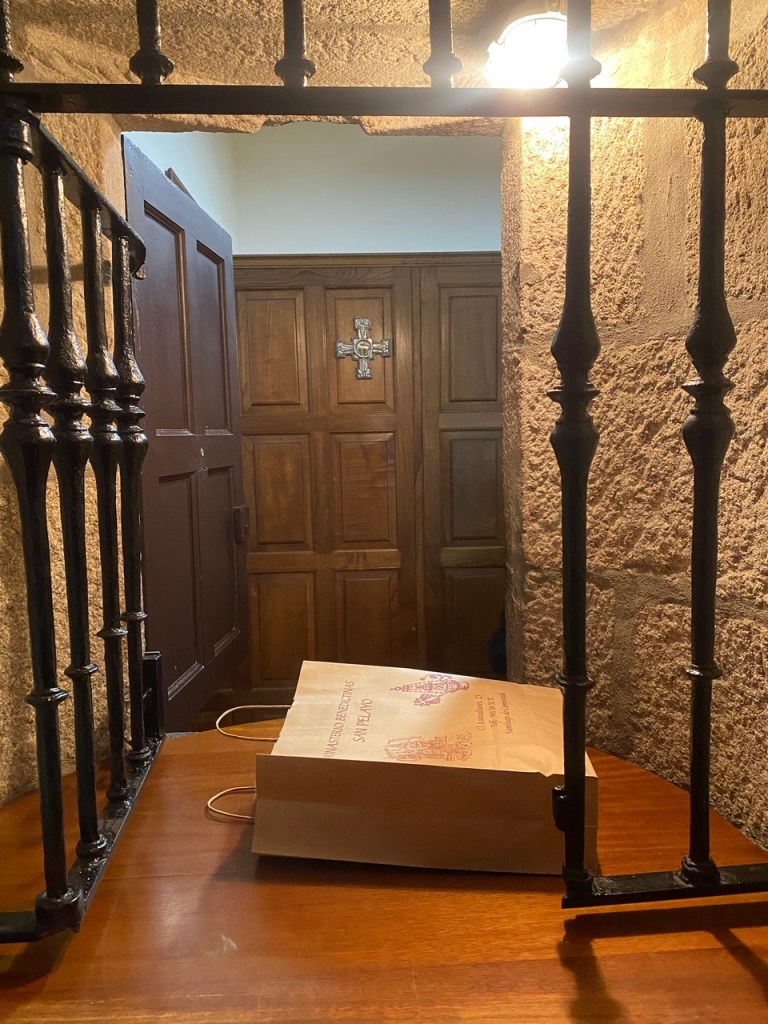
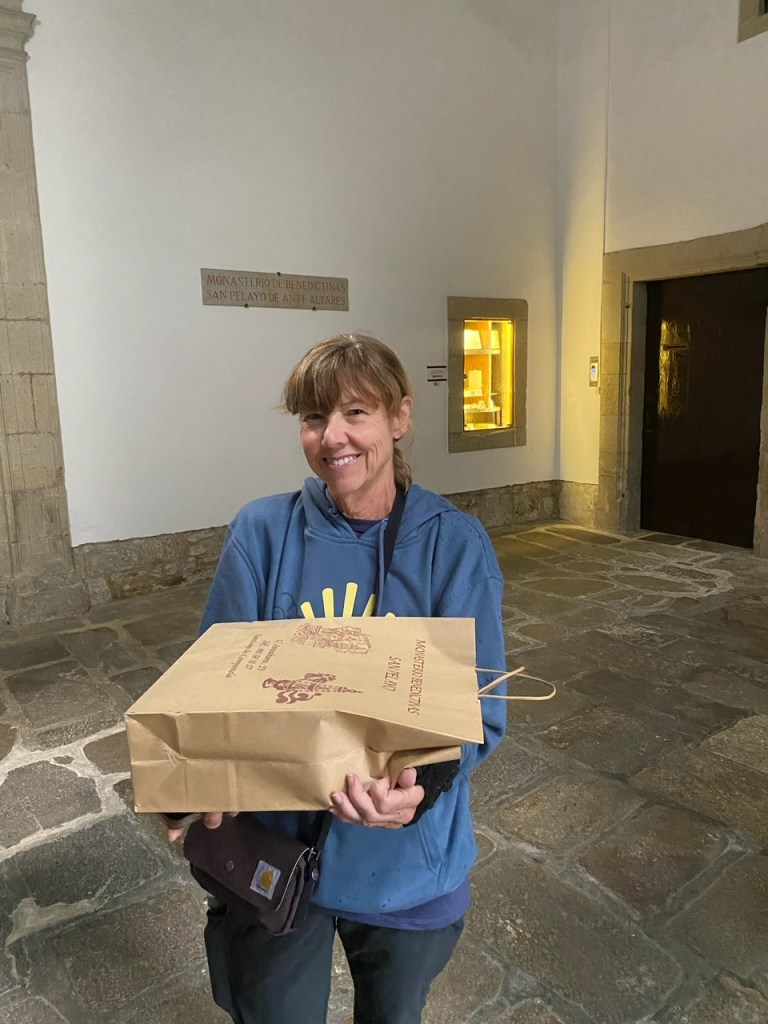
Next was a stop at the Monastery of San Pelayo, which is a Spanish convent of Benedictine nuns. Why, you ask? To buy cookies! A very unique and interesting experience: nuns at the church bake and sell cookies from the church. But there is no sign on the door, no advertisement…somehow my daughter had heard about it, so we went in, placed our order, and payment, at a window with a revolving table, and the cookies revolved around to us. Some of the nuns have taken a vow not to be seen, as I understand it, thus the revolving window. The cookies were delicious!

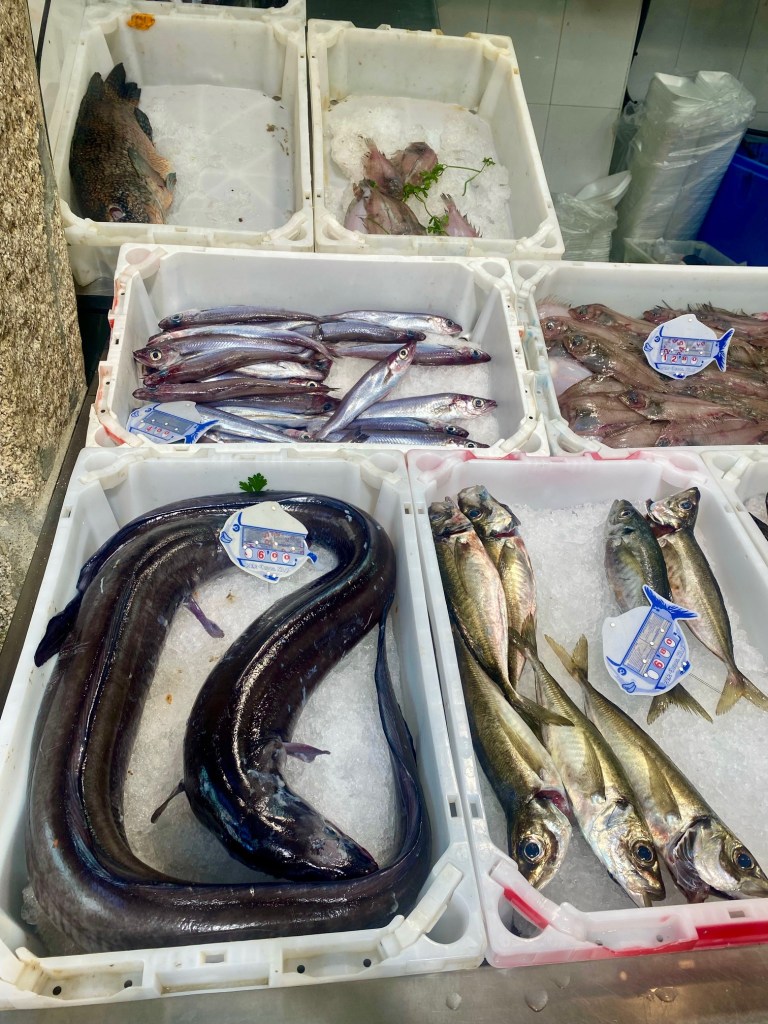
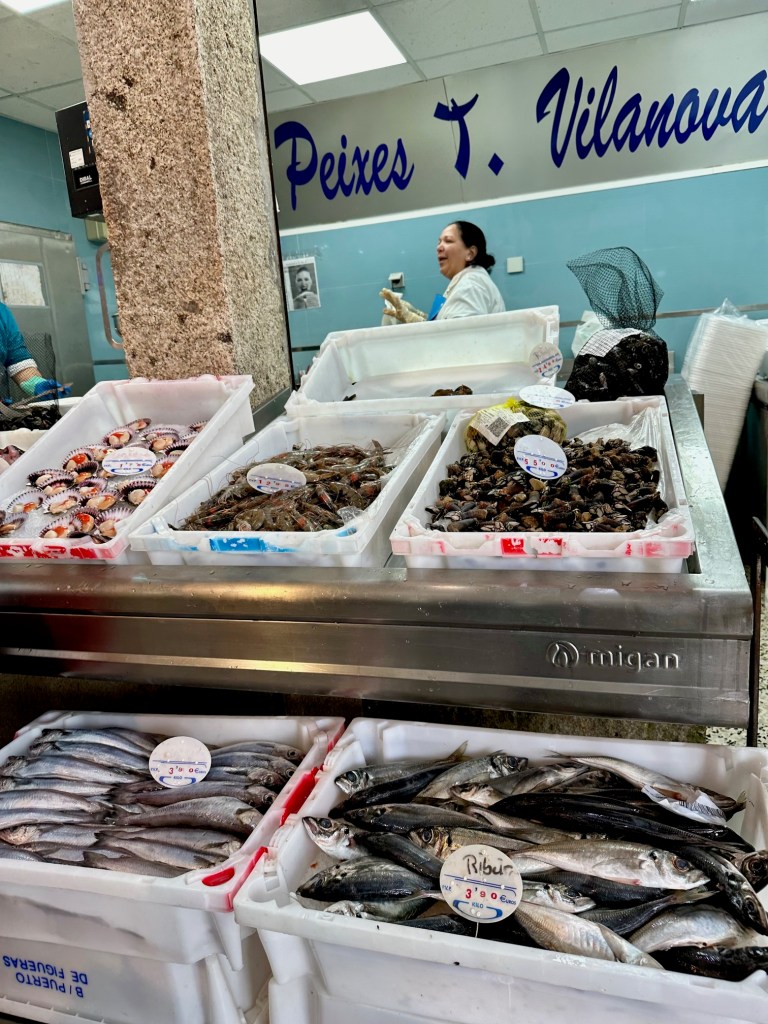
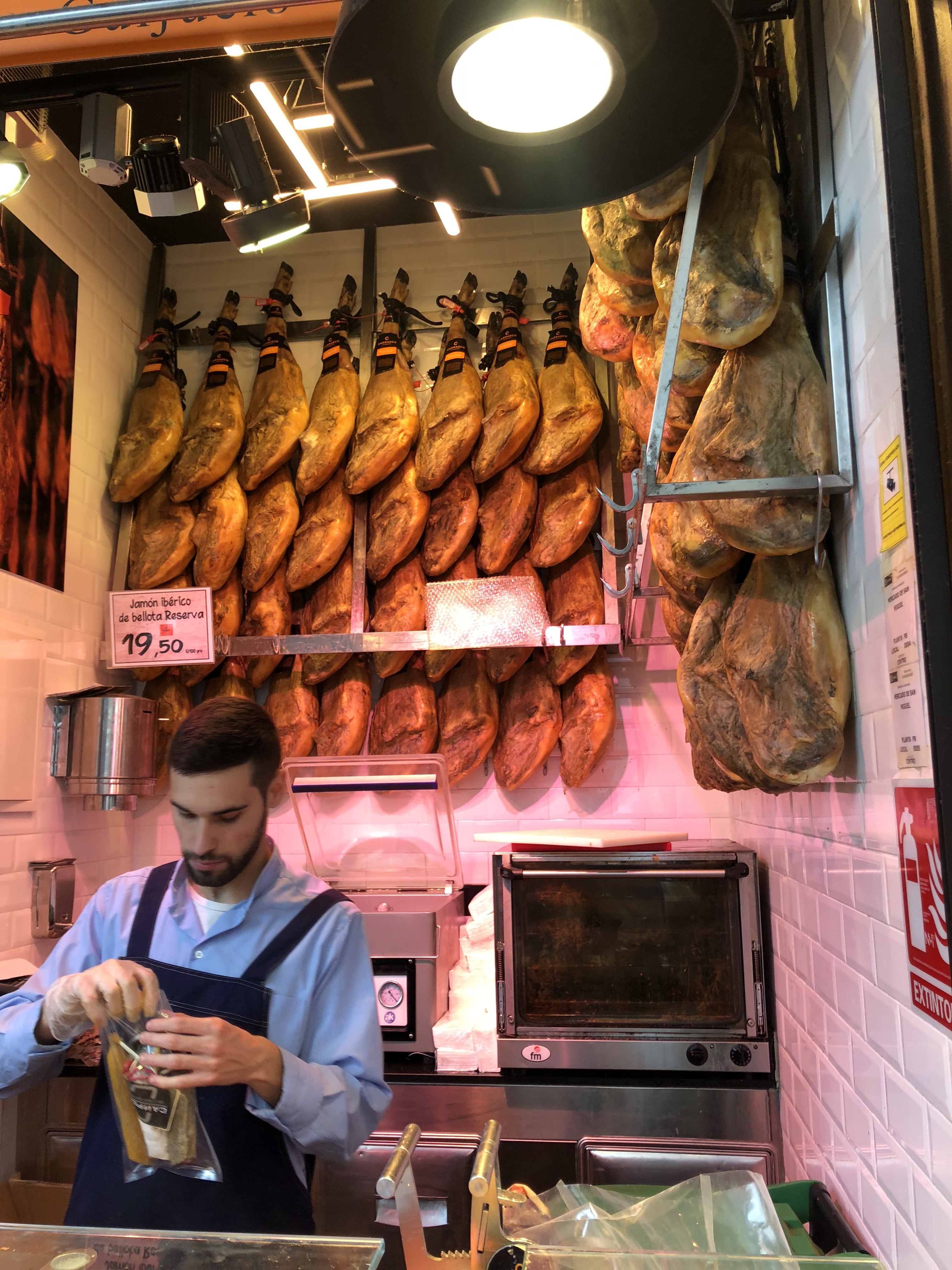
Next came a walking tour of the city, interesting and educational, and happily, also free. After an hour and a half of walking and learning, the tour over, we decided to go look at the Mercado de Abastos de Santiago, which is a HUGE food market and is actually the city’s second most visited attraction after the Cathedral. There are different buildings for fish, beef, pork, pastries, etc. and it seems there is everything a person might want within one! My daughter had wanted to get some Iberian ham. Acorn-fed Iberian ham in Spain is considered by many to be some of the best. I wanted to see barnacles, which I had heard were a speciality in Galicia. Barnacles, they say, are very tasty but getting them is dangerous work, as in hanging off cliff-sides to scrape them off the rocks! They are expensive for that reason, we had been told.

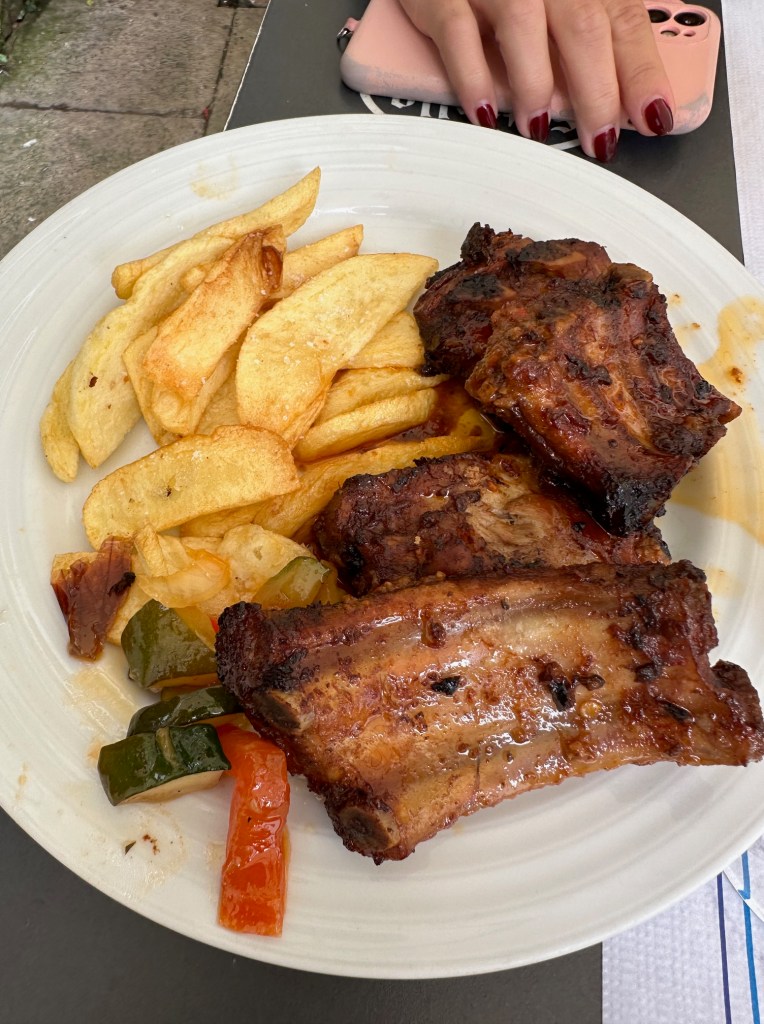
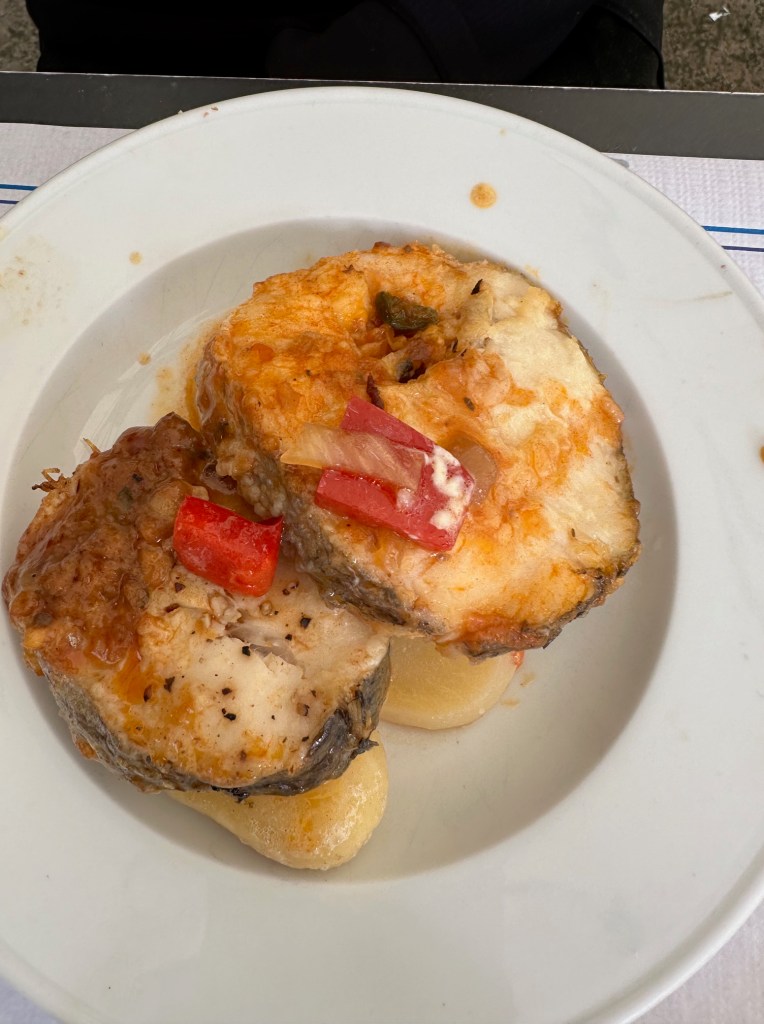
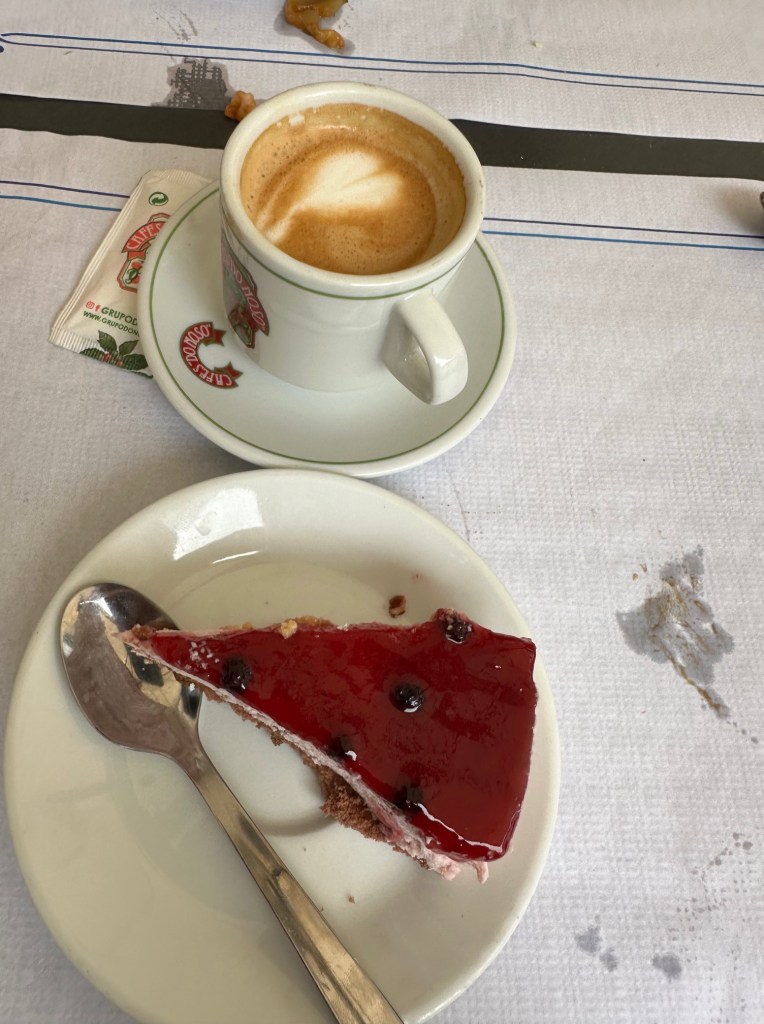
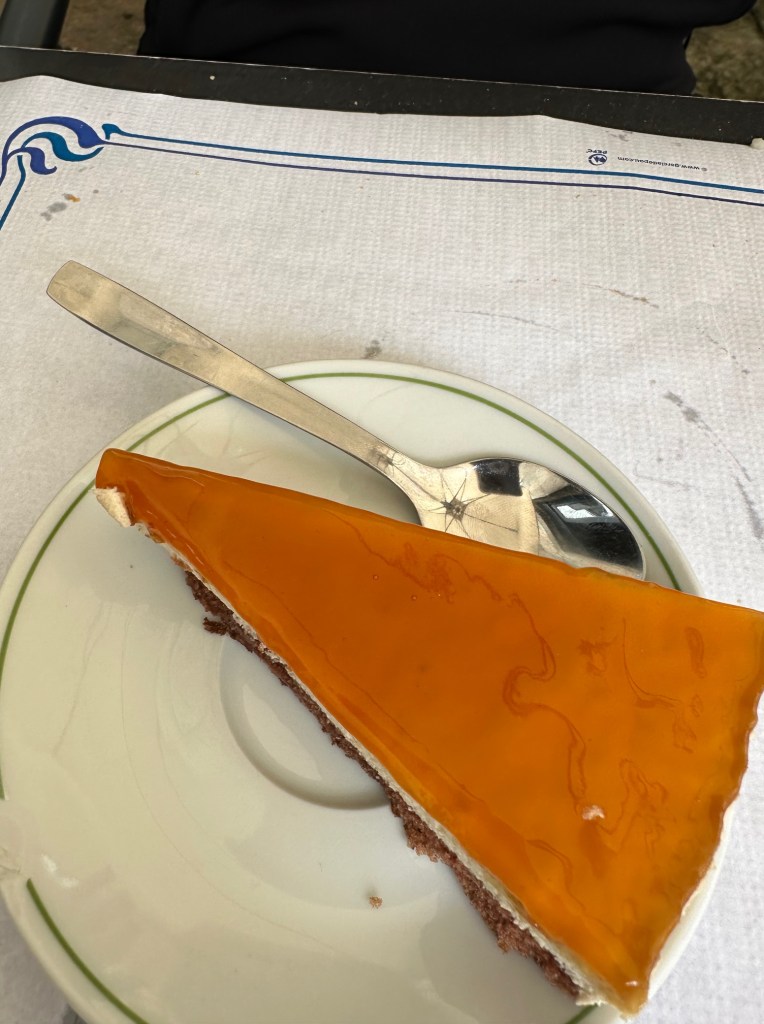
Now to find a Menu of the Day! After looking for a while, and with many places not serving a Menu of the Day since it was Saturday, we decided to go back to Damajuana, were we’d eaten when we first arrived in the city from our hike. They were serving a Menu of the Day, and we definitely made the right choice in going back! We had ribs, their wonderfully perfect fried potatoes, shrimp, and fish. I couldn’t resist ordering their lovely salad again. The brown bread with all was so good. And then, of course, came dessert—I ordered the “cake of fresh fruits” which was light and creamy with fresh berries in it. My daughter ordered cheesecake. Both topped off the meal wonderfully, along with coffee, naturally!

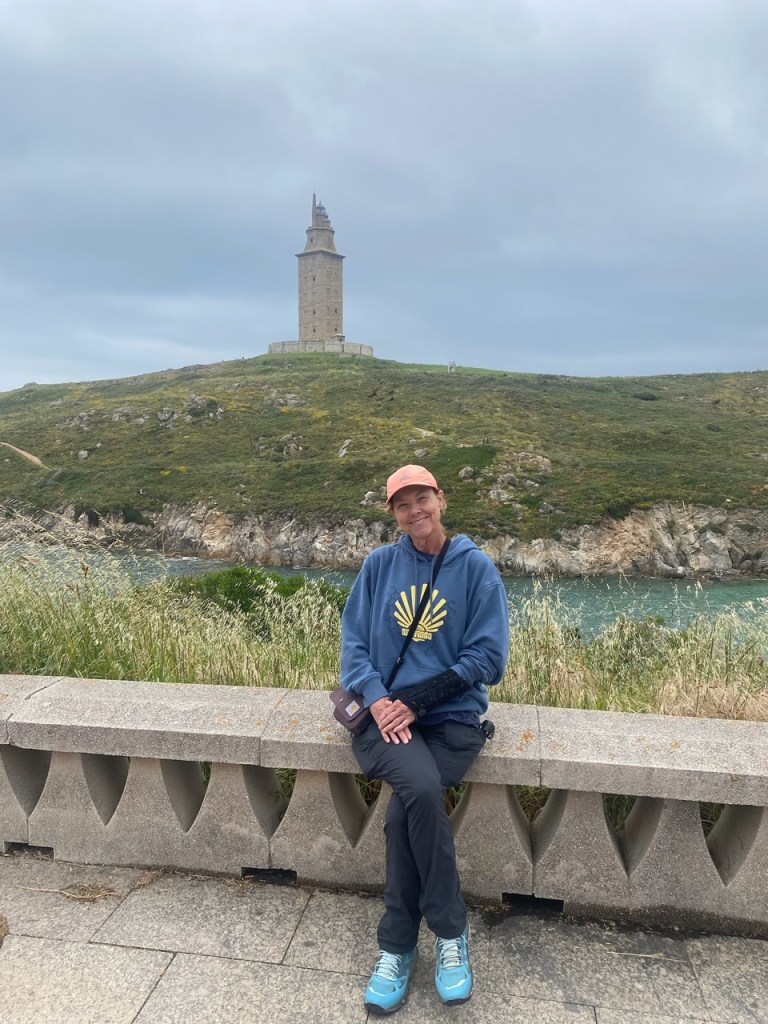
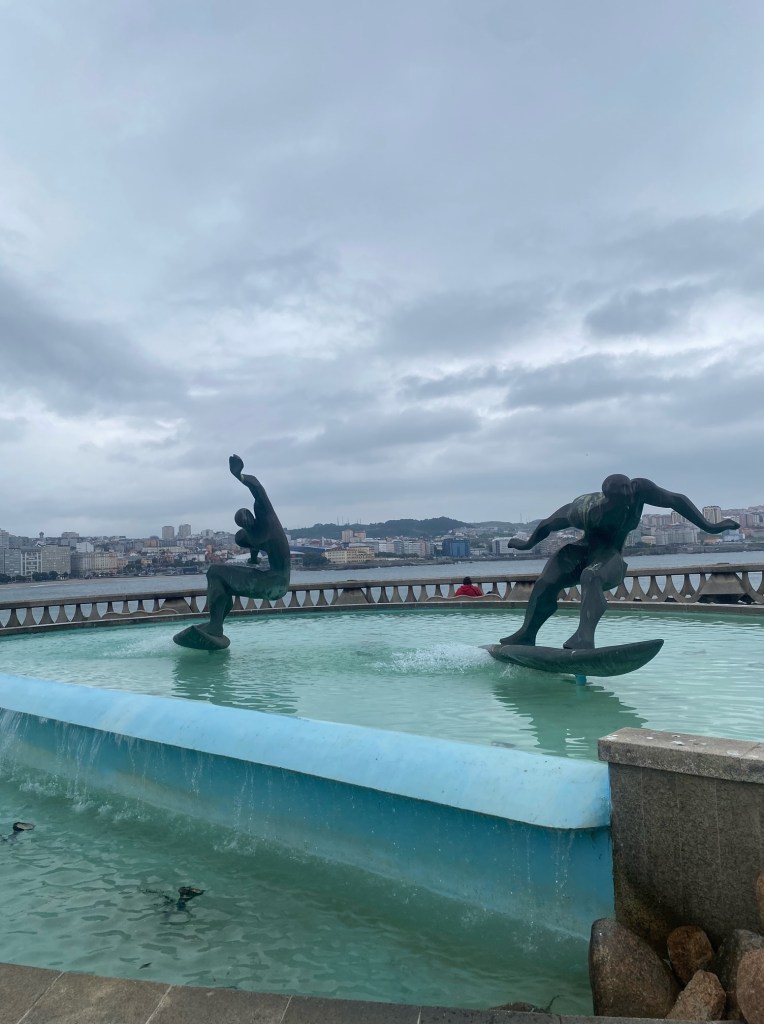
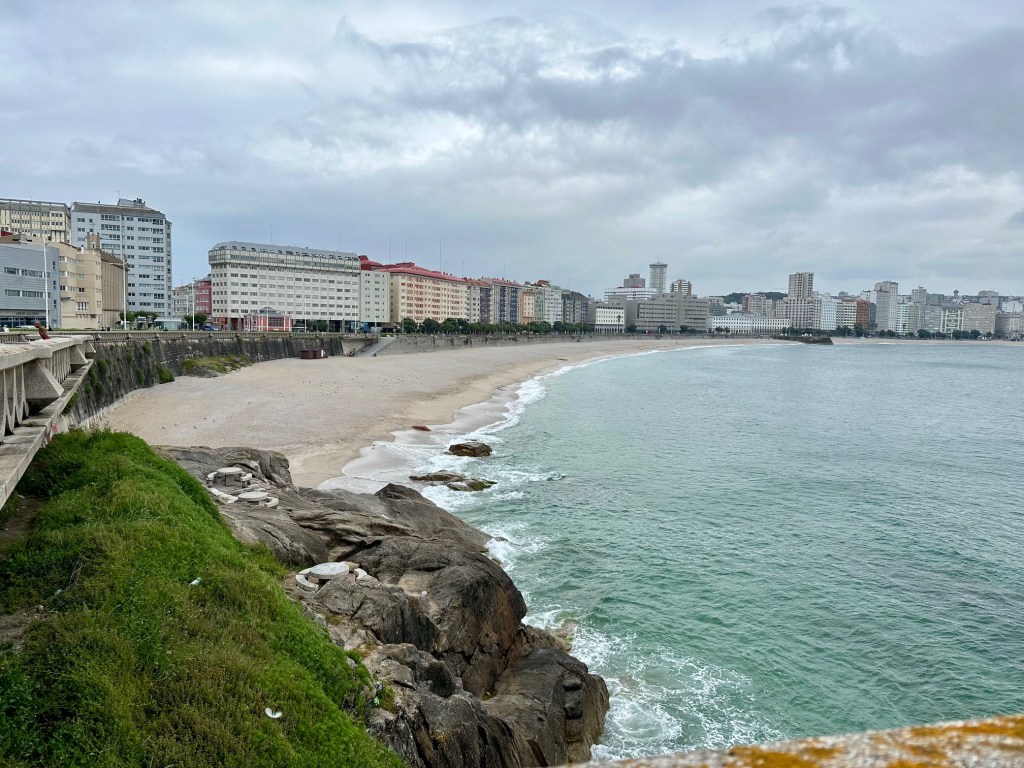
After our leisurely Meal of the Day, and some time in our Airbnb, it was time to catch our bus for the oceanside city of A Coruna, which we had been wanting to visit. We were thankful that we’d dressed warmly for the day, as the weather was overcast and cool, with a strong wind. Walking down the boardwalk we were greeted with huge crashing waves on the rocks in the distance, against the green on the tall rocky cliffs: beautiful. We saw the Tower of Hercules, which was built in the first century and is the oldest known lighthouse still in use. Also, at 180 ft, it’s the second tallest lighthouse in Spain.

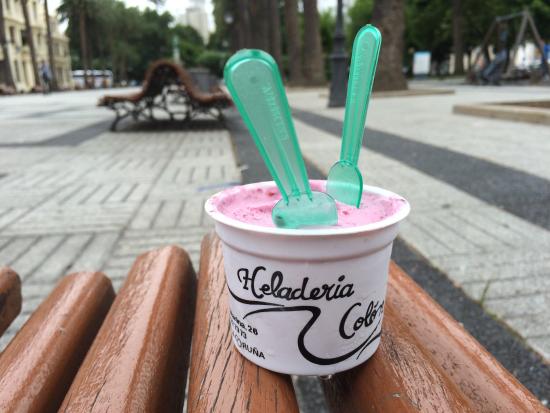
We walked around the city of A Coruna. I’d read about and wanted to try Membrillo ice cream. The membrillo ice cream here is somewhat unique to A Coruna, I had read, because it has fresh, unaged cheese from the nearby tiny mountain village of Cebreiro, as well as “bright burgundy chunks” of quince paste (“membrillo”) in it. What is quince paste? I had no idea but this ice cream was said to be out-of-this-world! We found an helados shop—helados is the Spanish word for ice cream—and, sure enough, they had membrillo ice cream. And it WAS delicious! And by the way, I’ve looked it up since, and quince paste is a thick, sweet jelly made from a fruit called quince.

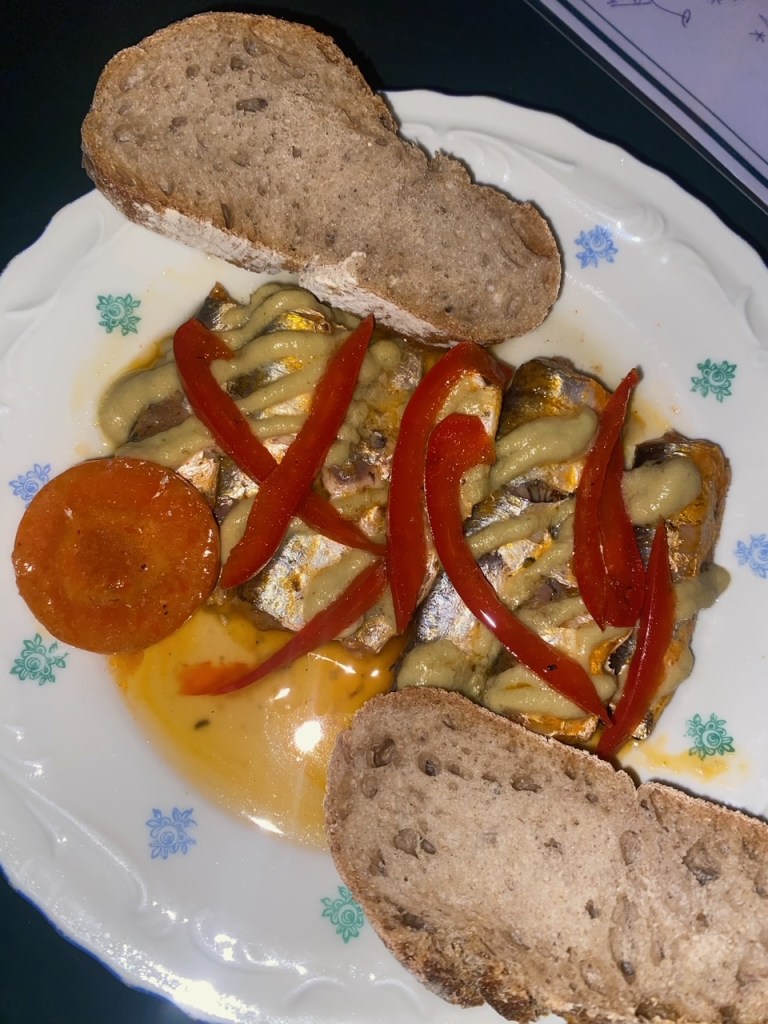
After the bus ride back to Santiago, we decided to stop for tapas at a couple of different spots (tapas being a small snack served with the drink you order at a cafe, bar, or restaurant) on our walk back to the Airbnb. One place we stopped was the small bar and restaurant Bar Entreportas that opened into the alleyway close to our Airbnb. It was a fun stop, with the door open to the alley, watching people go by in this almost hidden “gem” where I enjoyed sharing a dish of sardines and toast (very tasty!) and a coca-cola.

Sardines with toast at the Bar Entreportas

We walked to the Cathedral one last time before turning in, since we’d be leaving in the morning. It was pretty at night against the beauty of God’s night sky. Musicians were playing nearby and people were out enjoying the night—our last night—in beautiful Santiago de Compostela!

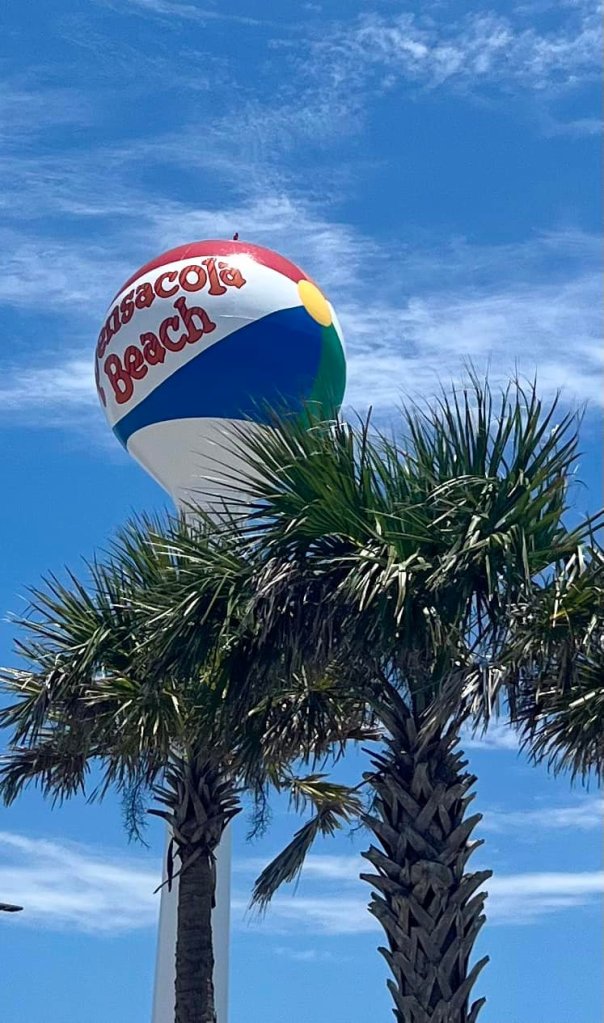
Pensacola Beach, Florida USA

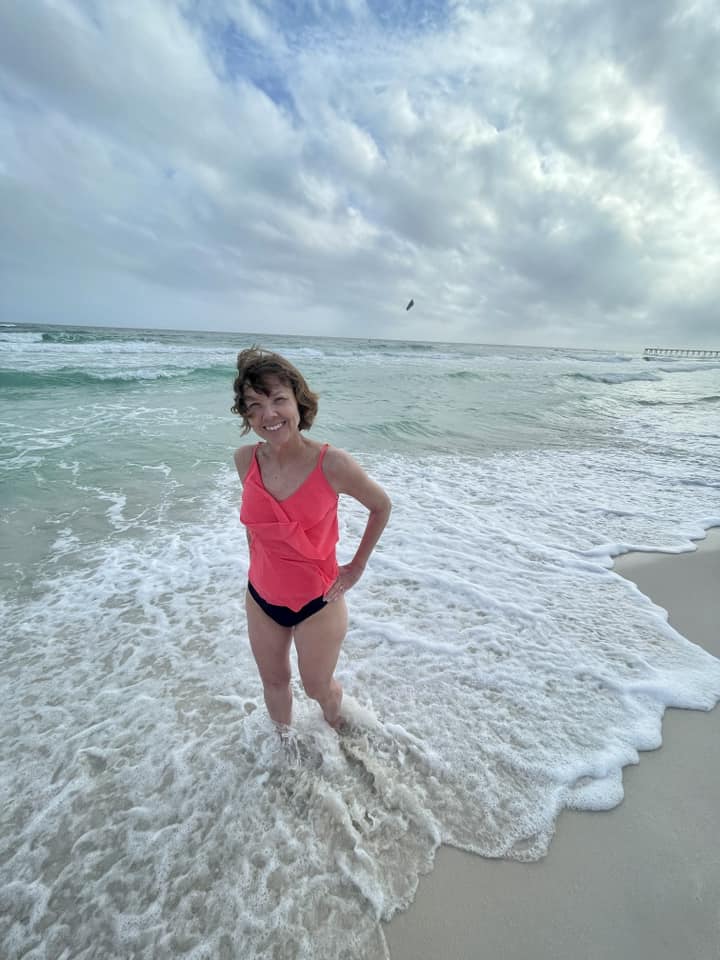
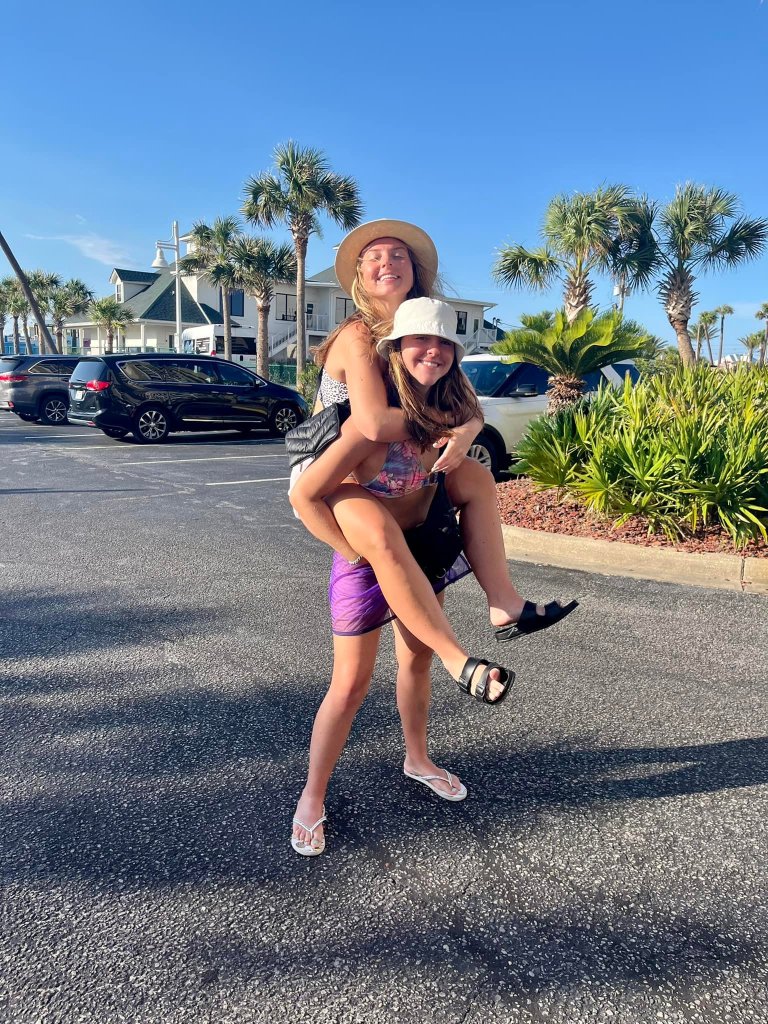
This is such a magical place for me, with my family, a wonderful tradition that to me is unparalleled in beauty, peace, and rejuvenation.

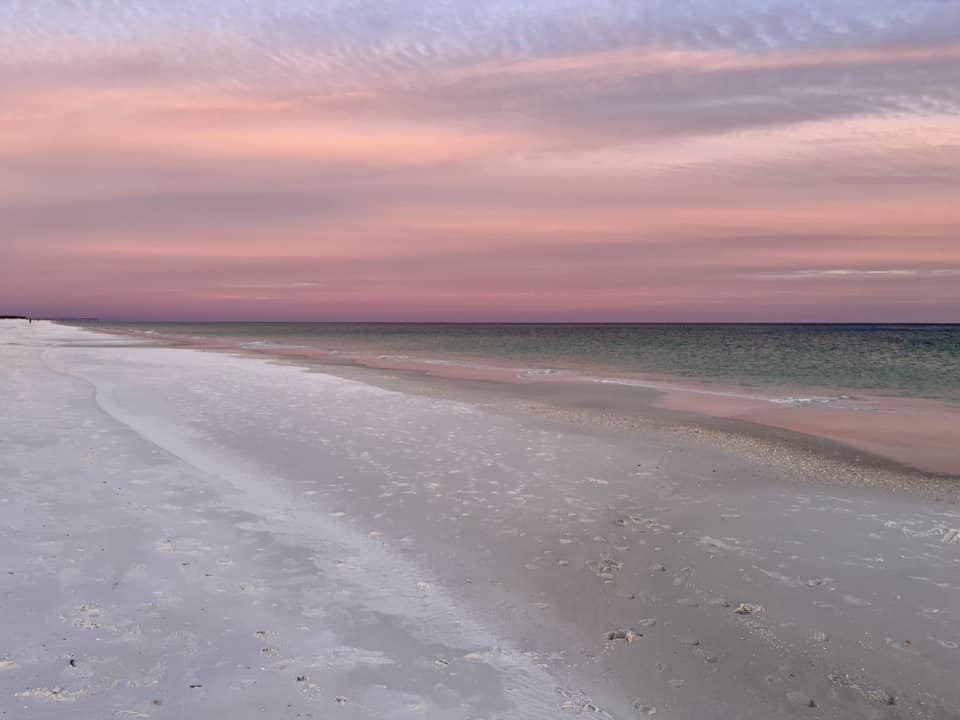
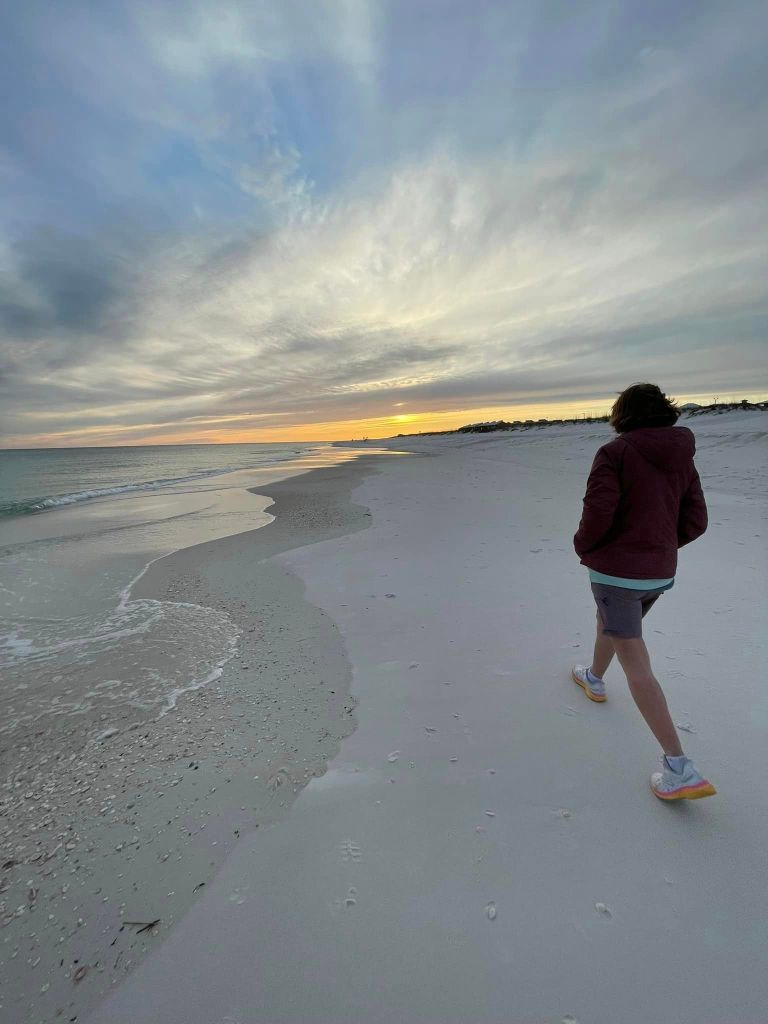
The sugar-sand beaches are perfect, the climate mild to hot depending on time of year, but most of the year consistently and beautifully nice with the soft coastal breeze blowing.

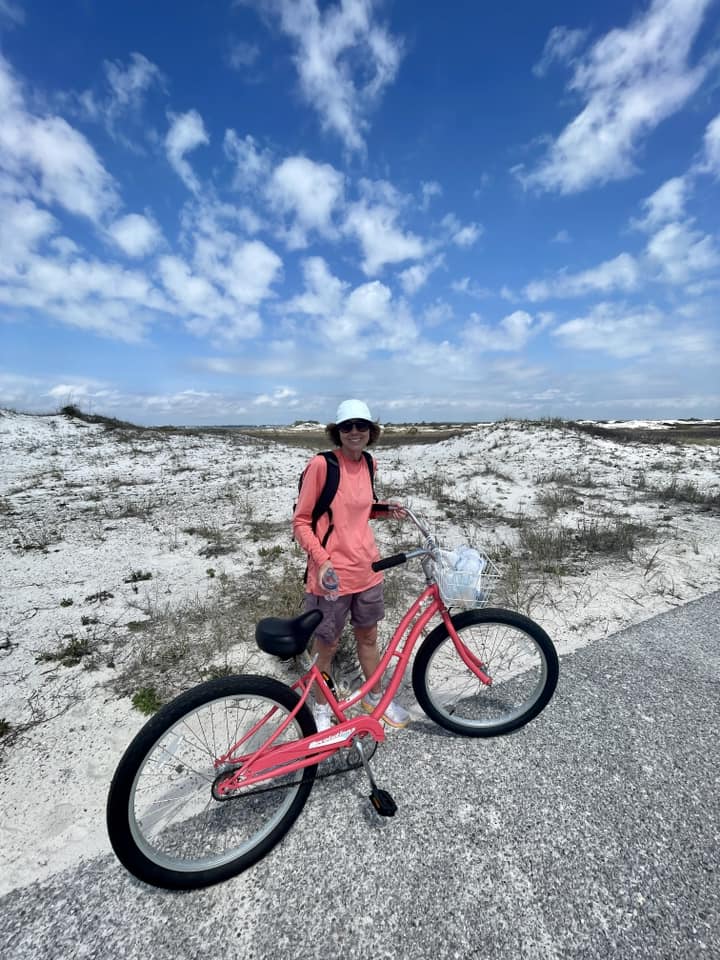
One of my favorite things to do at Pensacola Beach is to rent bikes and ride past the wild beaches (to close to Navarre and back) with my daughters.

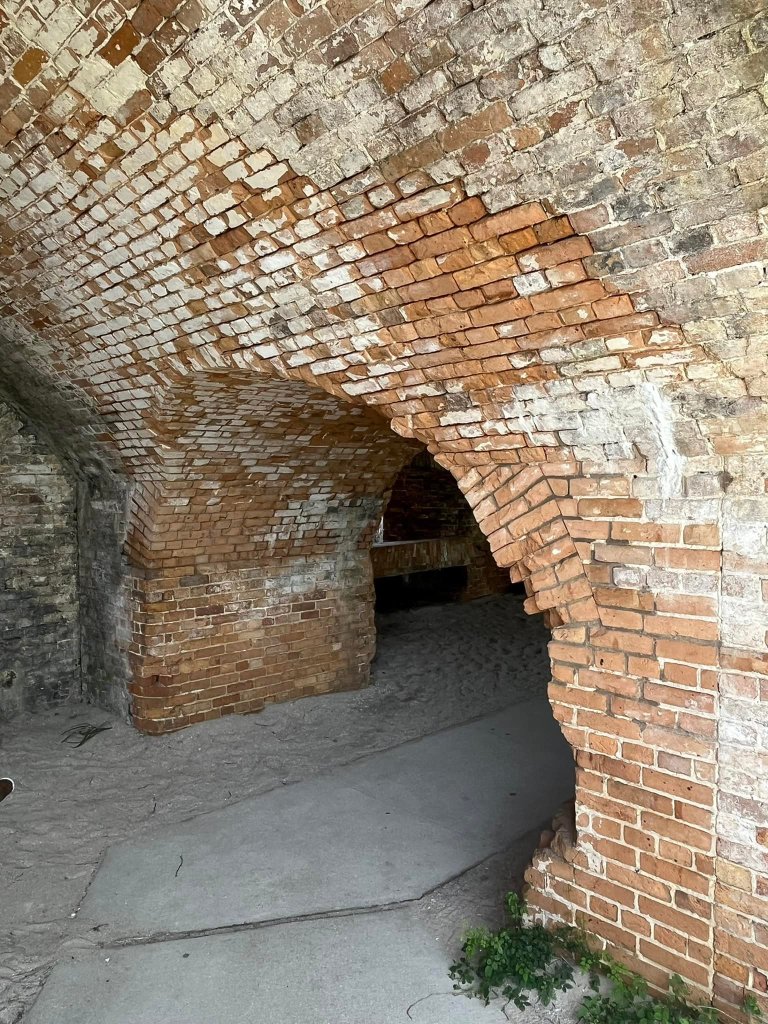
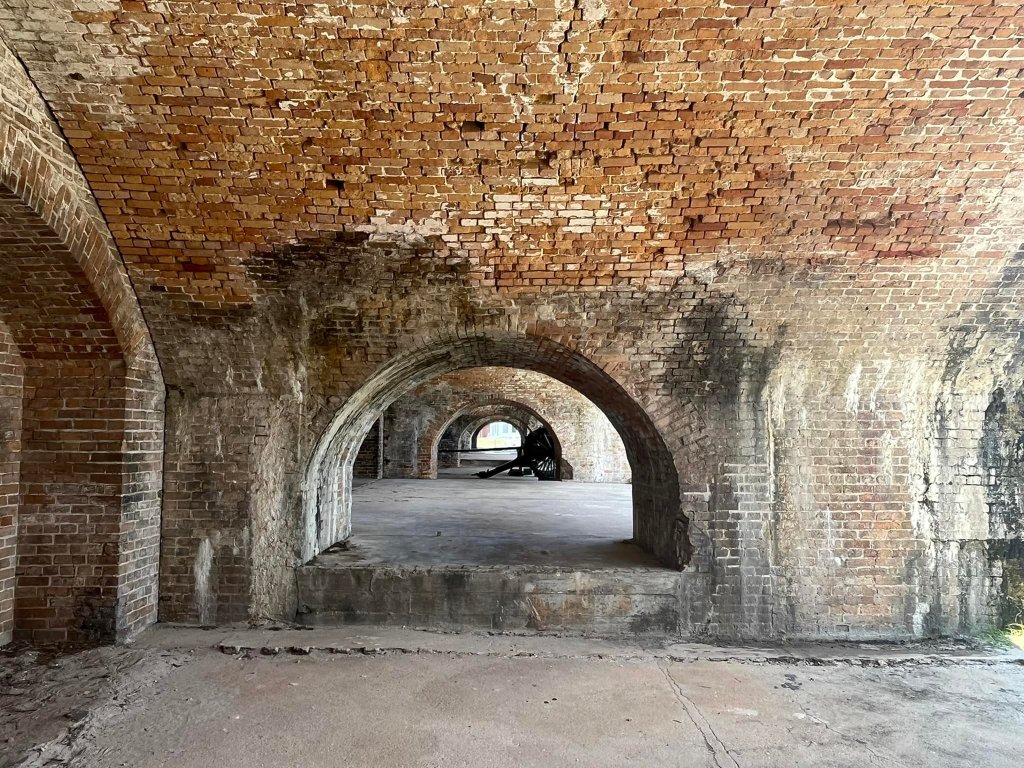
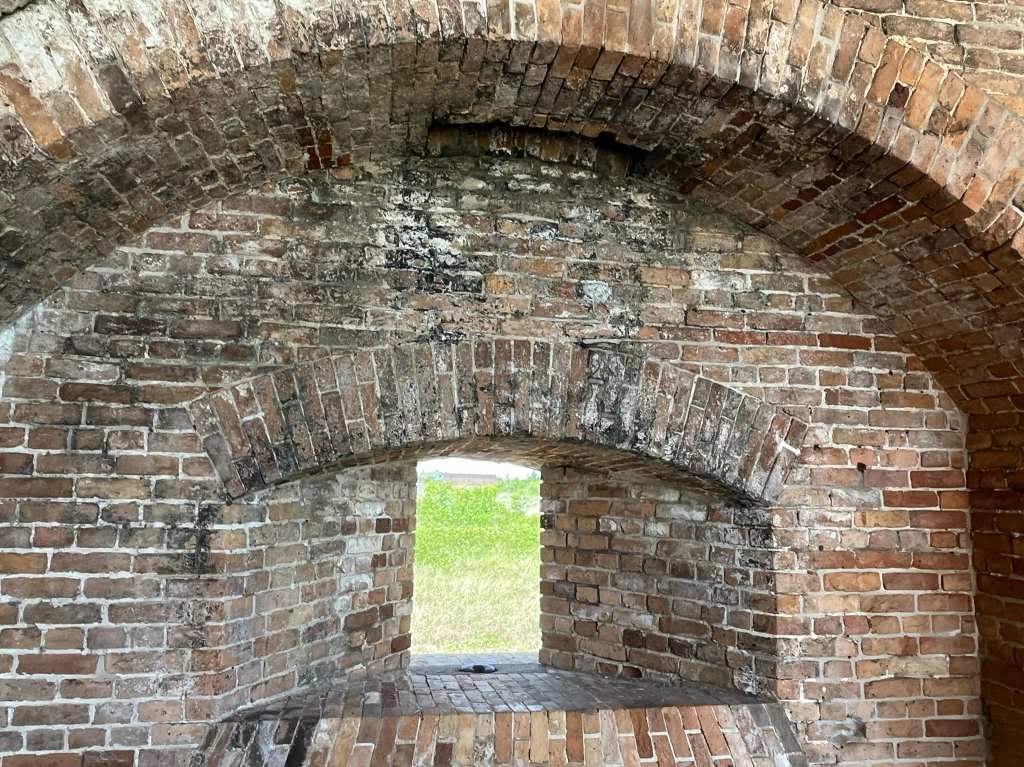
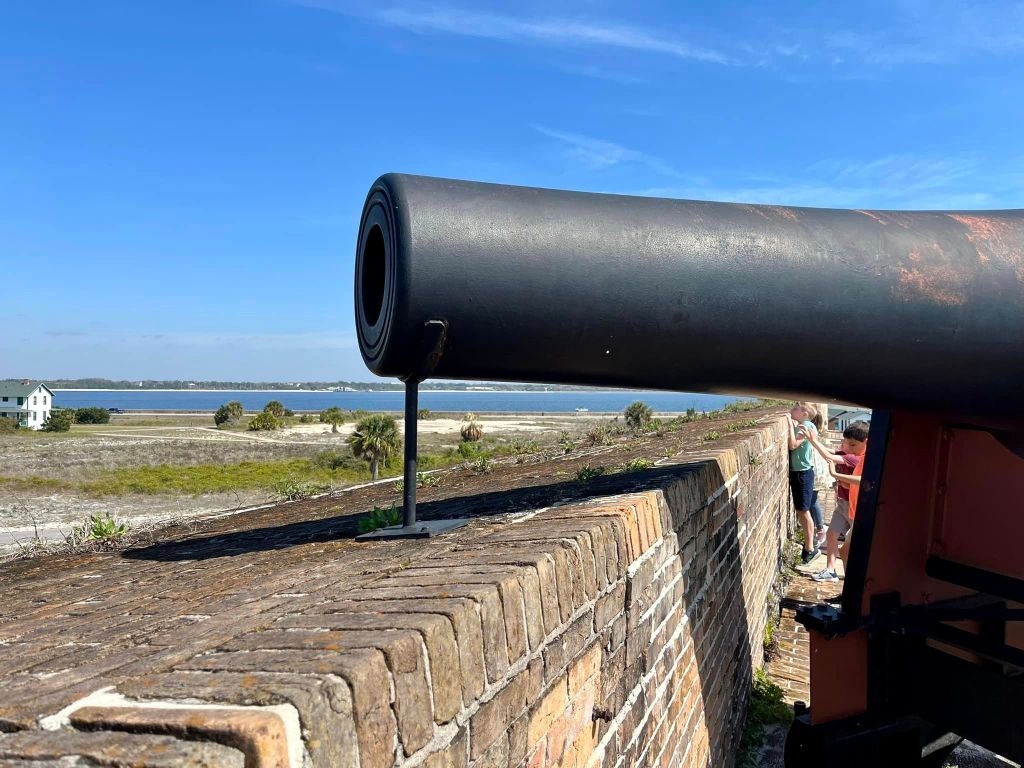
I love-love-love Fort Pickens, located on Pensacola Beach, built in 1834 to defend Pensacola from foreign attacks. It was held by the Union during the Civil War. Geronimo was once imprisoned here! It’s fun to me to climb over and scurry around the fort and grounds!

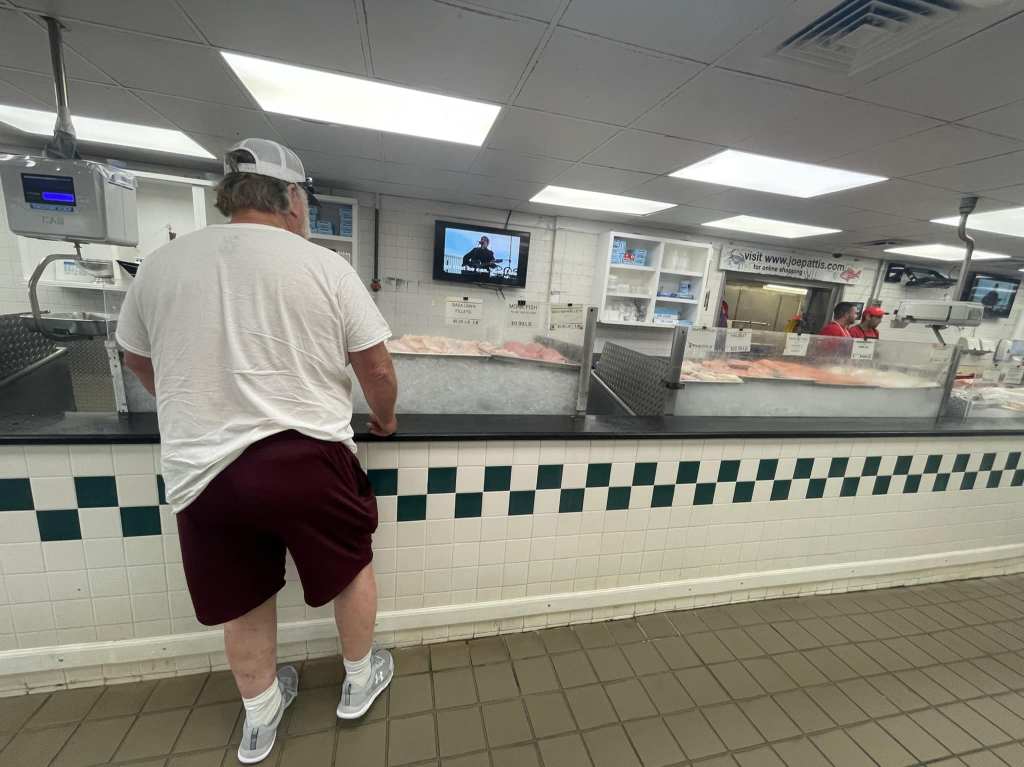
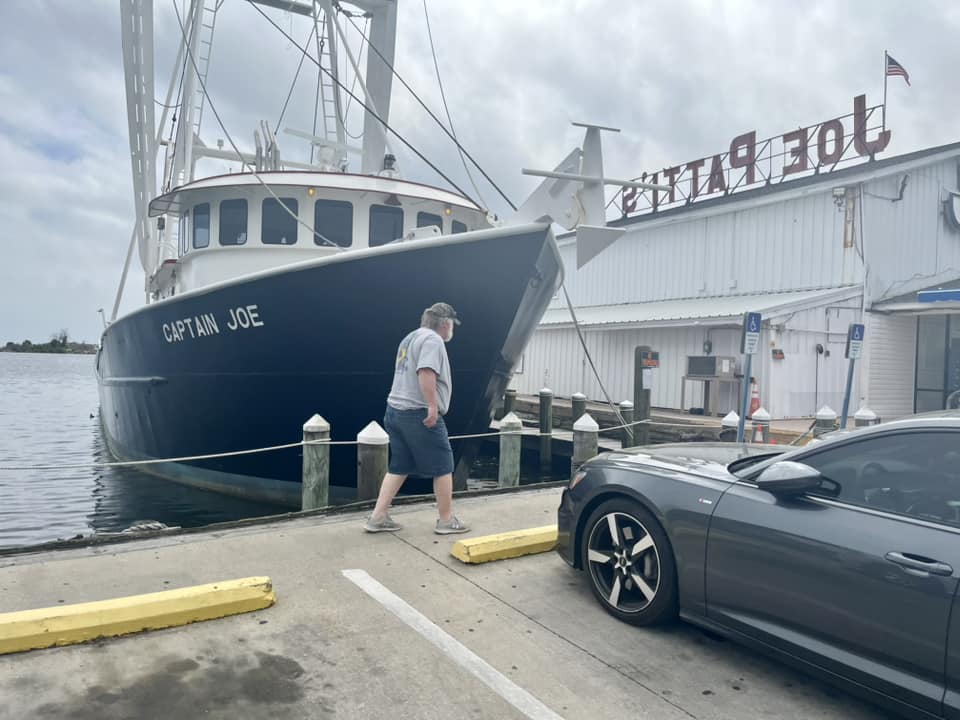
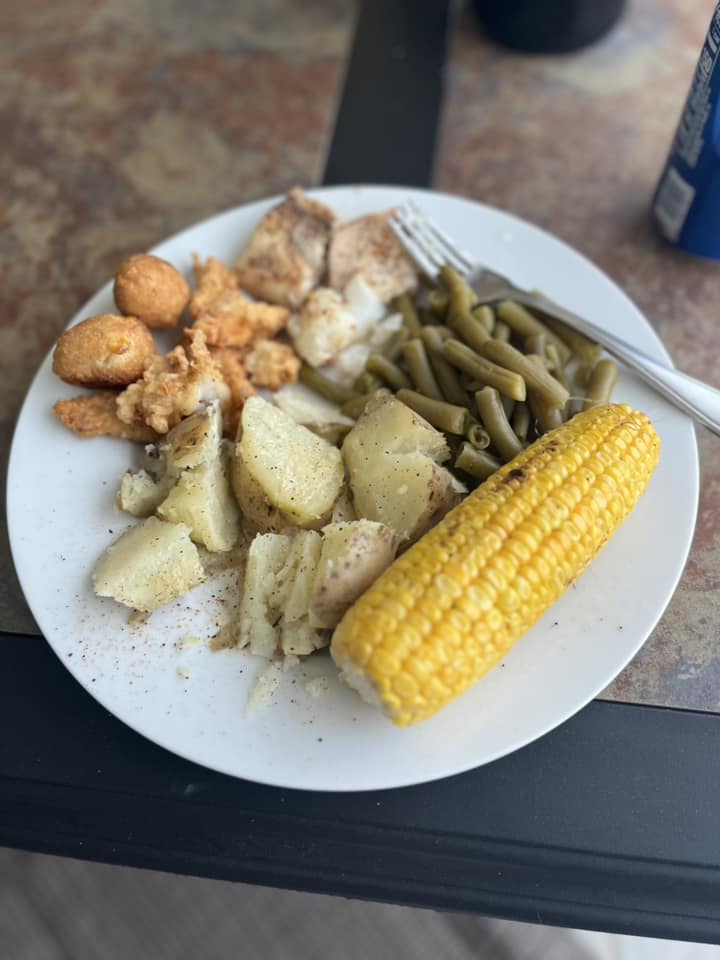
Our family loves Joe Patti’s seafood market. It has been in Pensacola since 1931. There are all kinds of fresh fish and seafood. I also like shopping for jams, relishes, and even souvenir t-shirts in the adjoining room. There traditionally has been a beignet stand outside of Joe Patti’s but it was disappointingly closed the last time we were there. We all choose an assortment of seafood at Joe Patti’s which my husband makes into a wonderful meal in the condo.

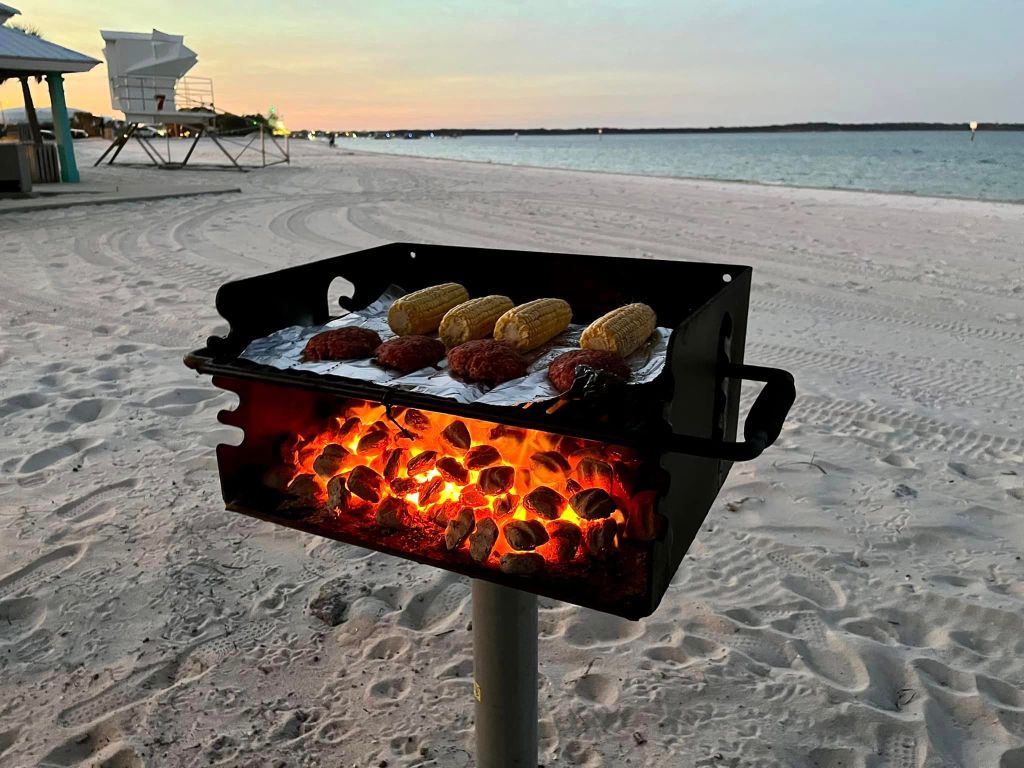
One night is always set aside for grilling on the beach!

My favorite restaurant on the whole on Pensacola Beach is The Native Cafe! It advertises as owned by fifth-generation Pensacolians. I just know it is soooooo good. And decorated with local artwork, fun to spend time in, as well.

We stay at the Emerald Isle—it’s all you need with beautiful balcony views and nicely equipped furnishings, and uncrowded beaches awaiting in magical splendor as you step outside!

Lots to see on a run down the sidewalk in Pensacola Beach!

Pensacola Beach can’t be beat for family fun, year after year!

Pompeii

POMPEII

August 2019

Pompeii was a Roman town in southern Italy. On 24 August 79 AD Pompeii was buried under volcanic ash and rock following the eruption of the volcano, Mount Vesuvius. Most of the people who lived there were killed.

The town was excavated 1,600 years later and the remains of many items, buildings and people were found in a “petrified” state (as they were at the time of the eruption).

Today you can walk through the streets of what was once the first-century Roman city of Pompeii.

The 79 AD eruption of Mount Vesuvius was the first time the volcano had erupted for 1,800 years. The people of Pompeii didn’t know what a volcano was.

Be yourself; Everyone else is already taken.

— Oscar Wilde.

Subscribe below to get notified when I post new updates.

A Week in Bilbao, Spain

Day 1:

After arriving in Bilbao and surveying our airbnb, my daughter and I walked to Old Town Bilbao for Pintxos—fun! So many different things to try, and ending with cheesecake and cafe con leche. A delicious evening in Bilbao.

Pintxos in Bilbao

Day 2:

Playas de Arrietara y Atxabiribil in Sopela

With several beaches just a short bus ride away, we chose to visit Playas de Arrietara y Atxabiribil in Sopela. (It was about a 30 minute bus ride after taking the metro across the city.) I enjoyed a leisurely breakfast of tortilla and fresh orange juice at a cafe up the hill from the beach, then relaxed on the beach, watching the wind surfers. Wind surfing is very popular there! My daughter, in the meantime, took a surfing class, which is popular there, as well.

Then from there we walked for 15 minutes or so to Porto Village (Puerto Viajo, in Getxo) where we sampled pintxos at a cafe. Walking around afterward, we happened upon a music and food festival, where I chose a bacon, pimentos, and goat cheese sandwich from one of the food trucks offering deletable and different looking foods. The bacon in Spain is comparable to what we call “Canadian bacon” in the USA. The sandwich was very tasty! The weather was perfect, and there were lots of people—many families, and many people and families with their dogs (so many dogs!)—enjoying the music and the day.

Pintxos in Porto Village

Slideshow:

After the bus ride back to Bilbao, we walked to our airbnb, stopping at a market for bread, lunchmeat, and cookies; then at a meat and fruit market for fruit. The worker there, who was from Morocco, gave us a Moroccan pastry to sample, filled with a nut spread and spices, very different and good. From my research, it appears to be called briwat.

Then after showers and sandwiches—and Moroccan pastries— we were off to the theater! We had purchased tickets beforehand to see a production at the beautiful historic opera house, the Teatro Arriaga de Bilbao! The theater house was built in 1890, designed by architect Joaquin Rucoba. It was rebuilt in 1985 after severe flooding. We were seated at the edge of the curved balcony. Leaning up to peer over the balcony and looking around me at the detailed beauty of this theater, I felt as if I’d been transported back in time!

We saw the production of Double Murder by Hofesh Shechter Co.

After the show we walked back to our airbnb through the pretty city with its old rock walls; the bridge over the river; beautiful cathedral; and pretty Spanish homes and buildings with flowers on the balconies.

It doesn’t get dark until around 10:00 in Spain. I did a little research to find out why: Spanish time, apparently, is a historical anomaly. Spain (except for the Canary Islands) is in the “wrong” time zone! This is because in 1940 the Spanish dictator Francisco Franco changed the Spanish time zone to match Germany’s!

Slideshow:

The next day we took a bus to Irun to begin our week on the Camino de Santiago North route from Irun to Bilbao! We successfully completed our hike (which was an amazing experience!) and relaxed as planned for a few more days in Bilbao—our first day spent in celebrating at a Bolivian restaurant and sampling traditional butter buns at a bakery (see post “North Route: Irun to Bilbao”)

Day 4:

Gaztelugatxe

We took a bus to Gaztelugatxe (after a short metro ride, about a 30 minute bus ride). Gaztelugatxe is the island which is ‘Dragonstone’ in Game of Thrones. It is said that John the Baptist visited this island. There are 231 ancient stairs on the island leading to a chapel at the top dedicated to him. The island itself is accessible by a man-made bridge. Only a certain number of people are allowed in a day so we only got to observe from overlooks and the nearby beach.

The nearby beach at the Bay of Biscay—just a short hike away— was beautiful, and uncrowded. We’d brought snacks, drinks, and sandwiches…it was a nice day of relaxing oceanside!

Day 5:

After breakfast in the airbnb, then a few (blissful, for my daughter) hours spent shopping secondhand stores in Bilbao, we went to the La Ribera Market, which is, with 10,000 square meters, the largest closed market in all of Europe. It is even listed in the Guinness Book of Records! We chose several different pinxtos for lunch there, including the Basque dish ‘bacalao pil-pil’, which is cod fried or baked with garlic and olive oil; mine was served on bread, with the long toothpick—recognizable on most Basque pinxtos, it seems—through it.

(example of a Bacalao Pil-pil pinxto)

Then on to the Guggenheim!

The Guggenheim Museum in Bilbao is a contemporary and modern art museum designed by Canadian-American architect Frank Gehry. It was built in 1997, and it immediately turned Bilbao into a popular tourist destination which still draws many tourists today. The curves on the exterior of the building were meant to appear “random” and were designed to catch the light, according to Gehry. The interior is designed around a large, light-filled atrium with views of the surrounding hills of the Basque Country.

Jeff Koons’ The Puppy at the Guggenheim museum is an icon in Bilbao. The Puppy is more than 40 feet tall. The breed is a West Highland White Terrier. It’s a permanent exhibit. Twice a year, in May and October, the plants are replaced with fresh seasonal ones—pansies in the fall and winter; and begonias, impatiens, and petunias in the spring and summer. The engineering? The puppy is anchored to a concrete base. A stainless steel structure is covered with a layer of turf, wire mesh, and a type of “geotextile” fabric which stimulates plant growth! There are 5 levels of scaffolding, and a network of pipes that feed and water the plants every day.

The Puppy is found in every souvenir shop in Bilbao on keychains, purses, postcards, tea towels, and t-shirts!

Mamam (the French word for “Mother”) is a bronze, stainless steel, and marble sculpture by Louise Bourgeois of a spider. It is over 30 feet high and 33 feet wide. It includes a sac containing 32 marble eggs! This sculpture is also found at Crystal Bridges Museum of American Art in Arkansas in the United States, as well as other museums around the world.

There are both permanent and traveling exhibits in the Guggenheim. An interesting maze of curves to walk through awaited us on the first floor. The mazes were interesting to look down upon from the second level, as well. The museum has three levels. Among exhibitions which stood out to us were Andy Warhol’s Marilyns and Jeff Koons’ Tulips.

Day 6:

After souvenir shopping, and churros and chocolate, we went for our scheduled 2 1/2 hour walking tour of Bilbao. It was interesting and fun!

This is the “Fountain of the Dogs,” created in the early 1800s to look like, as you can see, heads of lions. No one knows why it was then called by the locals, “fountain of dogs!” A little brainstorming here: what do you think?

It is said that the fountain was originally used to wash animals that were to be sold in the nearby market. Today it is in use to fill water bottles of grateful tourists!

Slideshow:

After our walking tour, we found a meal of the day in Casco Viejo, the old-town part of Bilbao along the river with traditional taverns and cafes as well as La Ribera Market and Teatro Arriaga de Bilbao (see previous posts) and modern shops and restaurants.

The meal was elegant! A cold tomato bisque—fun to try— was served before the meal. We ordered lasagna, which was very tasty with thin and delicate lasagne pasta, vegetables and meat; a steak-soup dish; chicken with French-fried potatoes; fish; and to finish the memorable meal, a Basque yogurt dessert and delectable apple pie, with, of course, cafe con leche.

Slideshow:

We walked around the city, including visiting the Acuna Cultural Center, a multipurpose center in which events are held, also housing interesting art, a gym, and restaurants. We went to the rooftop to look around; and had drinks at a terrace restaurant/bar there. Then back to the airbnb to pack for our next adventure. Tomorrow we will say good-bye to Bilbao, but will take our memories—and a few souvenirs that we’ll jam into our already cram-packed backpacks—to remind us of this week in Bilbao!

Santorini

Skaros Rock

The trail to Skaros Rock started with a long hike down many, many steps before then going up many, many more steps. We went, as do many others, to watch the sunset. We got lost on the way back, and ended up on the wrong trail, which we discovered was part of the Oil to Fira trail that we planned to walk later in the week. Nonetheless, this trail led us to Fira where we found our Air BnB without too much trouble.

Oia

We spent a couple of nights in Oia, city famed for its whitewashed, blue-domed buildings unique in architecture, built into the hillsides.

My favorite thing there (by far!) was Ammoudi Bay! 300 steps, straight down along the steep cliffs, took us to the stunningly beautiful Agean Sea on Ammoudi Bay.

Fun Fact: This is where Sisterhood of the Traveling Pants (Two) filmed the friends jumping off the cliff into the blue water at the end of the movie!

My daughters jumped from the high cliff of the Sisterhood fame, while I dozed on rocks below, swam, and braved jumping from a much smaller cliff.

We rode donkeys back up the never-ending steps! The donkeys are available for a few euros and are always a welcome sight! We also went down to Ammoudi Bay to eat at one of the several restaurants there and enjoy the view of the sunset, again riding the donkeys back up while enjoying the view.

“That’s a mem’ry I don’t mess with…” Lee Brice

Fira to Oia Hiking Trail

A wide variety of magical views met us all along the hiking trail from Fira to Oia! Six and a half miles— it took us around four hours with a some photo stops and other distractions along the way— through canyon views, hotels, churches, cacti, and a vendor selling pretty painted leather bookmarks; with whistling wind, cobblestone streets, dirt trails, pieces of highway, and a blazing searing hot sun! We stopped at a pretty little church and had lunch on the steps— sandwiches and chips we’d brought, and a most welcome cold coke from a vendor on the trail. After more miles and miles of the blazing hot sun, we happened upon a small shade where we had a snack, then continued the last leg of the trail into Oia. We walked around Oia a bit and my daughter went back to the (really cool)bookstore there to get a book she had wanted— The Iliad in Greek and English. Then we caught a bus back to Fira to our Air B n B, where we settled in happily with a take-out pizza for the night!

Slideshow: Fira to Oia

Caldera Sailing Adventure

We sailed around the caldera on a 5 hour tour, seeing the “red beach, black beach and white beach” as well as trying out the volcanic hot springs, and taking a swim in the blue, blue Agean Sea. A wonderful grilled lunch was served, as well as drinks and snacks throughout the day.

Crete

Malia

The beach at Malia made for a relaxing day after the whirlwind of Athens.

A favorite Cretan food was barley rusks— a double-baked bread made with barley flour and sometimes whole wheat flour. Also called a dakos, it is served drizzled with olive oil, sprinkled with oregano, and topped with cheese, tomatoes and olives. Yum!

The Samaria Gorge

Beautiful, expansive, freeing… Samaria Gorge!

When we started on this hike, I knew why I had come to Crete! The Samaria Gorge cuts 16 miles through the White Mountains of Crete, and ends at the Libyan Sea. Our tour group was to hike a shorter version of the gorge. My daughters and I, though, hiked past the “Iron Gate” at which point our travel tour guide had told us to turn around, because we were looking for an actual gate. The “Iron Gate” is, instead, a 13 foot wide section of the gorge with 900 foot tall cliffs on each side. We had taken photos there then forged on ahead looking for the iron gate!

The 2 1/2 hour bus ride from Heraklion was followed by a 45 minute ferry ride to get to Samaria to hike the gorge; then, of course, we followed the same routine back to Heraklion. The bus ride was interesting with olive groves, farms, goat herds with bells ringing, mountains and sparkling coastline. The ferry ride was enjoyable and relaxing. The hike and swim? An experience I am glad I didn’t miss in my life!

What a fun day!

Palace of Knossos

Palace of Knossos Slideshow:

Knossos was first settled in the Neolithic age in around 7000 BC! The first palace of Knossos was built in the middle Minoan age around 1900 BC. Although palaces had been built before, this one was on a much larger scale; its grandeur must have been an unimaginable sight! The site is about the size of two football fields and includes a south entranceway with many twisting turns through a maze of a dark corridor which has made many people through the years think it was the mythological Labyrinth!

Reconstructed parts of the Palace of Knossos are shown in deeper colors so that visitors can distinguish the original parts from the ones that have been reconstructed.

This theater was built in the Neopalatial period roughly 1750-1490. Spectators stood, instead of being seated, and watched, it is thought, religious ceremonies.

The queen’s megaron features a reconstructed fresco of dolphins swimming above the doorway.

The Heraklion Archaeological Museum

The Heraklion Archeological Museum houses countless artifacts from Knossos and is considered by far the most complete collection of artifacts from the Minoan age.

The Minoan writing system is to this day undeciphered. Thus, no one knows what is written on this 4000 year old clay disk, or even the purpose of it!

Heraklion

The waves at Heraklion were ENORMOUS. Across the boardwalk was the incredibly impressive Venetian castle of Heraklion called Koules (which, I learned, means fortress in Turkish.) The castle was originally constructed by Venetians in the early 13th century when they conquered the town. It has been used as a military base, prison, and storeroom throughout the years by the Genoese, the Ottomans, and others. The walls are very thick and divided into 26 apartments. The ground floor has a vaulted fanlight roof.

Chania

The city of Chania is surrounded by old stone walls, the inner walls built around 300 BC and rebuilt in the Byzantine era. The outer walls were built in the 16th century during Venetian rule in Chania. We took a bus to Chania for the day to walk around the picturesque city and harbor, then relax at the beach.

ATHENS

The Acropolis beckoned to us from atop its high hill while we saw other sights and the museums first before our scheduled guided hiking tour there.

The Acropolis

There’s no recorded history of what happened at the Acropolis before the Mycenaeans cultivated it during the end of the Bronze Age. Historians believe the Mycenaeans built a massive compound surrounded by a great wall (almost 15 feet thick and 20 feet high) on top of the Acropolis to house the local ruler and his household.

Ruler Pericles began a massive building project around 460 BC erecting colossal statues and elaborate temples on the hill. He died before the spendorous project was completed, some 50 years later.

The Acropolis must have been a crazy-spectacular sight for travelers to it during the Golden Age of Athens (460 B.C. to 430 B.C.) when Athens was at its cultural peak. Can you imagine, not having seen anything like it before, the awe they must have experienced!

Acropolis Slideshow:

The Acropolis Museum houses more than 3000 artifacts from the ancient Acropolis!

Acropolis Museum- Frieze from the Parthenon

I especially enjoyed the archaeological dig below the Acropolis Museum, and was so very glad that our tickets included the opportunity to go see it.

The Parthenon was built around 447 BC using limestone foundations and 22,000 tons of marble. It was designed by architects Ictinus and Callicrates and dedicated to the mythological goddess Athena. It was colorful, and had intricate statues and friezes going around the top, in the days of Athen’s glory. Some of the statues are located in a museum in Great Britain, while you can see many of them in the Acropolis museum in Athens. The Parthenon housed a gigantic statue of Athena, 39 ft. high and made of ivory and 2513 lbs of gold.

The National Archaeological Museum

There are approximately 16,000 statues in the National Archaeological Museum in Athens! Considered one of the greatest museums in the world, it houses artifacts from Greece dating from Pre-historic to late antiquity.

This funerary monument with a statue of a Hoplite (a heavily armored foot soldier) with the inscription of the name ‘Aristonautes’ was made from pentelic marble and had a total height of 8 ft. 1.6 in. The statue had a height of 5 ft.

Funerary Naiskos of Aristonautes
As a dog lover, I enjoyed this statue, from 500
BC, of a man giving his dog a treat of a locust!

Mars Hill

Slideshow:

Mars Hill is where the apostle Paul gave a speech to the Athenians, as told in the Bible in Acts 17: 22-31. There is a plaque with his words inscribed there. Mars Hill is mainly used now, it appears, as a popular spot to watch the sunset.

The Ancient Agora of Athens

The agora in ancient times was a large open area that served as the marketplace and meeting place for the town. The citizens of the city would meet here to discuss politics and philosophy, hear speeches, and buy goods. It was at the agora that Socrates, Plato, and Aristotle philosophized, to rapt audiences. Temples to the mythological gods were situated around the agora.

Ancient Agora- Slideshow:

Temple of Olympian Zeus

Temple of Olympian Zeus Slideshow

The Temple of Olympian Zeus was built of marble from Mount Pentelus, and measured 314 ft. 11 in. along its sides and 131 ft. 2.8 in. along its eastern and western faces. It consisted of 104 Corinthian columns, each 55 ft. 9.2 in. high. Only 15 of these columns remain standing today. A 16th column was blown down during a storm in 1852 and is still lying where it fell! The temple was begun in the 6th century BC but not completed until the Emperor Hadrian’s rule in the 6th century AD. Hadrian dedicated the temple to Zeus, king of the mythological gods. He placed a giant gold and ivory statue of Zeus in the entryway along with one of himself. Nothing remains of these, or anything else from the interior of the temple. Much of the temple was probably brought down during an earthquake during the medieval period, and its statues reused for building materials.

While at the Temple of the Olympian Zeus, we enjoyed looking out at the archaeological dig nearby.

The National Gardens

In the National Garden are planted things that would have been in the garden there during the Hellenistic period (507 BC to 323 BC.) It was beautiful and shady, a relaxing and nice respite from the heat of the day.

Sometimes men lounged on benches or couches around small rooms like this one, to hear philosophers and teachers.

Archaeological Site of Lykeion

Near the National Gardens are archaeological sites including the site of Lykeion. This is where the famous School of Athens was located! Yes, Socrates actually taught here!

“The only thing I know is that I know nothing.” Socrates- Around 490 BC

The Panathenaic Olympian Stadium

The only stadium in the world built entirely of marble, and the site of the first modern Olympic Games- We had so much fun walking around, climbing up the steep marble steps, running around the track, and clowning around!

SO MANY DOGS AND CATS!

It made me happy to see dogs and cats EVERYWHERE, including in stores and shops! Apparently well taken care of by kind city-dwellers and tourists, the animals are super street-smart, looking both ways and crossing busy streets at opportune moments. It was a phenomenon we saw everywhere we travelled in Greece!

Archeological Sites

Amazing-Astonishing-Remarkable-

People from ancient times lived in these structures, walked the steps, poured from the vessels… it is beyond amazing to me to see the (many!) archeological sites throughout the city.

The informative placard at this site suggests that Christian martyrs once used the this area as a hiding place. Found here etched into the walls are Christian symbols of fish, anchors, doves and crosses.

Byzantine and Christian Museum

Built in 1914 to collect, study and preserve the Byzantine and Post Byzantine cultural heritage, the Byzantine and Christian Museum holds approximately 30,000 artifacts, including Christian sculptures, textiles, paintings, jewelry, mosaics, wall paintings, and books.

This is thought to be one of the earliest depictions of the Nativity, from around 400 AD.

FOOD IN ATHENS

We walked thousands upon thousands of steps each day trying to see all of Athens, so we replenished our energy frequently through the wonderful foods there! I love the family-style meals served at many restaurants or by request. Spicy cheese dip was a favorite treat, as was yogurt, which I had every day, usually with honey, nuts and fruit. A staple for me also was grilled k-bobs which are called souvlaki (not to be confused with the gyro made with the grilled meat, also called souvlaki, we discovered.)

Senor Zeus Restaurant- Anafiotika

One of my favorites was a restaurant called Senor Zeus in Anafiotika. On our way down from hiking the Acropolis, we struck up a conversation with a man who took care of stray cats there (he knew them all by name and told us about each of their personalities!) He recommended the restaurant to us. It was wonderful, with a menu of the day that included several delicious courses and dessert. There was fried stuffed tomatoes and zucchini; fish dip; spinach pie; chicken skewers; stuffed bell peppers, and much more. We enjoyed all of it with a splendid view of the whitewashed homes and sky over Anafiotika. So very relaxing after the long day of hiking! 

Shopping in the Plaka district was fun, with me searching for souvenirs, and my daughters looking for jewelry or clothes. We all managed to find all we wanted and more!

You can sit on the famous “steps of the tavernas” in the Plaka district for a meal or drinks. It is very pretty with lights along the stairs at night. We ate on the roof of one of the restaurants there one evening.

Magnificent Madrid

The Plaza de la Armería is a square in Madrid that is located between the Almudena Cathedral and the Royal Palace. We enjoyed our time atop the Cathedral with the statues, glad that we had decided to tour the cathedral, as we had happened on it 15 minutes before it closed to tours for the day.

The Temple of Debod is an ancient Egyptian temple built in 200 BC. It was dismantled, moved and rebuilt in this square in 1970, given as a gift to Spain for helping relocate other ancient Egyptian temples before the construction of the Aswan dam in Egypt. Sitting on the long bench surrounding it, we heard the security guards begin blowing their whistles shrilly and shouting frantically. After looking around for a dangerous-looking culprit, I realized suddenly that their anger was directed toward ME. I had my feet on the wrong side of the bench!

The Royal Palace of Madrid was home to the Kings of Spain from Charles III to Alfonso XIII. It is not no longer the home of the royal family of Spain, but is used for official banquets, ceremonies and celebrations.

One of the most famous pictures in the Prado museum in Madrid is the painting by Diego Velázquez “Las Meninas” (which means ‘The Ladies in Waiting’). All over the city of Madrid are sculptures by different artists depicting Las Meninas! Which of these is your favorite!

Paella is one of the most well-known dishes in Spain. It consists of rice, saffron, chicken, and seafood, among other things, cooked and served in a large shallow pan.

Retiro Park in Madrid has a large lake in which to rent a rowboat and enjoy a little downtime from the hustle and bustle.

Our Airbnb was quaint and charming! I felt like I was on an “I Love Lucy” set.

Market of San Miguel

San Miguel Market is the most popular market in Madrid. The large covered market is not a traditional one but a gourmet tapas market, with over 30 different vendors selling a wide variety of beautifully prepared tapas, hams, olives, baked goods and other foods.

Market

Porto, Portugal

edited-also-good-of-me-to-use-copy

Oh how I love this place!  Hiking the cobblestone streets up and down through the city each day… ascending steep hills to be rewarded with views like none imagined… I’m in love with Porto’s beautiful unique vibe!

Douro River

edited-me-porto-1-1

img_2043

Archaeologists believe trade at the mouth of the Douro River in Porto may date back to a Phoenician trading settlement in the 8th century BC.  Later, the Douro River Valley region developed as an important trading center during the Roman occupation of the Iberian Peninsula, and continued into the Middle Ages.  As early as the 13th century, wine produced in the Douro Valley was being shipped along the river to Porto in traditional wooden rabelo boats.  Rabelos are still prevalent on the river today, though no longer used commercially.

The six bridges spanning the Douro in Porto are landmarks in the city.  My daughter and I looked forward to seeing the Maria Pia bridge, which was designed by Gustave Eiffel.  While on our sightseeing tour, the audio guide was a bit ahead, though, and we discovered we had oohed and ahh-ed over the wrong bridge!  We did see it eventually, and had a good laugh over the thought of our mistake, throughout the trip.

This slideshow requires JavaScript.


Livraria Lello Bookstore

porto bookstore editedThe Livraria Lello bookstore in Porto is said to be the inspiration behind JK Rowling’s bookstore in the Harry Potter book series.  Rowling taught English in Porto, and is said to have frequented the bookstore.  We were taken aback by the huge tourist crowd and long line to get in.  We were also annoyed that there was a cost to even go into the store. We made the decision to go in, though, and were glad we did.  We agree it was similar to the description of the Hogwart’s bookstore, which was pretty cool.  Also, I found a picture book about Porto that I bought there, which I keep on my coffee table and enjoy looking through from time to time.
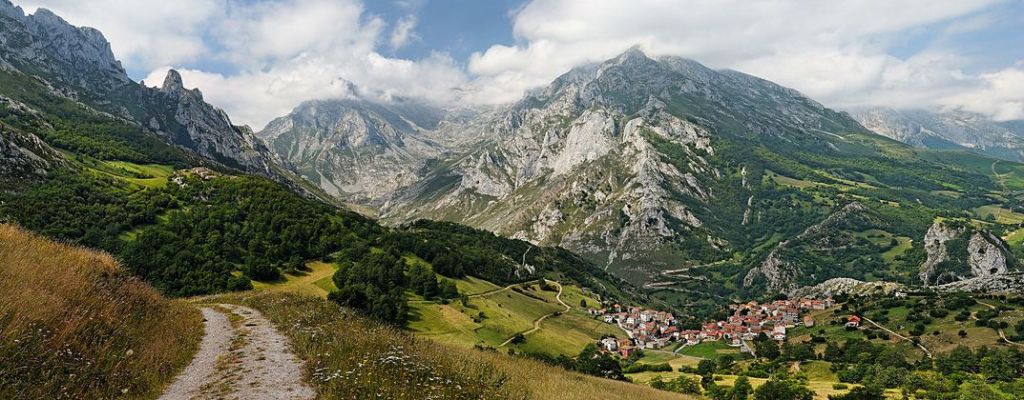
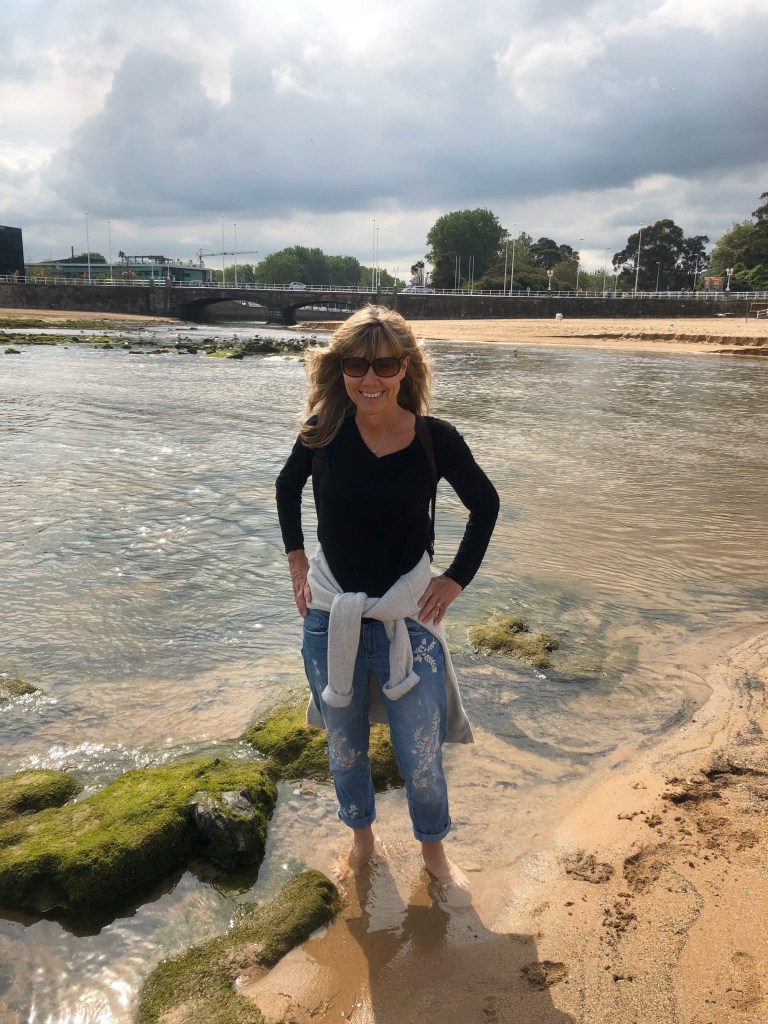
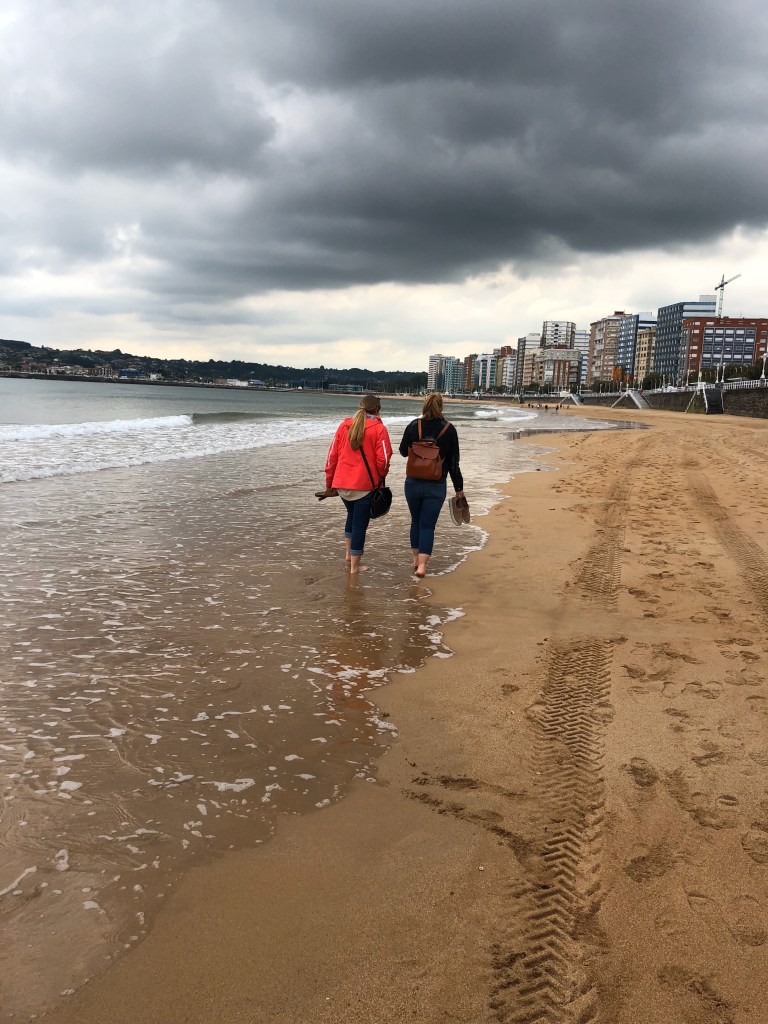
Aproveite sua Comida!

This slideshow requires JavaScript.

Interesting and unique was the gelato made by a street vendor, using a sheet of ice, cream, and fruit.  After a lot a chopping, and blending by hand, we were handed a most delicious treat!

Breakfast in Porto was wonderful!  I was complaining when we looked at the menus that first morning, that toast and yogurt did not sound like a very big breakfast, but the huge spread of toasted bread, cheeses and jams, along with enormous glasses full of yogurt and fresh fruits, and of course perfect coffee, was so tasty and filling that I looked forward to it every day!

One evening we walked to a restaurant/hotel which was known for it’s overhanging flowers that covered walls and ceilings inside, and had an appetizer on the balcony overlooking a convent.

Our favorite spot for dinner we found only on our last evening.  It was a small place offering only three choices:  fish, beef, or pork… yes these were the only words on the chalkboard menu!  My daughter chose fish and I had beef.  It was a large, good meal which included soup, vegetables, and potatoes, as well as dessert and coffee, and for a decent price.  We had a scare when we realized we had very little cash with us, and they did not take cards!  We counted out our money between us, and including cent coins we had barely enough!


The Atlantic Coastline

This slideshow requires JavaScript.

I have a better understanding of geology after seeing the enormous waves crashing with such fury against the rocks on the coastline of the Atlantic here! It is easy to see how caves and cliffs could form over time! We enjoyed walking along the sidewalks along the coast, and venturing out to the sand and rocks.  We spent a relaxing afternoon sunning on the beach, as well.  We devoted a little time to exploring an old fort in Porto, São Francisco do Queijo, nicknamed “Castle of Cheese” because of the cheese-wedge shaped rock it sits on.


Leon to Gijon

We travelled from Leon to Gijon in Spain by bus to see Gijon. Little did I know that the scenery along the way would be so completely breathtakingly beautiful! Now I must say that riding on the bus on that narrow and winding road made this unexposed tourist too nervous to think about snapping photos! The pictures will be forever in my memories, though!

Picos De Europa

Gijon

Gijón is a city in the northern Spanish region of Asturias, and sits right on the country’s north coast. It’s surrounded by rolling green scenery, rugged clifftops and wild, natural beaches.

Beautiful Historical Lovely LEON, Spain

My daughter and I went to visit my daughter who was attending school in Leon, and I spent three weeks in this captivating city. It holds a special charm for me, as it was the first place I ever traveled in Europe, and especially because I was there with both my daughters. Unforgettable times, lovely memories…

Roman Walls of Leon

The rock walls throughout Leon are dated from the 1st century B.C to the 3rd century A.D. from a sequence of Roman defenses.

The Cathedral of Leon

It has been described as “one of the purest examples of rayonnant style in all Europe”. The concept was a cathedral made of glass. One thousand eight hundred square meters of stained-glass windows were mounted in a limestone framework, in the mid-13th century by Maestro Simon Rodriguez. The towers came a bit later- the northern one in the 14th century and the clock tower in the 15th century. Inside the cathedral, one finds a plethora of stained glass, statues, paintings, and sculptures of Old and New Testament stories and people- all so beautiful it awes the souls of its visitors, including those of us who so love the Bible and its stories.

Upon our arrival in Leon, we ordered food from food trucks at a nearby market, and sat on the steps of the Cathedral of Leon for a picnic lunch.
From my daughter’s balcony, we enjoyed seeing the Cathedral at night.

San Isidoro

Historians are still unraveling San Isidoro’s complex origin. A pagan temple may have become a church dedicated to Saint John the Baptist. The remains of the martyr Pelagius were brought there to be looked after, at some time. In 1063, however, the bones of Saint Isidore, a Sevillian wise man, were sent there and soon displaced any other saint to whom the basilica might have been previously dedicated.
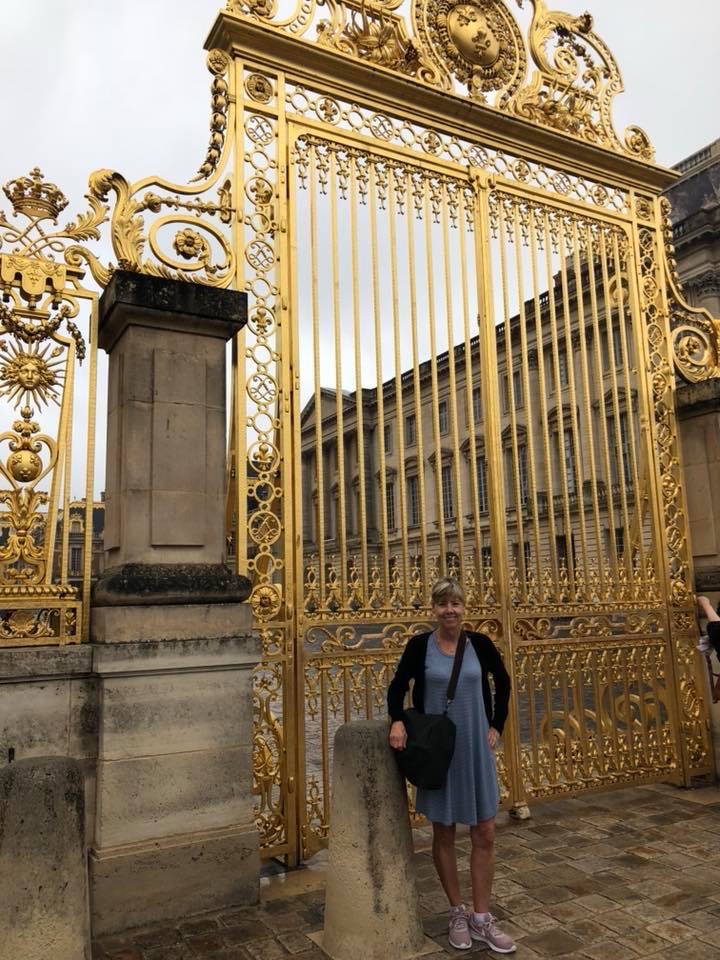
During our visit to the museum of San Isidoro I was in awe to see the magnificent library consisting of over 300 fifteenth century books, 800 scrolls, and 150 codices, primarily emphasizing different Bibles including the twelfth century Romanesque Bible, the codex Morales of Job, and several hymnals.

Inside San Isidoro is an invaluable collection of Biblical artifacts, paintings, and sculptures from the ages.

San Isidoro was my favorite of all the wonderful historical treasures that Leon has to offer!

A large bird had a nest in the bell gable at San Isidoro. We enjoyed looking up at it on our daily strolls through the city.

The Amazing Hot Chocolate of Spain

There are conflicting reports about when chocolate arrived in Europe, although it’s agreed it first arrived in Spain. One story says Christopher Columbus discovered cacao beans after intercepting a trade ship on a journey to America and brought the beans back to Spain with him in 1502.Another tale says that Spanish conquistador Hernan Cortes was introduced to chocolate by the Aztecs of Montezuma’s court. After returning to Spain, cacao beans in tow, he supposedly kept his chocolate knowledge a well-guarded secret.

The rich, thick hot chocolate dessert served at restaurants in Leon was my favorite gastronomical treat in Spain! I ordered one as often as possible after meals!

Cafe Con Leche, Por Favor

Spanish coffee is wonderful…a treat any time of the day. Good espresso with a hefty amount of steamed milk poured over it constitutes a cafe con Leche, or coffee with milk. There is almost no such thing in Leon as a “coffee to go”. The coffee is enjoyed sitting at the restaurant or bar, and always with a sweet treat as a tapa alongside it!

Cafe Con Leche

At this restaurant, a package of brown sugar was offered to add to the coffee.


Meals in Leon

I fell in love with the Spanish concept of meals as experiences in which to linger, savor, and connect with friends and family! A “menu of the day” served for lunch at some restaurants consisted of several courses, and always ended with coffee and dessert.

Cokes in Spain were served with lemon. They were almost always in a bottle, with a glass to pour them in- sometimes with ice but more often without ice. For this American who enjoys my cola, I enjoyed the lemon, and adjusted to the usually cool or lukewarm cola.

Casa Botines

A more modern building than others in Leon, the Casa Botines was designed by Antoni Gaudi Cornet in 1893. It has been used through the years for offices and apartments, and is now open for tourists to visit and admire. Outside, it has the appearance of a medieval castle while inside an interesting spacial layout.

The Camino de Santiago Trail

The Camion de Santiago trail goes through Leon, and we loved seeing the pilgrims and trail enthusiasts coming through the city. I smiled at seeing this backpacker and his dog who also had his own backpack.

Churros

Churros are a very popular snack in Leon and all of Spain. Churros originated in Spain and Portugal. They are sold by street vendors, or served alongside coffee at restaurants. They are eaten at breakfast, or throughout the day as snacks. They are delicious by themselves or dipped in chocolate! They reminded me very much of our traditional “funnel cakes” in the the southern United States.

I am planning to go back someday to the magical city of LEON!

Palace of Versailles

Versailles, France

The Palace of Versailles was the principal royal residence of France from 1682, under Louis XIV, until the start of the French Revolution in 1789, under Louis XVI. It is the biggest, and considered by many to be the most beautiful, palace ever built.  Louis XIV gathered around him the most important figures of the kingdom. Princes, courtiers and ministers lived in Versailles with him. The Palace of Versailles was a symbol of the total Monarchy system. In 1837, after the French Revolution, Versailles became a museum.

Every year, several millions of visitors walk through the Gate of Honour, main and unmissable entrance to the Palace of Versailles.

The Hall of Mirrors

The principal feature of this hall is the seventeen mirror-clad arches that reflect the seventeen arcaded windows that overlook the gardens. Each arch contains twenty-one mirrors with a total complement of 357 used. The hall is decorated with marble. The walls and cornices are decorated with gilded bronze trophies.During the 17th century, the Hall of Mirrors was used by Louis XIV when he walked from his private apartment to the chapel. At this time, courtiers assembled to watch the king and members of the royal family pass. The ceiling depicts the War with Holland (1672-1678). The Treaty of Versailles was signed in the Hall of Mirrors, and the hall still serves for state occasions such as receptions for visiting heads of state.

Hall of Mirrors


King Louis XVI Bedroom

Marble Bust of Louis XIV by Bernini

The Gardens of Versailles

We had taken a day trip from Paris to tour the Palace of Versailles. We had some trouble getting to and from Versailles because of train strikes (and our unfamiliarity with them) but the inconvenience and extra walking just made the day more memorable, and we had more time while walking and waiting for trains back to Paris, to reminiscence about the extravagance of the Palace of Versailles!

Paris… La Ville de l’Amour!

Paris is a global center for art, fashion, gastronomy and culture. Its 19th-century cityscape is crisscrossed by wide boulevards and the River Seine. Beyond such landmarks as the Eiffel Tower and the Notre-Dame cathedral, the city is known for its cafe culture and designer boutiques.It was a whirlwind few days for my daughters and me there, trying to see, taste, and do it all!

The Cathedral of Notre Dame
The foundation stone was laid by Pope Alexander III in 1163, and the high altar was consecrated in 1189.  Between 1844 and 1864, the building was renovated. Millions of visitors each year visit the cathedral to take in it’s beauty, unique architecture, and interesting gargoyles. Fun fact: The left tower is slightly larger than the right tower.


The Eiffel Tower

Fun fact: The Eiffel Tower was never intended to stand over the Champ-de-Mars permanently. It was built for the World’s Fair in 1889 and was scheduled to be dismantled in 1909.

We braved the crowded elevators to go to the top and see the amazing view. But my favorite time was when we went back at night to relax on a blanket and enjoy the view with chocolate and conversation.

Escargot

Trying escargot was a fun experience, and finding out I actually liked it was a nice surprise!

Arc de Triomphe

The Arc de triomphe was begun in 1806, on the orders of Napoleon I, to honor the victories of his Grande Armée. It bears the names of battles and generals from the Revolution and the First Empire. Every evening, the flame is lit on the tomb of the Unknown Soldier from the Great War.

The Louvre

The Louvre

The world’s largest, and possibly most famous, art museum in the world! Braving the crowds was well worth the experience. It was incredible to see the artwork and sculptures I’ve seen before so many times in pictures and re-creations.

Moulin Rouge
Paris’ Moulin Rouge, built in 1885, is known for its Champagne-filled parties that pioneered cabaret and the cancan dance.


Roman Forum

The Roman Forum is an area of the city of Rome around which the ancient city developed.It was for centuries the center of Roman public life. It was the site of triumphal processions and elections; the venue for public speeches, criminal trials, and gladiatorial matches. It was also the heart of commerce.

Historians estimate that the rise of public events in the Roman Forum first took place around 500 B.C., when the Roman Republic started. The Forum gradually developed, progressed and expanded over many centuries. Statues, arches, basilicas and other buildings were constructed to accommodate the gatherings.

Today the Roman Forum is a sprawling ruin of architectural fragments and excavations. It has 4.5 million sightseers each year.

During the Middle Ages, though the memory of the Forum Romanum persisted, its monuments were for the most part buried under debris, and its location was designated the “Campo Vaccino” or “cattle field.”

Excavation by Carlo Fea, who began clearing the debris from the Arch of Septimius Severus in 1803, and archaeologists under the Napoleonic regime marked the beginning of clearing the Forum, which was only fully excavated in the early 20th century.

THE BASILICA OF MAXIMUS
A remaining nave of a Roman basilica that once housed a colossal statue of Emperor Constantine.
Forum of Ceasar
The ruins of a Roman plaza built by Julius Caesar in 46 BC
Basilica Julia
The massive Basilica Julia was started by Julius Caesar but left unfinished after his assassination.
Temple of Vesta.
The vestals were chosen from age 6 to 10. They were vestals for 30 years, during which time they were expected to be chaste. They tended the sacred fire in the shrine of Vesta, and performed other rites such as caring for the sacred objects in the shrine and inner sanctuary, and preparing ritual food. There were four to six vestals generally.
Vestal virgins were chosen from highborn families and were granted privileges that would have been unimaginable for other women in Ancient Rome. They could own property, vote, and write a will. They had the best seats at public games, and they even had the power to free condemned prisoners and slaves. A condemned man on his way to his execution only had to catch a glimpse of a Vestal Virgin to be freed.
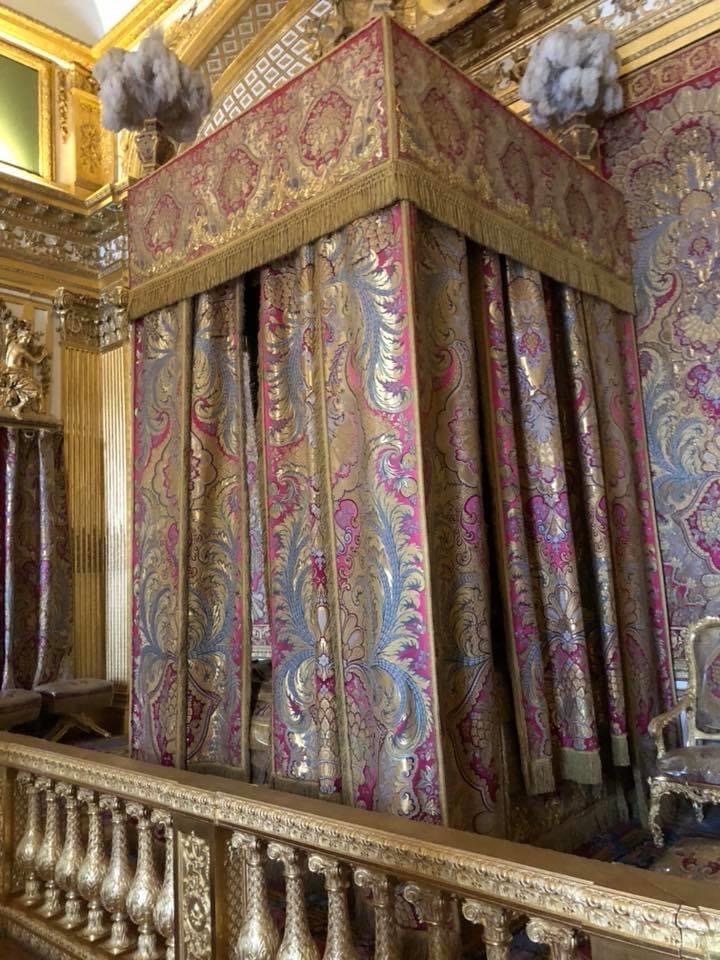
St. Peter’s Basilica

Posted byJan EdwardsPosted inUncategorizedEditSt. Peter’s Basilica

Door to St. Peter’s Tomb- Located on the right side of the entrance into St. Peter’s Basilica

The Holy Door or ‘Porta Sancta’ is only open during a Holy Year (Jubilee), which occurs every 25 years (the last one in 2000).On the first day of a holy year, the Pope strikes the brick wall with a silver hammer and opens it to the pilgrims.

Rome- Colosseum at Night

Construction on the Colosseum was started in 72 AD by the emperor Vespasian. It was finished eight years later in 80 AD

The Colosseum could seat 50,000 people. It covers around 6 acres of land and is 620 feet long, 512 feet wide, and 158 feet tall. It took more than 1.1 million tons of concrete, stone, and bricks to complete the Colosseum.
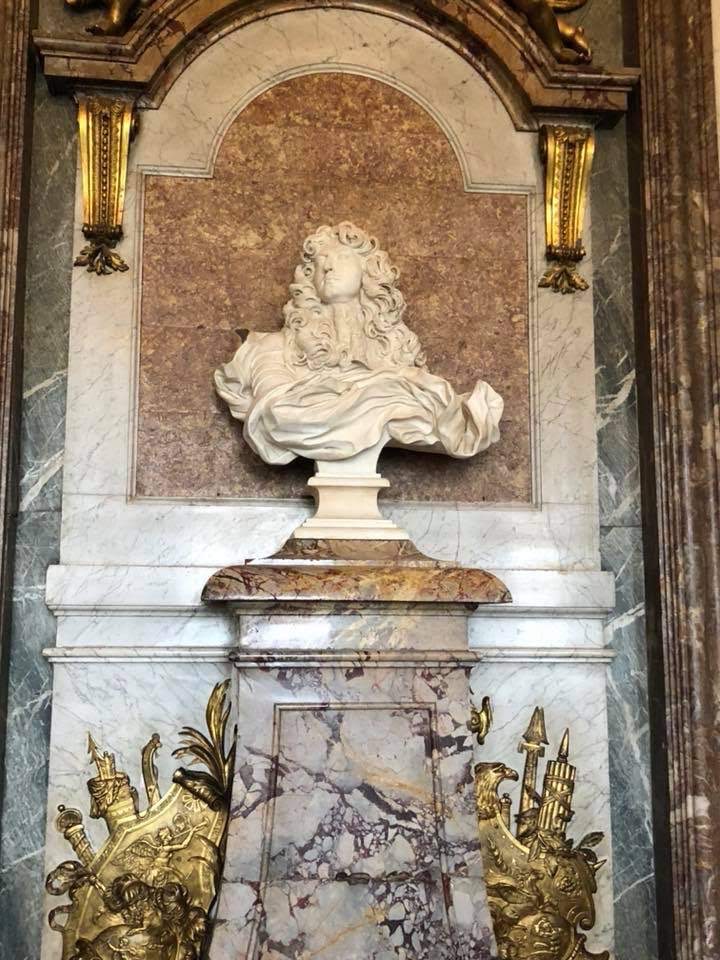
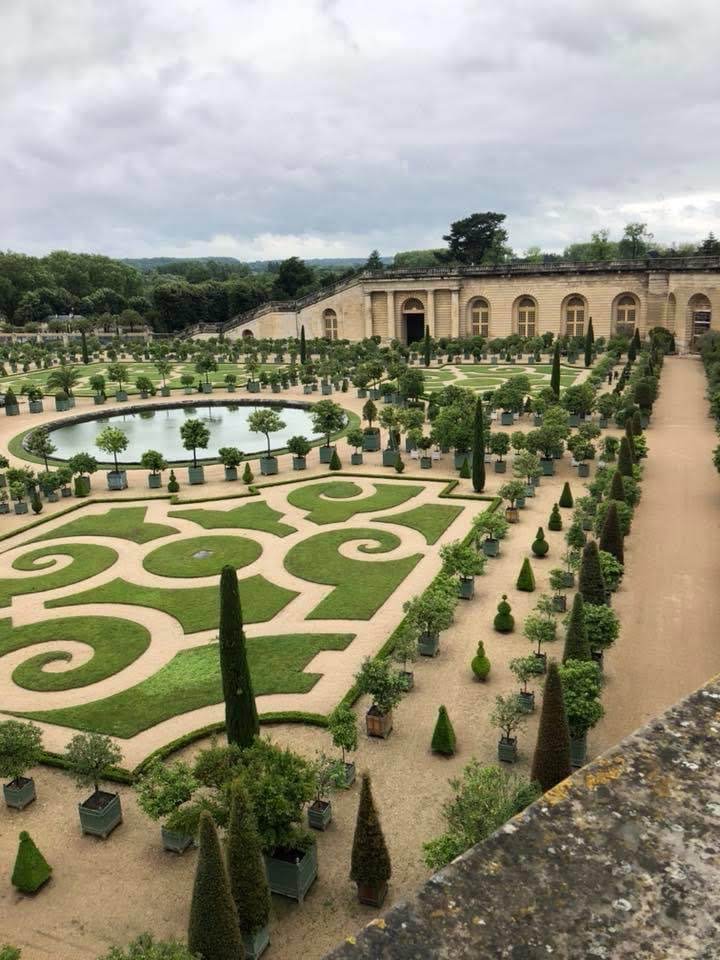
Where people sat in the Colosseum was determined by Roman law. The best seats were reserved for the Senators. Behind them were the equestrians or ranking government officials. A bit higher up sat the ordinary Roman citizens (men) and the soldiers. Finally, at the top of the stadium sat the slaves and the women.

Below the Colosseum was a labyrinth of underground passages called the hypogeum. These passages allowed for animals, actors, and gladiators to suddenly appear in the middle of the arena. They would use trap doors to add in special effects such as scenery.

The walls of the Colosseum were built with stone. They made use of a number of arches in order to keep the weight down, but yet still keep them strong. There were four different levels that could be accessed by stairs. Who could enter each level was carefully controlled. The floor of the Colosseum was wooden and covered with sand.

Outside of the Colosseum was an enormous 30 foot bronze statue of the emperor Nero called the Colossus of Nero.Some historians believe that the name for the Colosseum comes from the Colossus.

The Colosseum had 76 entrances and exits. The public entrances were each numbered and spectators had a ticket that said where they were supposed to enter. The west exit was called the Gate of Death. This was where dead gladiators were carried out of the arena.

We took a guided tour of the Colosseum at night, which was spectacular!

St. Peter’s Basilica

St. Peter’s Basilica, located in Vatican City, is believed to be the burial place of Saint Peter, who was one of the twelve apostles of Jesus. It is believed that Saint Peter was the first Bishop of Rome. Roman Christians who were alive in the 1st century AD have written about him. It is believed that after Peter was killed, his body was buried in a cemetery where the basilica now stands. A church was built here in the 4th century AD. The building that stands here now was begun on April 181506 and was finished in 1626. Many Popes have been buried there.  

  • The pope, who lives at the Vatican, often says mass at St. Peter’s.
  • Many people go there on pilgrimage.
  • It is said to be the greatest work of architecture of its age.
  • It has works by many famous artists including Michelangelo and Bernini.
  • St. Peter’s is probably the largest Christian church in the world. It covers an area of 5.7 acres and can hold over 60,000 people.

The Anne Frank House

Anne Frank was a 14 year old Jewish girl who began keeping a diary shortly before her family went into hiding from the Nazis during World War II. For two years, she and seven others lived in a “Secret Annex” in Amsterdam before being discovered and sent to concentration camps. Anne died in the Bergen-Belsen camp in 1945.

Frank’s father was the family’s sole survivor. He reluctantly read Anne’s diary, which gives a detailed account of Anne’s thoughts, feelings and experiences while she was in hiding. Later, at the urging of friends, he decided to publish the diary. It has been an international bestseller for decades and a key part of Holocaust education programs. Several humanitarian organizations are devoted to her legacy.

“Anne was a lively and talented girl, expressing her observations, feelings, self-reflections, fears, hopes and dreams in her diary,” said Annemarie Bekker of the Anne Frank House in Amsterdam. “Her words resonate with people all around the world.”

Young Anne in a class photo. Anne is the 10th child from the left.
A photo of Anne taken shortly before going into hiding
Anne kept cut-out pictures of movie stars
on her walls.

While Anne did describe life in the Secret Annex, she also wrote extensively about her thoughts, feelings, relationships and personal experiences that had nothing to do with the Holocaust or the Franks’ situation. We know from her diary that Anne sometimes disagreed with Margot, felt her mother didn’t understand her and had a crush on Peter. Sharing a room with Fritz Pfeffer, a middle-age man, was awkward for both Anne and Fritz, and Anne sometimes wrote about her struggles.

The Secret Annex is located alongside the canals of Amsterdam.

Naples- Mount Vesuvius

Mt. Vesuvius, a still-active volcano, looms over the Bay of Naples. Mount Vesuvius is about 4,190 feet high and measures about 30 miles around its base. Geologists estimate it to be about 17,000 years old. Vesuvius is the only volcano on the European mainland that has erupted during the last century and is still active. It has erupted over 50 times during the last 2,000 years.

The popular pizza Margherita owes its name to Italy’s Queen Margherita who in 1889 visited the Pizzeria Brandi in Naples. The Pizzaiolo (pizza maker) on duty that day, Rafaele Esposito created a pizza for the Queen that contained the three colors of the new Italian flag. The red of tomato, white of the mozzarella and fresh green basil, was a hit with the Queen and the rest of the world.Neapolitan style pizza now spread throughout Italy and each region started designing their own versions based on the Italian culinary rule of fresh, local ingredients.

Design a site like this with WordPress.com
Get started