Tenerife is one of the eight Canary Islands. It is the largest of the islands, and very popular with tourists, especially those from European countries. My daughter teaches English there, and after our Camino hike and time in Bilbao, we spent the last week of our summer adventure in Tenerife.
Fun Fact: Even though the Canary Islands are part of Spain, they are actually closer to North Africa than continental Spain (with the nearest island, Fuerteventura, being 67 miles off the African mainland, and Tenerife 186.4 miles)!
Day 1: Playta Amarillo and Casa de Mary
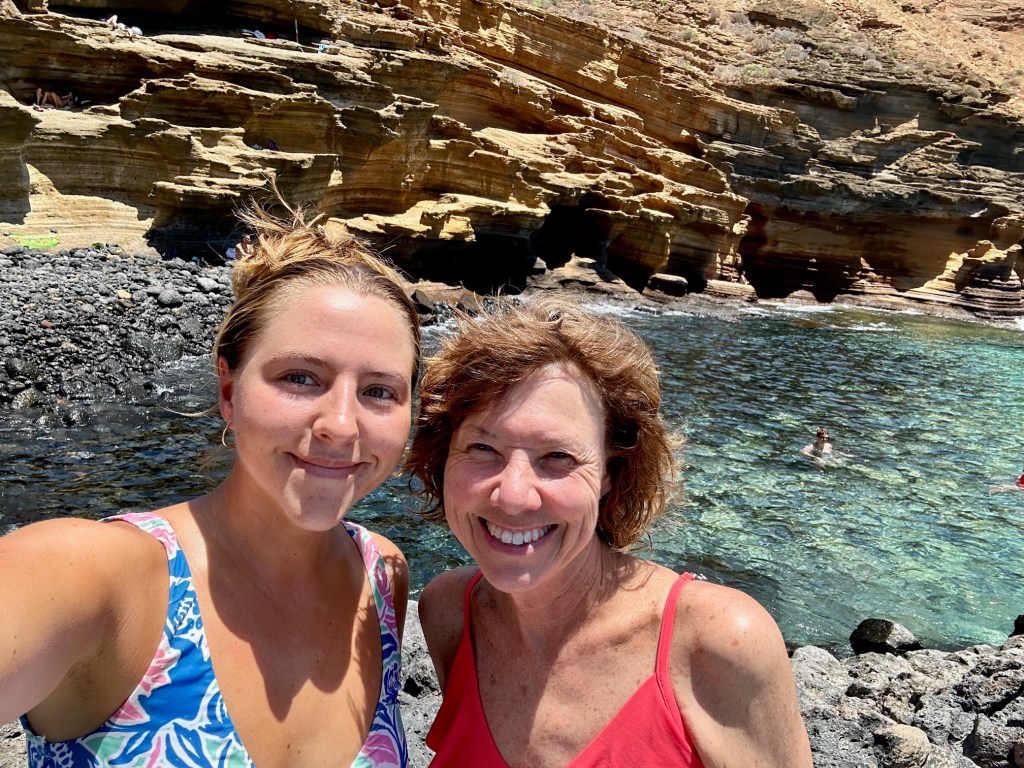
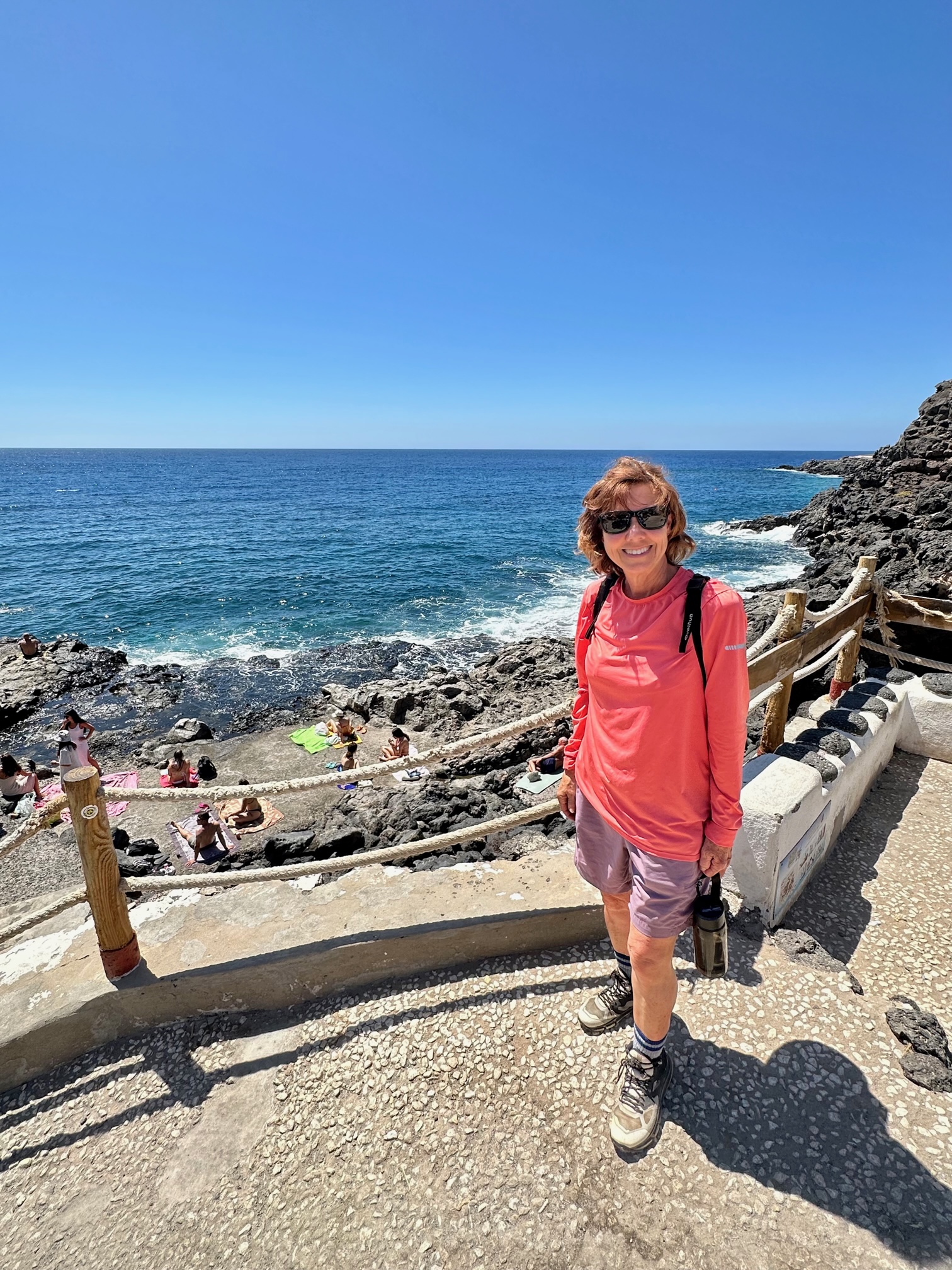
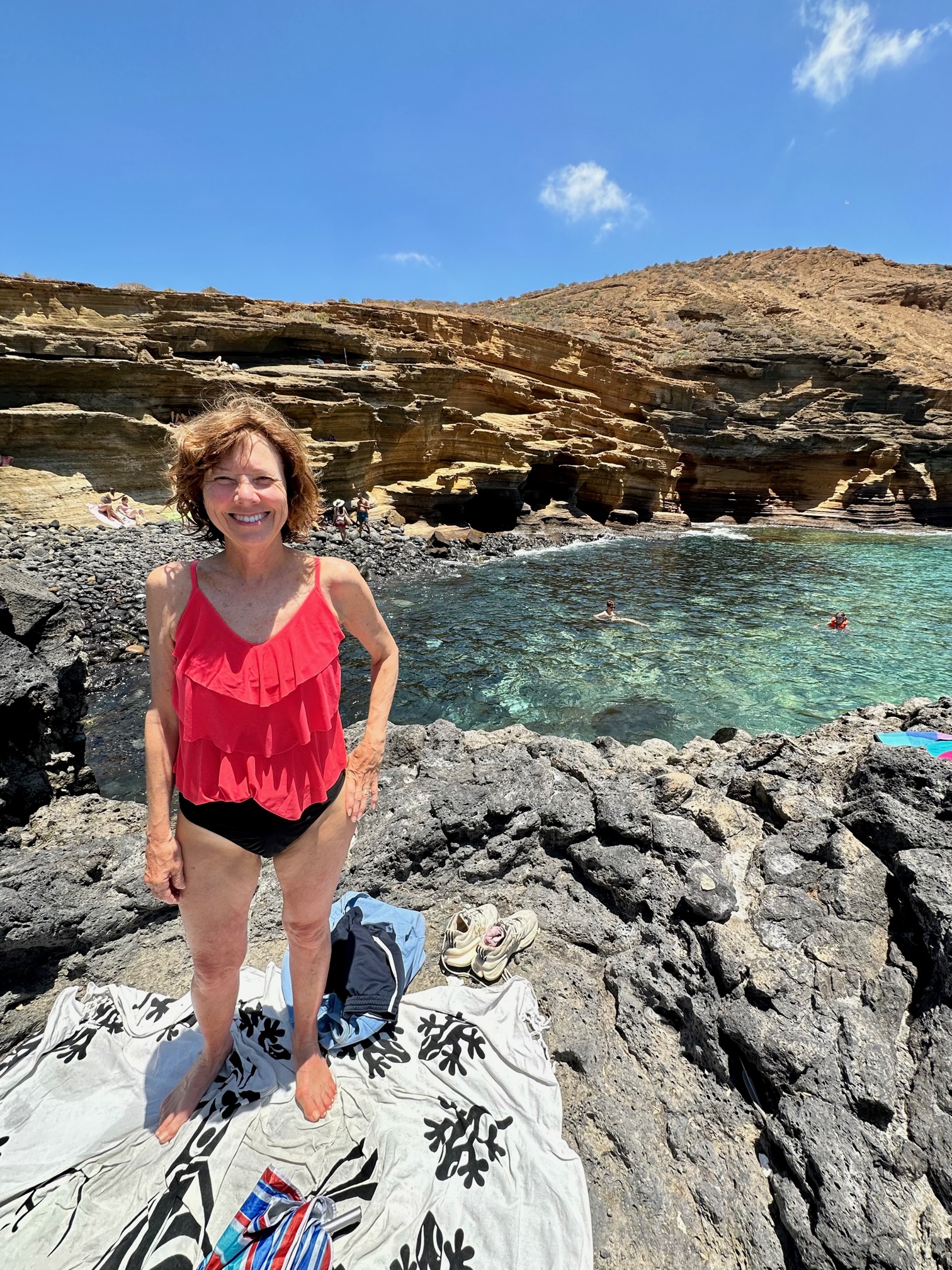
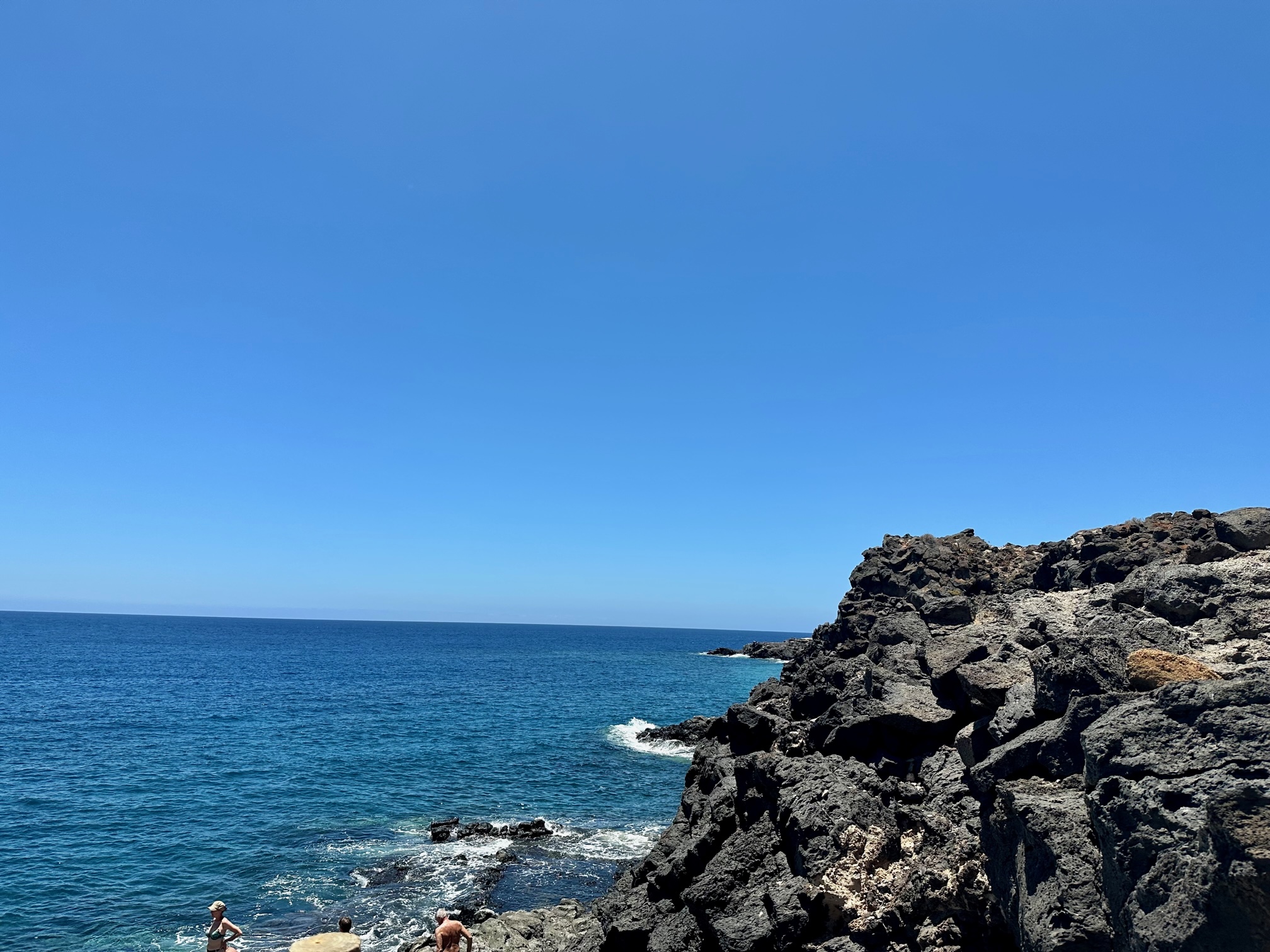
We took city busses (a major means of transportation in Tenerife, if you don’t have a car) from El Medano, then walked to get to Playa Amarillo. This is a black rock beach surrounded by yellow rocky cliffs, made by a volcano. The water is crystal clear. The yellow cliffs—eroded volcanic rock formations—around it have overhanging shelters (it’s almost like small caves) where people relax on beach towels underneath them. The only way into the water here is to jump from the diving board built off the small rocky area. The rocks are sharp and jagged, with swim shoes of some type a must! People lay out on the rocks and enjoy the beautiful water, sometimes snorkeling. We spread our towels on the black rock, jumped from the diving board into the cool and so, so clear water (wishing we’d brought goggles) then relaxed on our towels in the sun. We enjoyed watching a dog barking at a few fish in a small pool of water that had collected in a crevice of the rocks.
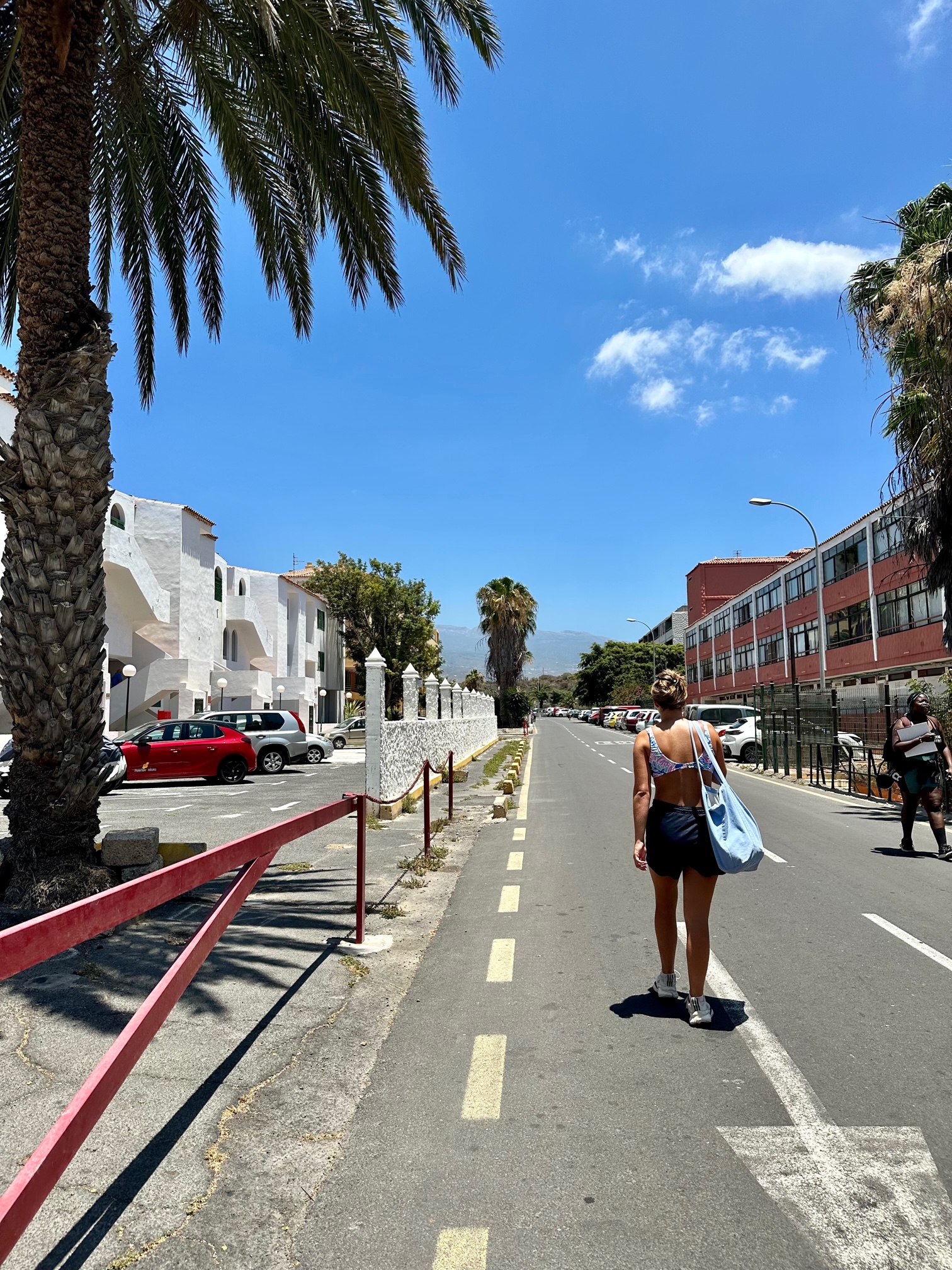
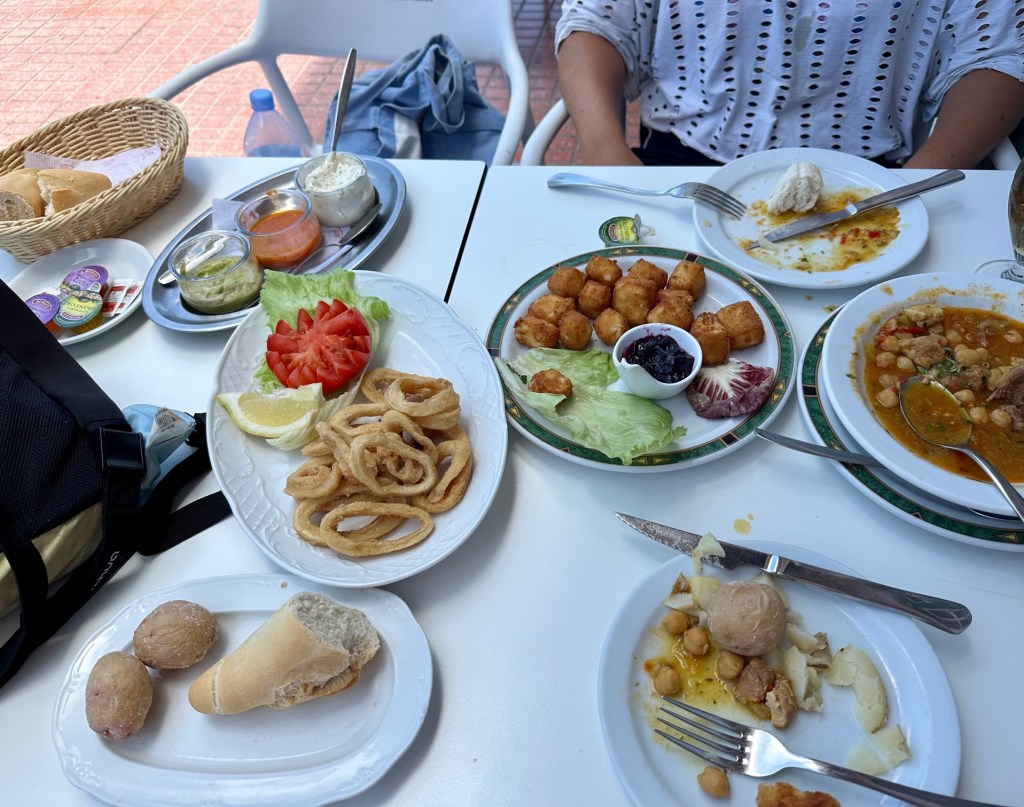
All too soon it was time to gather the towels, sunblock, and my umbrella, and walk to the village of Las Galletas (a 15 minute or so walk) to eat at a cafe that my daughter had selected for us to sample some tasty Canarian dishes for lunch. We decided on an array of appetizers which included Canarian potatoes—these small red potatoes, similar to those grown in the southern United States, are grown in a plentiful amount in the islands, and are served proudly at almost every restaurant and cafe—we also had fried cheese balls with jam; fried calamari; and garbanzo beans. There was, of course (as always anywhere in Spain!) fresh bread. And I sampled the green and red Canarian sauces that I would soon find are served at every meal in Tenerife (and the other Canary Islands, as well, according to my research)! The sauces are used to dip your potatoes or bread in, or fried cheese, or anything else, I learned! They are called Mojo sauces. The red mojo sauce is made from red chili peppers, the green from green peppers. Other ingredients found in both usually are garlic, olive oil, paprika, cumin, and vinegar. My research says that the Mojo sauces were probably invented in the Canary Islands because all the ingredients were at hand there: the chili peppers from South America, pimenton (paprika) and olive oil from Spain, and cumin from North Africa. Also, the Guanche people who lived in the Canary Islands some 1500 years before the Spanish arrived there in the 15th century, made a similar sauce with ingredients found on the island!
We had only enough time for quick showers and to change clothes, before walking a short distance to my daughter’s students’ 6th grade graduation! (She teaches English at a school there.) The building was beautifully decorated for the occasion. The graduation events included a talent show in which every member of the 6th grade class participated—in solo dance routines; comedy skits; group dance routines; and songs, as the audience clapped along to the beat of the music. Teachers, administrators, a parent, and students gave short speeches; and a teacher sang, beautifully, as the students and crowd joined in for parts of it. Teachers were called to the stage and given flowers by the students. A slide show of the year’s activities was shown. Then diplomas were awarded to each student. Altogether, the graduation lasted two hours! Refreshments were served afterward. Although our 6th grade graduations in the small town where I teach in the United States differ from this one (no “talent show” or crowd participation!) the smiles and pride on the students’ and parents’ faces and cameras flashing by all the happy grandparents, siblings, and friends were the same!
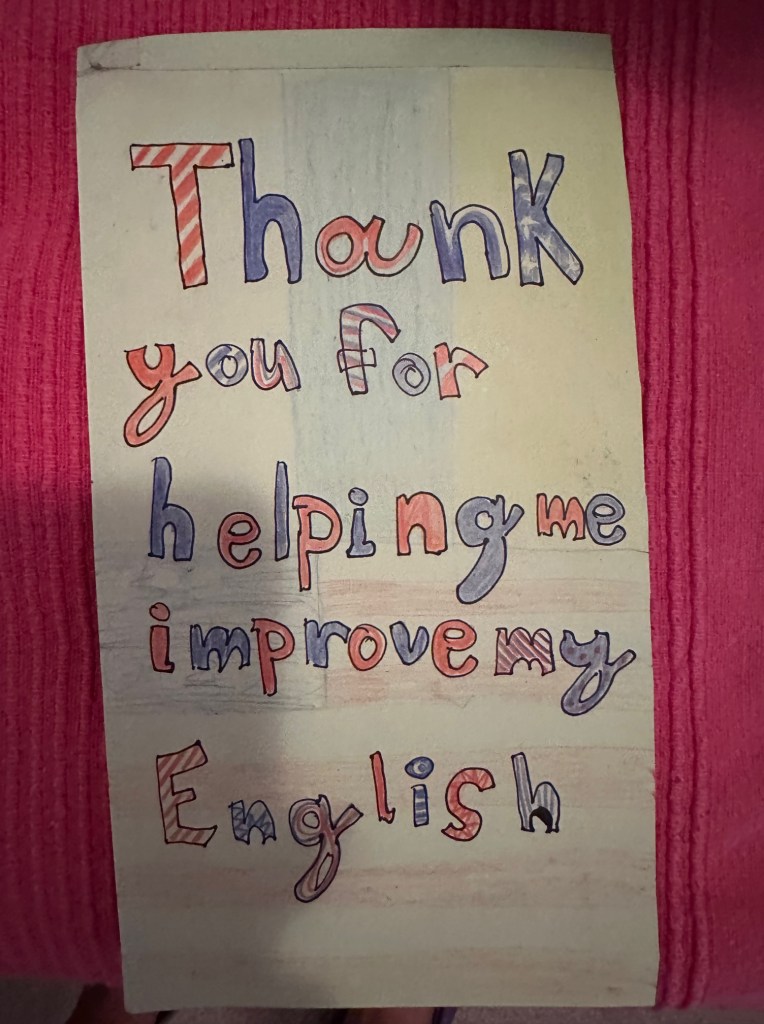
A note to my daughter from a student at her school
Day 2: Playa El Medano and Dinner at a Banana Plantation
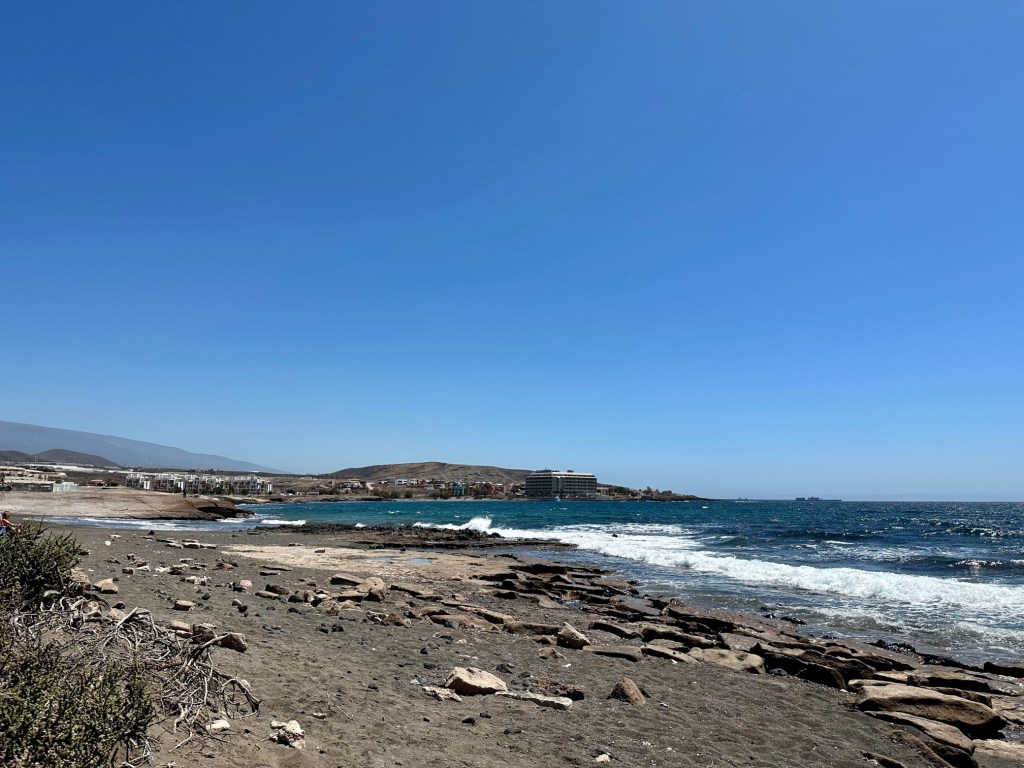
The wind surfers were fun to watch at the El Medano beach. The mild weather and sunshine felt nice. The beach was rocky with a sharp, jagged drop-off at the water’s edge. There were more assessable areas a short walk away, though, to wade into the ocean. We’d stopped at a flea market at the village square and I’d bought a book about the Guanches who first settled in Tenerife in ancient times, so I read and napped instead. It was very windy. I was told that it is usually very windy here—much windier than other Tenerife beaches. I did my research after I got home, and discovered that El Medano is windier than anywhere else on Tenerife because it is on headland that juts out into the strong Atlantic tradewinds where the air speeds up when it pushes past El Tiede, the 12,198 foot tall volcano on the island.
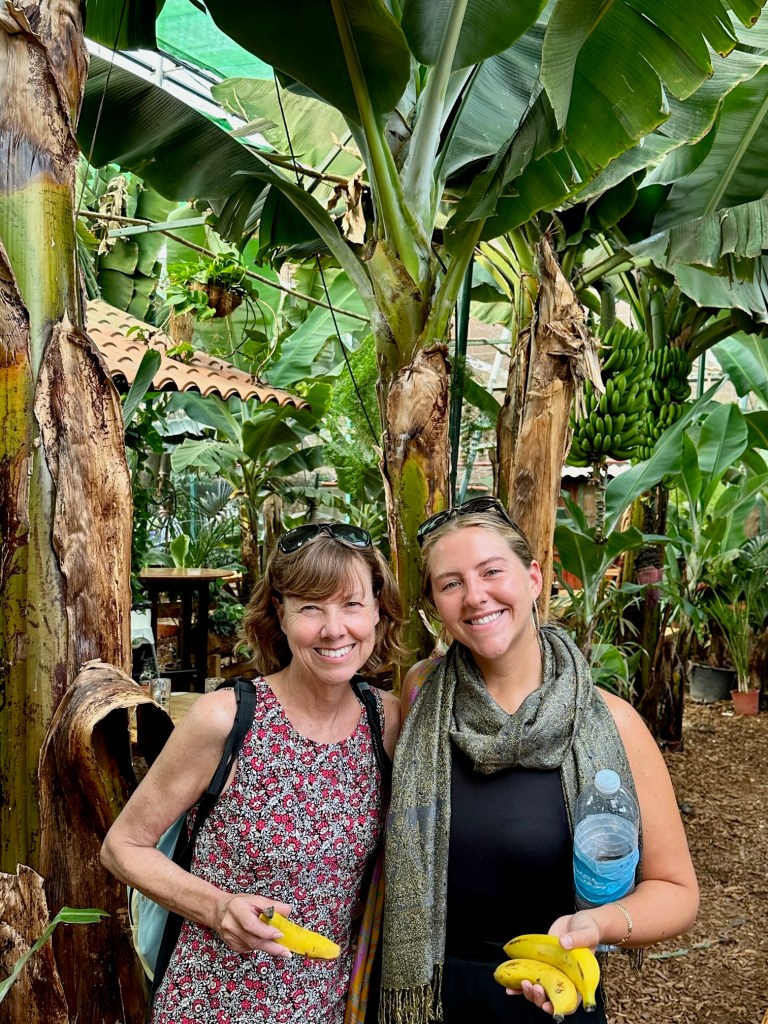
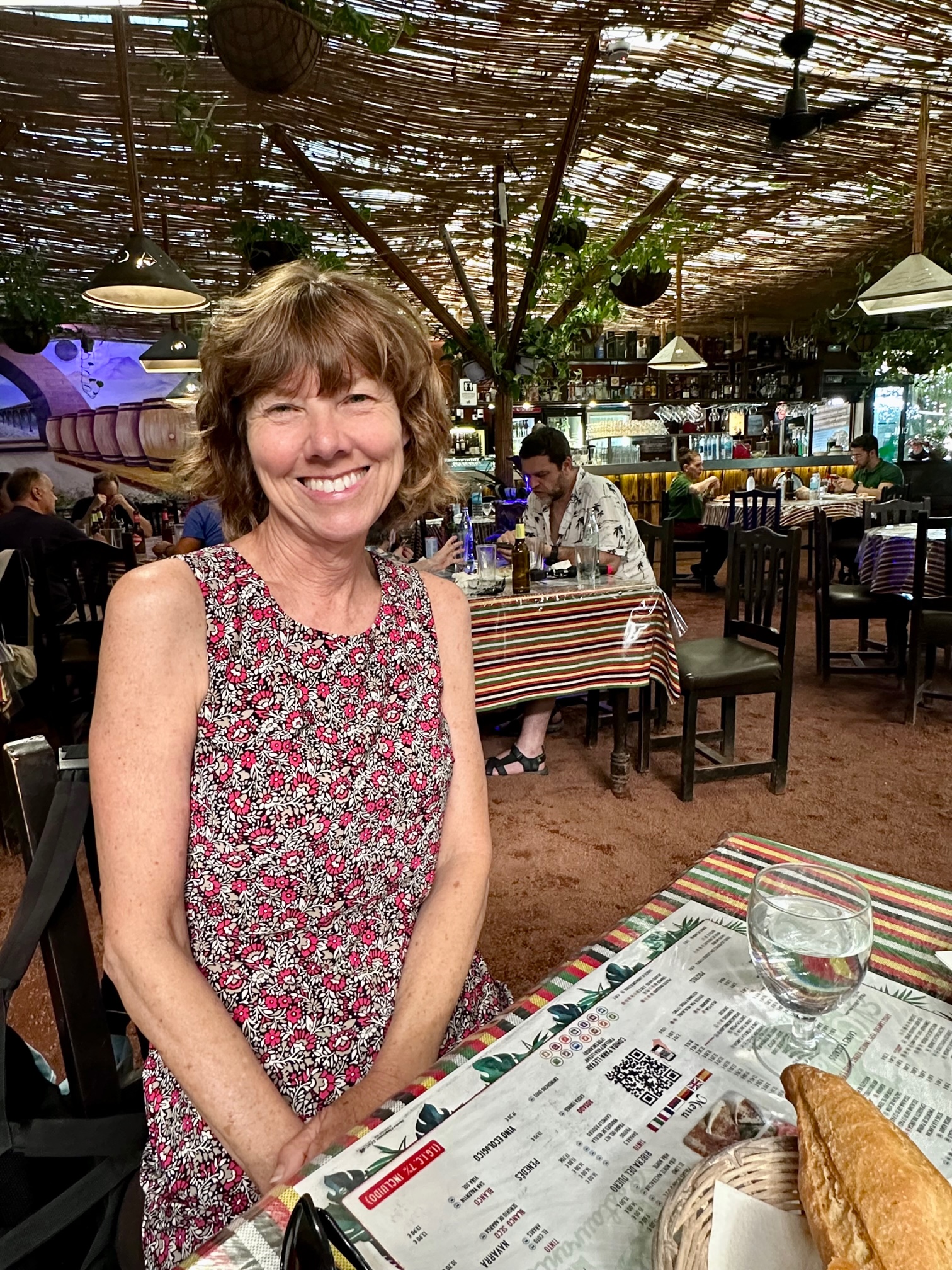
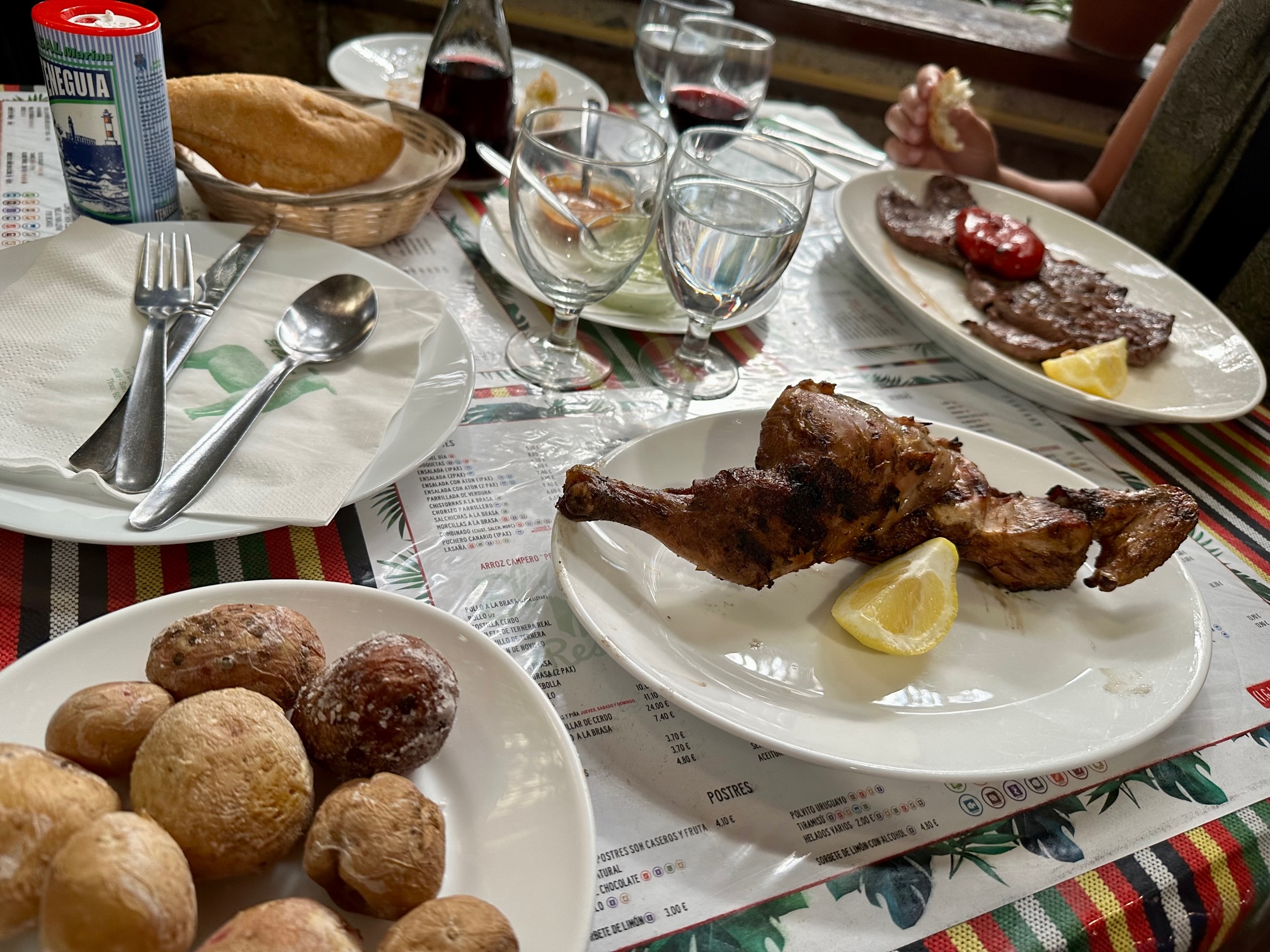
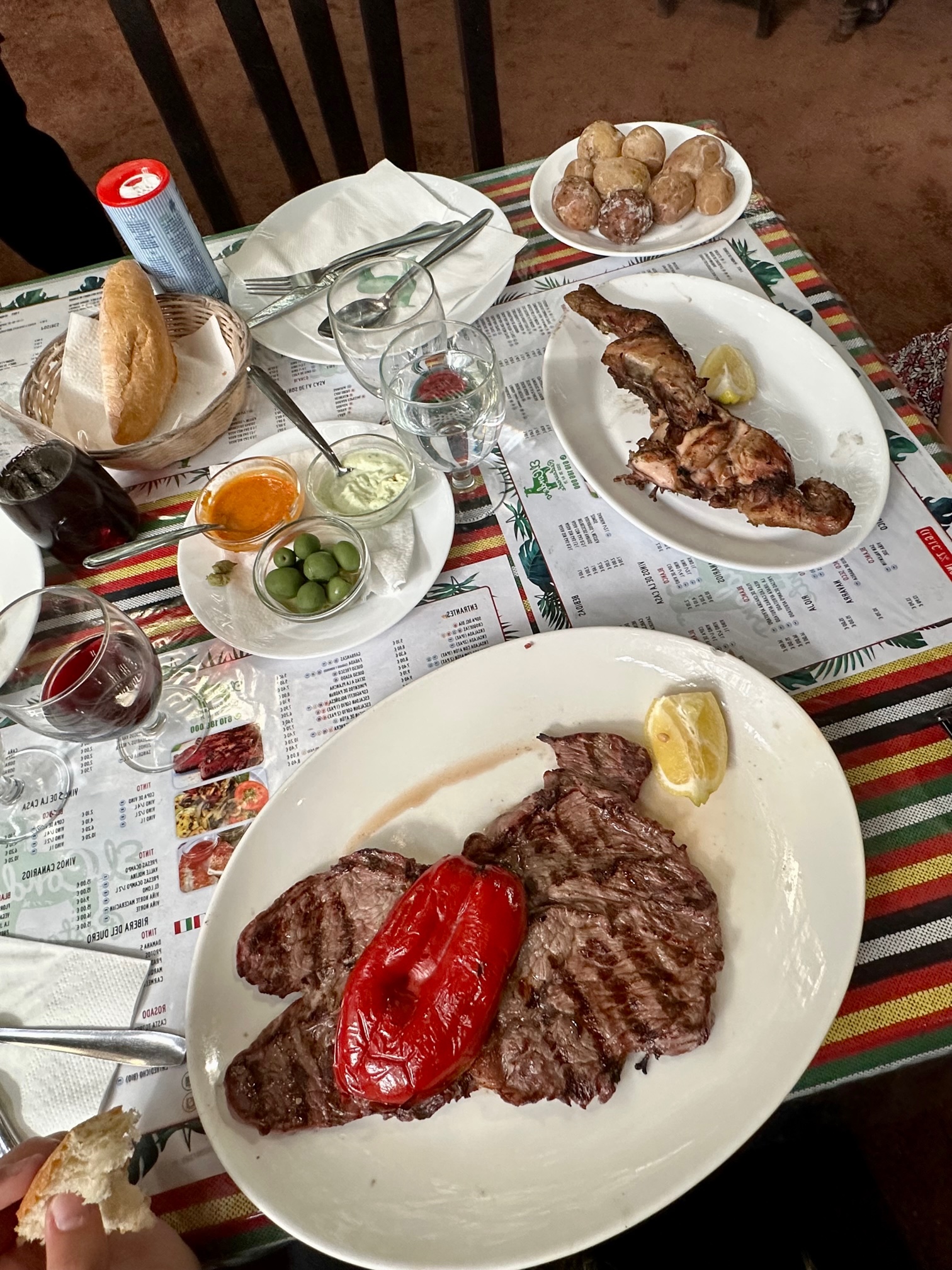
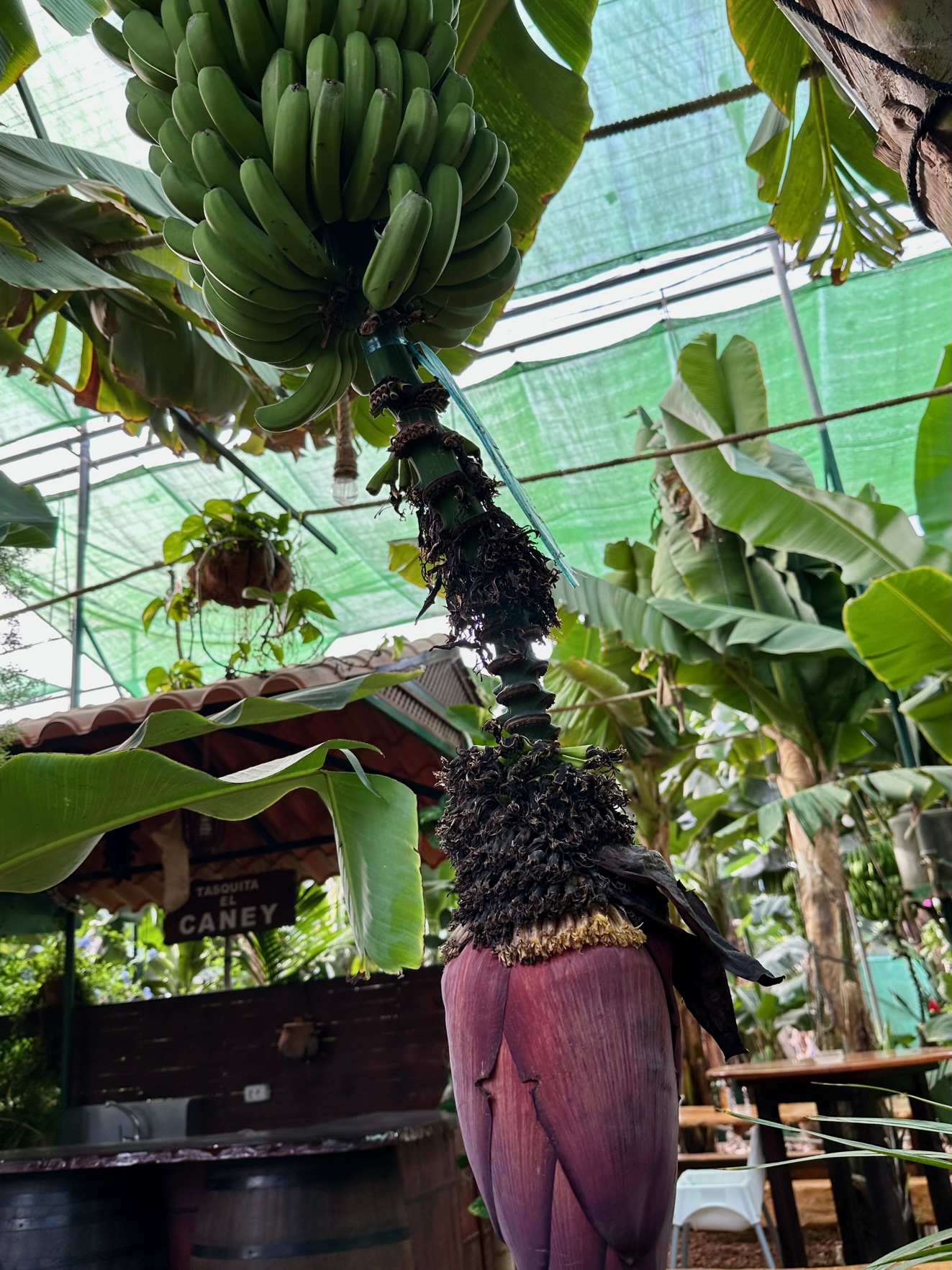
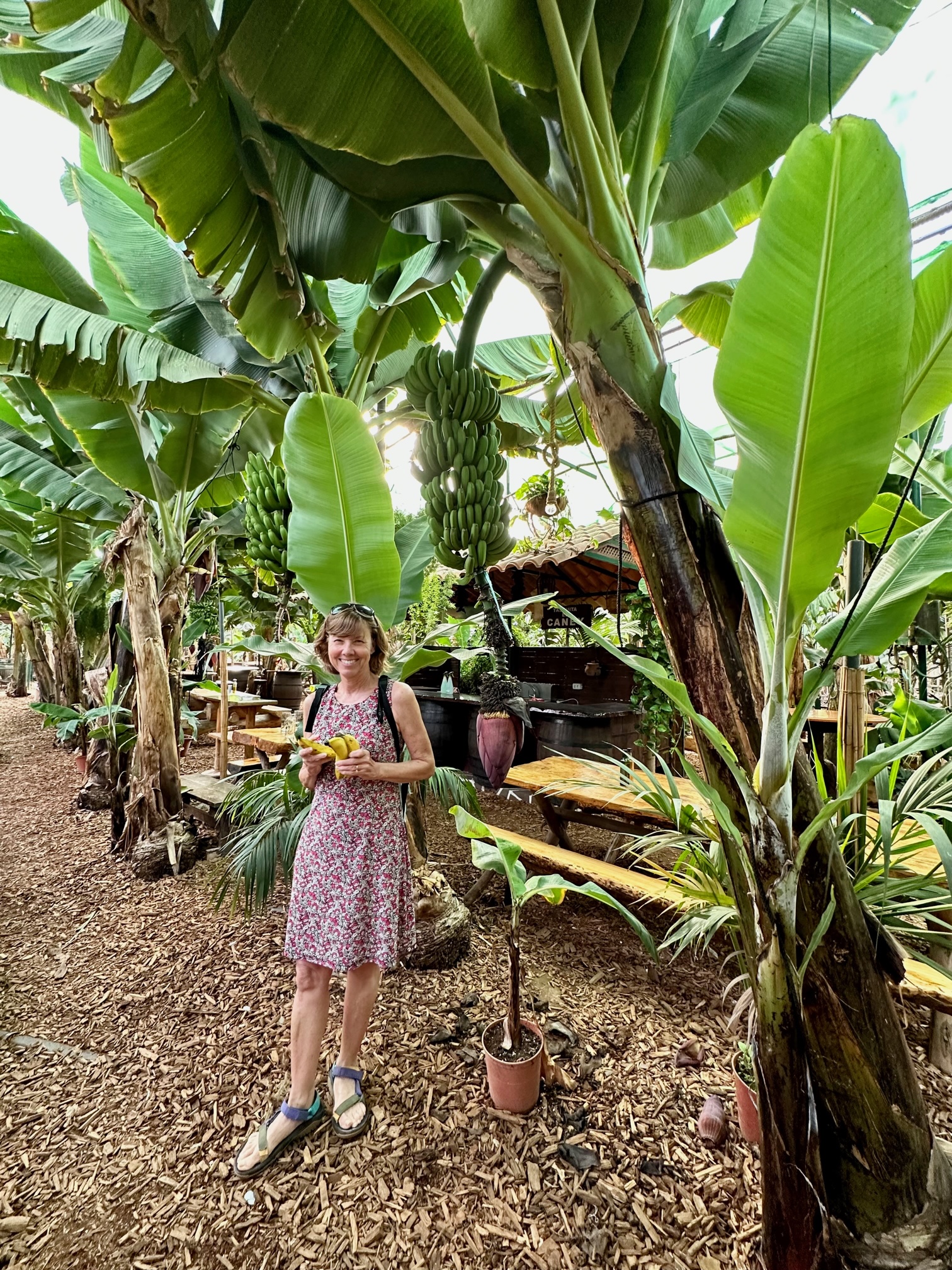
We had reservations for dinner at El Cordero restaurant—which is in a banana plantation! I had been seeing miles and miles of banana plantations on our bus rides, which was interesting to me, as I’d never even seen a banana tree at all before! The experience did not disappoint! After eating a fantastic meal in the spacious, airy restaurant looking into the banana plantation, we walked through the plantation, examined the banana trees and buds close-up, and took pictures. All restaurant customers are given a banana as they leave. It was a fun evening!
Day 3: Black Spaghetti; Los Cristianos; and Los Americas
My daughter does private “English Immersion” with children, and was gone this morning to do that. English speakers, it seems, are in demand for families to hire to play with and “baby-sit” their children, to introduce them to or enrich their English skills. On my own, I went to the beach, where a very nice couple saw me having trouble with my umbrella in the wind and the man anchored it in the sand for me. Don’t you love kind people!
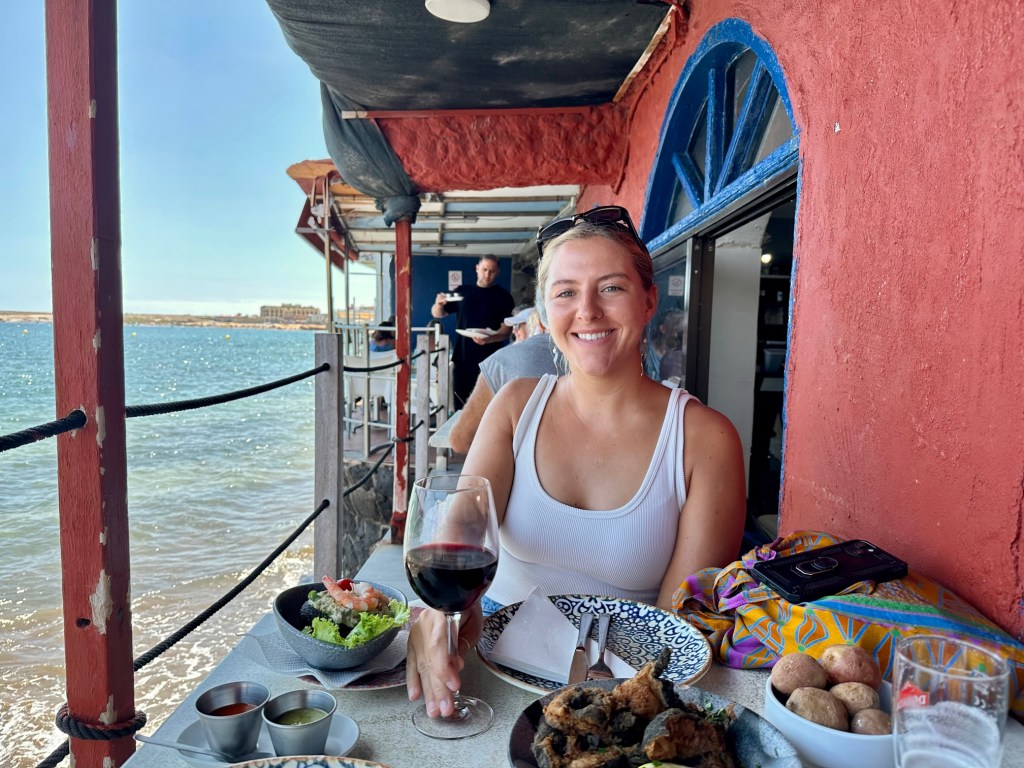
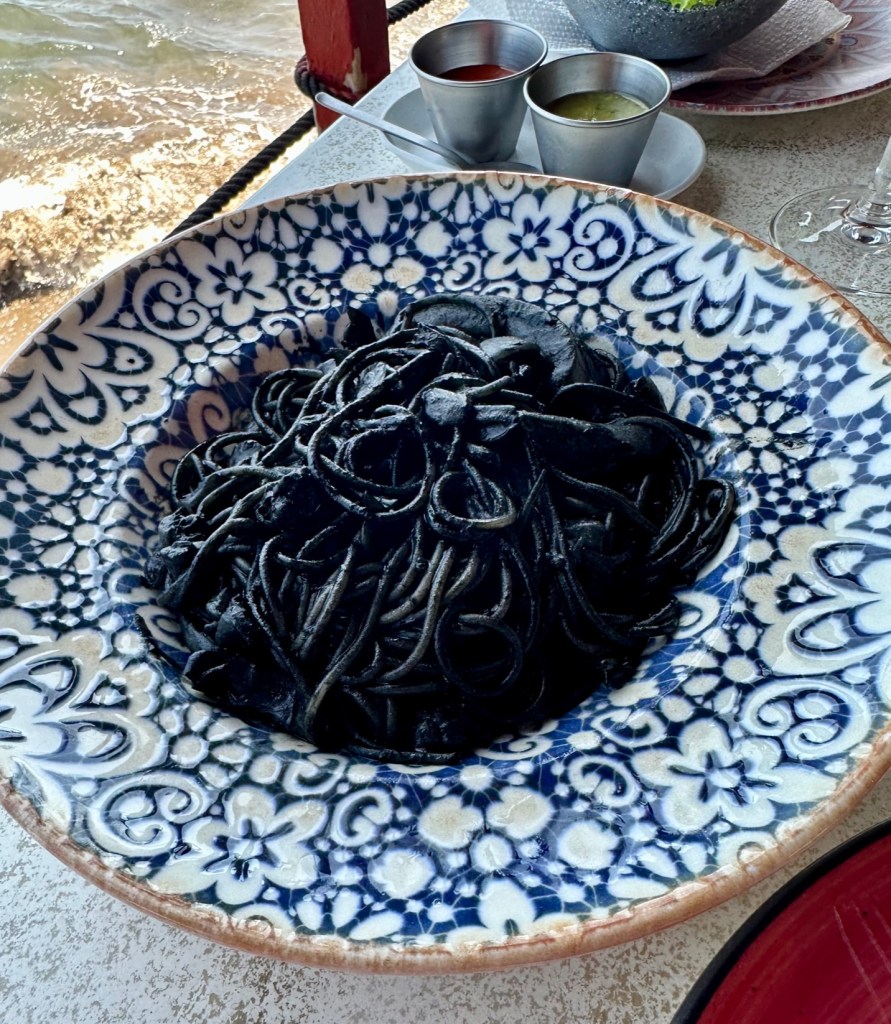
We’d made lunch reservations at Playa Chica, a restaurant on the sea front in El Medano. It was very pretty. We sat oceanside outside on a narrow strip of tables and chairs. The waiter handed our food and drinks out through the window! We tried seafood dishes we chose a bit randomly off the menu including “black spaghetti” which was spaghetti with squid and squid ink! It was quite good and I ate plenty of it!
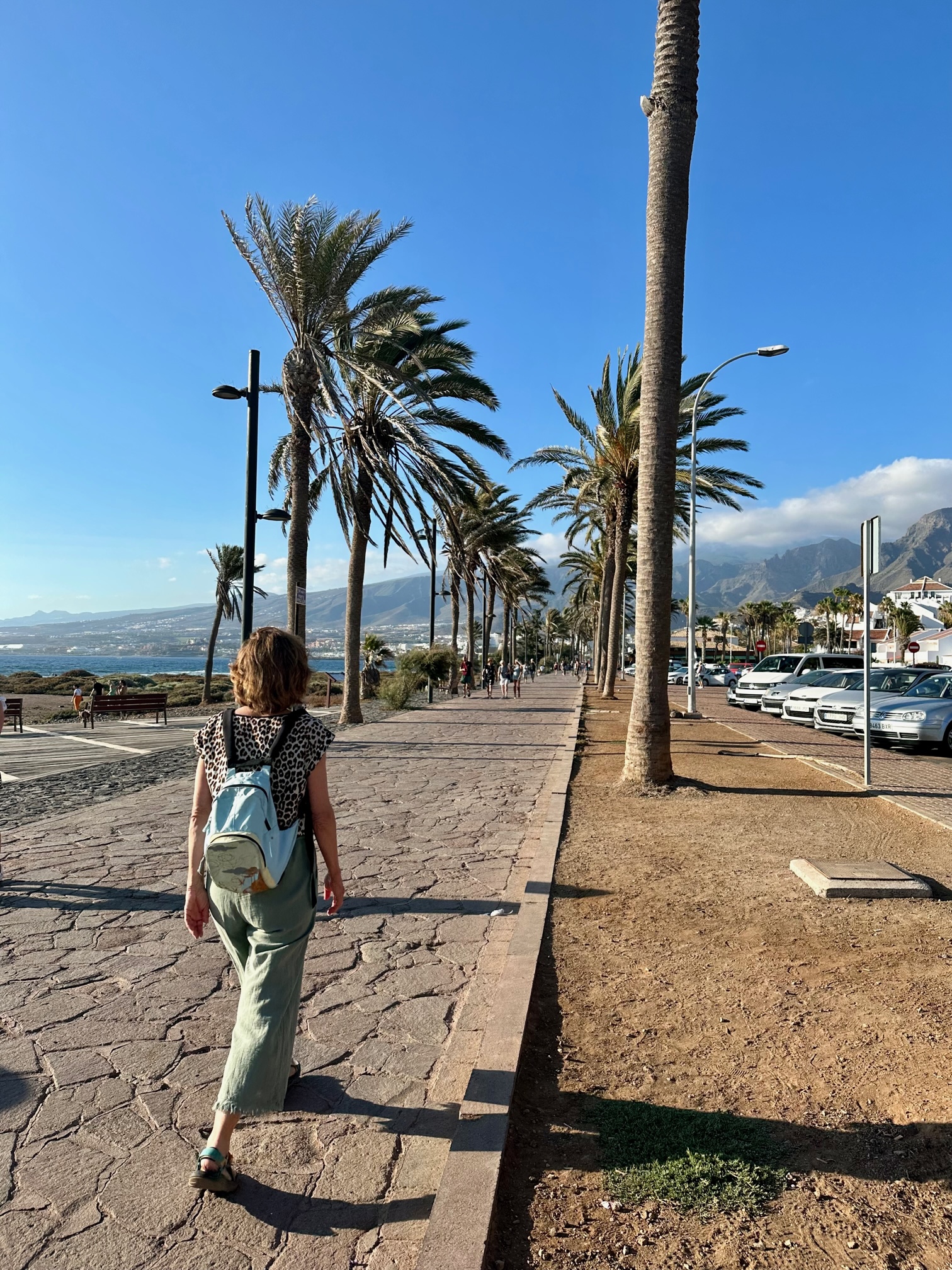
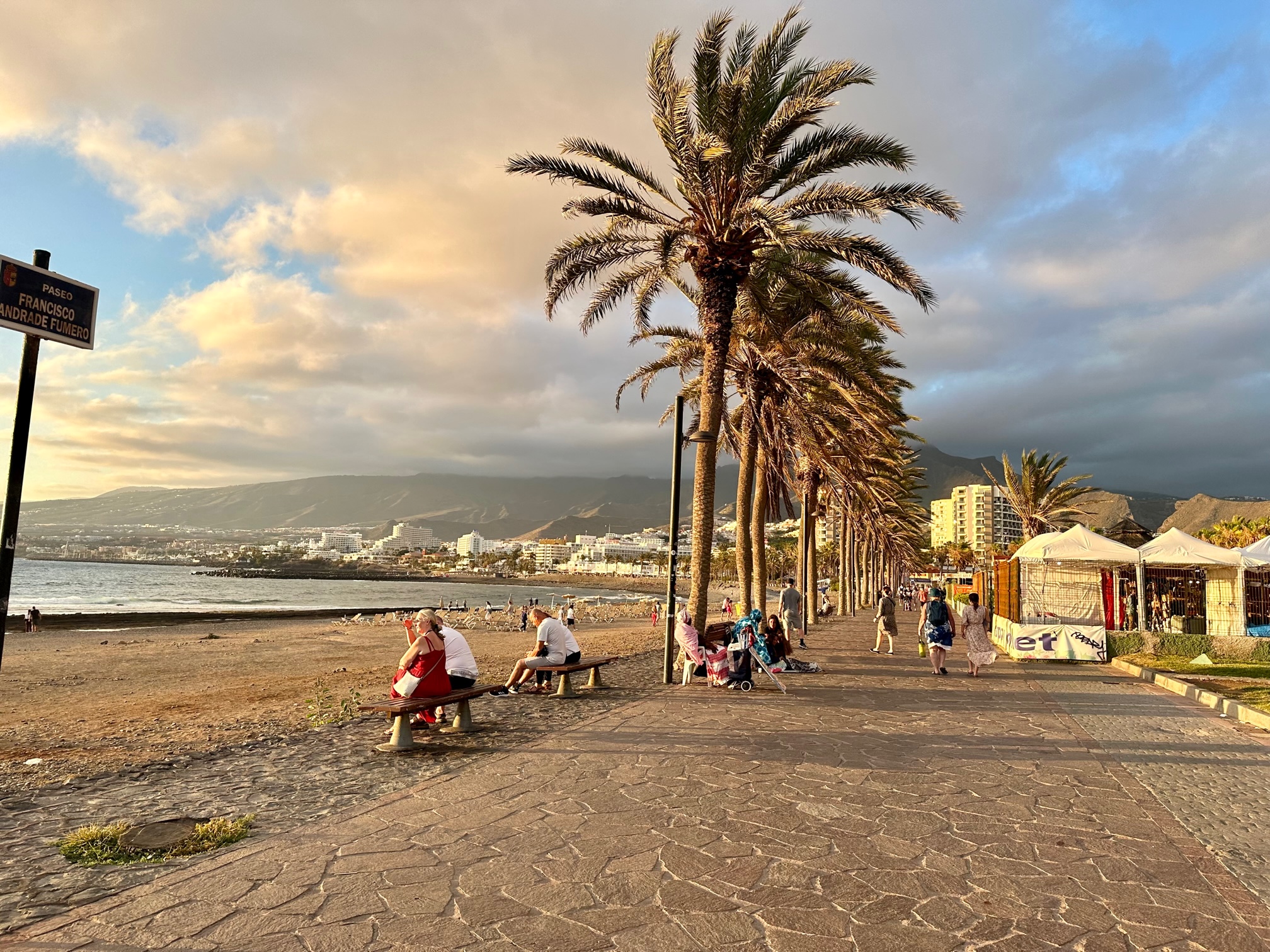
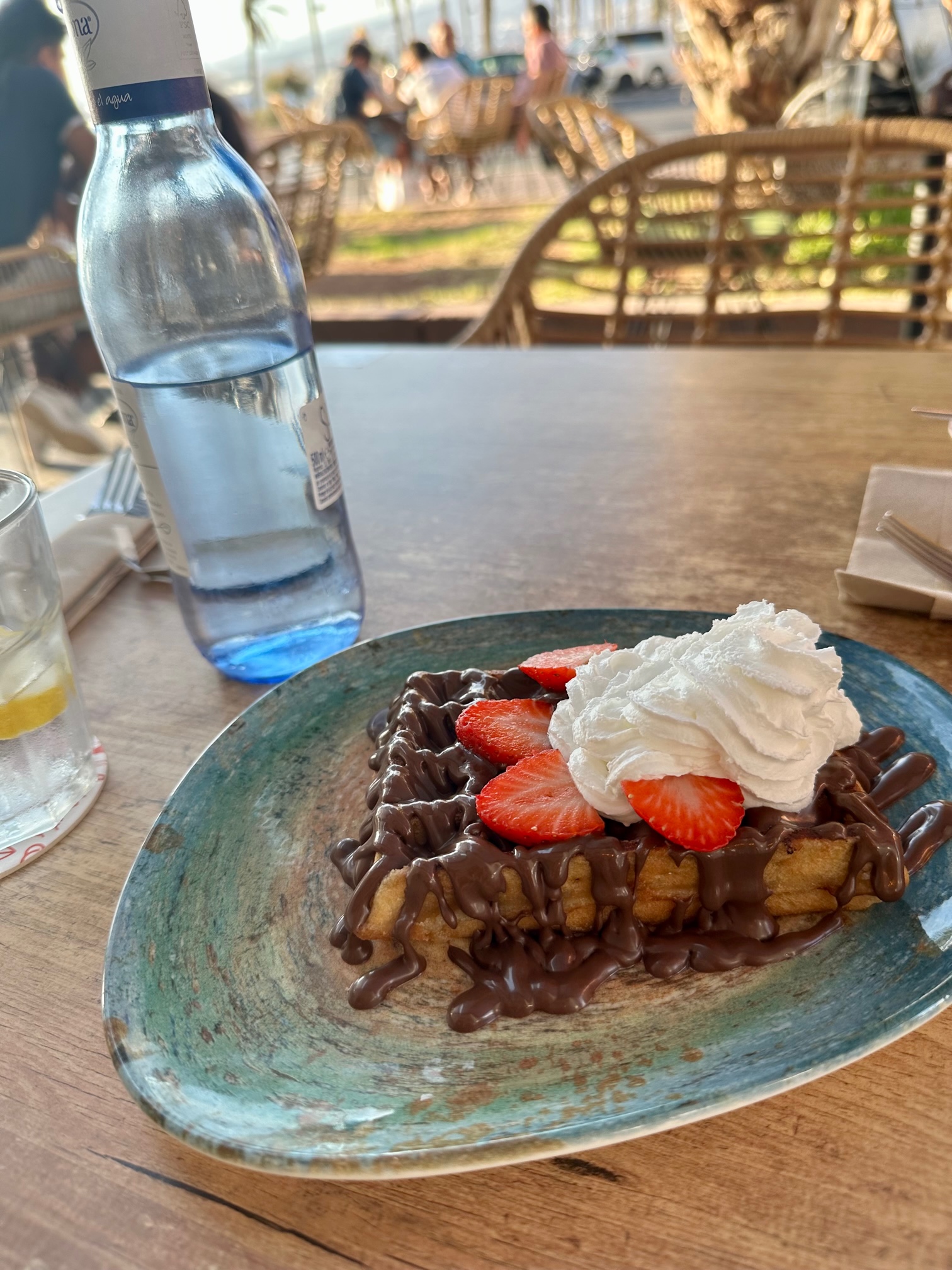
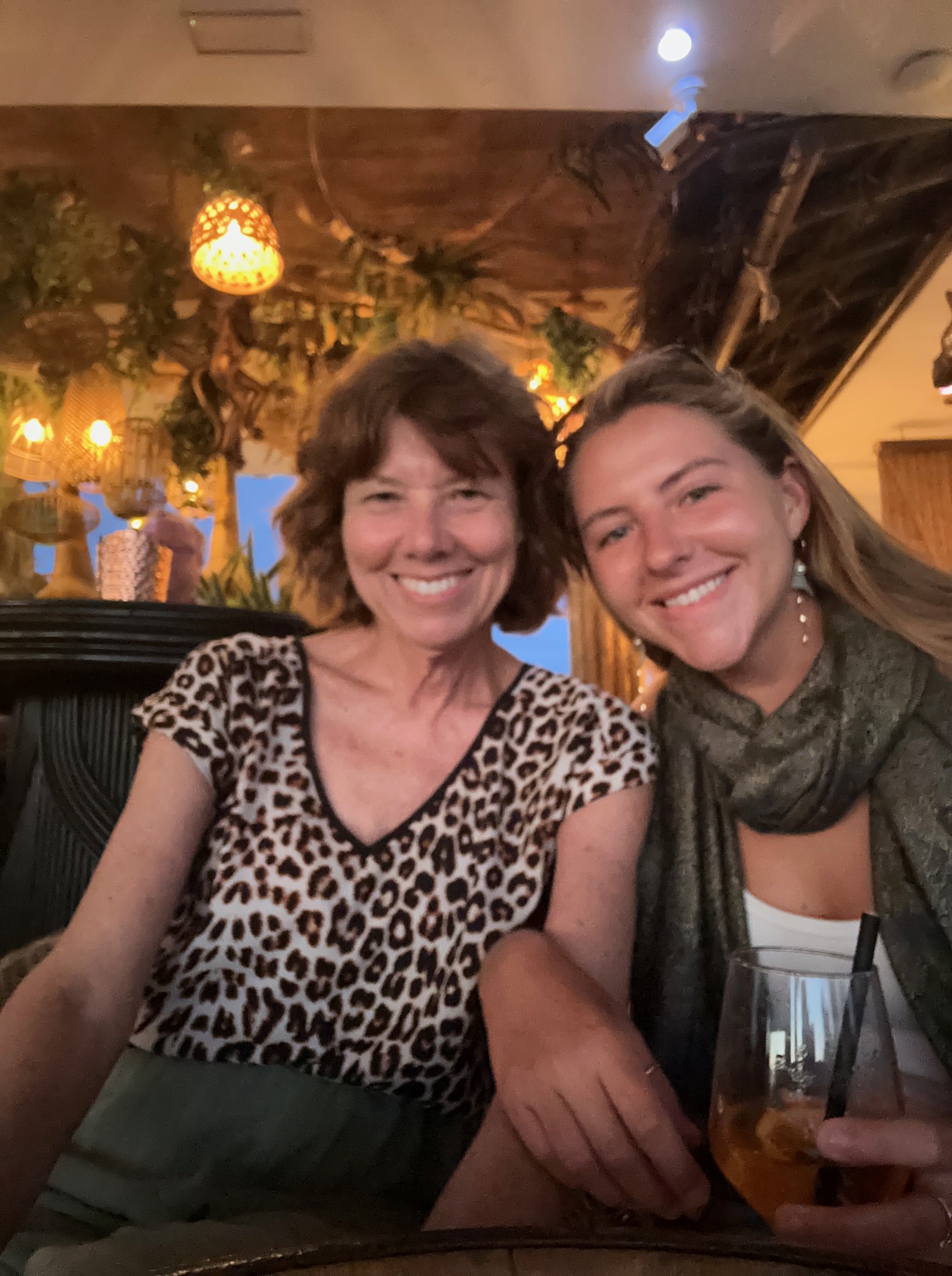
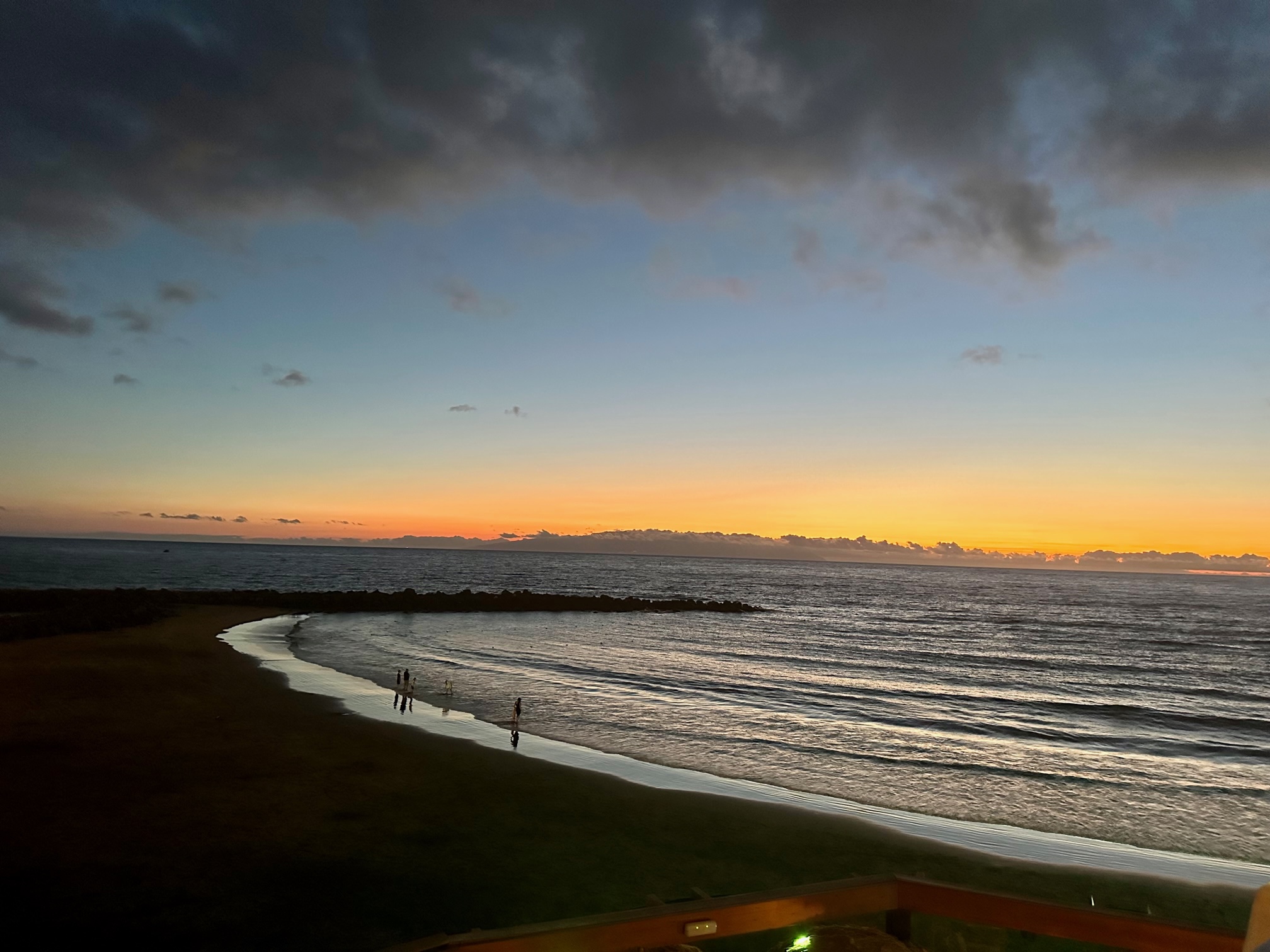
After our interesting and fun lunch, we travelled by bus to Los Cristianos which is described by Trip Advisor as “a playground for beachgoers from all over Europe.” We walked the boardwalk there, going in a few shops along the way, and stopping for a waffle with Nutella, strawberries, and whipped cream. (Nutella is very popular all over Spain, including Tenerife—although, surprisingly, peanut butter can be hard to find.) The mountains with the beach and clouds were very pretty. The boardwalk continues for many miles, through more towns including Los Americas (described by Trip Advisor as a lively, upbeat resort built in the 1960s) where we stopped at a “happening” jungle-themed bar and restaurant to watch the sunset and have something to drink.
Day 4: Candelaria and Santa Cruz
After souvenir shopping and beach time in El Medano, plus a crepe at a cafe there for breakfast; then a huge, messy, delicious pancake-like wrap with lots of vegetables (including corn!) in it for lunch—bought at a nearby cafe and eaten on the beach—we left for Candelaria.
Candelaria
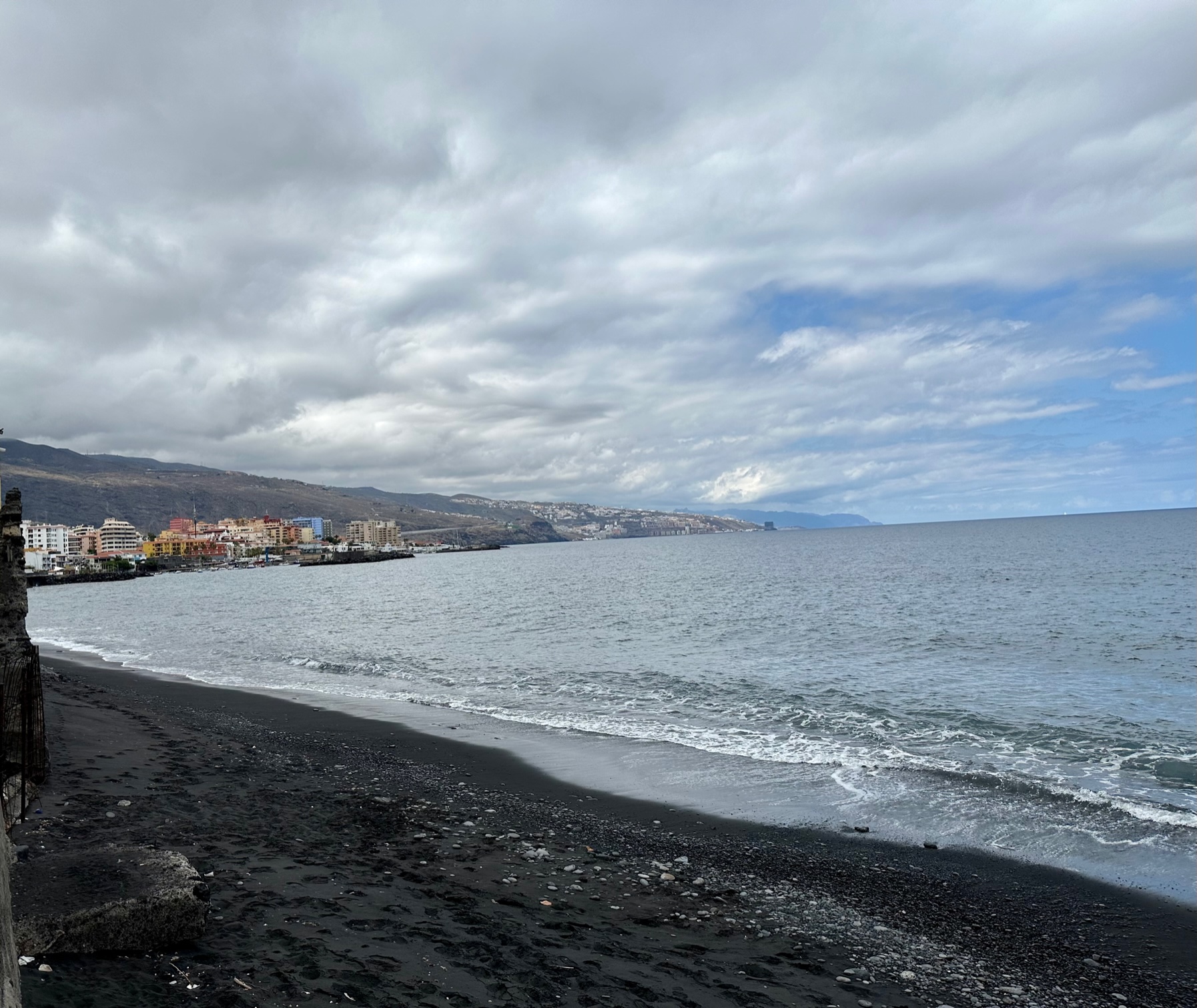
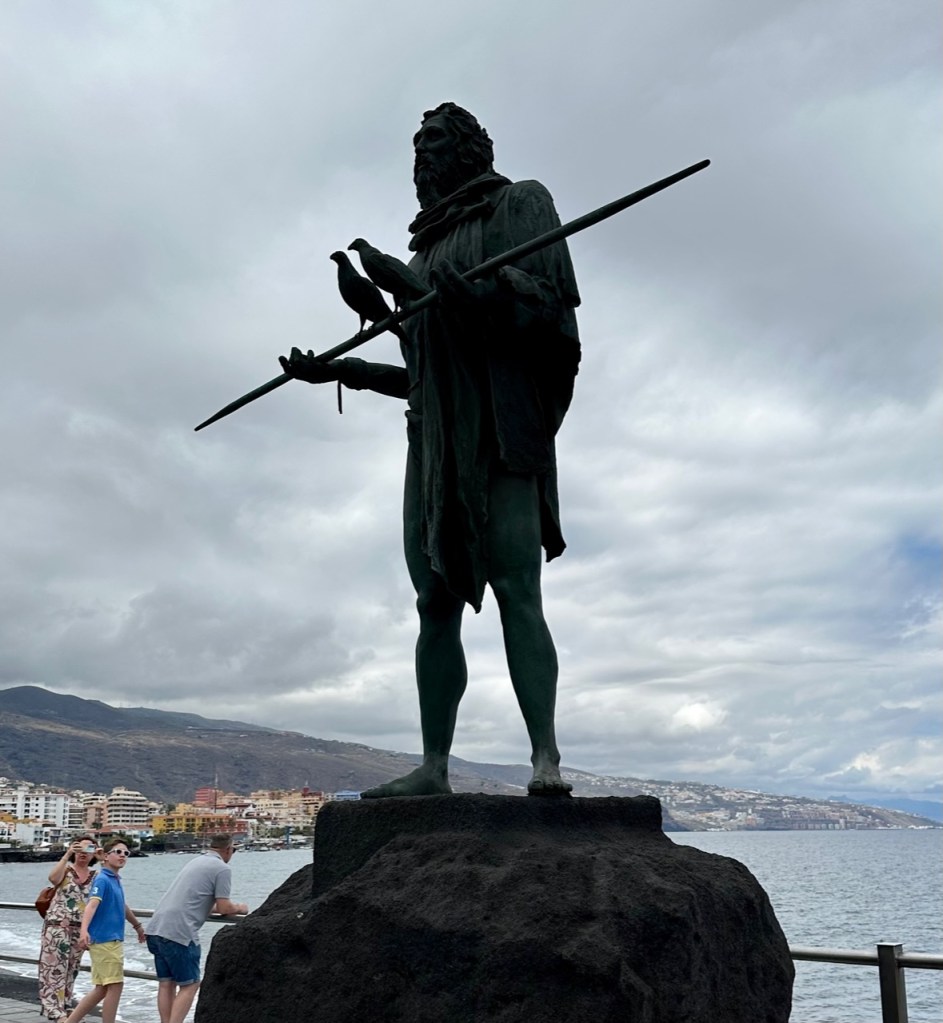
My daughter had an English Immersion baby-sitting assignment in Candelaria. One of mu daughter’s roommates kindly drove us there (around a 30 minute drive) having an appointment himself in the area. We went a bit early and walked around Candelaria, which is a very pretty Tenerife village with its black sand beaches surrounded by volcanic mountains. We walked by each of the 9 Kings of Tenerife statues.
The statues of the kings represent the nine Guanche kings who ruled the nine different kingdoms of Tenerife in prehistoric times. Currently there are bronze statues, which replaced statues made of volcanic rock which were transferred somewhere else (for safekeeping, I presume) in the late 20th century. I haven’t been able to find out when the volcanic statues were originally made and placed in Candelaria! If you like a challenge, please try to find out, and let me know too!
We went inside the basilica there, called the Basilica of Our Lady of Candelaria. The historic statue of Mary there is somewhat uniquely depicted as a dark-skinned woman. She wears a gold crown and holds a gold scepter in one hand and a baby in the other. The statue was reproduced in 1830. The original one had washed up on Tenerife’s shores as early as 1400! The original “Black Madonna” as it is called, had blonde hair. No one knows for sure where the original one came from!
https://www.interfaithmary.net/black-madonna-index/tenerife
After coffees at a cafe, my daughter and I walked to her English Immersion job. I joined them for a while. The children (ages 3 and 5) were making a ‘cake’ with their mother, and my daughter. The cake was what I call a ‘pie’ and they were making the crust for it. Fun fact: In the United States, we measure flour, sugar, and other such ingredients, using measuring cups (or at least I do; don’t you)? But this mom used a scale to measure all, by each ingredient’s weight. As I’ve read up on it, it turns out weighing is much more accurate than measuring. This method is used especially by professional bakers. It is also used in most homes in Spain, according to at least one blogpost I read.
“In Spain we work by weighing the ingredients, especially in baking.” -Miss Blasco Blogpost
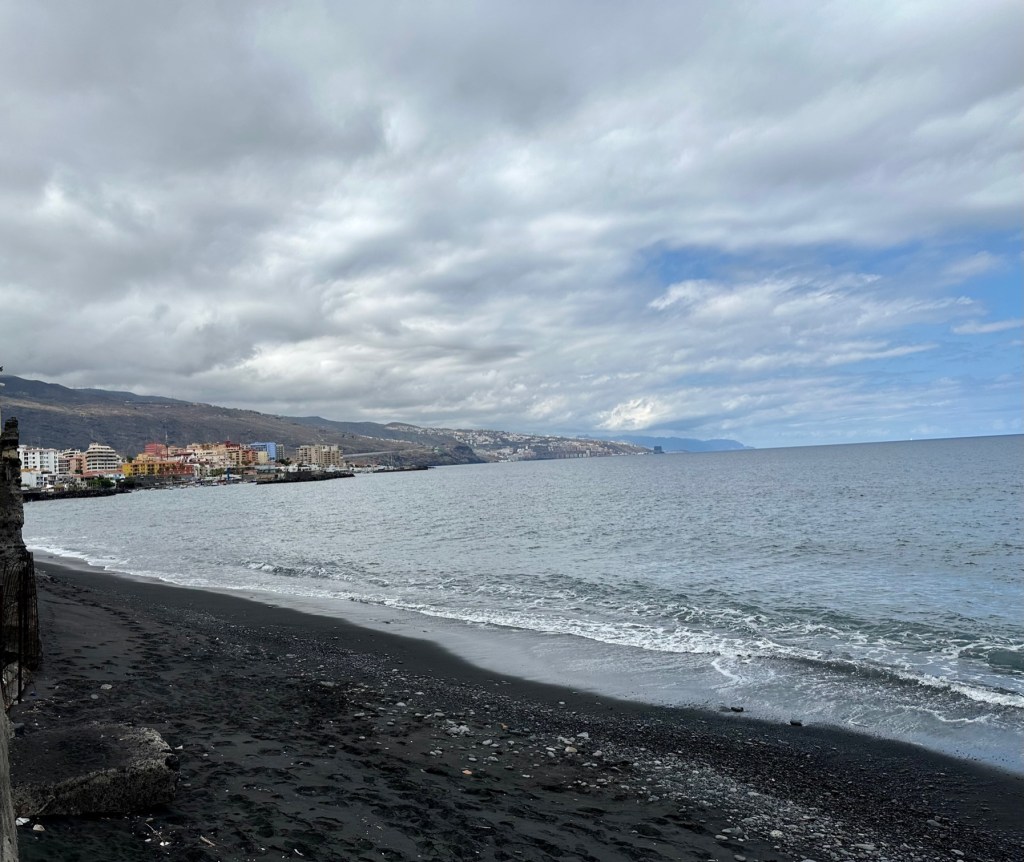
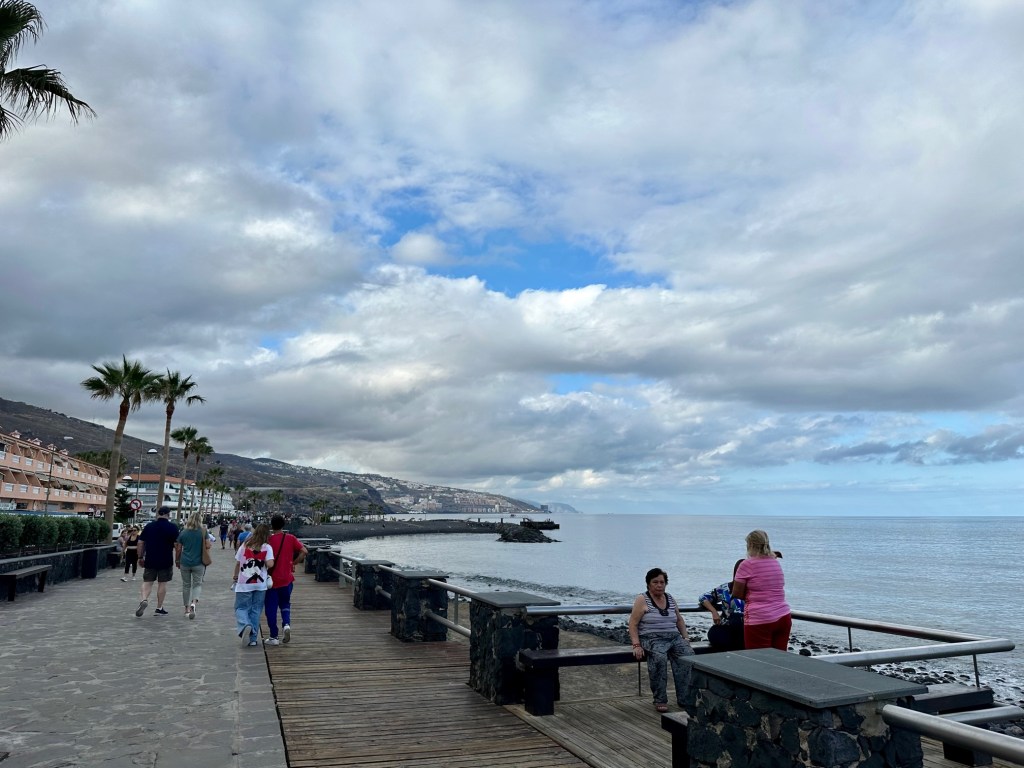
While my daughter continued her baby-sitting, I left to walk down the boardwalk in Candelaria. It was nice with not too many people, and cloudy, mild weather. The setting is beautiful, the city nestled in between the mountains and ocean. The boardwalk stretches on and on, with shops and cafes and restaurants as far as you can see, and beyond the boardwalk more shops, cafes, and restaurants. I stopped for something to drink and a snack, and took time in the otherwise empty outdoor cafe to call home.
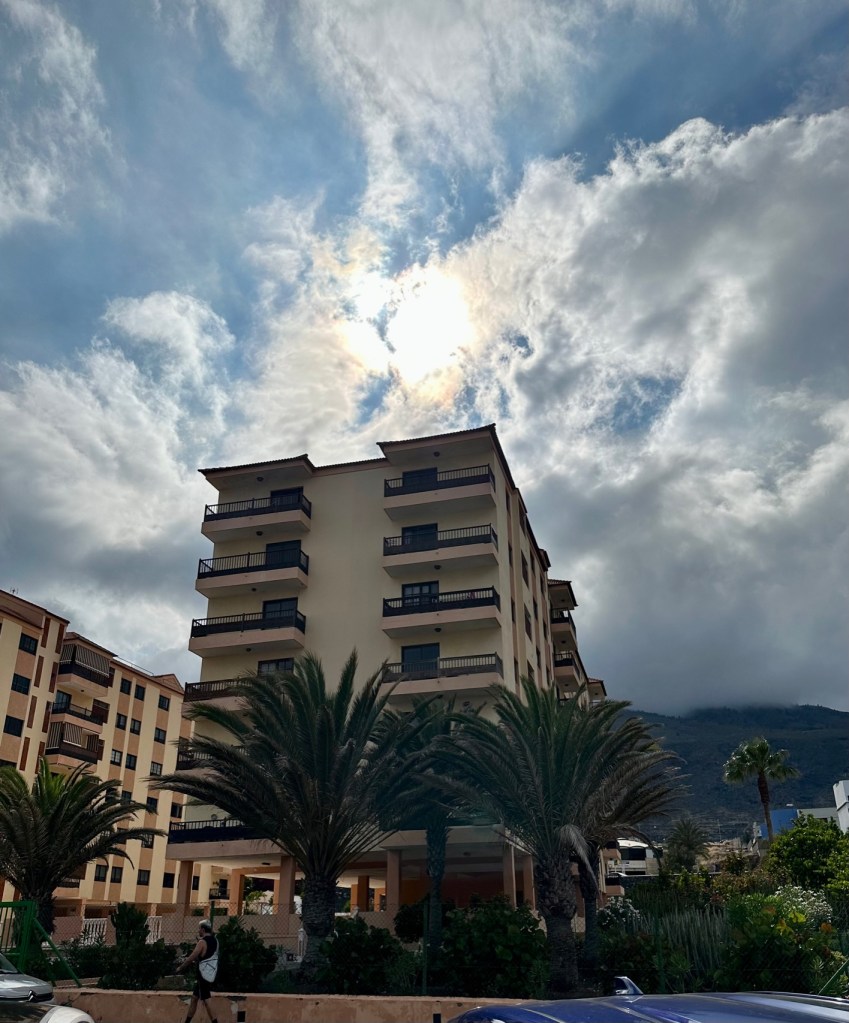
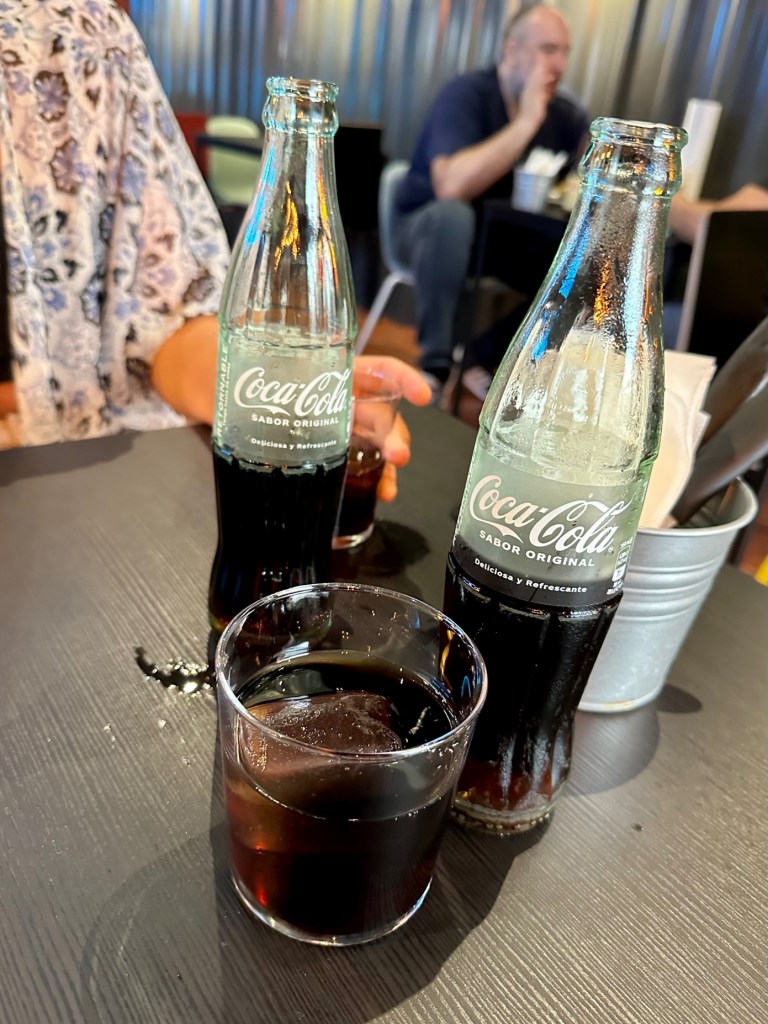
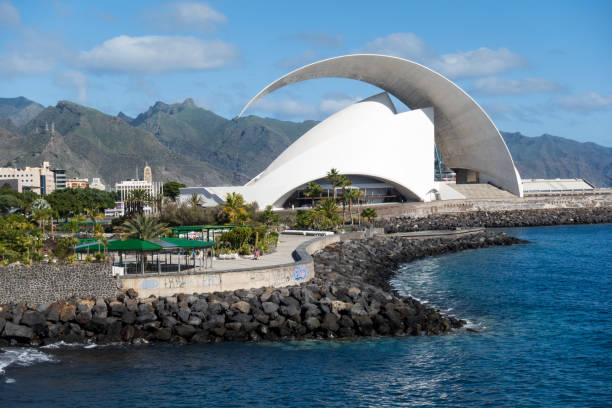
When my daughter finished, we got a bus to Santa Cruz (a 30 minute or so bus ride from Candelaria). Santa Cruz is the capital city of Tenerife, and one of the capital cities of the Canary Islands, the other being Las Palmas on Gran Canaria island. We walked around in Santa Cruz. I noticed the big trees there unlike the palm trees I was used to seeing in the beachfront towns we’d been in. There is an amphitheater in Santa Cruz, called the Auditorio de Tenerife, that is a replica of the Sydney Opera House. After walking around enjoying the sights of the capital city, we stopped for a hamburger and fries; an appetizer of French fries with guacomole, cheese and beans atop them—much like our “nachos” but with French fries instead of tortilla chips; and coca-colas. We did a little shopping at a huge department store where I found and bought the style of tennis shoes I’d been looking for. Then we caught the bus to El Medano and settled in for the long (hour or so) bus ride.
Day 5: Los Gigantes; Hell’s Valley; and El Teide!
Barranco del Infierno: Hell’s Valley
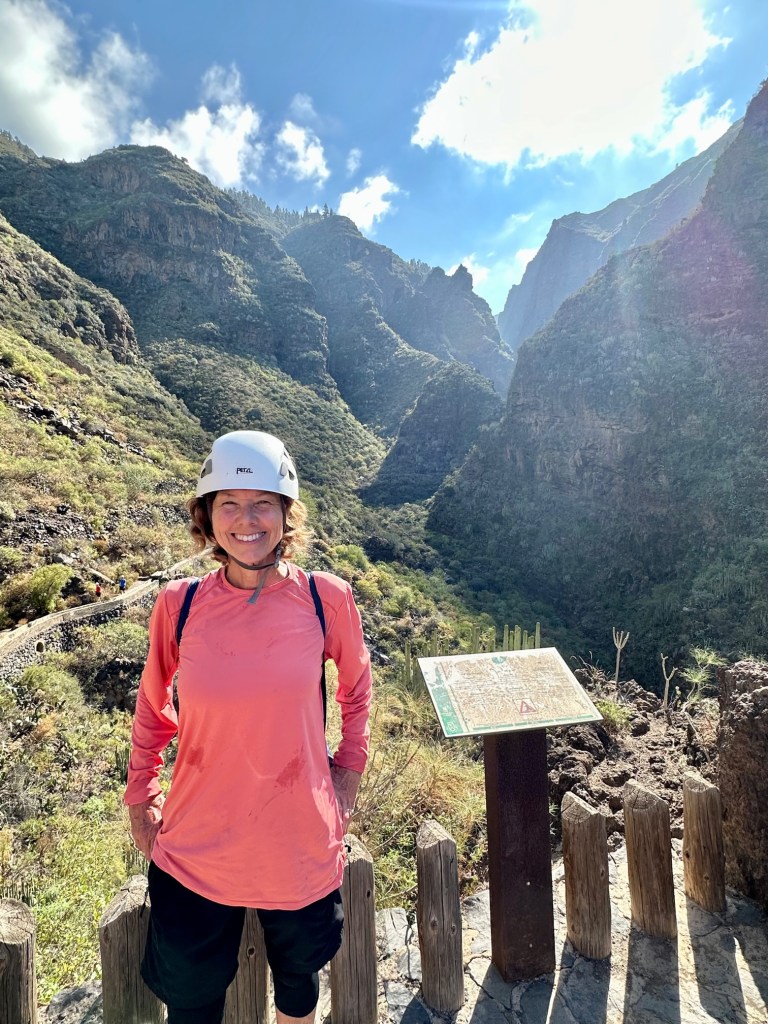
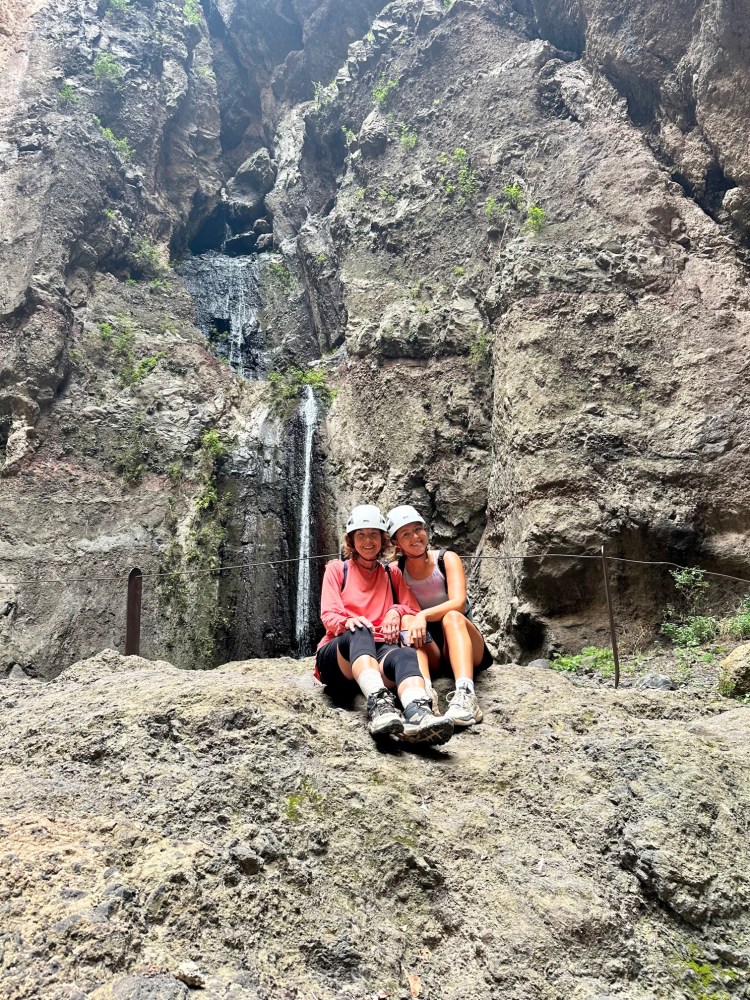
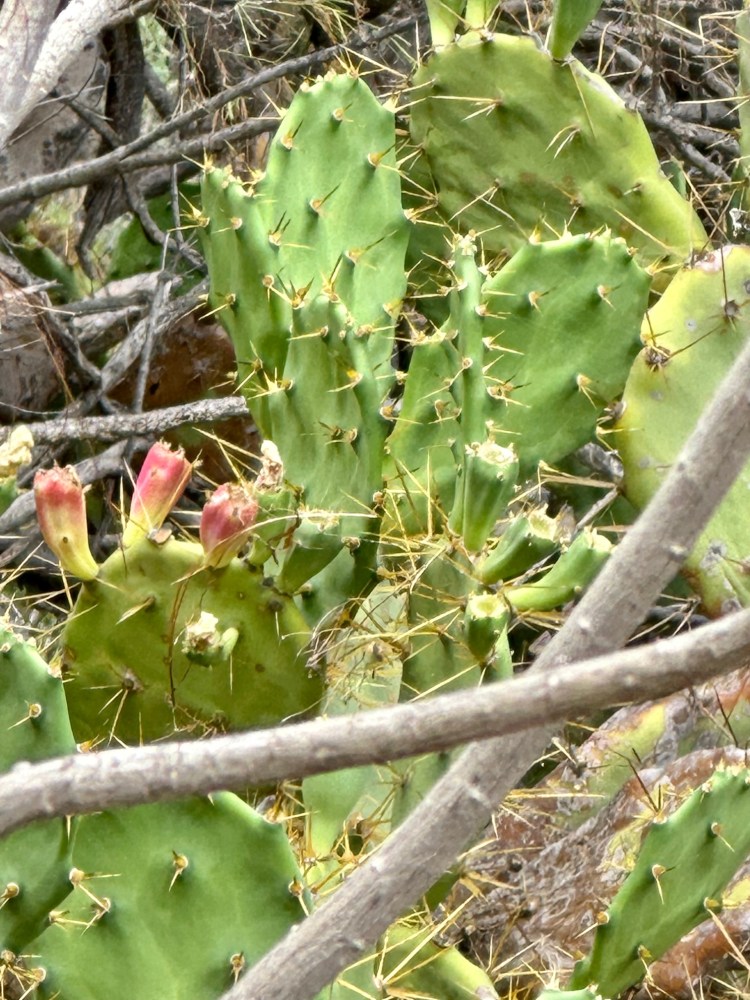
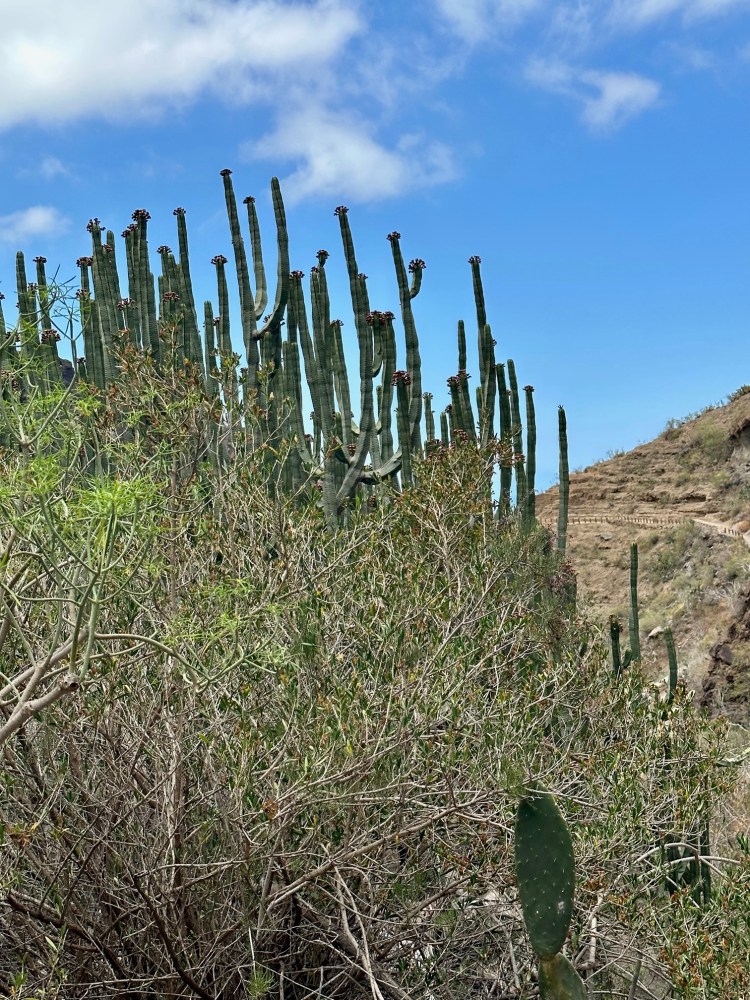
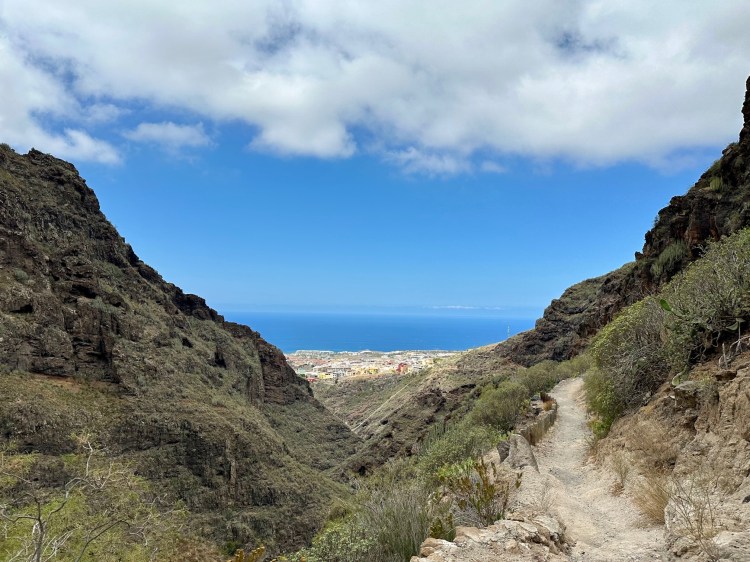
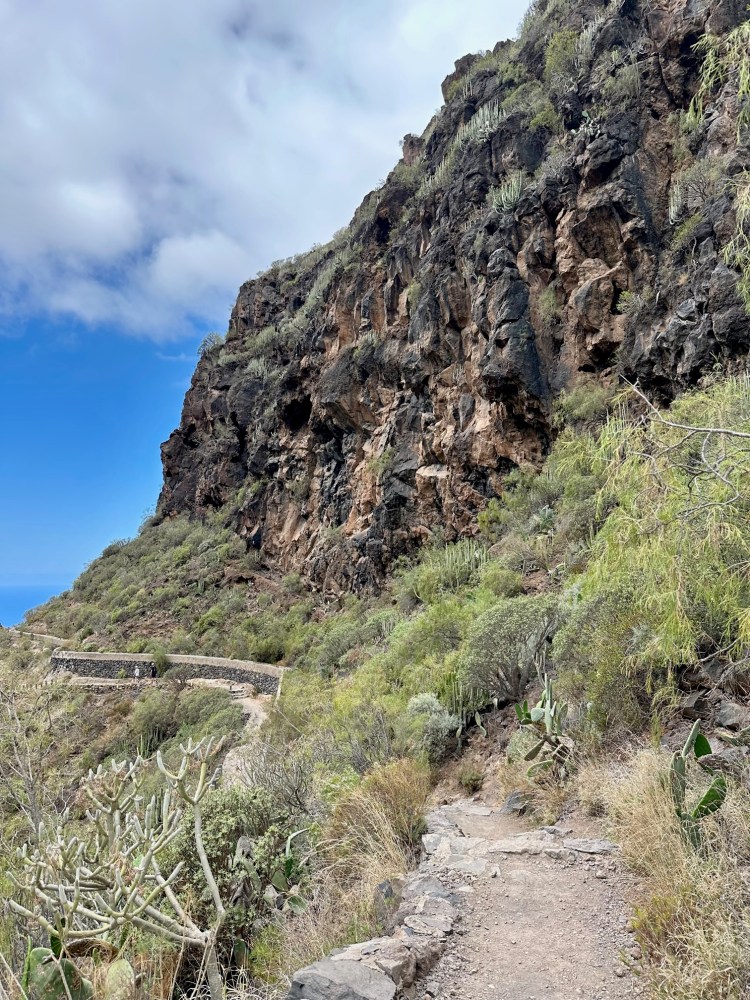
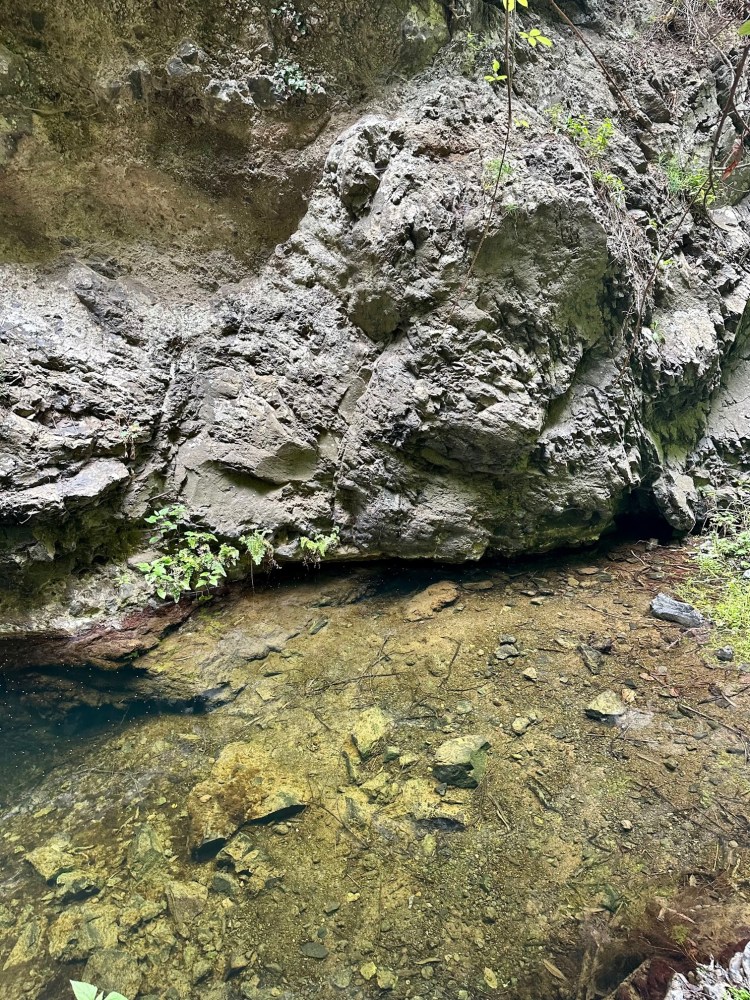
My daughter, a friend of hers, and I started the day by going to hike the gigantic gorge named Barranco del Infierno—Hell’s Valley! Would it be aptly named? We started early and I wore my knee sleeves, just in case! We were required to wear helmets, as there is a chance of falling rock. It was a beautiful hike—there was some shade along the way and it wasn’t too hot; we were used to the steep climbs from our week on the Camino; and the 3 hour or so experience was, I might say, the exact opposite of “Hell’s Valley”! I had a great time and enjoyed every minute! There is a waterfall at the top of the canyons which signifies time to turn around and go back. We had our snack we’d brought, while at the waterfall. The hike was awesome, with canyons, streams, cacti, and jungle-like parts, too. Beautiful and so much fun.
Slideshow:
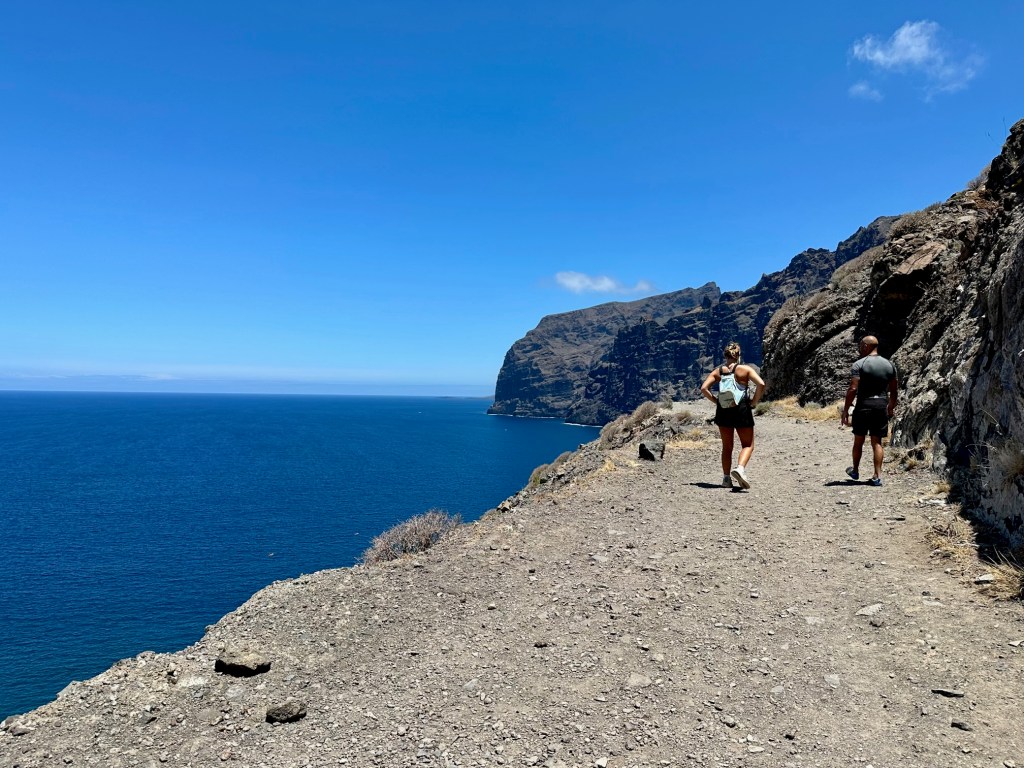
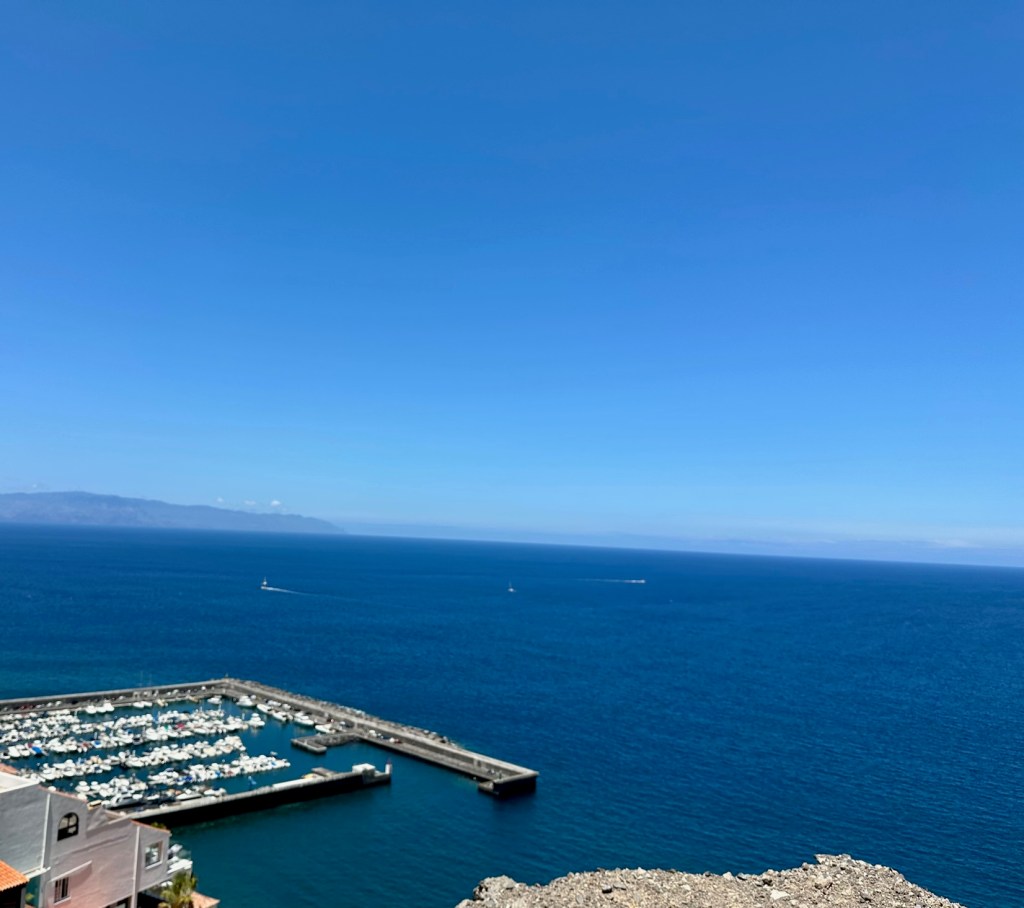
Still psyched from the awesomeness of the Hell’s Valley hike, we drove to Los Gigantes, which is a resort town famous for its gigantic volcanic rock cliffs that plummet straight down into the sea. The cliffs are, I later read, 1970 feet high, and, because of their enormous height, unique geologically. I didn’t have to do any research, though, to tell you they are a majestic sight to see! We stopped on the outskirts of the town of Los Gigantes to walk around, amazed by the beauty of the area. We had a crazy-hard time finding a parking place in this town, but it was well worth it to walk around then settle at a cafe looking out on the cliffs and crystal-clear ocean, where beach-goers relaxed and swam. We had an outstanding lunch there—I was expecting perhaps typical touristy food but everything we ordered was very tasty. I ordered samosas which were new to me. They were delicious! They were thin triangle-shaped hot fried pastry, some filled with chicken, some with fish, and some with vegetables. I would definitely order them again; so good! Funny story: I thought I was ordering guacamole and cheese toast with jam, but it was ham. I’m accustomed to seeing “jamon” (the Spanish word for “ham”) but the menu had read “jam”. I looked for my jam for a minute before realizing what had happened.
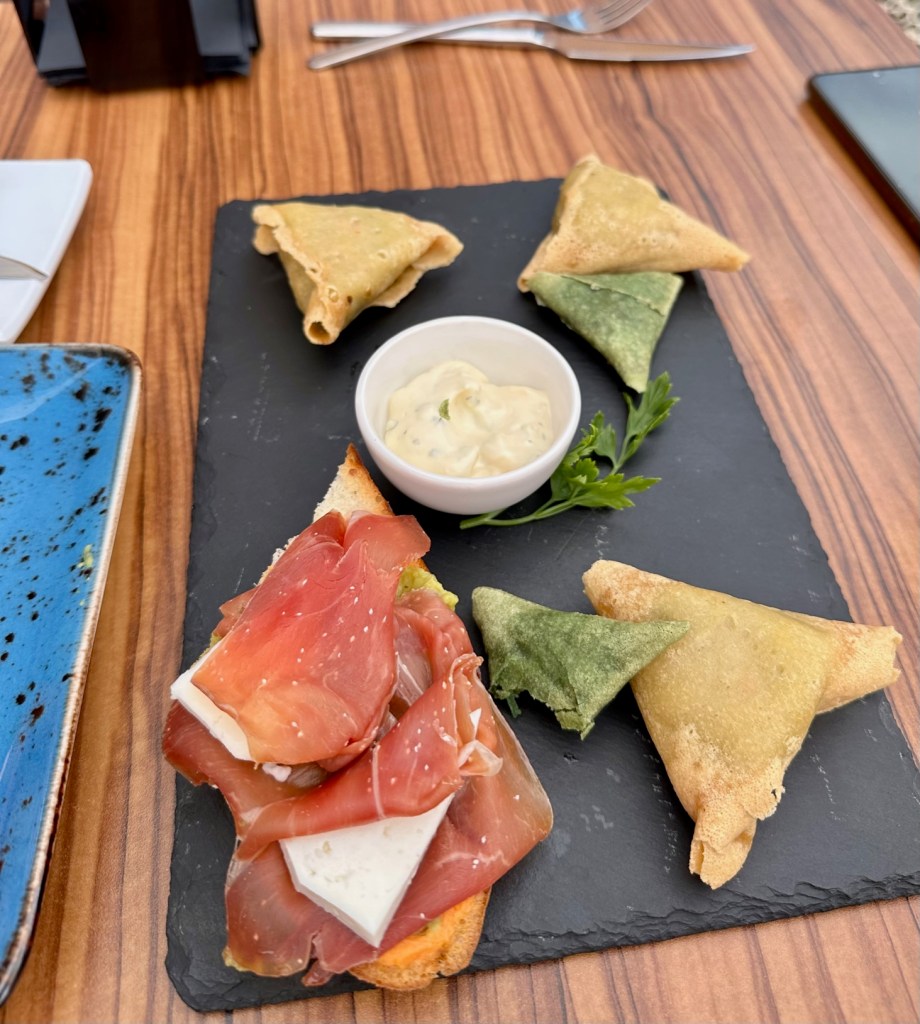
(Notice the ham, not jam, on the guacolmole toast!) The samosas (pictured) were wonderful!
Interesting: Whenever we stopped to fill up with gas, a gas station attendant would come out to pump the gas! A “blast from the past” for me! I did a little research to see if that was an anomaly, and I read that in rural areas in Spain, the majority of gas stations are served by attendants who, yes, come out and pump your gas for you.
Ready for one more fun fact? I bought a package of cookies at the grocery store (“supermercado”) that were called “granola with milk chocolate”. Turns out “granola” is our “graham cracker”. These chocolate-covered grahams were extra-good! Better than any I’ve had.
After the spectacular sights we’d seen today, you’d think we might’ve called it a day; but the grand finale was yet to come…
El Teide/ Above the Clouds:
El Teide, the volcano on Tenerife, is at its summit the highest point in Spain, and the highest point above sea level in all the islands in the Atlantic Ocean. Its elevation is 12,198 feet. It’s an active volcano, not extinct. Its last eruption was in 1909.
We drove to the base of El Teide, about a 30 minute drive from where we were. Up, up, and up! The terrain became increasingly interesting, at times with lots of big black rocks as far as you could see, and always El Teide in the background (or forefront). It looked like we were driving across Mars!
We got out at the Visitor Center, as well as at several overlooks, and places to hike. The entire area was the National El Teide Park, and there were several opportunities to explore within it.
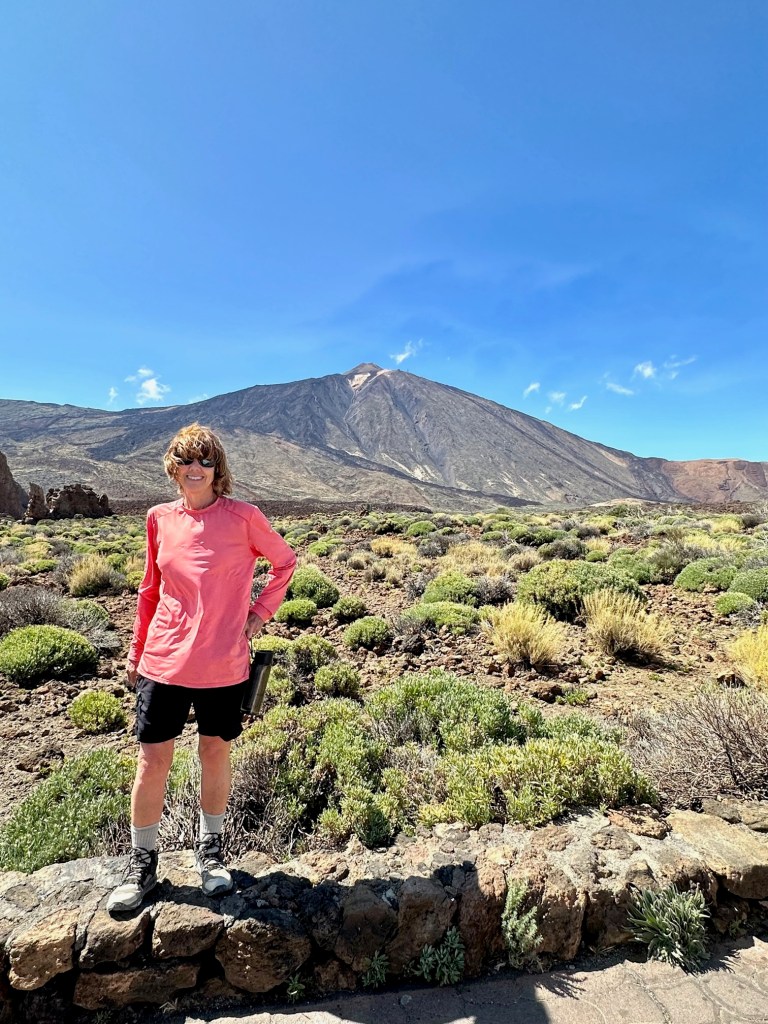
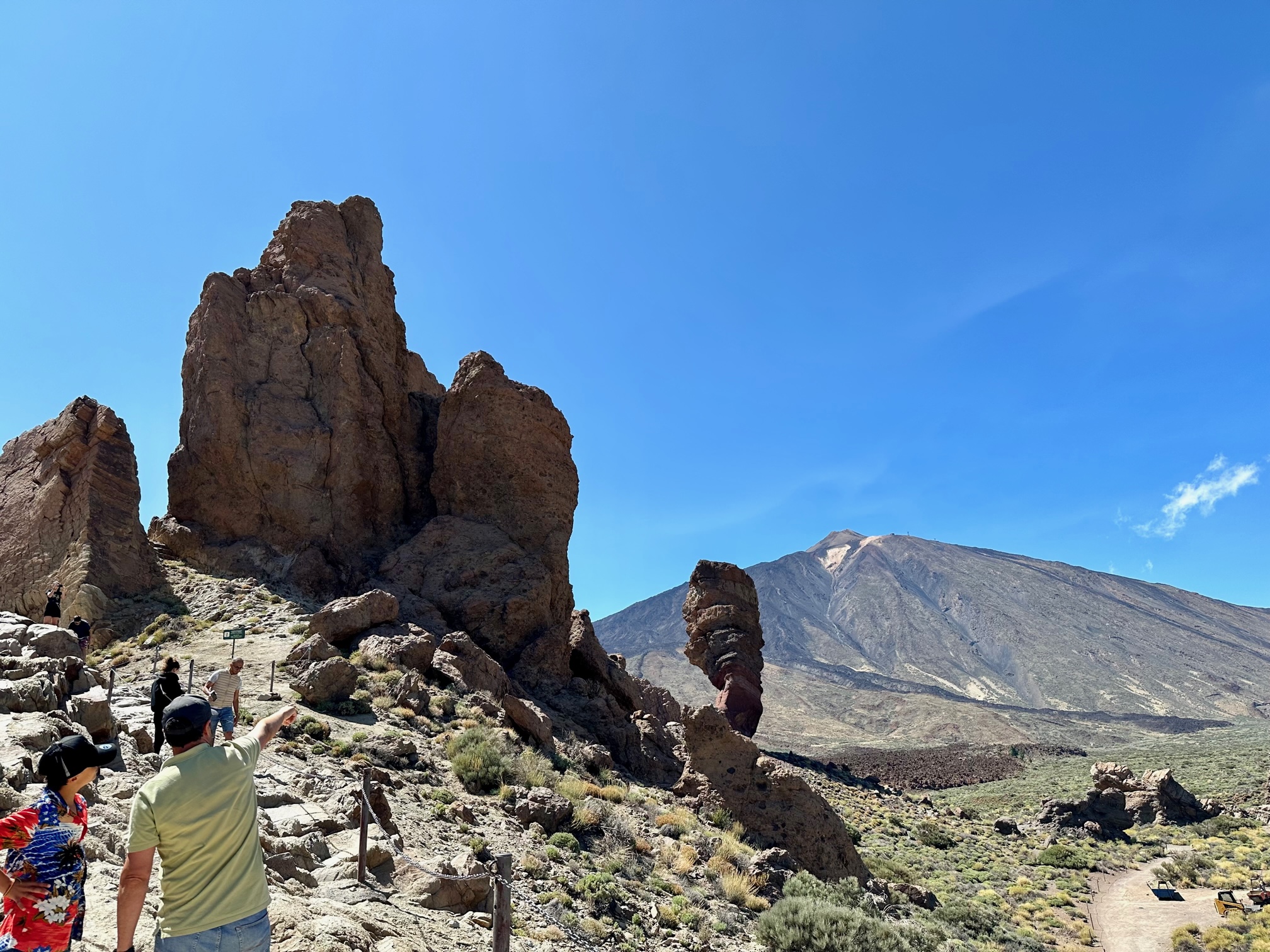
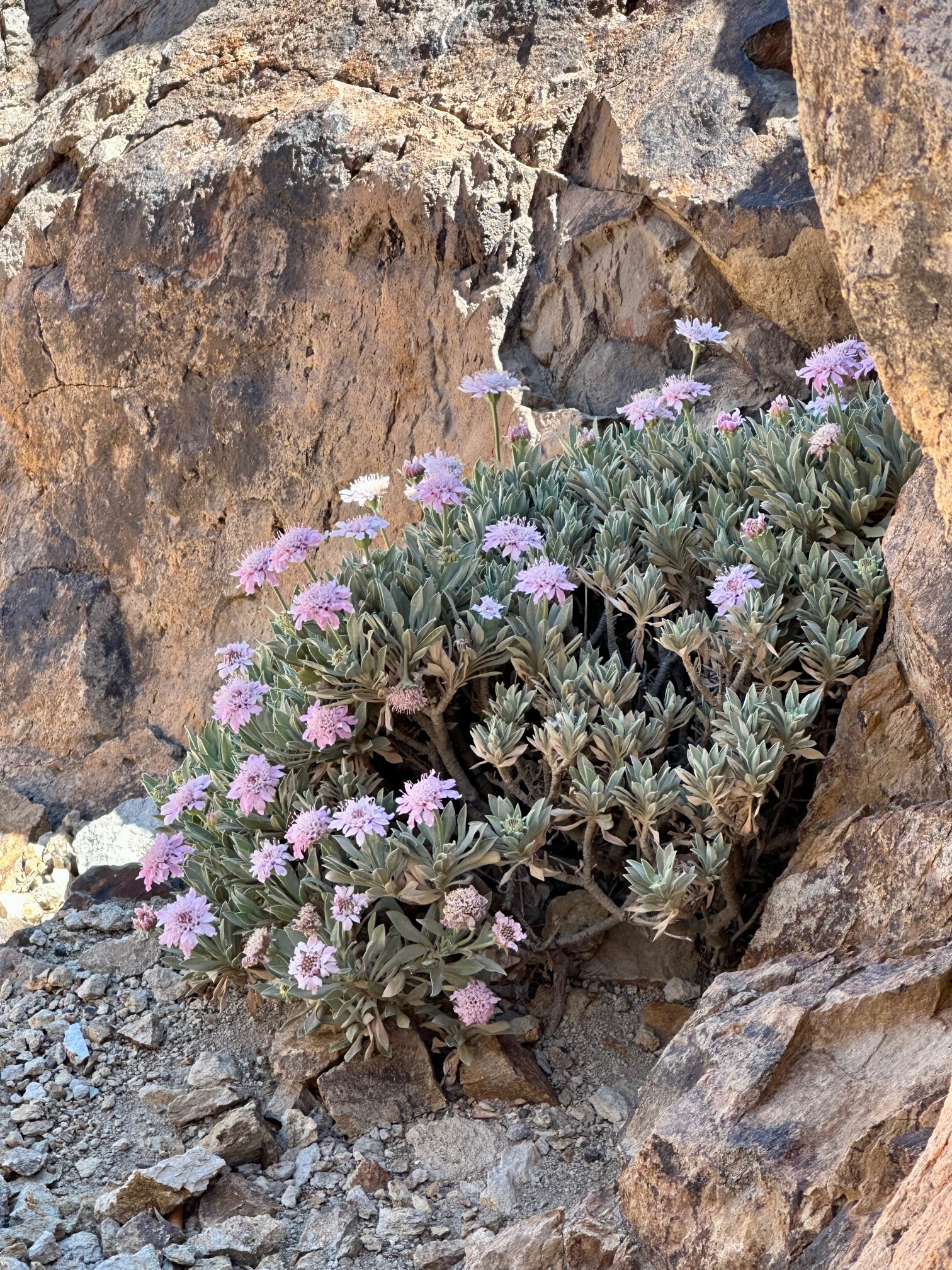
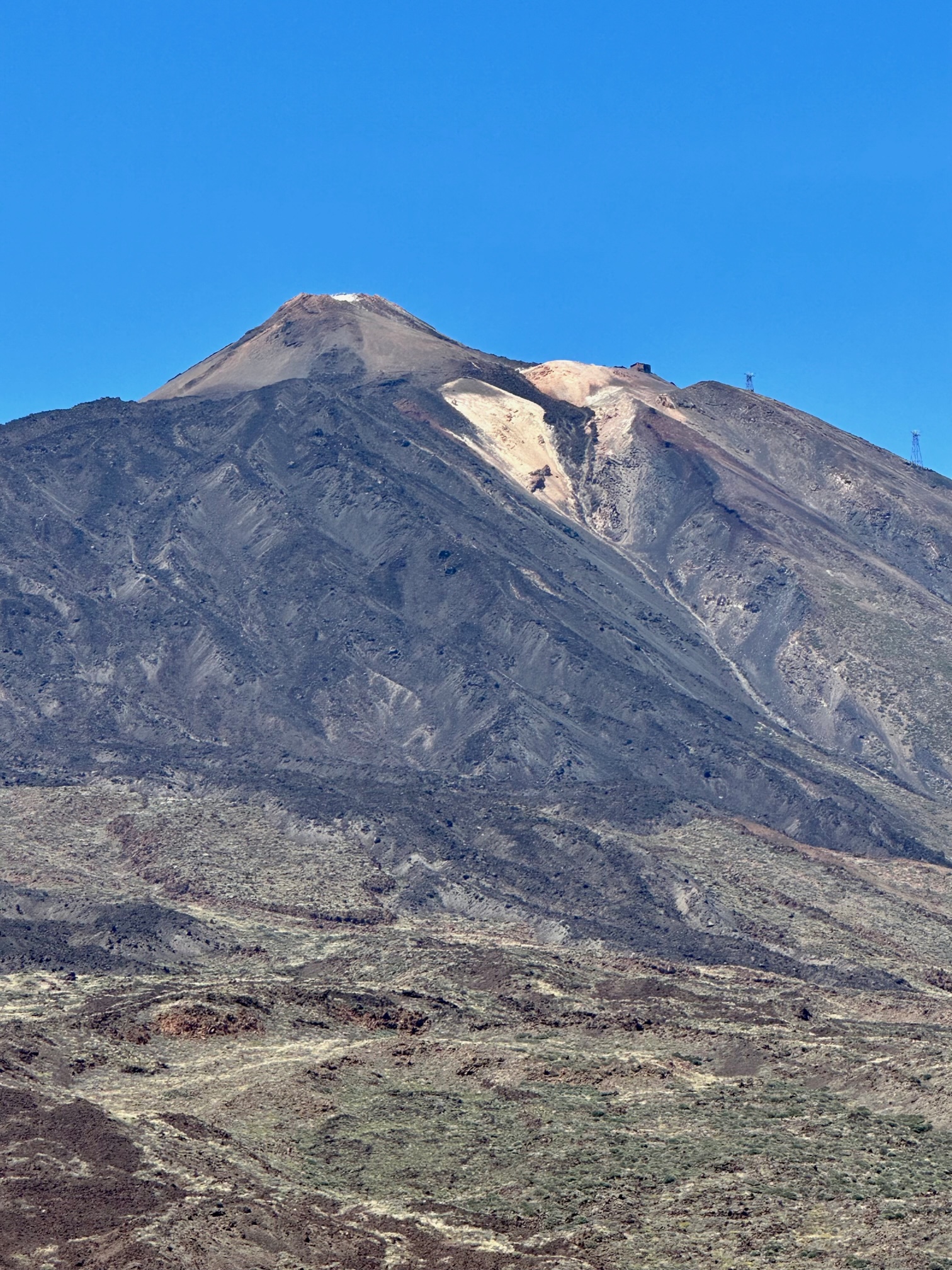
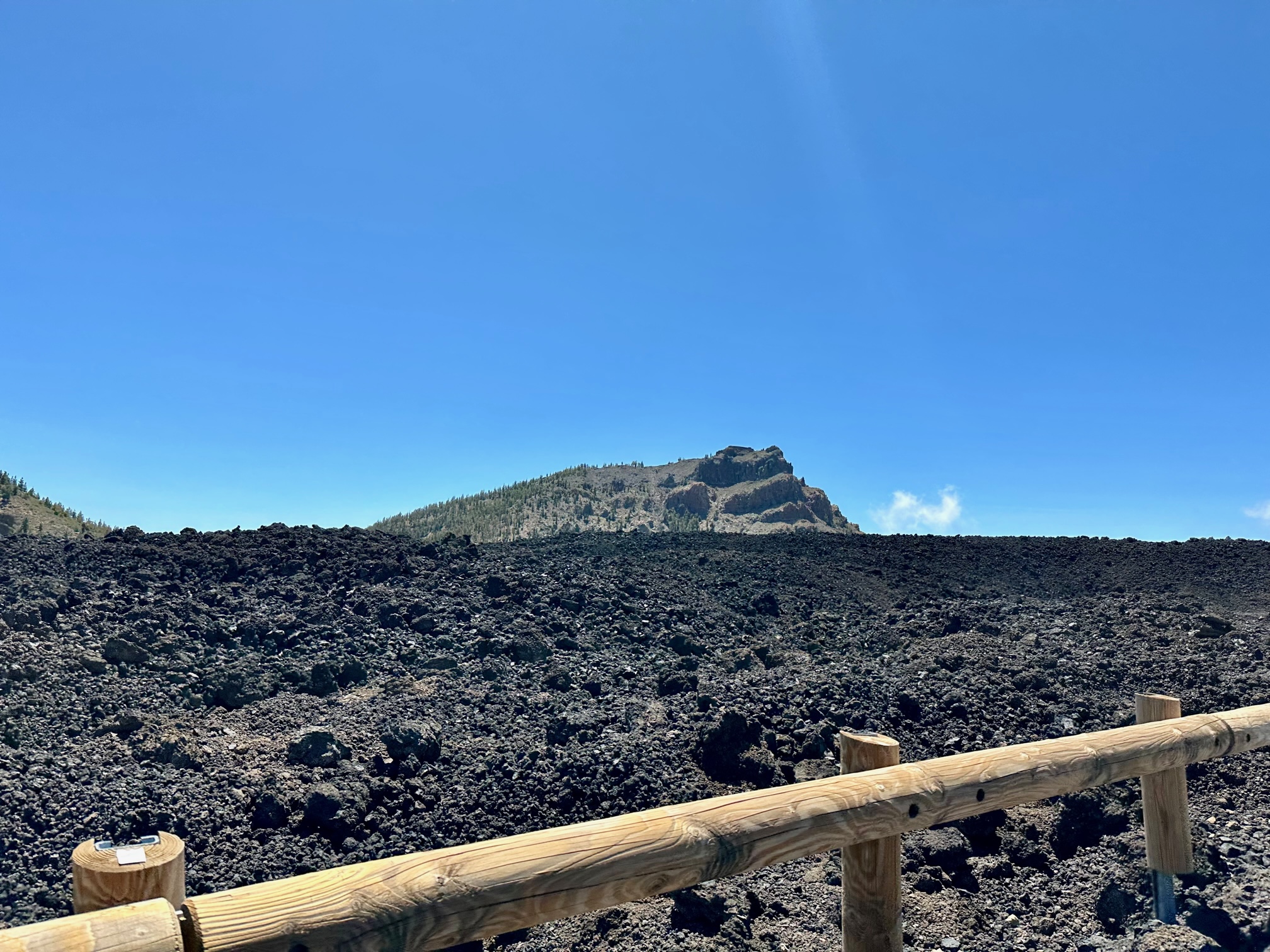
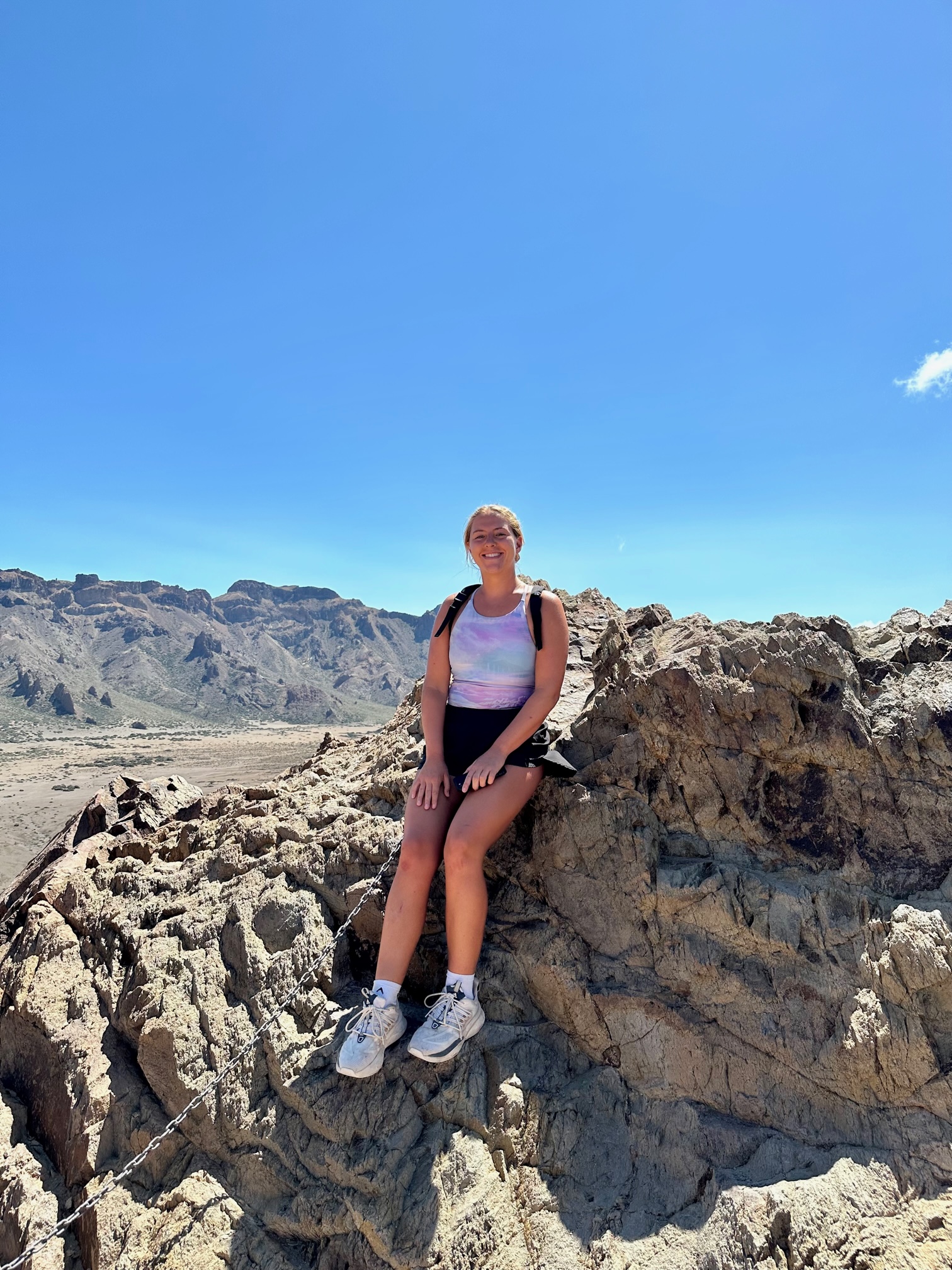
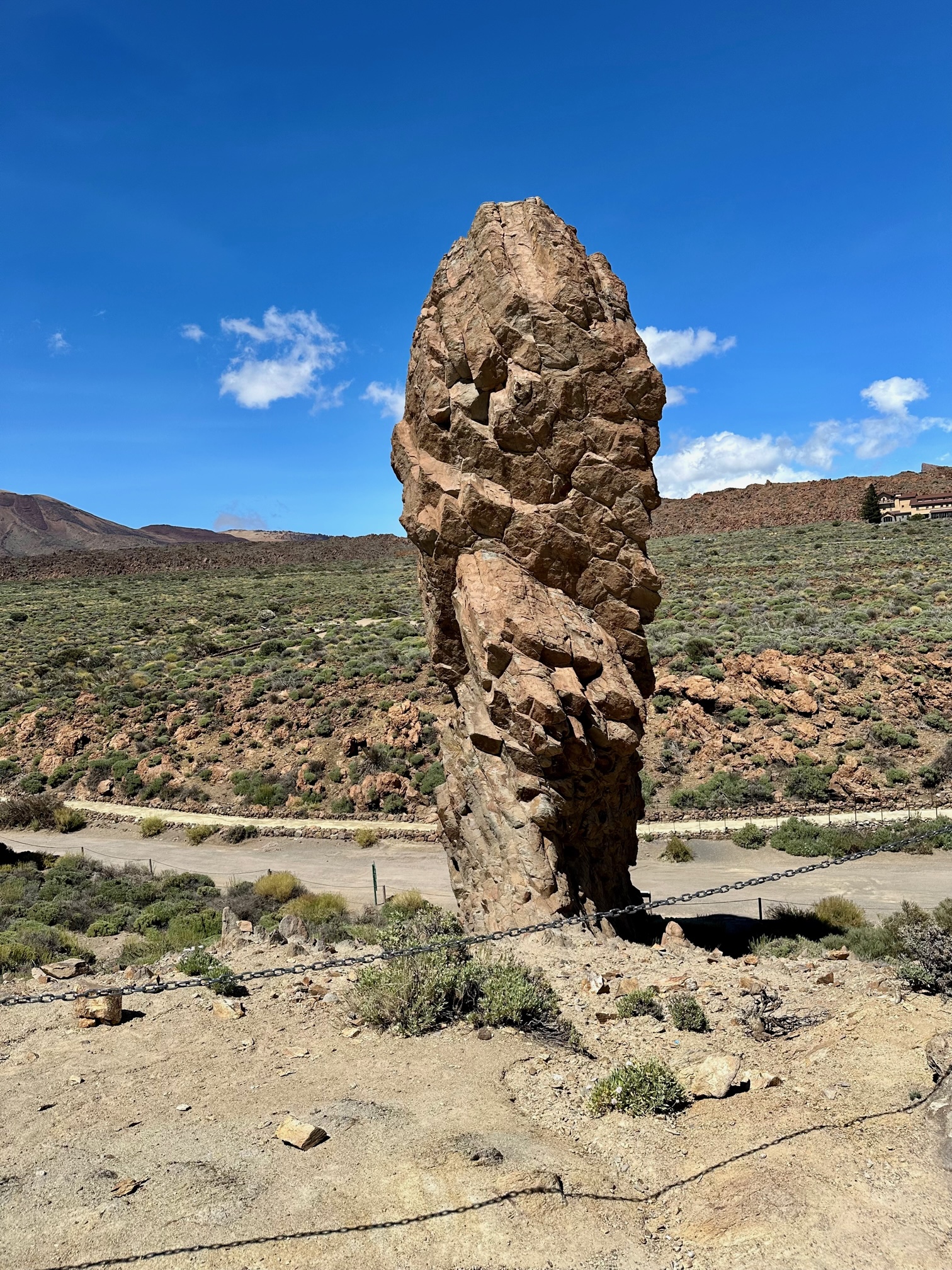
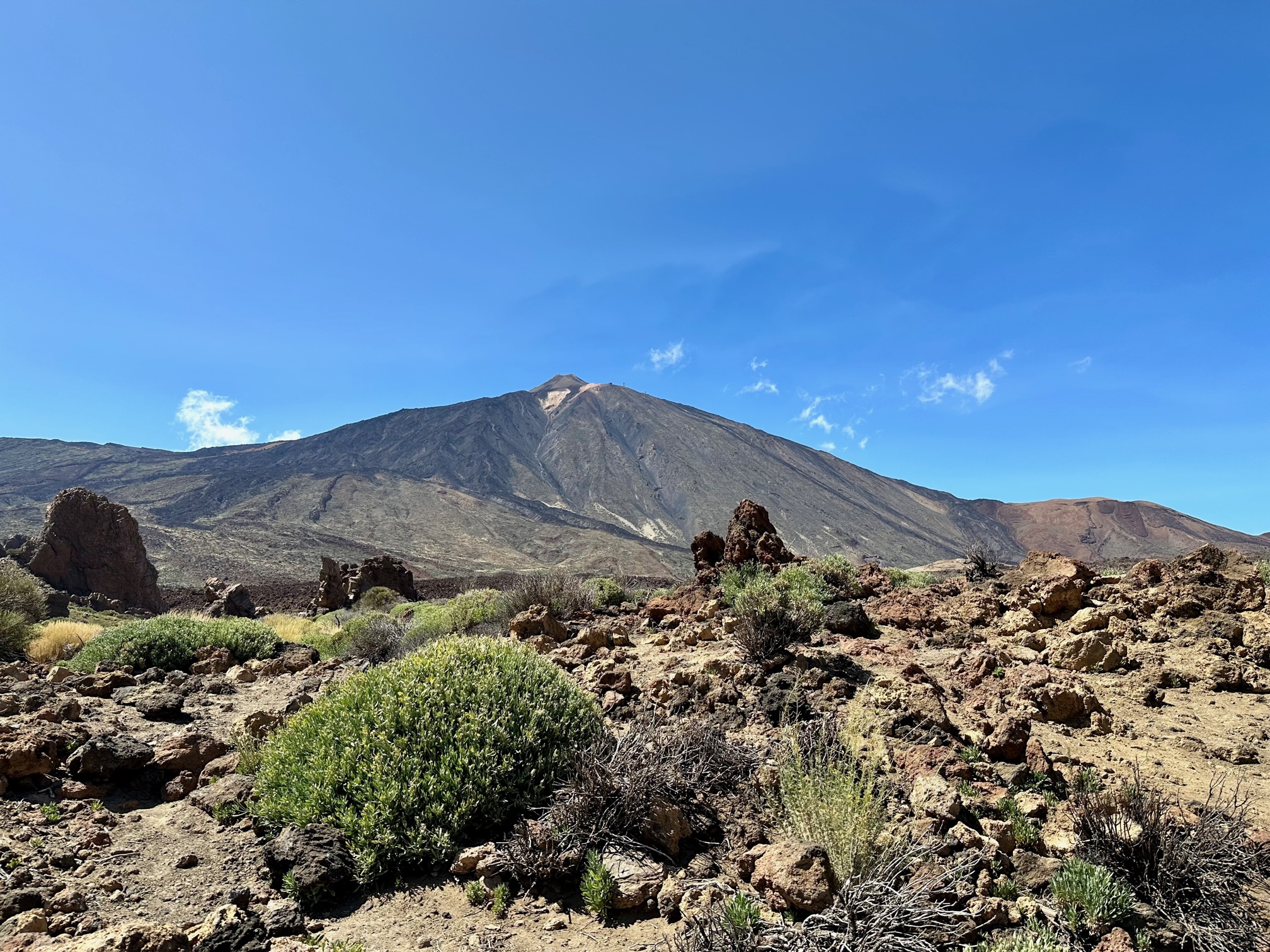
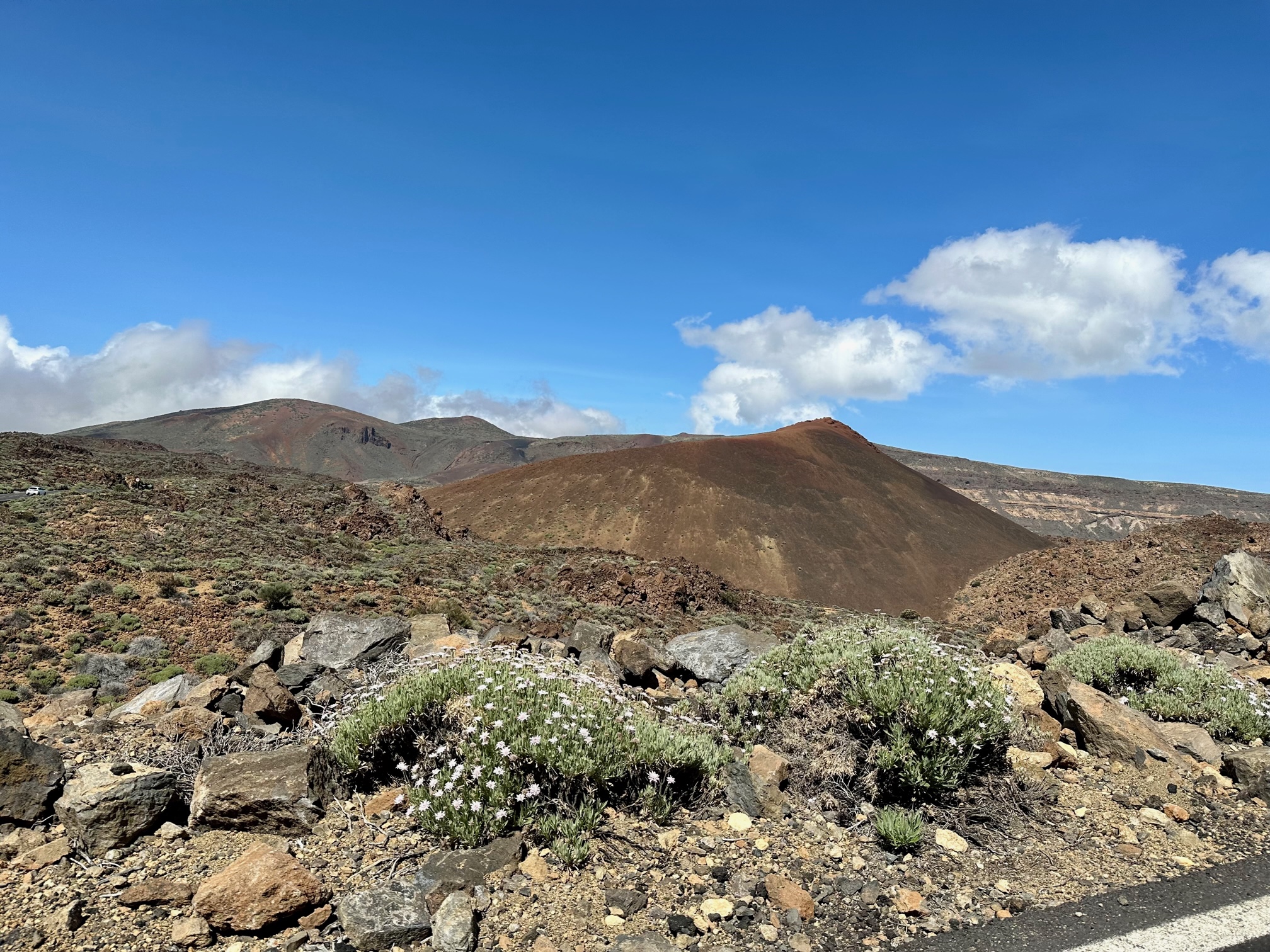
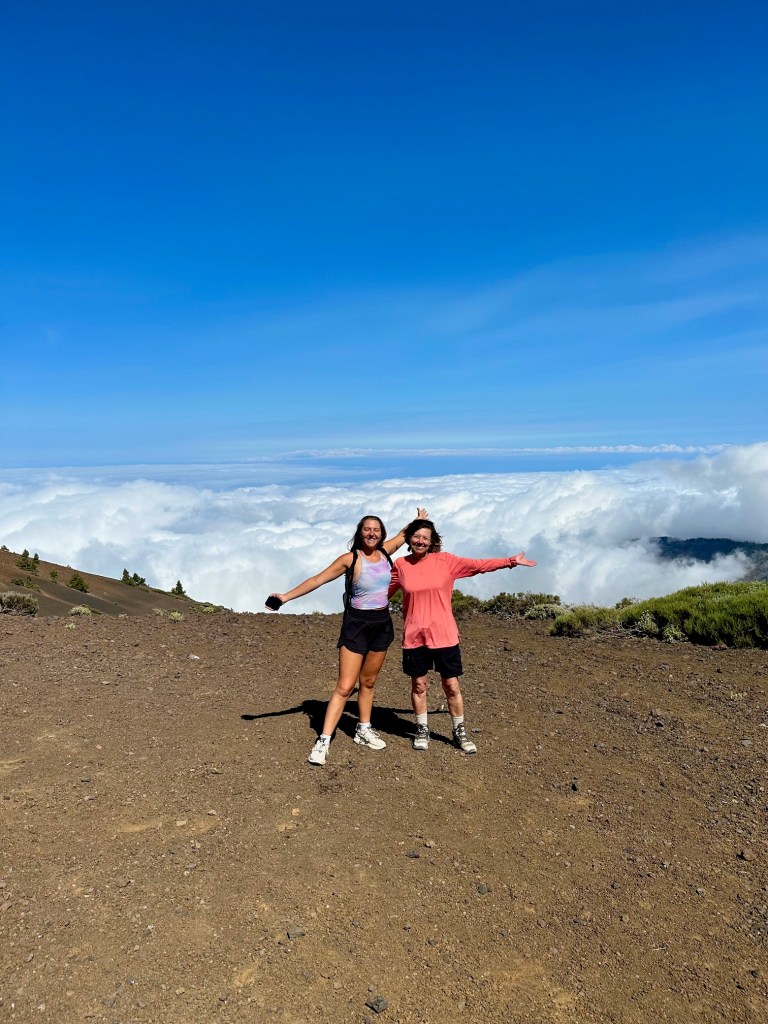
We continued the drive over the high mountains, at one point parking the car at an overlook and jumping out to exclaim over the billowy clouds beneath us—we were at such a high elevation that we were “above the clouds”!
We drove on across the mountains all the way to Santa Cruz (the capital and main city in Tenerife, you may recall, and about a 45 minute drive when we were out of the National Park of El Teide area). My daughter and I had wanted to shop for a suitcase to take souvenirs and other things home. We found an inexpensive one fairly quickly at a large department store, and were on our way back to El Medano, around an hour’s drive.
What a spectacular day, ending a spectacular week with my spectacular daughter as host! I would love to do it all again, this island life for a week on Tenerife in the Canary Islands!
 Gayla's Blog