(A week hiking the foothills of the Pyrenees Mountains in the Basque Country of Spain)
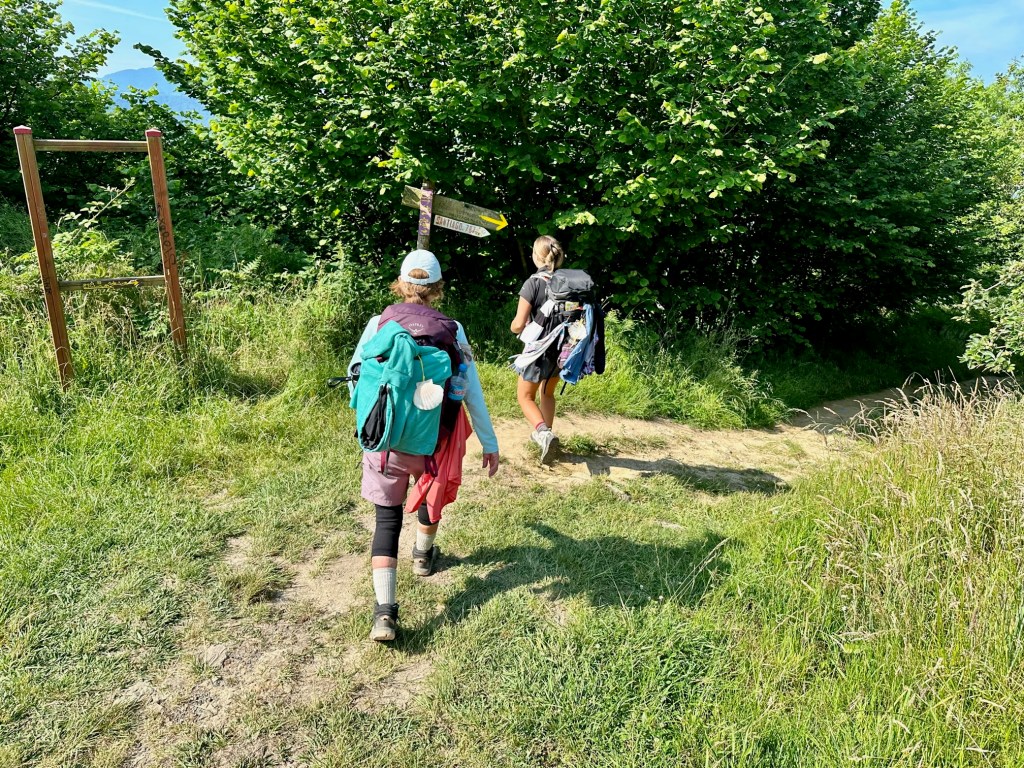
The Camino de Santiago, or the “Way of St. James” is a pilgrimage to where the apostle from the Bible James’ bones are said to be buried in Santiago in Spain. Pilgrims have made their way there for over a thousand years! People still walk there for religious reasons, but also for adventure, for personal peace, and other reasons. Regardless of their reasons, all are called “pilgrims.” There are seven main routes, each taking around four weeks to accomplish the entire trip, with beginning points in Portugal and France, besides Spain. Yellow arrows and seashells painted on roads, signs, and trees, among other things, show the way!
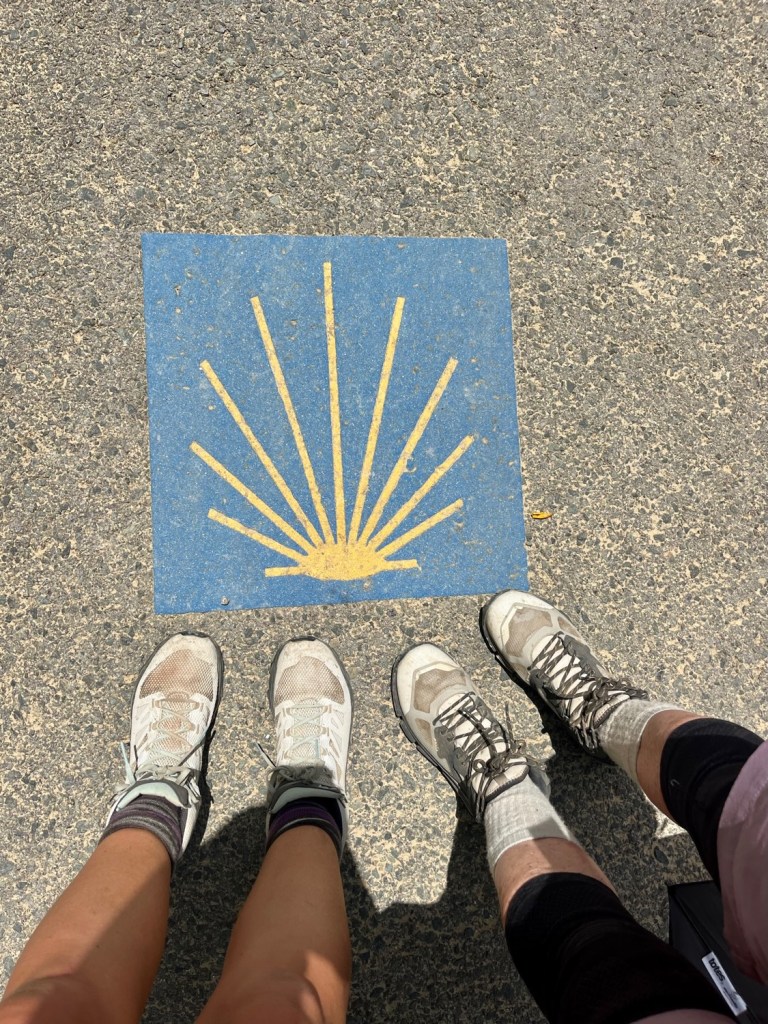
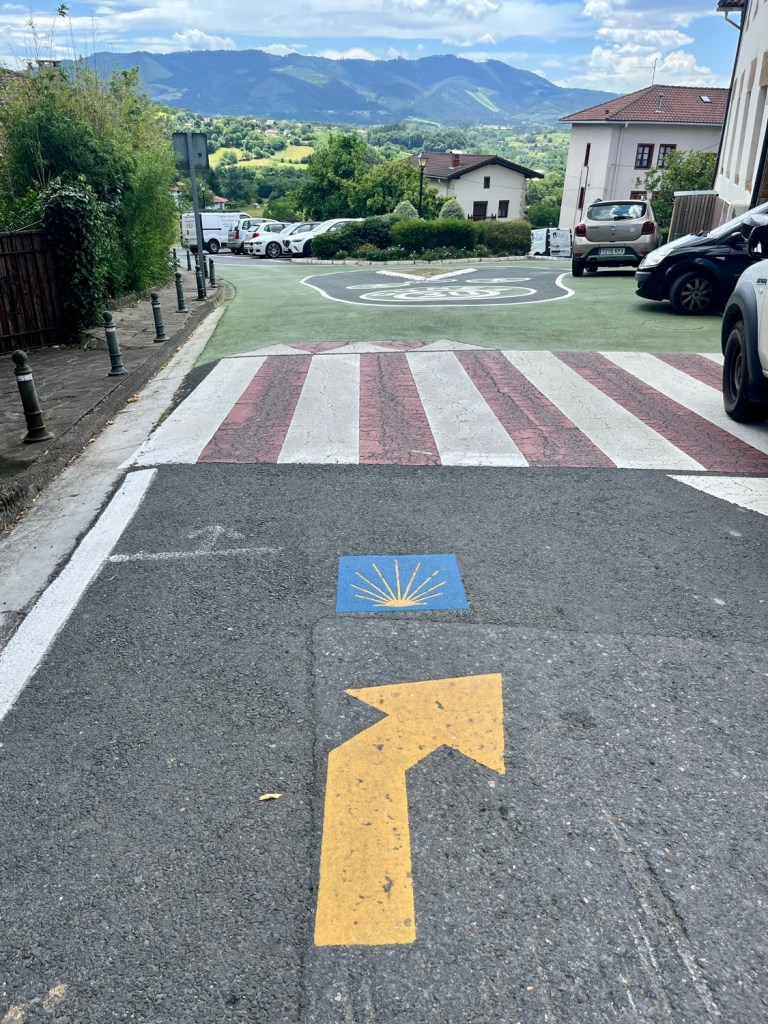
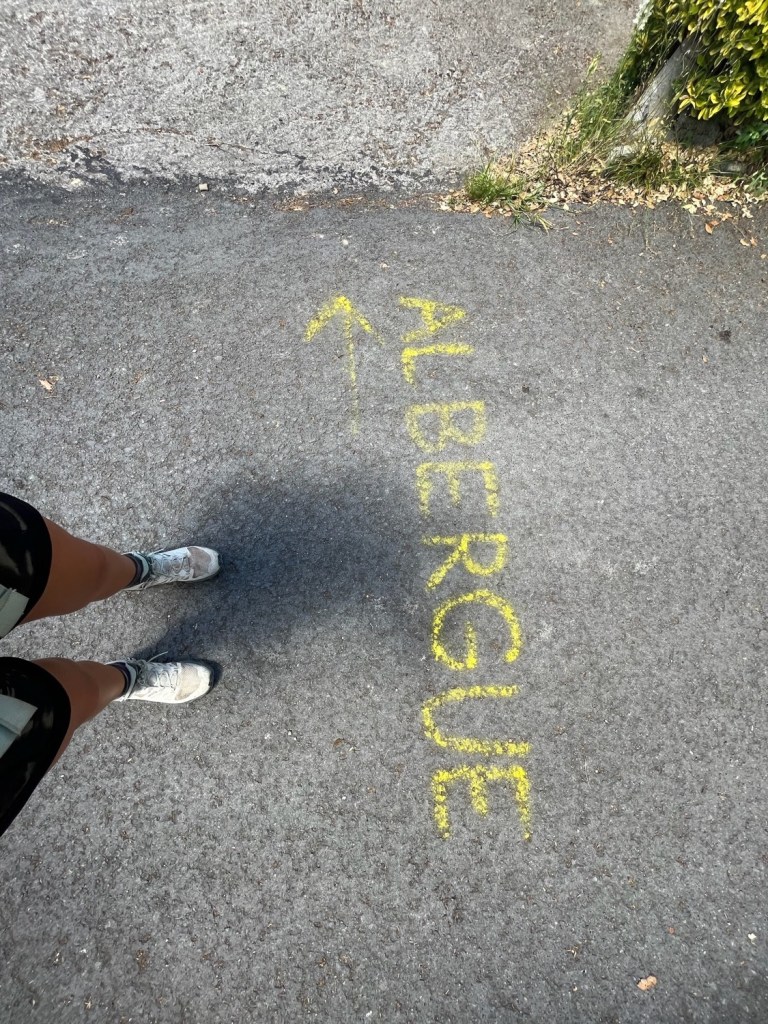
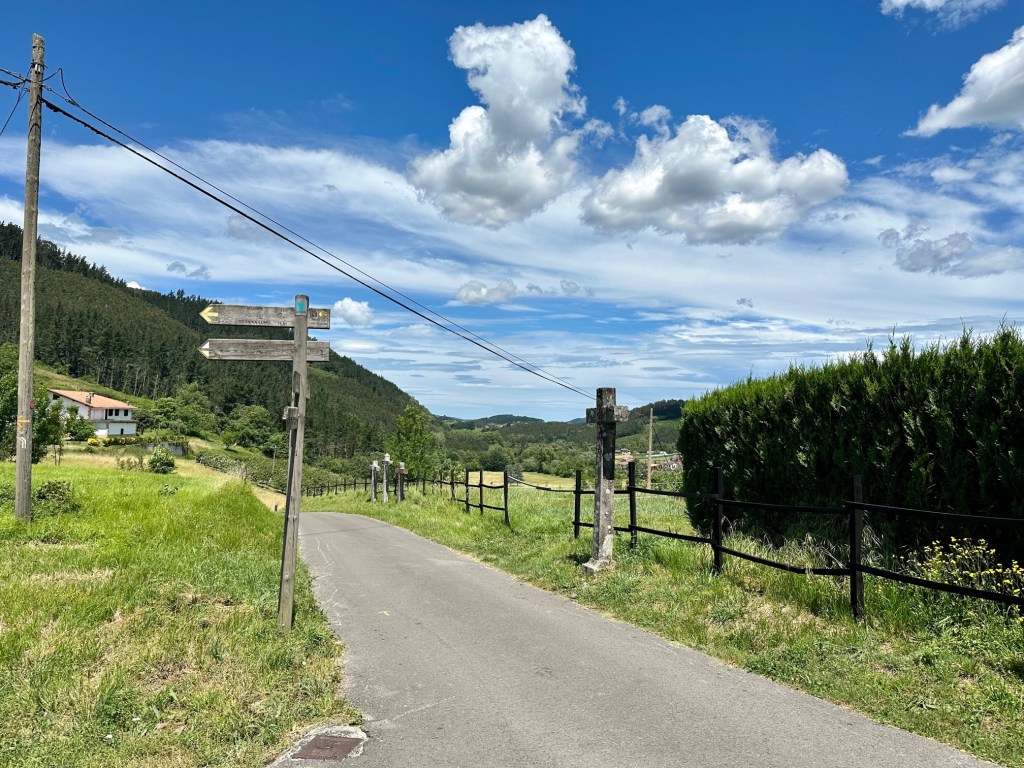
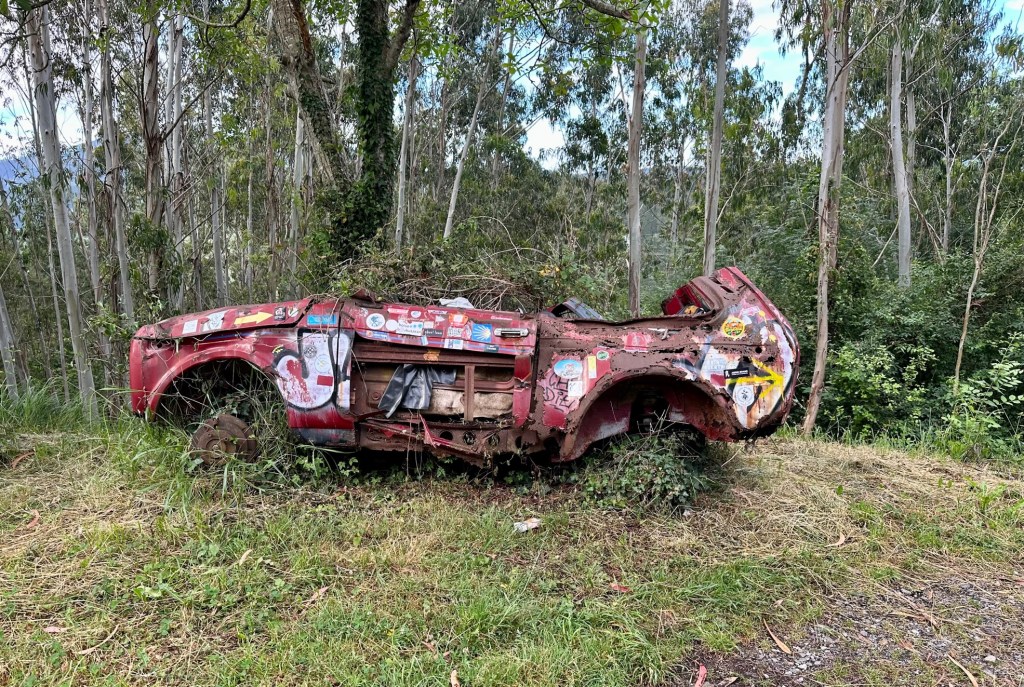
The North route of the Camino de Santiago is considered the most difficult of the seven Camino routes, and the first week of the North route the most difficult of the North route! We chose this route because it is also considered the most beautiful route. And I’m so glad we did!
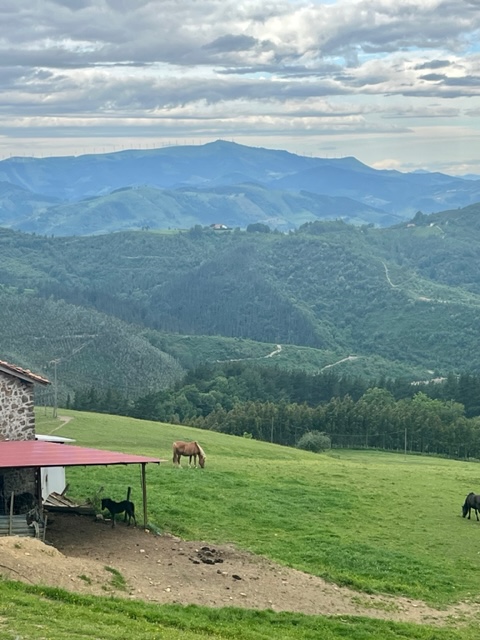
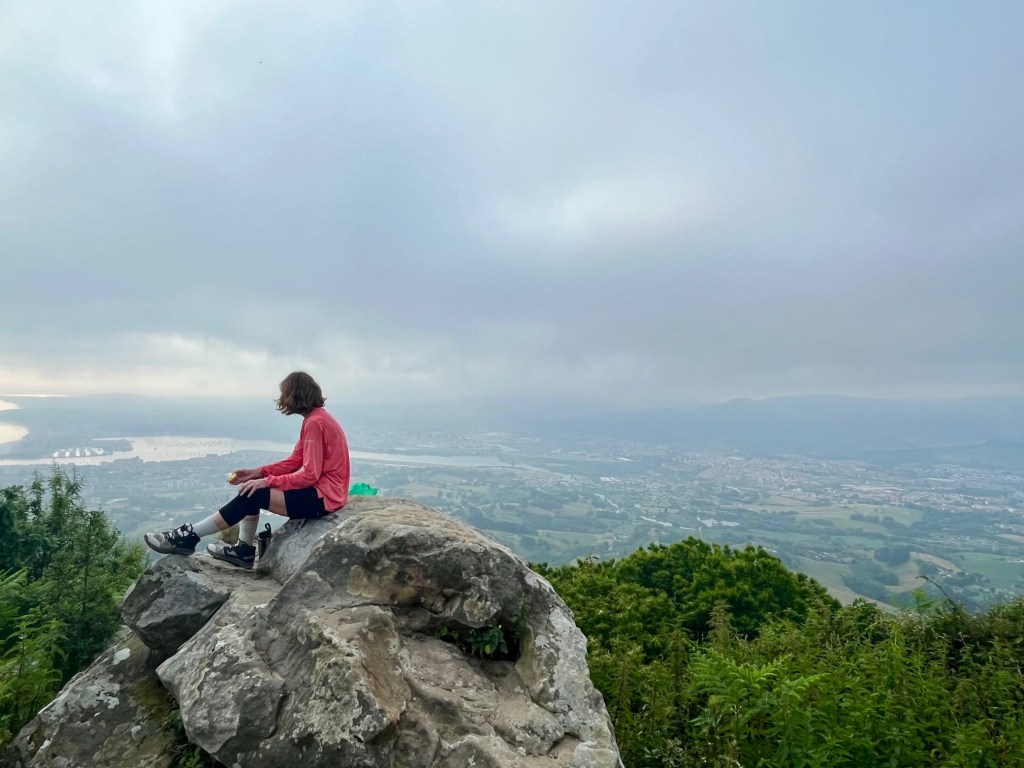
Day 1: Irun to San Sebastian (16.1 miles): A Beautiful Beginning
My daughter and I had taken a bus from Bilabo to Irun to begin our week on the Camino. In Irun we stayed at the Albergue Ondarreta, La Sirena. (An albergue is a Pilgrim hostel.) We shared dinner items and stories/expectations with other pilgrims there before climbing into bed for (me, anyway) a sleepless night awaiting out adventure!
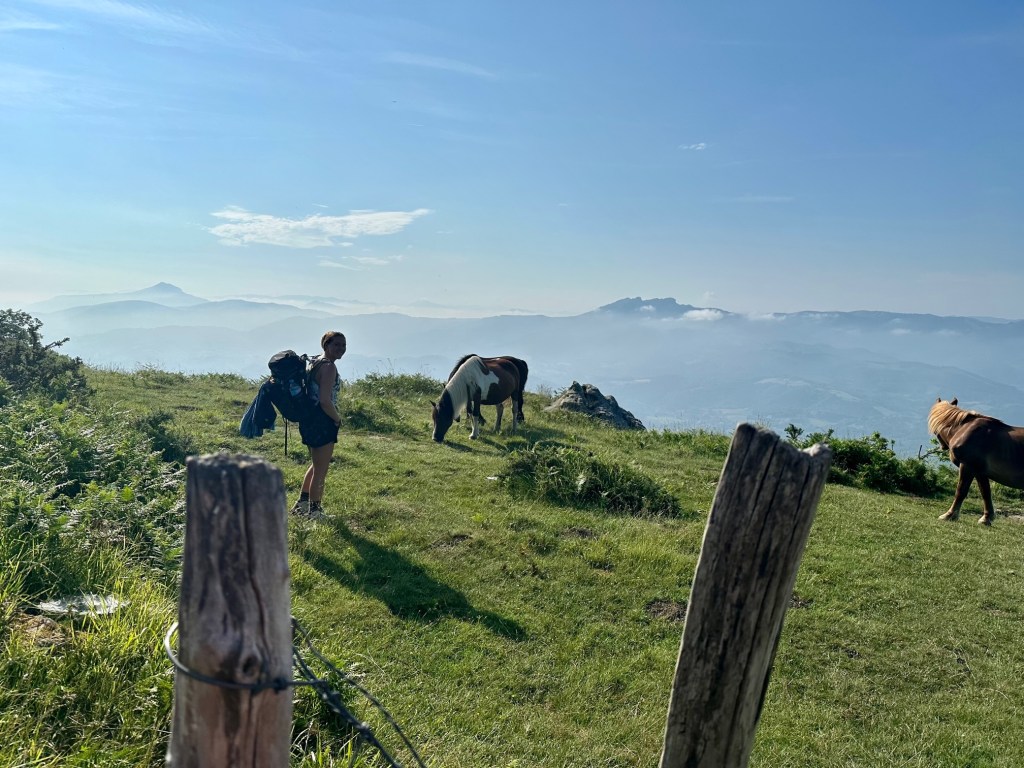
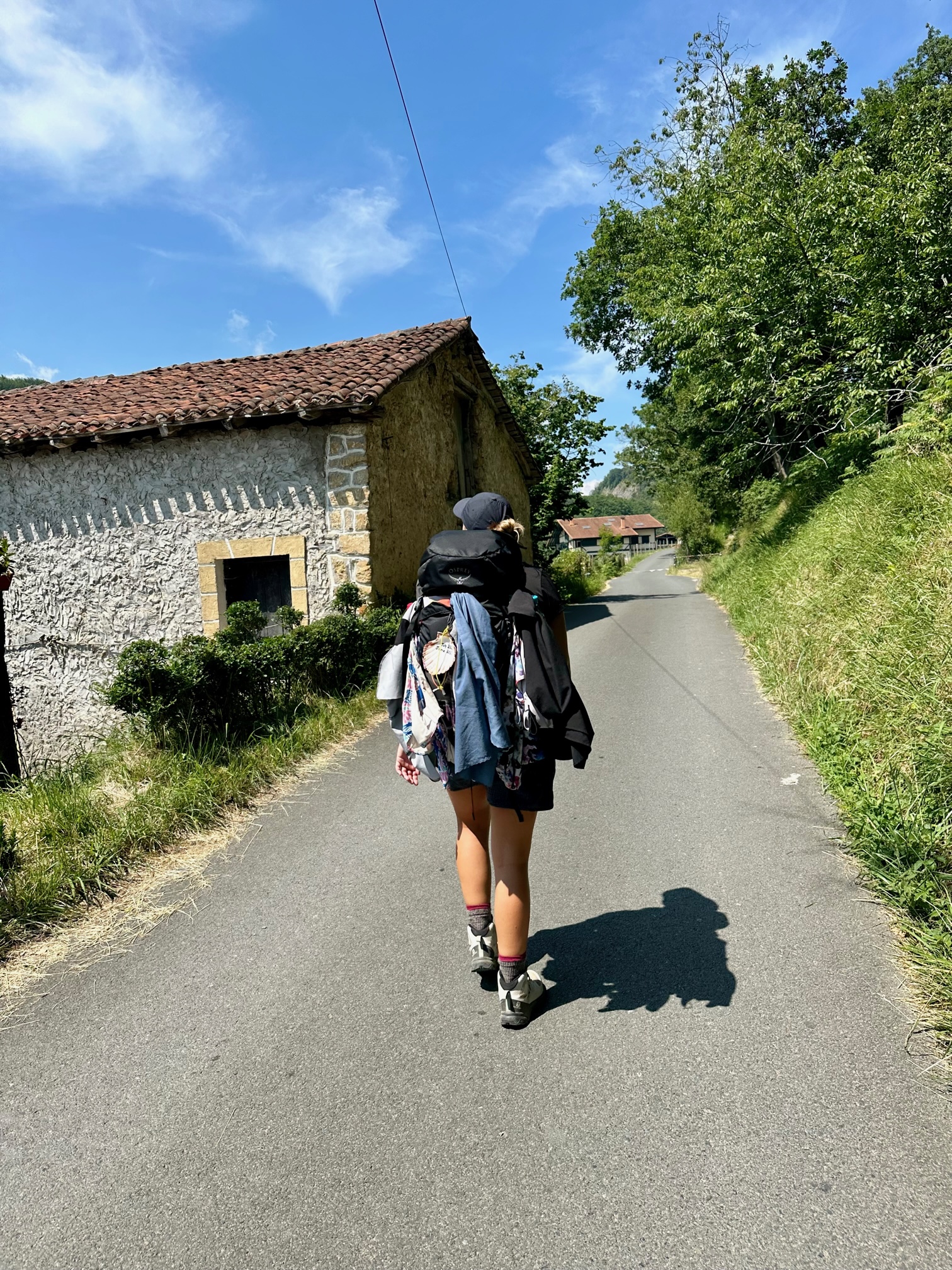
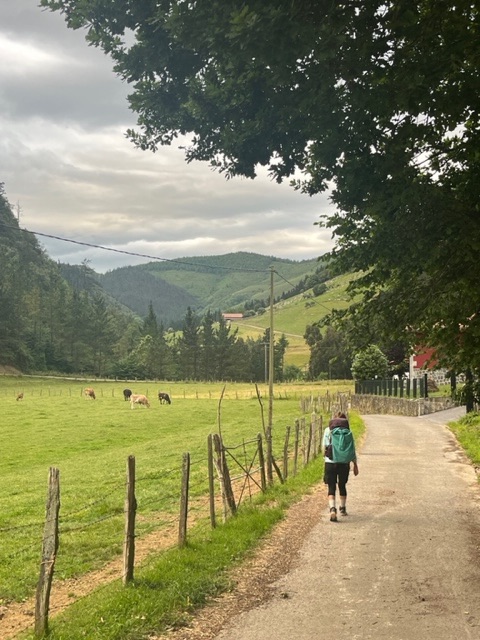
The first day on the Camino held beautiful and wonderful sights all day! It was all I’d dreamed of and more, with horses, goats, sheep, cows, farms, ocean that blended into fog and sky and eased into grass; jungle-like forest from time to time; hills and mountains and valleys. The beauty and tranquility was astounding. So many steps; oh, so many steps, up and up and up seemingly forever!
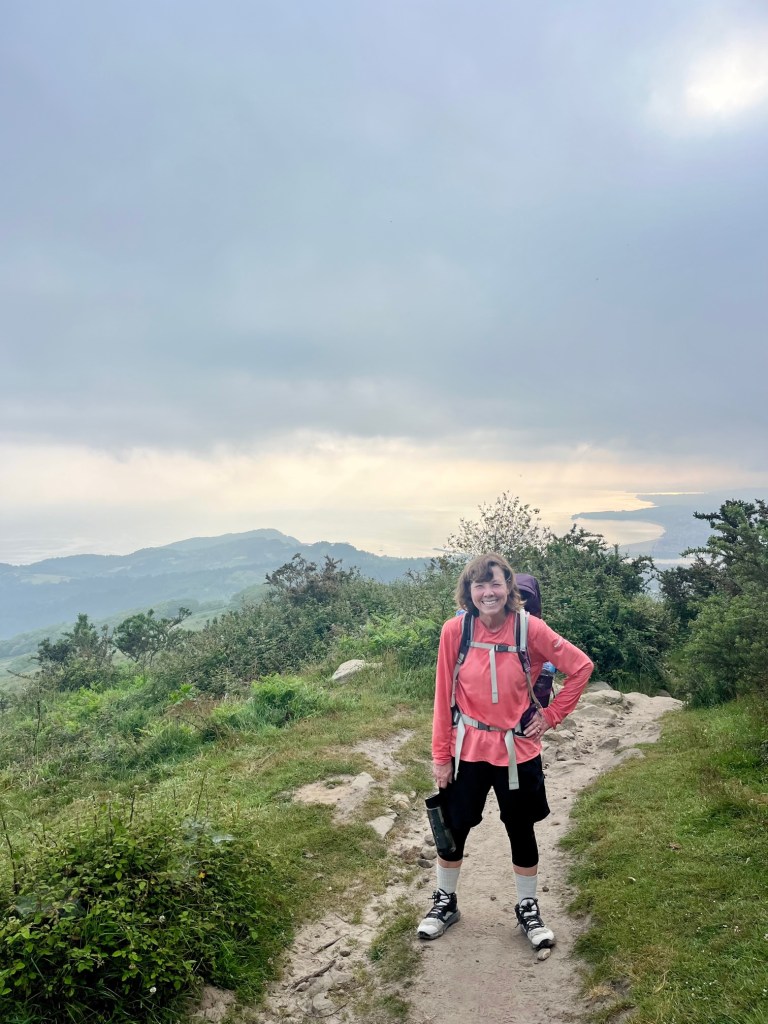
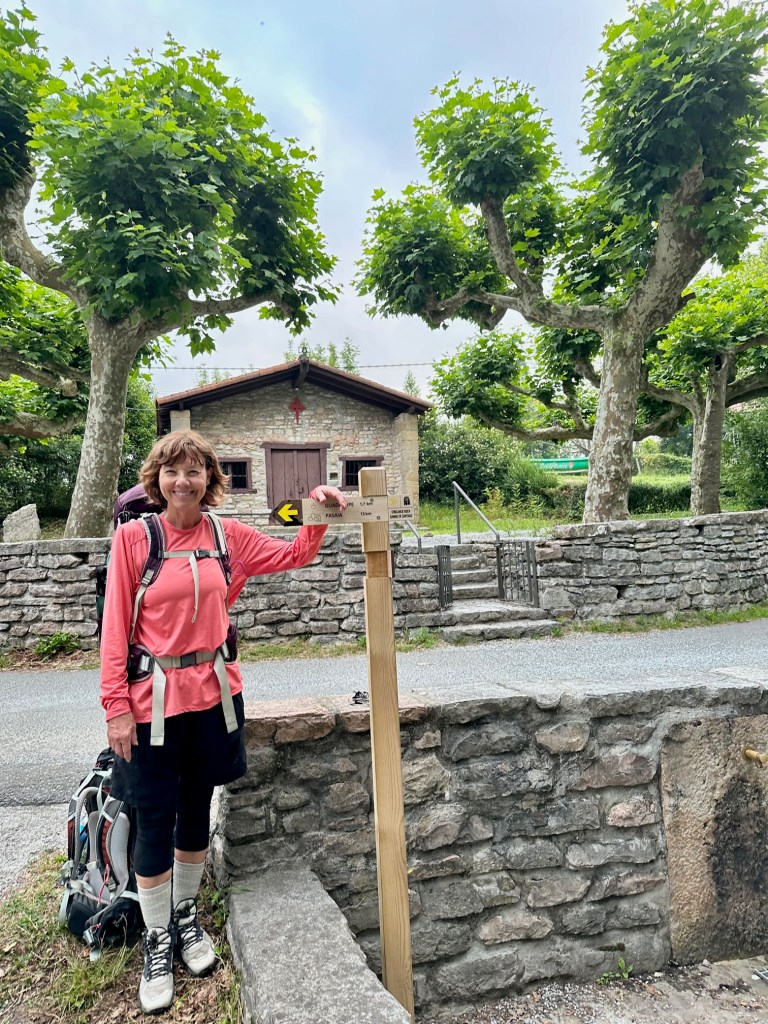
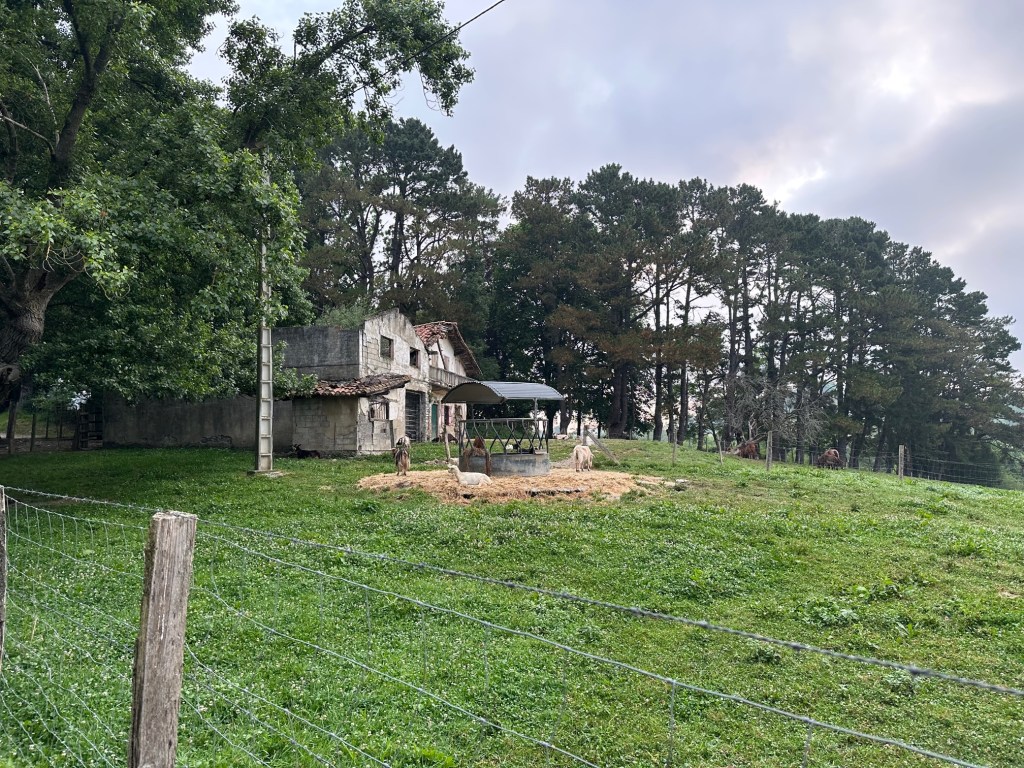
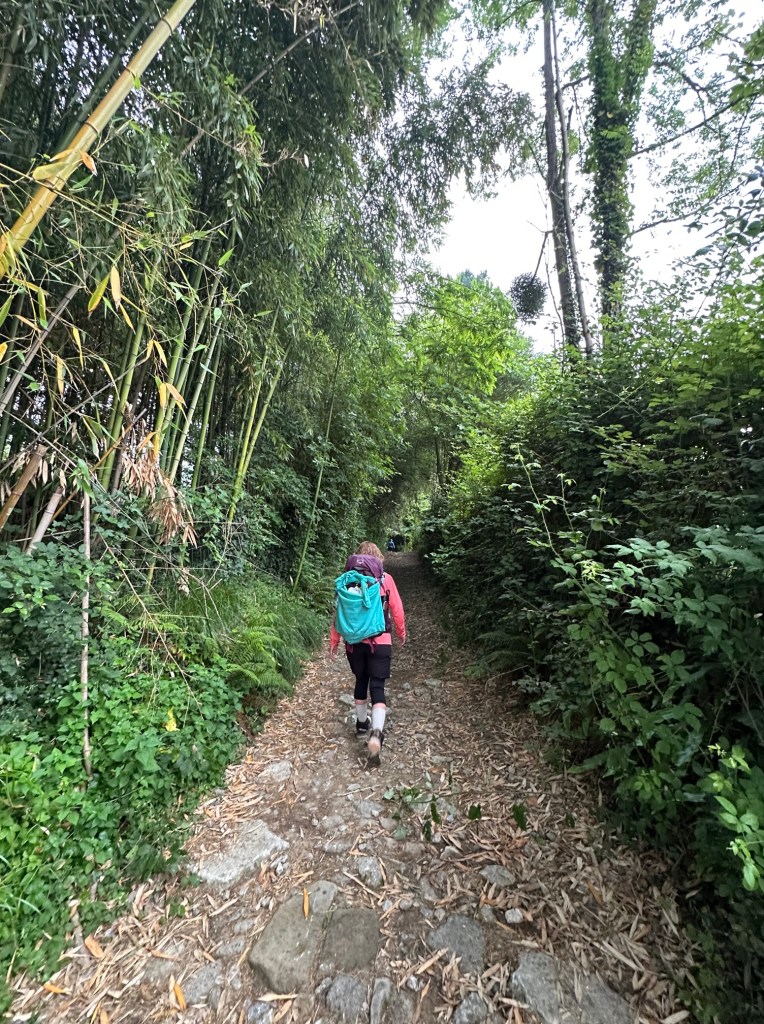
At the port city near Pasaia, we had to take a short ferry ride to begin the last leg of our first day’s hike. We had the most wonderful tuna sandwich at the cafe Taberna Muguruza Ardoak at the port where the ferry deposited us. The tuna was piled high and topped with anchovies and peppers; it was served with cheese and bread; and drinks.
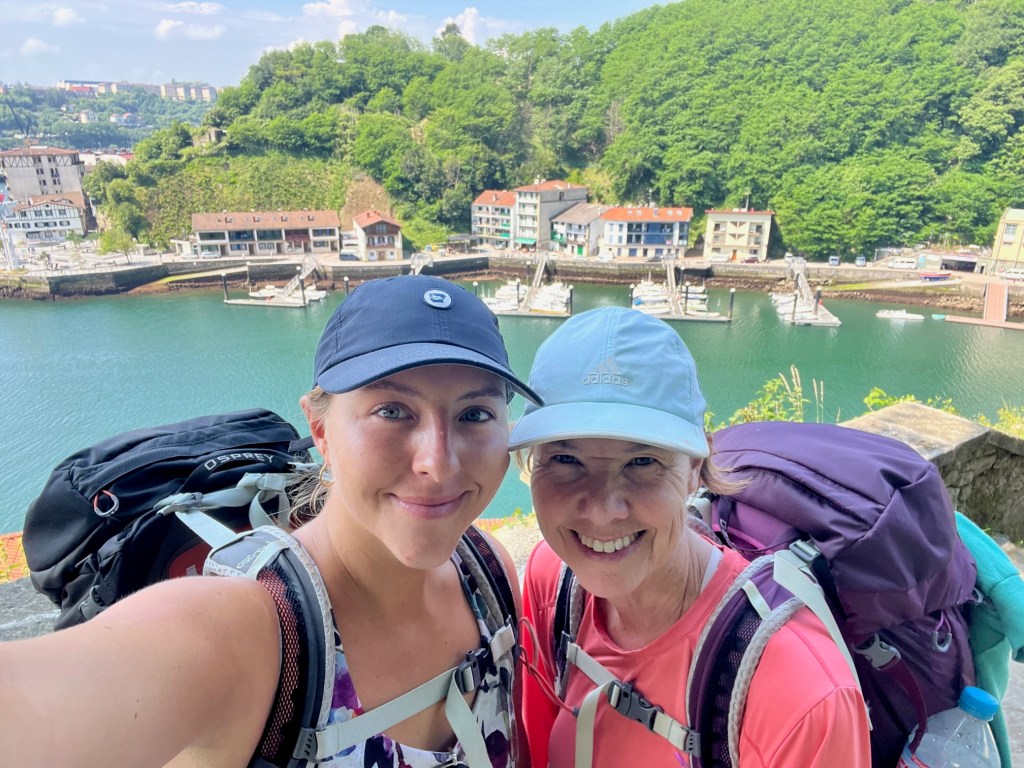
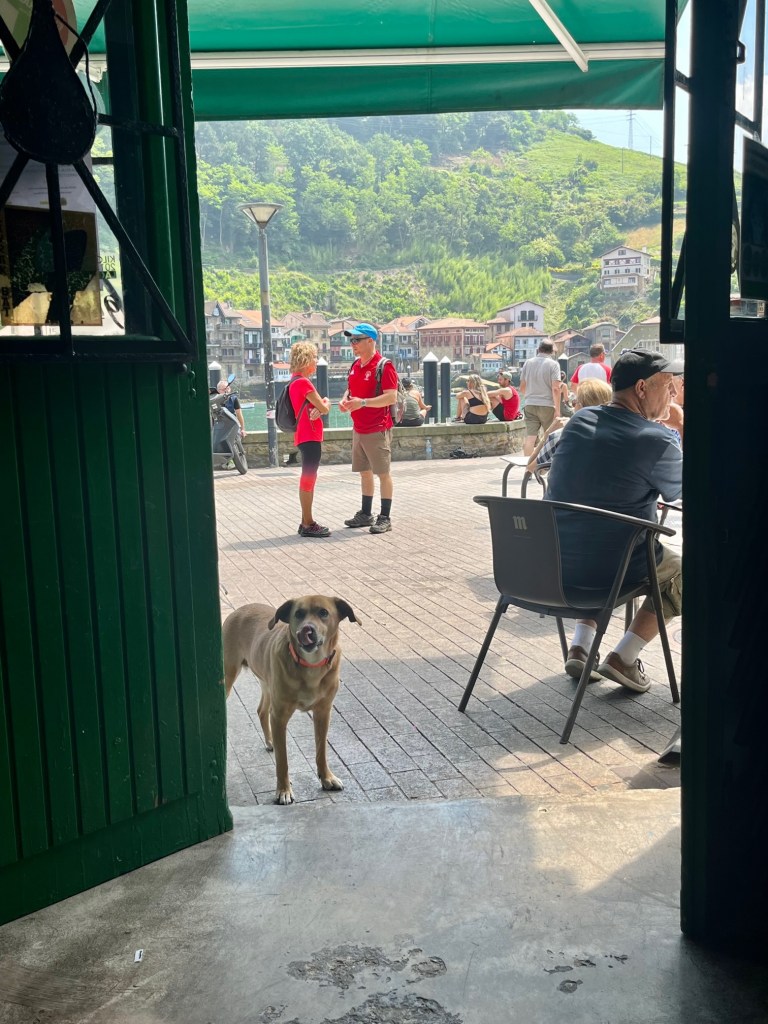
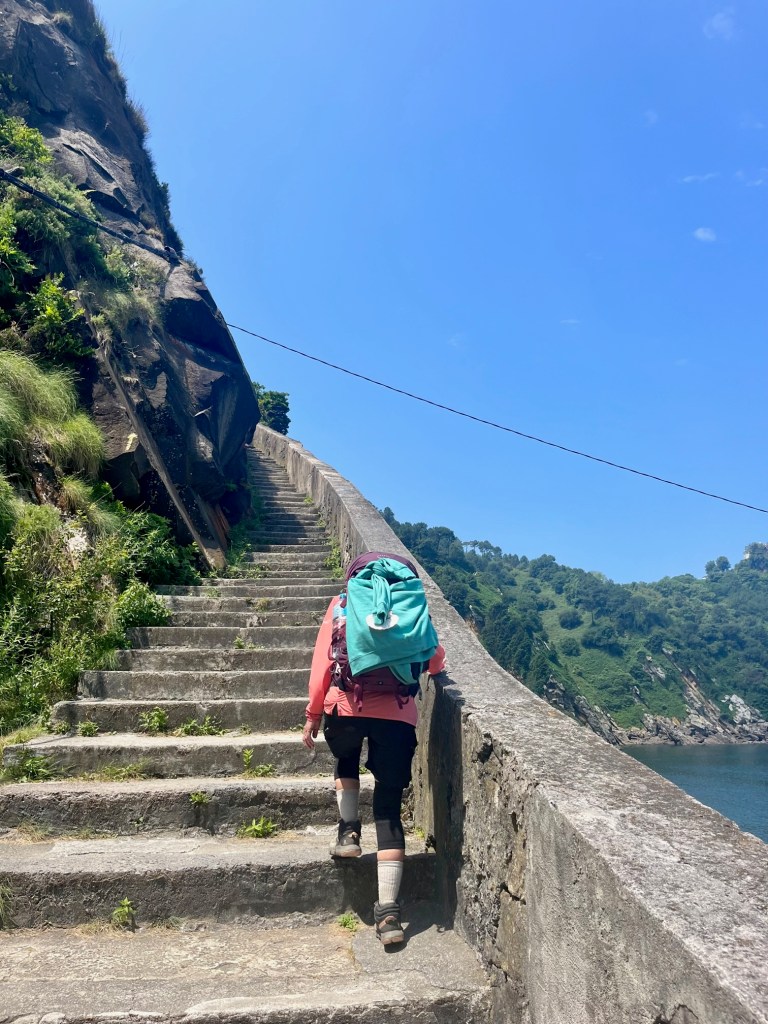
At each port city, we would descend endless steps down to the city then of course more steps up to continue the way!
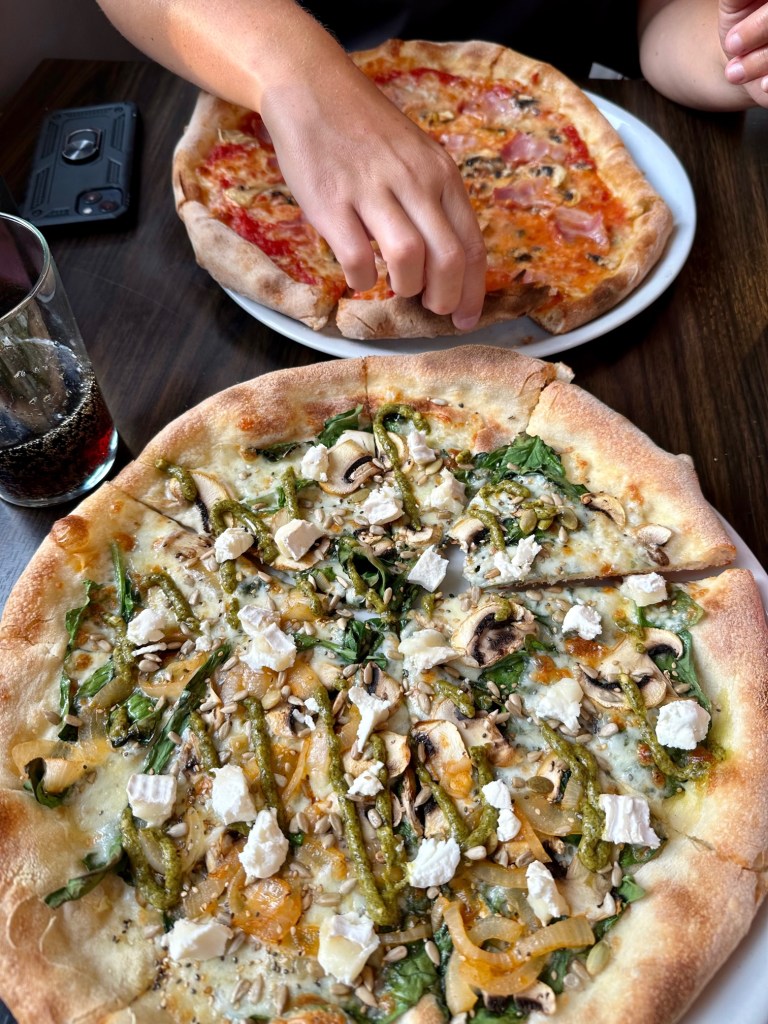
Then time to climb more hills and oh-so-steep mountains to finally arrive at San Sebastian! We spent the late afternoon hours at the beach. Ahh so nice after this incredibly grueling, but wonderful, day. Dinner was pizza at a pizza restaurant in San Sebastian—I chose one with spinach, goat cheese, pesto, and sunflower seeds; delicioso!
Day 2: San Sebastian to Getaria (15.7 miles): In love with the Basque countryside
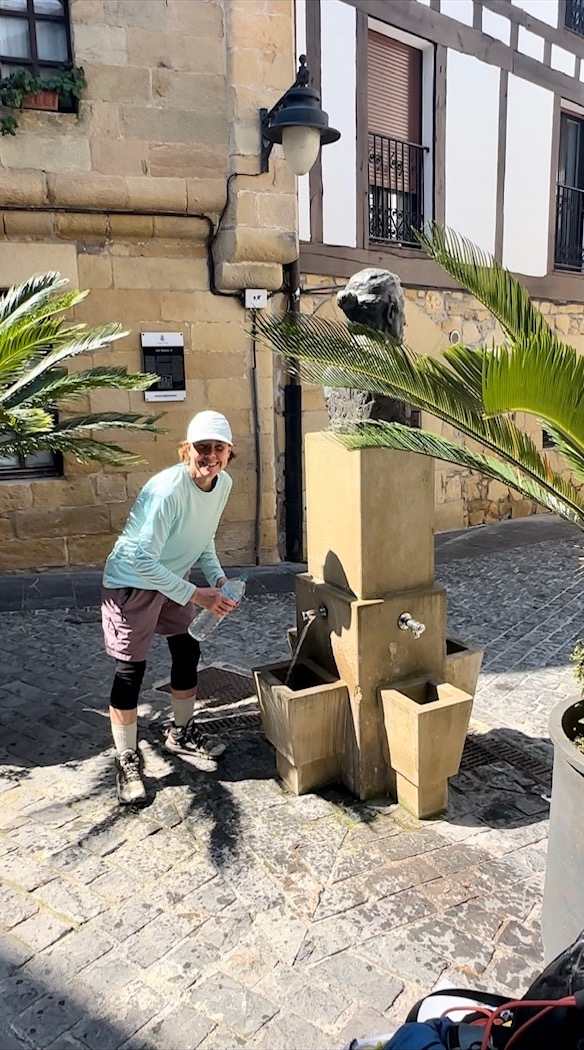
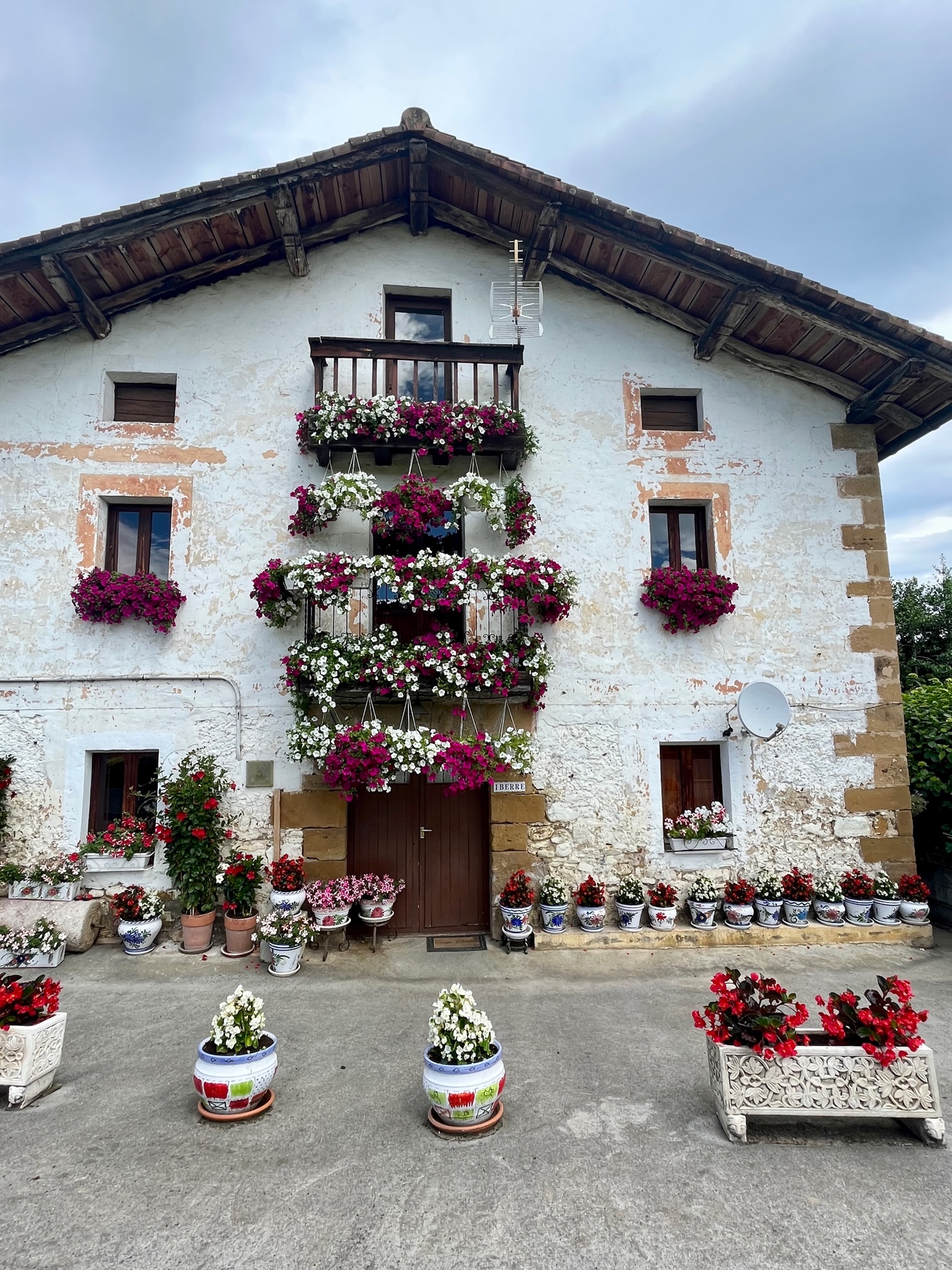
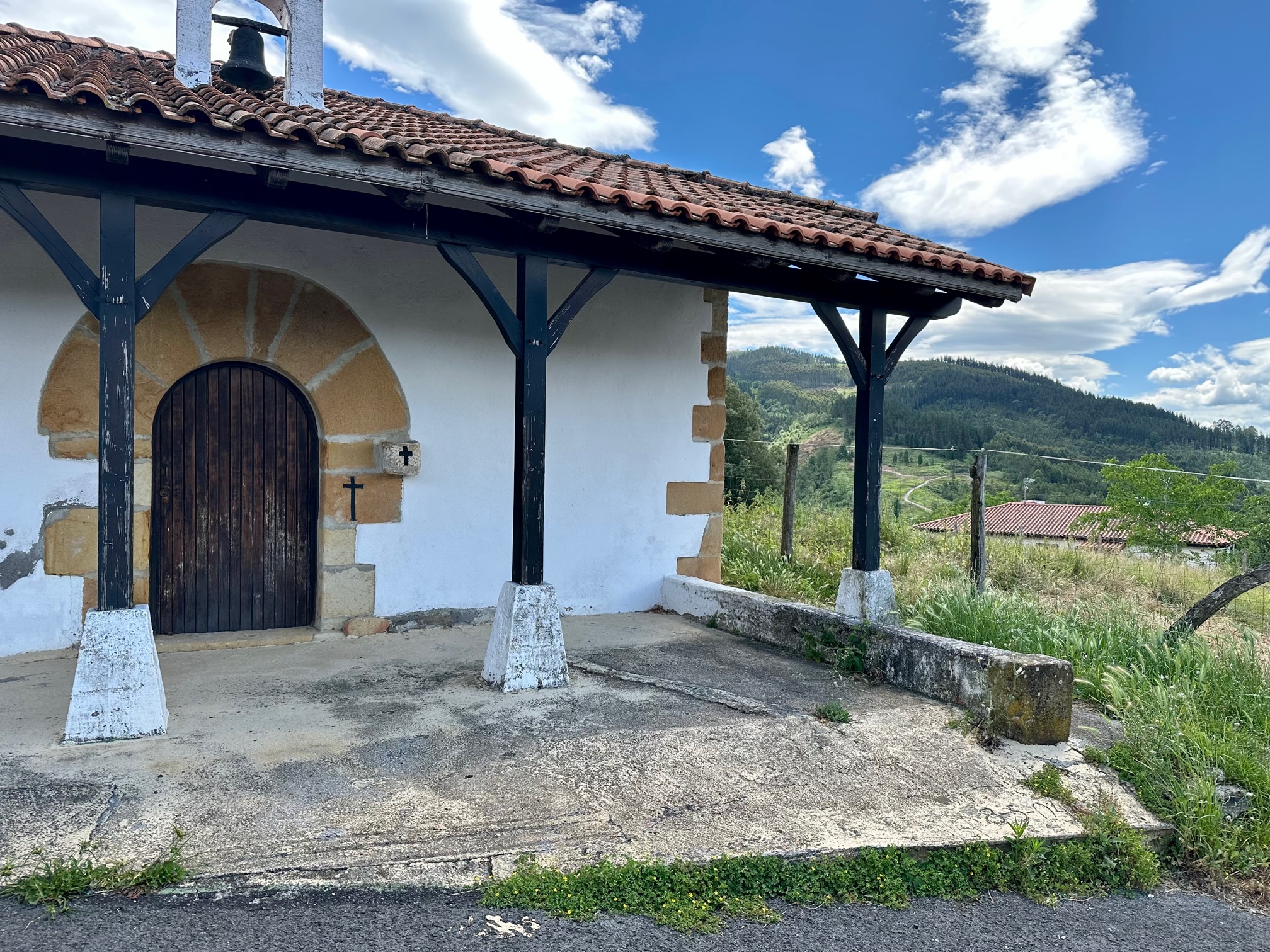
Have I mentioned that I am absolutely enthralled by Basque Country? With its hills, valleys, cropland; old rock homes with red roofs, all adorned with pretty flowers; friendly people happy to wave and say “Hola” or “Buen Camino” (‘Happy Walk to you’) ; stunning ocean views cropping up along the way…it’s like stepping into a fairytale.
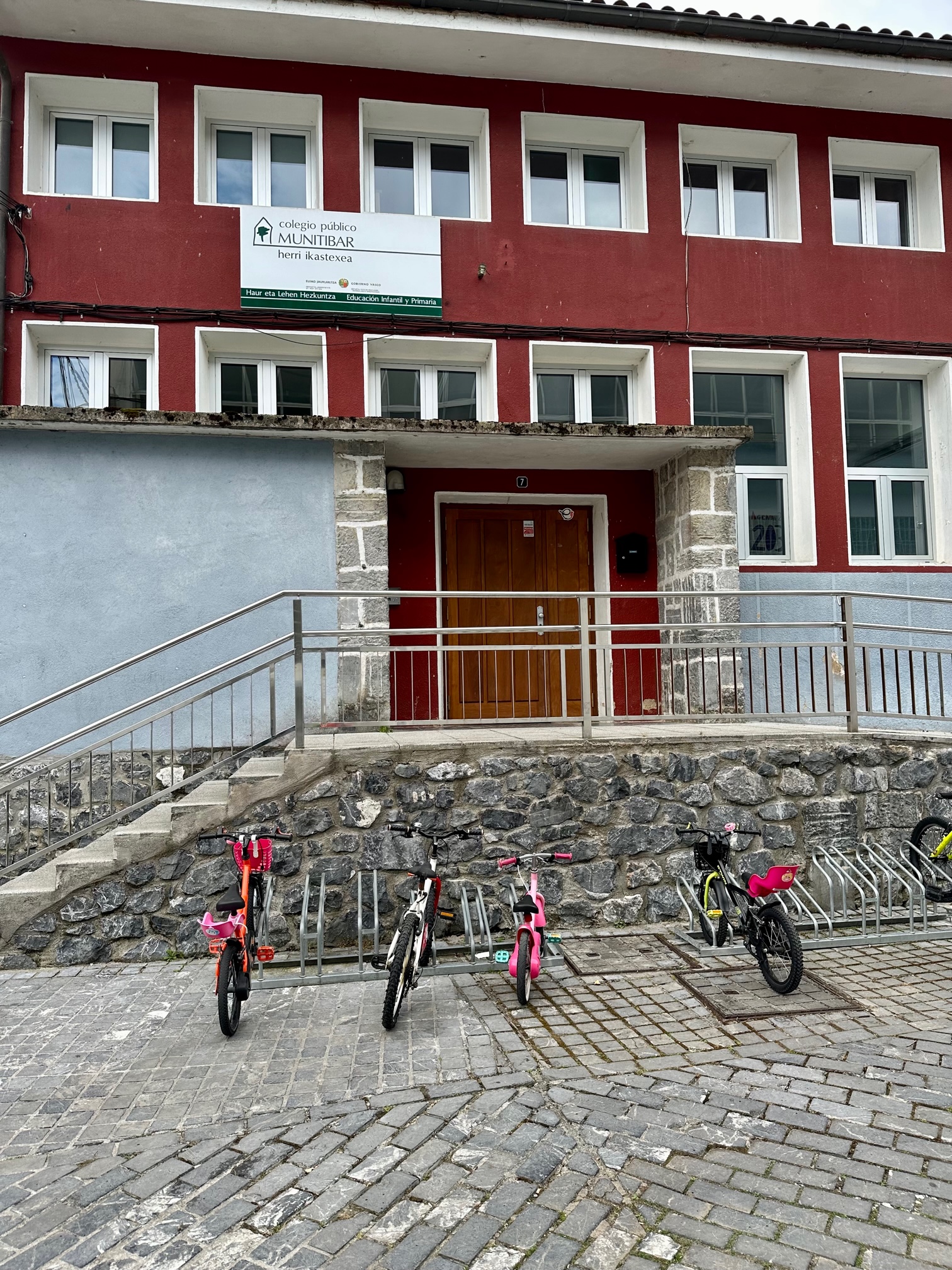
Fun fact: “Hello” in the Basque language is “Kaixo” pronounced kie-sho. Most people in the Basque country, it appears to me, speak Spanish. As my daughter speaks fluent Spanish, we conversed easily along the way. Signs are often written in Basque language, though. My research shows that the Basque language is taught in schools throughout the Basque Country. The Basque Country is a part of Spain and France, but has its own language, traditional foods, and customs, including the sport ‘pelota’ which is similar to squash. We saw people playing it a couple of times against rock walls along our way. It is thought that the Basques may be the oldest ethnic group in Europe. It’s believed they inhabited the south-western corner of Europe since before Indo-European peoples came to the area some 5,000 years ago!
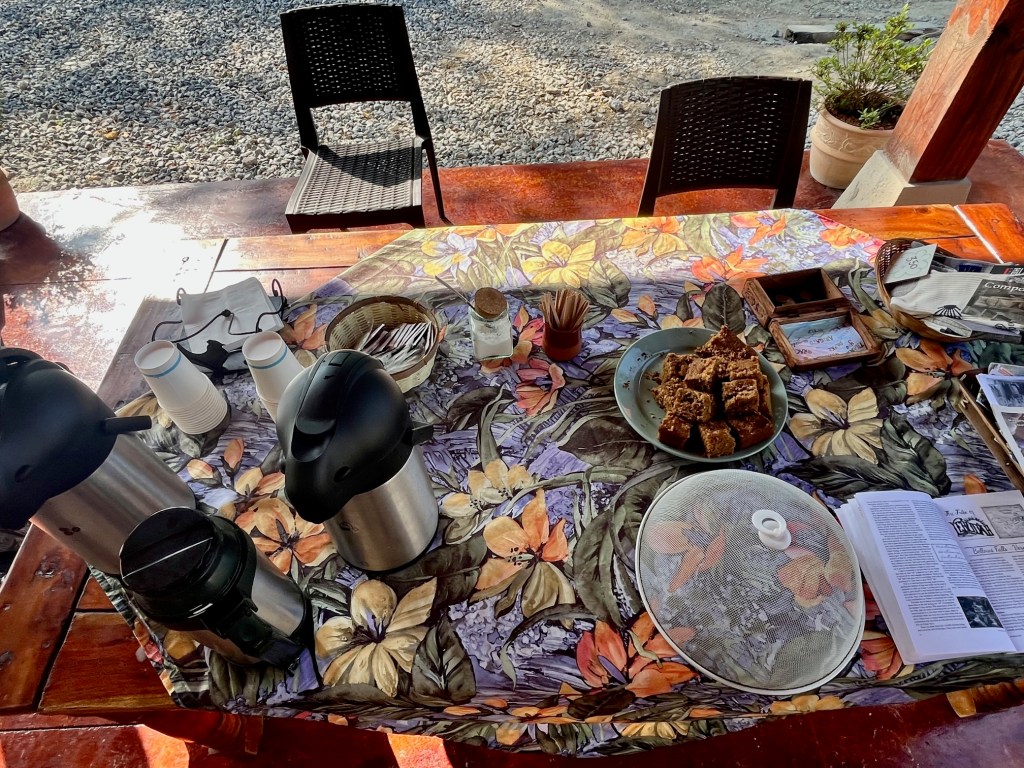
Which to do first, take my backpack off or pour a cup of coffee! The coconut cake was as good as it looked, too. This was the sight that awaited us in the late morning at an albergue we came upon. Since we, as the other pilgrims, had had an early morning start, to say that the sight of coffee was welcome would be a vast understatement! And all “donativo” (for donation.)
Several hours later, we came to the town of Orio where we had a great lunch oceanside at a restaurant there. With fresh guacamole and chips, an assortment of the “croquetas” (small fried croquettes filled with minced meats and a creamy milk and flour paste, very popular in the Basque towns) potatoes served with a spicy sauce, and drinks, we felt wonderfully revived for the last leg of our day’s journey.
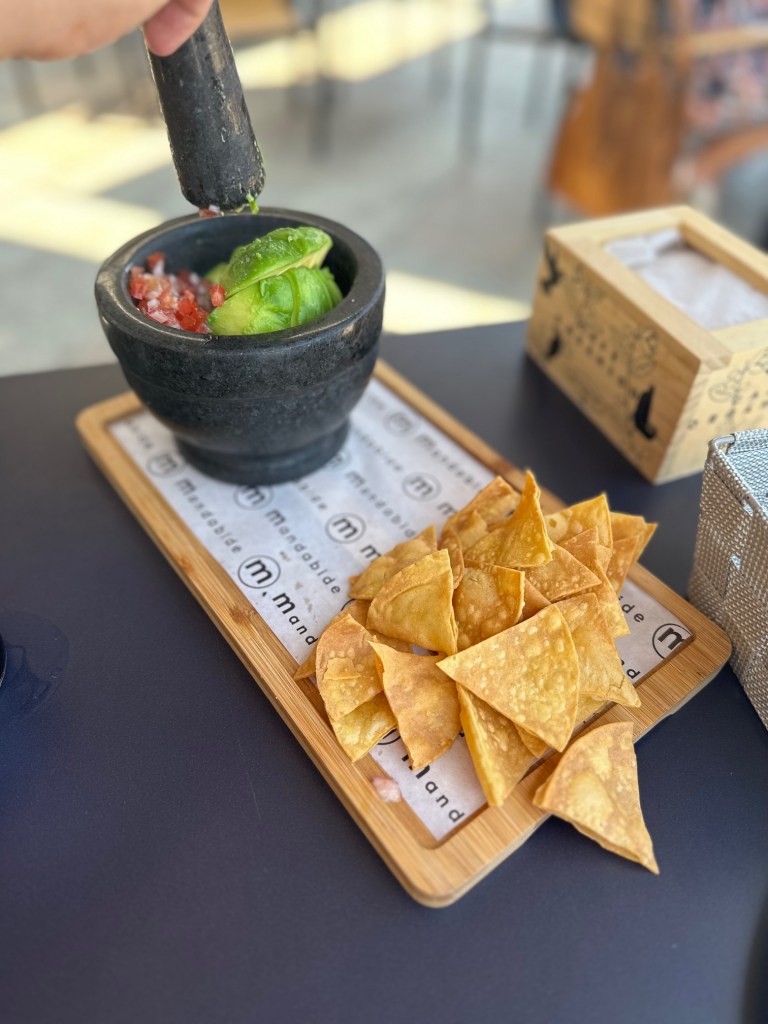
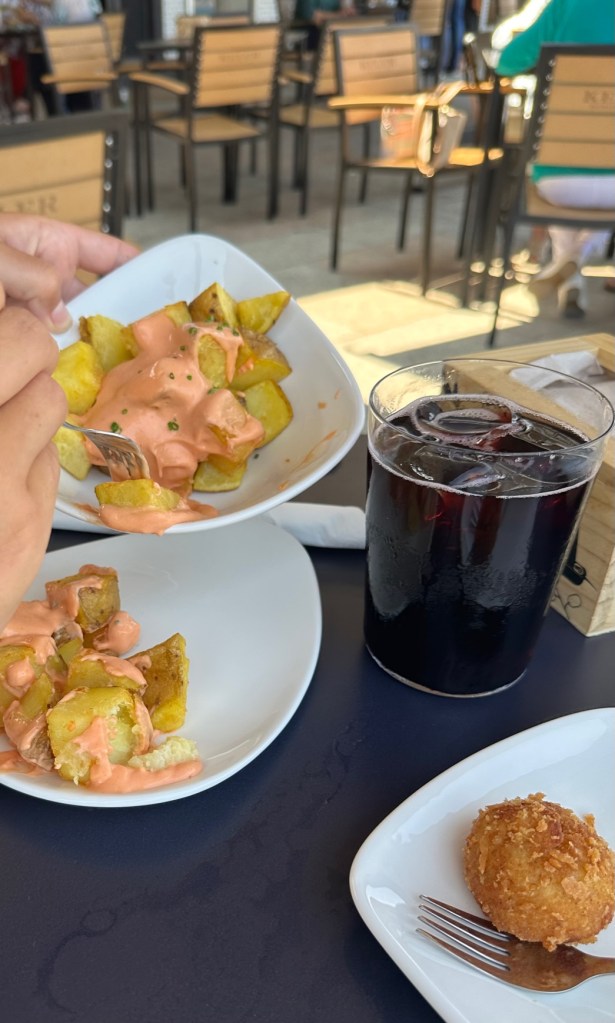
Then came the long hot walk for many shade-less miles down the boardwalk then stretches of highway. I found myself extra-glad I had stuck a lightweight umbrella in my backpack! Never was it needed more! On to Zarautze, then Getaria.
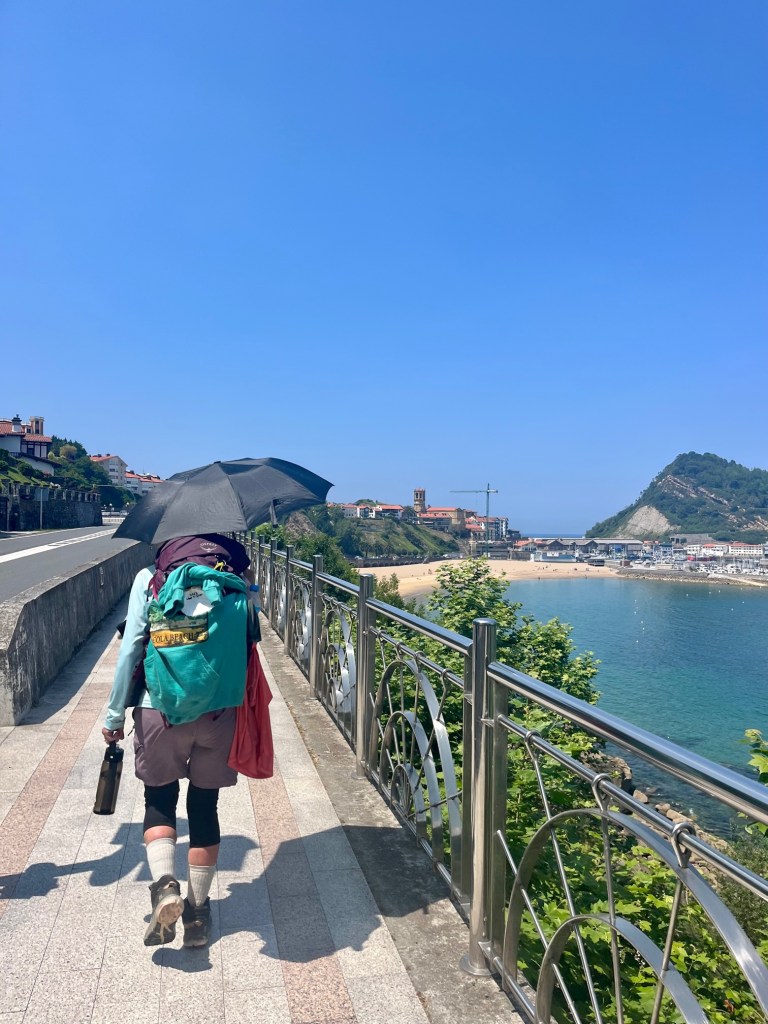
After a long and glorious yet very difficult day of ascending high peaks and walking in the hot sun, we managed to climb the enormous hill to our albergue in Getaria to find it closed! We found another albergue where we got two of the last beds available, AND they had a washing machine and dryer! After laundry we headed to the beach. So, so, so nice to dip into the beautiful blue water of the Cantabrian sea then lay on the sand. Dinner was Pintxos in Getaria, which are bite-size or small portions of food, prettily prepared and served with a short drink. Ordering several different Pintxos is a good way to try new and different foods, and to sample the well-reputed Basque cuisine.
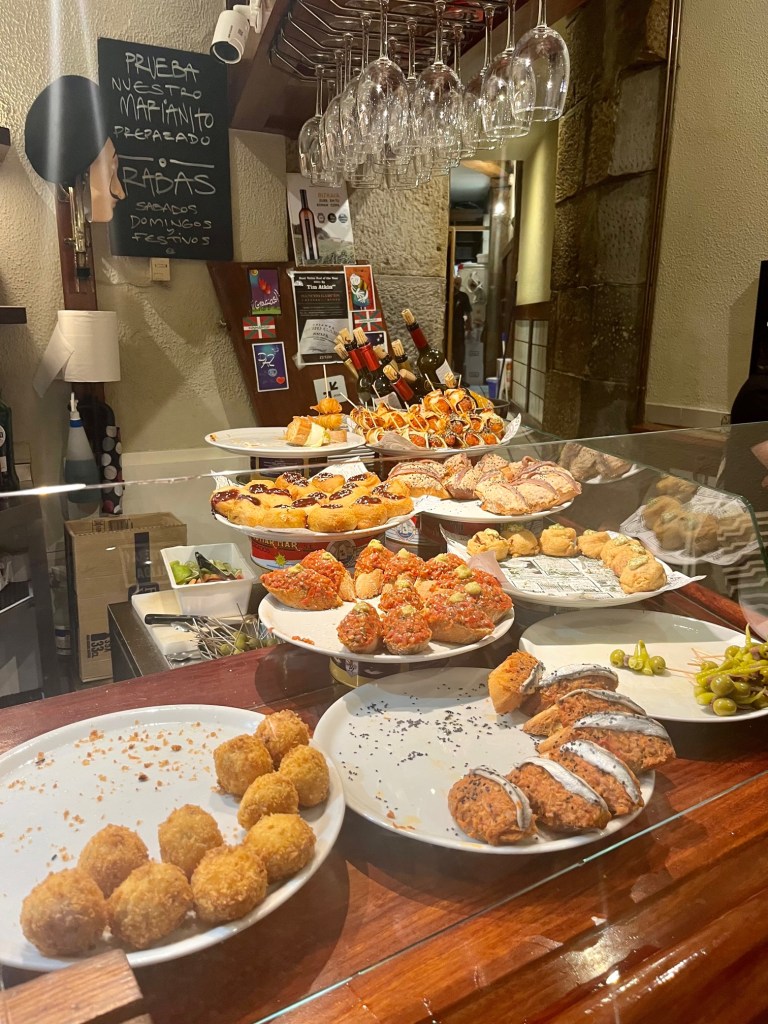
(Pinxtos pictured from a Bilbao restaurant)
Day 3: Getaria to Ibiri Auzoa (15.1 miles): So Many Mountains to Climb!
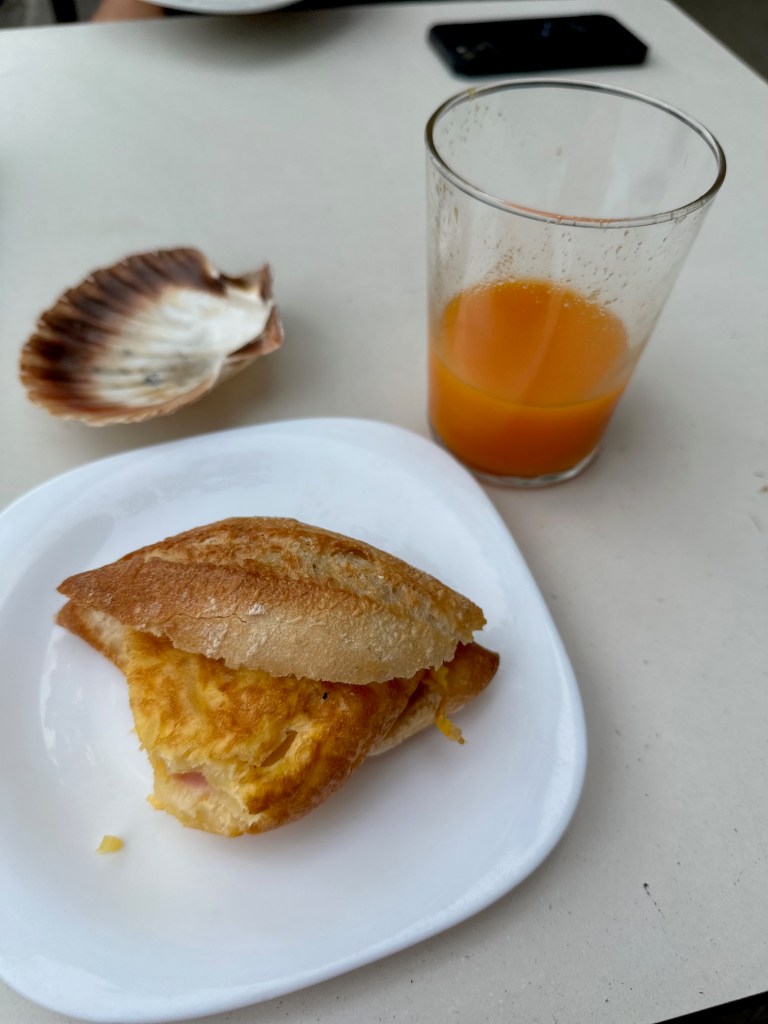
From Getaria to the little town of Zumia was an hour’s walk. Breakfast was at a cafe there—we ordered the staple that’s an option for any meal in Spain, which is “tortilla” (eggs, potatoes, and cheese in a type of delicious omelette) also bread, and orange-carrot juice. Then we were back on The Trail, where we looked around us in wonder throughout the day at its indescribably unworldly scenic views, while listening to sounds of bells on the goats, sheep, and other farm animals. We saw a shepherd and his sheep dogs herding a flock of sheep; very cool! Had a scare with a few pit bulls along the way; whew! Snacked on apples, nuts, and raisins. It was a long way (around 10 miles) from Zumia to Deba, a port town with many options for a late lunch. We chose a “menu of the day” which is a meal served by many Spanish restaurants, usually at lunch, and includes several courses including dessert, and “vino or cervaza”, for a set price. (My coca-cola always is an extra charge!) The meal was excellent—and so much food! I had forgotten we had other courses coming after the wonderful empanadas and pasta with chorizo. I was prepared to have my ‘cafe’ and dessert when the waiter brought out a huge plate of chicken and french fries! When we finally got to the end of the meal, the Basque desserts of apple pie, and a cake with a custard cream filling, along with my cafe con leche, of course, were the perfect end to the perfect meal. We still had miles to go to our albergue in Iberia Auzoa, though, and the miles were, as almost all the terrain so far on the North route had handed us, difficult miles (perhaps especially after the enormous meal, you might be thinking, and would be correct). Finally we arrived to the sight of other smiling pilgrims at the alburgue sitting at tables in the yard, cervazes in hand, calling out greetings.
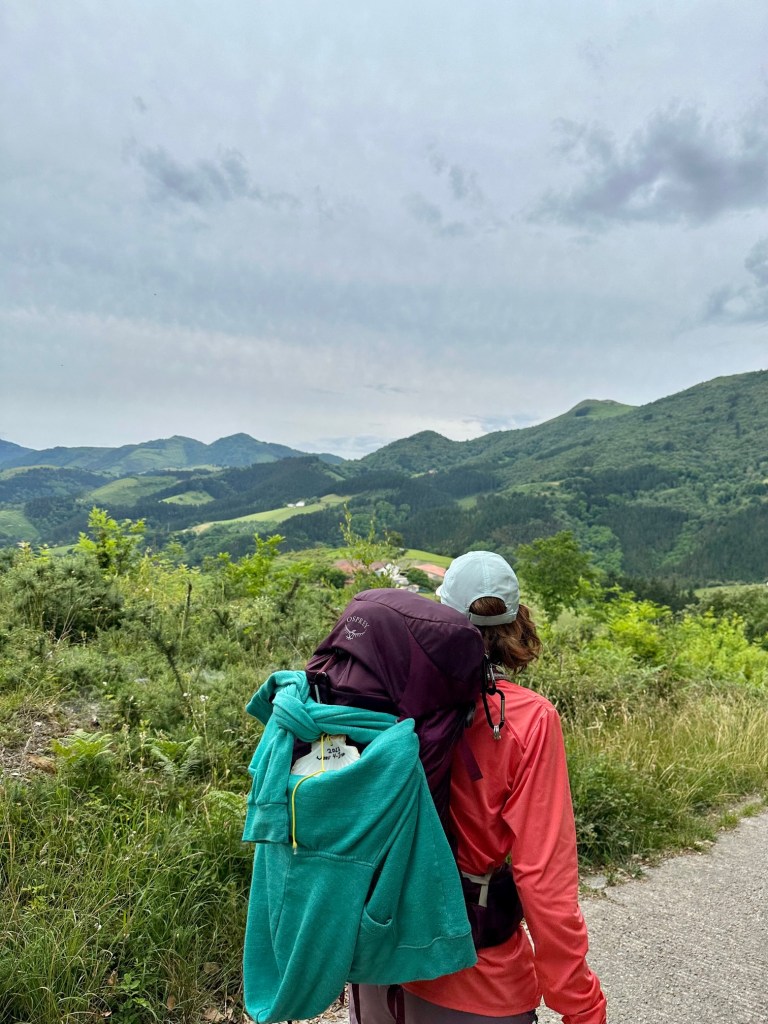
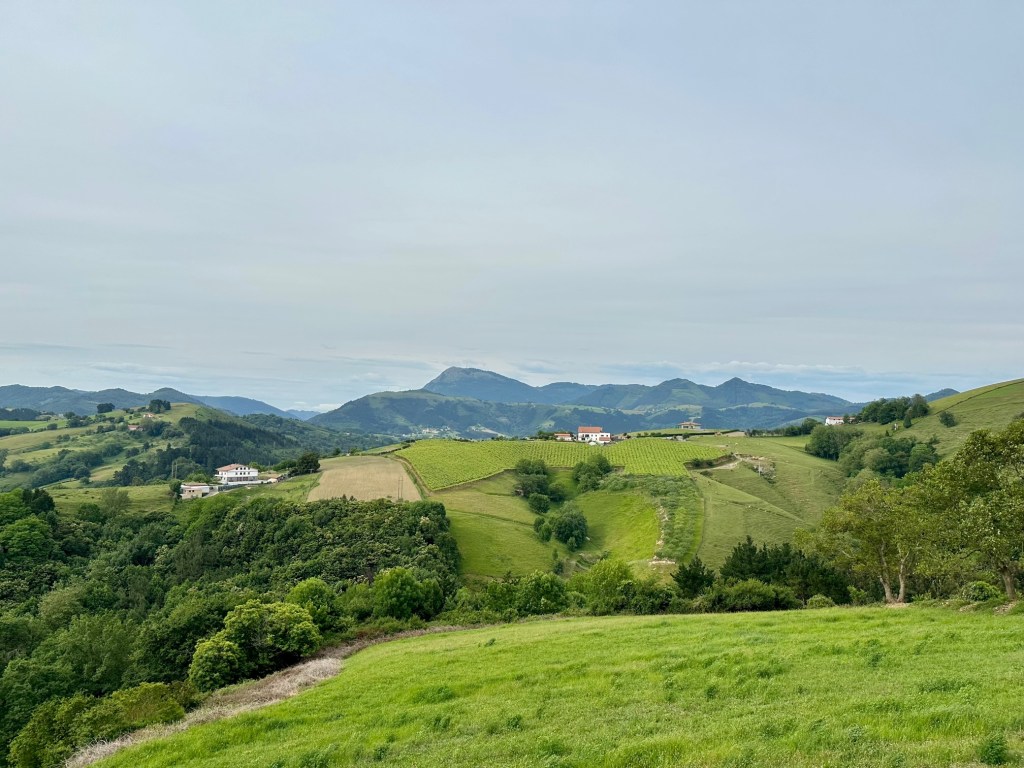
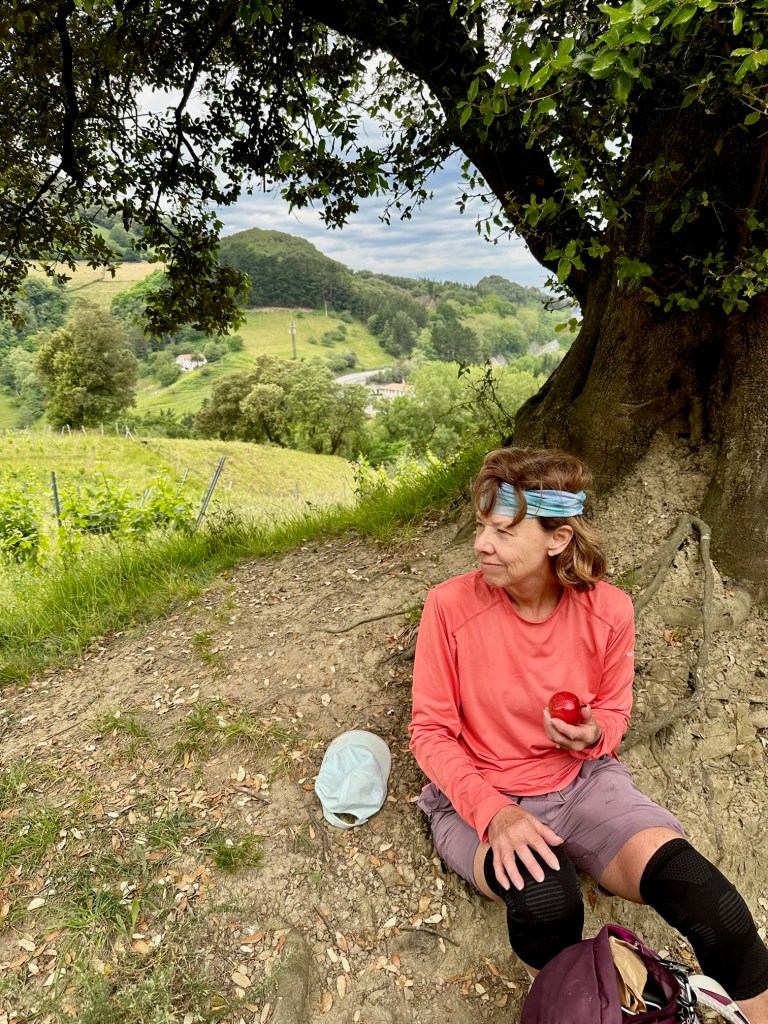
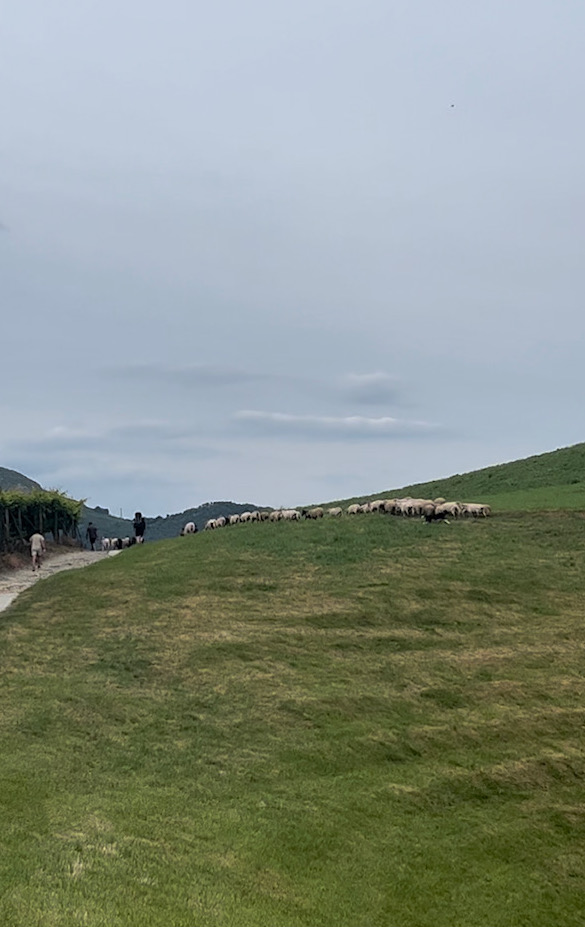
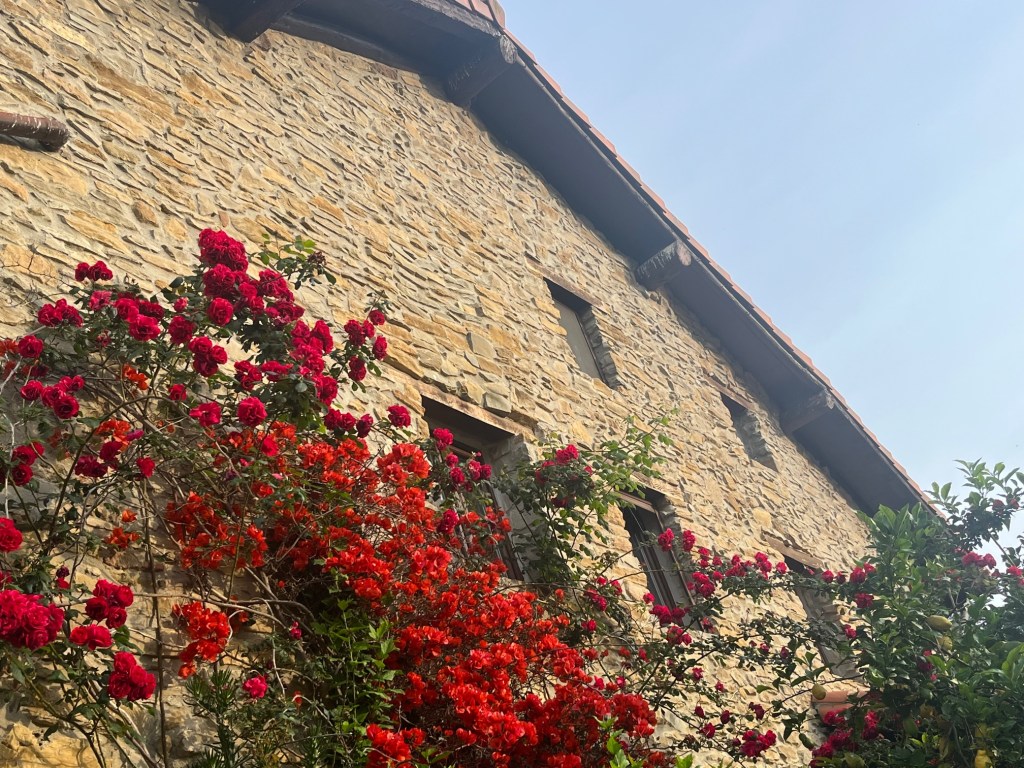
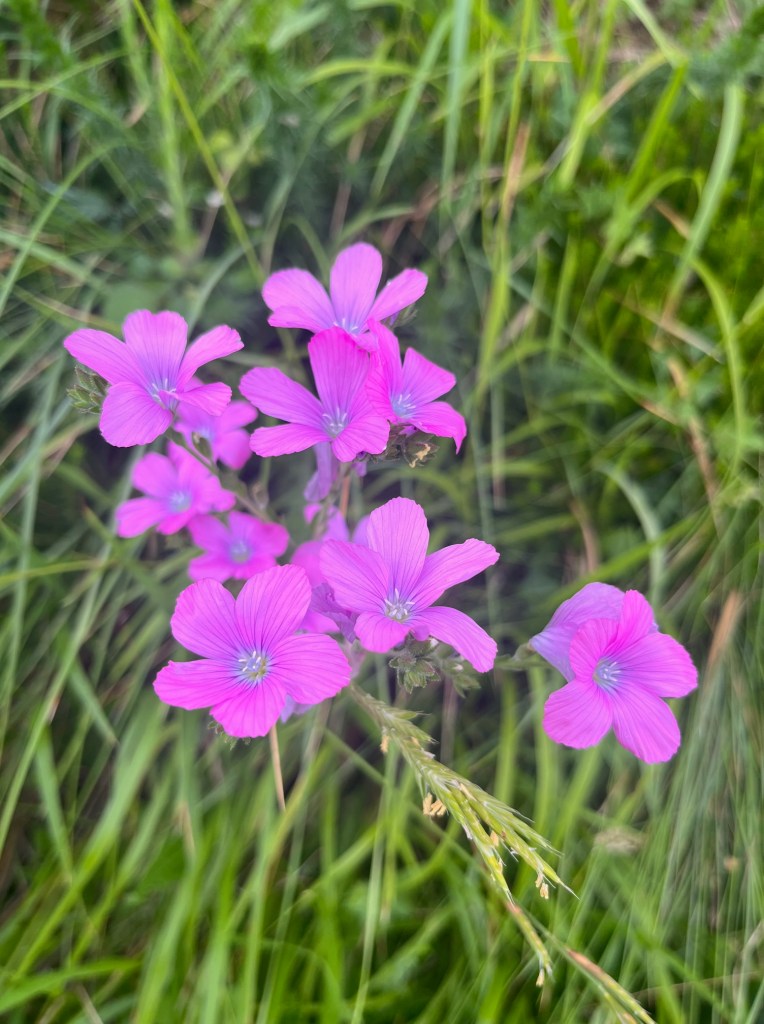
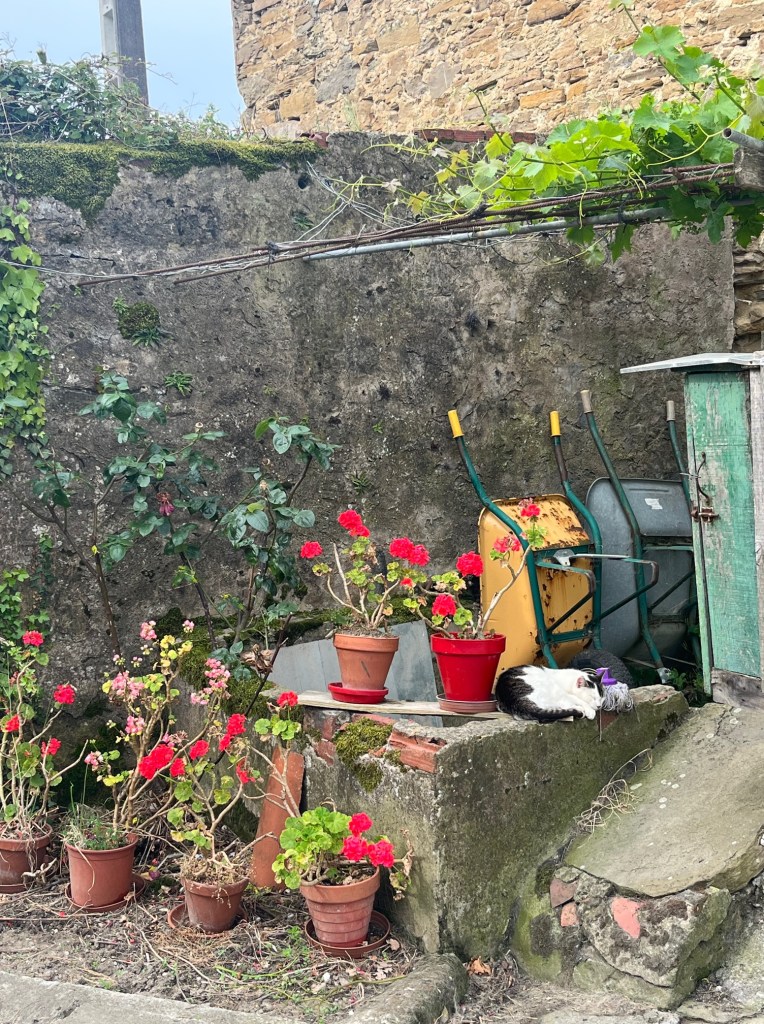
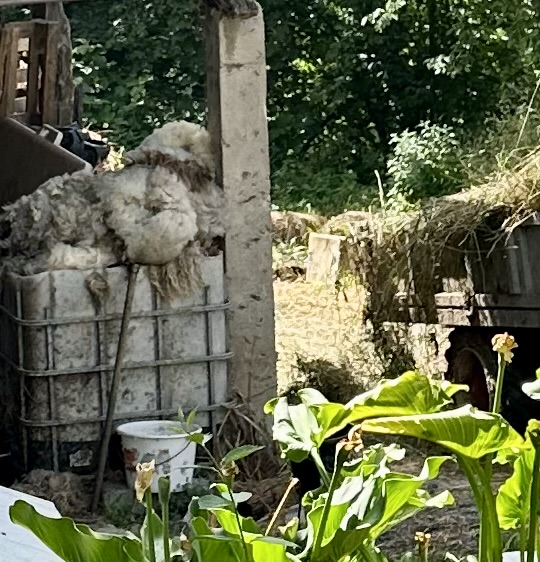
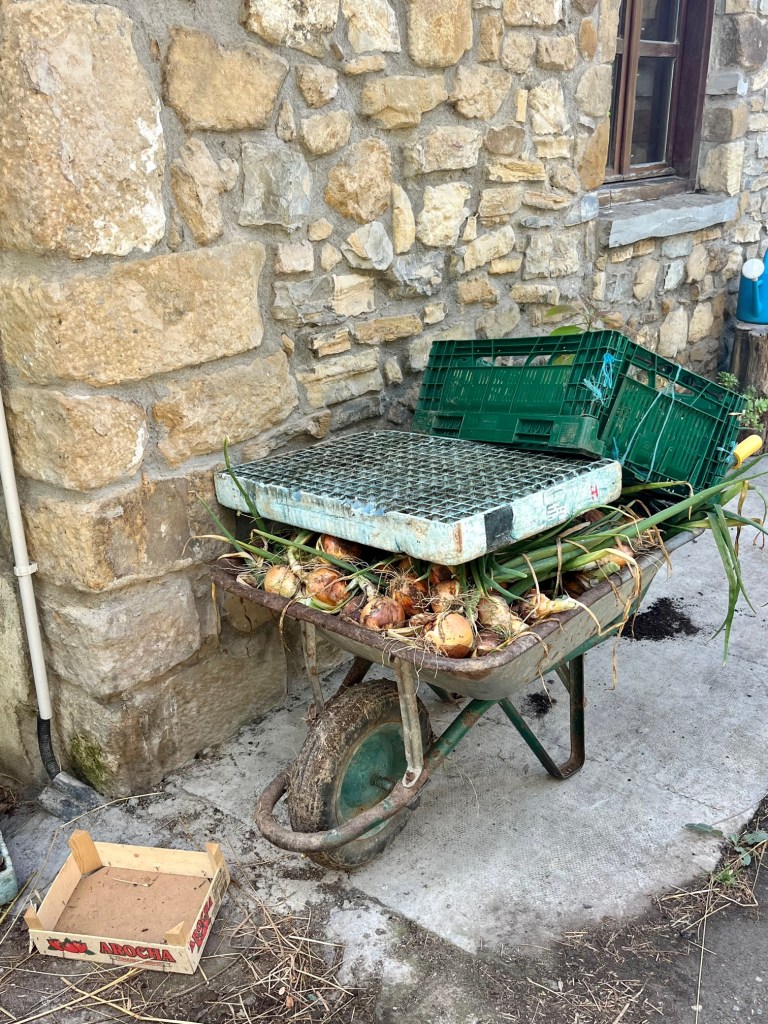
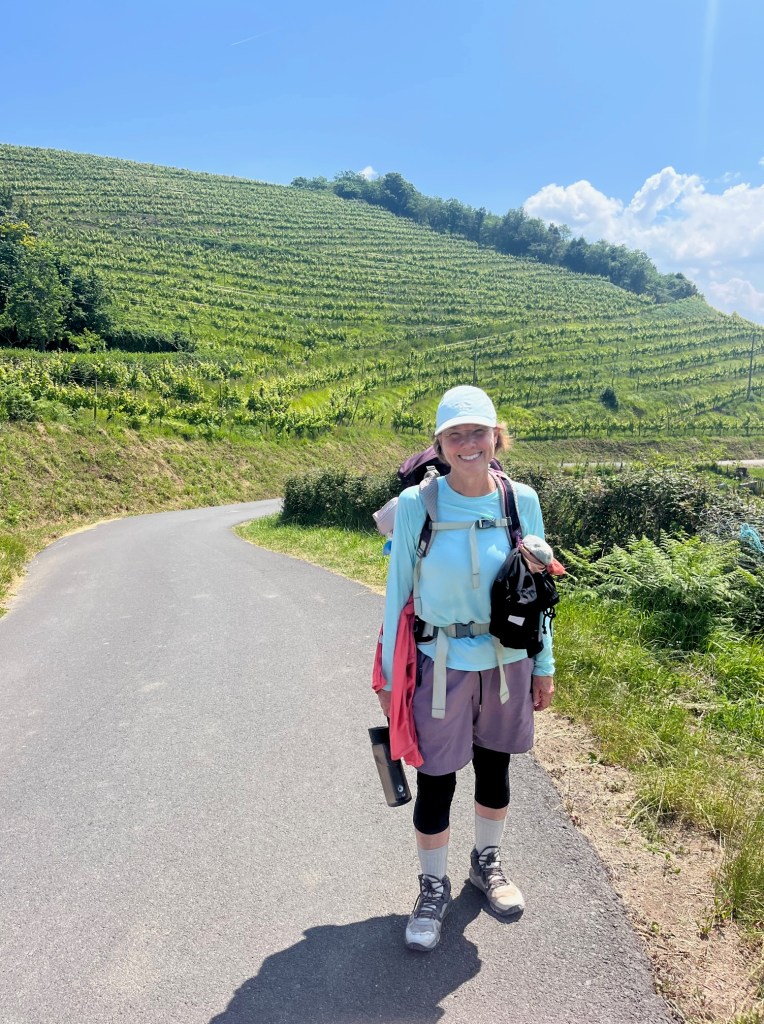
Many of the small farms dotting the landscape of the Pyrenees Basque hillsides appear to be (and it was confirmed by our tour guide in Bilbao later) self-sufficient. There are also larger areas of cropland that are industrialized, including beautiful vineyards along the way.
Day 4: Ibiri Auzoa to Markina (12.5 miles): Rewarding splendorous views continue!
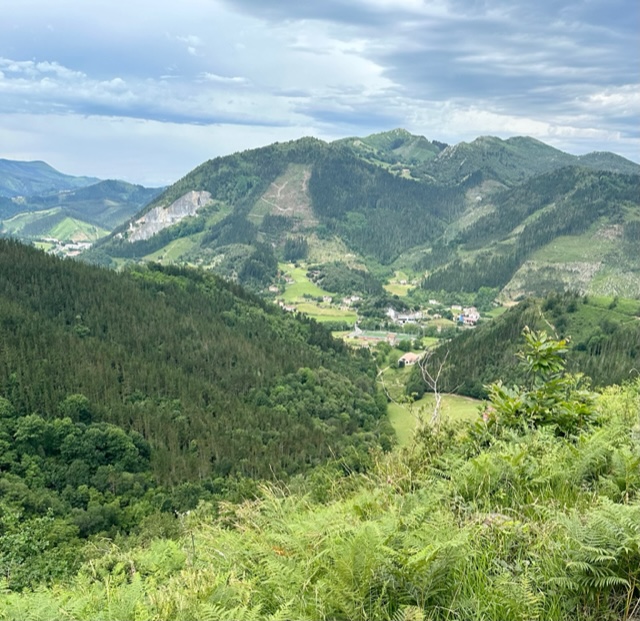
Every day remains absolutely consistent in both difficulty (miles and miles of hiking straight up mountains) and the reward for it: panoramic views of God’s creation!
Slideshow:
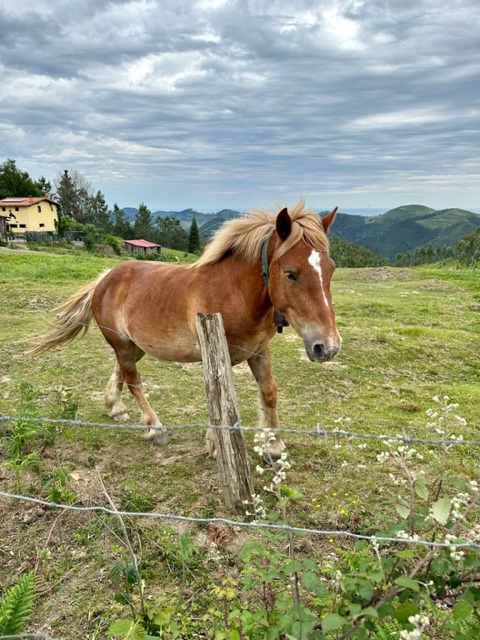
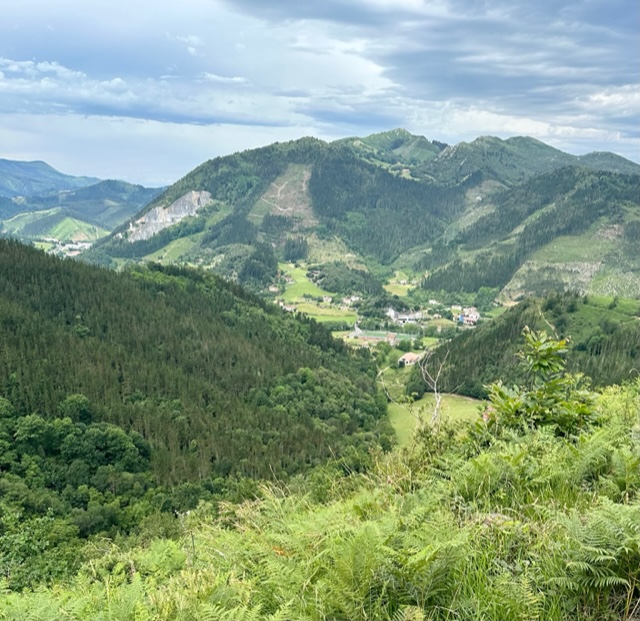
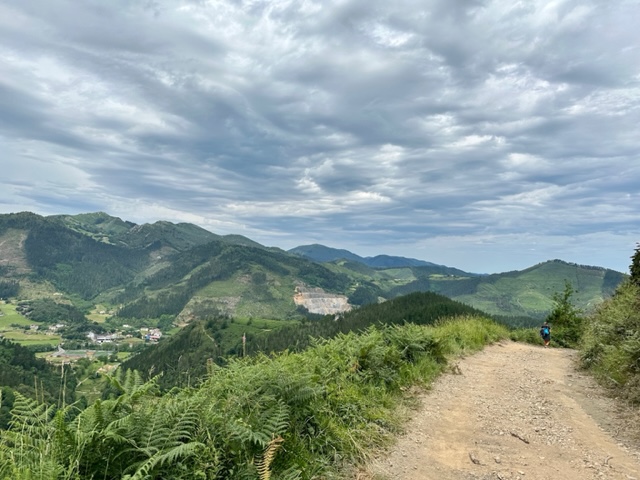
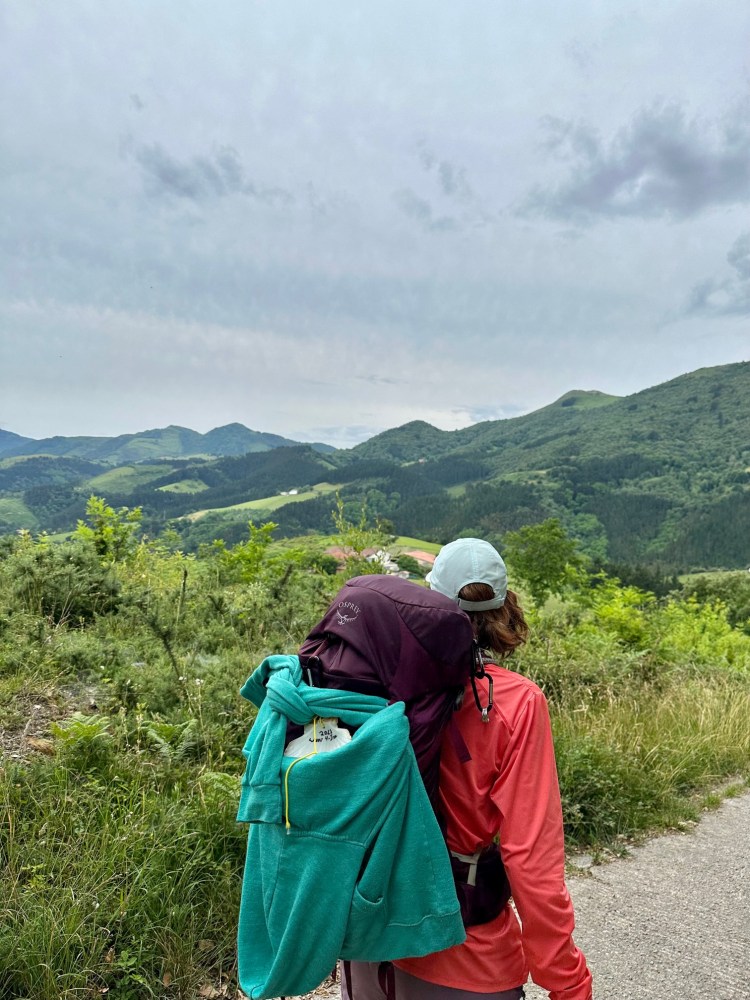
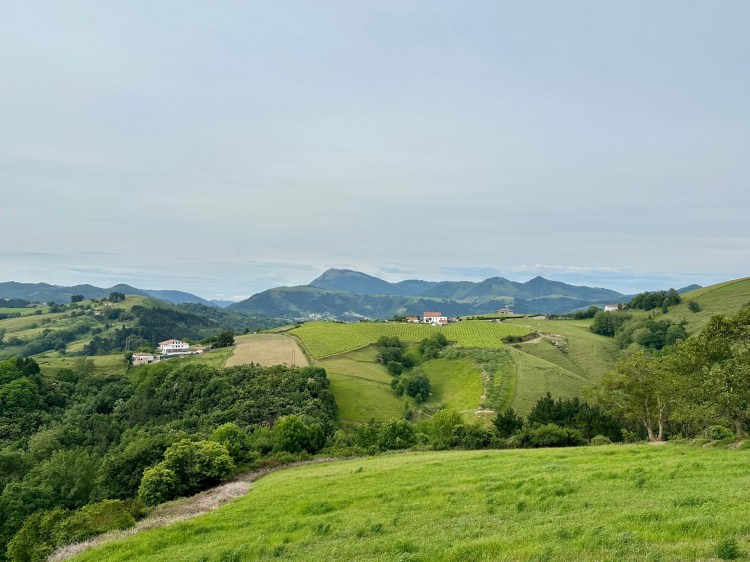
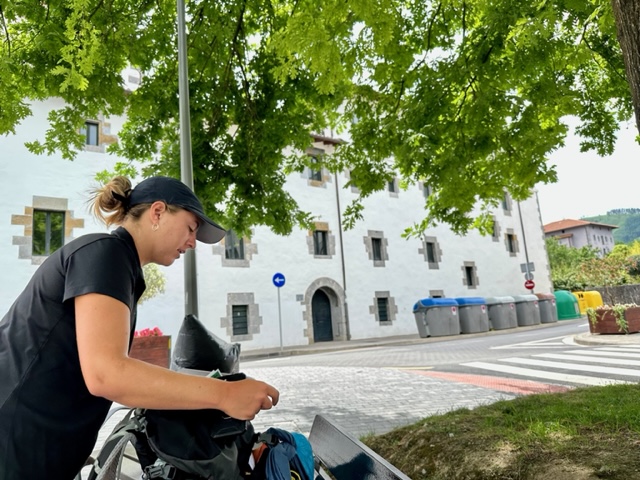
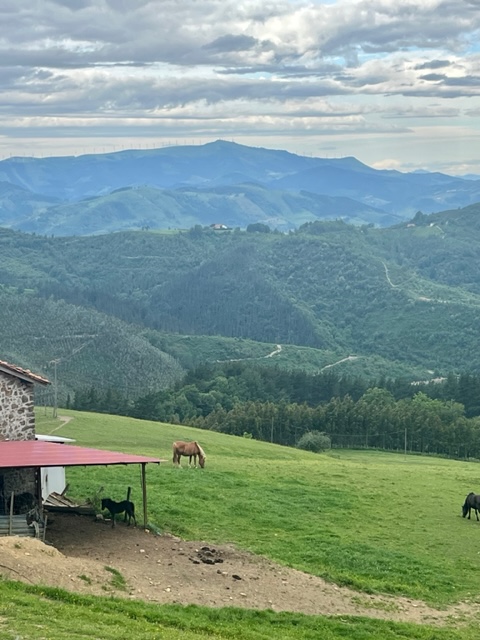
The Pyrenees Mountains form a natural border between France and Spain. Although many associate the Pyrenees Mountains with France, the greater part of them, and the majority of Pyrenean villages—such as those we passed through in the foothills of these mountains—lie on the Spanish side.
Day 5: Markina to Guernika (15.8 miles): A Fairytale World and a Sobering Museum
Breathtaking scenery, beautiful quiet picturesque towns, smiling people…the things that have come to represent Basque Country to me…also walks into the jungle-like (mixed) forest with its tall thin trees, narrow trails, and streams:
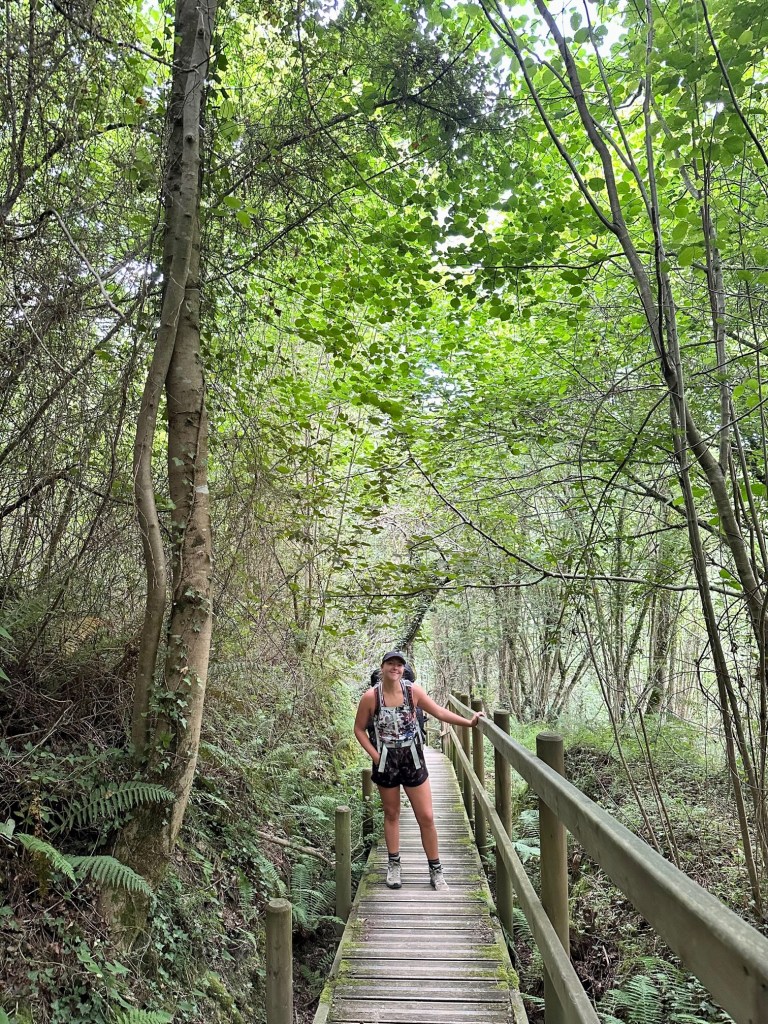
Lunch was much needed halfway through, as the cloudy breezy day had turned into hot and miserable stillness that made the mountains seem even steeper. We had packed peanut butter sandwiches and Pringles, which, along with our (always) trail mix, kept us going.
In Guernica we splurged for a hotel room—a private room, bathroom, and shower!—up several flights of stairs, of course. We went to the Gernika Peace Museum this evening. Guernica is the site of a terrible bombing during the Spanish Civil War, in 1937. Many civilians died. The bombing is the subject of the painting by Pablo Picasso entitled “Guernica.” The museum had glass floors which showed broken pieces of furniture, assorted shoes, broken pieces of dishes, toys, and other things that you might have seen after the wreckage of the bombing. We saw photos of the aftermath of the bombing, and relics. In one room we watched video of eyewitnesses who shared their personal stories of horror, heartbreak, confusion, and loss.
https://3d.raumgang.de/es/tour/k9ce4npfqt
We got a pizza to “take away” and ate it in our (did I mention, private!) room. We also took this opportunity to make phone calls home.
Day 6: Guernica to Larrabetzu (10.8 miles): Coffee in a Pretty Cup
We passed a house with a table of prettily packaged fruits and nuts trailside, for sale, and were invited to the front porch for coffee. We sat on the front porch of the pretty house while our host made fresh coffee, then enjoyed our wonderful cafe con leche in pretty, delicate china cups, as we looked out at the same splendorous scenery we had seen all week, but now from a porch instead of the trail. A 3 month old Border Collie puppy ran up suddenly to give us puppy-kisses. The lady and her husband smiled and talked a bit with pride about their dog and puppy. A cup of coffee had turned into a fun and rejuvenating experience.
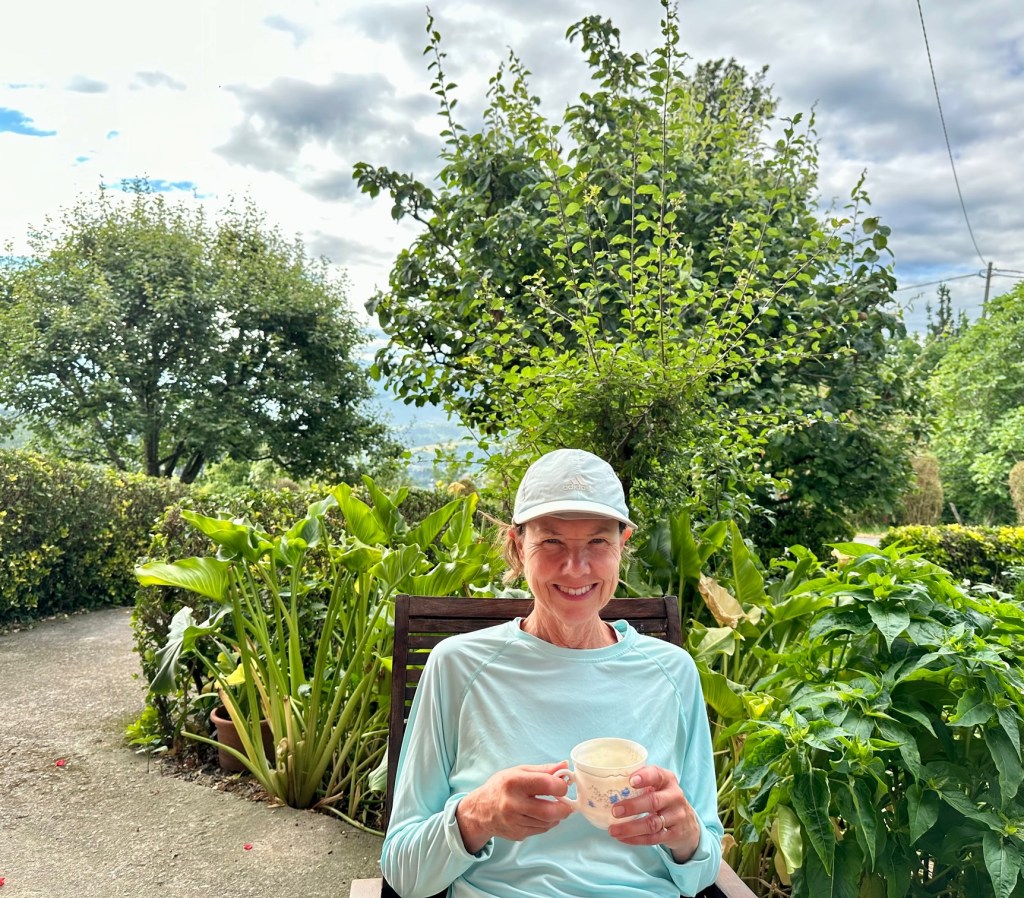
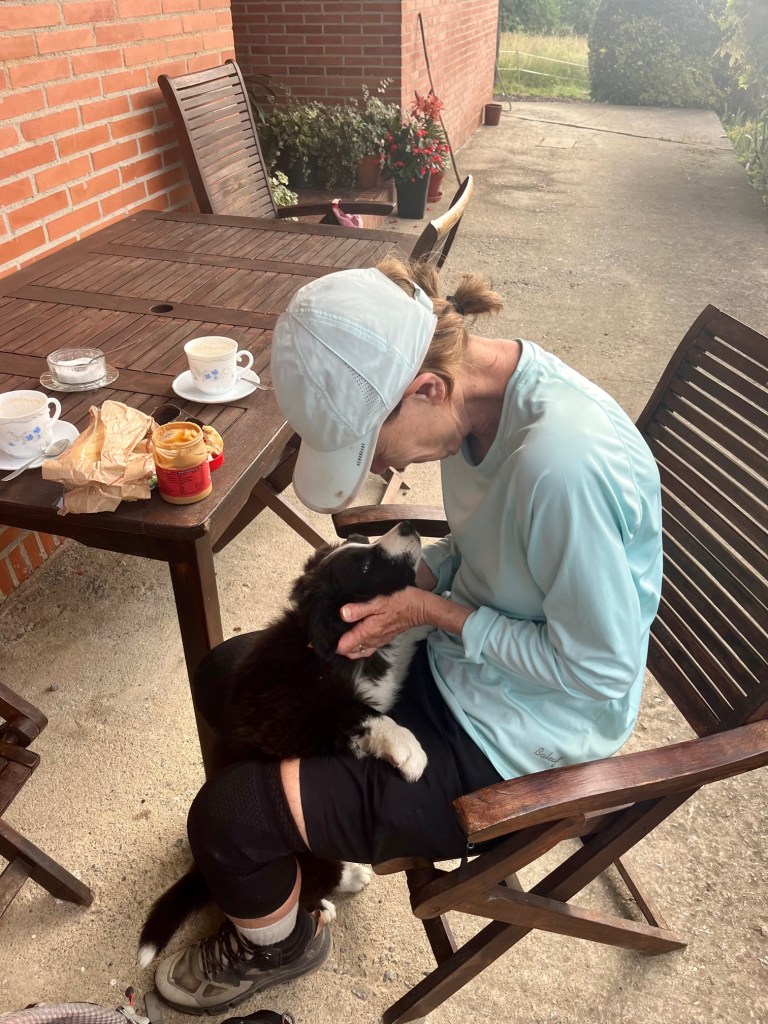
With today’s hike less miles, we got to Larrabetzu and our albergue at 1:00. Until our alb ergue opened, we passed the time by having some pinxtos, including mussels, and cafe con leche, before ending up at a cafe for lunch. As it wan’t the typical lunchtime, we were the only ones in the restaurant, and sat by ourselves in a room with old rock walls, big log beams, and a fireplace—quaint and pretty. I had chicken, french fries, and a fried egg; very tasty bread; and coca-cola with lime.
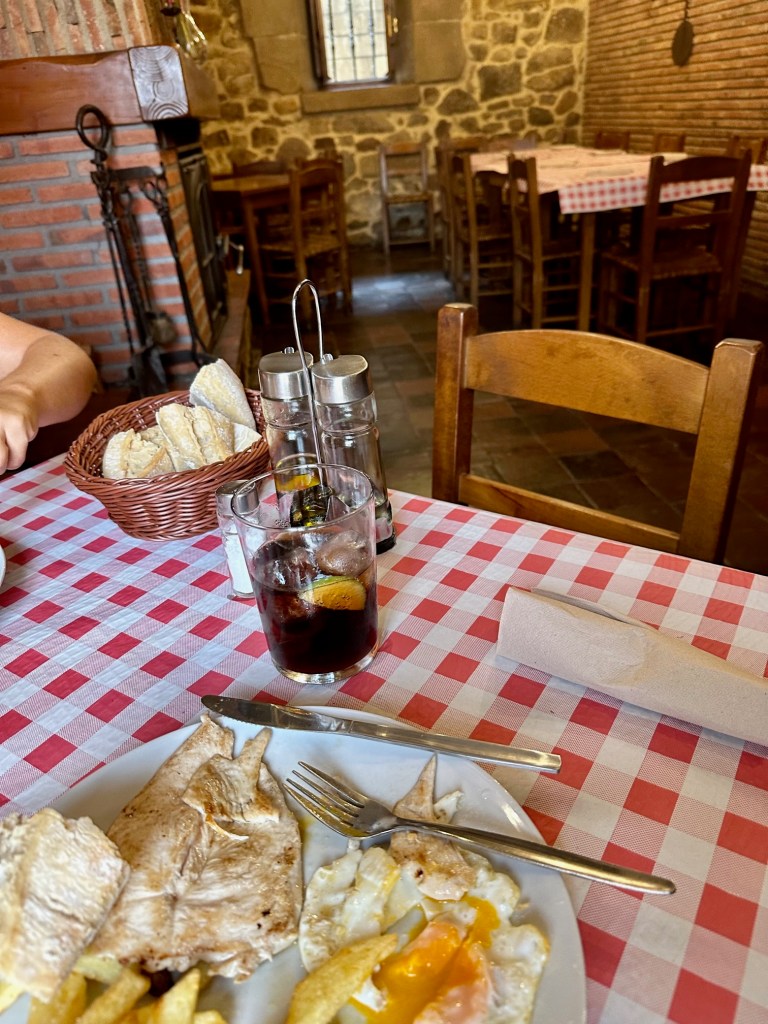
We were able to get into our albergue after lunch, a little early. After checking in and showers, we went back out to explore the small town. We ended up chatting with a group of other pilgrims, from several different areas of the world; and had dinner together with them that night. Back to the albergue before 10:00 curfew (the doors are locked then) and good night.
Day 7: Larrabetzu-Bilbao (9 miles): A Rainy Descent into Bilbao
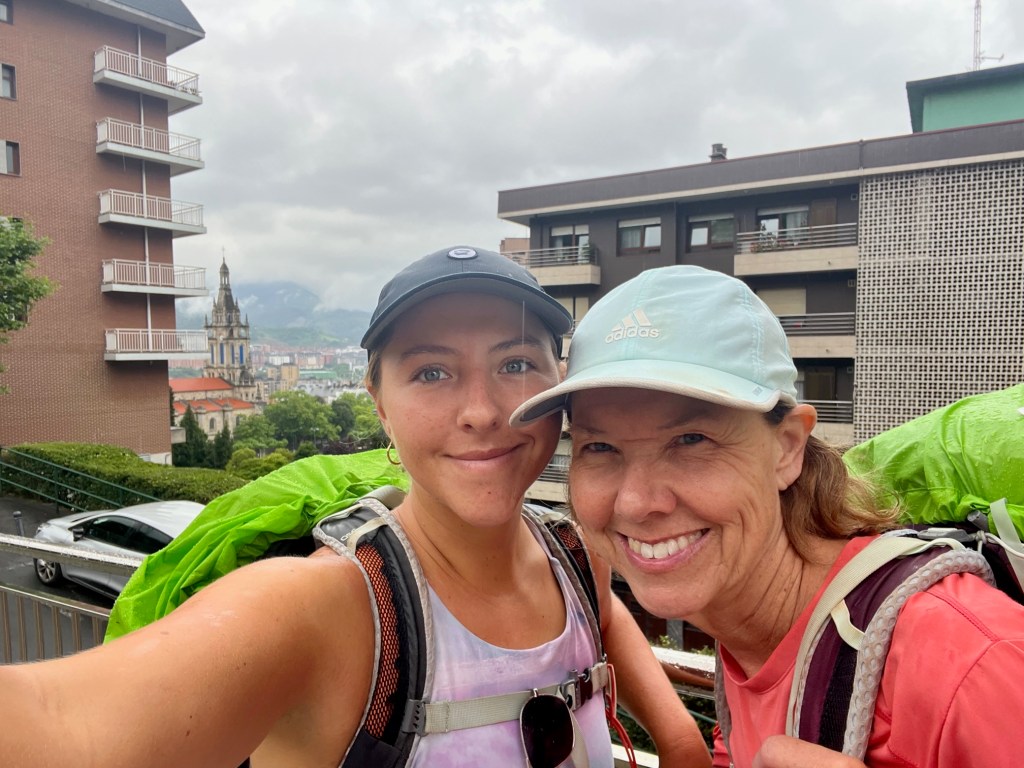
Again, steep hills to climb; and at the end (with a light rain falling) a big descent into our destination of Bilbao! And with that our week on the Camino de Santiago North route is complete!
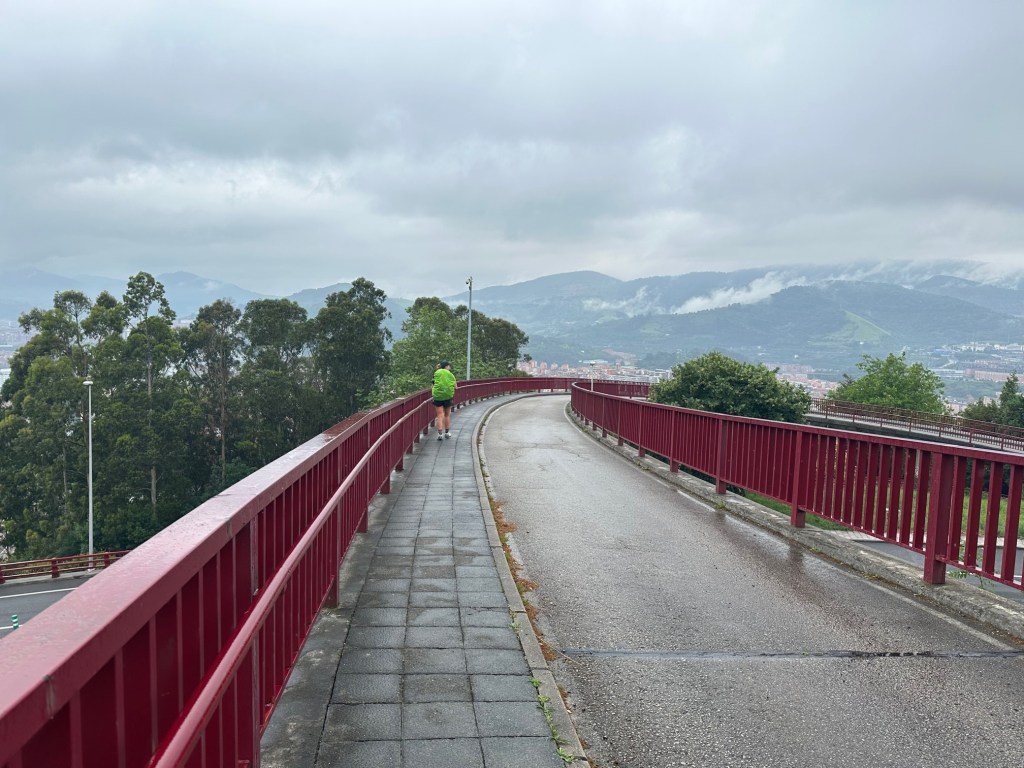
“And I think to myself…what a wonderful world!” -Louis Armstrong
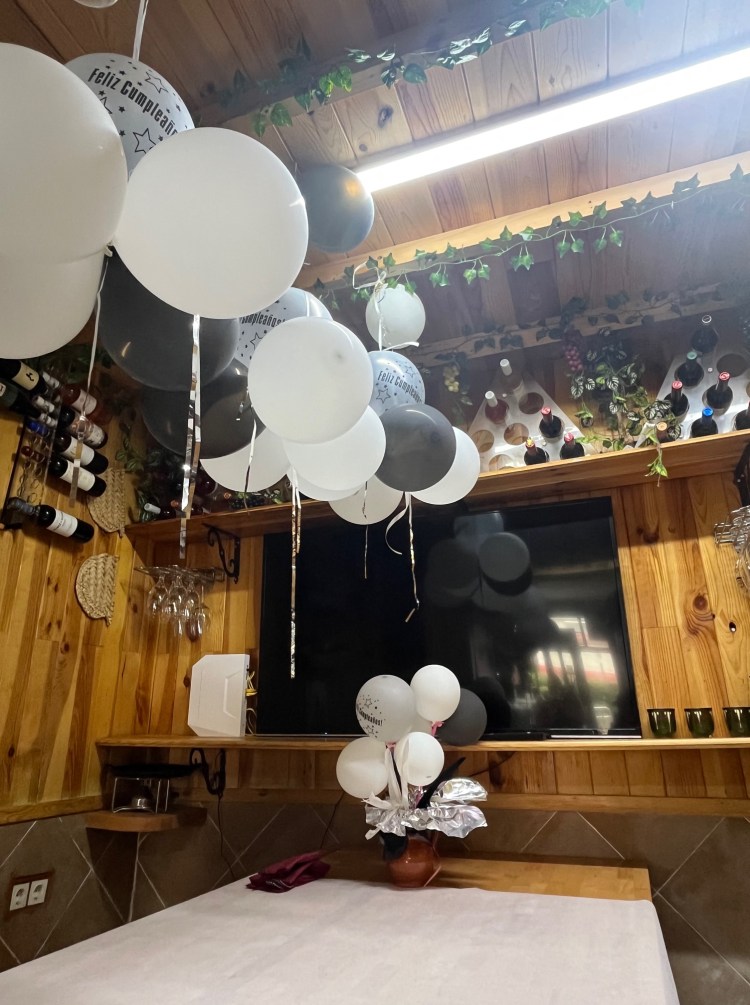
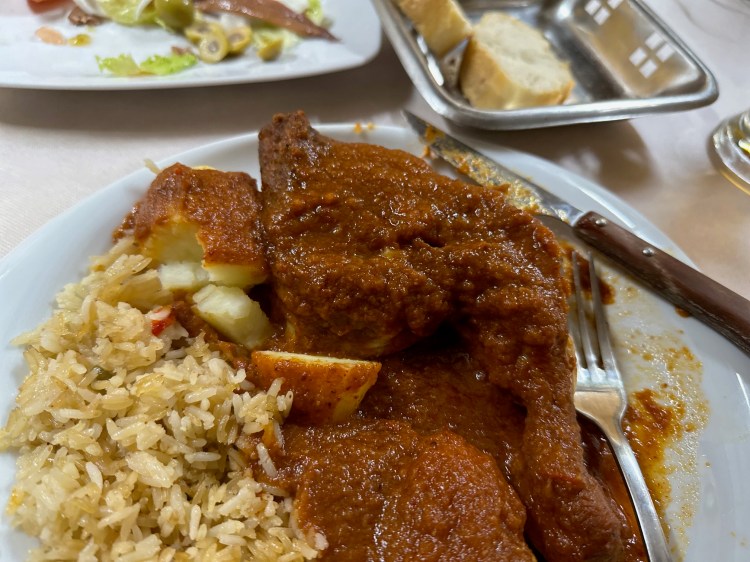
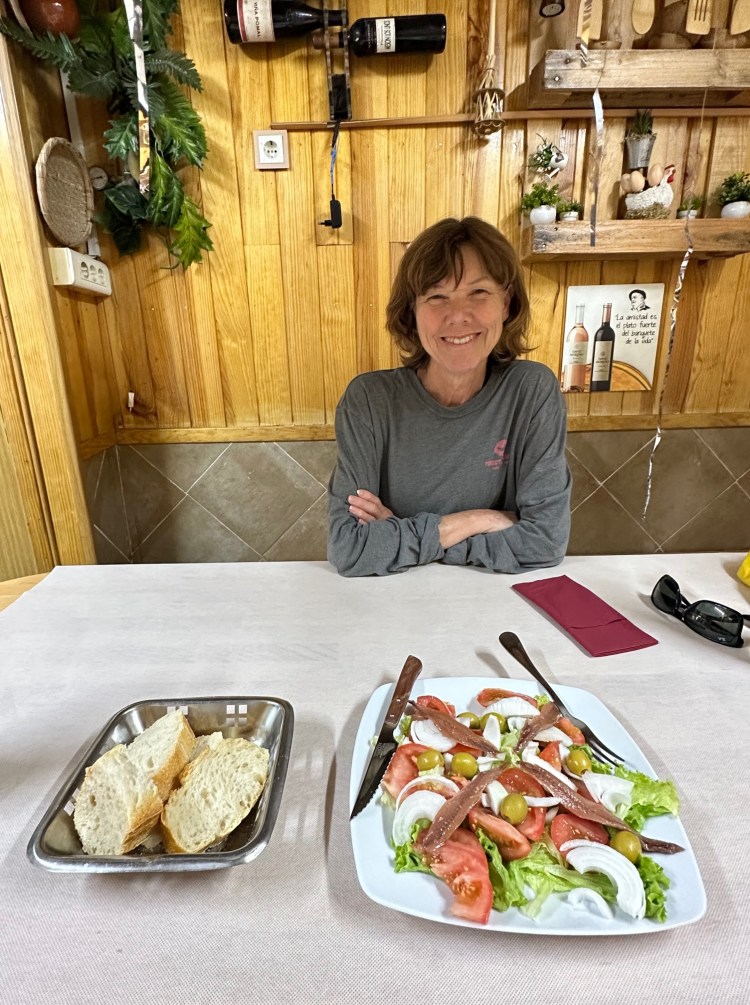
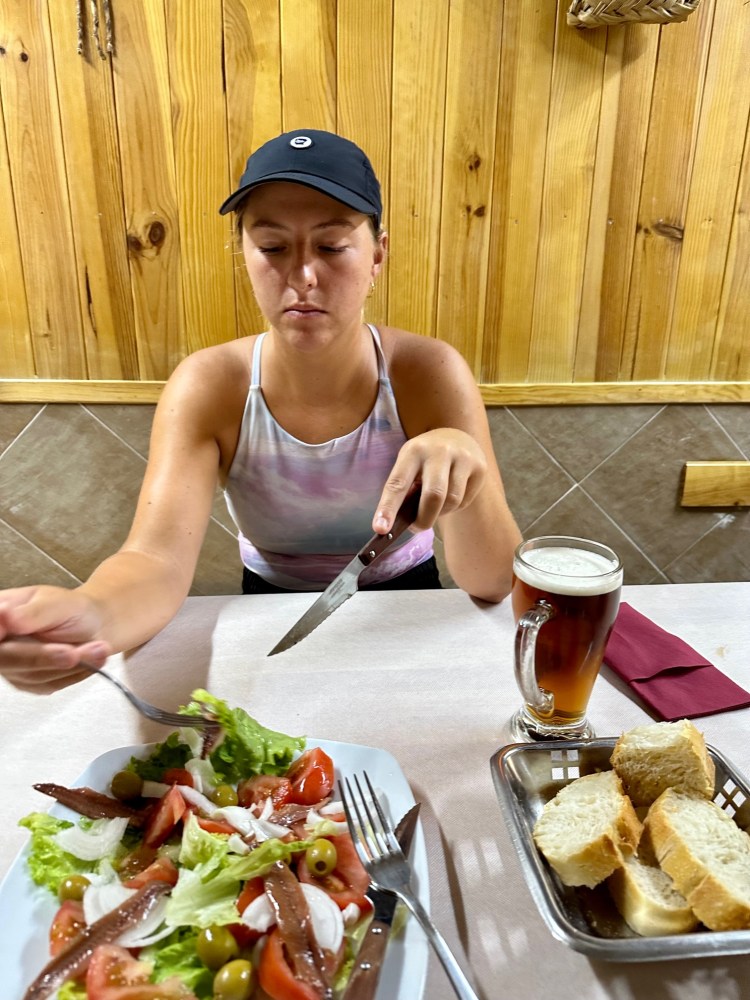
In Bilbao, we had an hour or so walk to our Airbnb. After settling in and chatting with our what would prove to be outstanding, exceptional host Idoia, over a cup of coffee, we went out to find somewhere for a celebratory lunch! We found a gem, which was a Bolivian restaurant. We were the only customers for lunch, as it was the off-hours (once again) and the restaurant owner led us to our table—decorated with balloons and celebratory streamers! It turns out the table had been used for a birthday party the night before. We felt it suited us perfectly. My meal was amazing, with half a chicken, and potatoes, covered with a rich red spicy chili sauce unlike any I’d ever tasted; rice, fresh bread; and a huge plate of fresh tomato slices, onions, and olives. ‘Perfecto’!
Slideshow:
Then by a bakery where I “accidentally” got a traditional Basque bakery treat that was incredibly perfect! It was a roll, light and fluffy (similar to what your bread-making relative might make for Thanksgiving dinner) but was filled inside with a cream. These are called “Bollos de Mantequilla” or “Butter Buns.” Each bite was so very delicious!
https://buber.net/Basque/2021/09/05/basque-fact-of-the-week-the-butter-buns-of-bilbao/
In our wonderful air-conditioned room at our Airbnb, we spent the rest of the afternoon watching TV before getting out to explore a bit and get our Pilgrim Passports stamped at the tourist office.
What an experience this week has been! My life has been enriched and changed for the things I’ve seen and experienced—for the panoramas of the simple tranquility and beauty of the Pyrenees foothills of the Basque Country that have been absorbed into my soul; and even for the difficulties of it!
“Yes, I think to myself…what a wonderful world!” -Louis Armstrong
 Gayla's Blog