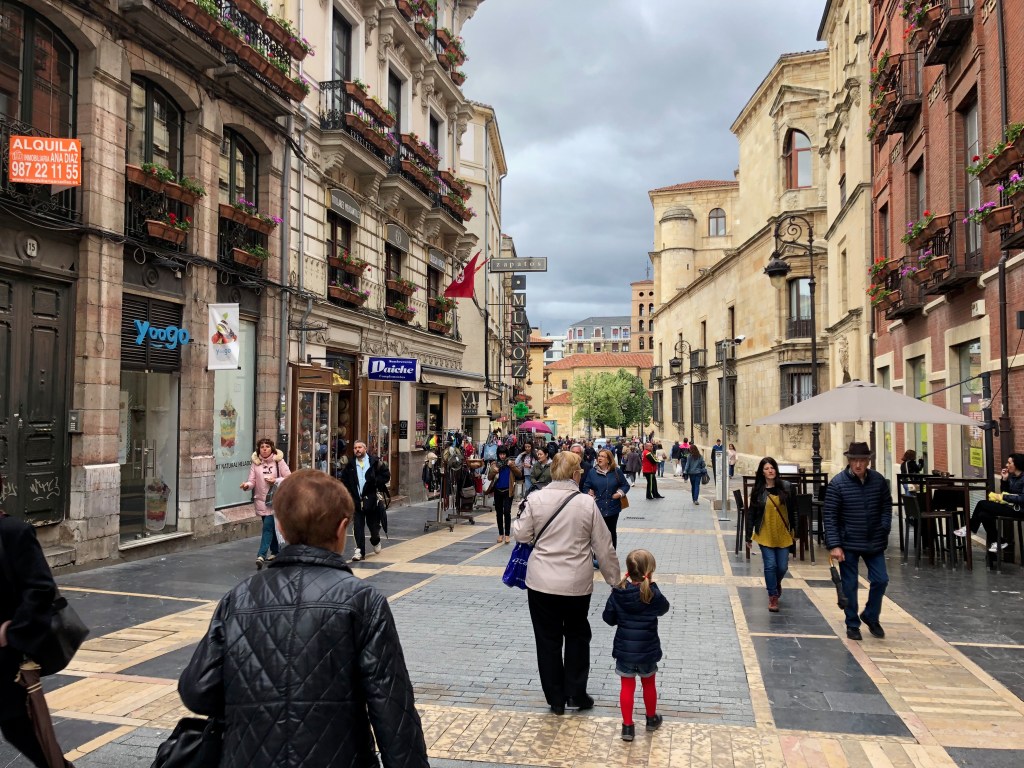
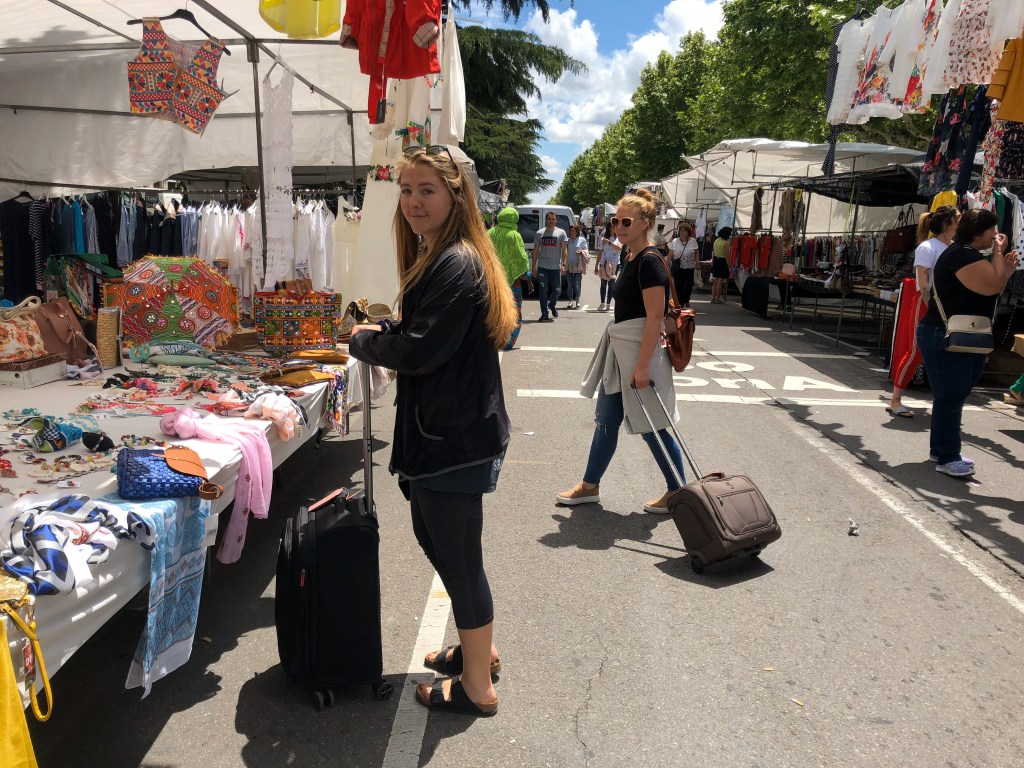
My daughter and I went to visit my daughter who was attending school in Leon, and I spent three weeks in this captivating city. It holds a special charm for me, as it was the first place I ever traveled in Europe, and especially because I was there with both my daughters. Unforgettable times, lovely memories…
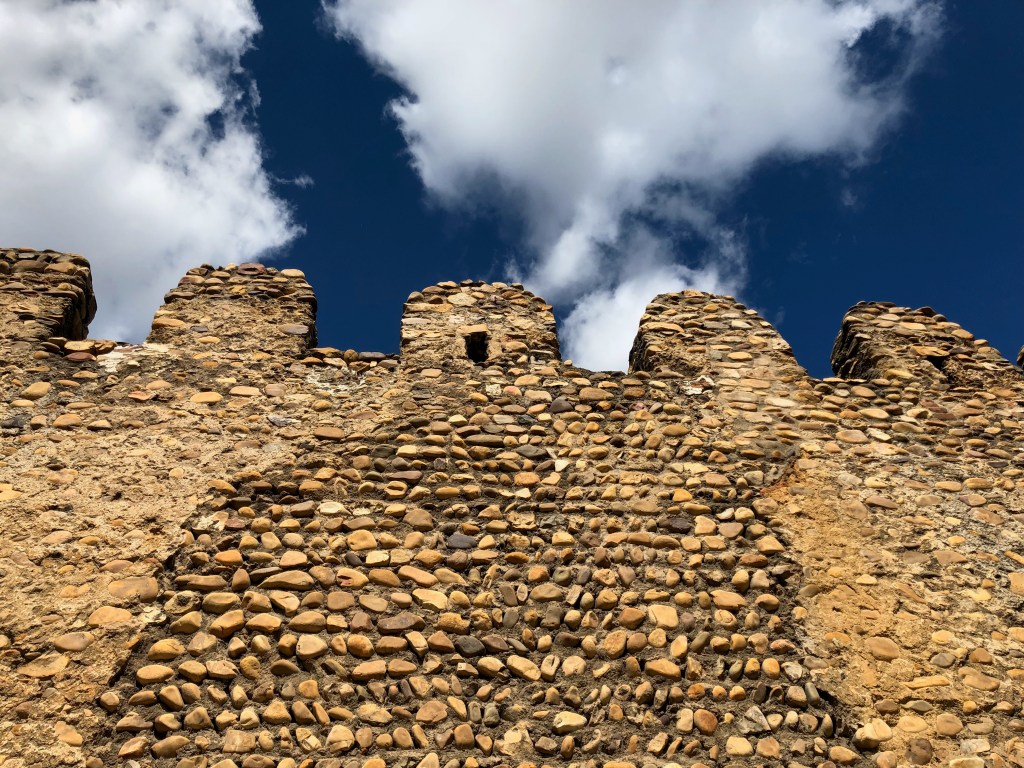
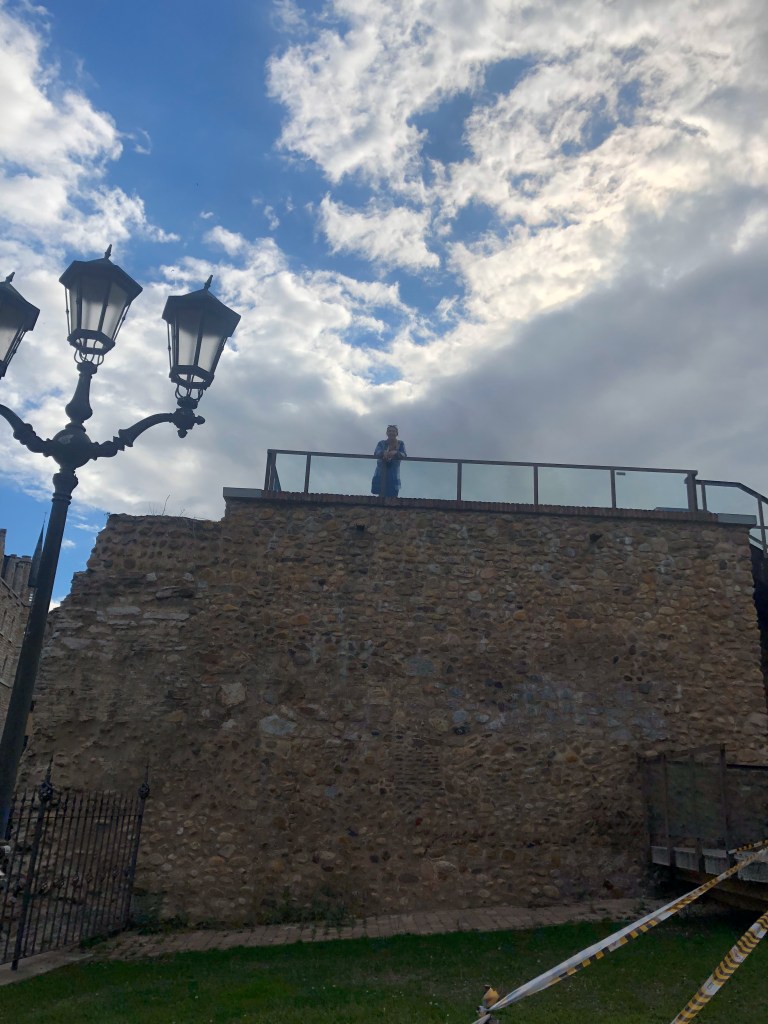
Roman Walls of Leon
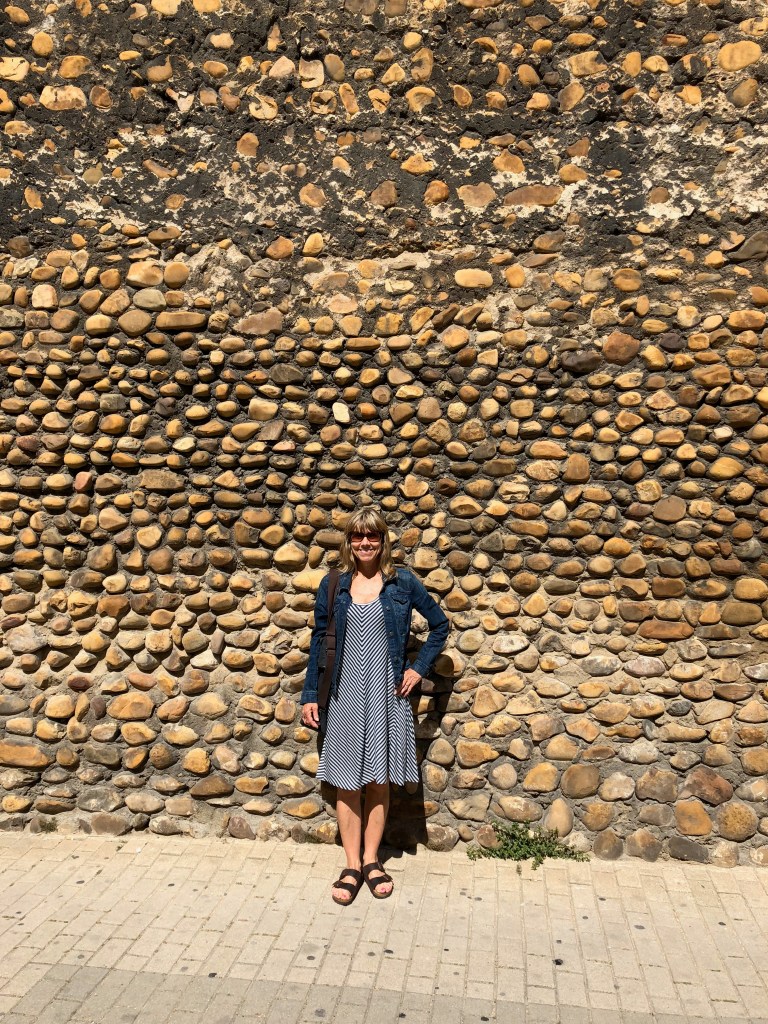
The rock walls throughout Leon are dated from the 1st century B.C to the 3rd century A.D. from a sequence of Roman defenses.
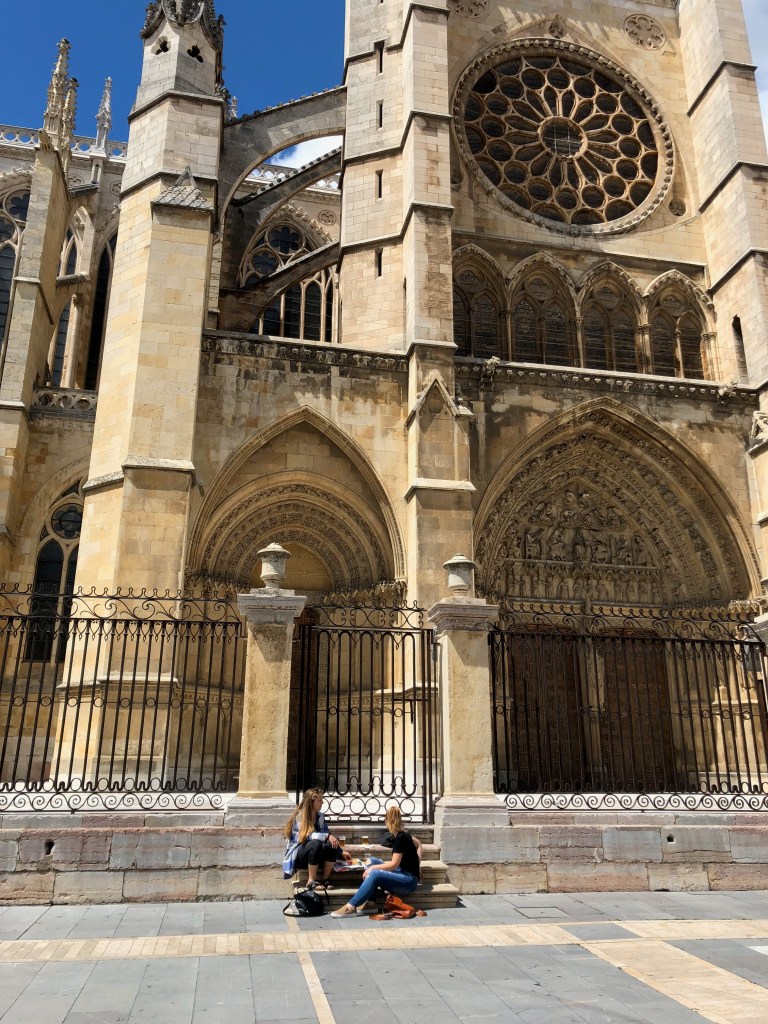
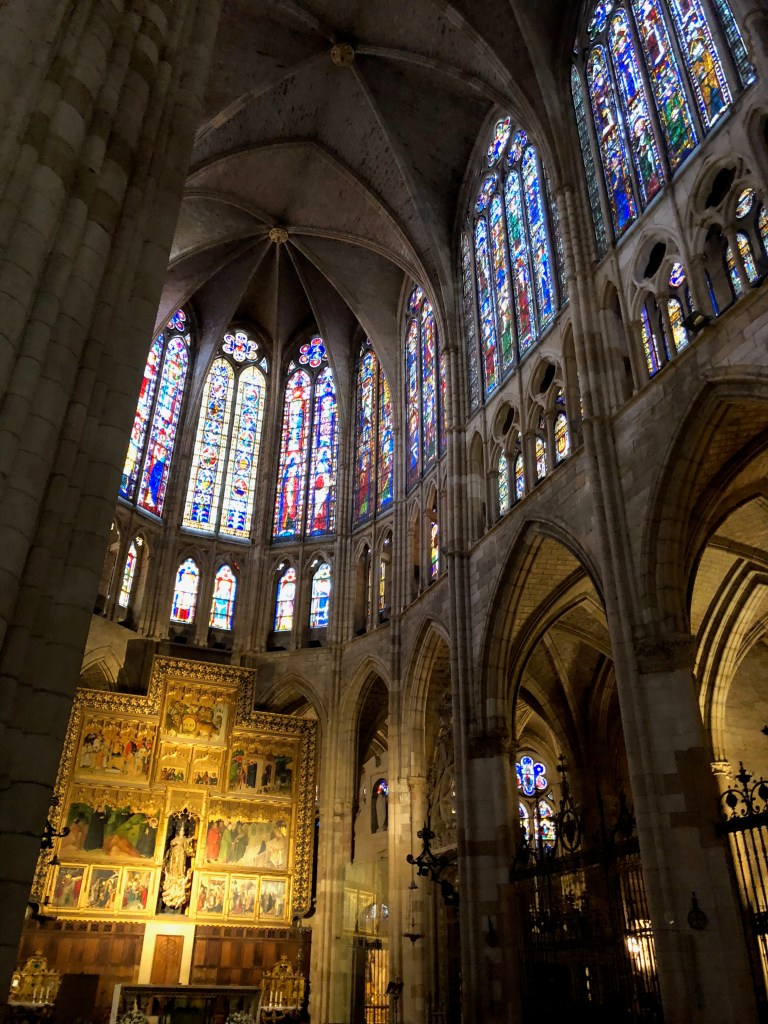
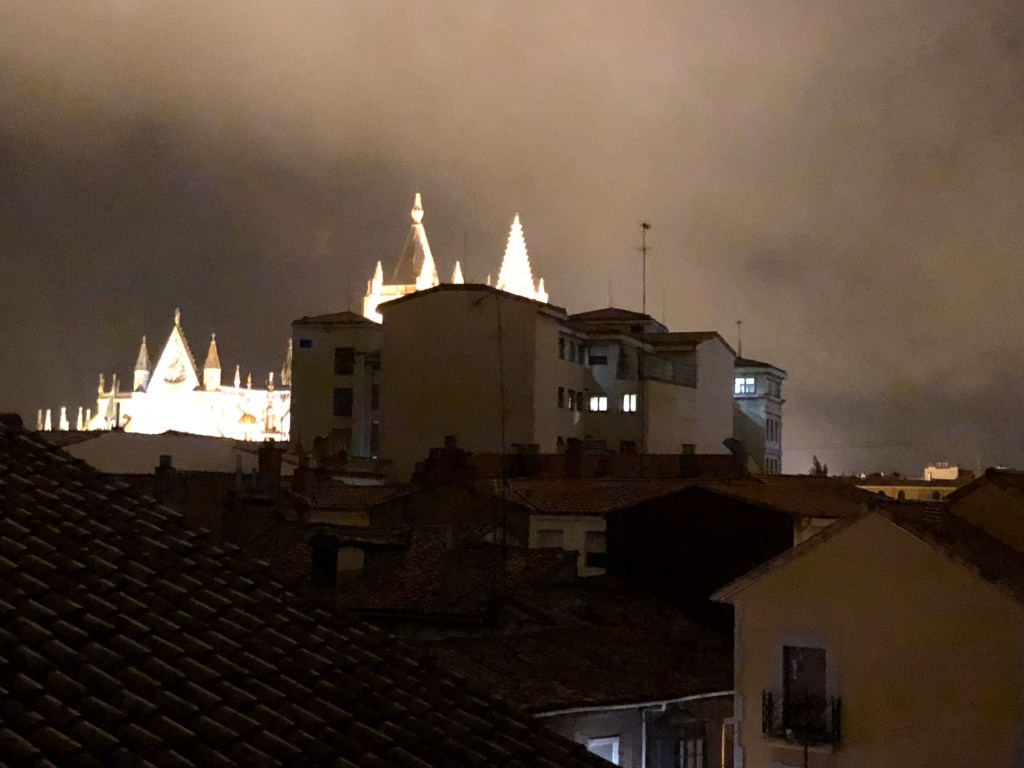
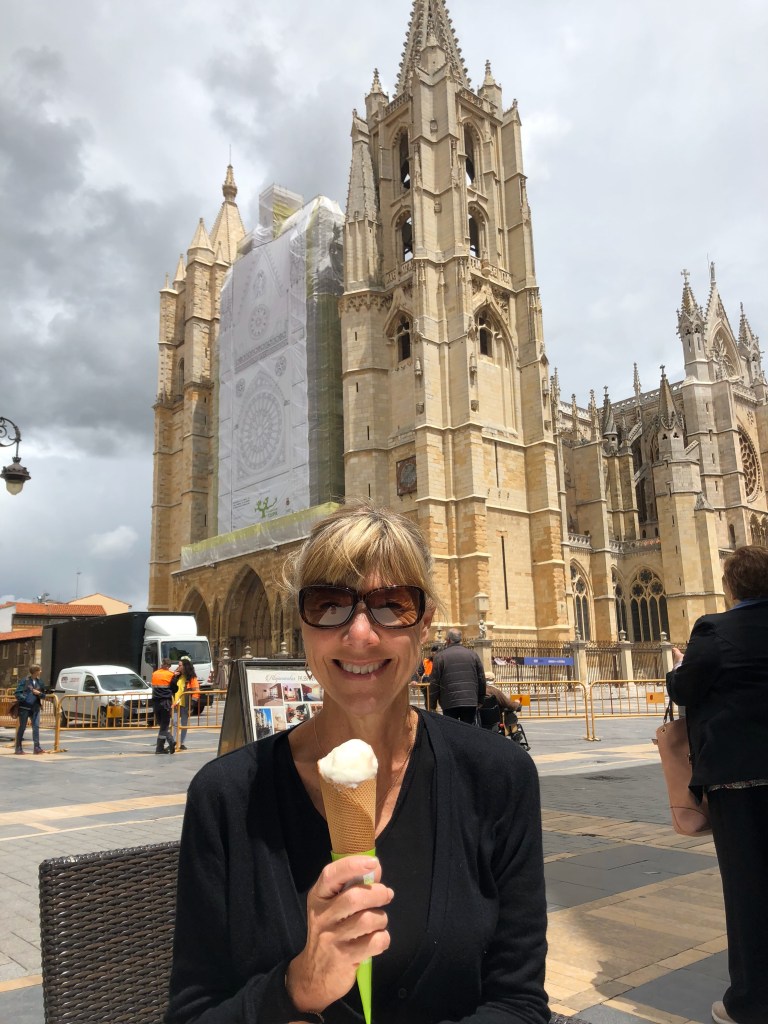
The Cathedral of Leon
It has been described as “one of the purest examples of rayonnant style in all Europe”. The concept was a cathedral made of glass. One thousand eight hundred square meters of stained-glass windows were mounted in a limestone framework, in the mid-13th century by Maestro Simon Rodriguez. The towers came a bit later- the northern one in the 14th century and the clock tower in the 15th century. Inside the cathedral, one finds a plethora of stained glass, statues, paintings, and sculptures of Old and New Testament stories and people- all so beautiful it awes the souls of its visitors, including those of us who so love the Bible and its stories.
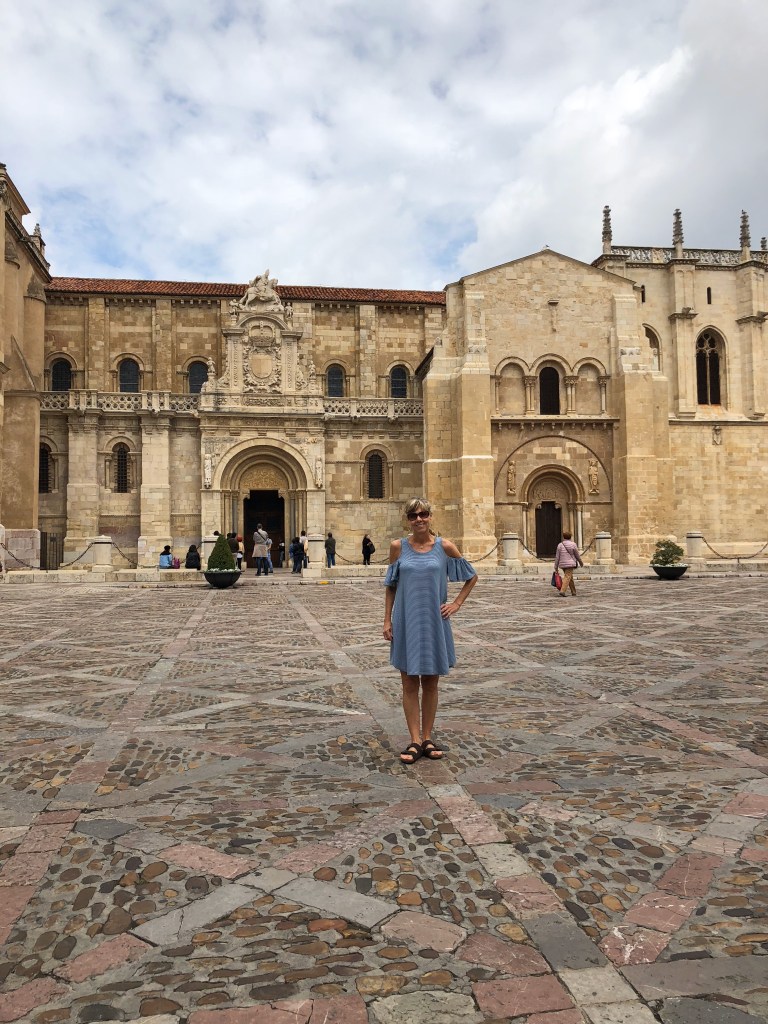
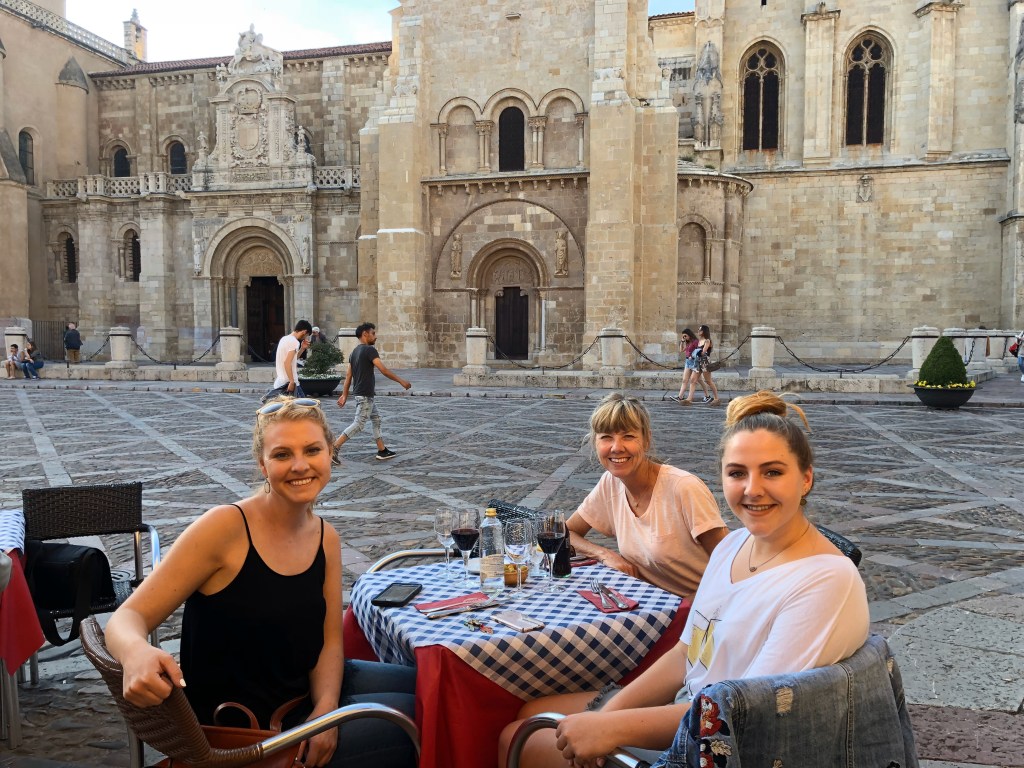
San Isidoro
Historians are still unraveling San Isidoro’s complex origin. A pagan temple may have become a church dedicated to Saint John the Baptist. The remains of the martyr Pelagius were brought there to be looked after, at some time. In 1063, however, the bones of Saint Isidore, a Sevillian wise man, were sent there and soon displaced any other saint to whom the basilica might have been previously dedicated.
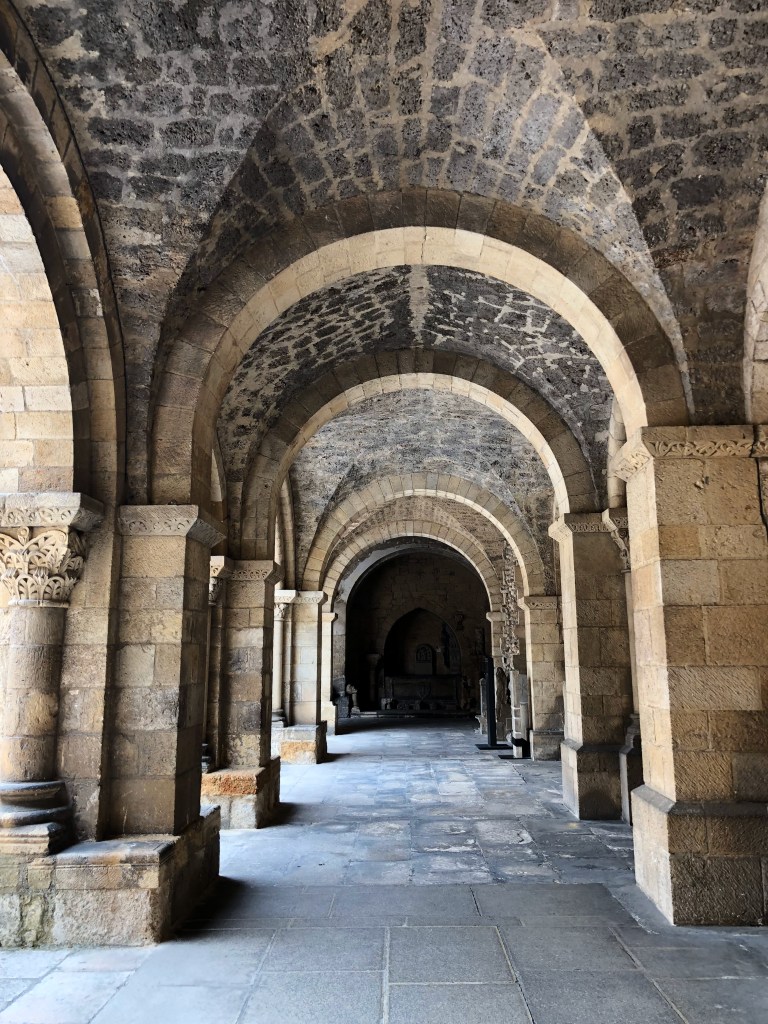
During our visit to the museum of San Isidoro I was in awe to see the magnificent library consisting of over 300 fifteenth century books, 800 scrolls, and 150 codices, primarily emphasizing different Bibles including the twelfth century Romanesque Bible, the codex Morales of Job, and several hymnals.
Inside San Isidoro is an invaluable collection of Biblical artifacts, paintings, and sculptures from the ages.
San Isidoro was my favorite of all the wonderful historical treasures that Leon has to offer!
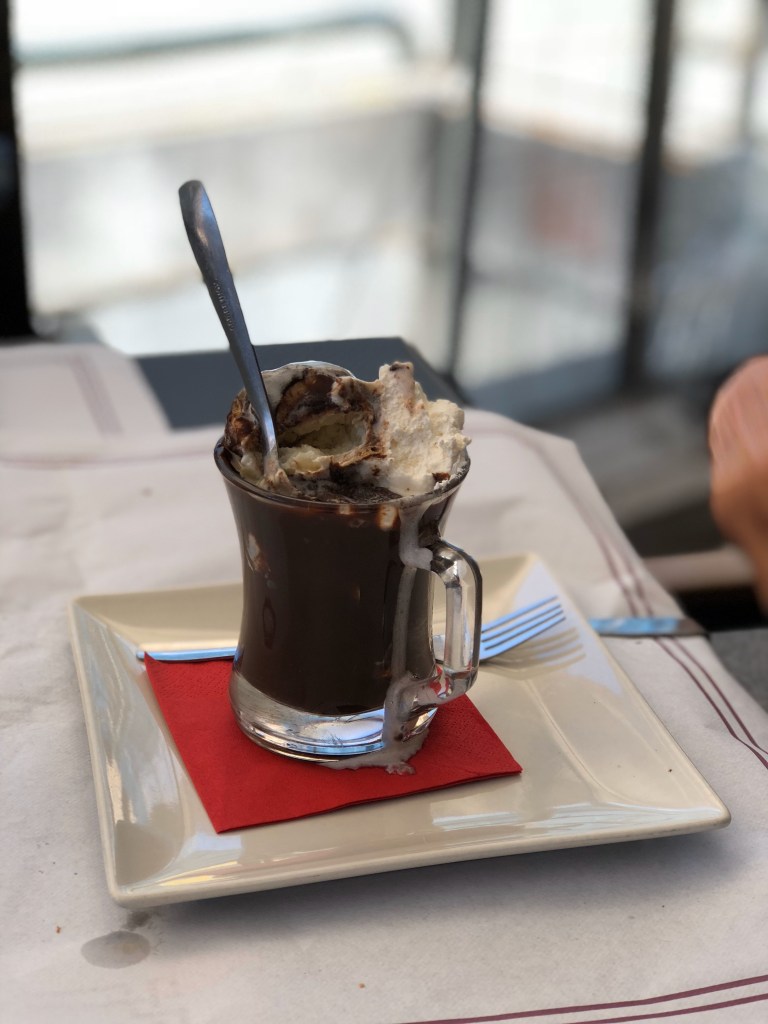
The Amazing Hot Chocolate of Spain
There are conflicting reports about when chocolate arrived in Europe, although it’s agreed it first arrived in Spain. One story says Christopher Columbus discovered cacao beans after intercepting a trade ship on a journey to America and brought the beans back to Spain with him in 1502.Another tale says that Spanish conquistador Hernan Cortes was introduced to chocolate by the Aztecs of Montezuma’s court. After returning to Spain, cacao beans in tow, he supposedly kept his chocolate knowledge a well-guarded secret.
The rich, thick hot chocolate dessert served at restaurants in Leon was my favorite gastronomical treat in Spain! I ordered one as often as possible after meals!
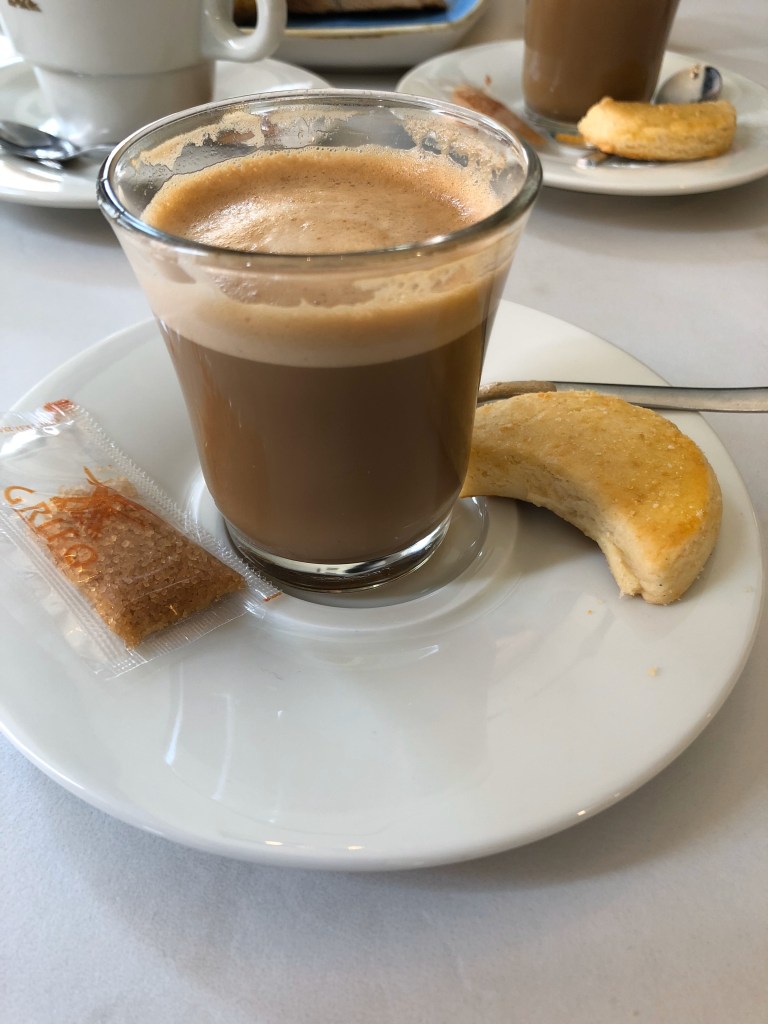
Cafe Con Leche, Por Favor
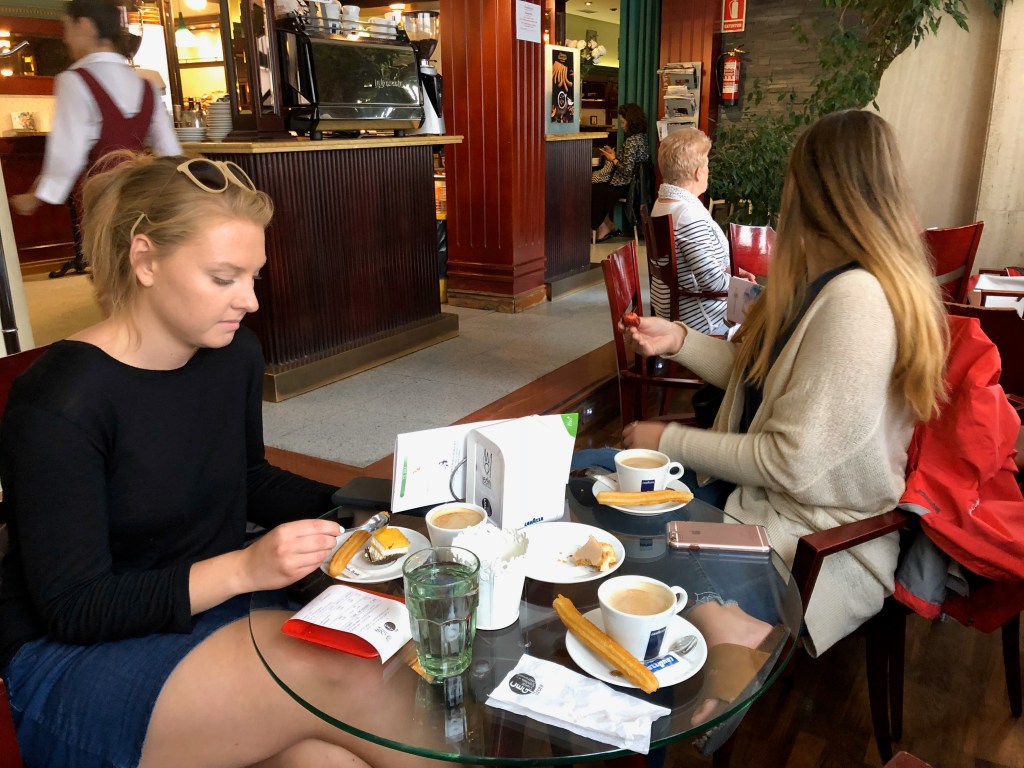
Spanish coffee is wonderful…a treat any time of the day. Good espresso with a hefty amount of steamed milk poured over it constitutes a cafe con Leche, or coffee with milk. There is almost no such thing in Leon as a “coffee to go”. The coffee is enjoyed sitting at the restaurant or bar, and always with a sweet treat as a tapa alongside it!
Cafe Con Leche
Meals in Leon
I fell in love with the Spanish concept of meals as experiences in which to linger, savor, and connect with friends and family! A “menu of the day” served for lunch at some restaurants consisted of several courses, and always ended with coffee and dessert.
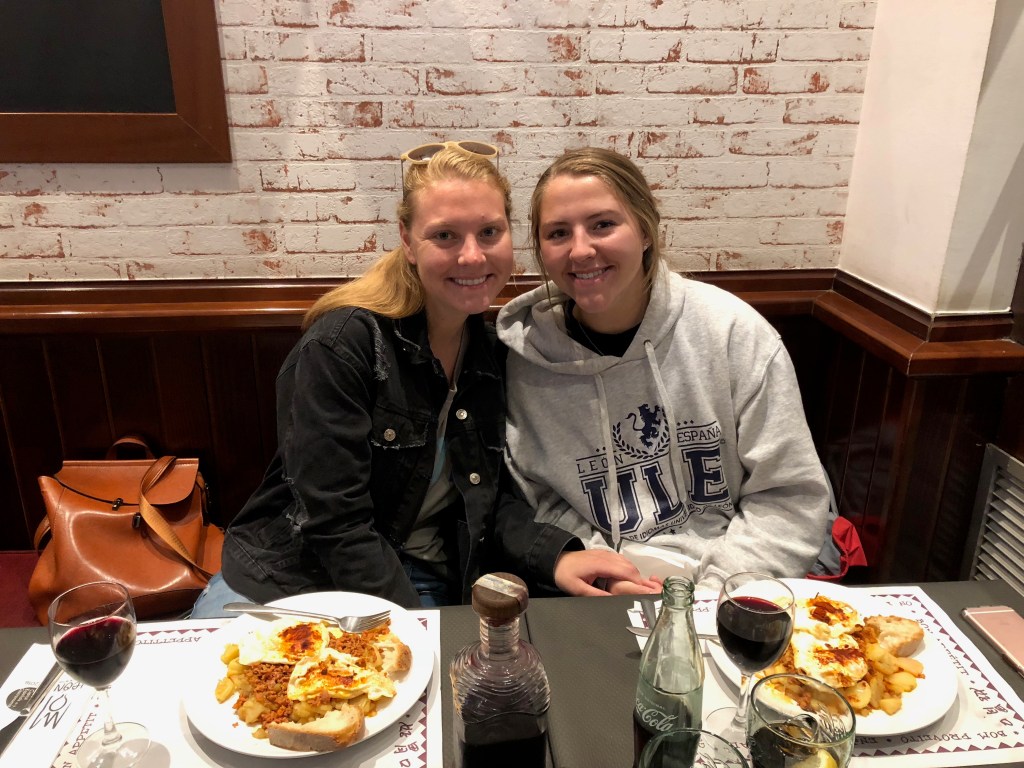
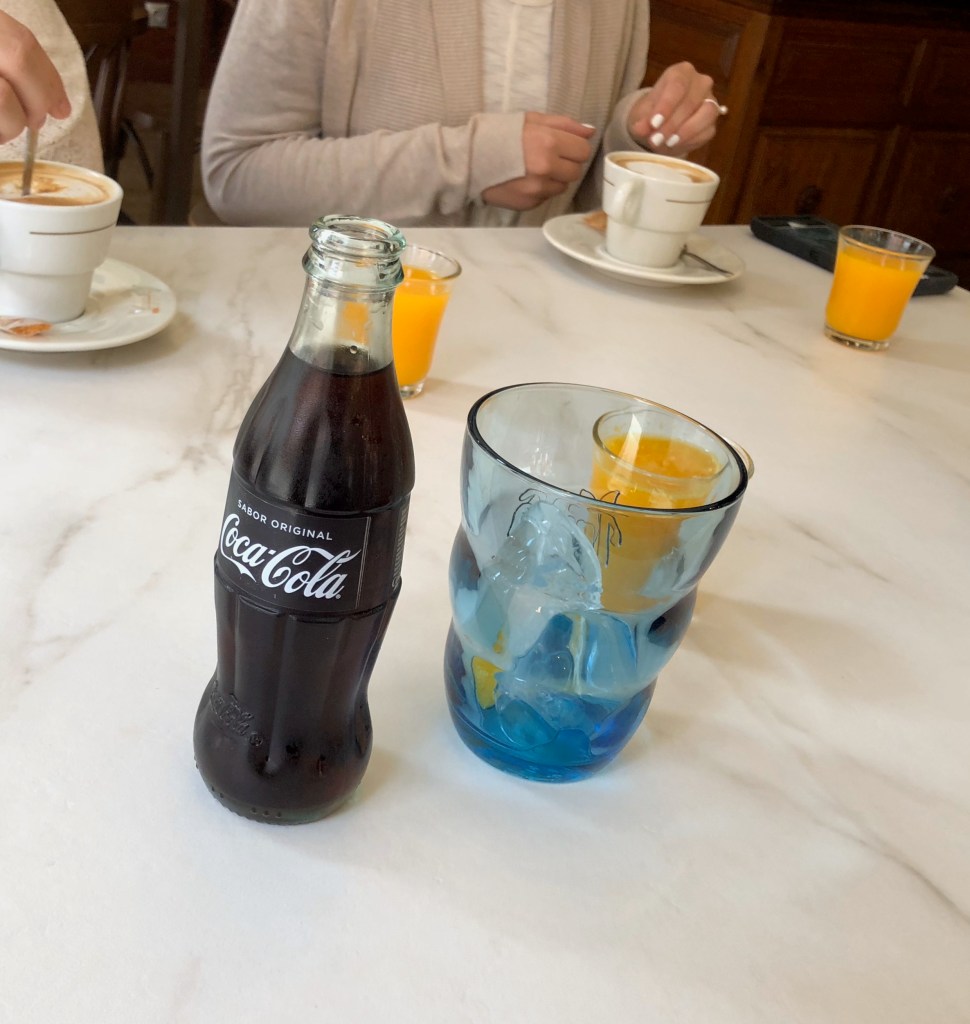
Cokes in Spain were served with lemon. They were almost always in a bottle, with a glass to pour them in- sometimes with ice but more often without ice. For this American who enjoys my cola, I enjoyed the lemon, and adjusted to the usually cool or lukewarm cola.
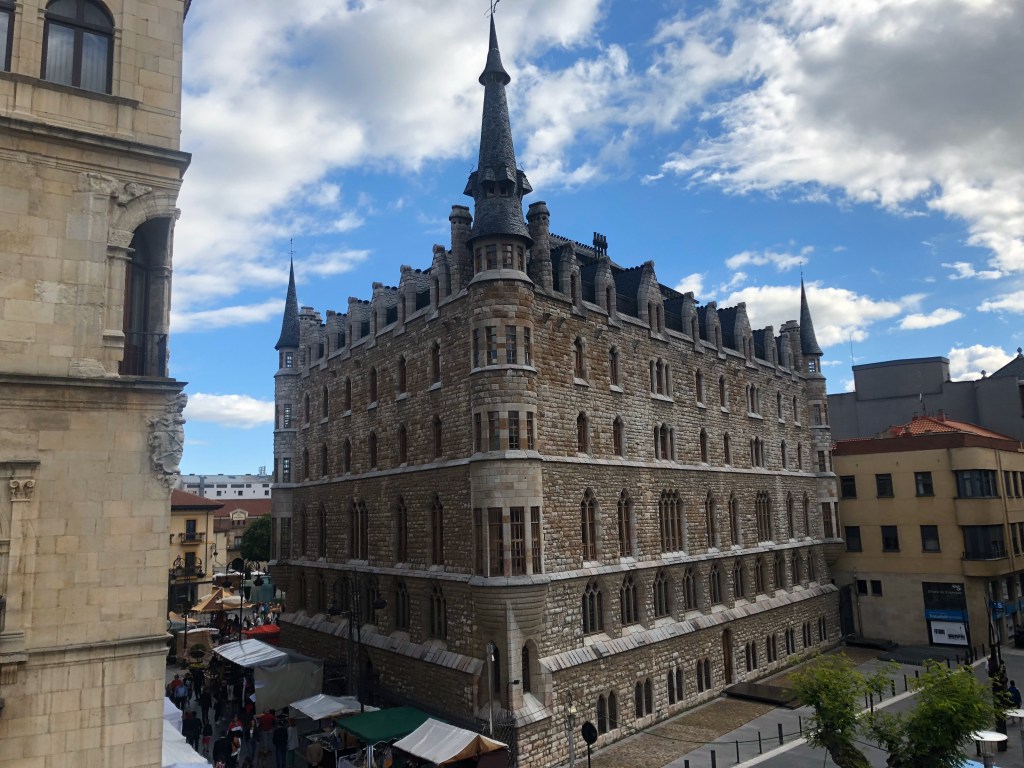
Casa Botines
A more modern building than others in Leon, the Casa Botines was designed by Antoni Gaudi Cornet in 1893. It has been used through the years for offices and apartments, and is now open for tourists to visit and admire. Outside, it has the appearance of a medieval castle while inside an interesting spacial layout.
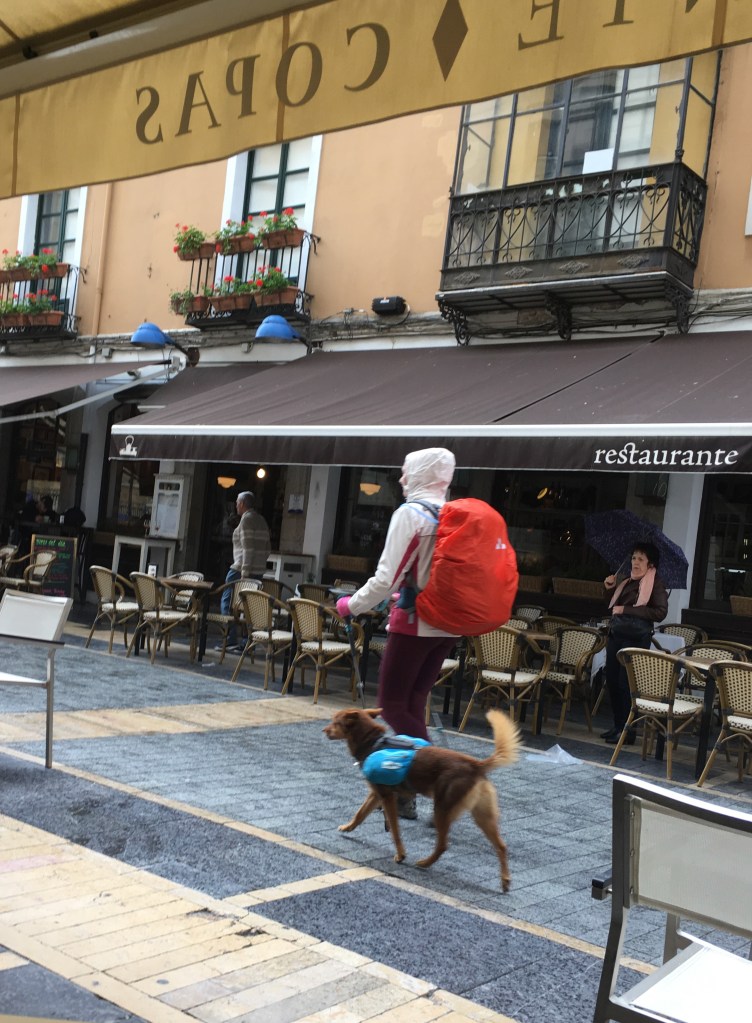
The Camino de Santiago Trail
The Camion de Santiago trail goes through Leon, and we loved seeing the pilgrims and trail enthusiasts coming through the city. I smiled at seeing this backpacker and his dog who also had his own backpack.
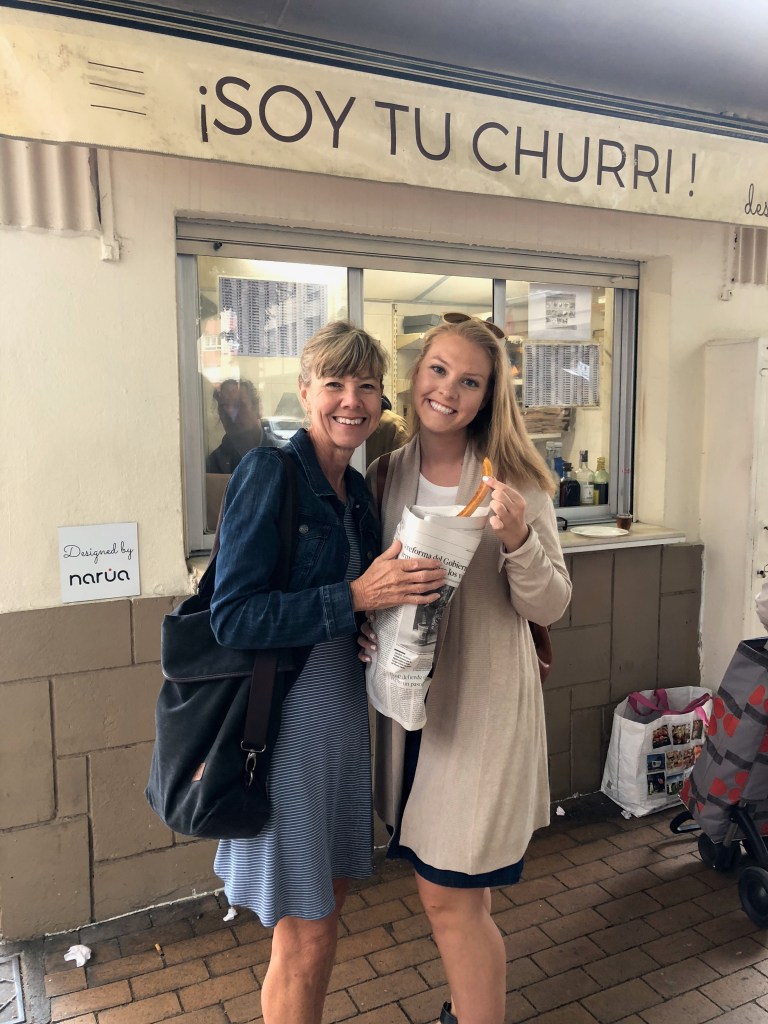
Churros
Churros are a very popular snack in Leon and all of Spain. Churros originated in Spain and Portugal. They are sold by street vendors, or served alongside coffee at restaurants. They are eaten at breakfast, or throughout the day as snacks. They are delicious by themselves or dipped in chocolate! They reminded me very much of our traditional “funnel cakes” in the the southern United States.
I am planning to go back someday to the magical city of LEON!
 Gayla's Blog